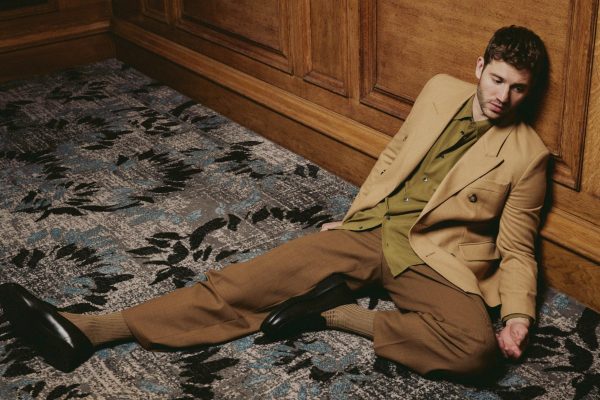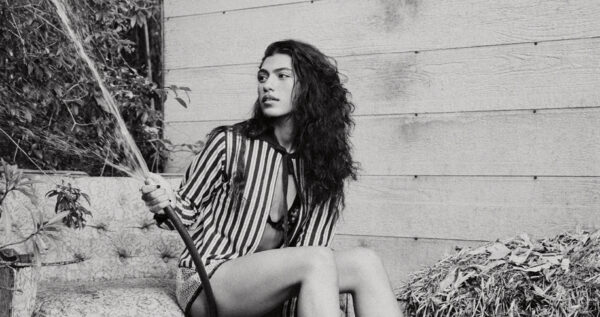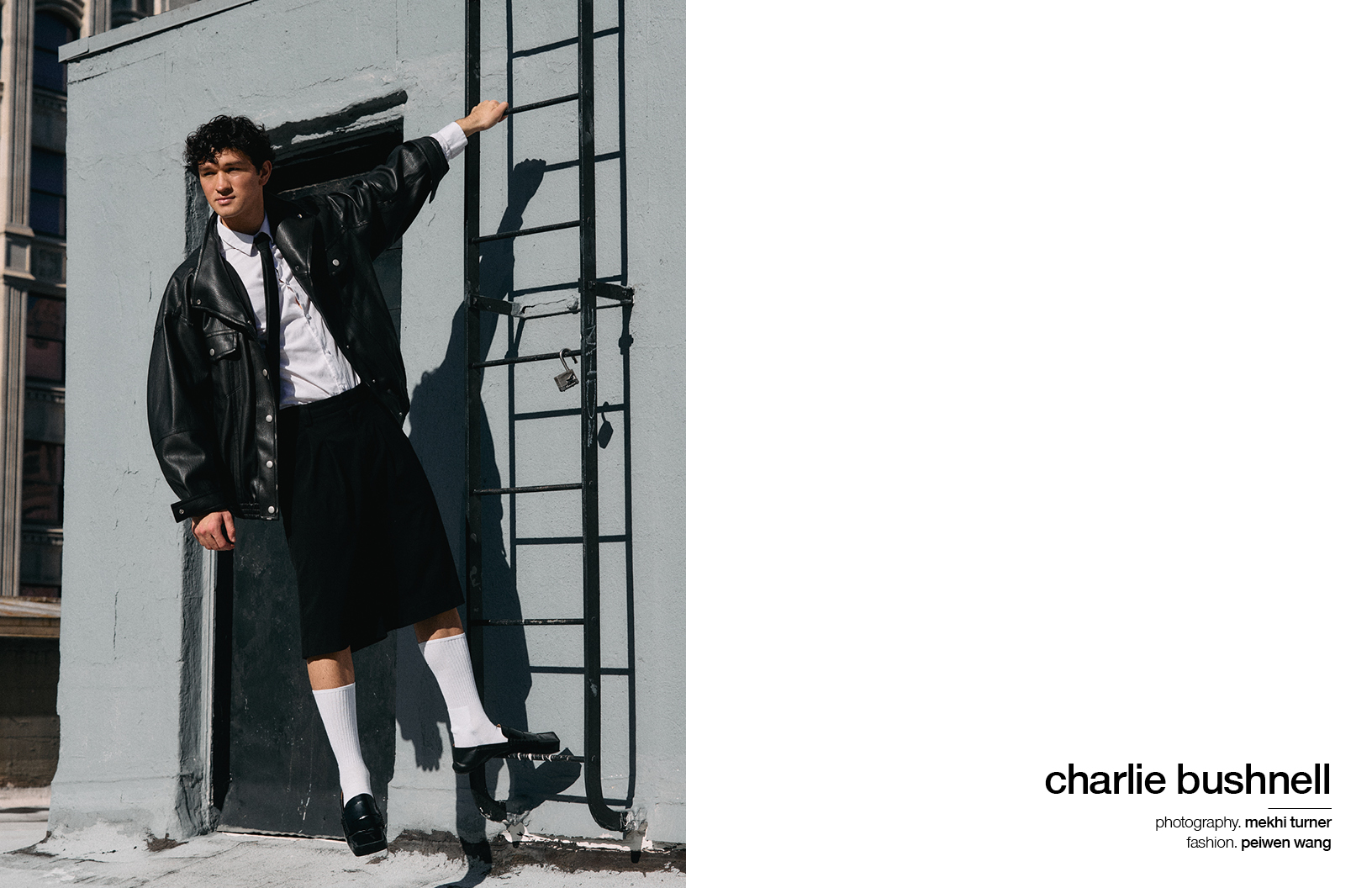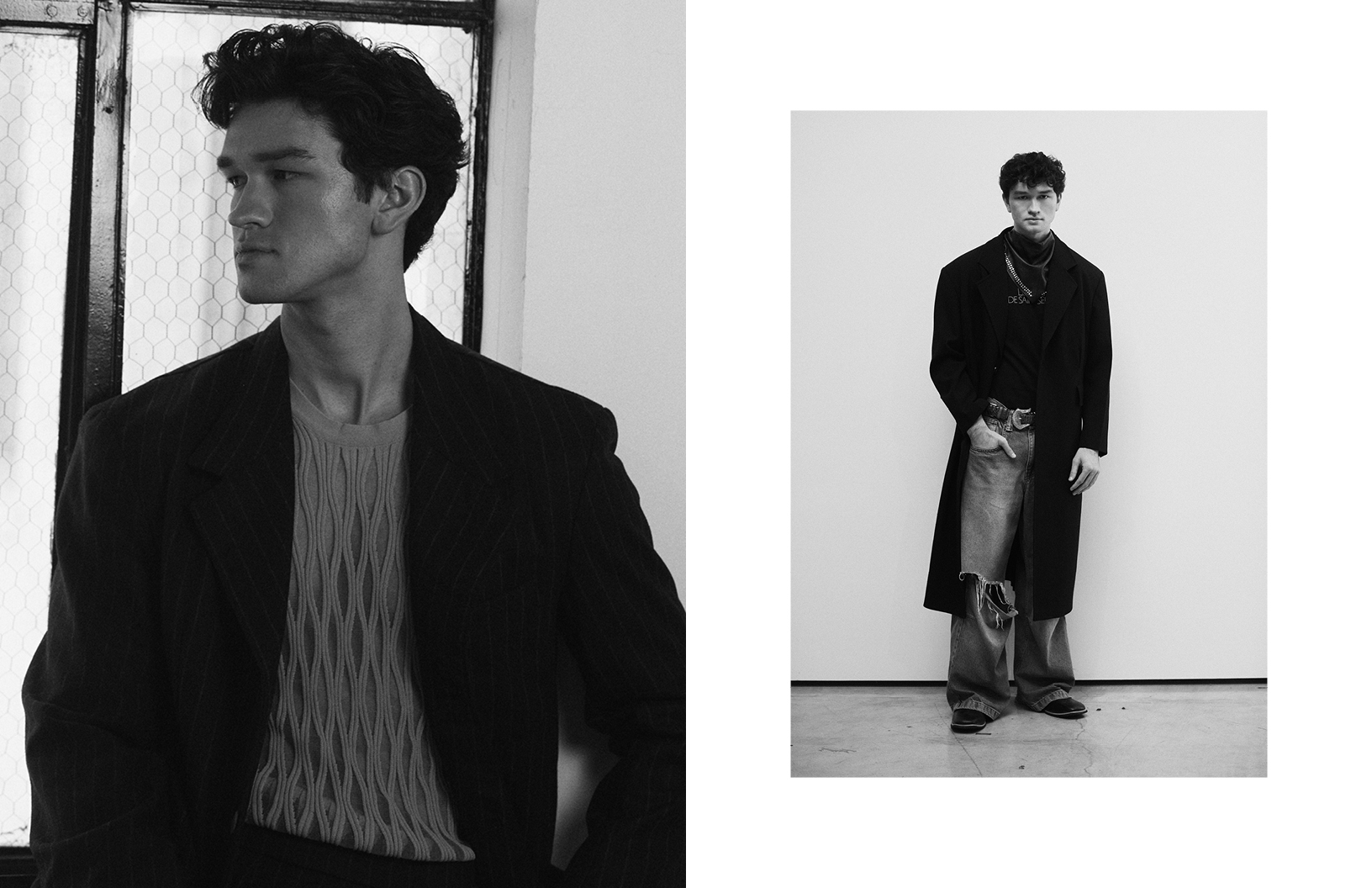


Taylor Acorn’s music has always existed in the space between vulnerability and resilience. On her new album, ‘Poster Child,’ that balance feels more intentional than ever. Since the release of her debut full-length, Acorn has navigated profound personal and professional shifts — moments of uncertainty and self-discovery, shaping her to become the artist she is today. But rather than shy away from the weight of those experiences, she channelled them directly into the creation of this record, crafting an album that is equal parts intimate and expansive.
‘Poster Child’ is steeped in reflection and memory. The nostalgia of childhood comes alive on tracks like “Home Videos,” where Acorn revisits formative moments with her late father and the innocence of youth. Music and memory intertwine in her storytelling — her first inspirations included Evanescence and the Goo Goo Dolls, the albums and voices that sparked her early desire to write, sing, and carve a place for herself in music.
At the same time, though, the album confronts more adult reckonings. “Blood on Your Hands” channels the catharsis of betrayal and professional heartbreak, capturing the raw intensity of a personal and creative falling out. And in the way ‘Poster Child’ is structured, with its bookending tracks “People Pleaser” and “Masquerade,” Acorn draws a through-line from self-doubt and over-accommodation to authenticity and self-possession.
In conversation with Schön!, Taylor Acorn speaks about the making of ‘Poster Child’, the healing power of revisiting the past, and more.
How would you describe how you’ve grown since the release of Certified Depressant?
I think, just human to human, you go through things and they teach you serious lessons. Unfortunately for me, between my last record and this record, there were a couple of things within my personal life and my career that were shifting, and I was trying to navigate that. I think that ultimately makes you grow, even if I was going through a lot behind the scenes.
Going into this next record, I’ve had a lot of time to just sit with my thoughts and process everything. You can change so much within a year’s time, too. So yeah, I think it was all of those factors. I had one full-length record under my belt already, and reading all of the comments from other people — what they expect from me or what they want to hear — I really took all of that into consideration with this project, too. I think it was just a culmination of different things like that.
You worked really closely with Dan and Emma on this record. What was the collaboration process like between you three? Rather than a bunch of people across an album, I think working with two or three really, really close collaborators allows you to be a bit more vulnerable.
Dan and I have been writing together and working together since 2018, so he pretty much knows me like the back of his hand at this point. I dish out all my drama and everything to him, and he listens. Emma is one of my best friends, so to have the two of them in the room, I trust them wholeheartedly. But also, I’m an open book. If I’m in a room with someone else, I’m probably going to dish out my drama; that’s just how I am. I feel like it’s the Virgo mindset; we just spew everything.
It’s been really awesome to be able to be so vulnerable and have that safe space to share my ideas and opinions. I think we all work so well together. Dan and I have been writing for the longest time, and it was him and me up until, I think, last year, when Emma really started writing with us and lending her talent, because she’s so insanely good. It’s been really fun being able to not only be such good friends outside of it, but to collaborate really well together. It’s a really special thing, and I really try to protect that too. They were insanely helpful in the process of this next project, and I’m really excited to continue to share it with them.
It’s a cool story to be able to say Dan and I have been working together since 2018. Looking back on all of the songs we’ve written previously up until now, you just see the growth. There’s something really cool about the fact that we’ve stuck together for as long as we have. I’m very appreciative of them; they’ve really given me a place and a safe space to share my ideas.
Emma and I can relate a lot because we’ve been in the industry for a long time, and she’s been a writer for 15 years in Nashville. I think she’s just now feeling like, “I’m getting my break,” you know what I mean? We all have our own personal things we’re going through, so it’s been really nice to have that space to bounce off of each other — a nice little therapy session.
Yeah, that’s lovely. When I was listening to “Home Videos,” it made me think back to childhood, and I wanted to ask you a little bit about yours — specifically, if there was any movie, book, or album that made you want to get into songwriting or writing in general.
Oh, man. I think what really sparked my interest when it came to music was actually the very first Evanescence record. I can literally put myself in the time and place when I heard “Bring Me to Life” for the first time. I was in my parents’ Suburban, one of the old, old 90s Suburbans. I was in the car, and it was playing on the radio. I have an older brother — he’s like six years older than us — and he was really into WWE. So my sister and I had just bought the Chyna… like, I remember sitting there unpackaging it in the car, being so excited, and then hearing Evanescence on the radio.
Back then, there were a lot of male vocalists, but finding a female vocalist in that rock space was really rare. To me, I feel like Amy was the one who paved the way for a lot of women in that hard-rock space. I was obsessed with her. I would watch all of their AOL sessions, all of their live events. I was just in love with it. I think for my eighth birthday, my mom bought me that record. I would sit by my boombox and listen to it, trying to mimic her. I owe a lot of my ability to sing, because I didn’t really take vocal lessons, to listening to her and trying to mimic her.
My family has always been really into rock music. The Goo Goo Dolls were a huge part of my childhood. Every time I listen to them, I feel like I’m back climbing trees at my childhood home. There’s something so special about that time period of music. I still listen to it every single day. I listen to Counting Crows before every show.
I love that. Before every show? It’s become like a ritual for you.
It is, yes. I usually either listen to 90s acoustic radio or I’ll listen to Counting Crows, and that’s kind of been my little pump-up. A lot of these songs are very sad, but for me, they put me in a really calm headspace. I feel like I’m back in time, and there’s an innocence about it.

“Home Videos,” is such a beautiful song and video. I know you lost your dad at a young age, and the video touches on that, too. How has your relationship to that loss changed since you first started writing songs, and how does “Home Videos” reflect that growth?
Oh, thank you. It was filmed and directed by Nikki Fletcher, who is an amazing director in Nashville, and her and my story is really interesting. I had met her years ago when I first moved to Nashville, and I didn’t know she was doing music videos or anything like that. She had done a few graphic design things for me in the past when I was doing country music. So when we put in to find a director, I was so excited when I saw her name, because first of all, she’s already somebody I know.
I had this vision of having this world that I get sucked into, where I’m back with my old self, doing all of the things I used to do as a kid, like skateboarding and riding bikes and all of that stuff. We didn’t write books in the video, but that was the sentiment I wanted. It was so crazy when she came back with her treatment, and it had everything. I thought, “This is literally what I was dreaming up in my brain.” So it was so cool to see it all come to life.
It was such a fun day. The little girl who was in the music video, she had never skateboarded before, so all of those scenes of her skateboarding, I literally was teaching her how to do it. She knew how to skateboard by the end of it. She ran to her mom and said, “Mom, I want to get a skateboard.” And to me, I know she’ll think about that. I don’t know if she’ll continue to skateboard after this, but it’s just so cool to have that moment with her.
It really felt like I was back in my childhood again, getting to do all of the things I used to do. Again, I’ve always wanted to write something that was a nod to my dad. That part of my life is something I hold so sacred because after that was when my whole family dynamic changed. I think back to those times a lot. As a kid, you don’t really realize the weight of losing a parent or someone close to you until you’re older and can actually process things, so it was really healing for me to be able to do that.
There’s a part in the video where the little you is standing alone, and you reach out to her, which was such a moving scene. It was almost like you were healing your inner child.
Yeah, I think when you’re a kid, you’re constantly wanting to grow up and wanting to grow up. Then you do, and you want to be young again. I’m looking in the mirror, and I’m like, “How can I fix all of this?” I reflect on a lot of that time. The further away I get, the more I crave it. Recently, I’ve been doing things like — I live right next to a high school, and so we’ve been going to high school football games. We just go and sit in the stands, just to experience those things again. I’ve been really excited to do that.
When you’re writing songs, do visuals come to you early on, or does that happen later? I know for “Home Videos,” you said you already had an idea in mind before seeing the treatment.
That’s actually how I can tell if a song is good — if I can see the music video in my head. But sometimes my brain imagines things like, “Girl, you do not have the money for that,” which is funny. But truly, if I can visualize the world, or if I can imagine multiple versions of the story, that’s when I know it’s special. That’s how I felt with Hangman. The concept could go so many ways, and I could see it so clearly—the emotions, the story, everything. I just love music videos. Maybe that’s the millennial in me — we grew up on TRL. It makes me sad thinking MTV might be going away.
The house in the “Home Videos” video… is that the same house from “Crashing Out”?
Yes! If you watch them back-to-back, you can definitely notice. It was really cool that we could connect them visually, even though the songs themselves are different. They feel like their own worlds, but there’s a thread there, and I love that.
It works so well. And “Blood on Your Hands,” I gravitated to that one immediately. The bridge must have been so cathartic to write and sing. It’s just so good. Tell me a bit about writing that one.
It’s been such a fun moment live. We’ve done two shows with all the new songs, and that one always hits. I still have the voice note from the day we wrote it — you can hear Knox, Emma, and me just losing our minds when the bridge came out. It was a total accident. I just felt it and went for it. This whole record came from a really painful falling out I had with someone who was deeply tied to my career. It was shocking. So writing felt like my little “Taylor Swift moment,” honestly. That bridge just… came out. When we listened back, we all reacted instantly. It was super cathartic.
I know some people give me flak for cussing in songs — I get messages asking for clean versions. I understand parents wanting something their kids can listen to. But at the same time, I’m writing honestly about my life and how I felt. Sometimes those words are the feeling. It felt right in the moment, so why change it? And honestly, there are only three songs on the album where I cuss, and there are twelve songs total, so it’s not like it’s constant. The rest don’t have any of that.
Those moments, especially in the live show, are powerful. I let the crowd take that line if they want, and they do. It’s become such a cool release, for them and for me.
I love that you bookended the album with “People Pleaser” and “Masquerade”. They feel like they’re in conversation with each other. “Masquerade” almost touches on leaving behind false connections and finding yourself again. Were those placed strategically for that reason, and because of the connection between the two?
Yeah, “People Pleaser” is definitely rooted in a part of me that, especially earlier in my career, was kind of a “yes man.” I said yes to everyone — didn’t want to step on toes — even when I didn’t agree. I’ve kind of been like that my whole life. Being the middle child, I always wanted to do right by everyone. But that usually landed me in sticky situations. Over the years, I’ve learned my own worth. My voice is valuable. You sometimes have to be headstrong. Sometimes people don’t deserve forgiveness, even when you really want to forgive them.
Starting the album there felt right, like, “Here’s who I’ve been, here’s how my career has looked up until now.” And it’s also a sarcastic nod to seeing comments about myself: “Your hair looks like ___.” “You should change this.” “You sound like this.” There’s something wild about people wanting you to be both perfectly authentic and constantly changing. It’s like, “You want me to change, but this is me… but okay, sure, I’ll change because you said so.”
And you’re not being authentic if you’re just adhering to whatever they want or don’t want.
Exactly. If I’m trying to be what everyone else wants, how am I being true to myself? So “People Pleaser” was a cheeky way to say, “You want me to jump off a cliff? Sure, I’ll do it.”
I’ve grown a lot since then. And “Masquerade” kind of represents that growth, the turning point. I’ve been in the music industry a long time, even though some people think I’m new. I even get accused of being an “industry plant,” which is funny because I’ve been doing this basically alone for years. You learn a lot when you’re figuring everything out yourself. You see the inner workings—people, friendships, how transactional some relationships can be. I thrive on genuine connections, and it’s tough when things feel superficial.
So “Masquerade” is everything I’ve felt and everything Emma has felt too. She’s been doing this 15 years, she’s incredible, and she’s also felt overlooked at times. The song was a way of saying: “We’re real people. This is who we are. If you like me for me, amazing. If not, that’s okay too.” I don’t need to bend myself into a shape that isn’t me. And that’s why it felt right for the end of the album — this album feels like me in my fullest form. It closes with a sense of, “This is who I am now.”
It feels like an exhale — like you said everything you needed to say about this experience, and now it’s, “Okay, onto the next chapter.” When you release a body of work like this, does it feel like a chapter closing or a chapter beginning? Or both?
Honestly… both. It’s sad because I love this album so much that I don’t want the chapter to close. I’m like, “Can we just keep going?” It is kind of a chapter closing and a fresh start at the same time. You can change so much in a month, a year, five years — and that’s the beauty of being human. I hope I keep having things to write about, because that means I get to keep making art.
Right now, it feels like folding down a page in a book. Not the end, just a pause before continuing. Survival in Motion felt like a closed chapter after all those features, like I was moving onto something new. This one feels more like a continuation, the start of what the next projects will be.
What do you hope to manifest for yourself in 2026?
I was literally thinking about this earlier. At this point in my career, I’ve been so fortunate to do so many amazing things. I’m really trying to stay present and grateful for what I have now, because tomorrow isn’t guaranteed. With social media, everything can flip like a switch. I’m trying to slow down and appreciate the moment. Of course, I’d love to say I want to play an arena, or a stadium, or manifest a feature with the Goo Goo Dolls — that would be incredible. But I’m also reminding myself that even if that never happens, I’m already in such an amazing place compared to where I was.
I’m taking things one day at a time. Being grateful. Not getting ahead of myself. Letting the universe do what it’s going to do. I can dream about things, but I’m truly happy where I am right now.

“Poster Child” is out now.
interview. Kelsey Barnes