

At Haute Couture in Paris, or fashion week anywhere, certain constants remain: names shift on and off the schedule, designers appear and disappear, and there are always off-schedule shows, events, and appointments to juggle. Monday began with Schiaparelli, a perfect start to couture. Daniel Roseberry is a true designer, sketching, fitting, and evolving garments with the ateliers. Seeing the clothes up close at Place Vendome is a privilege — the complexity and beauty are astounding. A seemingly striped column dress was actually ribbons of fabric joined by rows of beads; a satin skirt’s shape emerged from bias cuts steamed over canvas. Beige-on-beige silk organza flowers, sometimes sprouting tiny feathers, trailed over lace and crepe foundations. The color palette was restrained, and the collection told a story of humans defying gravity — a cohesive, elegant narrative.
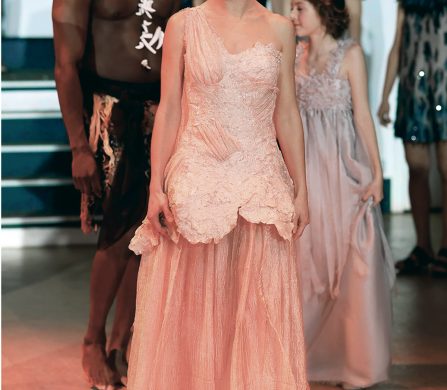
Imane Ayissi, a former dancer from Cameroon, reflects movement and culture in his work. Raffia starbursts and draped dresses glided down the runway — from tight, sexy silhouettes to easy, flared shapes. His bold color sense shone, blending deep hues and bright bursts. Ayissi’s collections always pulse with energy, and the audience responds in kind — no hushed couture here, just applause and exuberance. His designs are personal, mixing luxury with reinterpreted ethnic fabrics, bold patterns, and dynamic shapes. Having followed his work since his Paris debut, I found this season a vibrant distillation of his strengths.
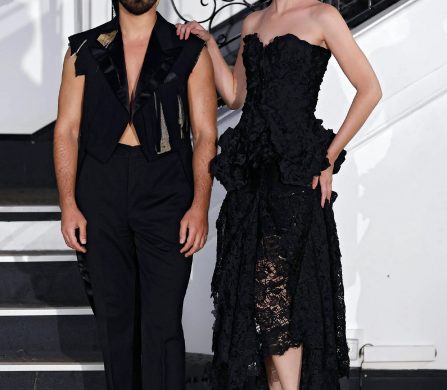
Georges Hobeika, now working with his son Jad, added menswear to his couture line. The show opened with a somber tribute to Georges’ late mother, featuring all-black pieces — a Chantilly lace dress reminiscent of the 1930s, a plume-covered coat, and a striking black taffeta caped suit. From there, the collection blossomed into color and embellishment. Highlights included a floor-length ballgown with gold vine embroidery swirling around its bubble skirt and a Byzantine-inspired golden robe adorned with cranberry roses and silver leaves. Hobeika balanced evening wear with cocktail and party looks, showcasing classic draped silk mousseline dresses in bold hues like frosted lime — a testament to his atelier’s craftsmanship.
Dior‘s collection played with fantasy and romance, nodding to Alice in Wonderland. Stephen Jones’ hairpieces — punkish Mohicans and bamboo crinoline cages — added a playful edge. Neutral-toned floral embroidery felt delicate and ethereal, with ruffles and frills so light they seemed to float. The show left me wondering how clients would embrace these dreamy pieces and how they’d appear at upcoming events. Ariana Grande, as if on cue, wore one of the looks — a bamboo-crinolined dress sprinkled with tiny flowers — to the Critics’ Choice Awards.
Rahul Mishra’s collection explored the balance between nature and urbanity, inspired by the Earth seen from space as a “pale blue dot.” The show opened with dark, architectural silhouettes, evolving into gold-drenched optimism. Mishra’s signature 3D embroidery took center stage — black birds swirling around models like flocks in motion, and mirror-like circular discs adding a clubby edge. A standout was a black velvet hourglass gown, reimagined with intricate black-on-black embroidery. The finale shimmered with gold, a metaphor for light overcoming darkness — a timely reflection of our planet’s current state.
Alexis Mabille embraced the client-designer relationship with a collection showcased in Galerie Vivienne. His focus was on the wearer — from a black tuxedo dress with a feathered hem to a gold matelassé gown with waistcoat ties trailing down the back. Light tulle skirts revealed glimpses of legs, and a violet cocktail dress featured a dramatic, structured bow lined in matching lamé. Mabille, long established in couture, has also flourished as an interior designer, applying his mastery of shape, material, and color to new creative realms.
Stéphane Rolland showed at the vast Salle Pleyel, its wide stepped runway allowing models to parade individually or cross paths, forming striking silhouettes against each other. The finale, with every model ascending the space, was breathtaking. Before the show, we saw a short film about Rolland’s work with Brigitte Macron and the Fondation des Hôpitaux, supporting hospitalized children, adolescents, and the elderly. It was moving, and after a round of bows from those involved, the collection began. This season’s twin inspirations were Josephine Baker and Brancusi — the Black American singer who made France her home and the Romanian sculptor known for his linear, abstract forms. Rolland channeled their spirit without being literal, staying true to his sculptural style. Pale chestnut silk mousseline caftans drifted, spiked feathers quivered on gowns, tiny origami waist details contrasted with sweeping fringes, and clouds of silk gazar floated down the runway. It was pure couture — monumental, dramatic, and impossible to imagine outside this world. The show closed with a direct nod to Josephine Baker: Coco Rocha in an explosion of ivory plumes atop an ivory dress. Applause echoed through the auditorium as Rolland took his bow, surrounded by his models in a final tableau — a true couture moment.
Julien Fournié celebrated his 50th birthday in style at the Théâtre Mogador with a show that was as much a spectacle as a collection. It moved through a series of scenes — city to party, career dressing to nightclub — a journey from serious to surreal. Highlights included city wear in shades of blue with a Napoleonic flair — velvet details and sharp tailoring — and dreamy, flowing looks like a “thousand and one nights” ensemble with gold embroidery and violet mousseline veils, or a golden pollen-yellow gown trailing with strands of sparkling “diamonds.” A scarlet fit-and-flare dress, shimmering with red-on-red embroidery, oozed Hollywood glamour. The finale was electric: sharp tailoring, skinny pants, and curvaceous dresses, lightning bolts of glitter flashing across clean silhouettes. The entire company flooded the stage, and as Fournié joined the dancers, he was hoisted into the air, arms outstretched, as “I’m Crucified” by Army of Lovers blasted through the theater — a bold, celebratory moment met with cheers and well-earned applause.
Ronald van der Kemp calls his couture collections “Wardrobe,” and that’s exactly what he delivers — a curated mix of trousers, mini dresses, cocktail looks, and gala gowns. He moves seamlessly from simple silk satin togas to extravagant tartan taffeta ballgowns, always balancing drama with wearability. What sets him apart is his mastery of upcycling and deadstock fabrics, creating looks that rely entirely on their unique materials. His eye for combining seemingly clashing fabrics — patchworking a bodice or piecing together sleeves — is magic. Each garment reflects his deep knowledge of construction, where even mismatched elements feel deliberate and elegant. Van der Kemp has revolutionized the idea of ethical couture, proving that sustainable fashion can be luxurious, intricate, and beautiful. His collections are a testament to both craftsmanship and creativity.
On Aura Tout Vu, founded by André de Sa Pessoa and Yassen Samouilov in 1995 and later joined by Livia Stoianova, remains bold, playful, and unapologetically glamorous. The show at Paradis Latin felt more like a private party — sequins, towering sleeves, and skin-baring silhouettes filled both the runway and the audience. The show moved through color themes, opening with black — plumes, crystals, bugle beads, and paillettes shimmering down bold models in waistcoats, coats, trousers, and dresses. Red followed, with a standout high-necked “Robe Sirène,” covered entirely in flickering bugle beads. Blue brought printed pieces that felt almost carnival-esque, jackets and pants sharp yet sensual. The finale exploded in silver and white — decorations swirling, fabrics trailing — models turning the runway into a riot of sparkle and movement. As the show ended, the energy carried into the night, and you could tell a party was bound to follow.
Gaurav Gupta’s invitation hinted at the show’s emotional depth — a hand-delivered oval box containing a brass singing bowl, its serene chime setting the tone for the collection, Across the Flame. Held at The Bridge Club, the show opened not with models but with Gupta’s partner, Navkirat Sochi, slowly pacing the space, reciting a poem — a powerful acknowledgment of her recovery after severe burns last year. The collection interpreted fire and its aftermath — from flame, ash, and charred remains to healing and transformation. Bright drapery mirrored flames’ movement, while deep purples evoked bruises. Sharp corsetry rose like flickers of fire, gold swirled in heat-like patterns, and trailing fabrics suggested smoke. It wasn’t just a couture show — it was a story of beauty emerging from tragedy. Gupta didn’t use the collection to dwell on pain but to highlight rebirth and strength. It was bold, moving, and unforgettable — a reminder that fashion can carry deeper meanings beyond the surface.
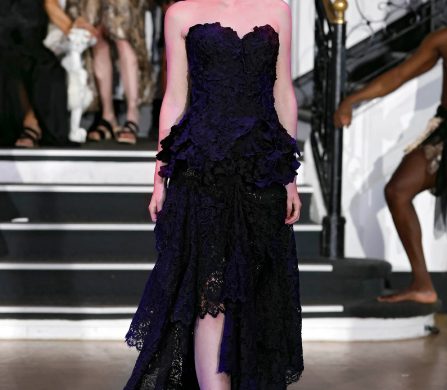
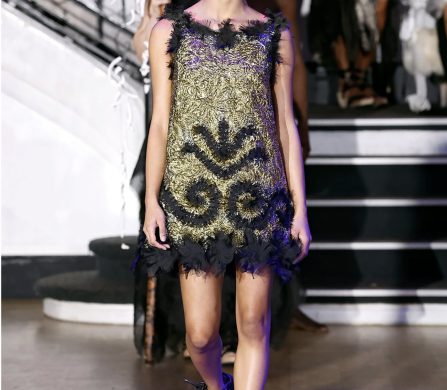
Franck Sorbier remains unwavering in his dedication to couture’s origins — the handwork, the painstaking detail, the artistry. His collections are a masterclass in “high sewing,” untouched by ready-to-wear trends. This season, Sorbier crafted a narrative from darkness to light. The first half was dramatic — black lace, dark ribbons, and evening wear set against a backdrop of tension. Cocktail dresses appeared like slivers of light — black brocade, fragmented embroidery on white, and a standout silver crushed dress edged in scrollwork appliqué. The mood shifted as dancers and models emerged in soft rose, blush, and gold. An empire-line dress in smoky mousseline, with delicate tracery on the bodice and a flowing stole, felt like a painting by Ingres. Sorbier’s show wasn’t just a display of clothes — it was a performance, each piece part of a larger story. As the designer took his bow, the applause roared — a fitting end to a show rooted in both craft and creativity.
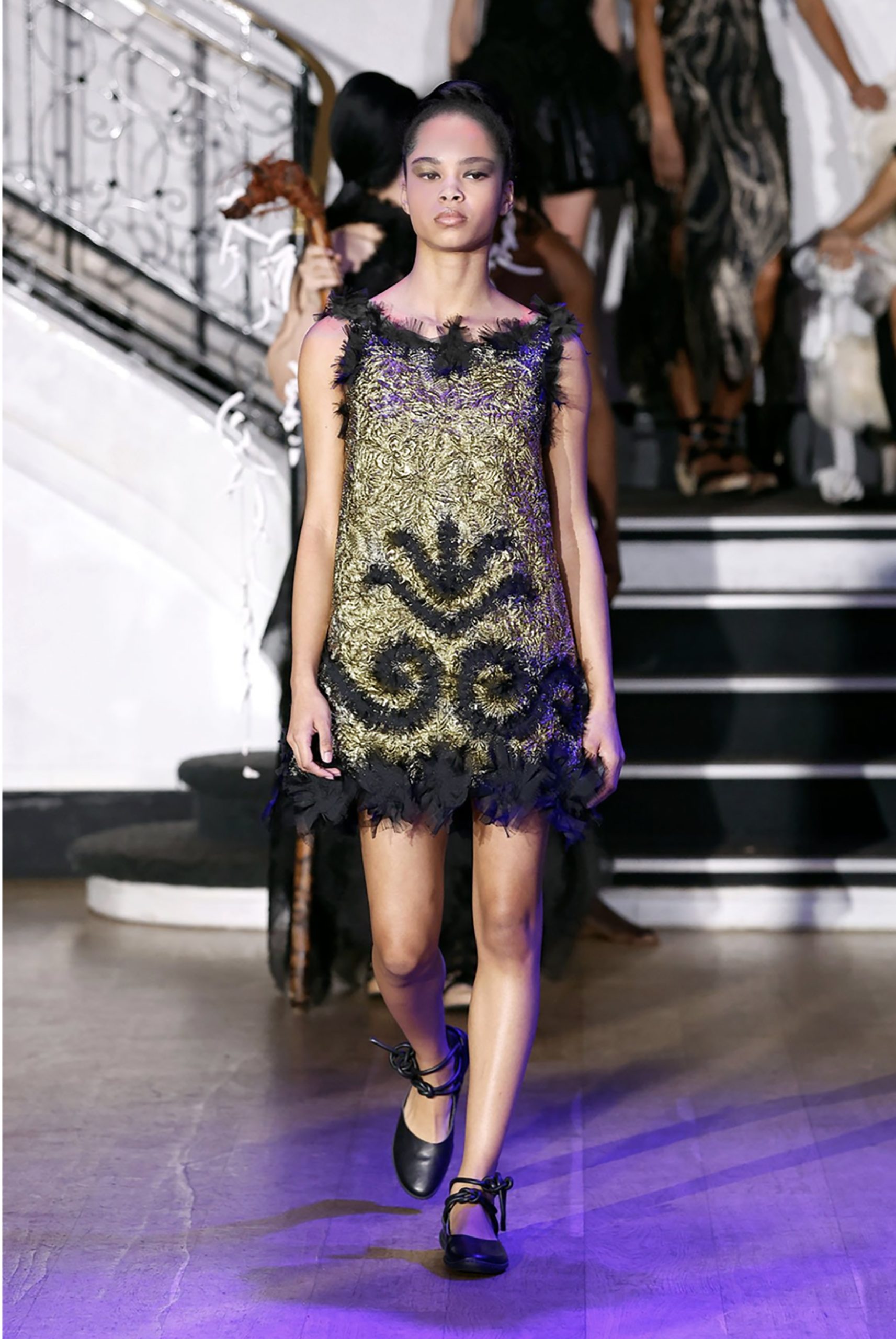
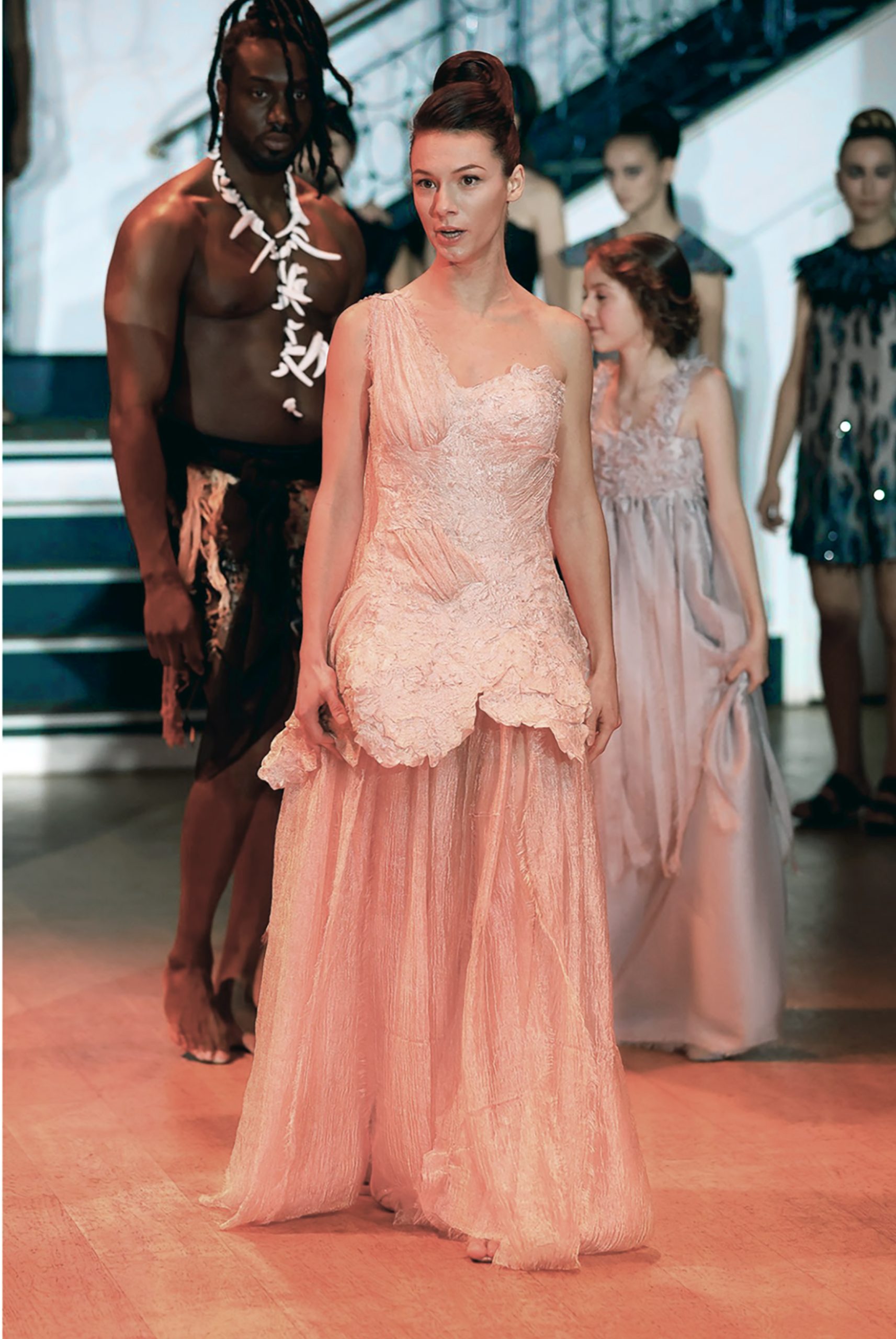
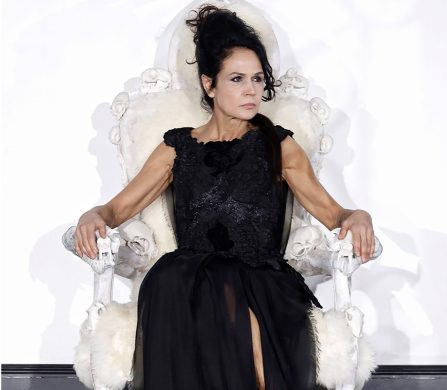
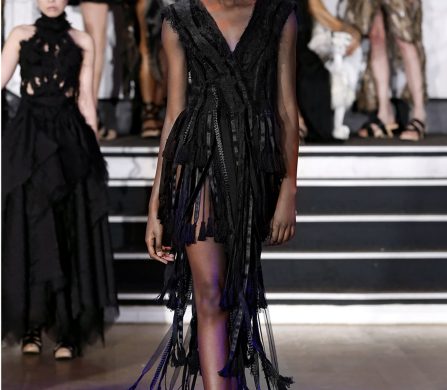
Yuima Nakazato presented a serene, thought-provoking collection titled Fade. The show unfolded around a central sand dune, with models moving in slow, circular patterns — an oasis-like atmosphere. The collection played with blue tones and a recurring lattice motif, at times resembling plaited twine or metallic threads, softly emerging from garments. Silhouettes ranged from wide trousers and coats to delicate silk organza wraps, often billowing into the air like veils or burnooses. The show culminated in a dramatic moment when Nakazato ascended the dune, revealing a robe of ceramic discs linked together, dressing a model in an almost Byzantine warrior style. The blend of modernity, craftsmanship, and poetic storytelling once again solidified Nakazato’s place as a highlight of the couture calendar.
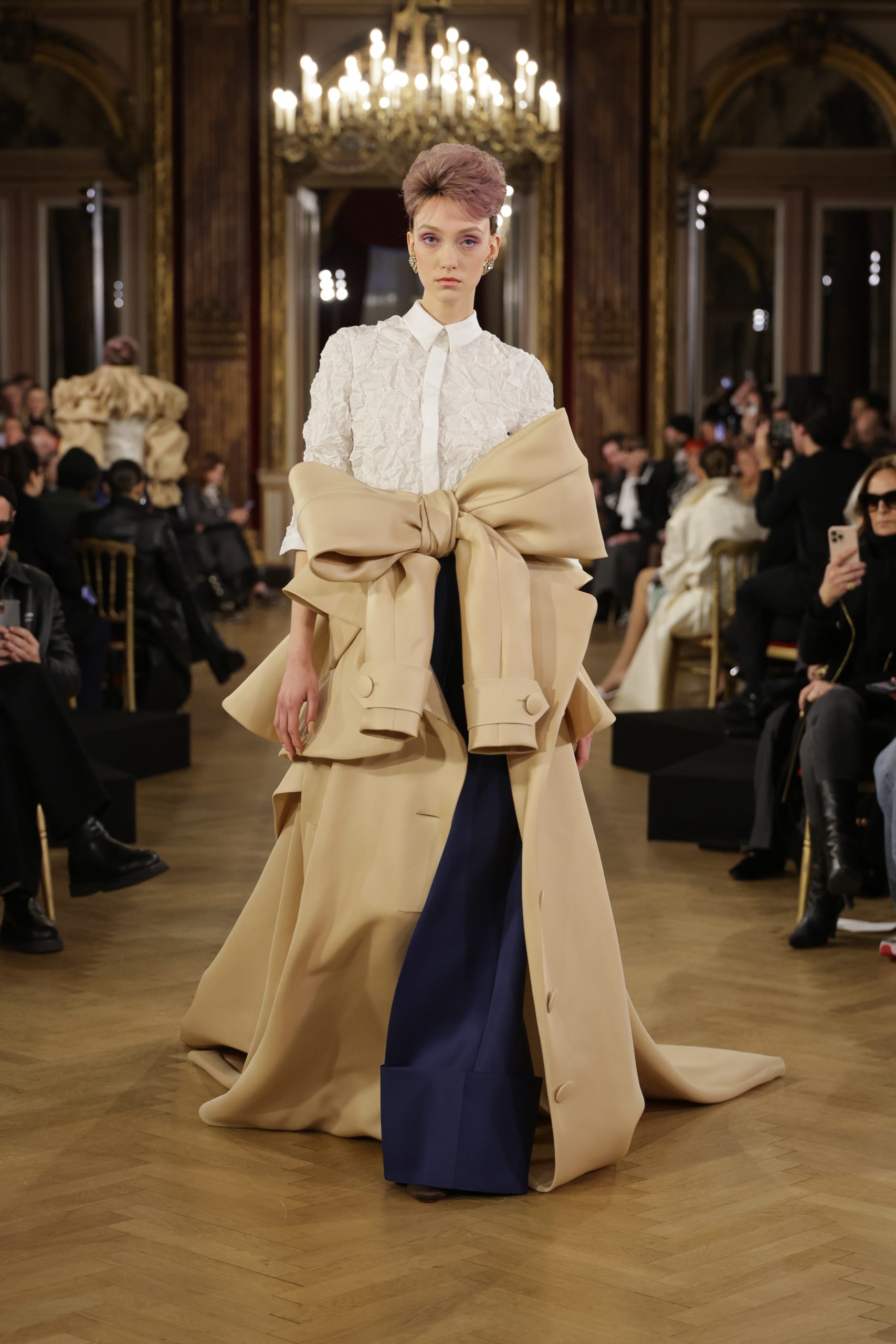
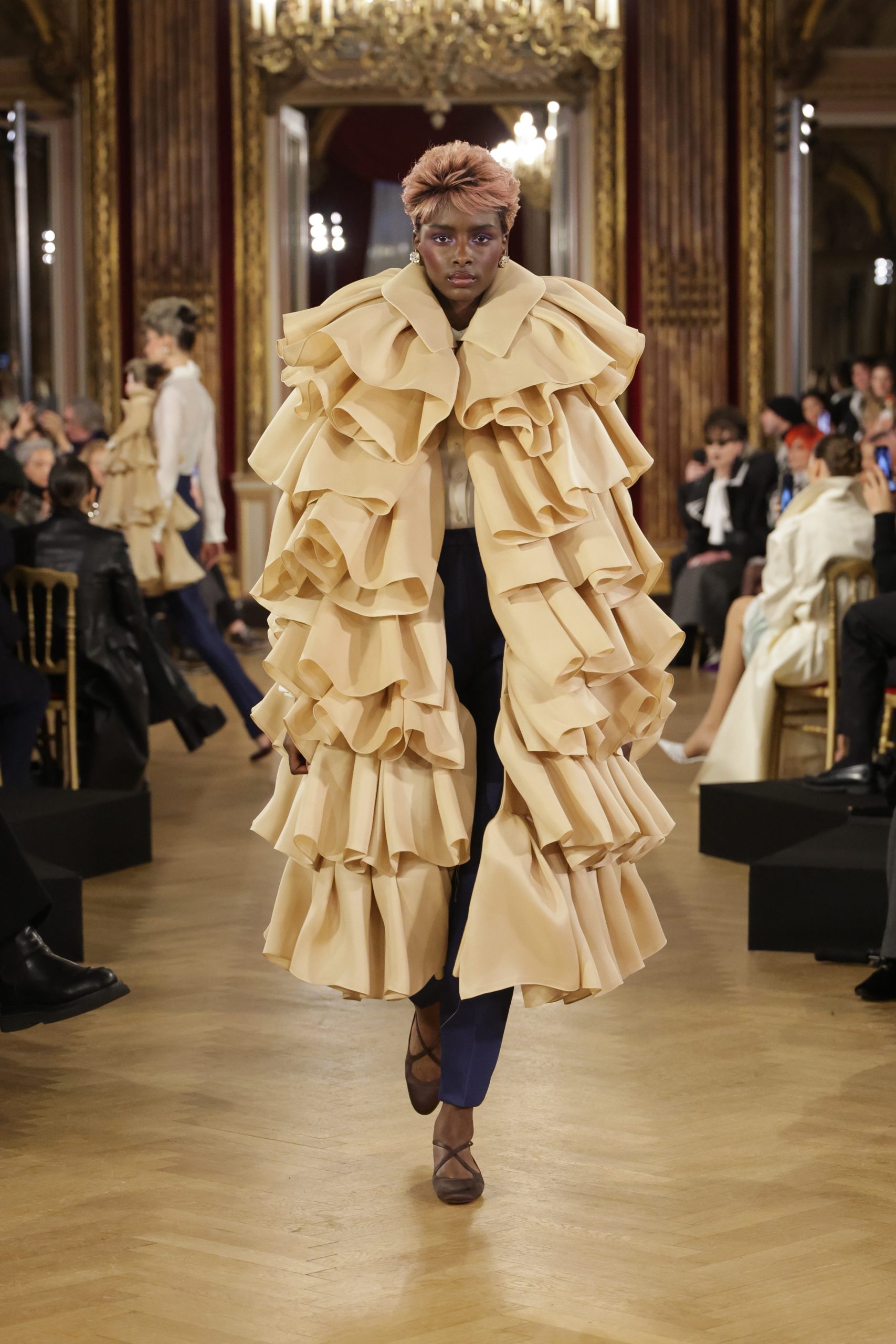
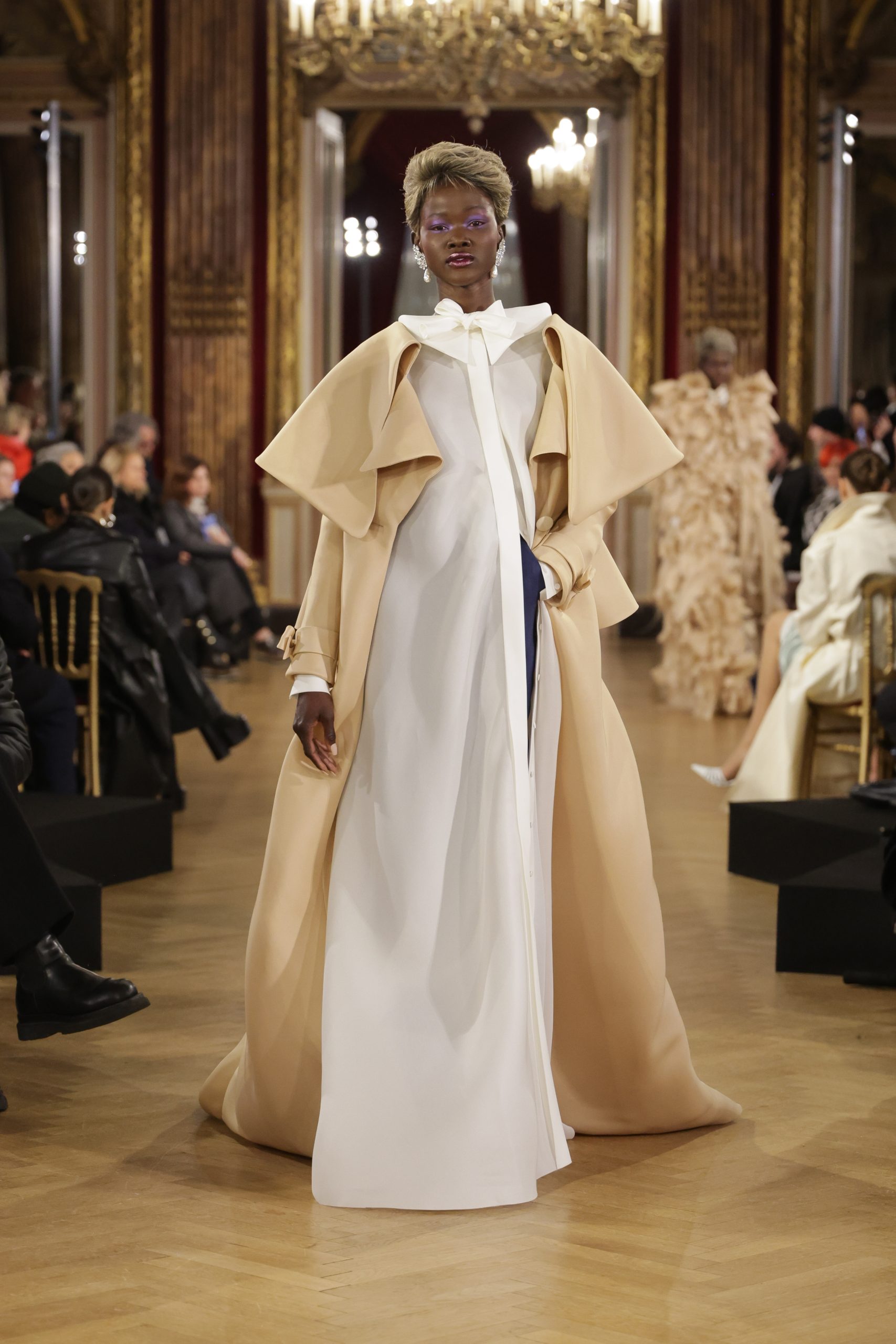
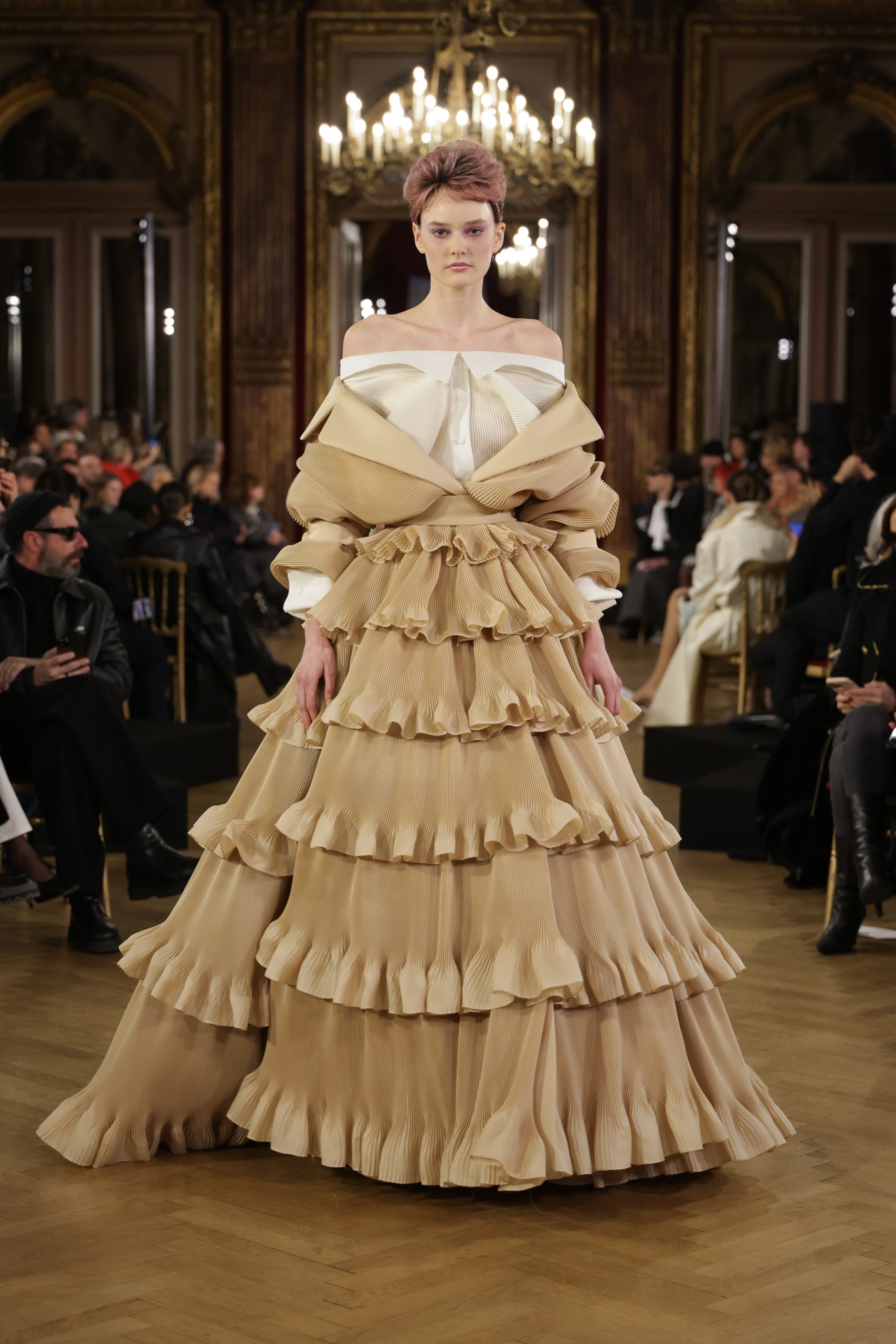
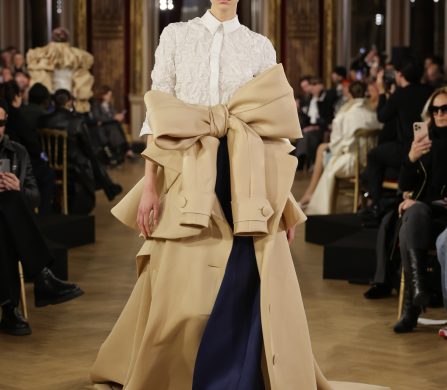
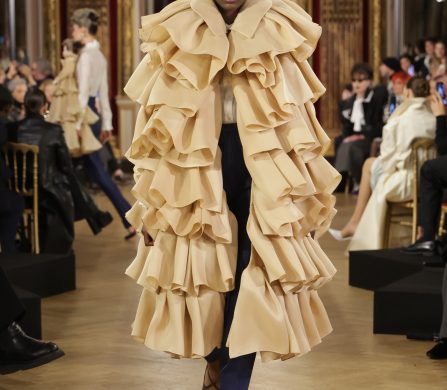
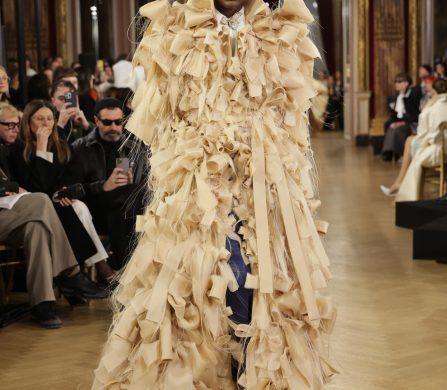
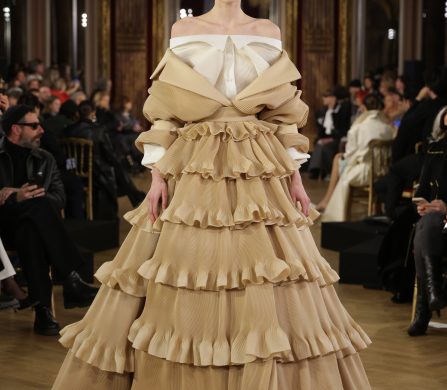
Viktor & Rolf brought their signature wit and daring creativity to couture week, presenting a bold collection built entirely around three classic pieces: a trench coat, a white shirt, and navy trousers — all in silk gazar. Set in the iconic salon where Yves Saint Laurent once showcased his work, the designers masterfully transformed these basics into a cascade of silhouettes: empire-line coats, flaring bustles, and dramatic layering that ranged from neat tailoring to exaggerated volume. The soundtrack reinforced the concept, with a posh voice repeating the trio of garments. The result? A brilliantly clever, couture-level puzzle of proportion and style — divisive, daring, and utterly memorable.


Zuhair Murad embraced old Hollywood glamour and 70s technicolor flair with a collection bursting with freshness and vibrancy. This season leaned less on heavy embroidery, allowing bold drapes and striking color palettes — think fruit-toned pinks, reds, blues, and greens — to shine. Flowing silk crepe de chine, structured duchesse satin, and layered tulle created a playful yet elegant contrast. Bows adorned both hair and garments, reinforcing a romantic, rococo spirit reminiscent of Lana Turner and classic American Vogue moments from the Diana Vreeland era. It was glamour with a capital “G” — cinematic, joyful, and utterly show-stopping.
Aelis once again captured hearts with her ethereal, eco-conscious designs. Blending modern fabrics with vintage finds, Sofia Crociani’s creations radiated a melancholic beauty, a quiet dreamscape of monochrome textures. Silhouettes ranged from soft empire lines to flapper shifts, delicate godets, and trailing ribbons. There was a ghostly elegance in crushed mousseline held by lace fragments or jet beaded tulle slipping over white chemises. Aelis’ designs felt like sketches brought to life — subtle yet emotionally impactful — leaving the audience momentarily suspended in her poetic world before stepping back into reality.
Juana Martin transported the audience to Andalusia with a show steeped in Spanish heritage. A flamenco singer opened and soundtracked the presentation, even gracing the runway herself. Martin’s designs were bold and dramatic — black lace dresses with voluminous ruffles, crystal-beaded flamenco skirts, and capes layered with tiers of white mousseline. Sculptural elements like oversized bows, jet fringe, and lace sleeves nodded subtly to classic Balenciaga influences. The collection celebrated Spanish couture traditions with a modern edge, delivering high drama and undeniable passion.
Peet Dullaert offered a masterclass in understated elegance, proving that couture’s technical precision doesn’t have to overshadow the clothes themselves. Presented in an intimate atelier, the collection focused on fluid, streamlined silhouettes — beaded sheers, twisted drapery, and cloud-like trains. Inspired by Art Deco and the techniques of Madeleine Vionnet, Dullaert skillfully manipulated fabric, creating shape through under-stitching and strategic restraint. Highlights included a white organza blouse jacket with delicate floral embroidery, and a long, beaded fringe dress that felt both timeless and modern. It was couture with historical roots yet undeniably forward-thinking — minimalism meeting meticulous craftsmanship.
Maison Sara Chraibi brought a poetic, culturally rich vision to couture week, blending Moroccan heritage with timeless couture techniques. Set in the Institut du Monde Arabe, models exuded regal elegance, with plaited coronet hairstyles and flowing fabrics that mirrored elements of nature — waves, leaves, and branches translated into white-on-white embroidery, lace florals, and shimmering silver accents. There was a mythical, Alphonse Mucha-esque quality to the collection, evoking a sense of ethereal beauty. Chraibi’s work feels both ceremonial and modern, solidifying her as a vital voice in the evolving couture landscape.
Miss Sohee made her couture debut with a collection straight out of a fantasy. Forget daywear — this was a young designer’s dreamscape of unapologetic glamour. Models floated through the salon in gowns adorned with cascading 3D floral embroidery, sweeping stole trains, and sculptural plumes. A pale blue toga dress revealed hidden blossoms, while a black velvet corset exploded with drama. It was couture in its most romantic, unfiltered form — rooted in classic femininity but with the boldness of a 28-year-old’s vision. Whether or not it aligns with today’s practical realities, Sohee’s debut left the audience mesmerized and firmly announced her arrival in the couture world.
Germanier closed the season with an electrifying display at Palais de Tokyo. Kevin Germanier balanced simplicity with breathtaking embellishments — sleek silhouettes countered by bold beadwork, shimmering globules, and dynamic pencil-like decorations. His color palette was daring and chaotic yet harmoniously executed, a dazzling kaleidoscope of hues. From show-stopping statement pieces to versatile men’s tops and frilly separates that could be dressed up or down, Germanier’s mastery of both design and craftsmanship shone through. Every bead, fringe, and encrustation was applied with surgical precision, making for a high-octane, unapologetically couture finale.
words. Tony Glenville