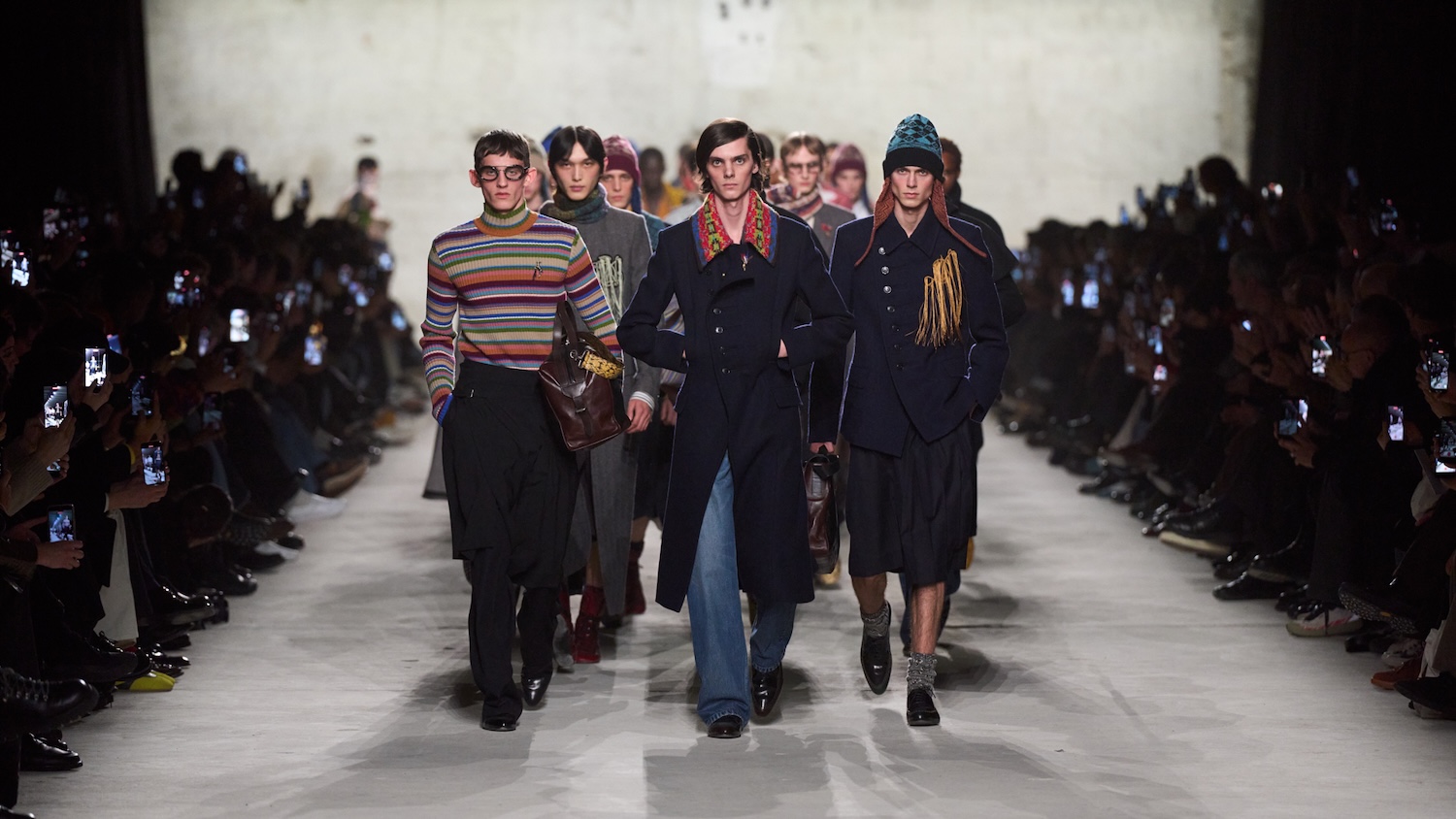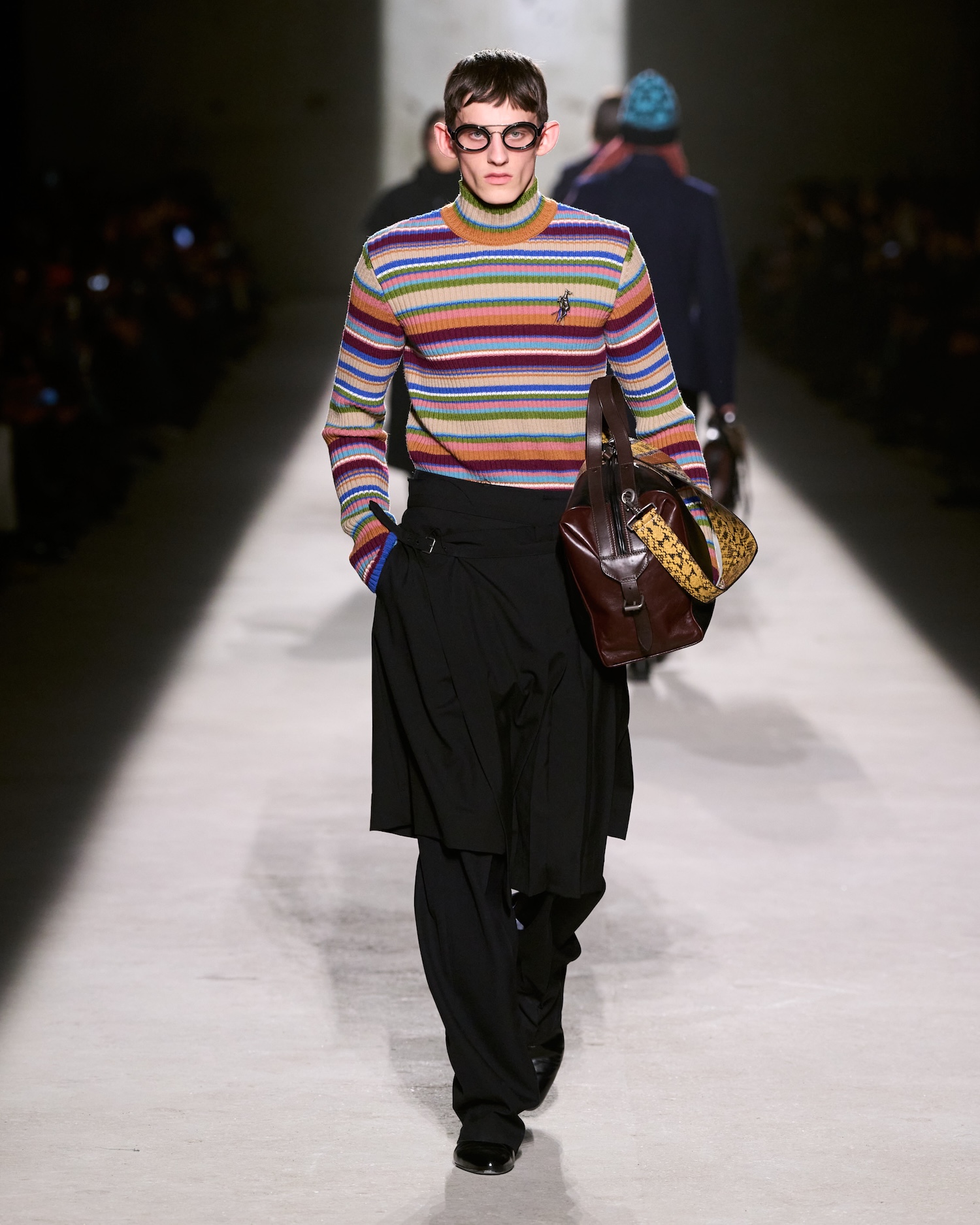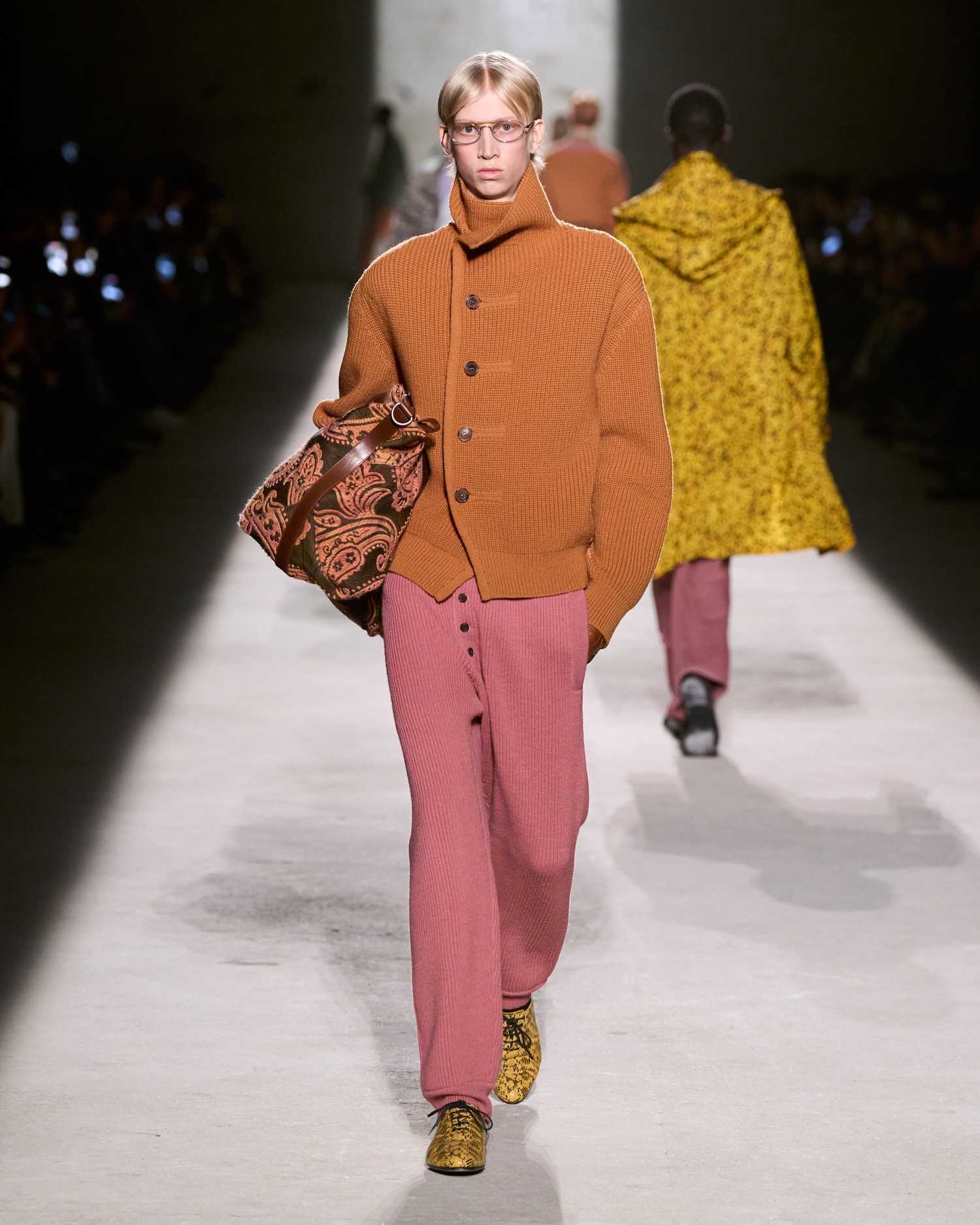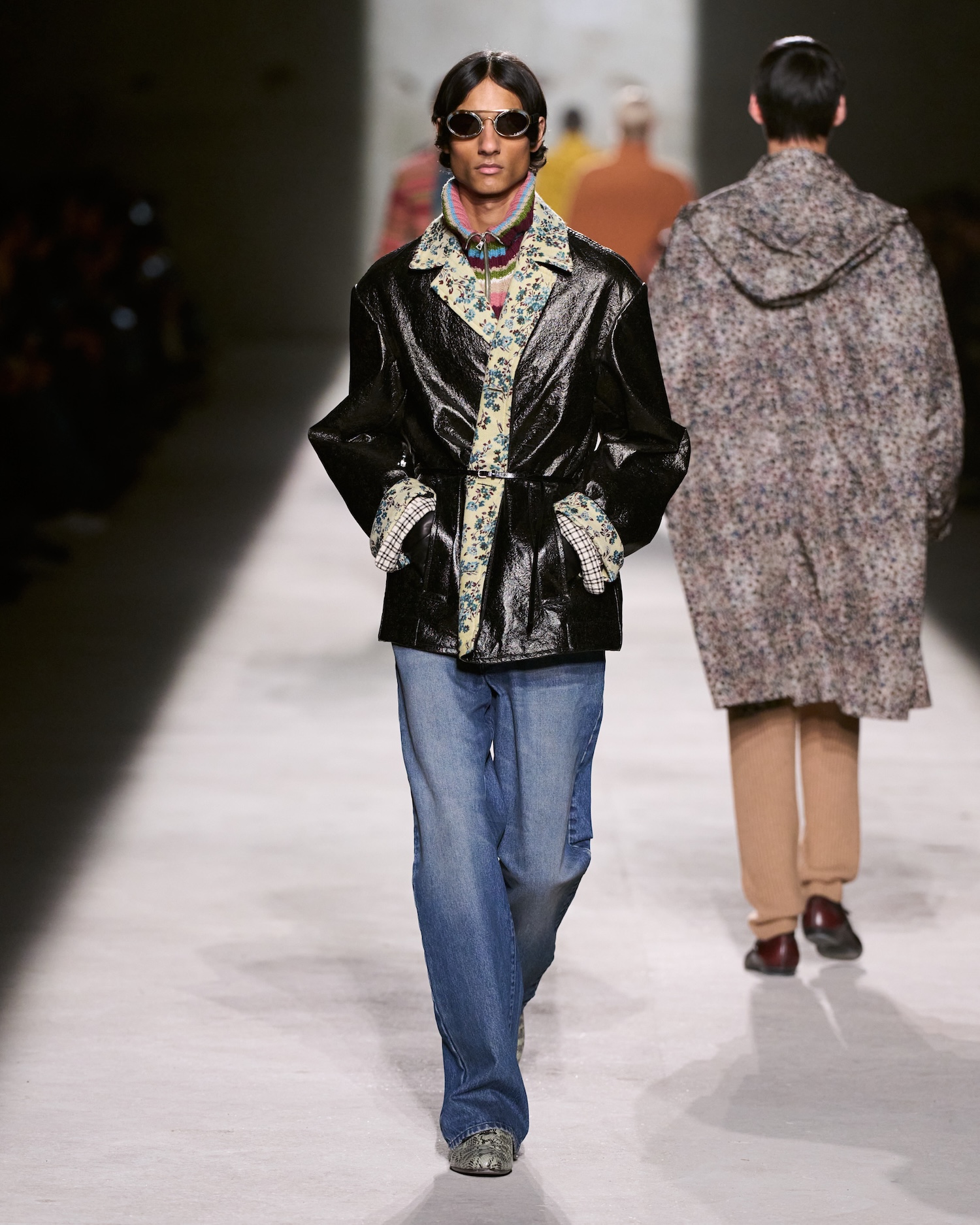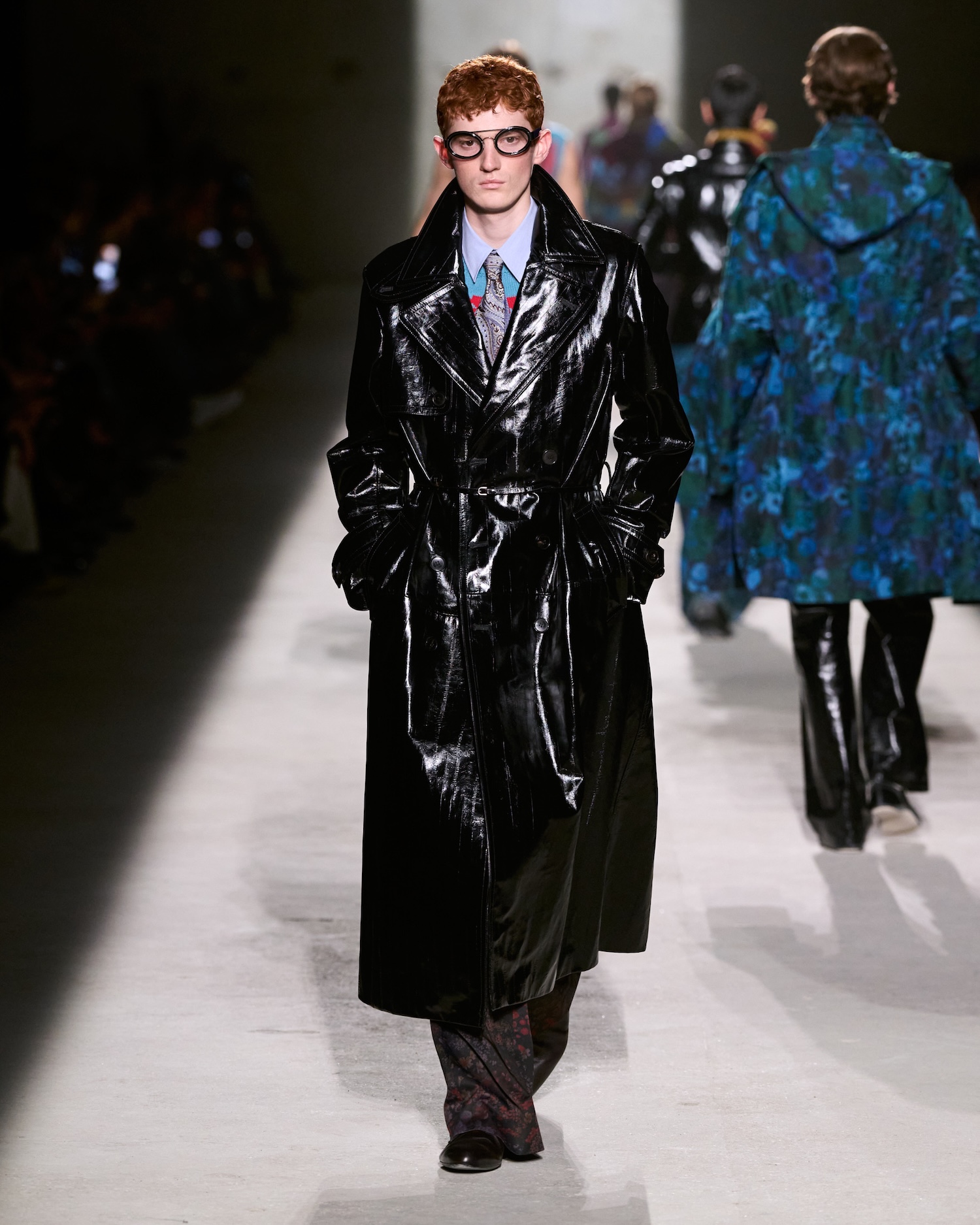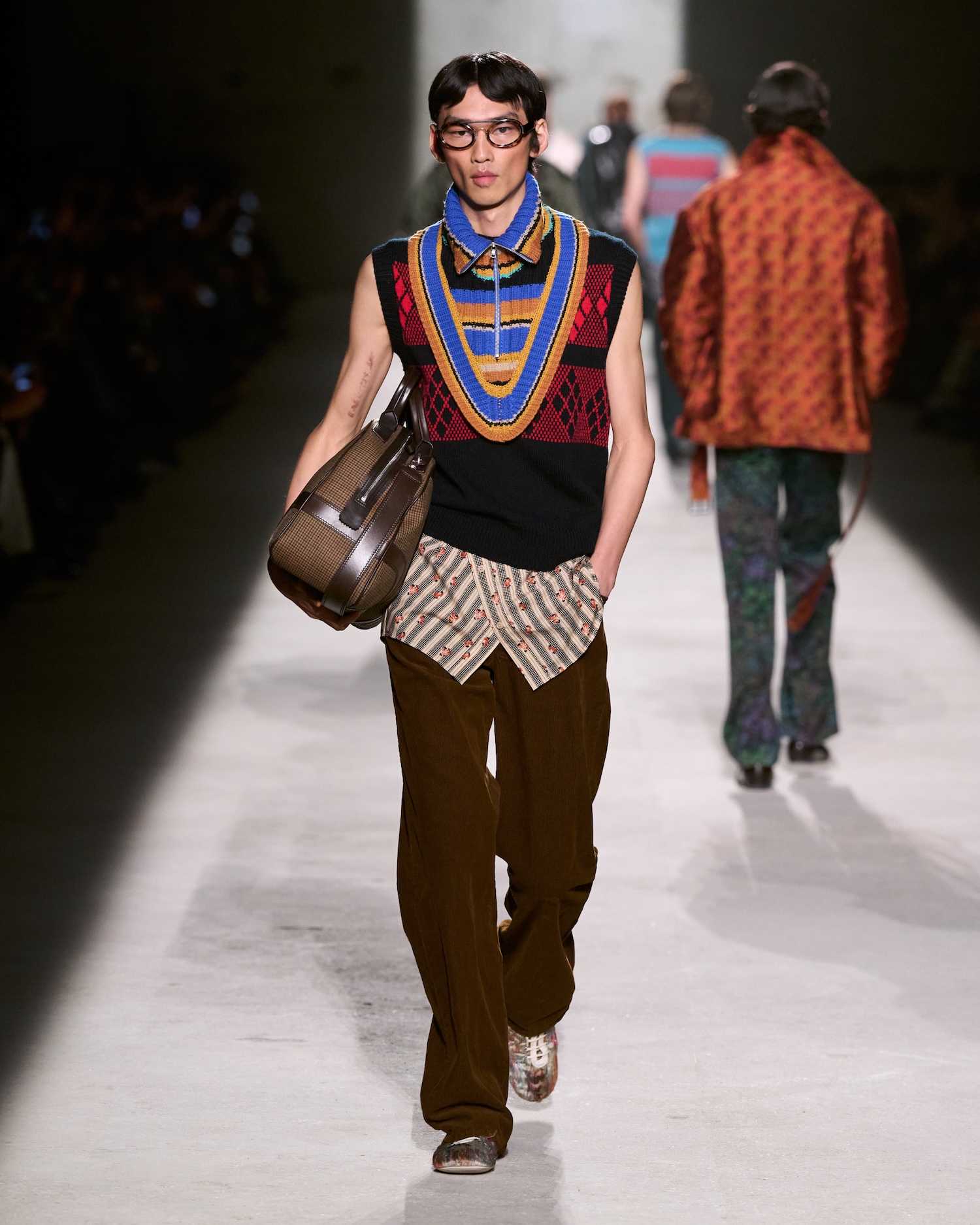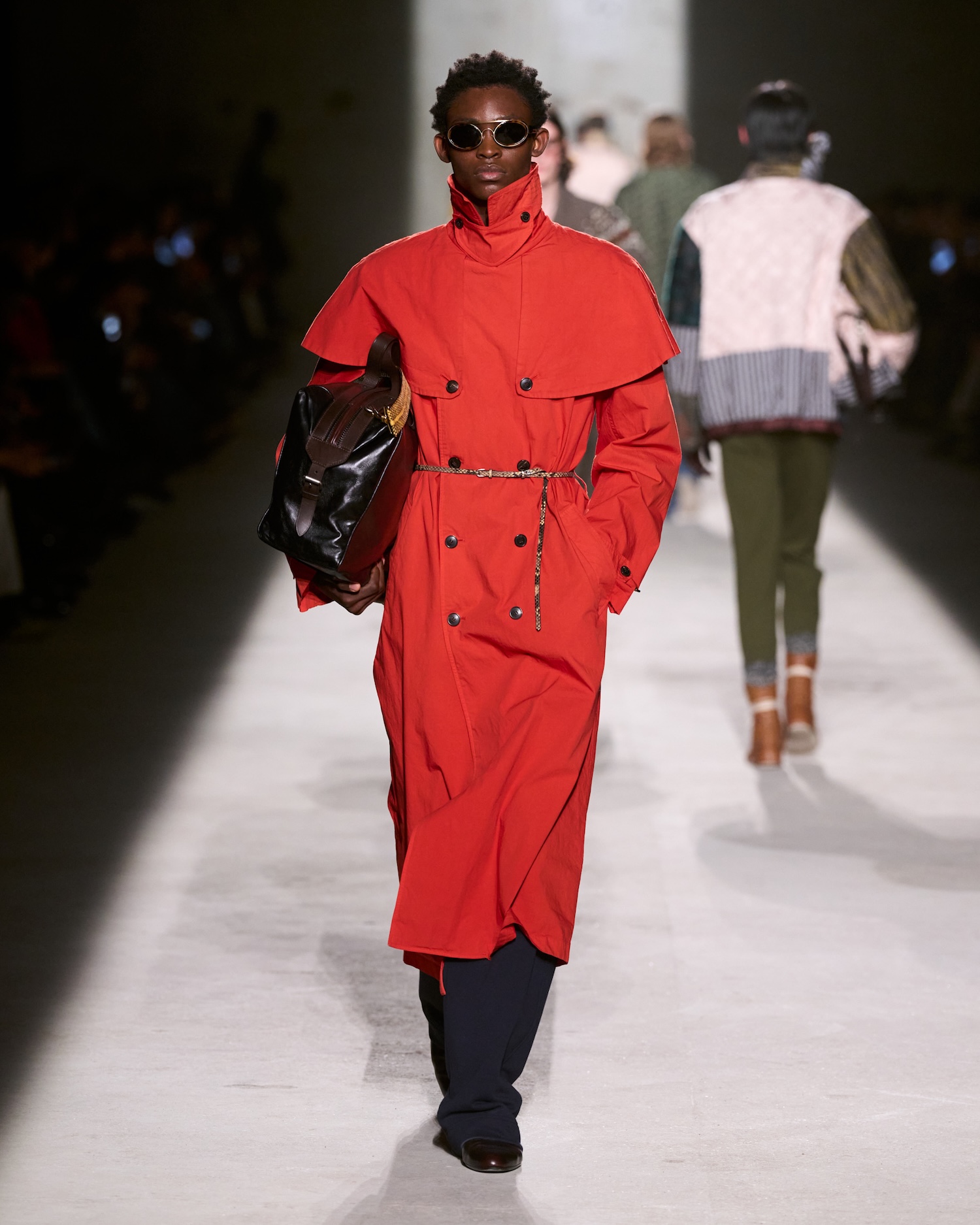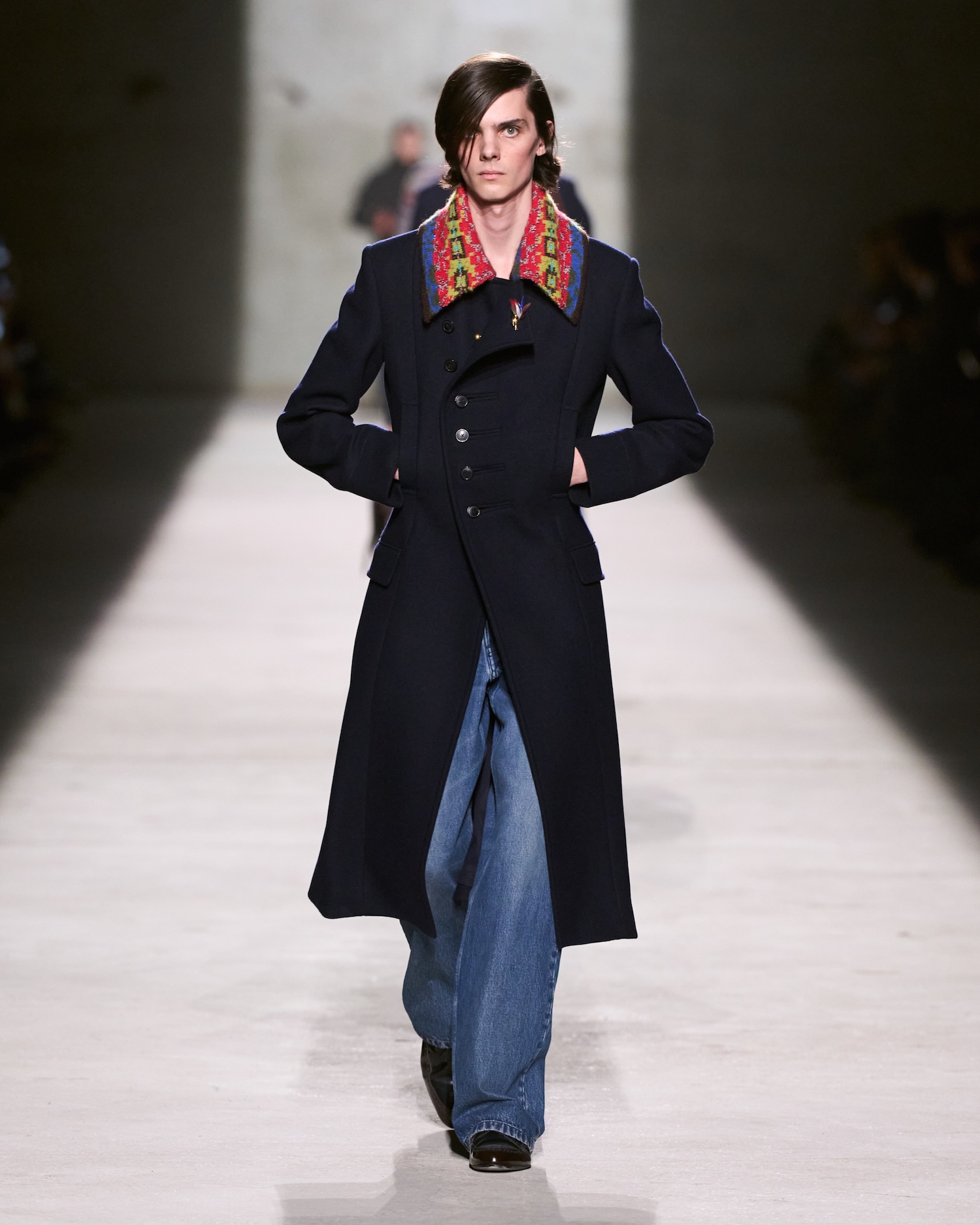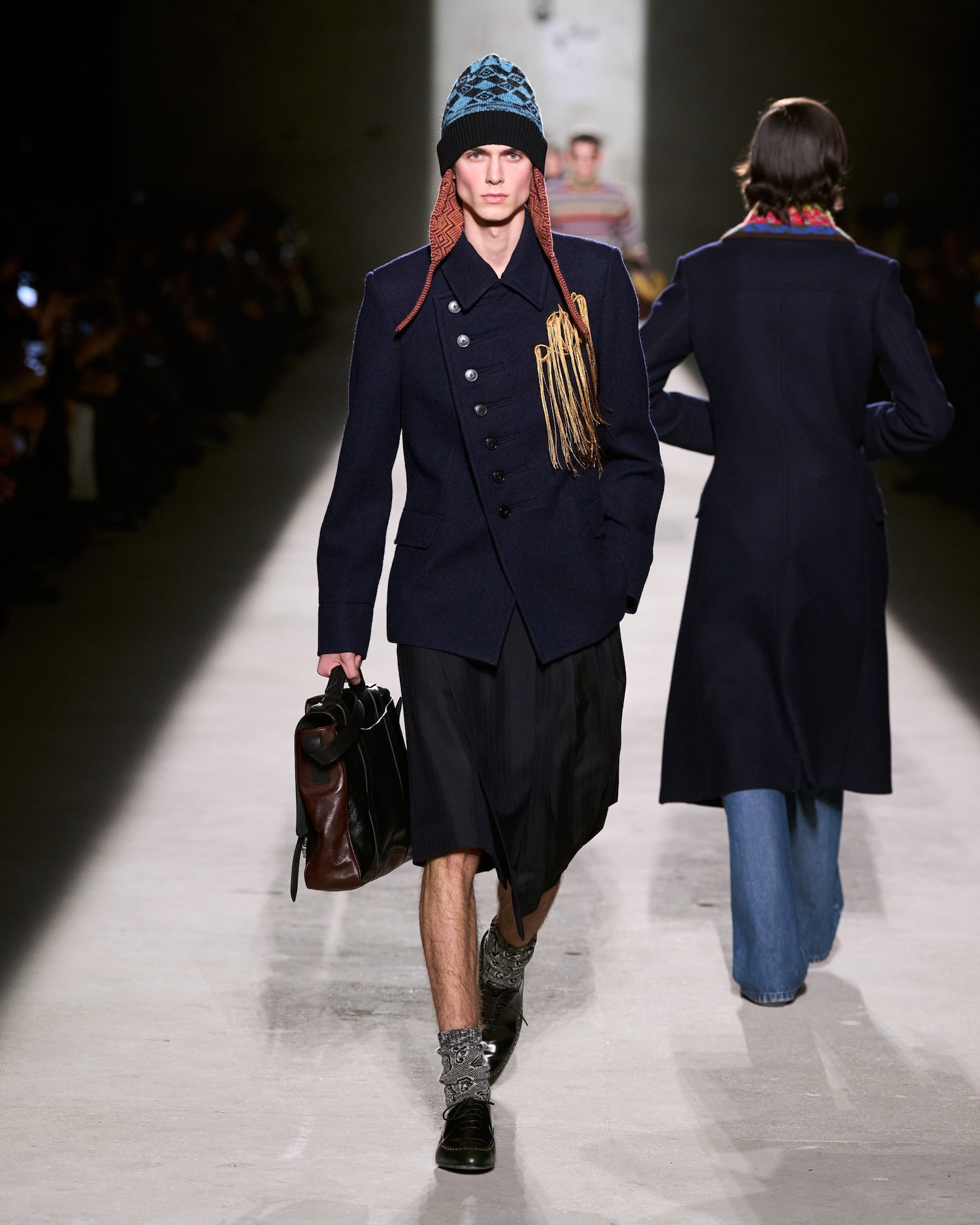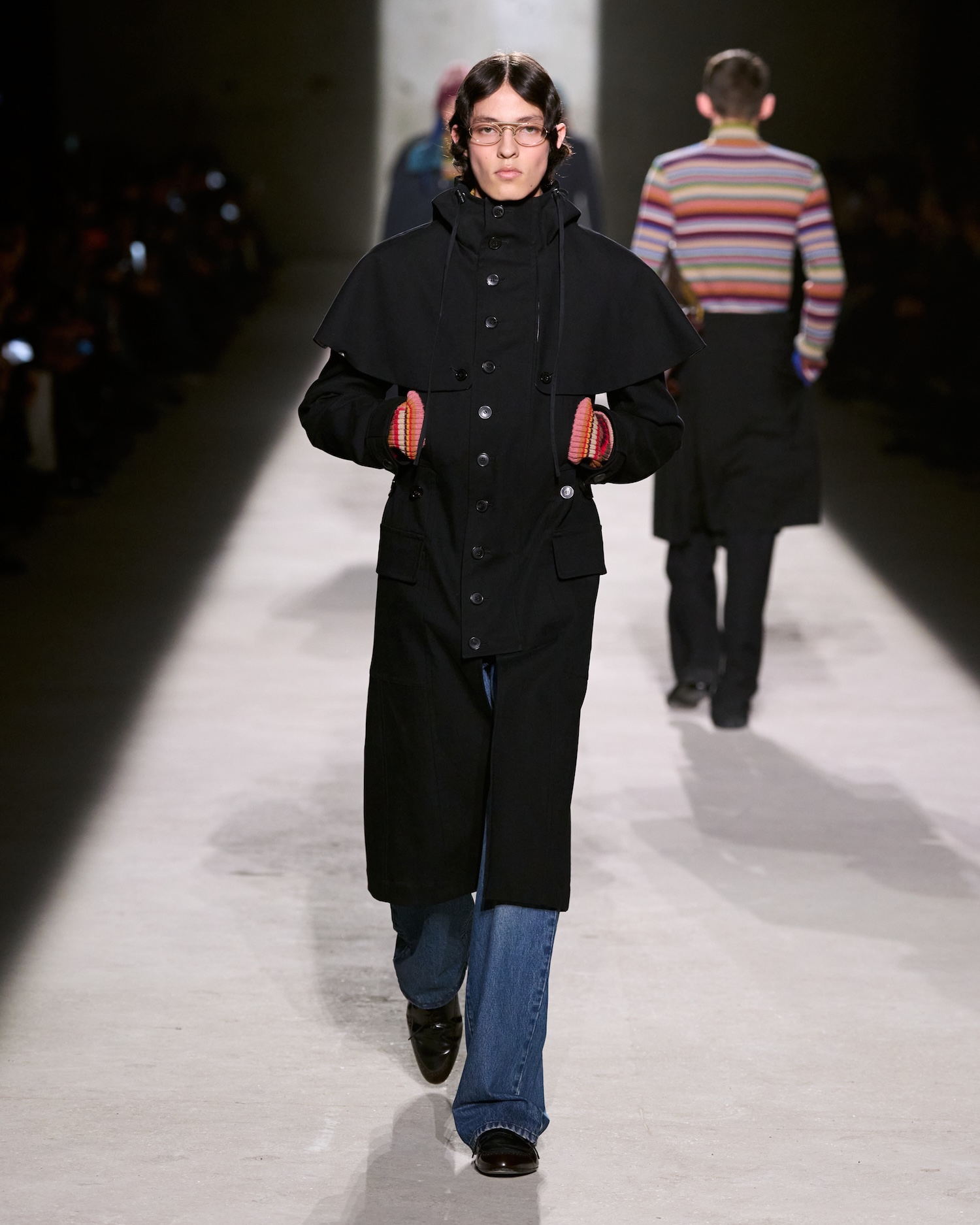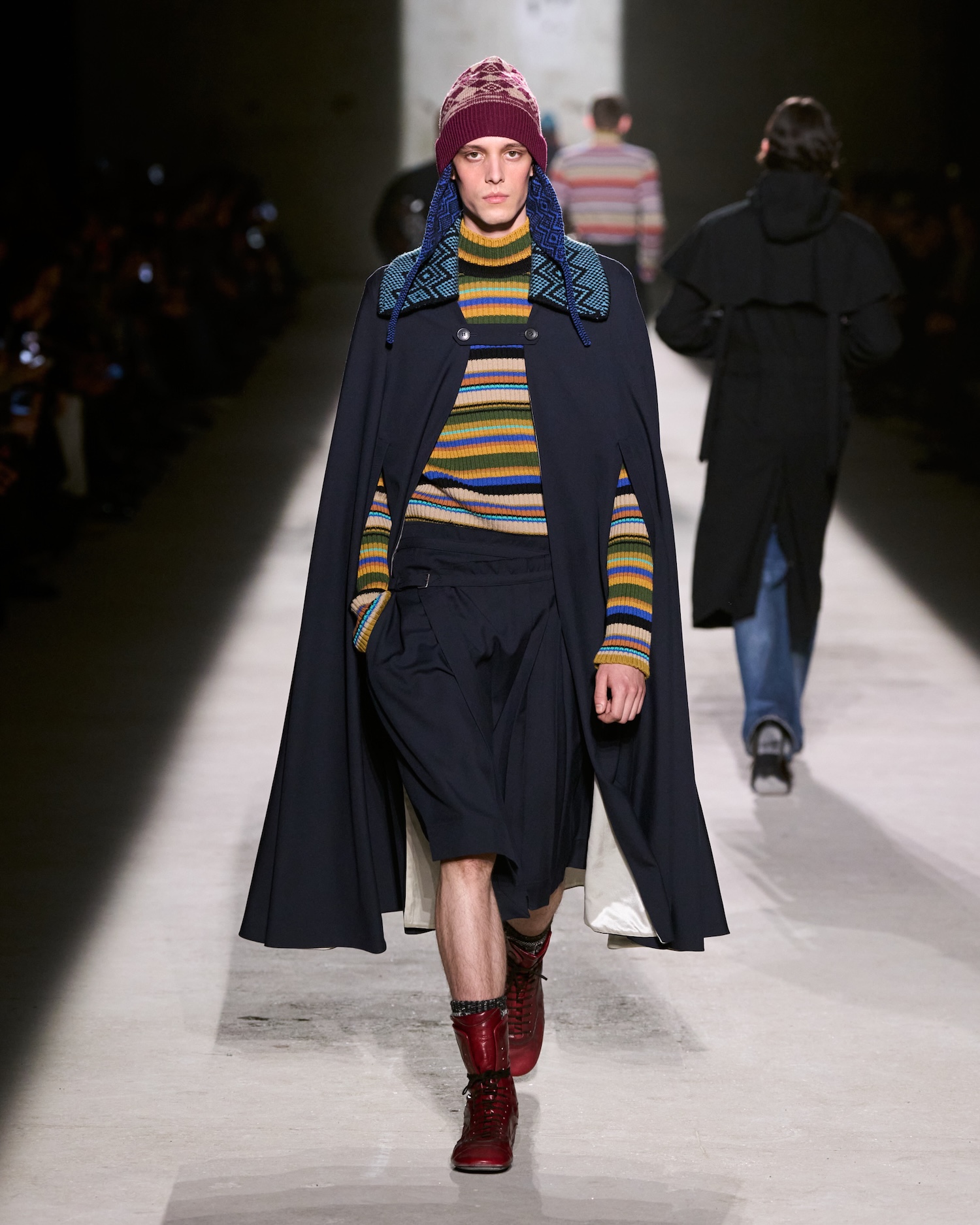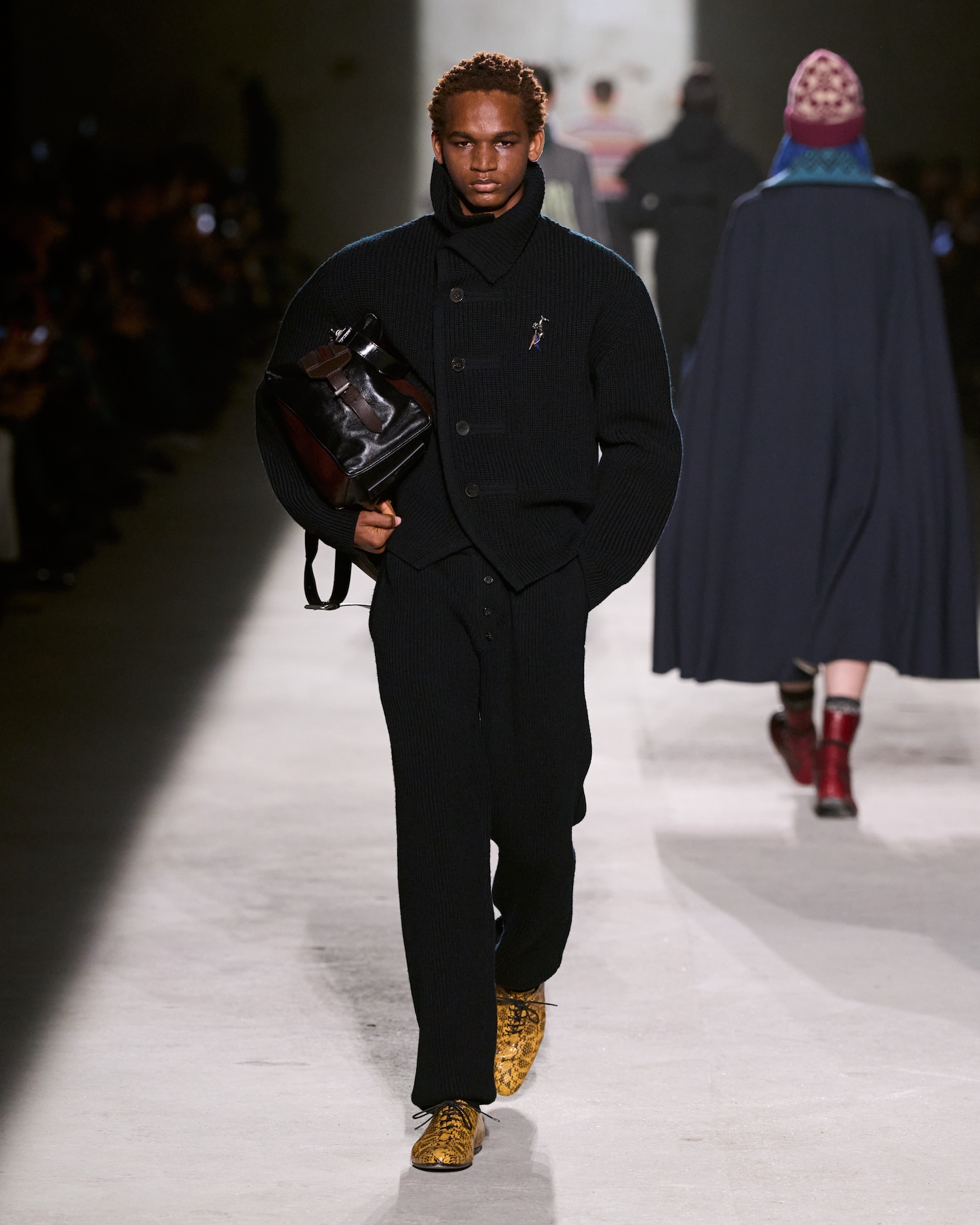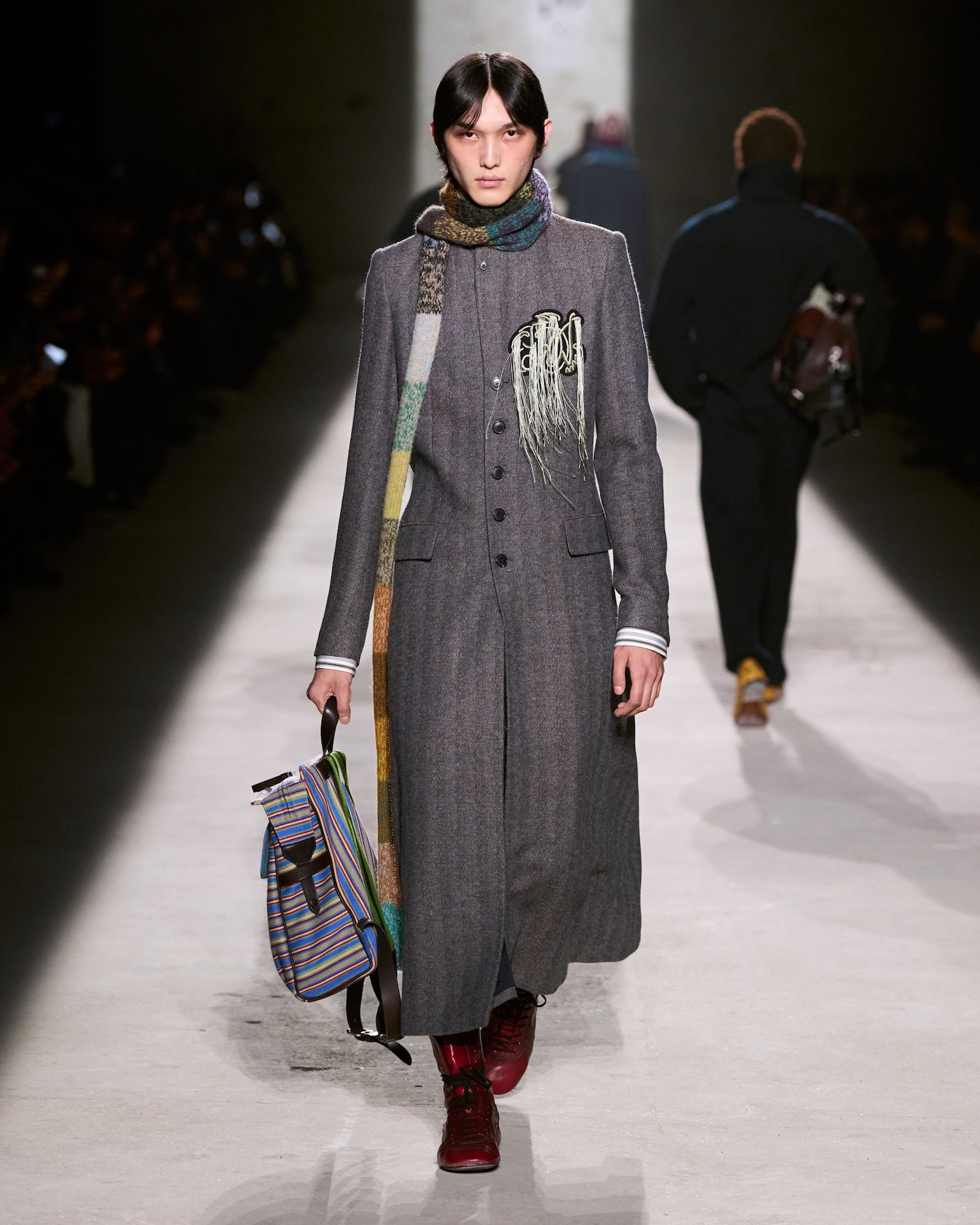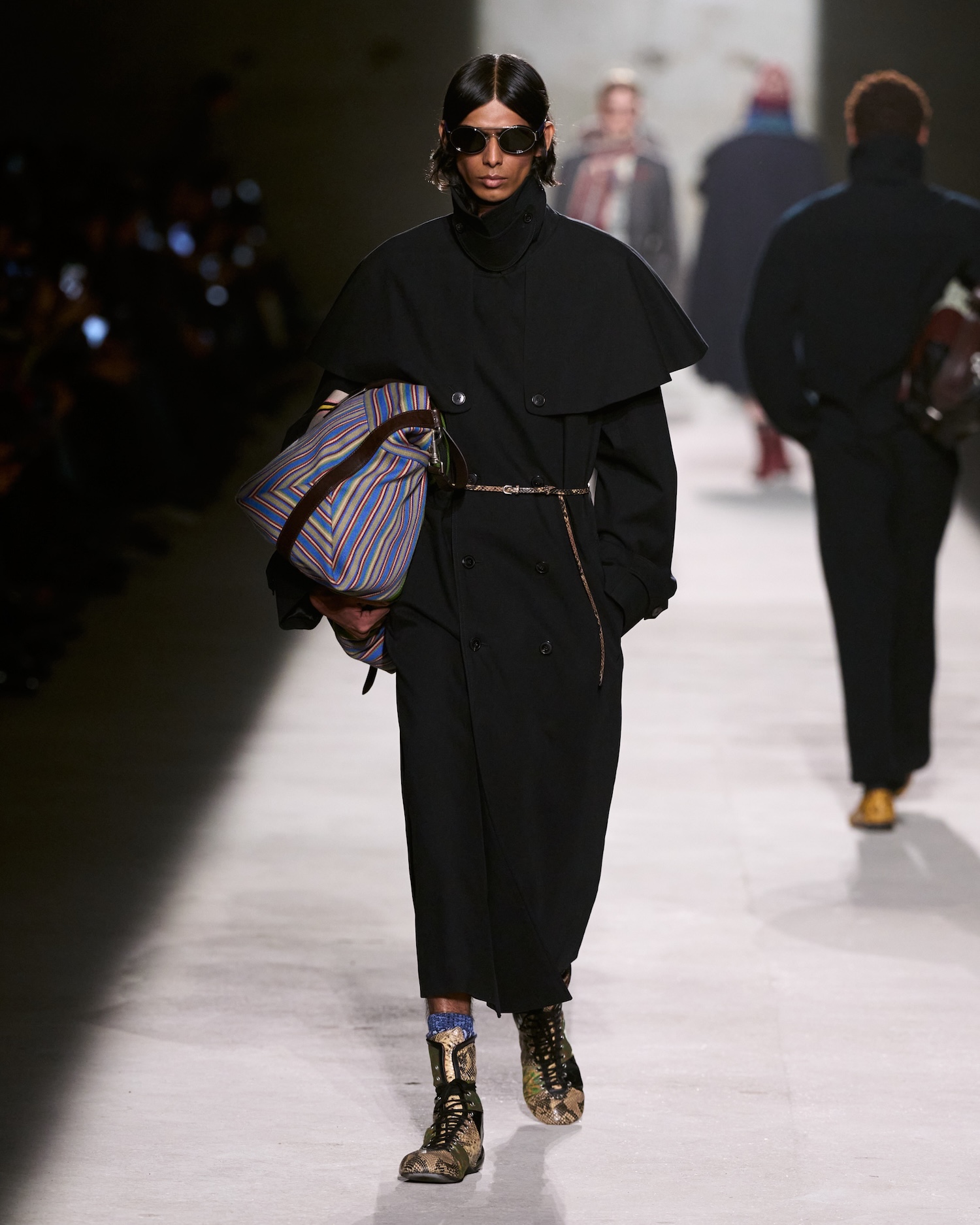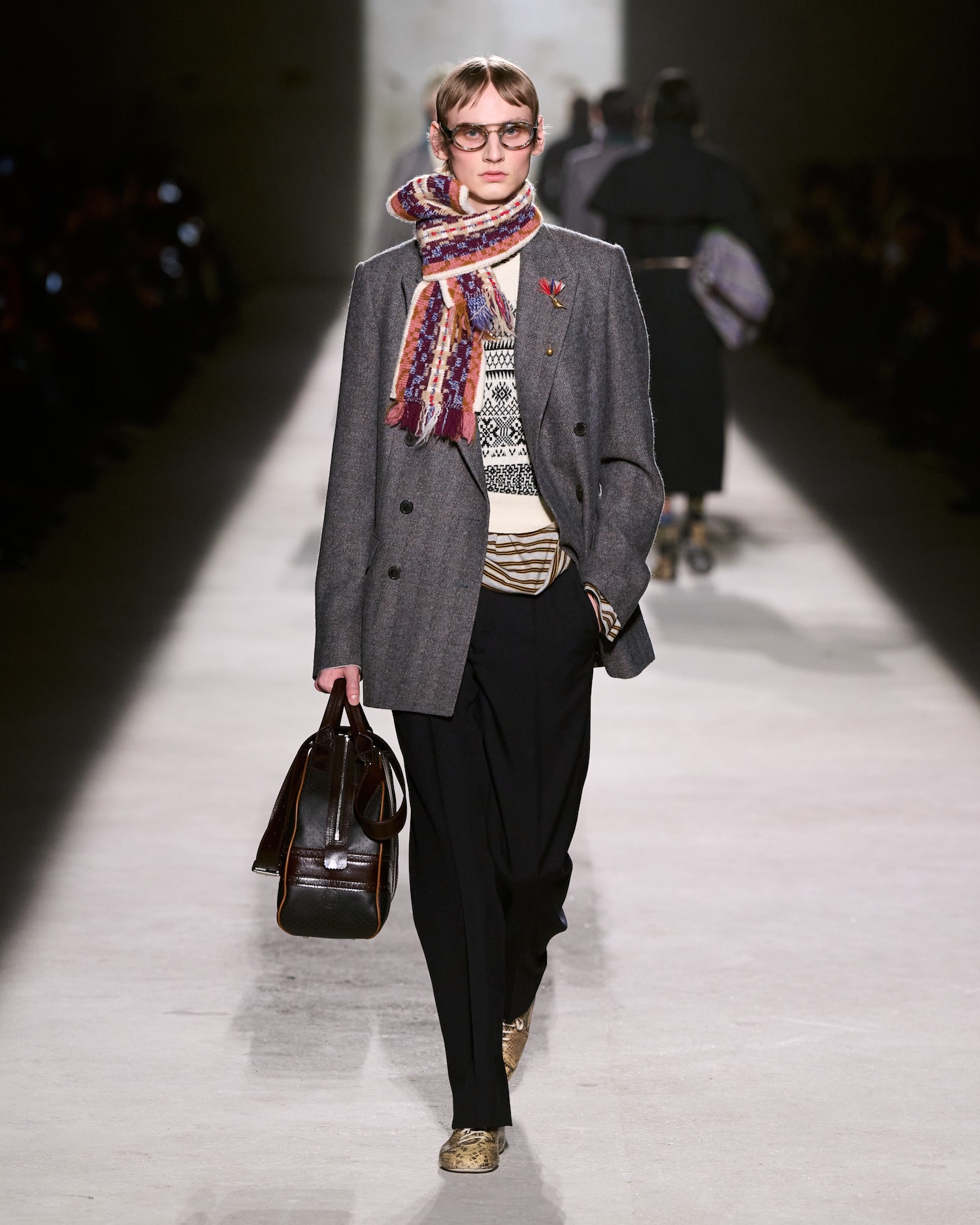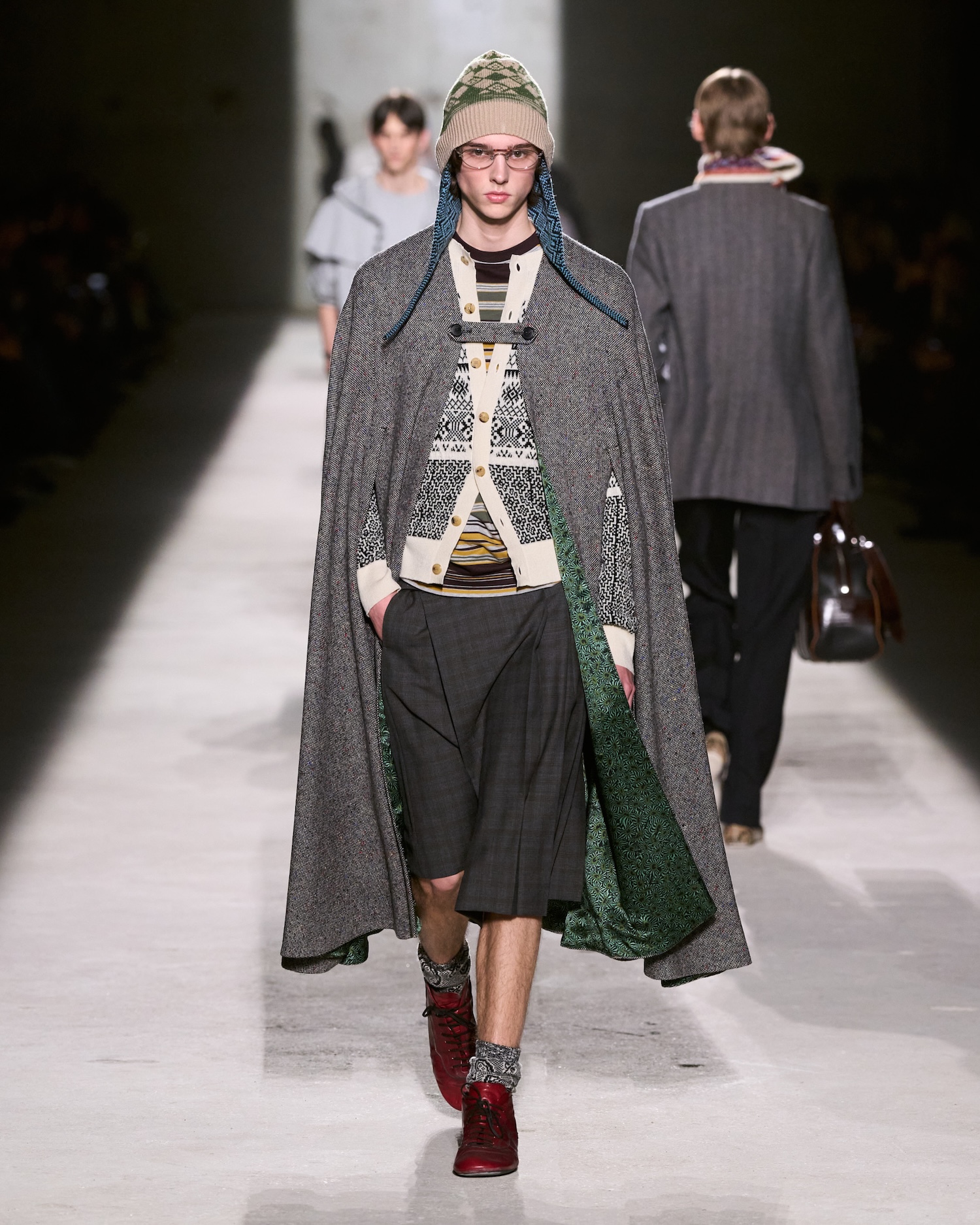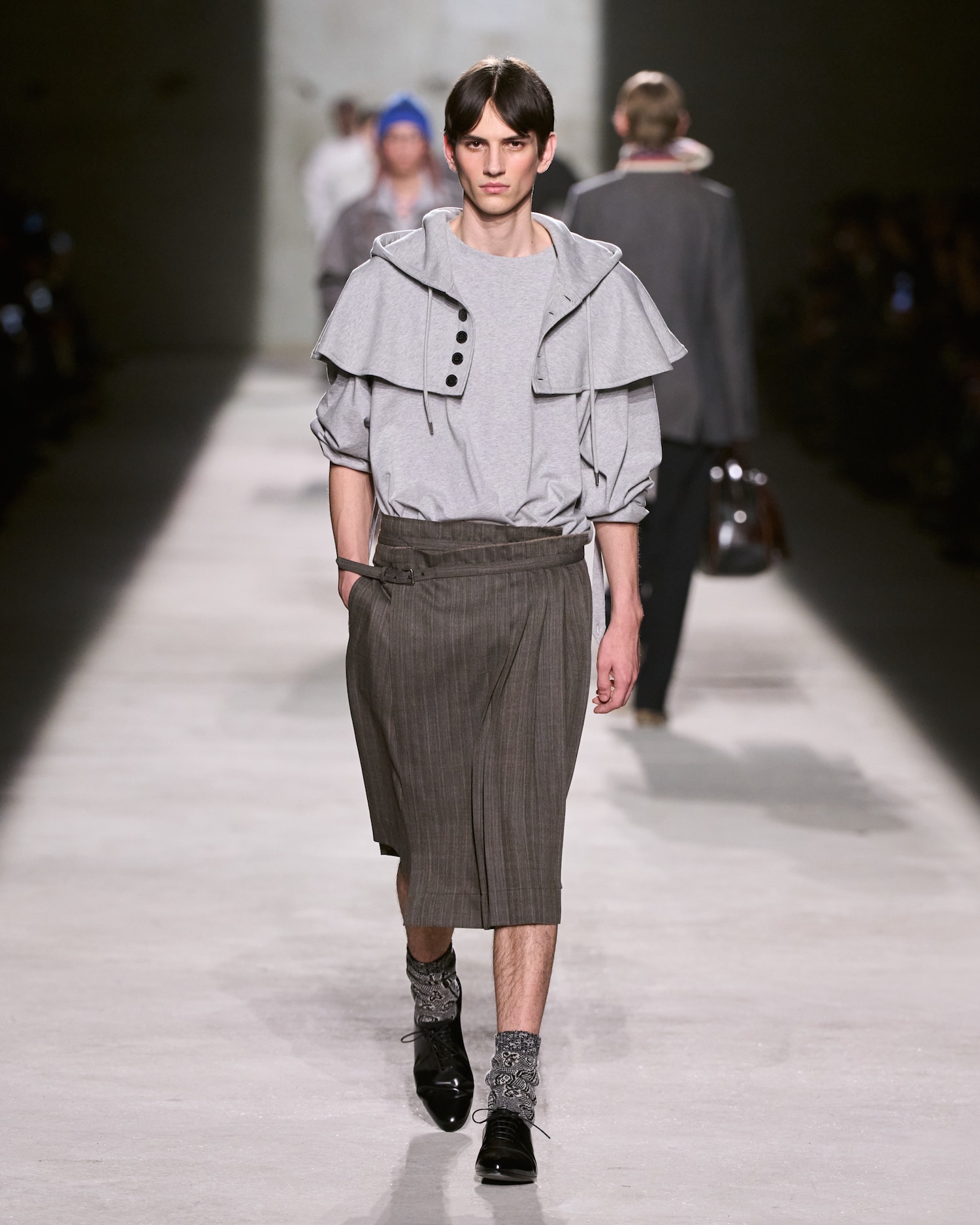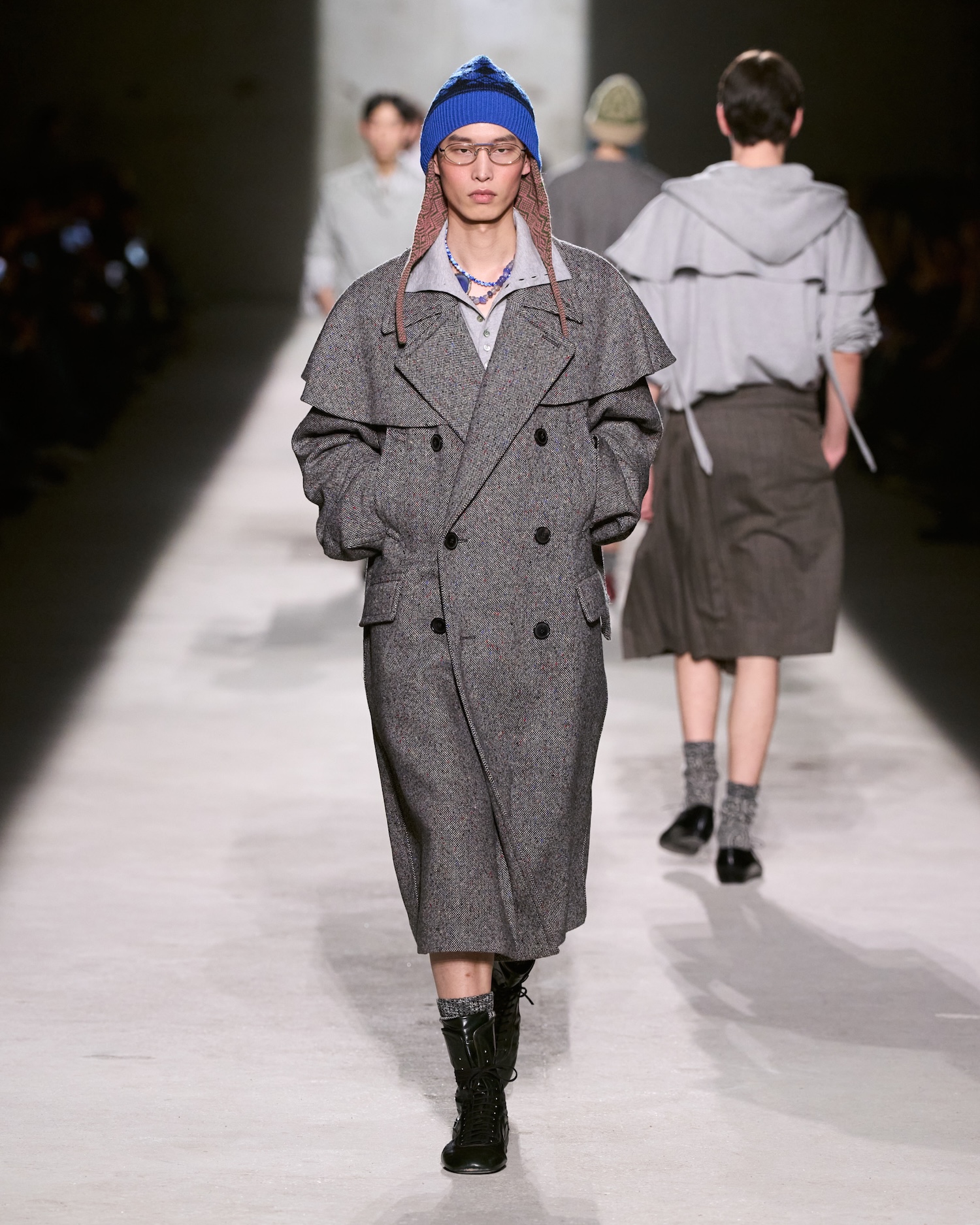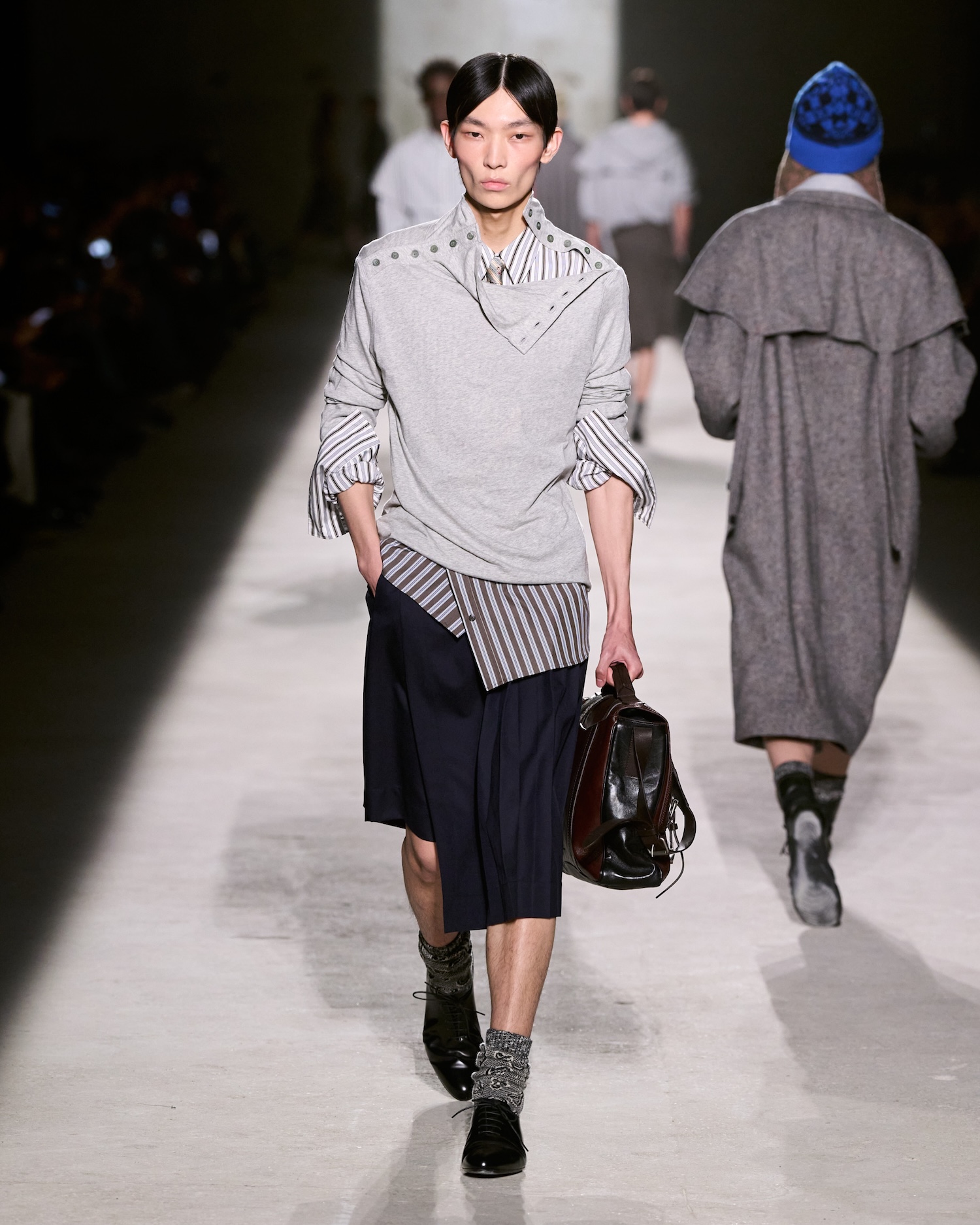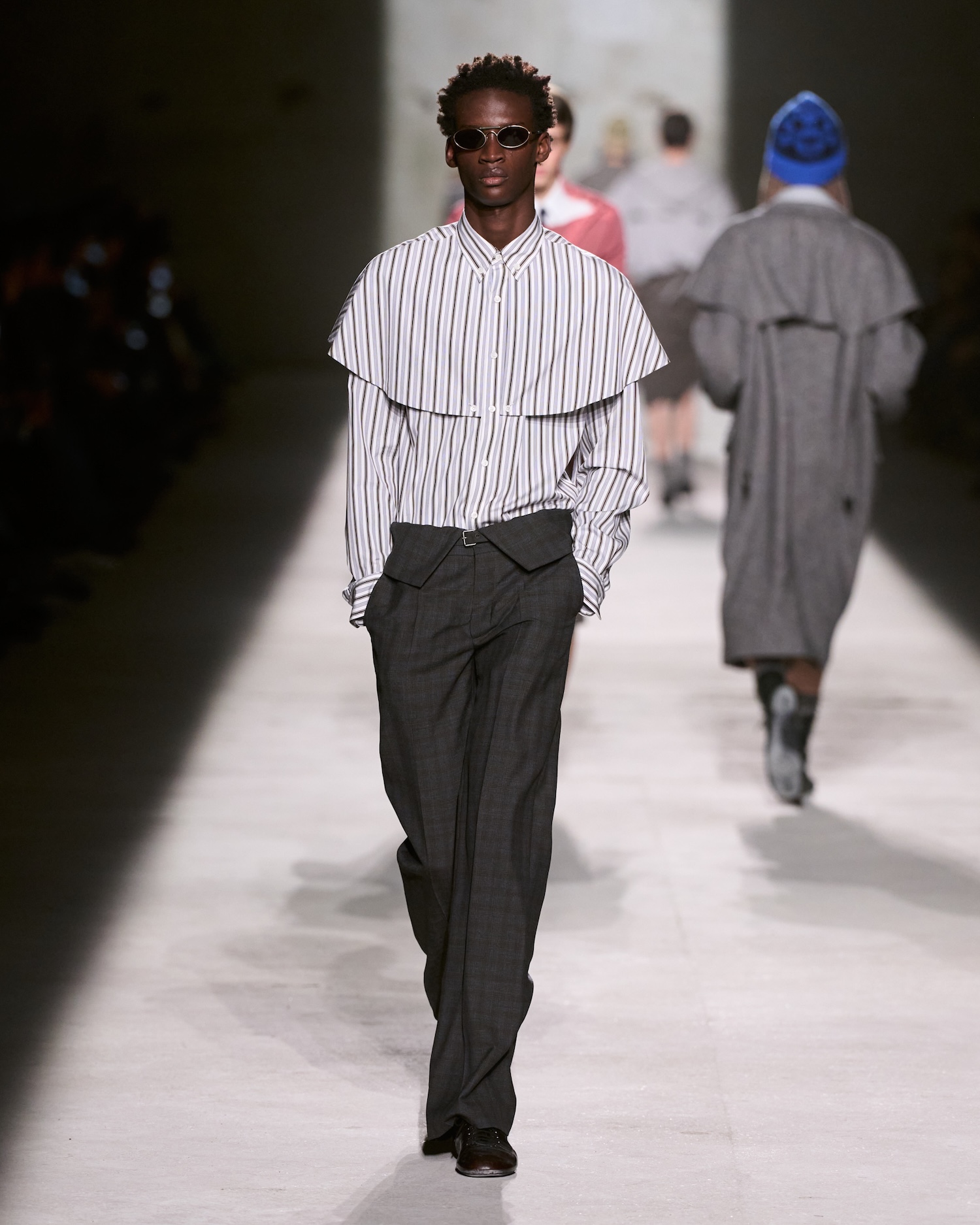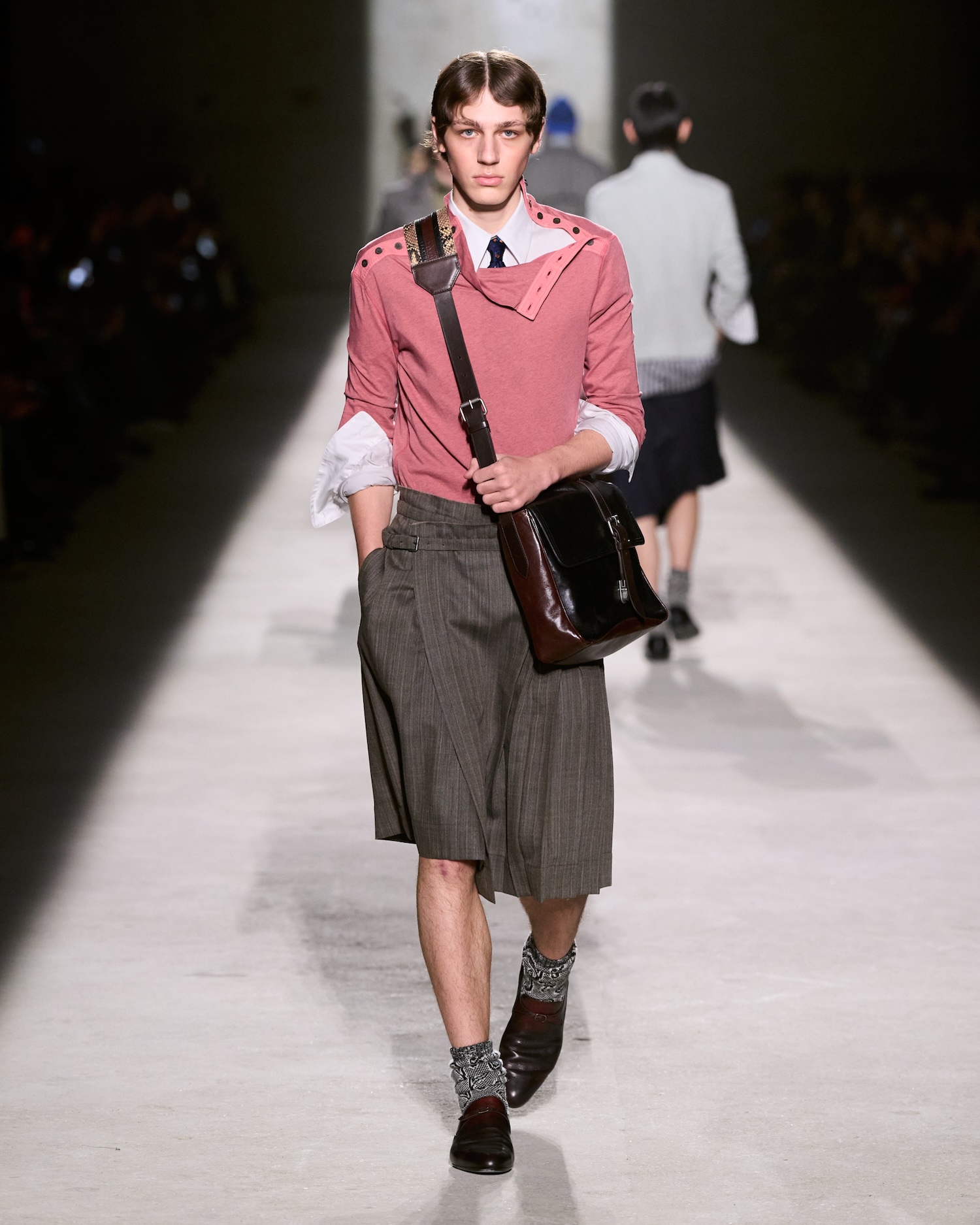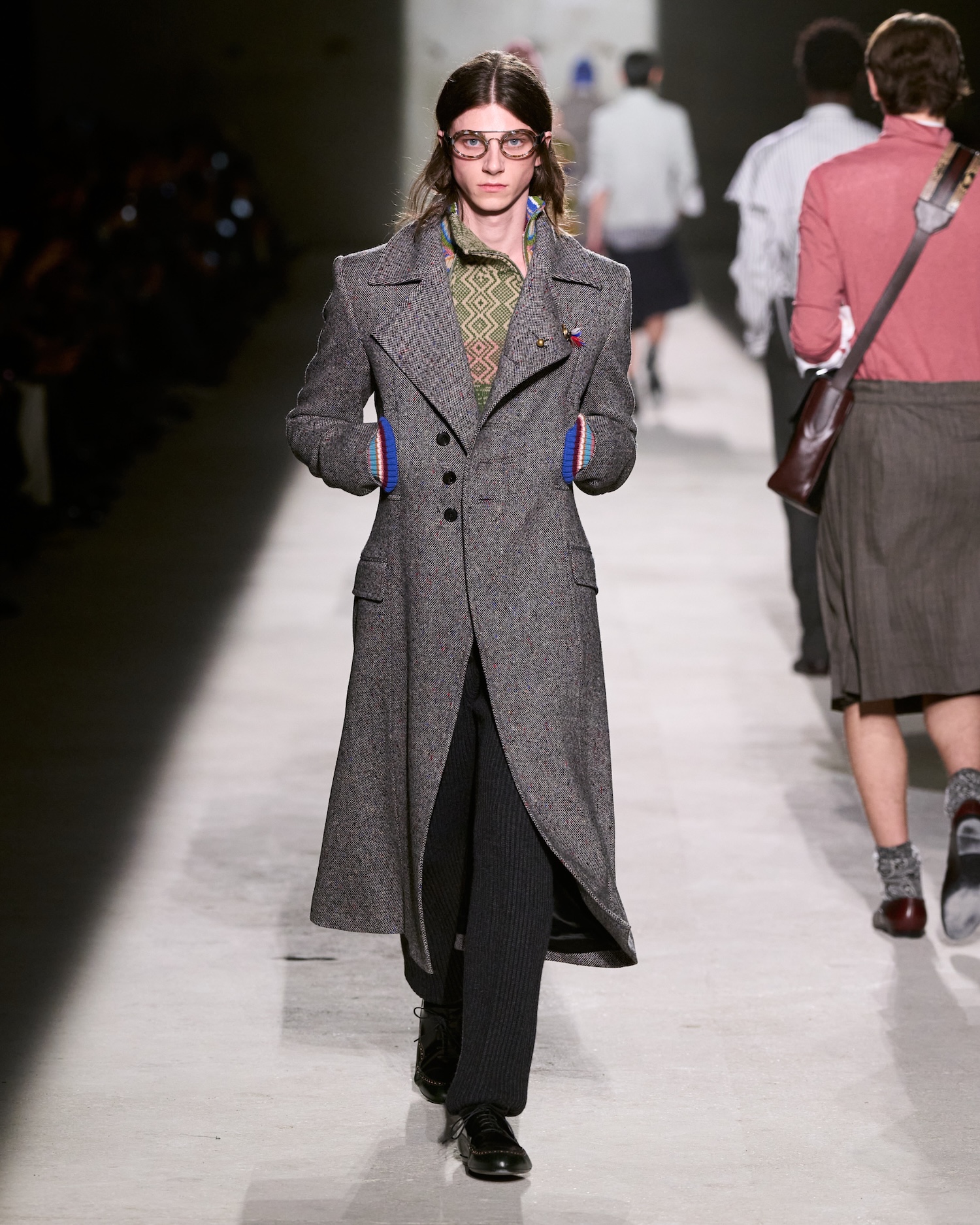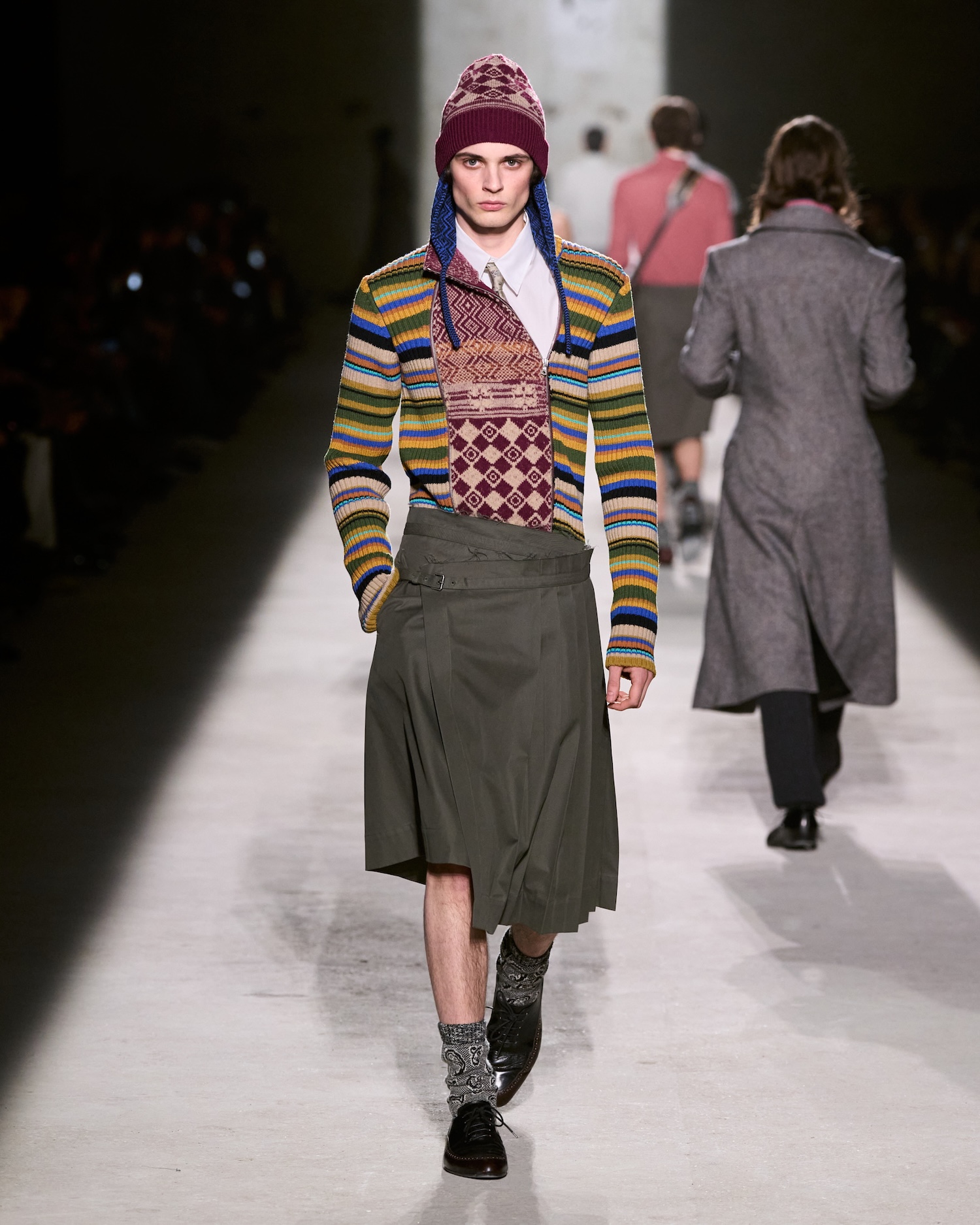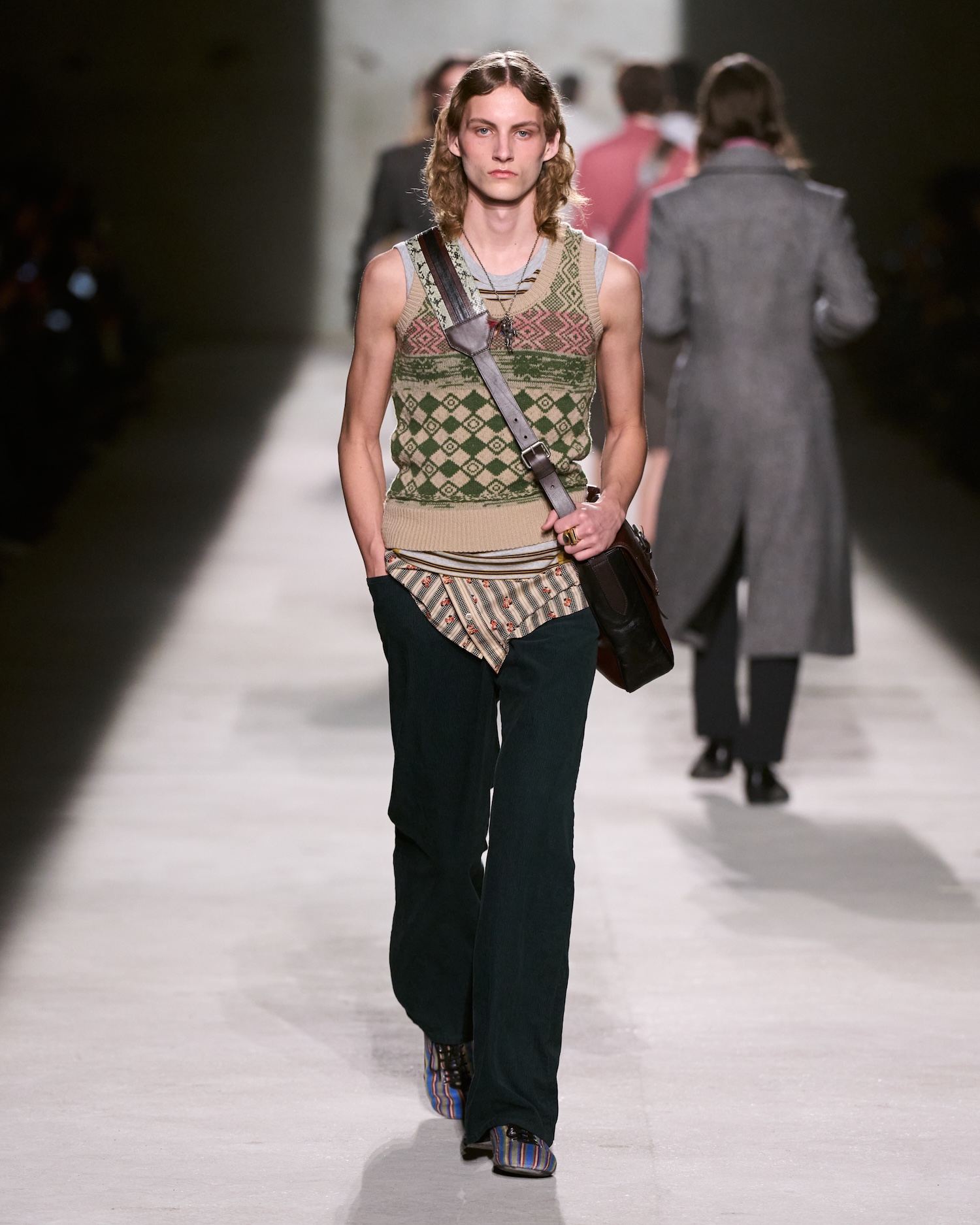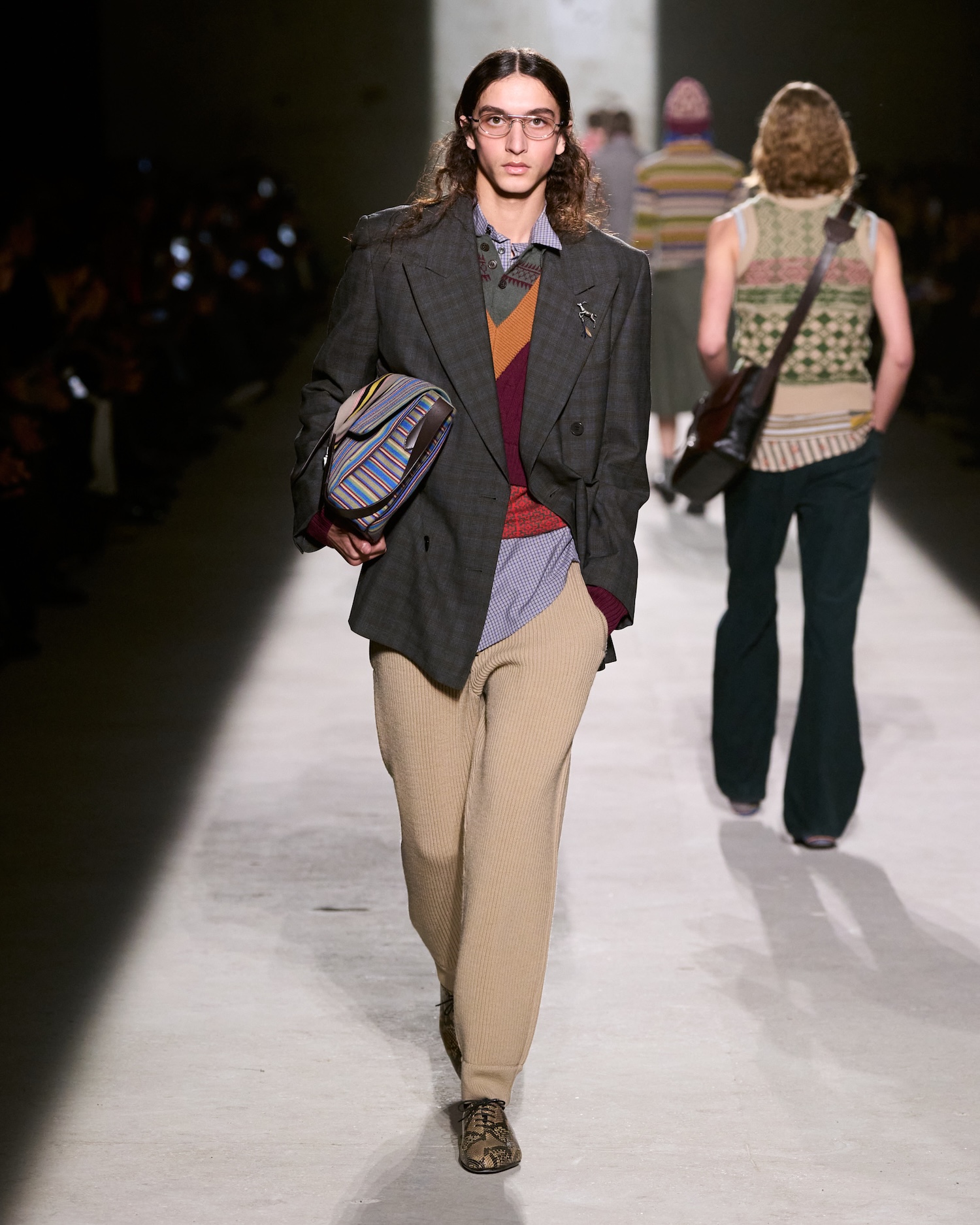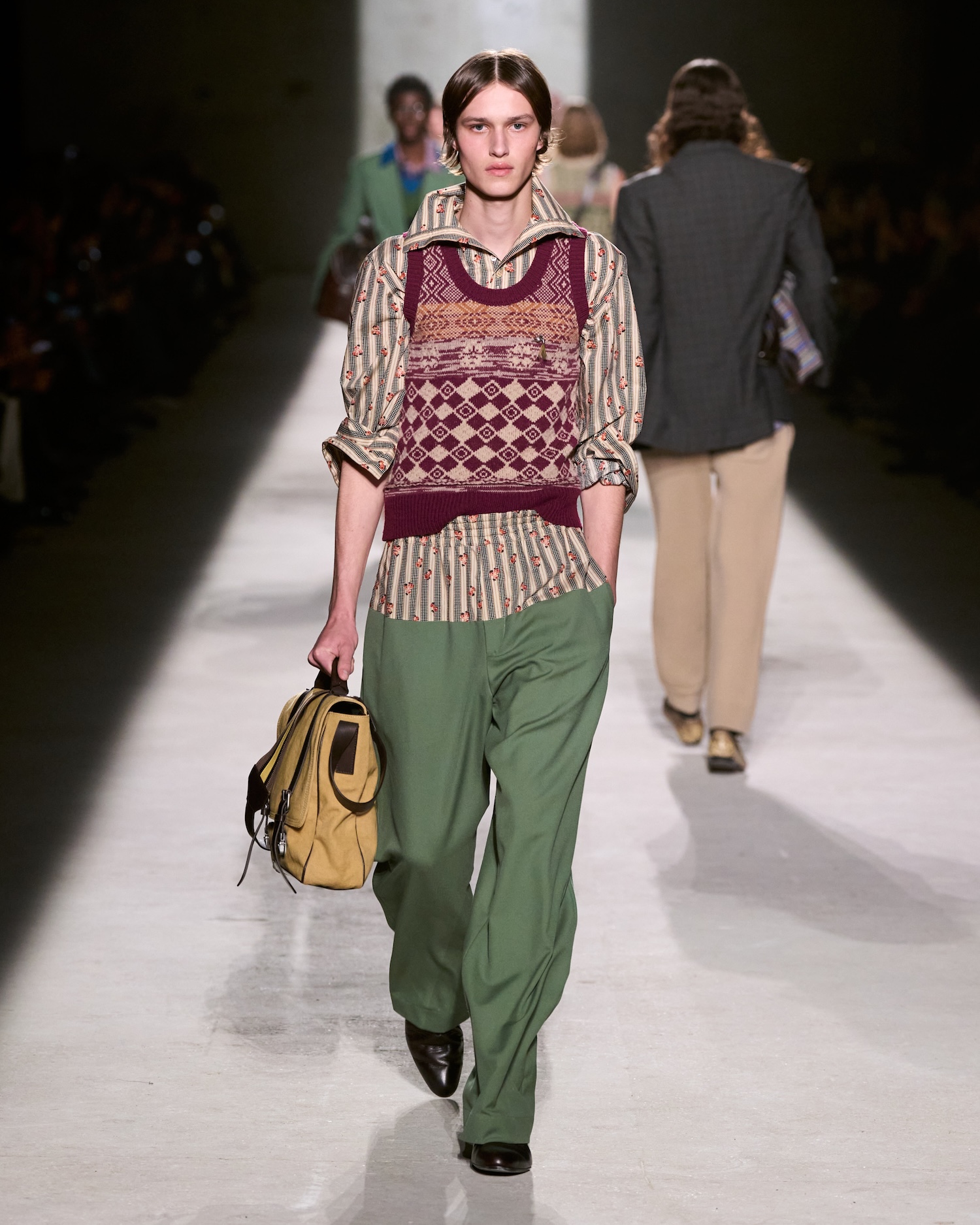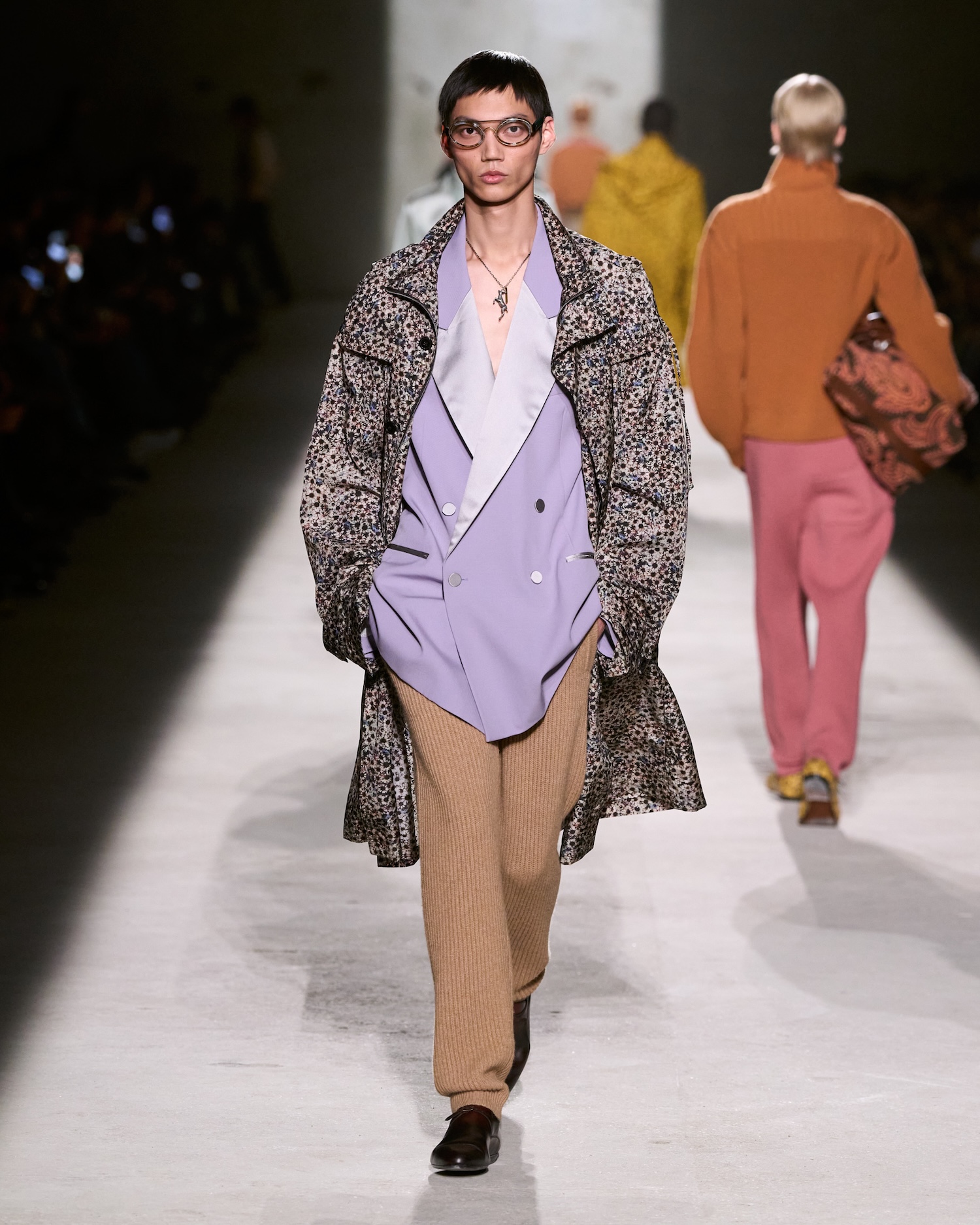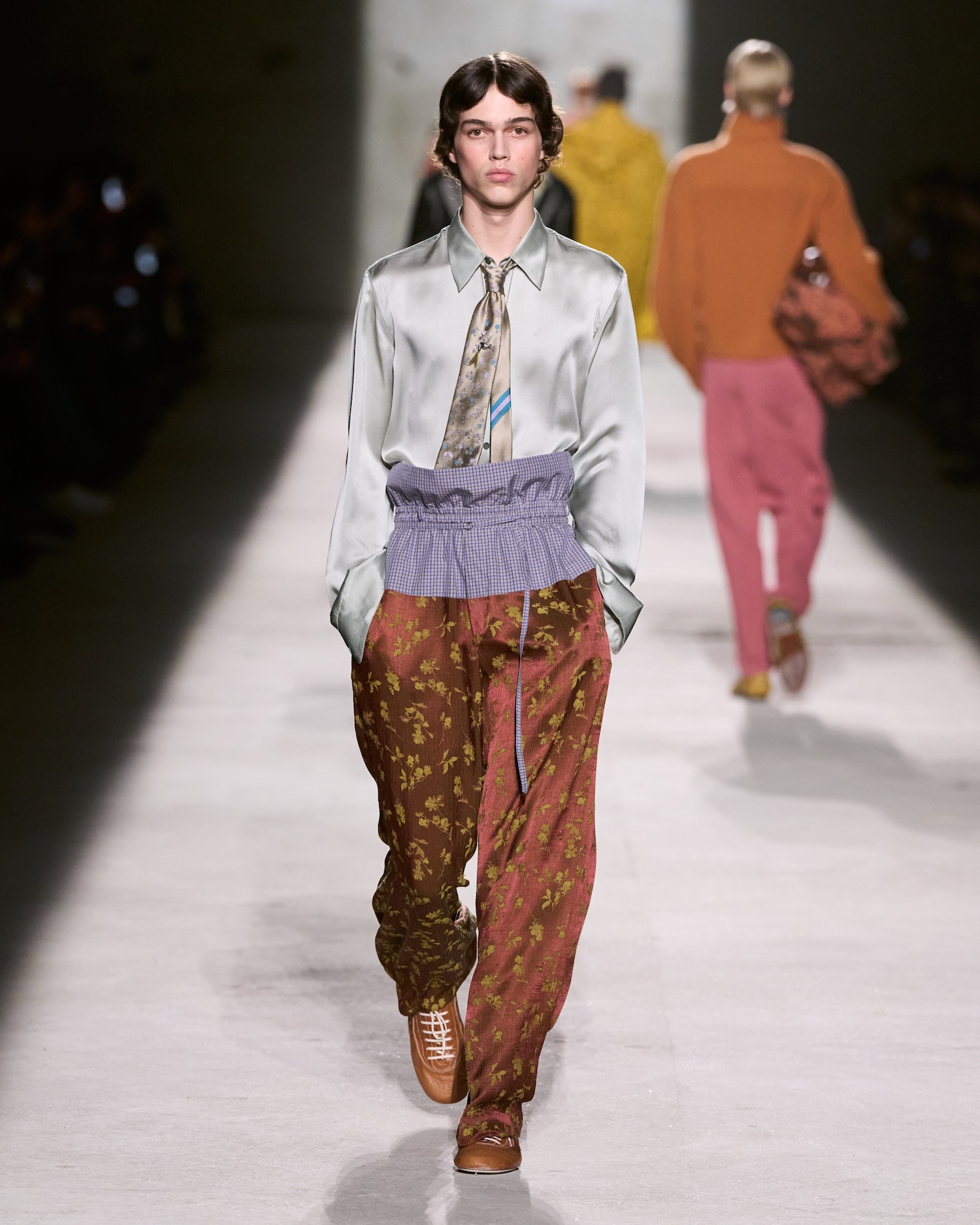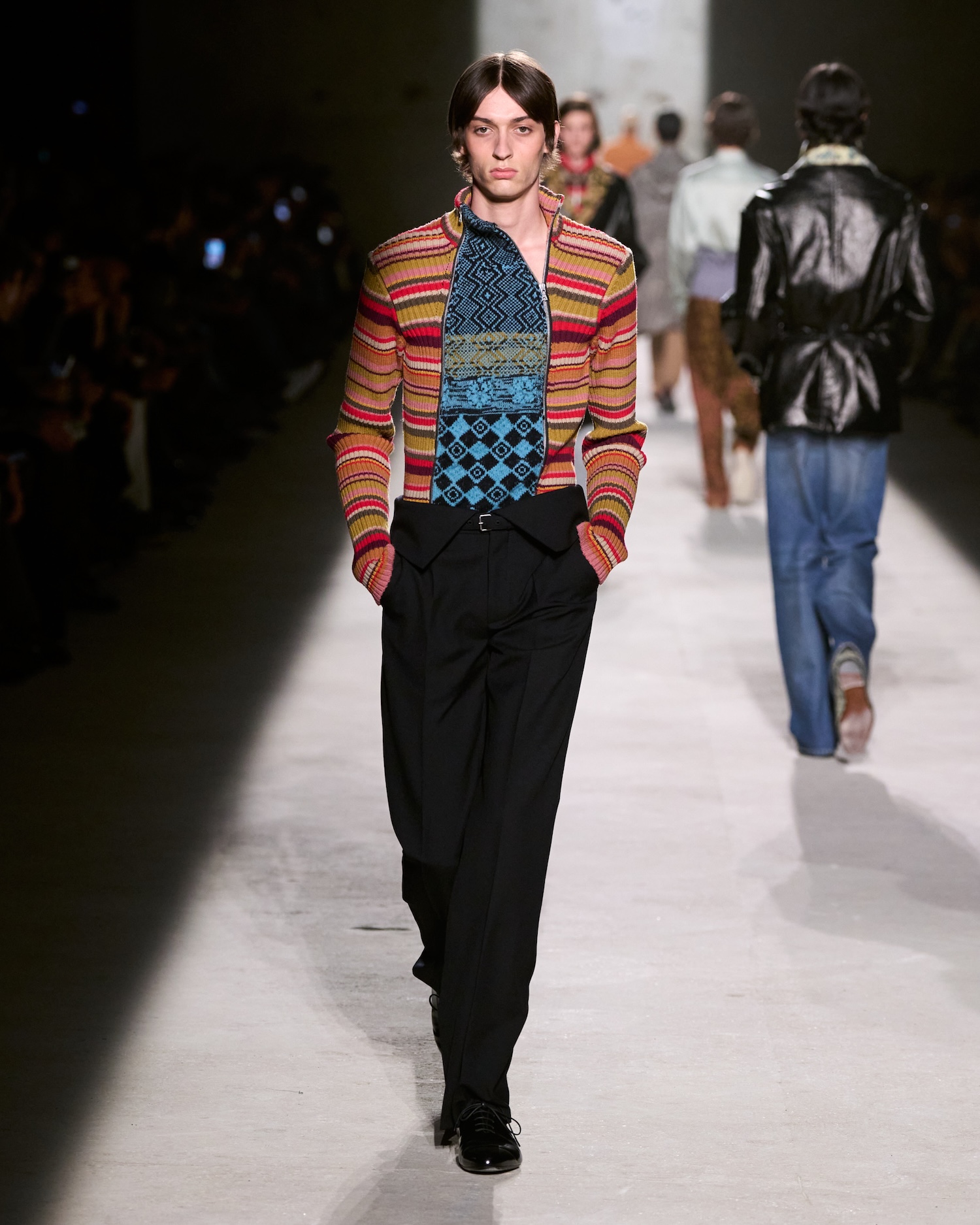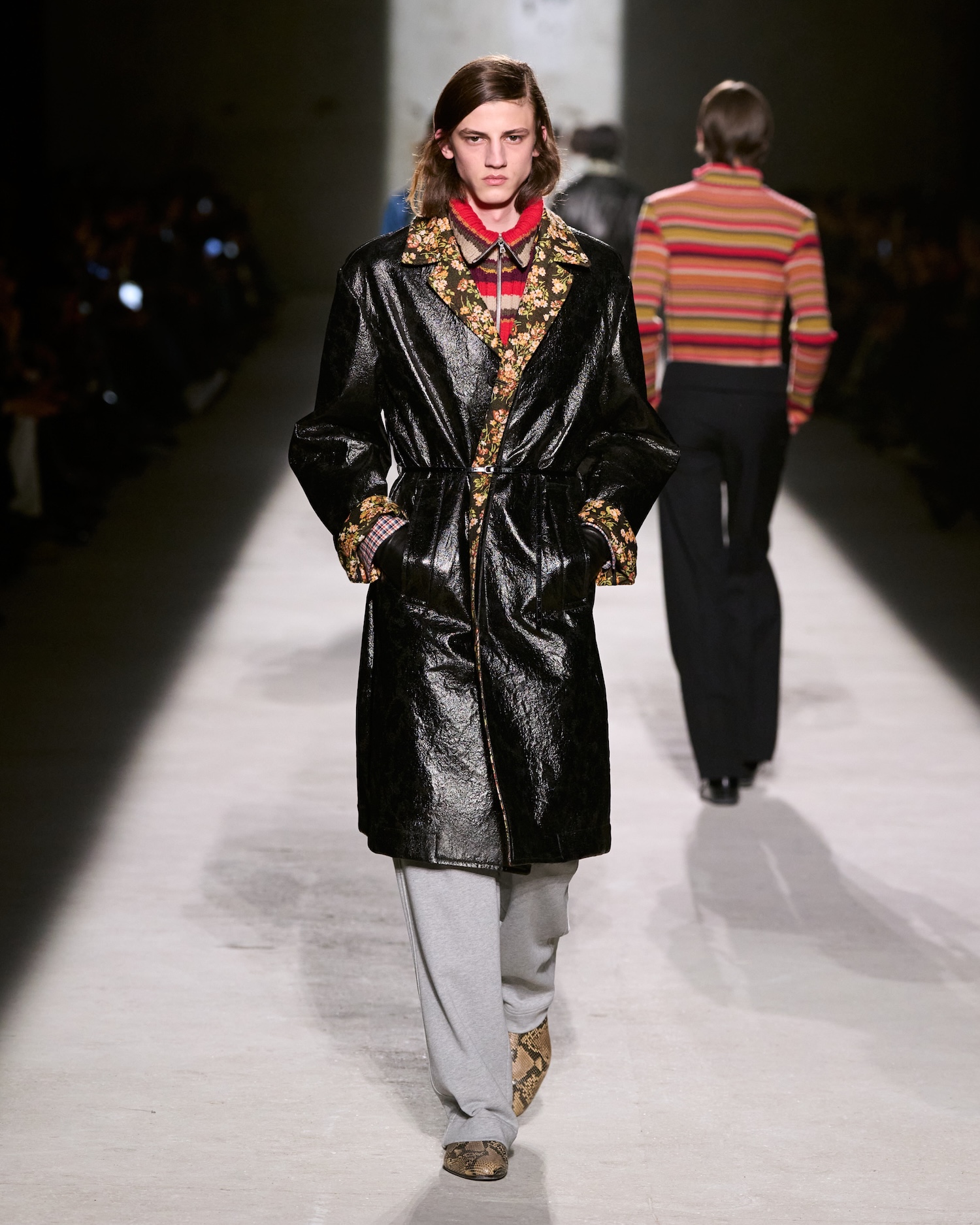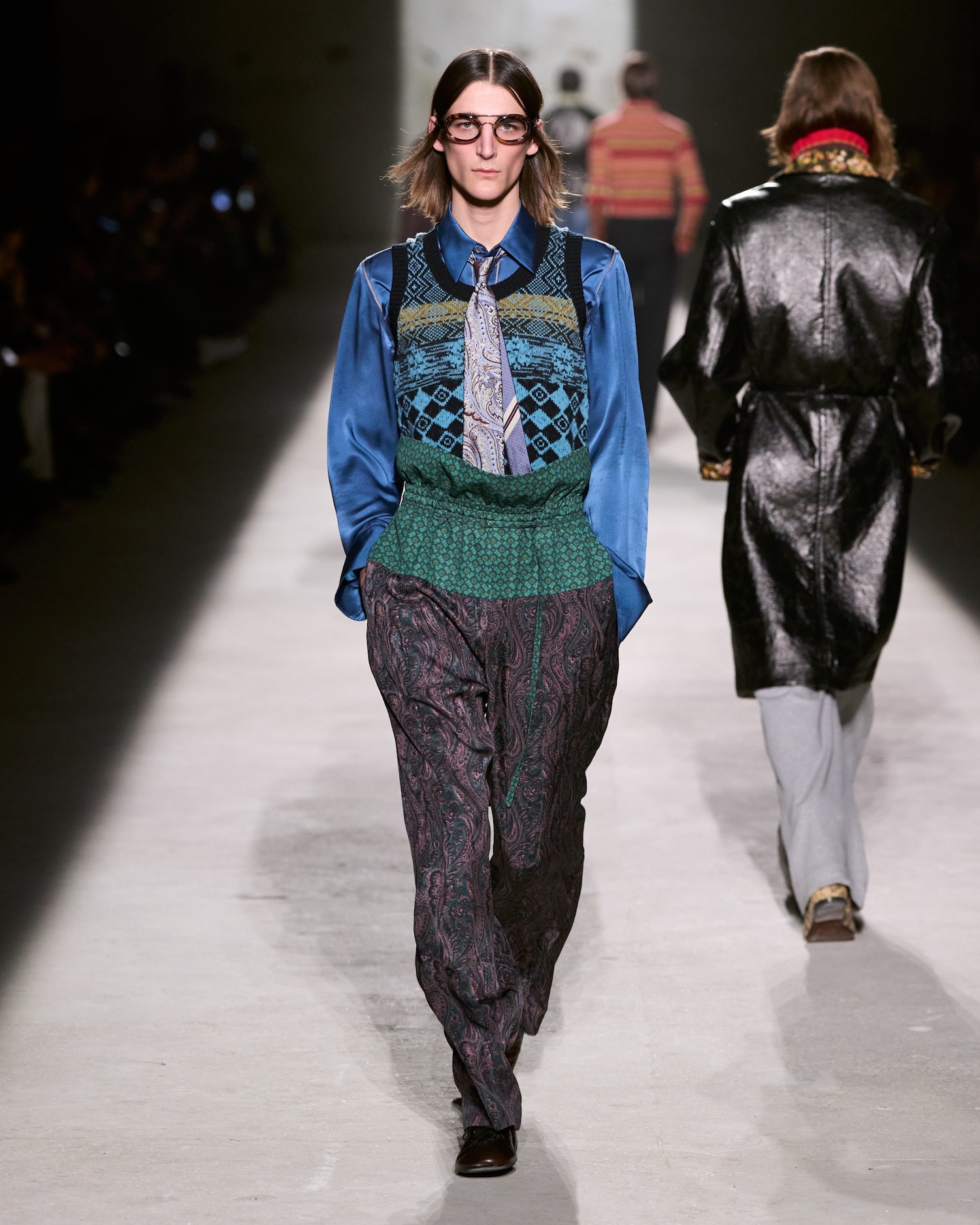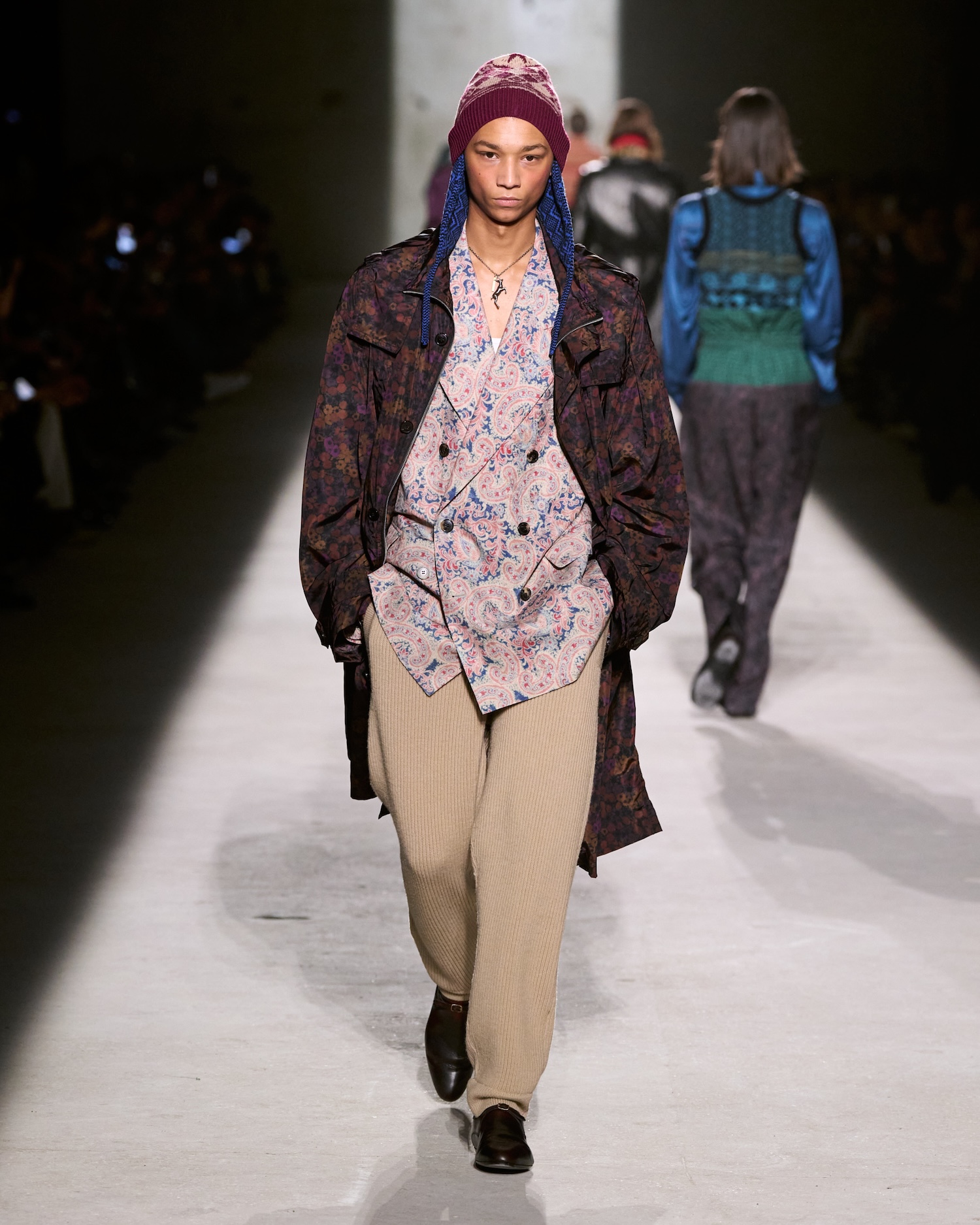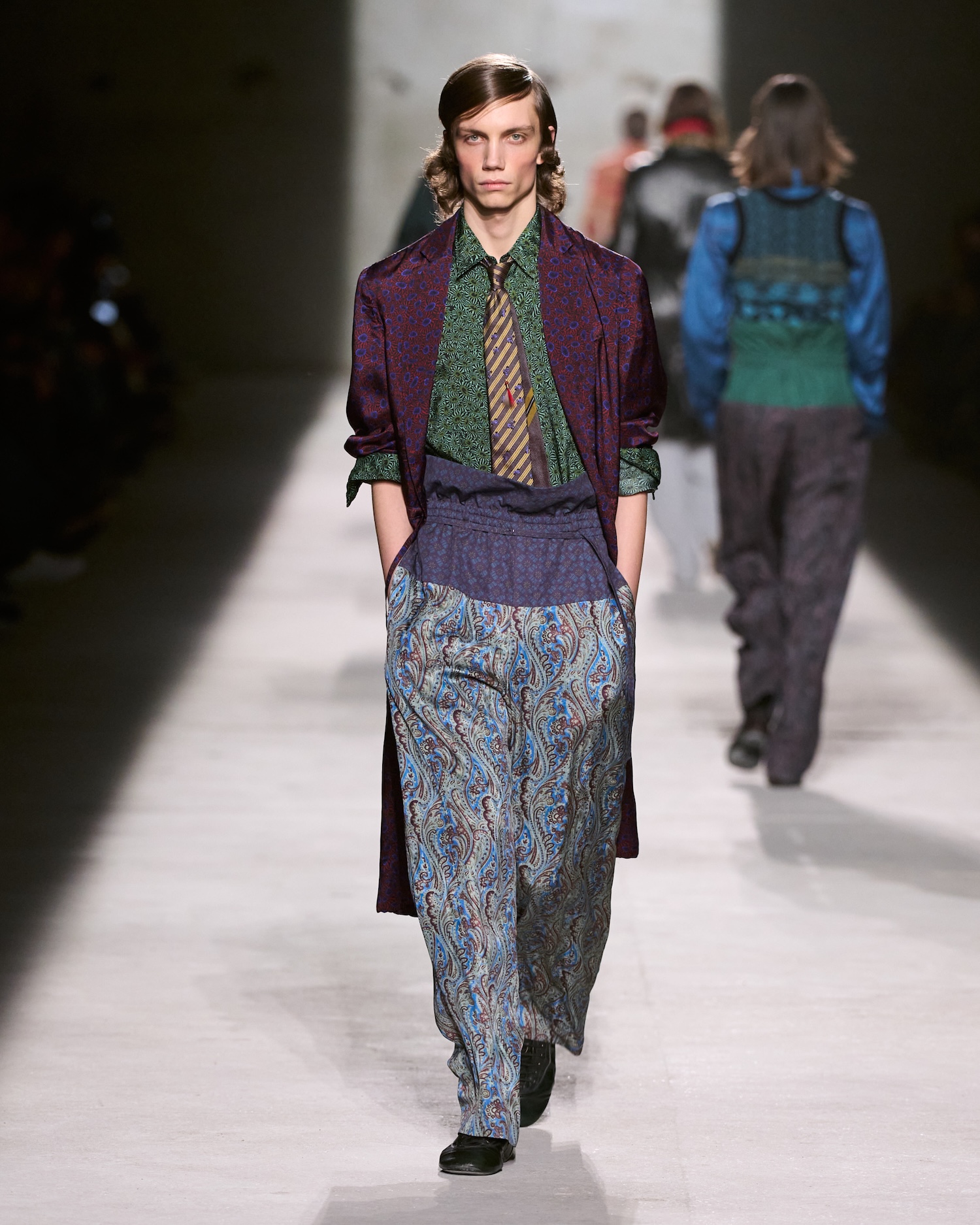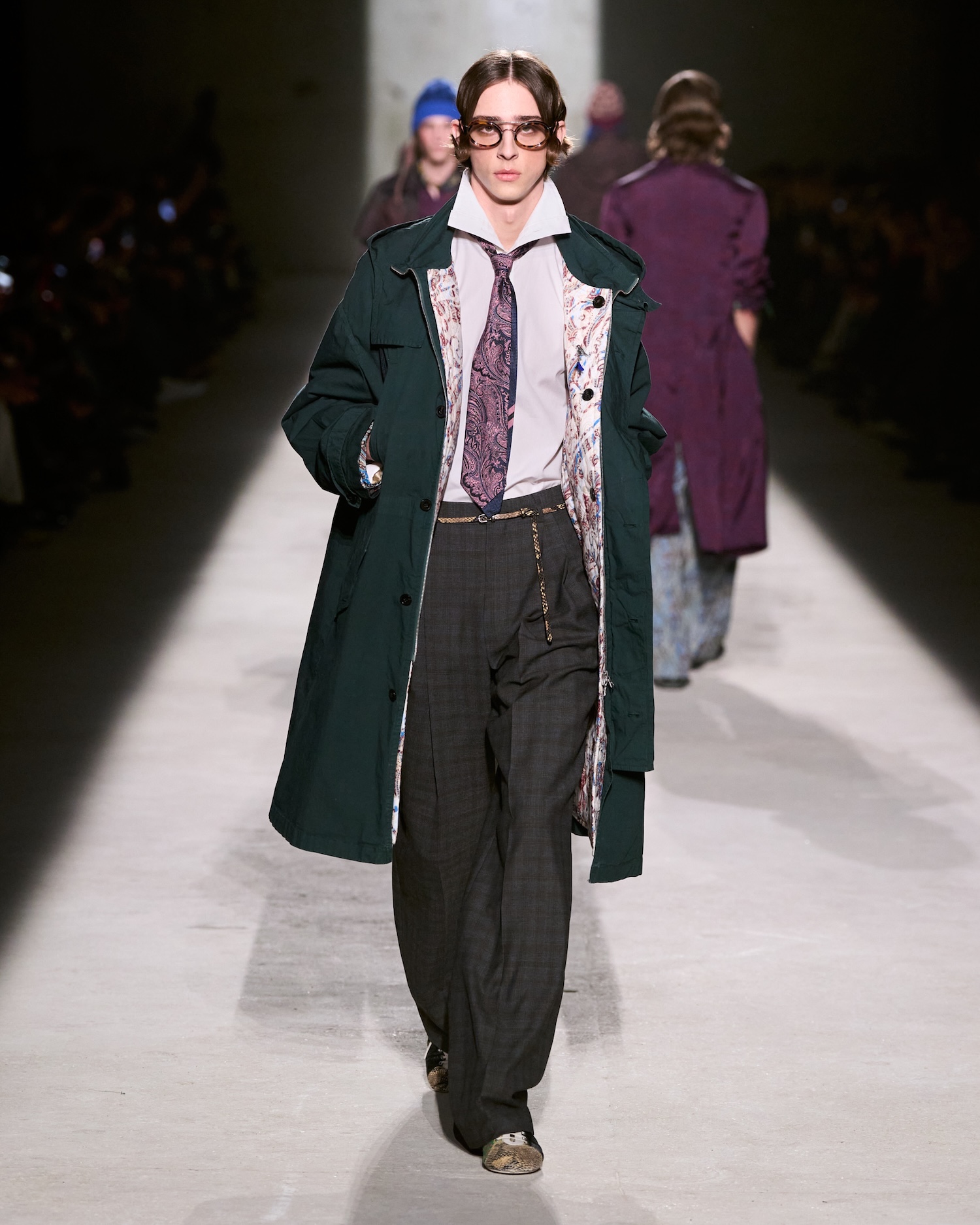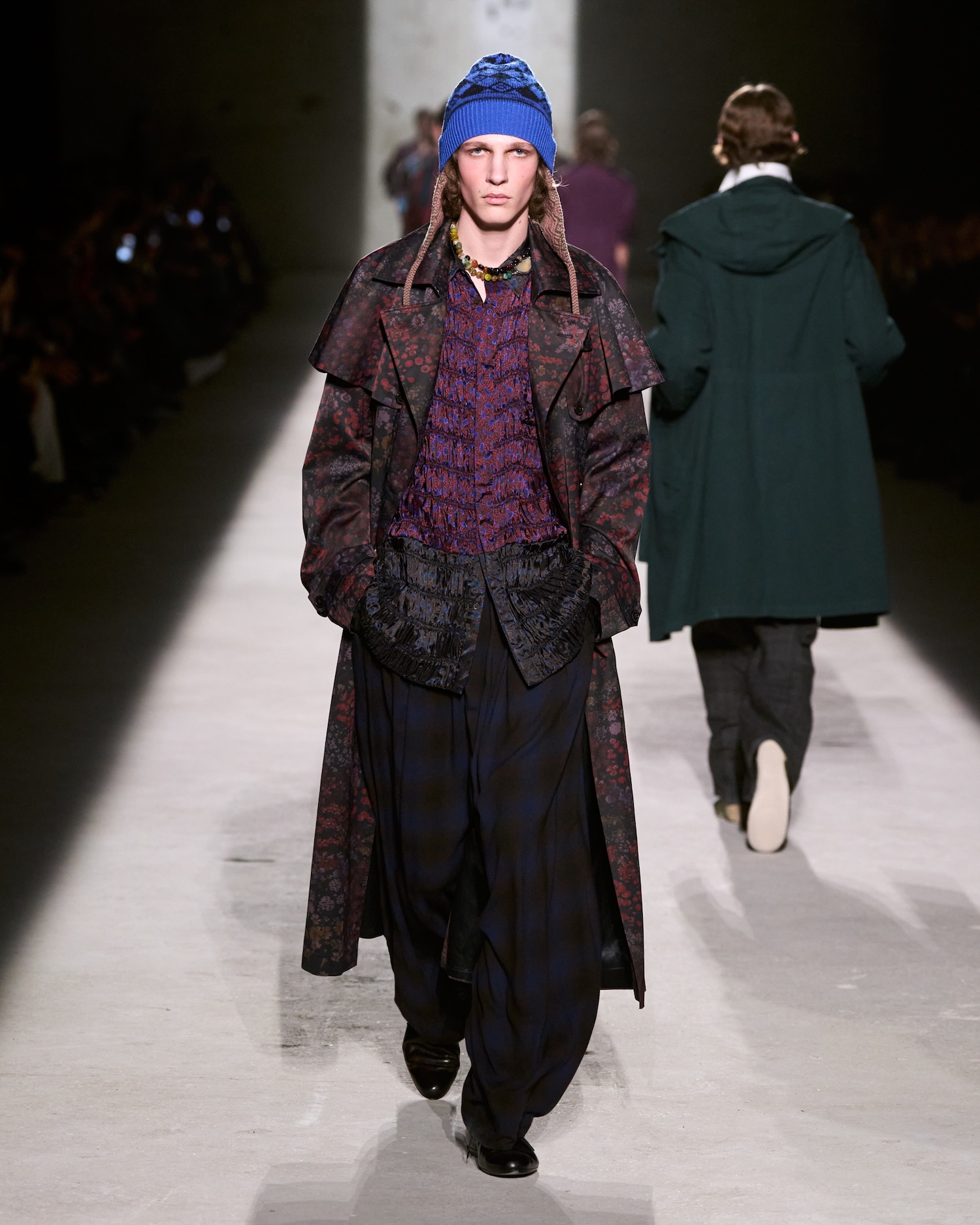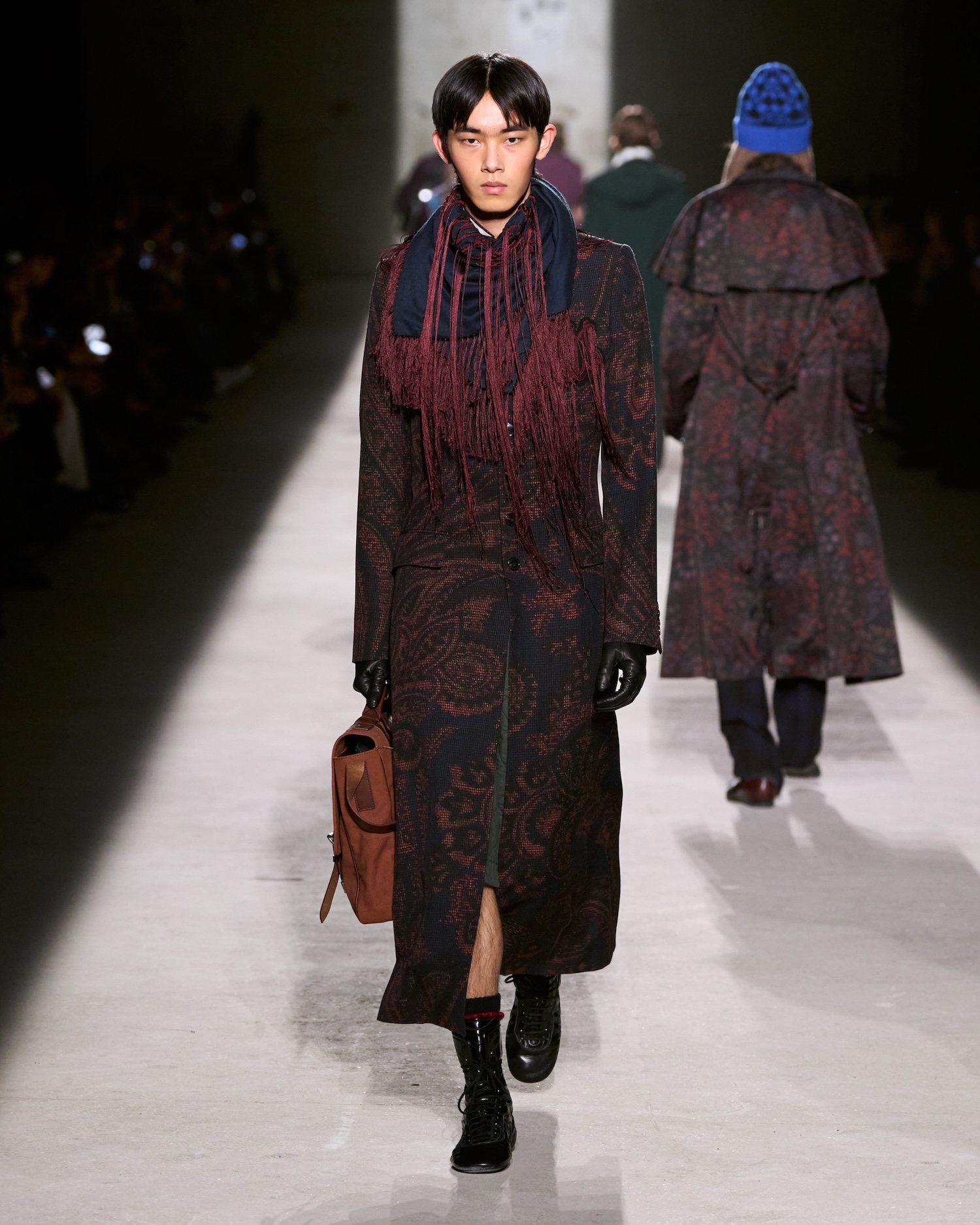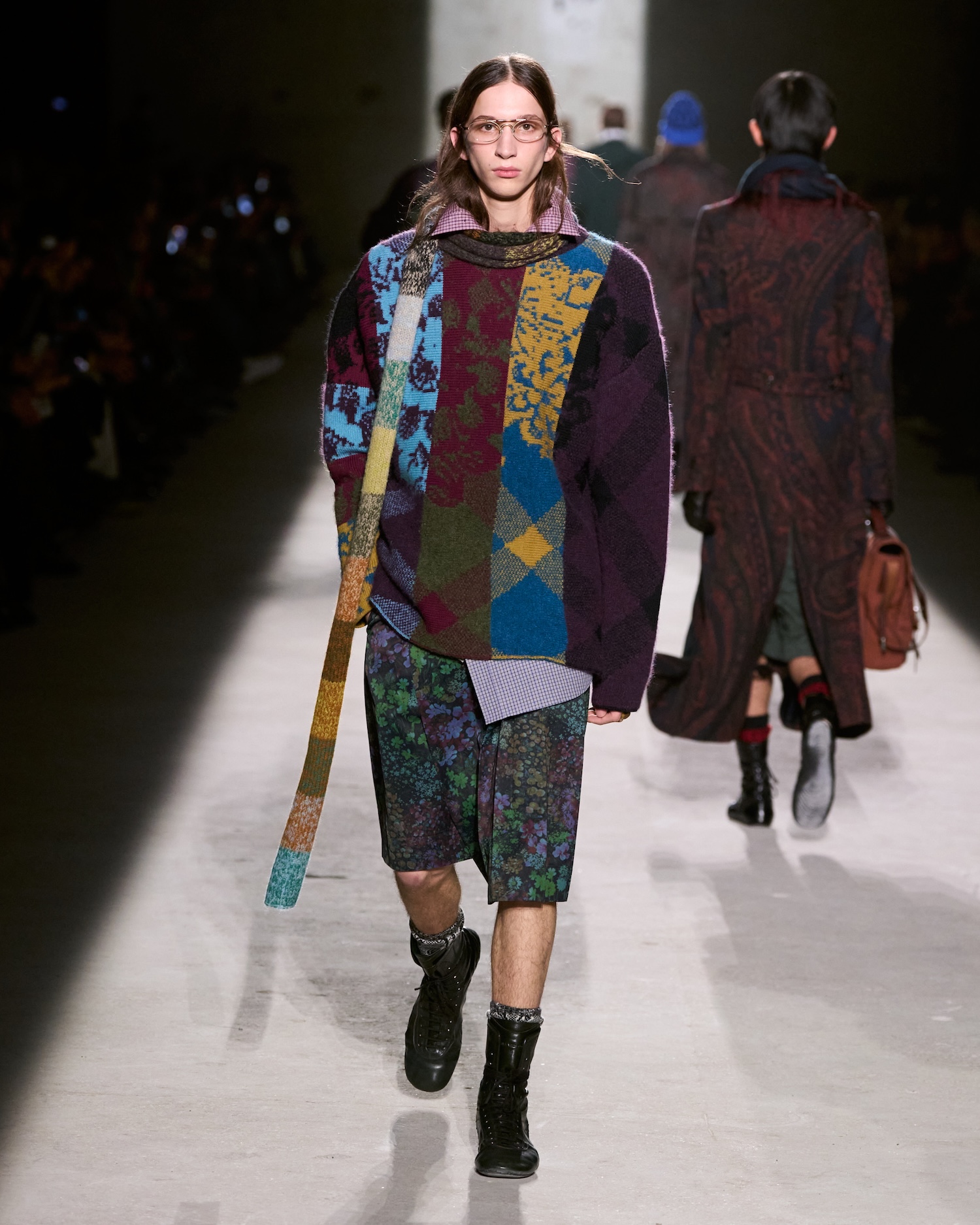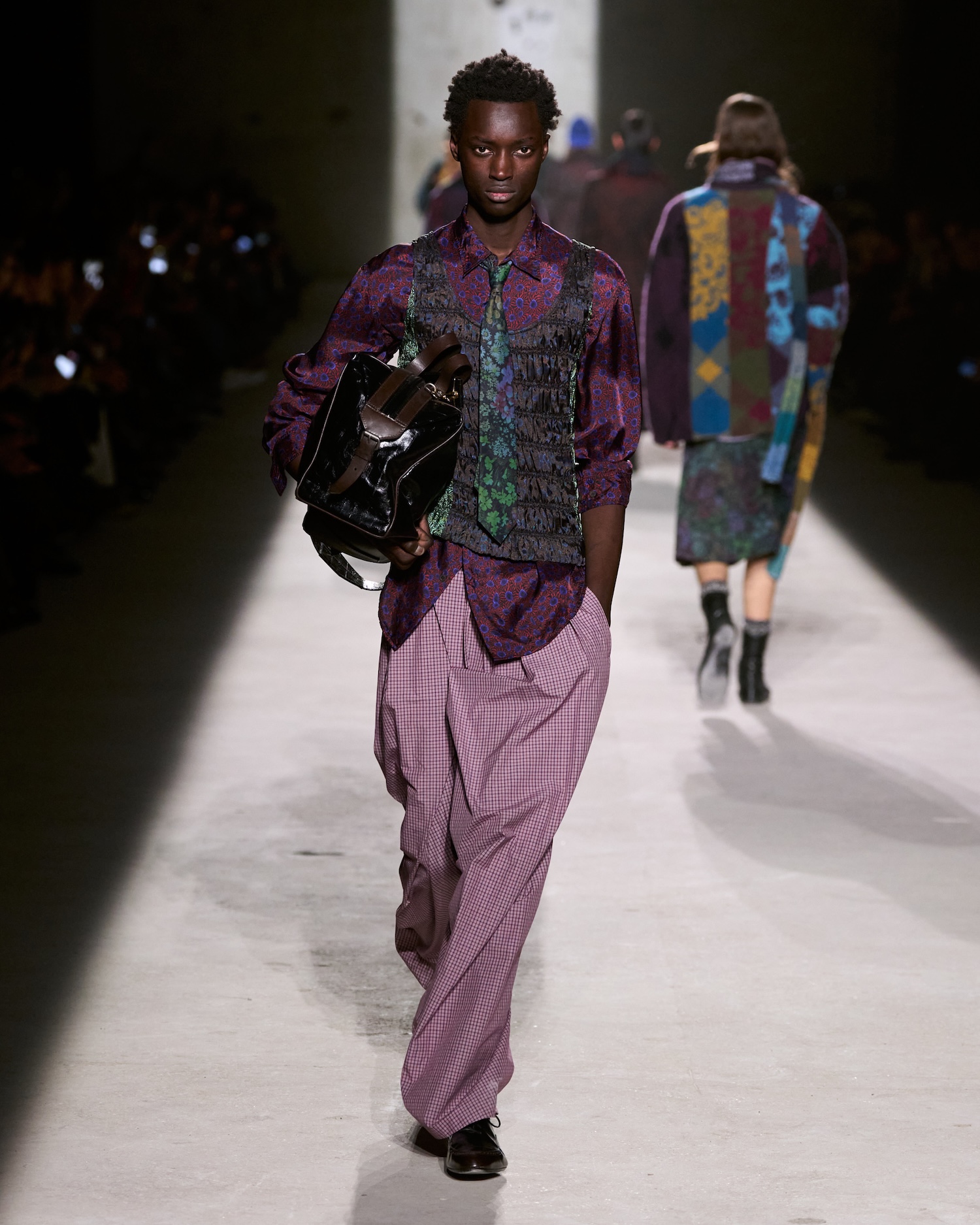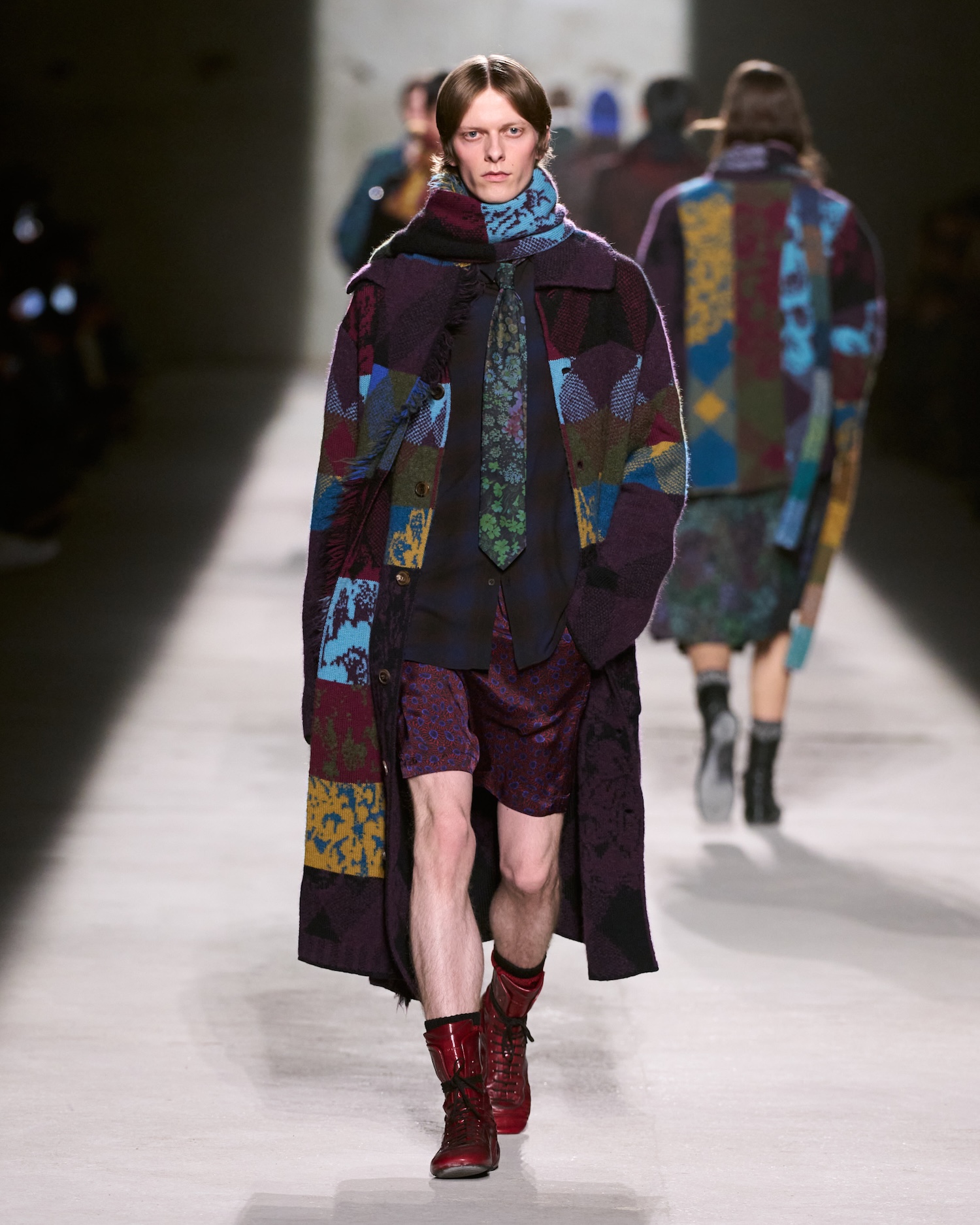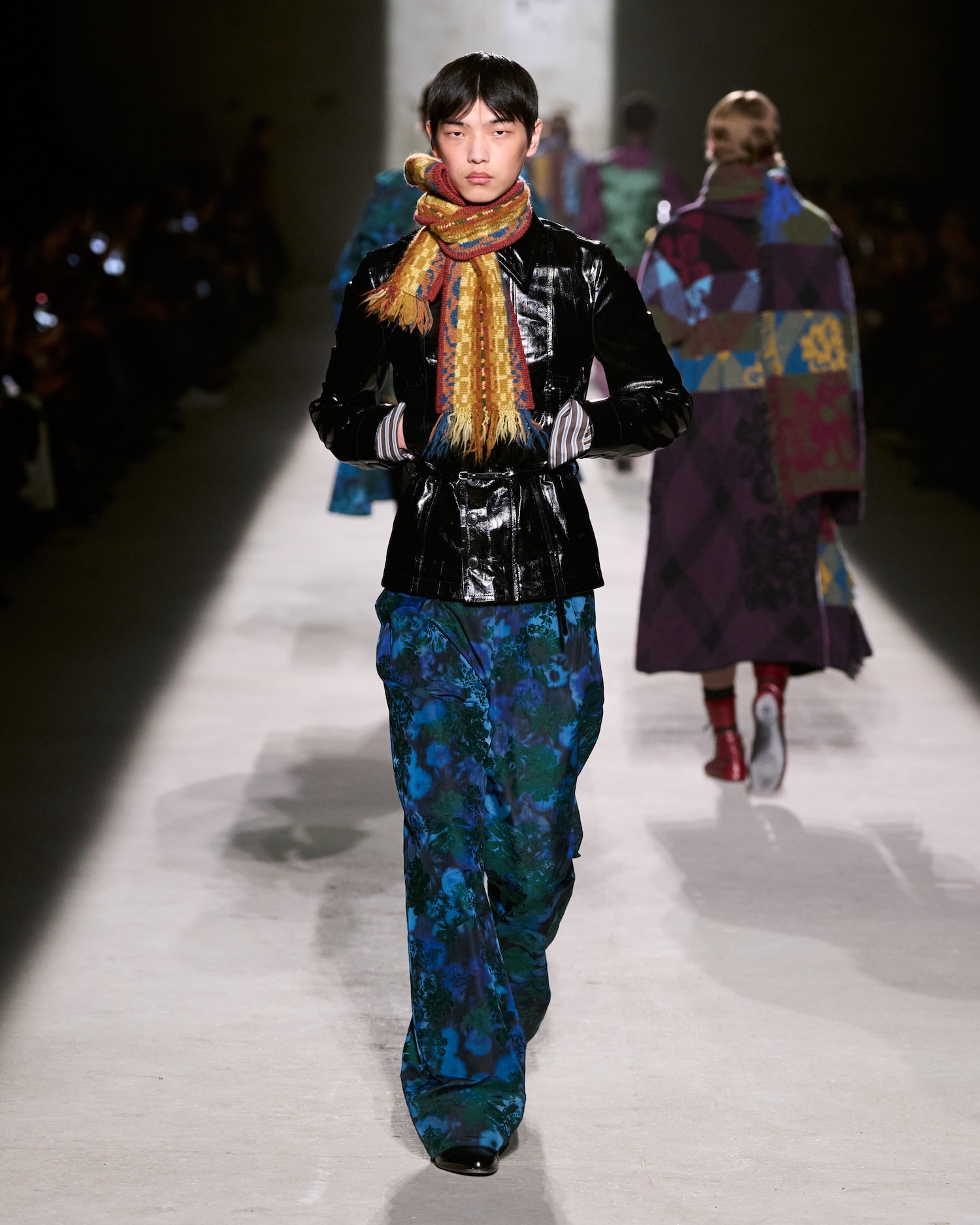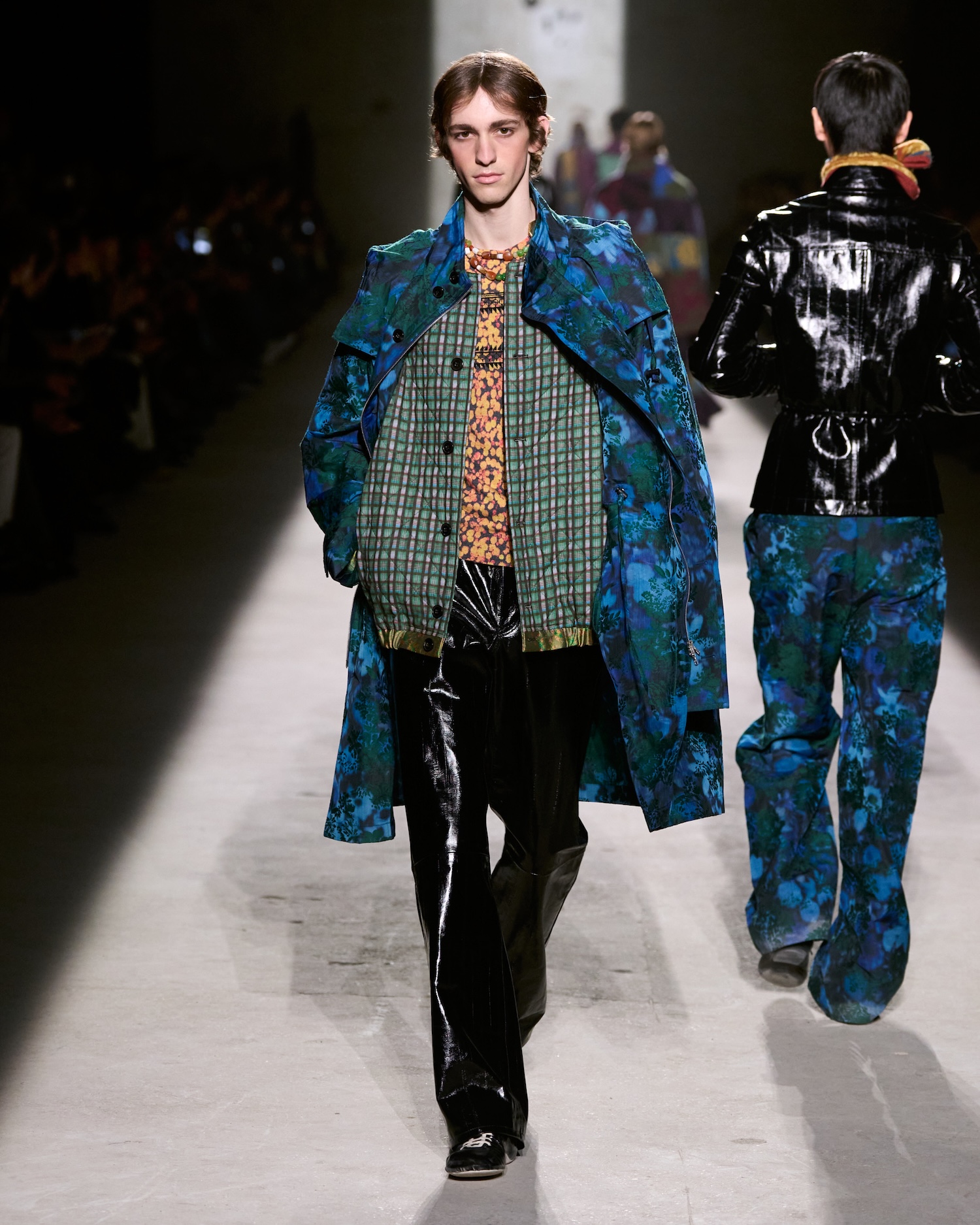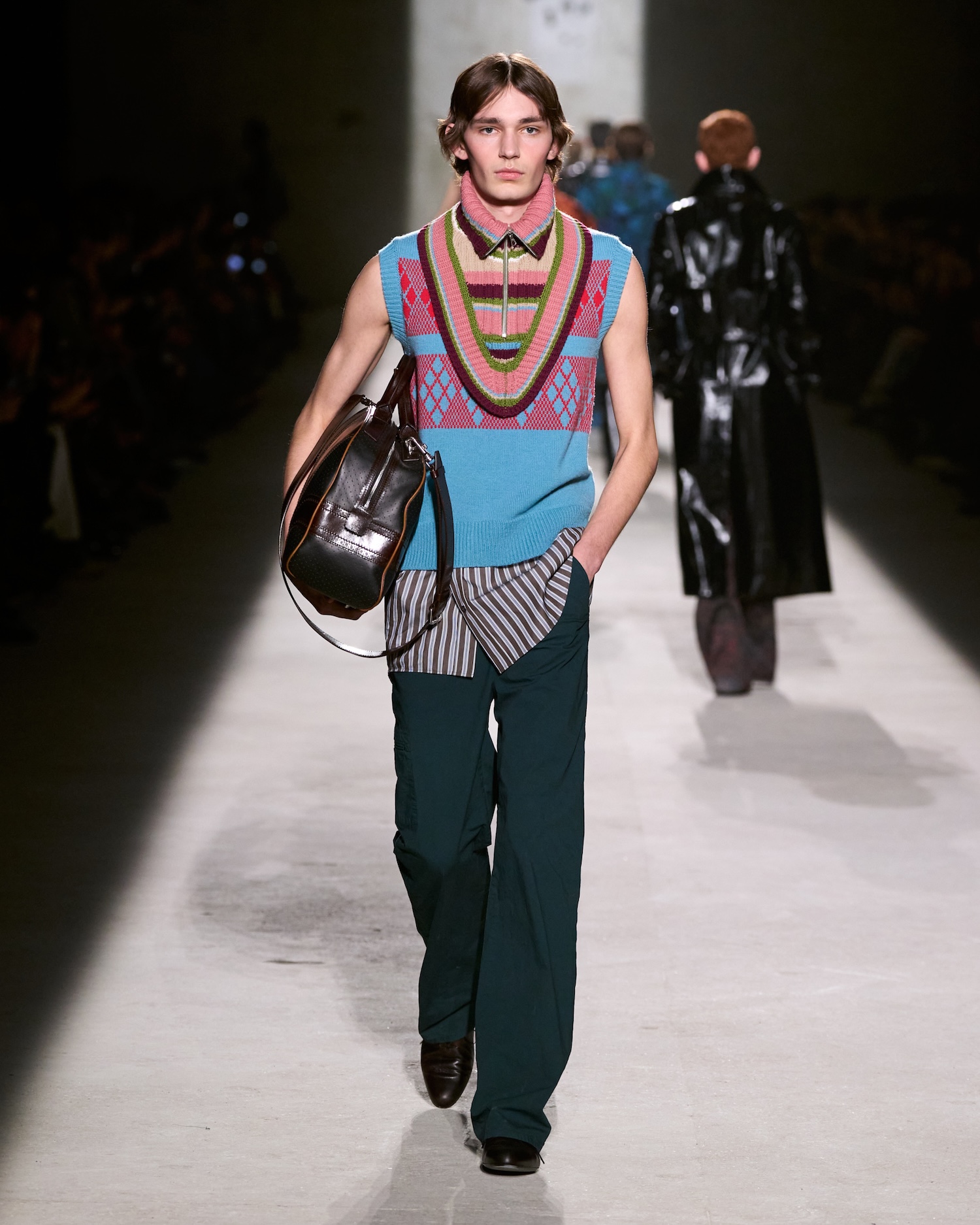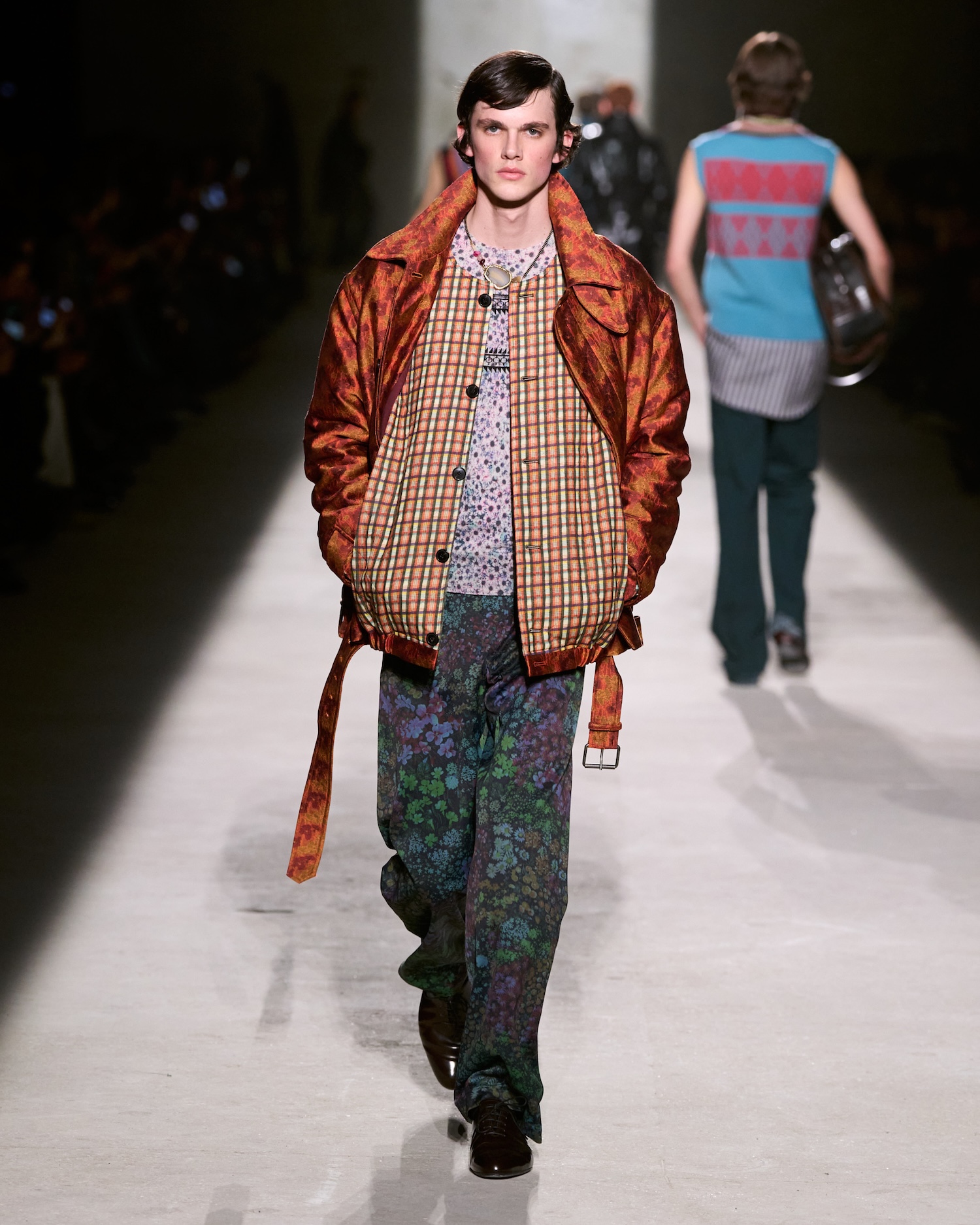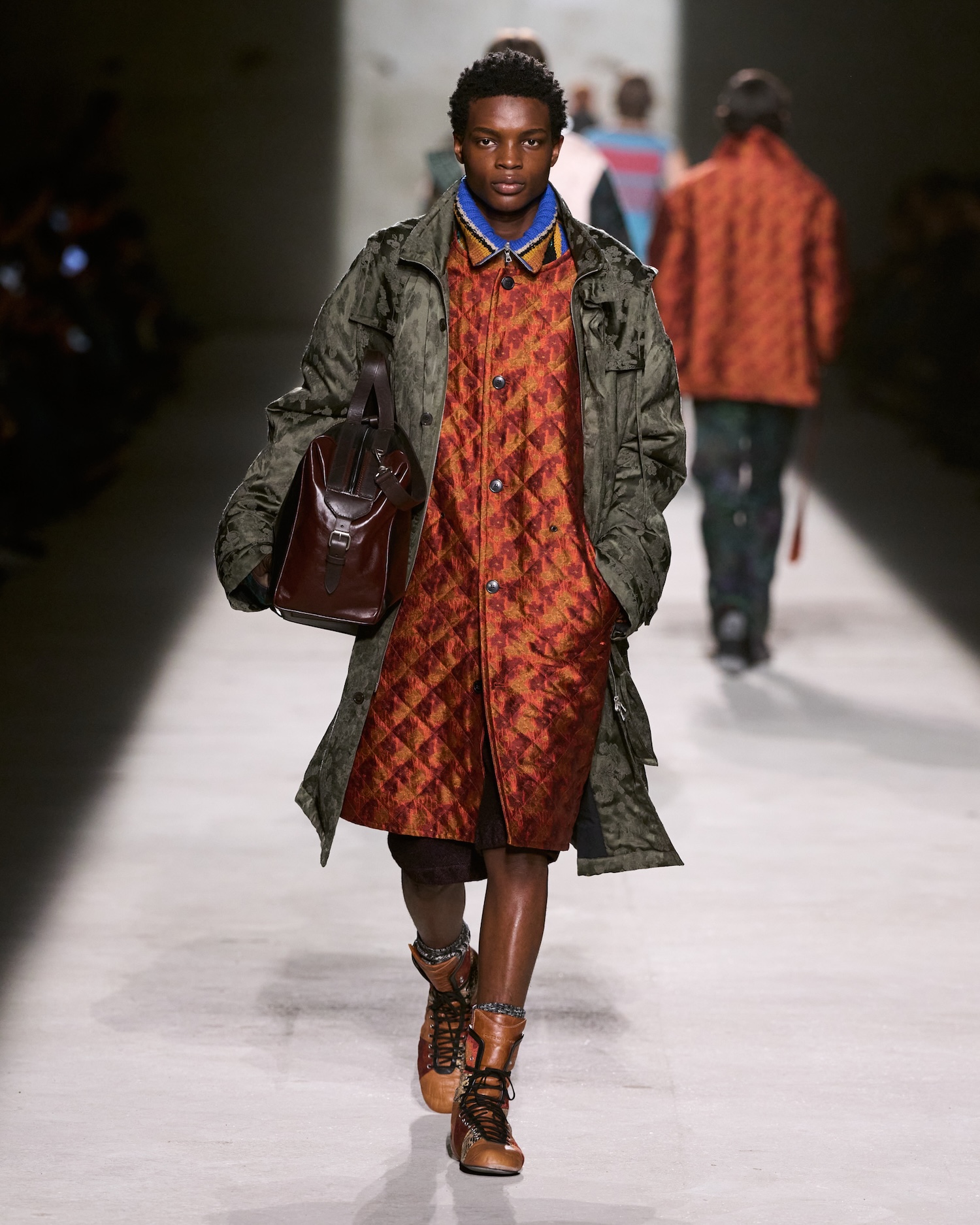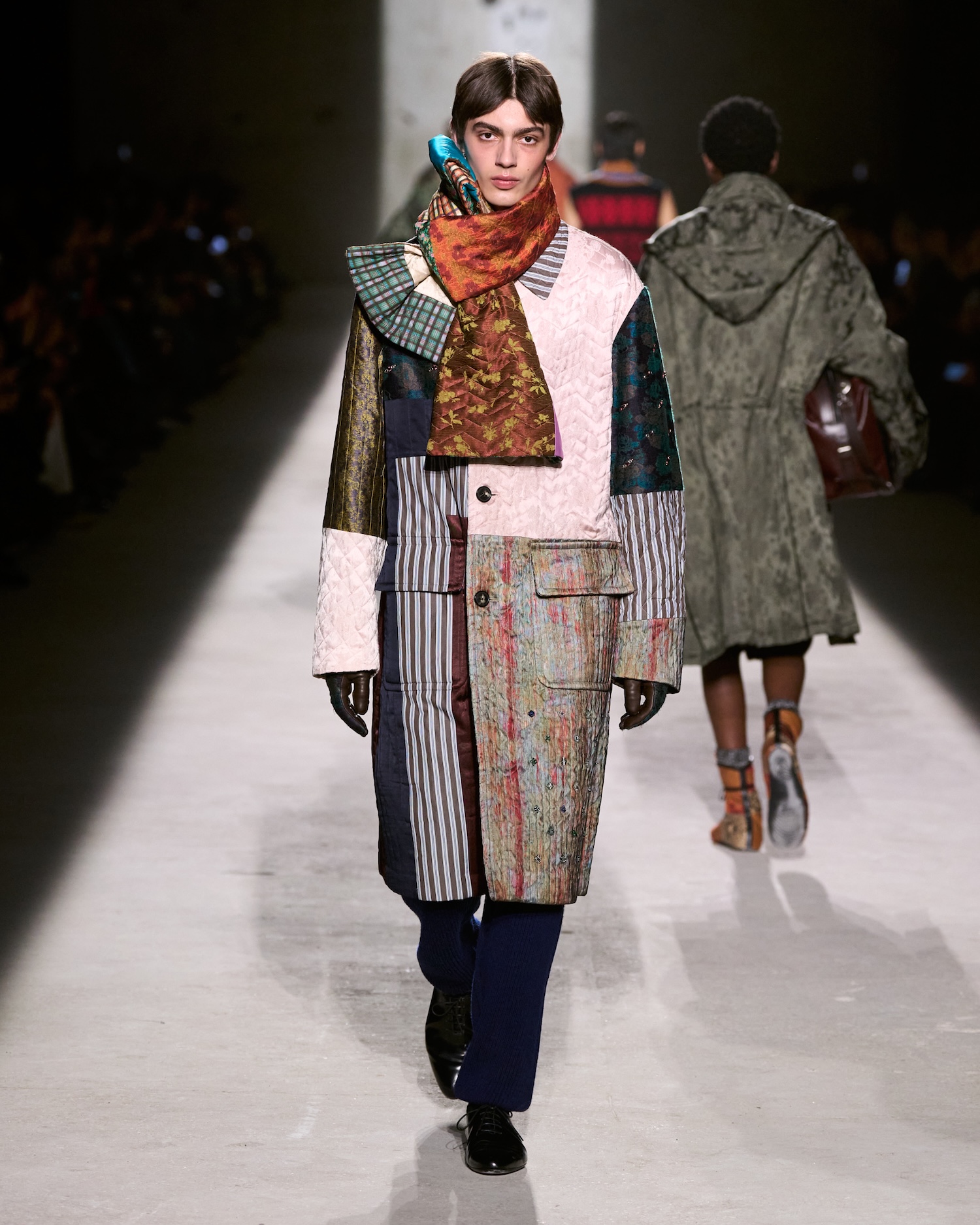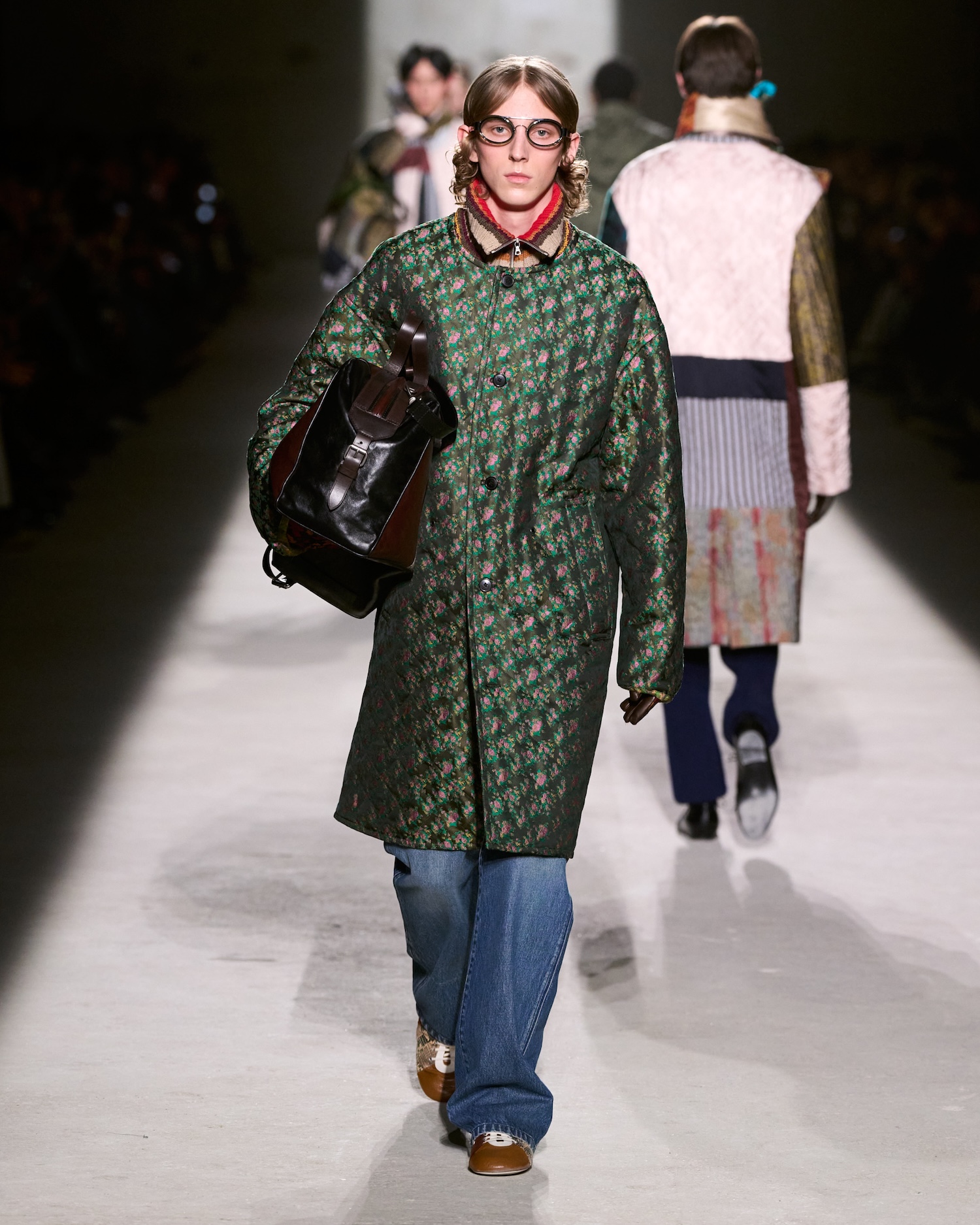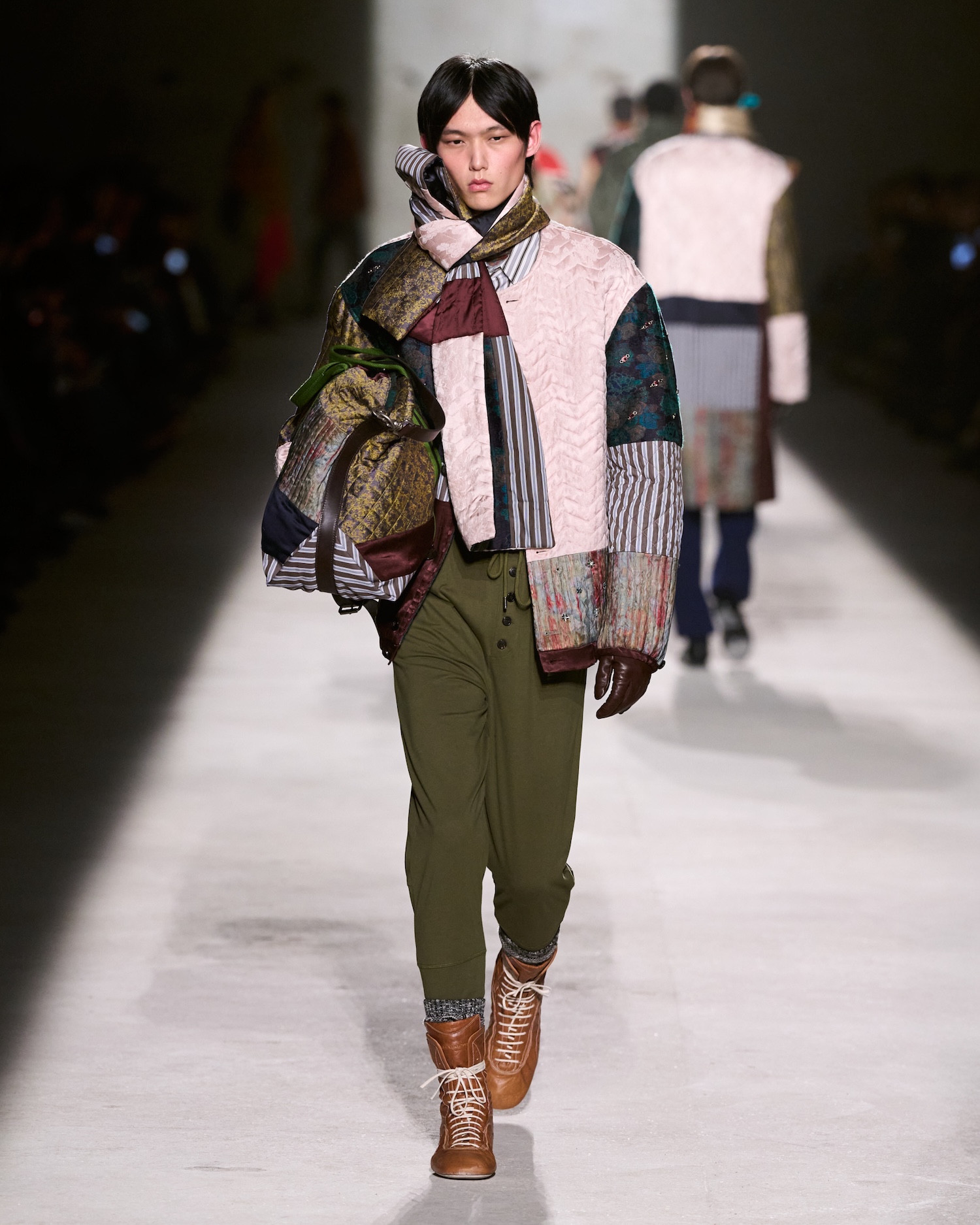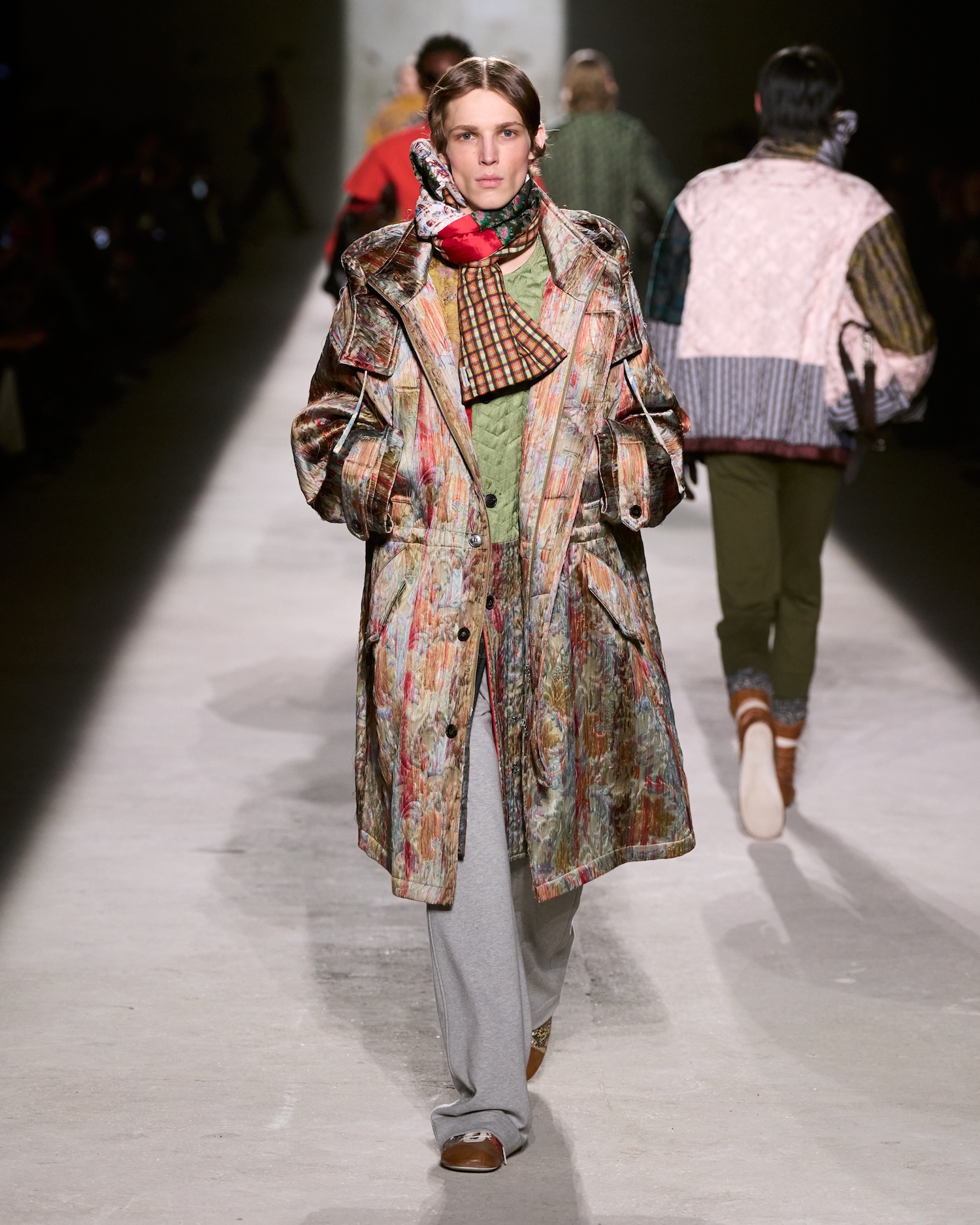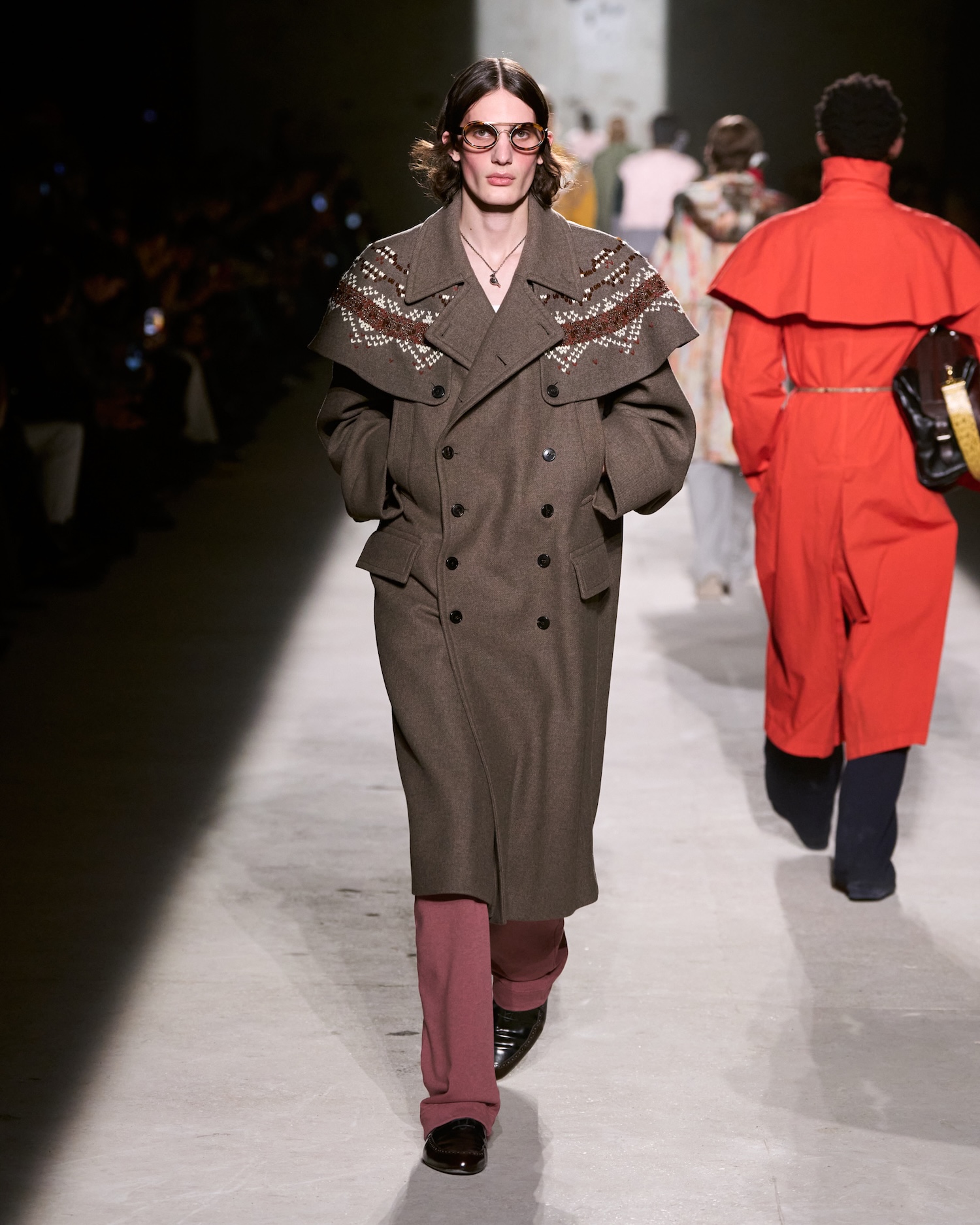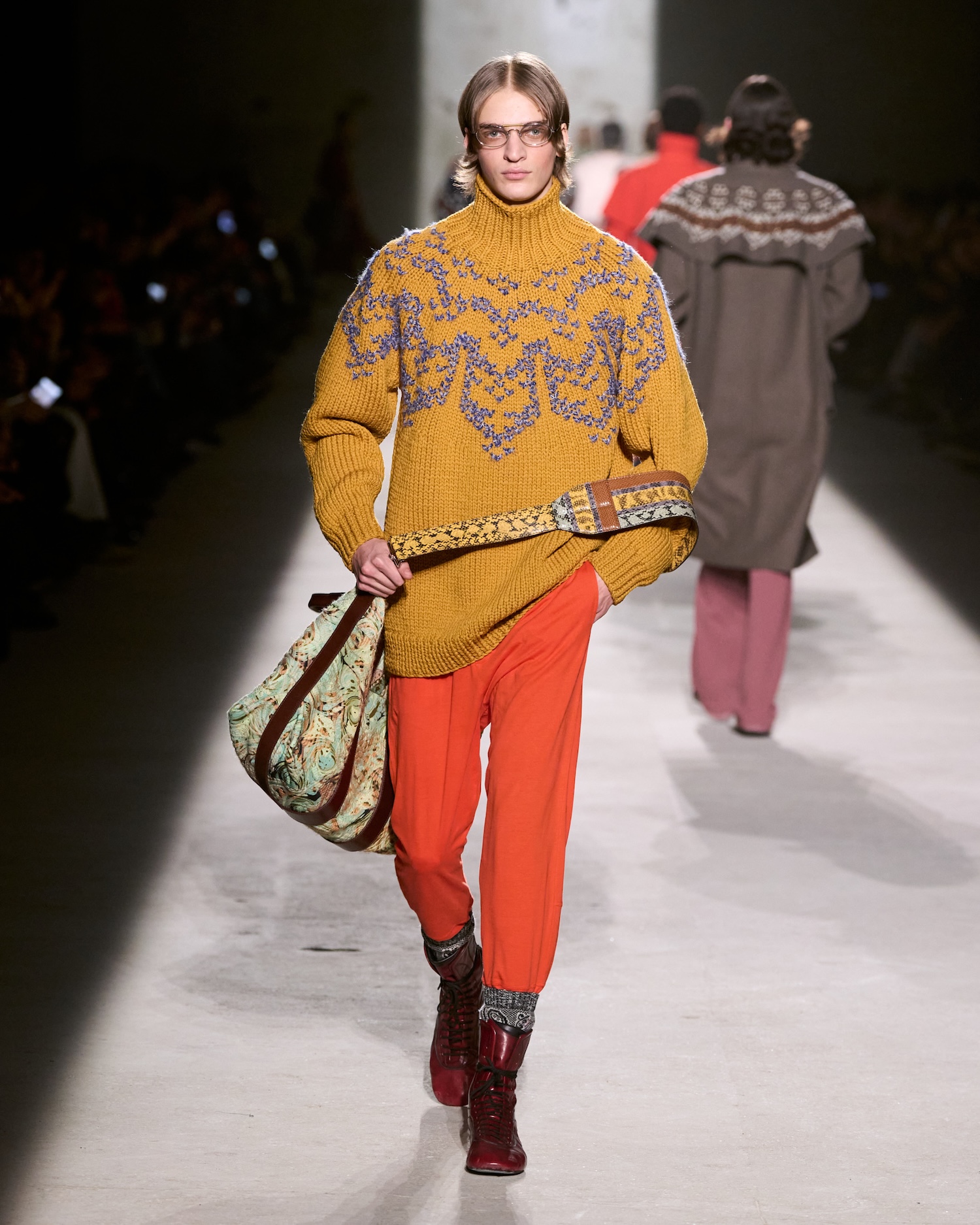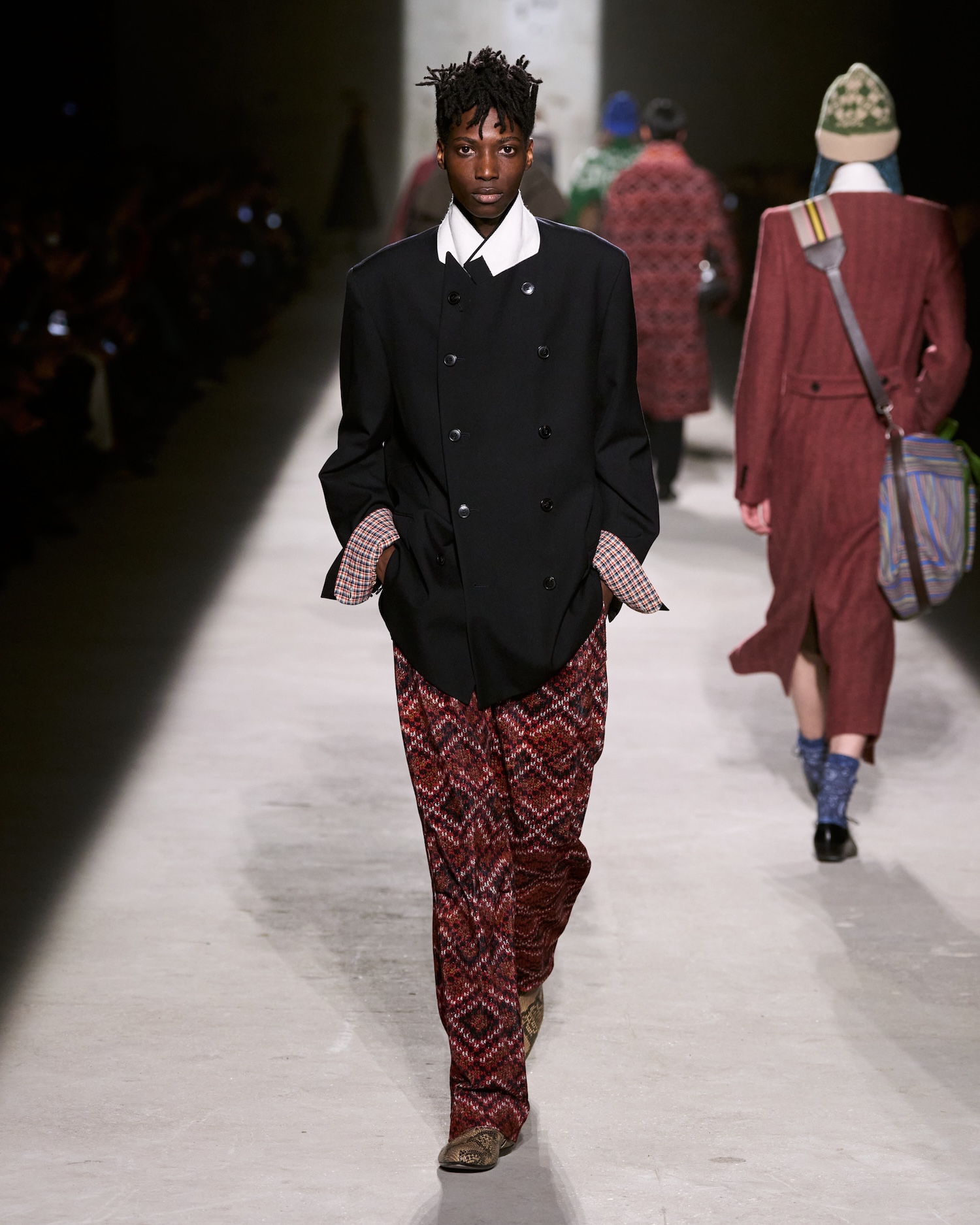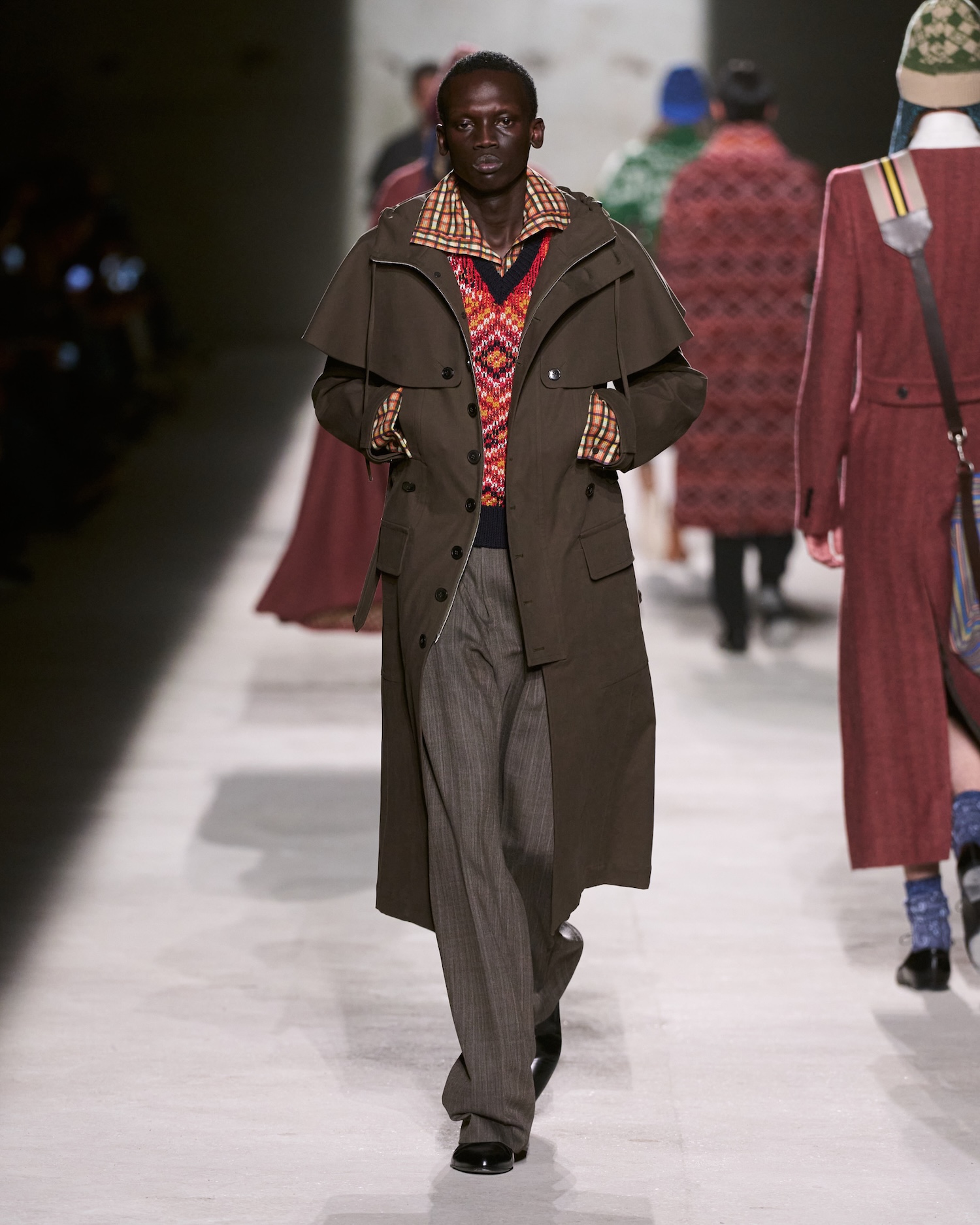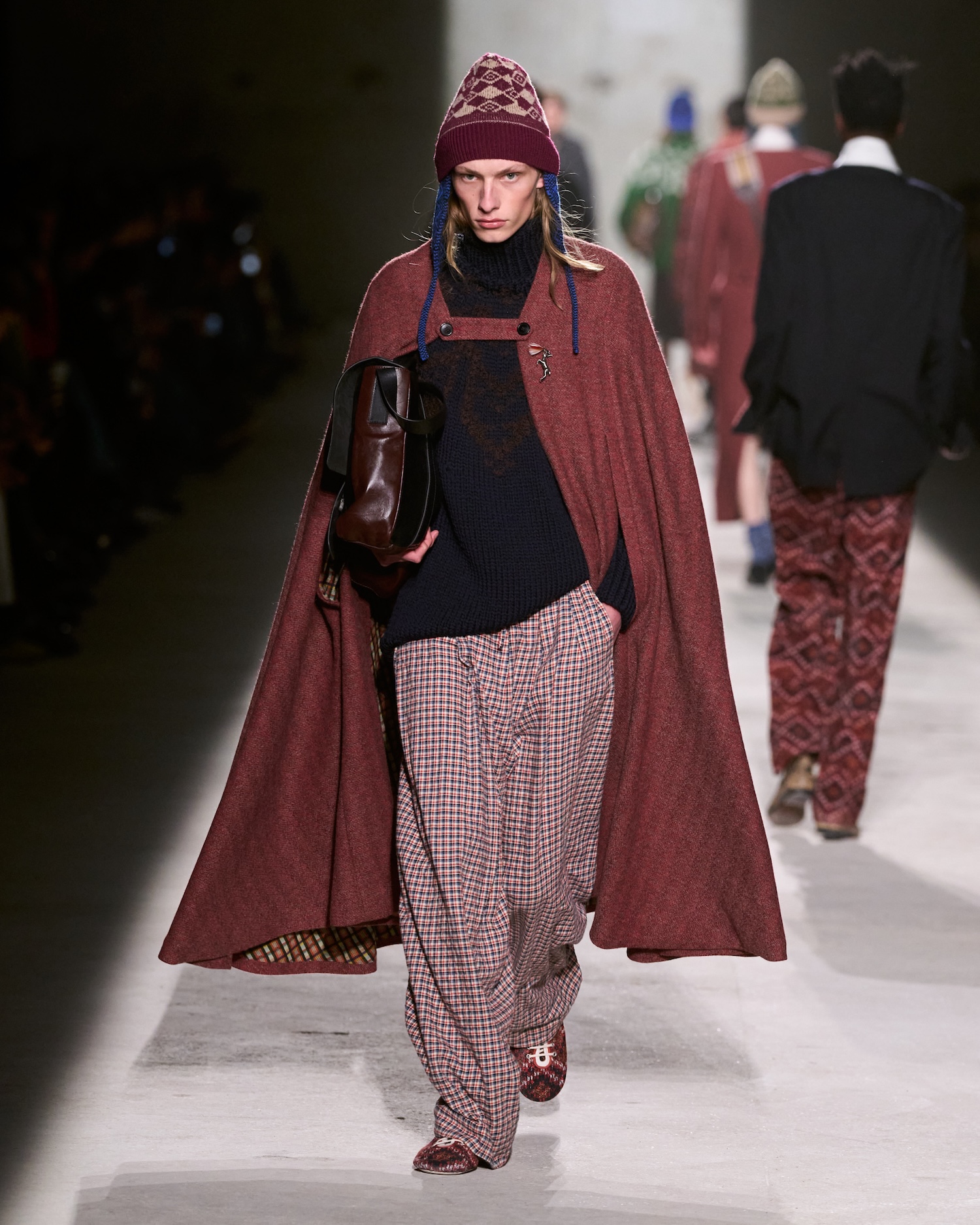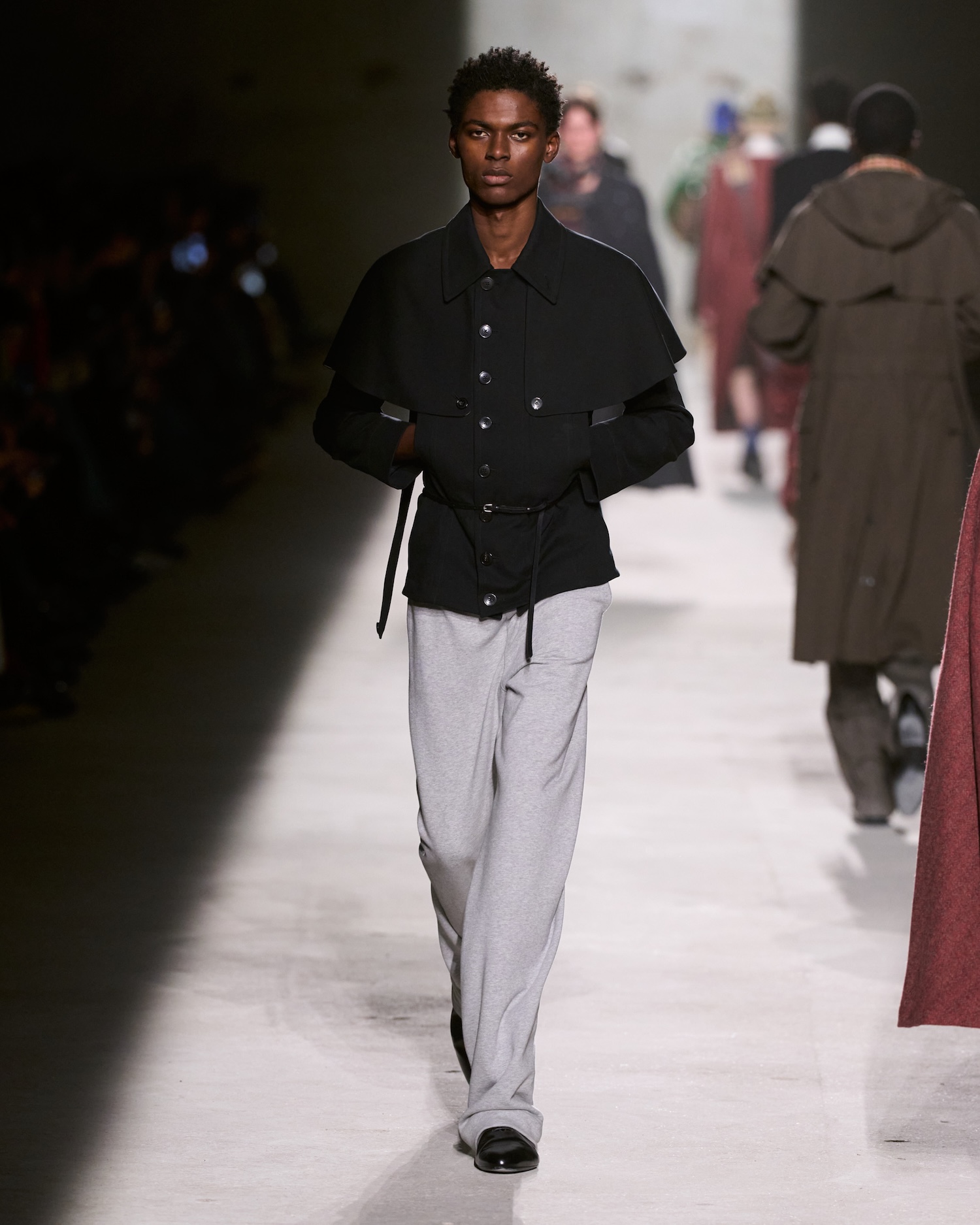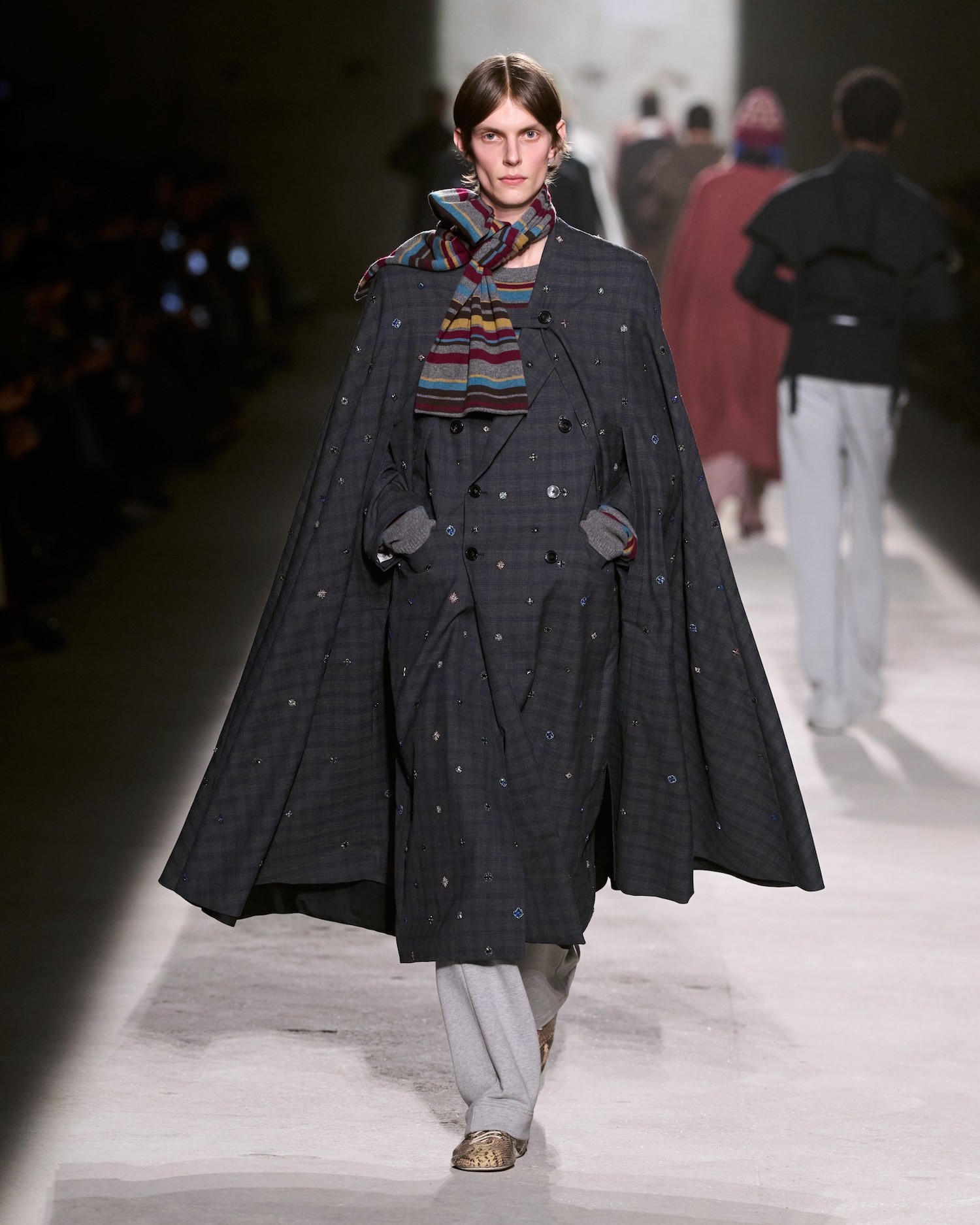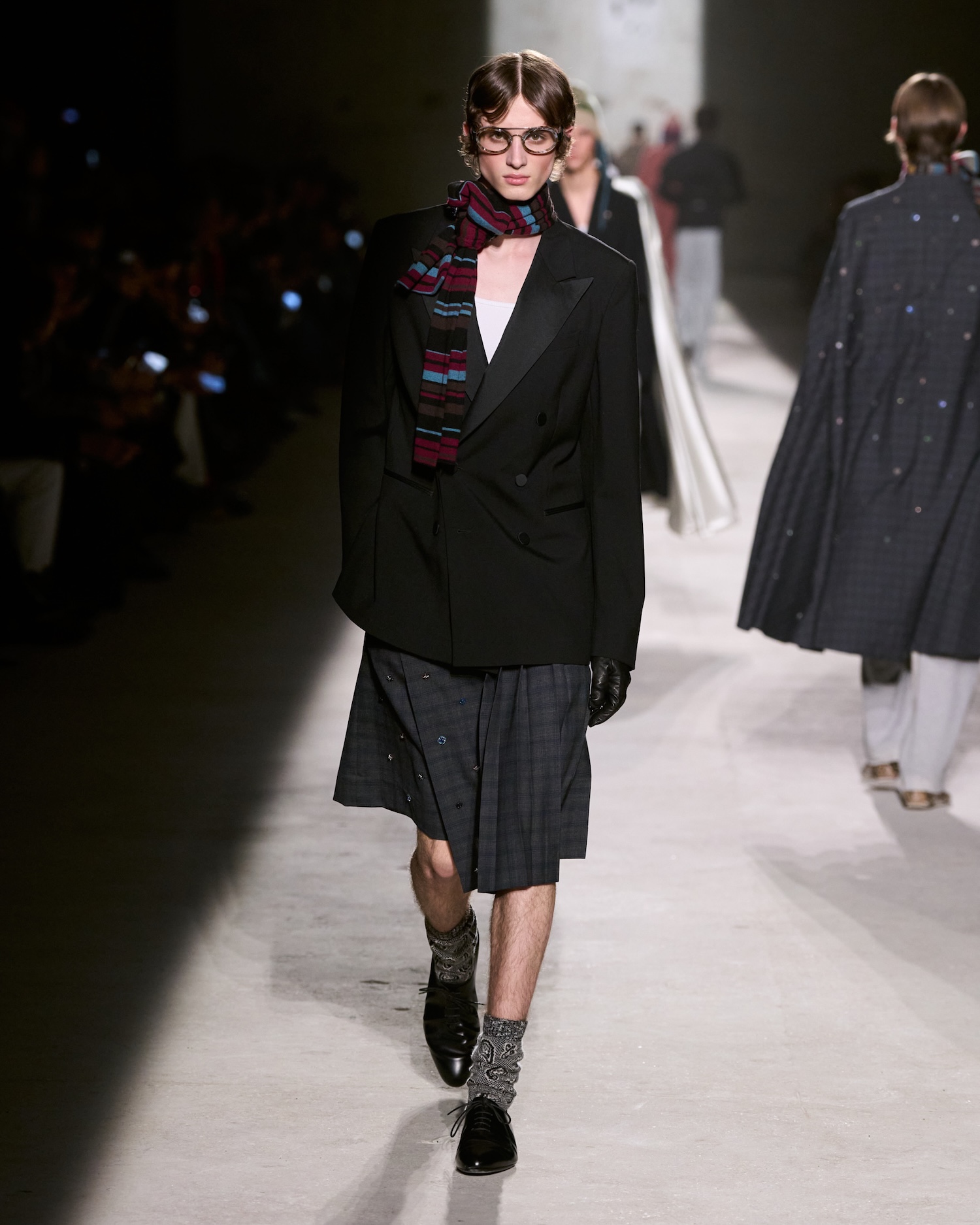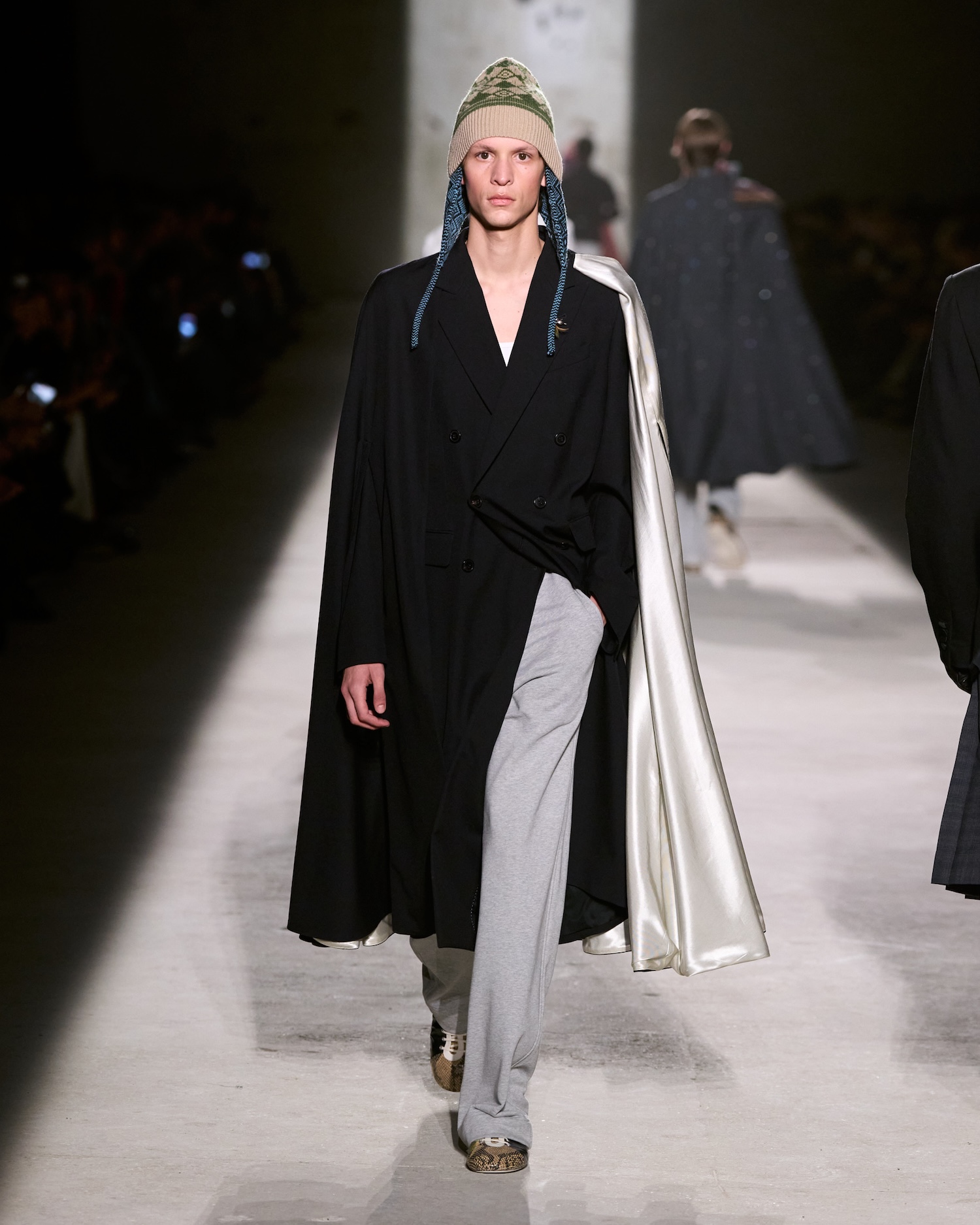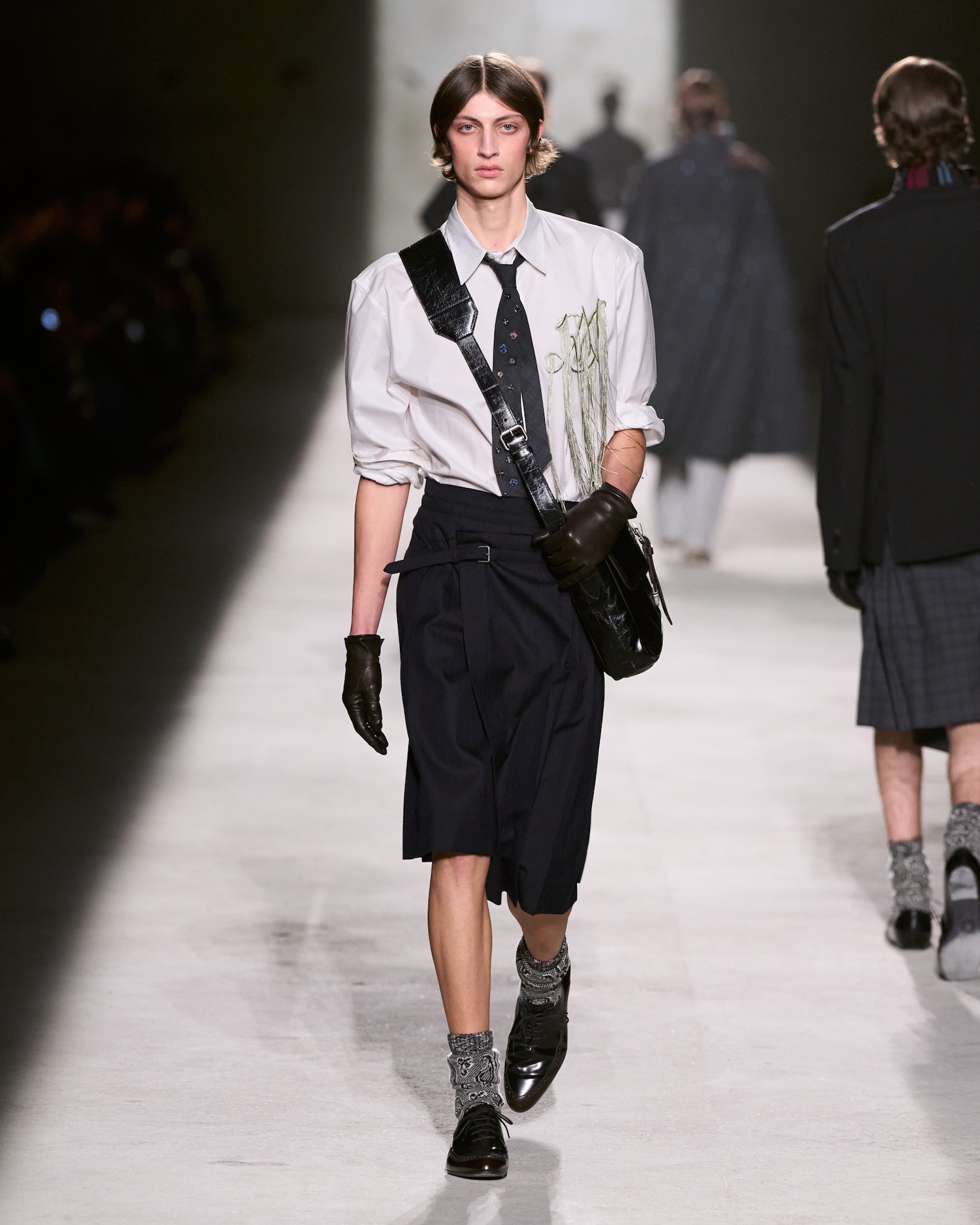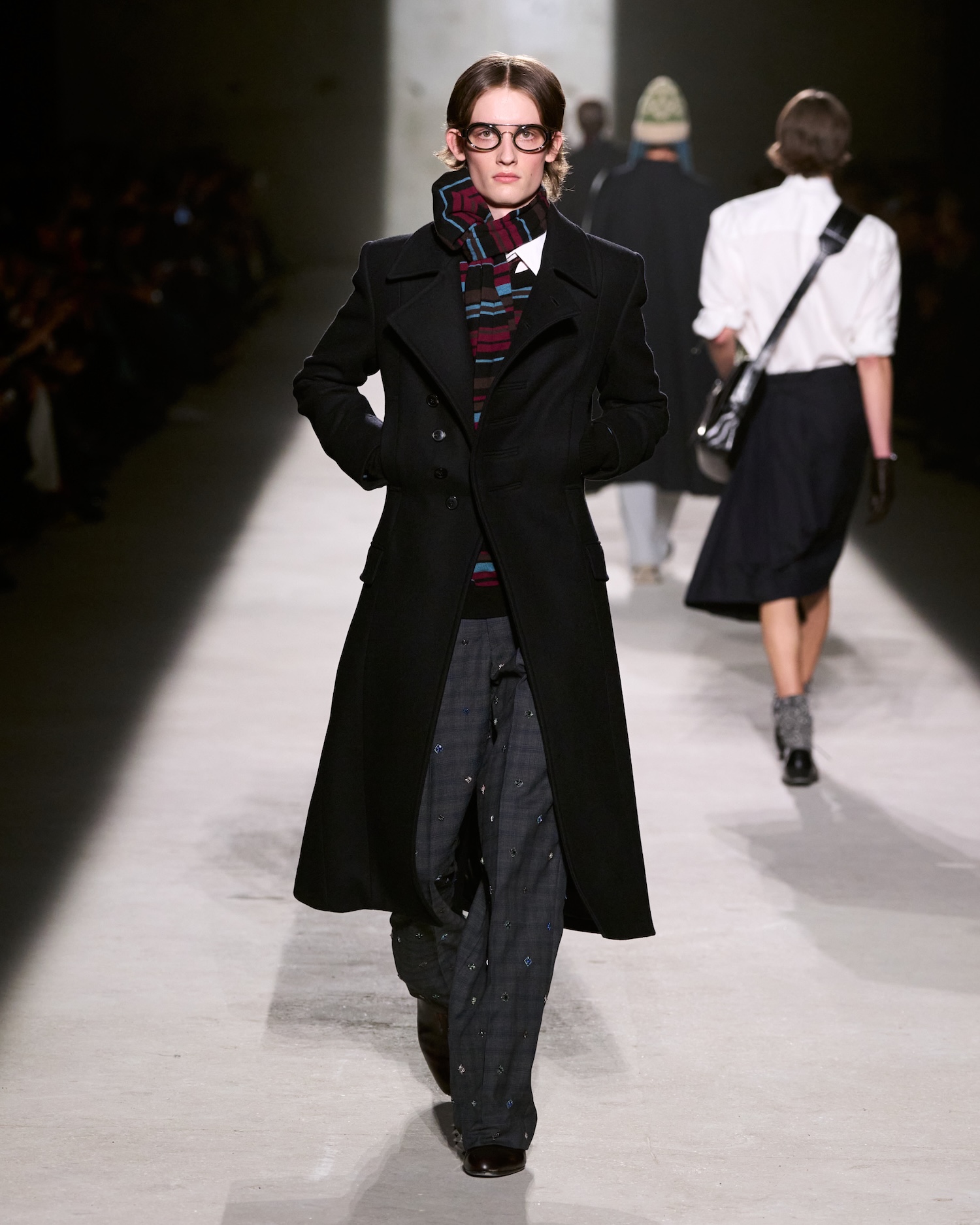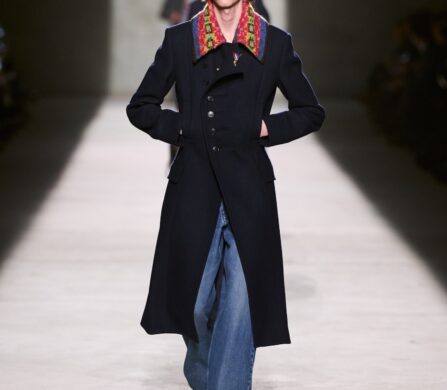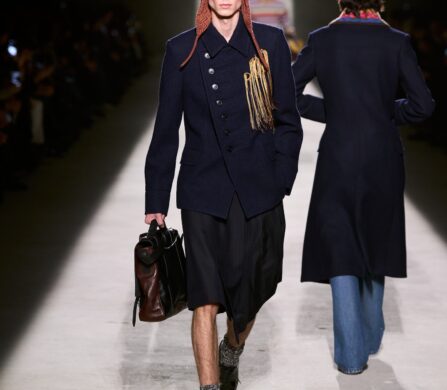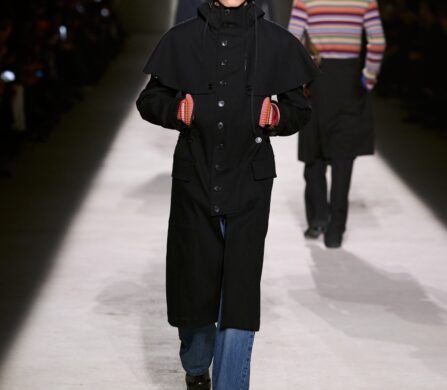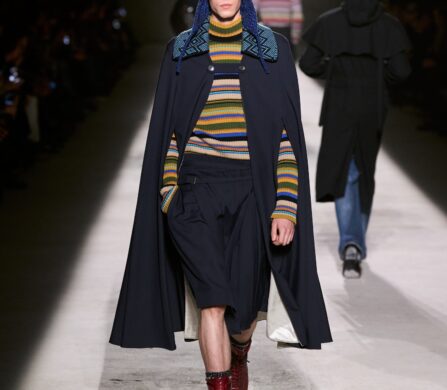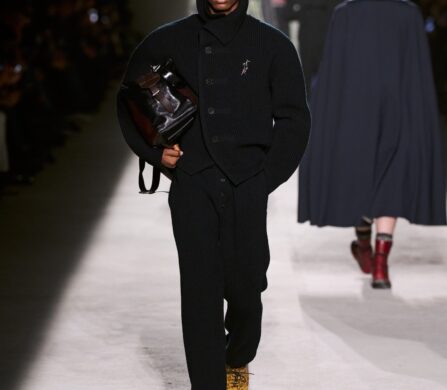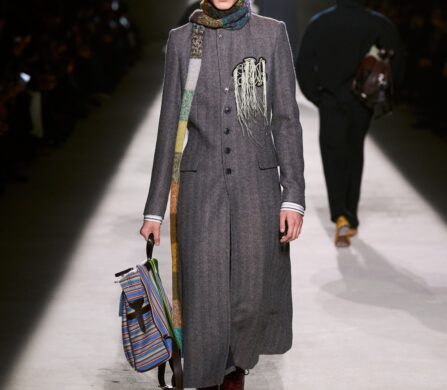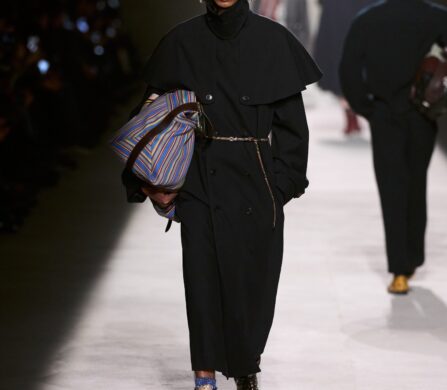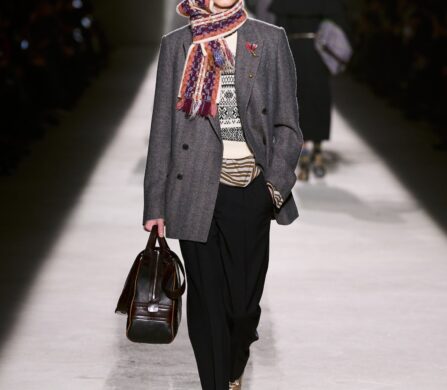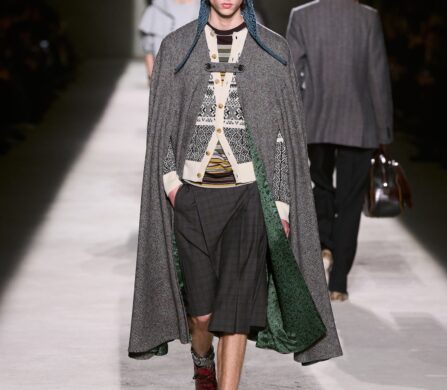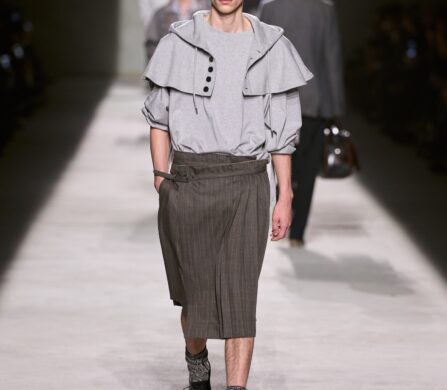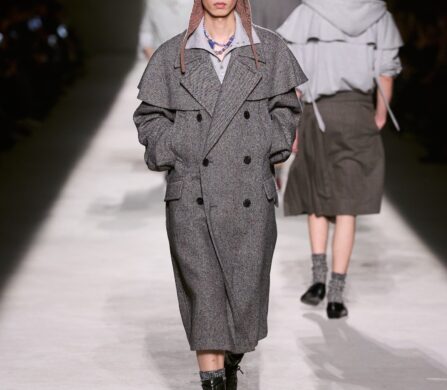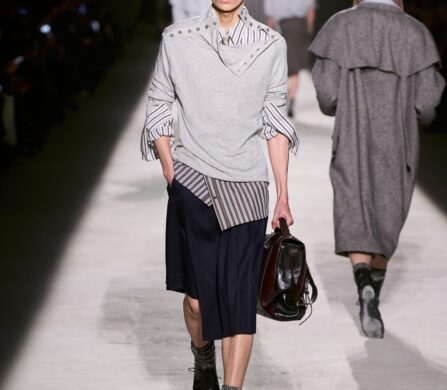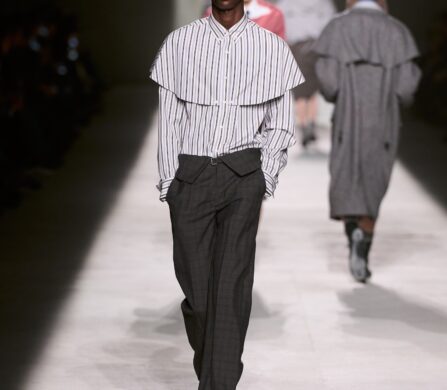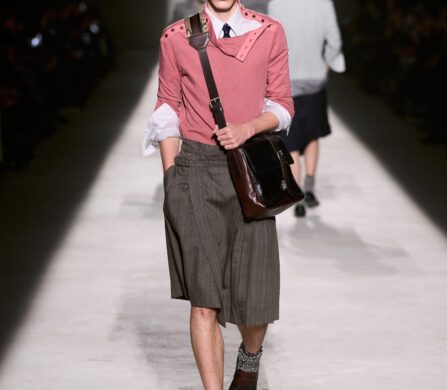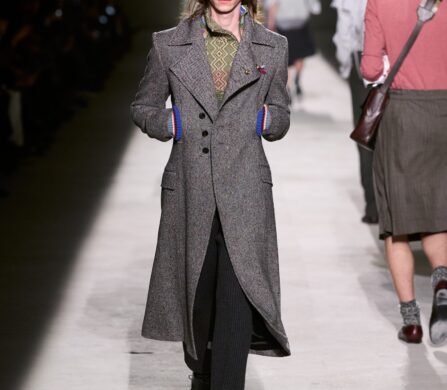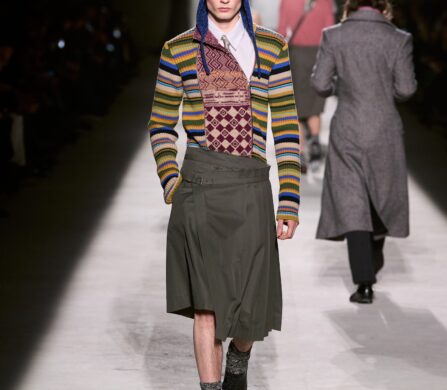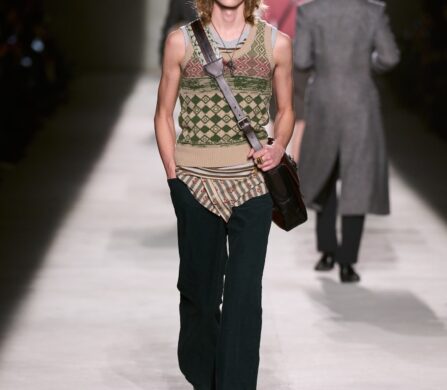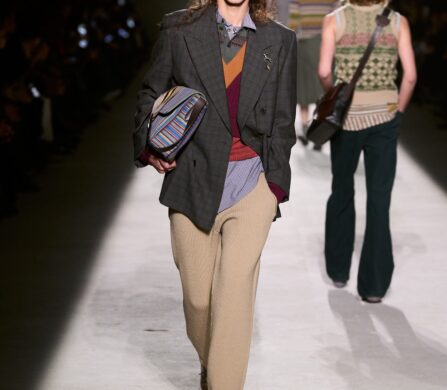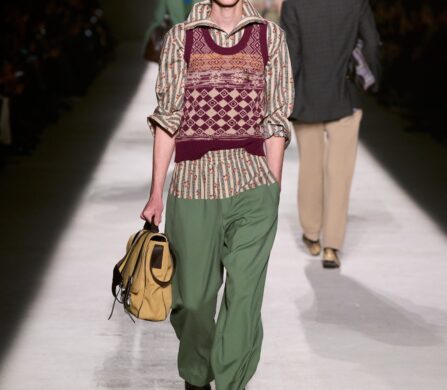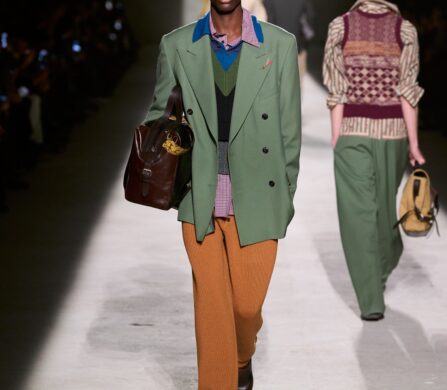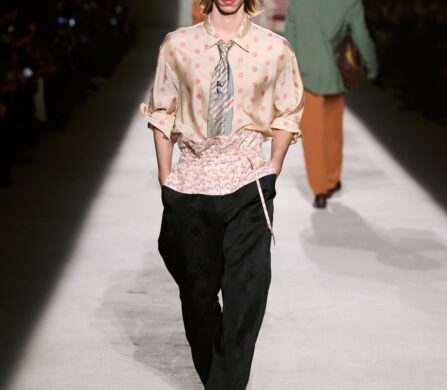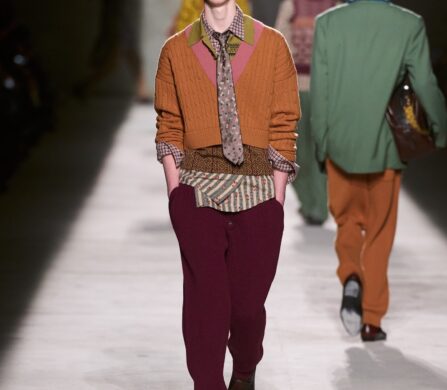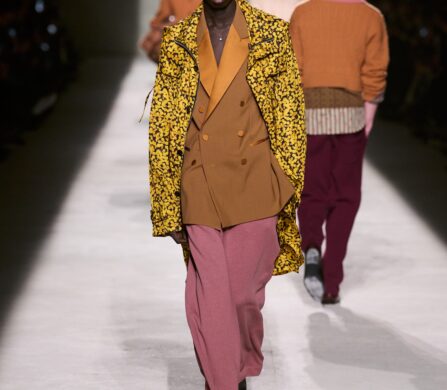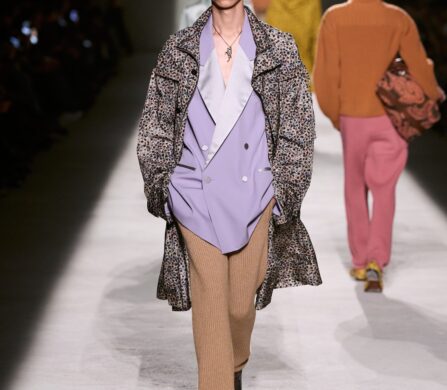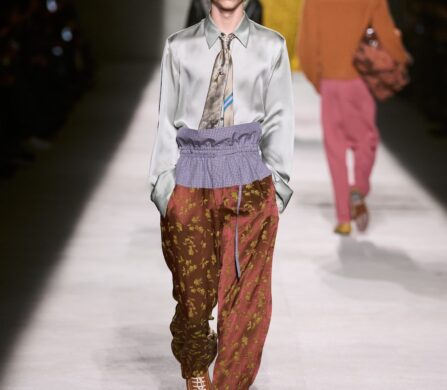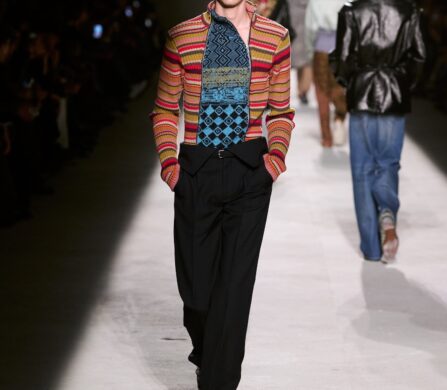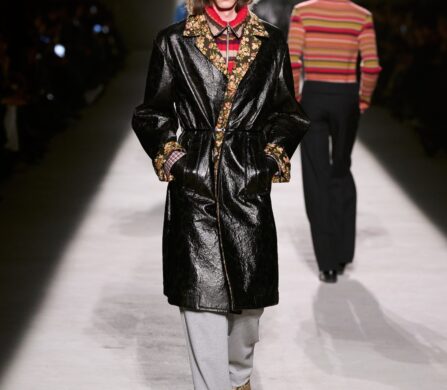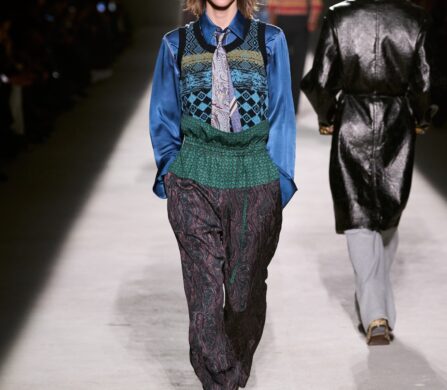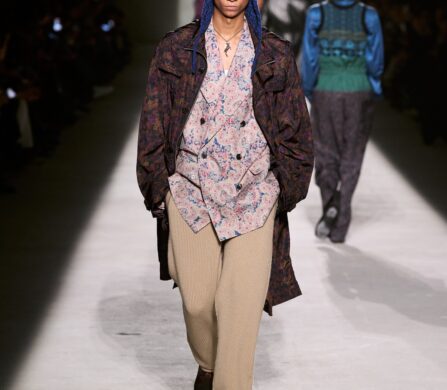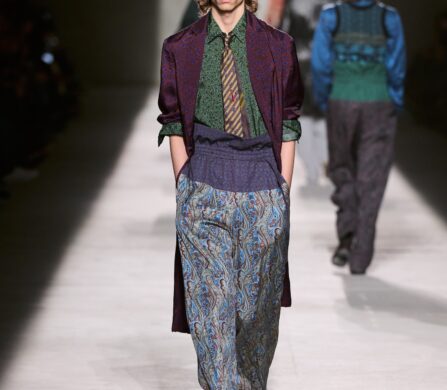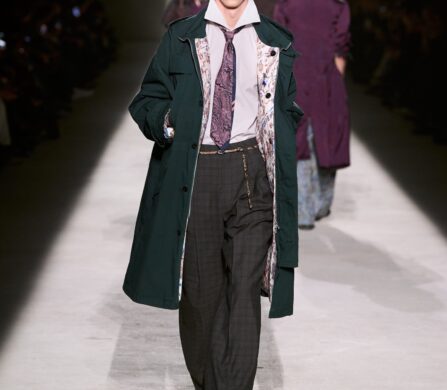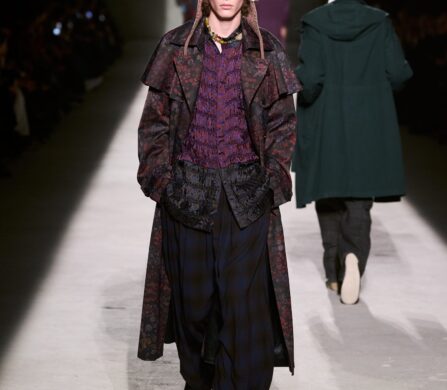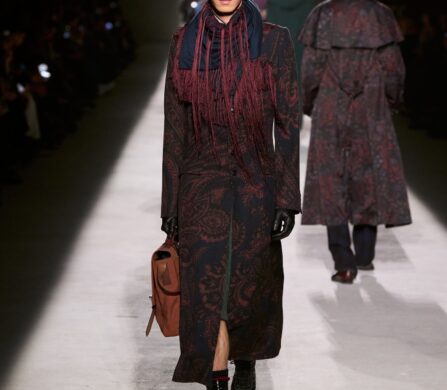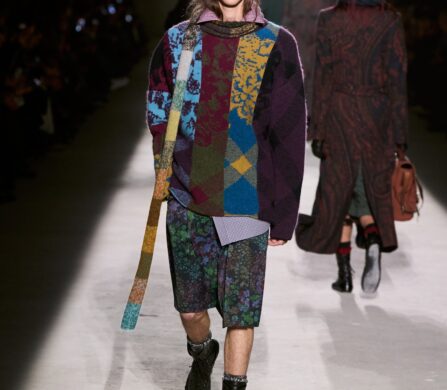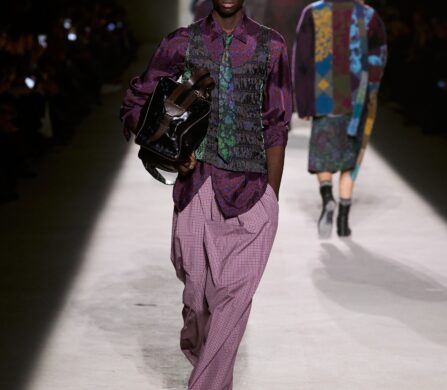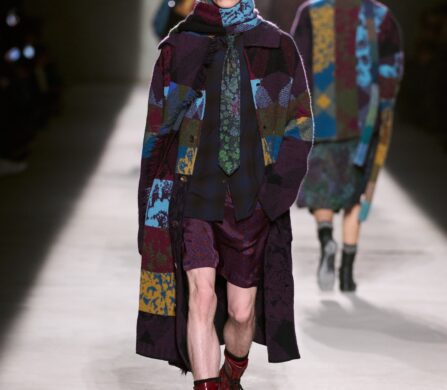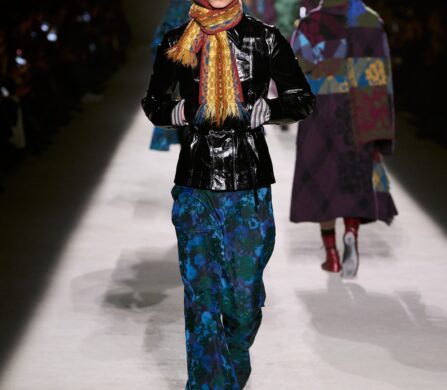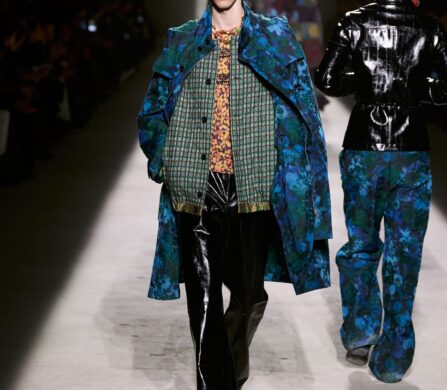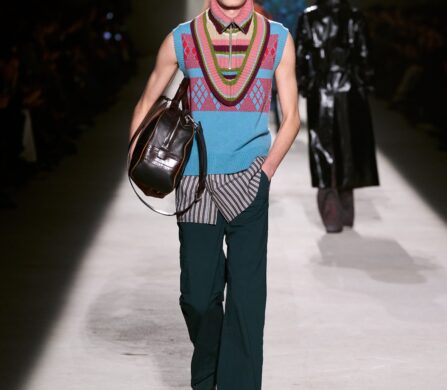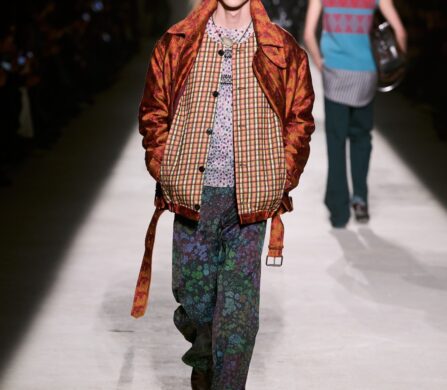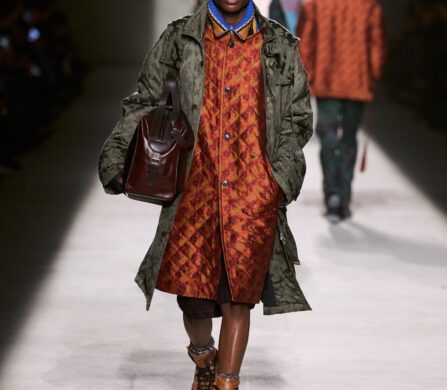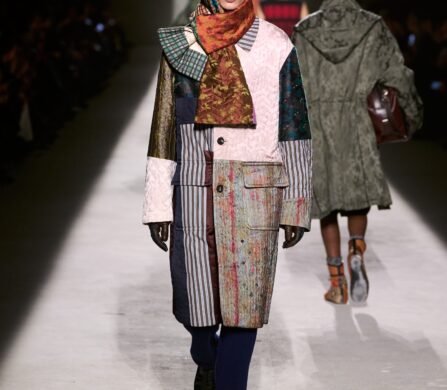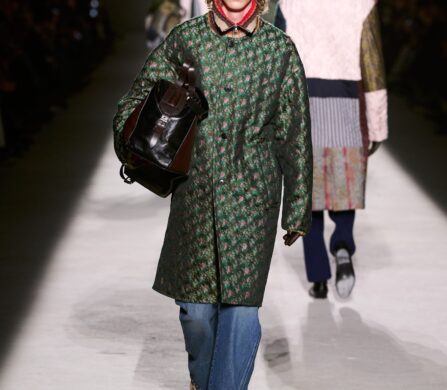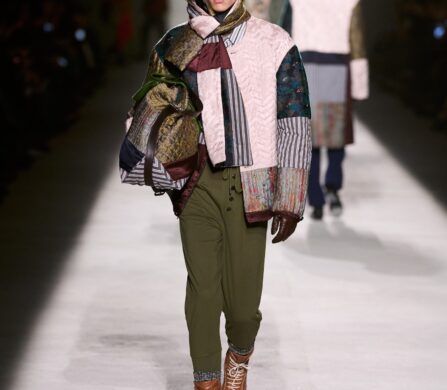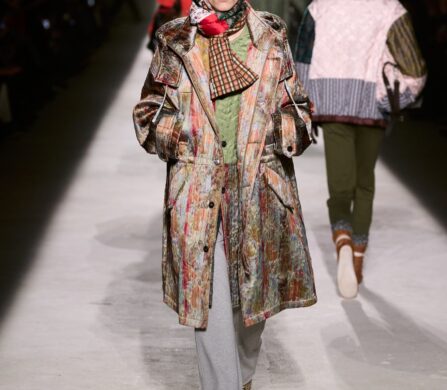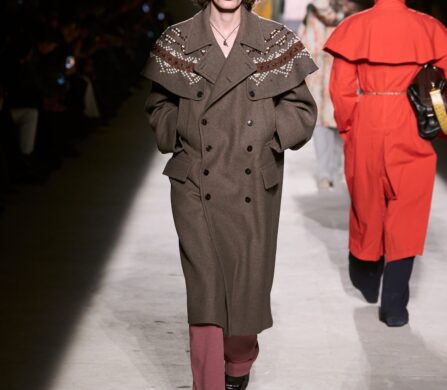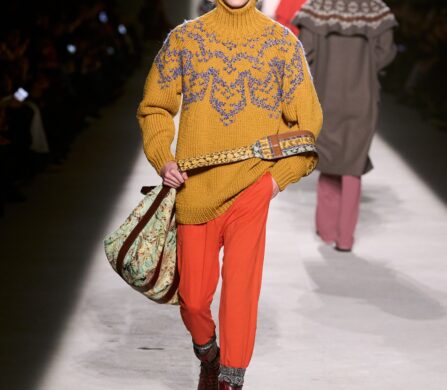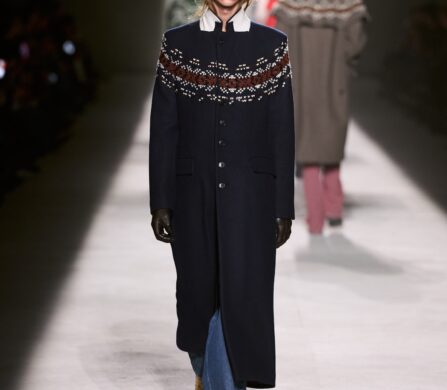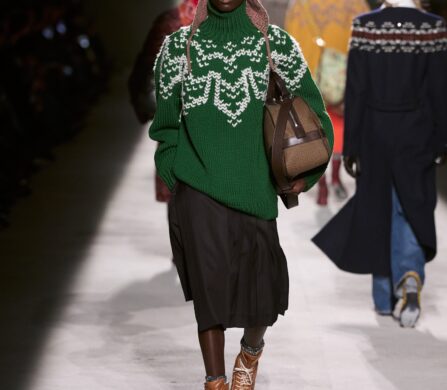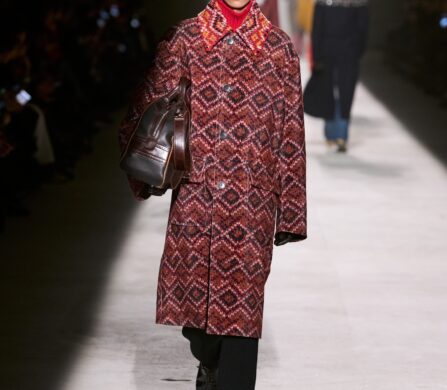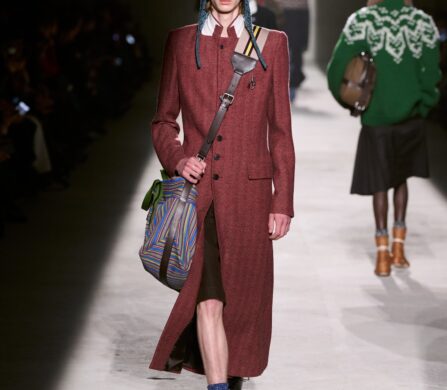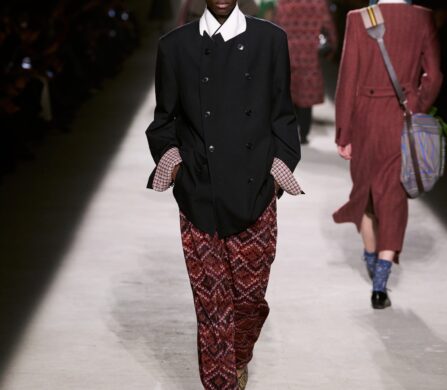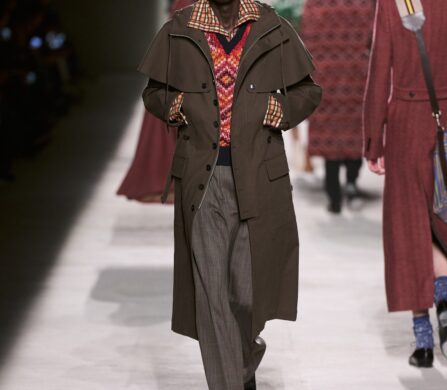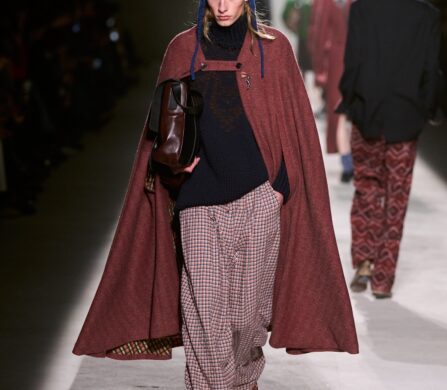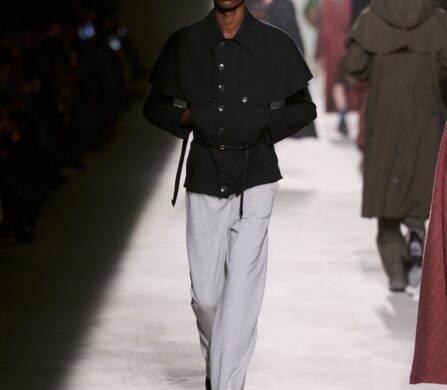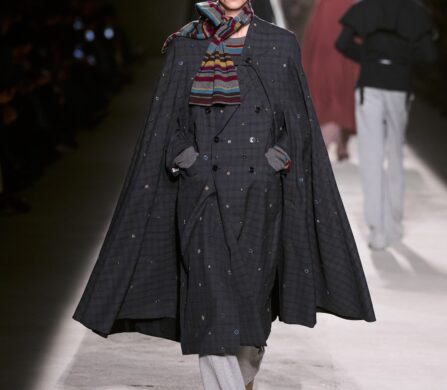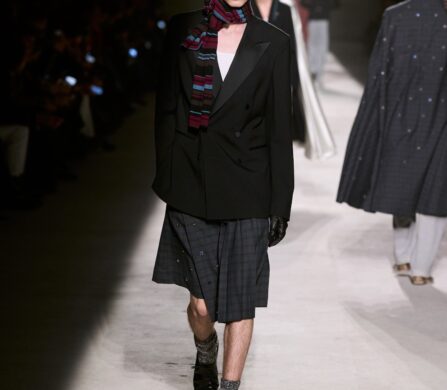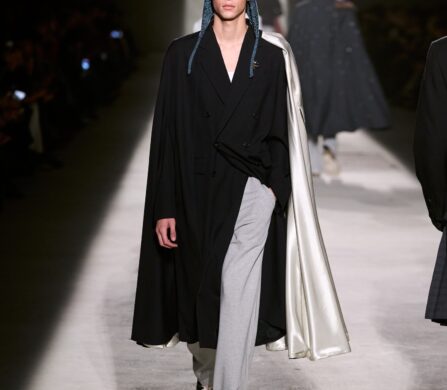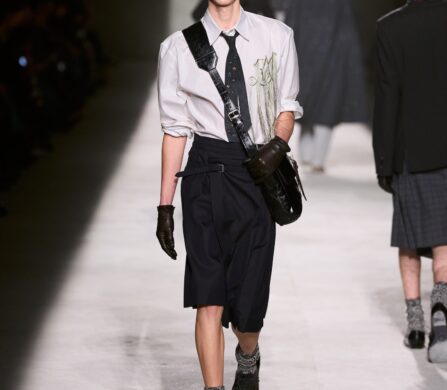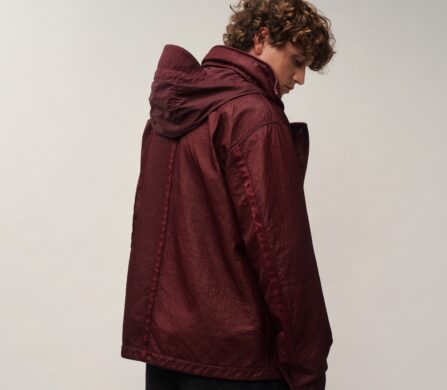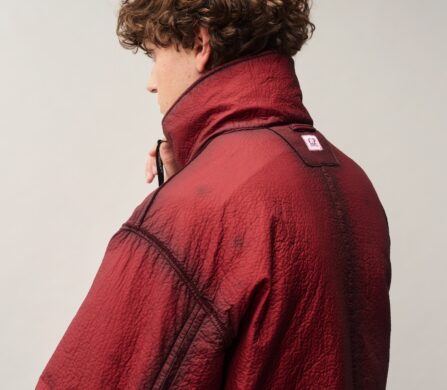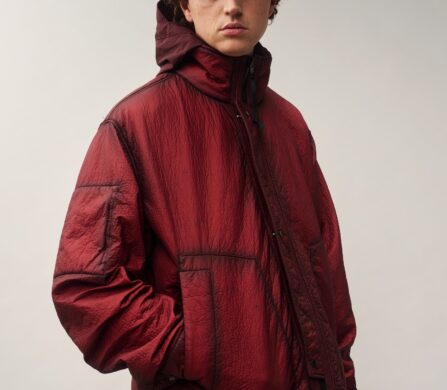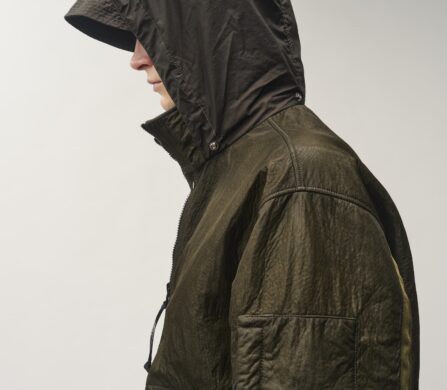


McQueen chose tension this season. It’s a thrill that has always been the house’s signature, but in Seán McGirr’s sophomore outing, it became something far more potent than a mood. The Spring/Summer 2026 collection bypassed easy runway theatrics for a psychological interrogation of what happens when the urban façade collapses and we surrender to impulse. This was a visceral dive into the conflict between strict order and the primitive drive, essentially asking: where does the wildness live in a world desperate for control?
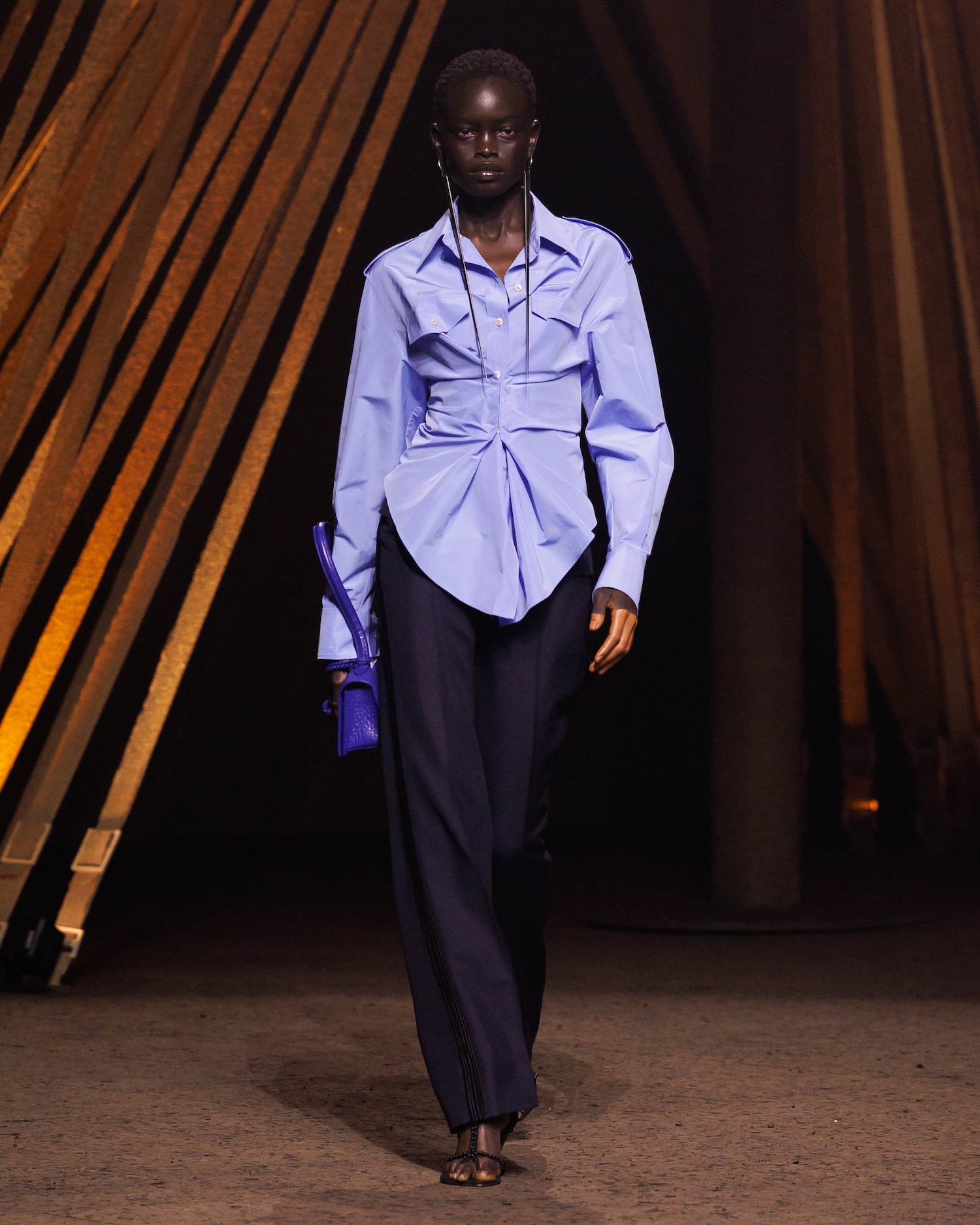
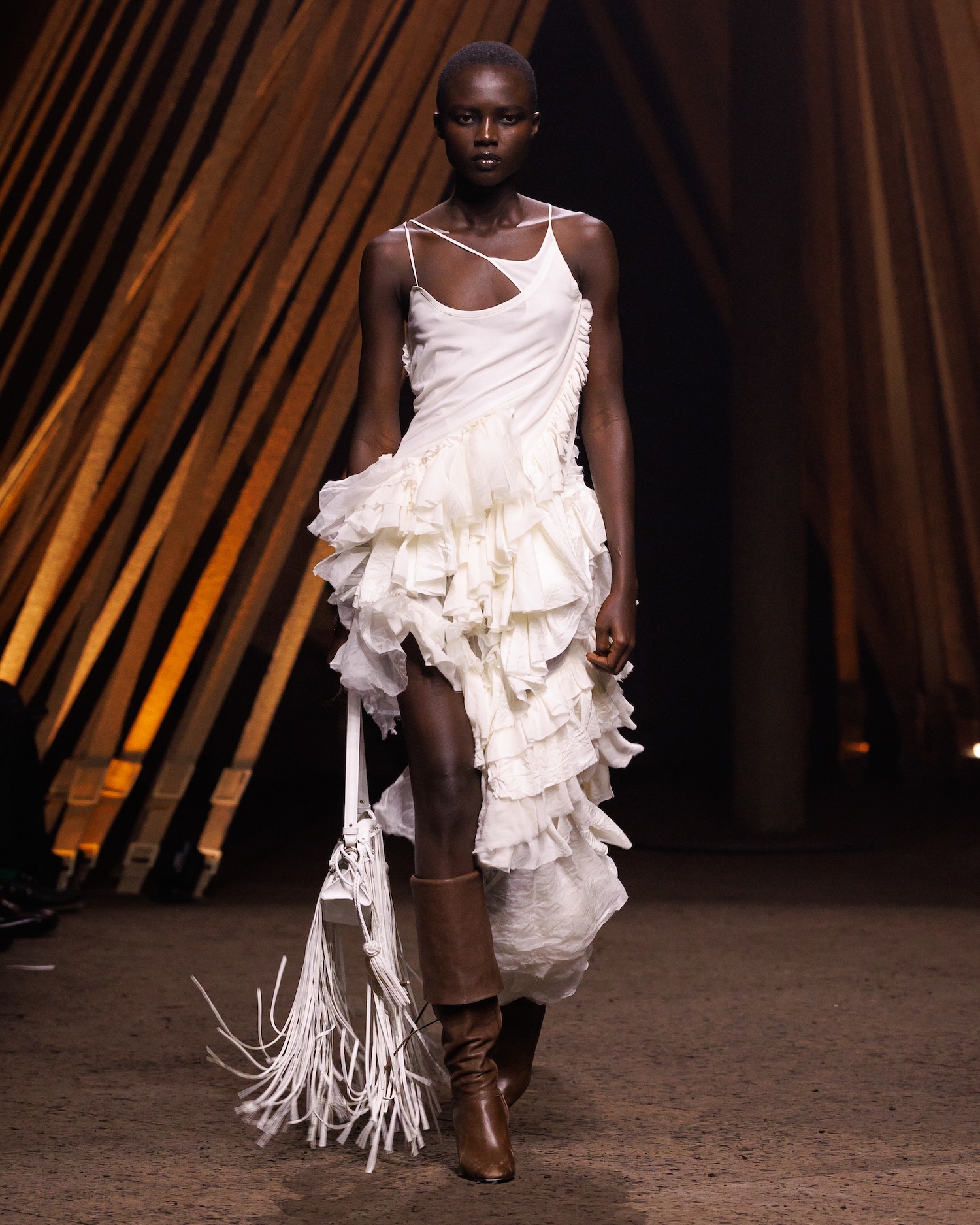
The thematic backbone, drawn from the unnerving 1973 folk horror of ‘The Wicker Man,’ was brilliantly rendered in the environment. The venue felt consecrated, dominated by a magnificent, fortified maypole structure – a powerful symbol of communal ritual crafted from hessian ribbon and natural foliage. It was a pagan altar set in Paris, instantly transporting the audience to a psychological landscape ready for transgression.
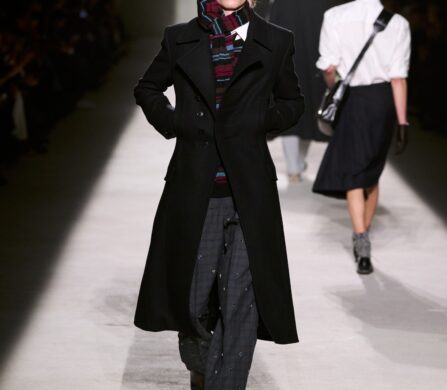
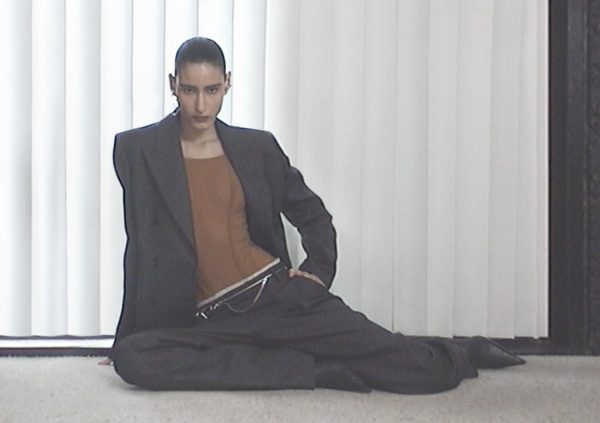
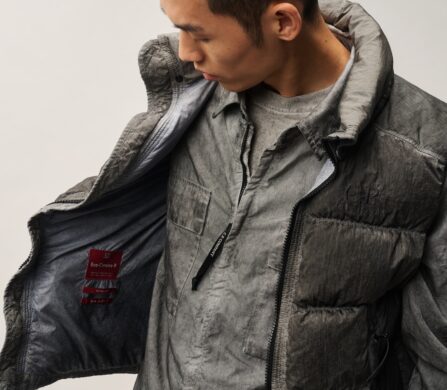
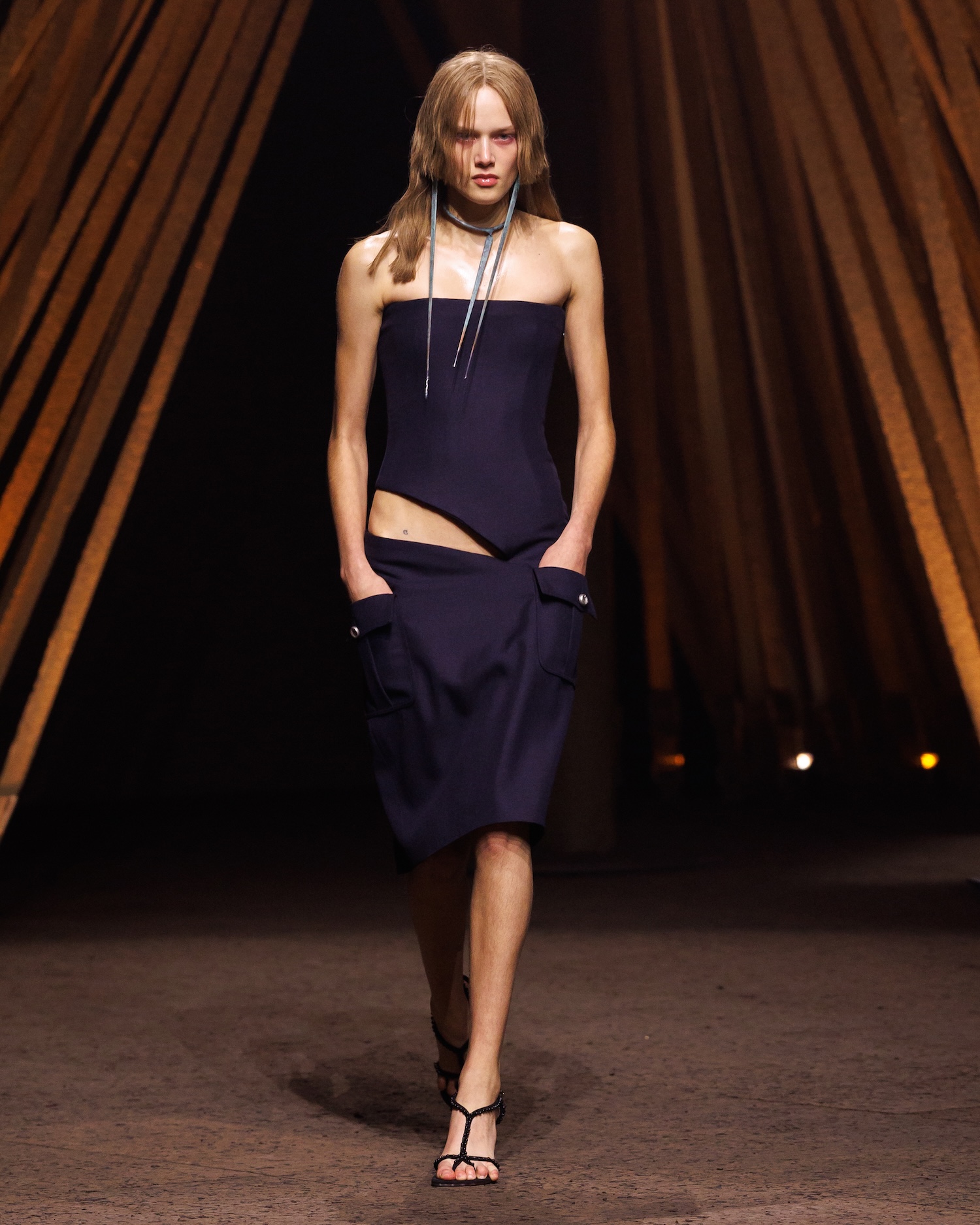
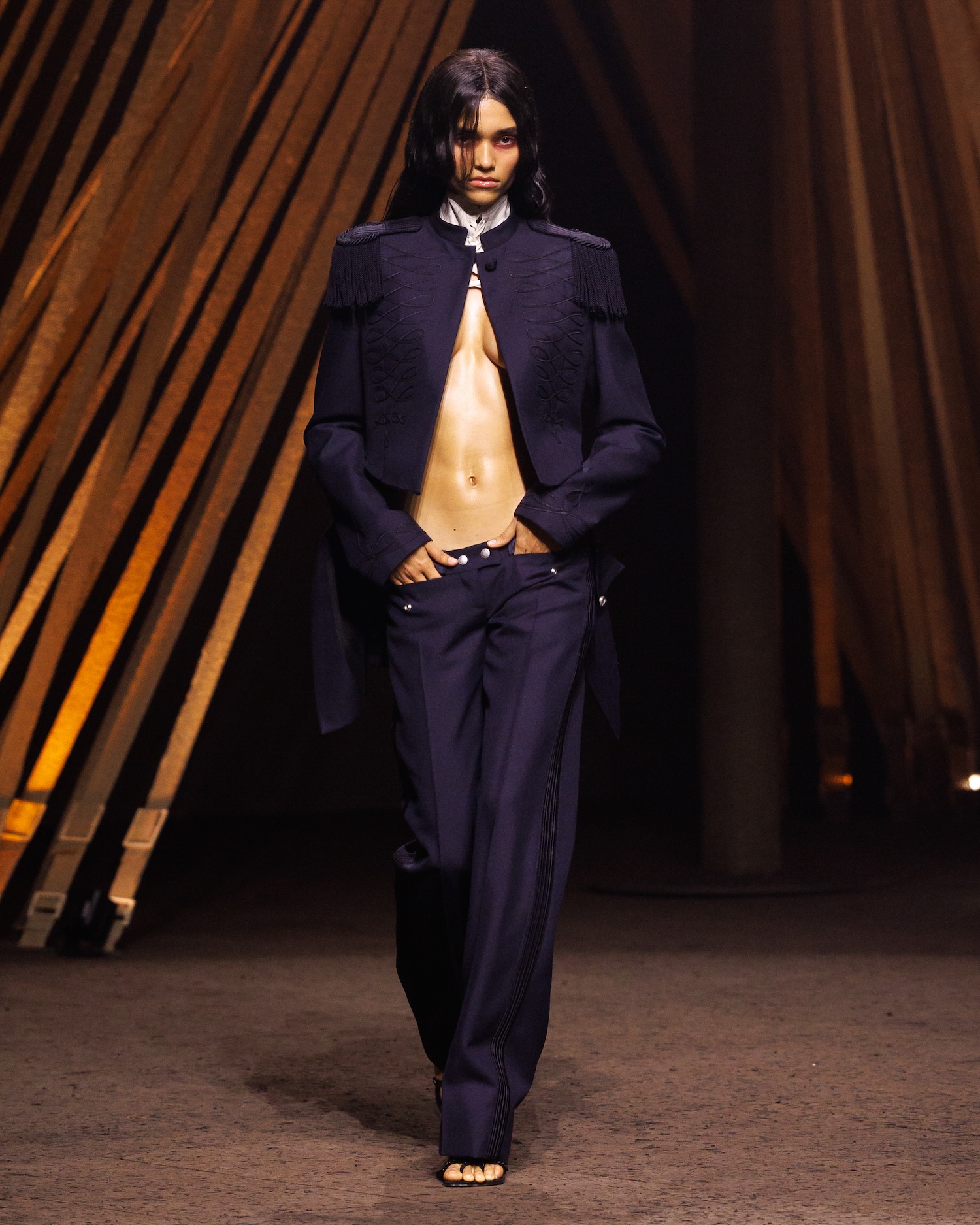
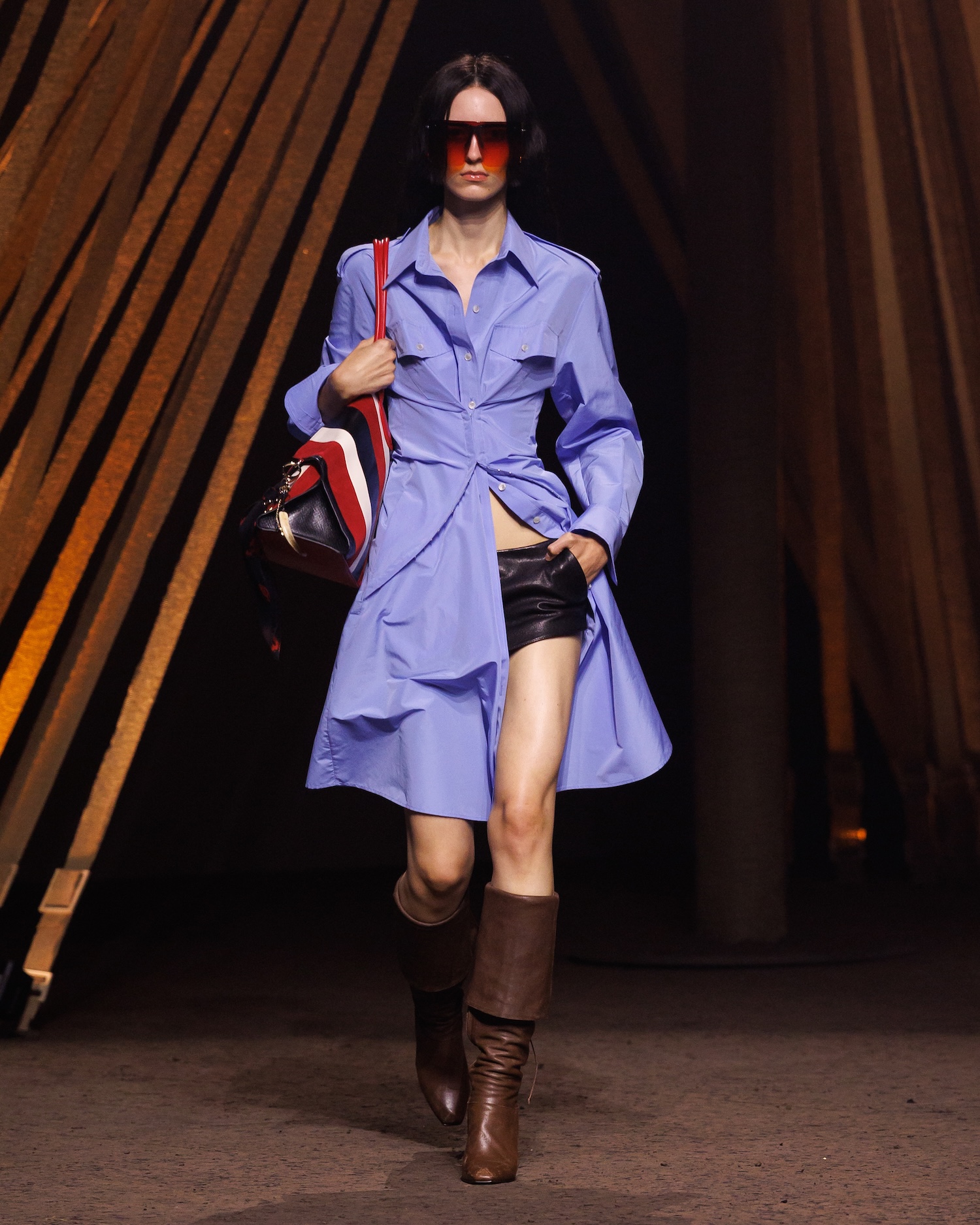
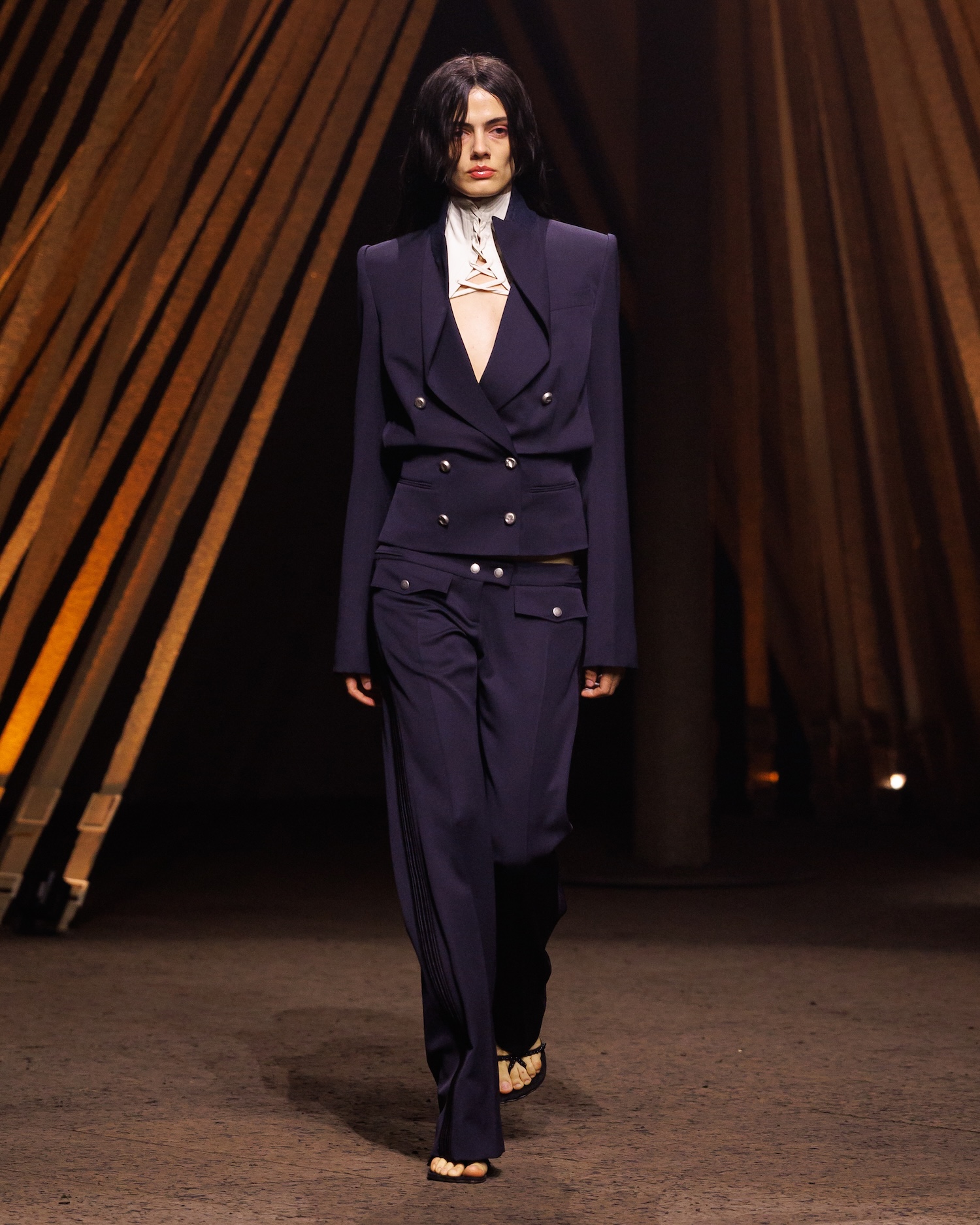
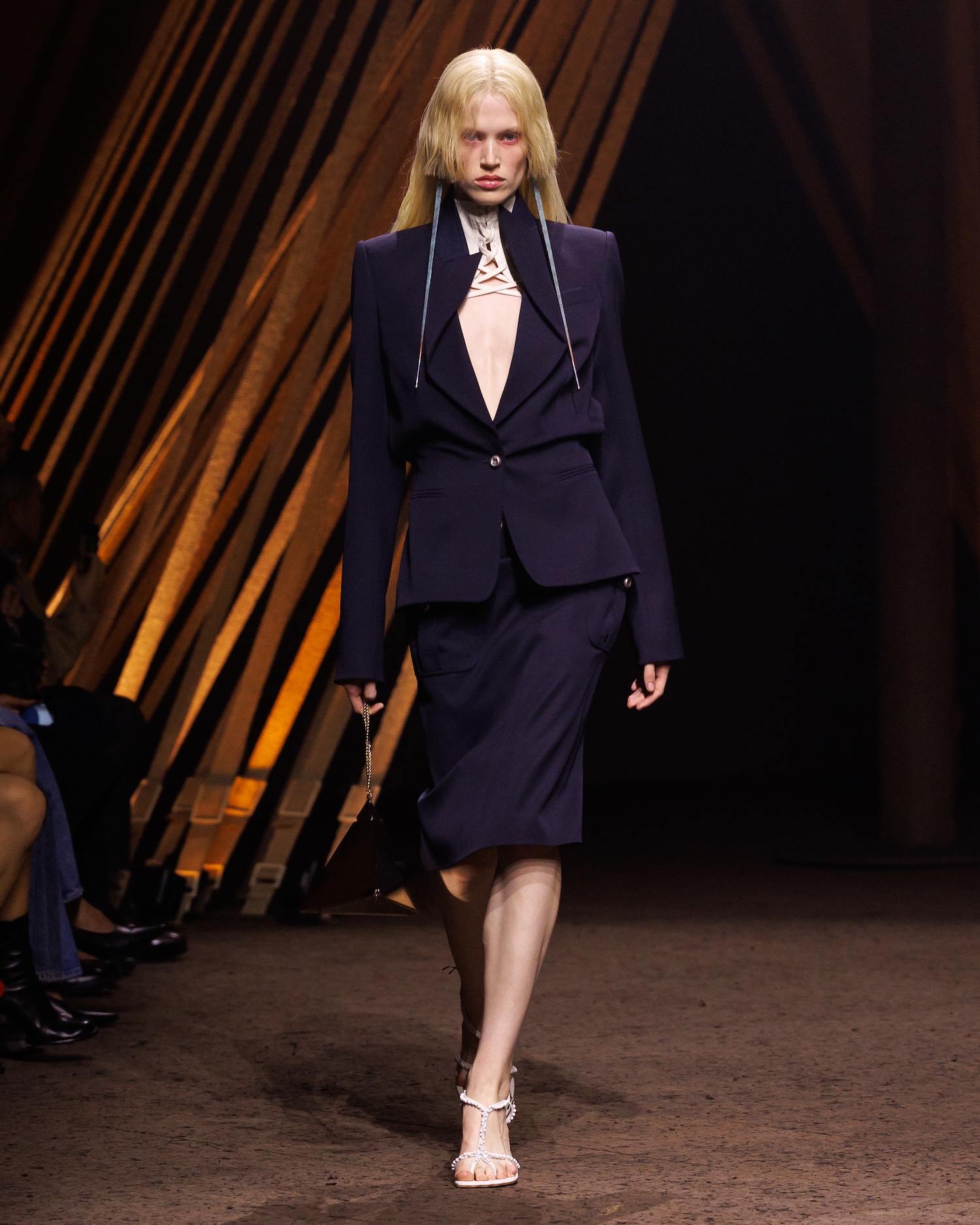
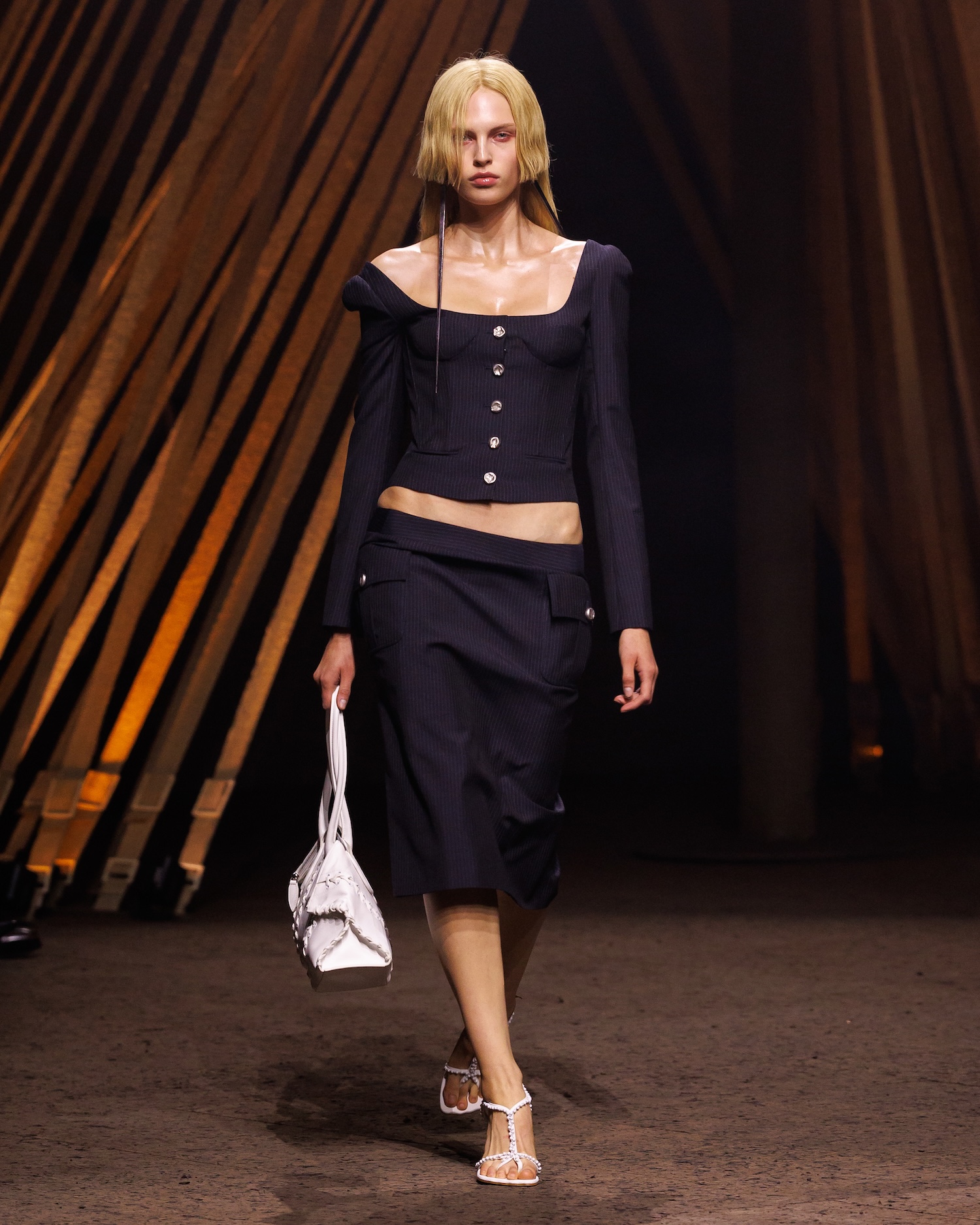
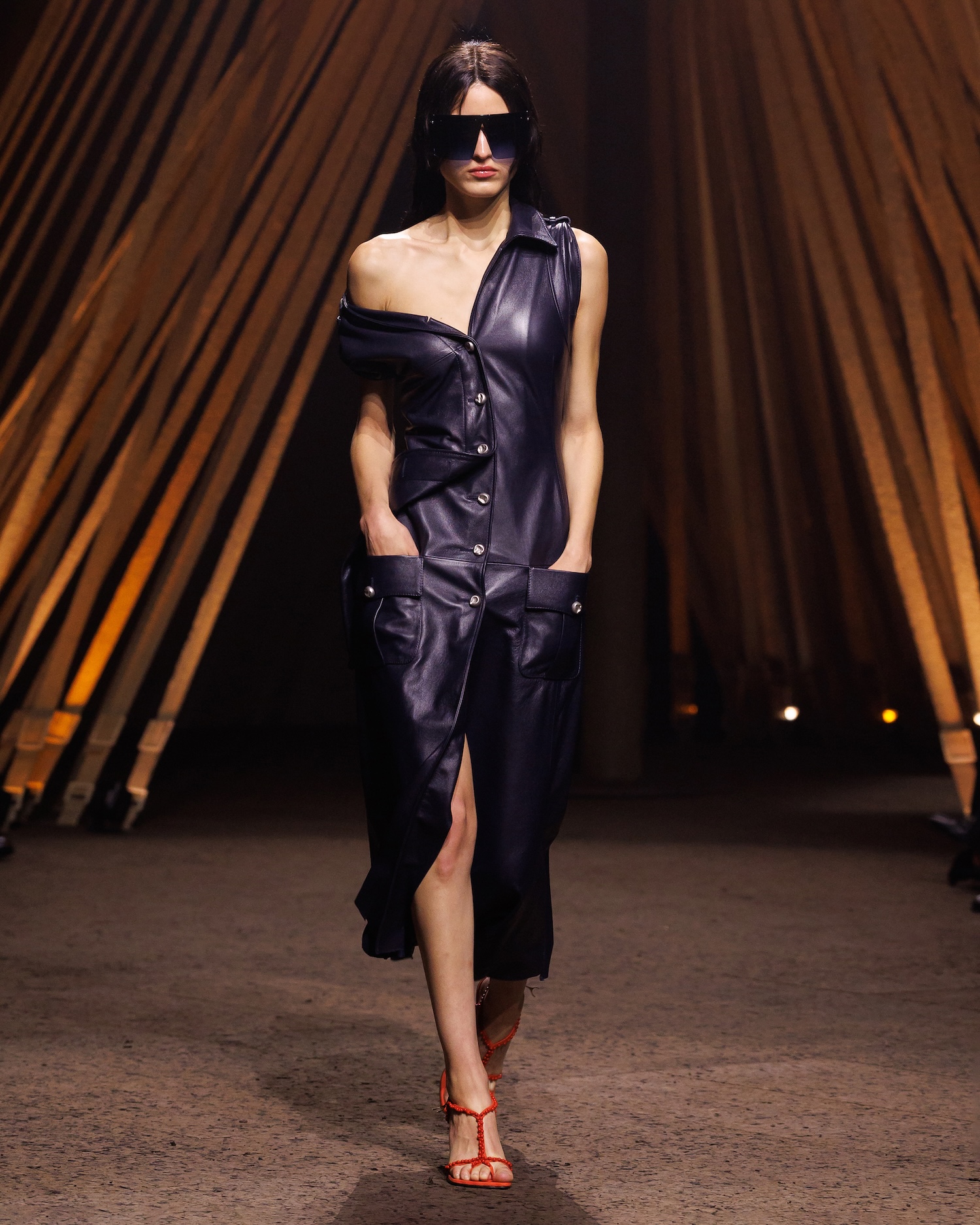
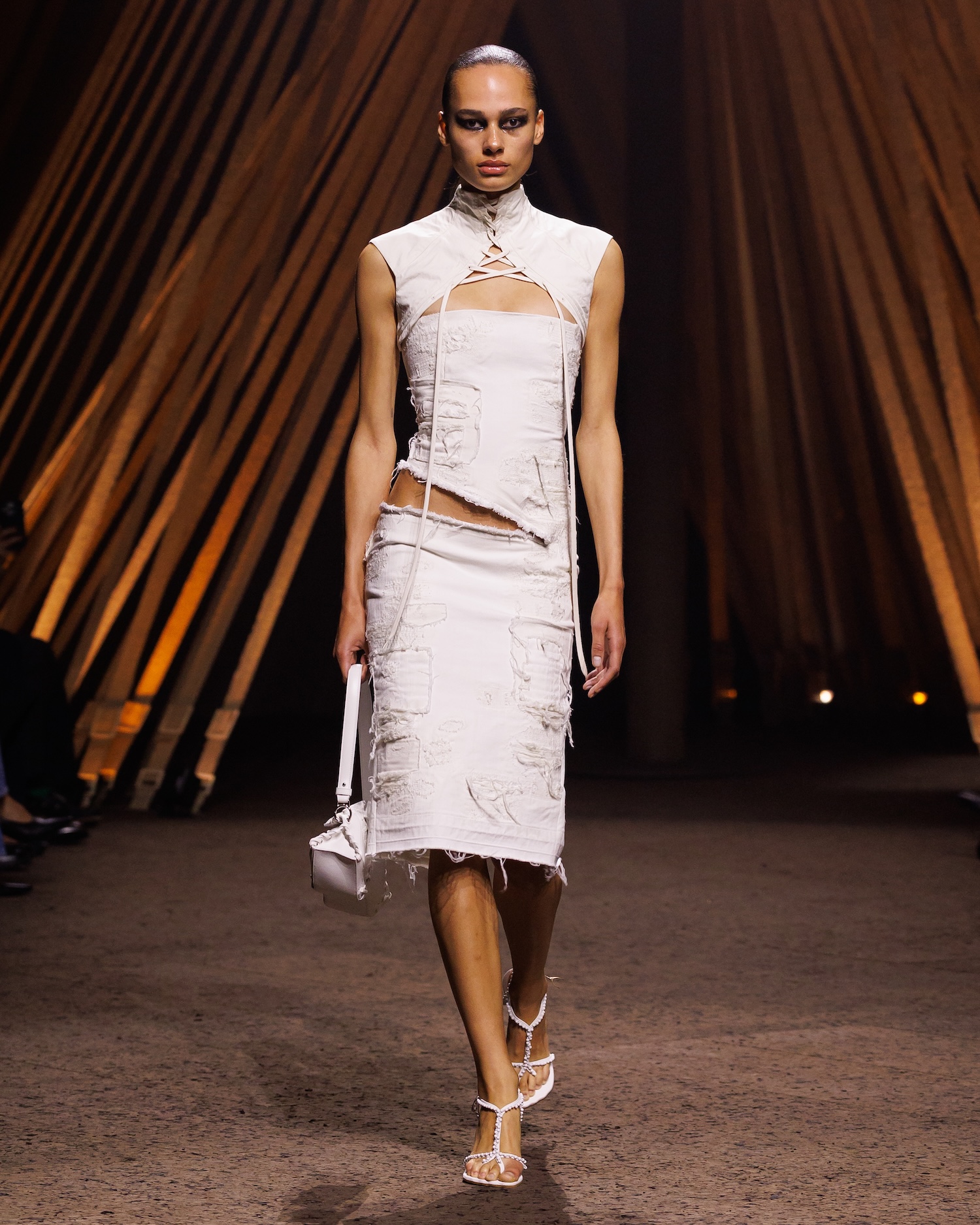
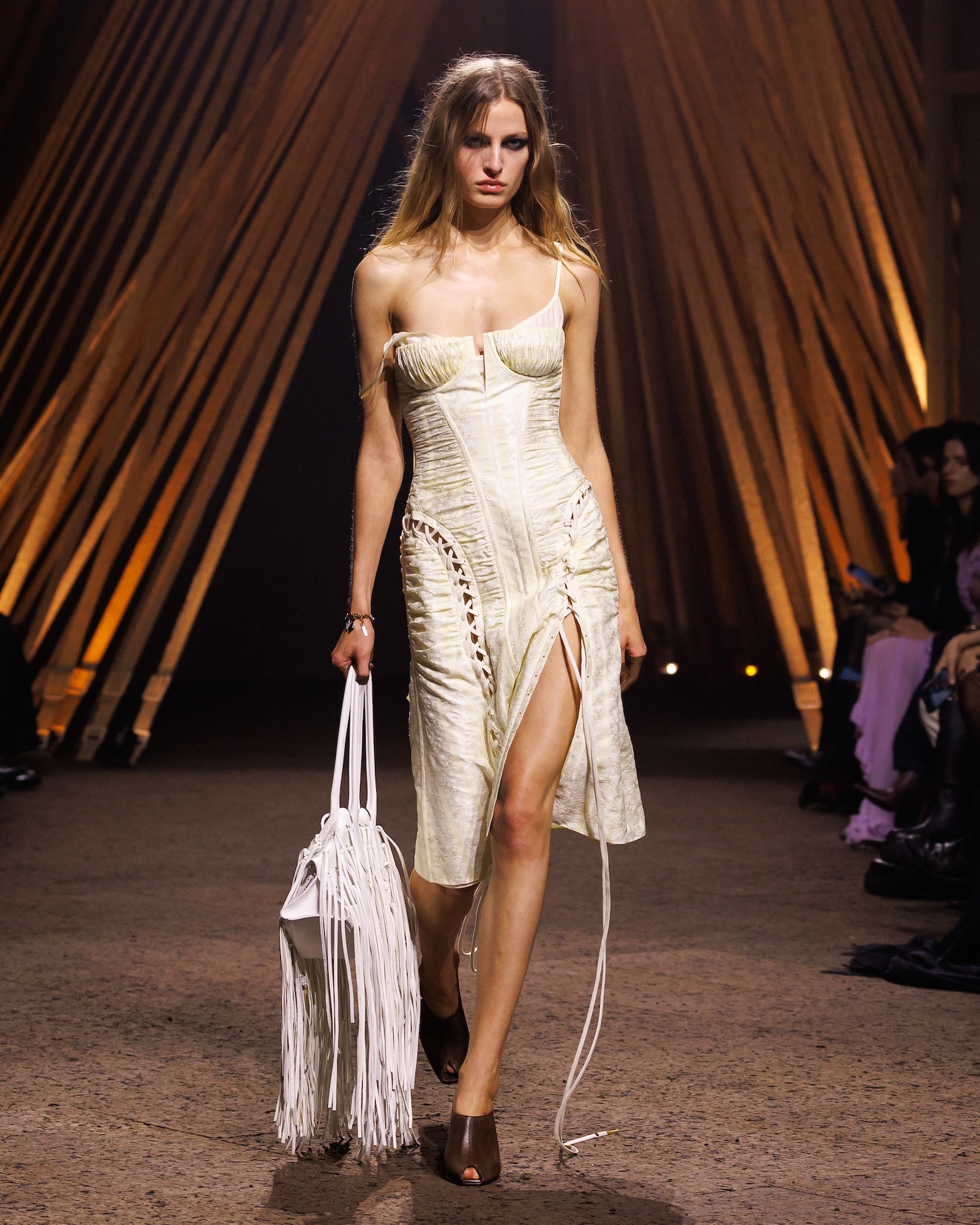
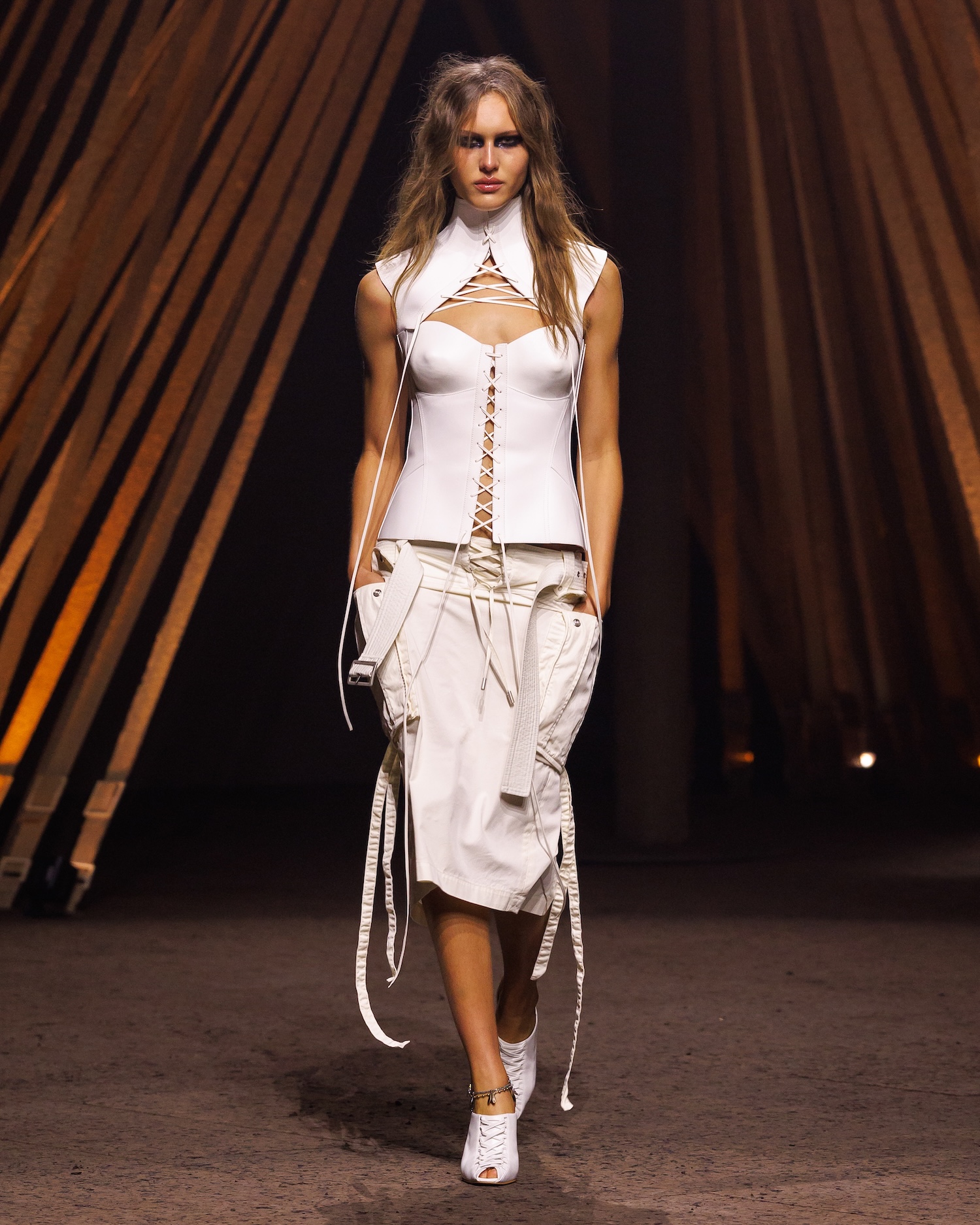
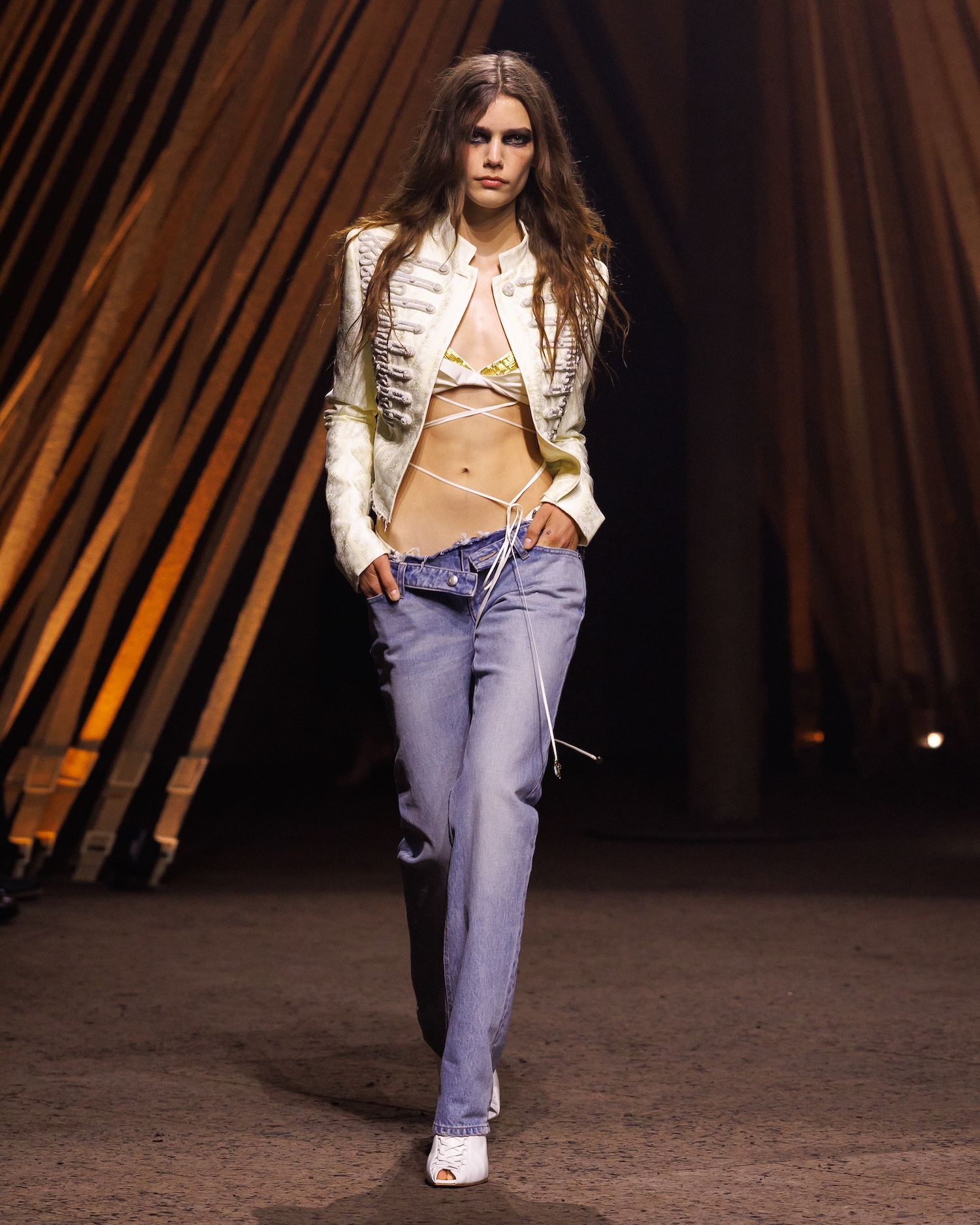
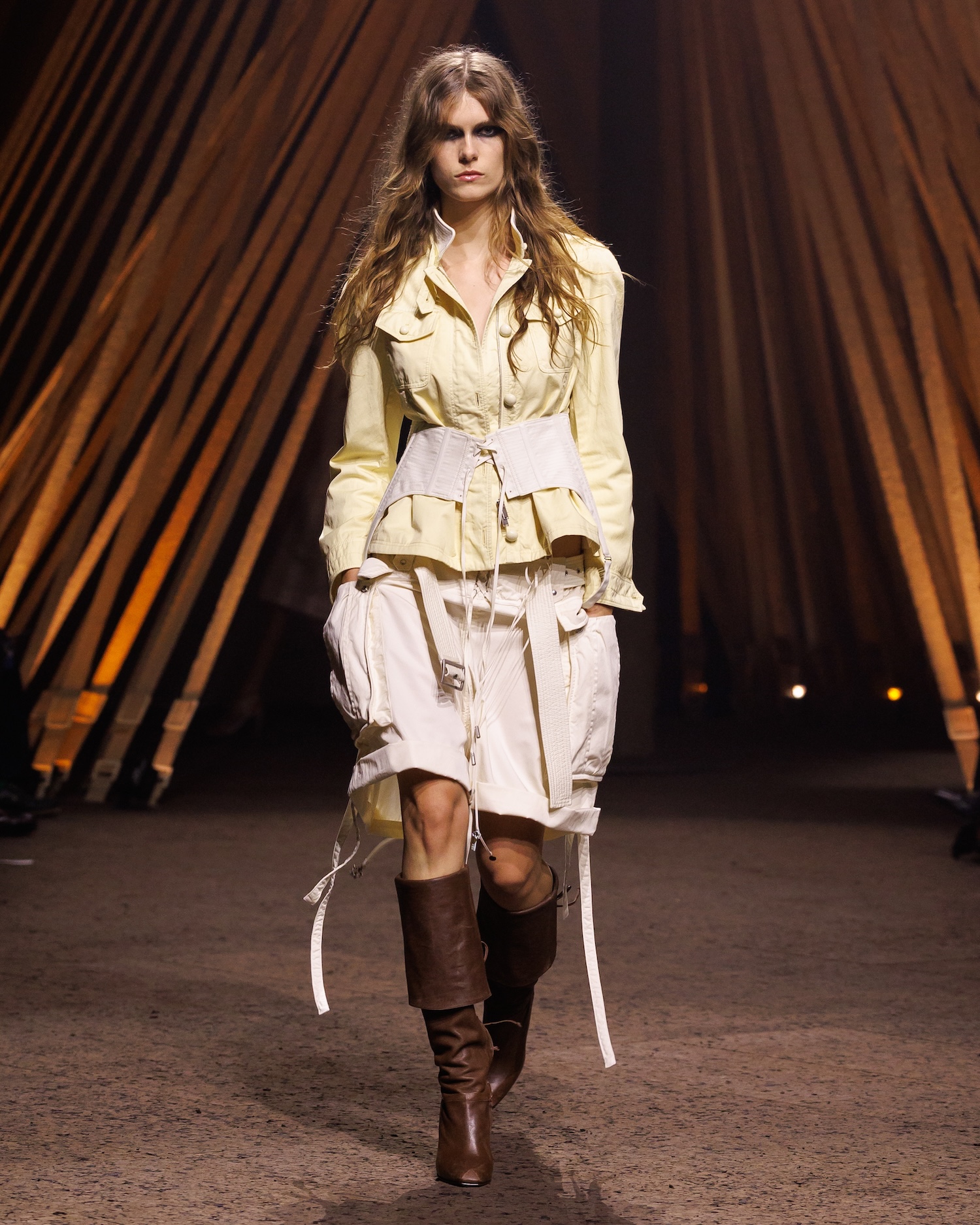
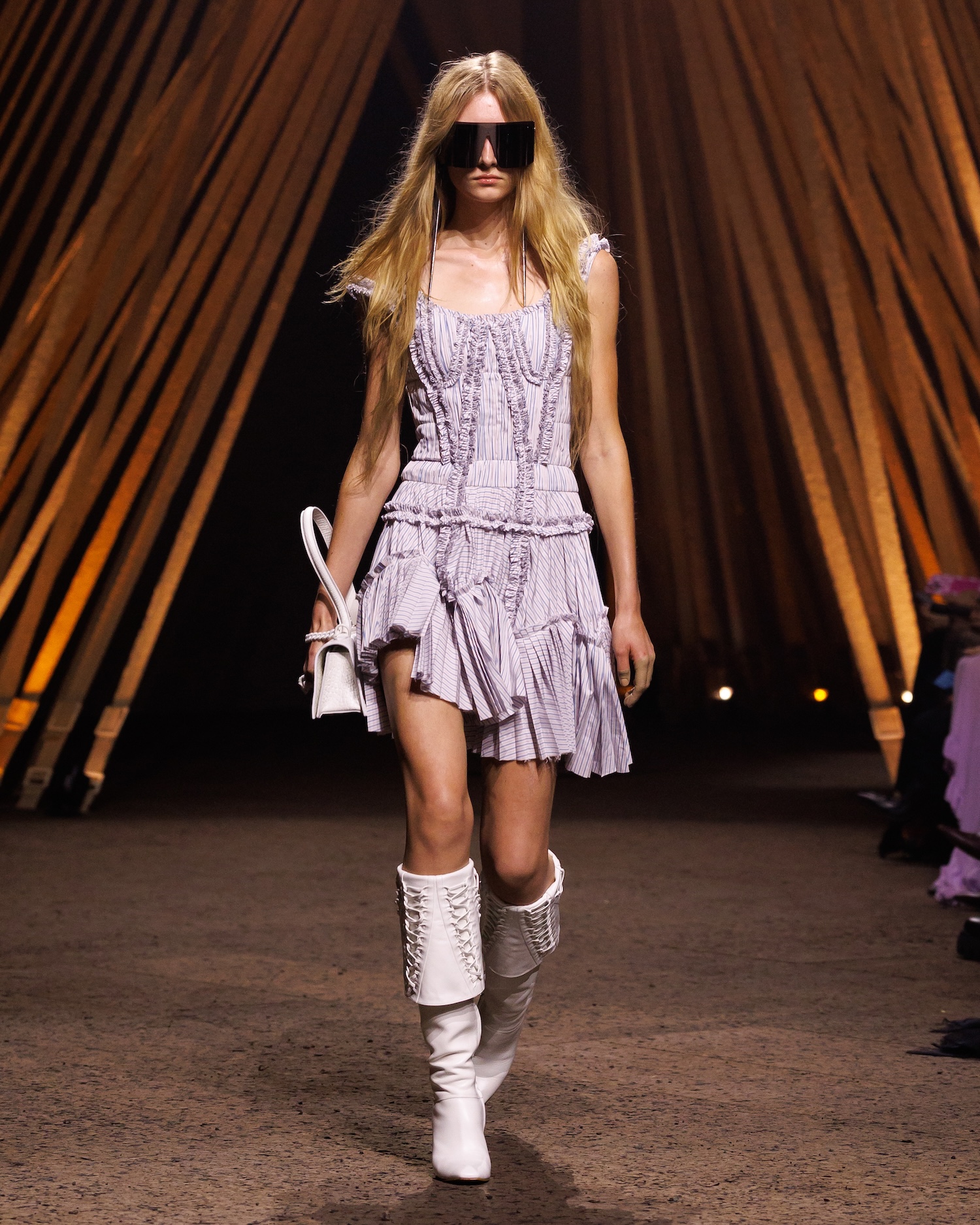
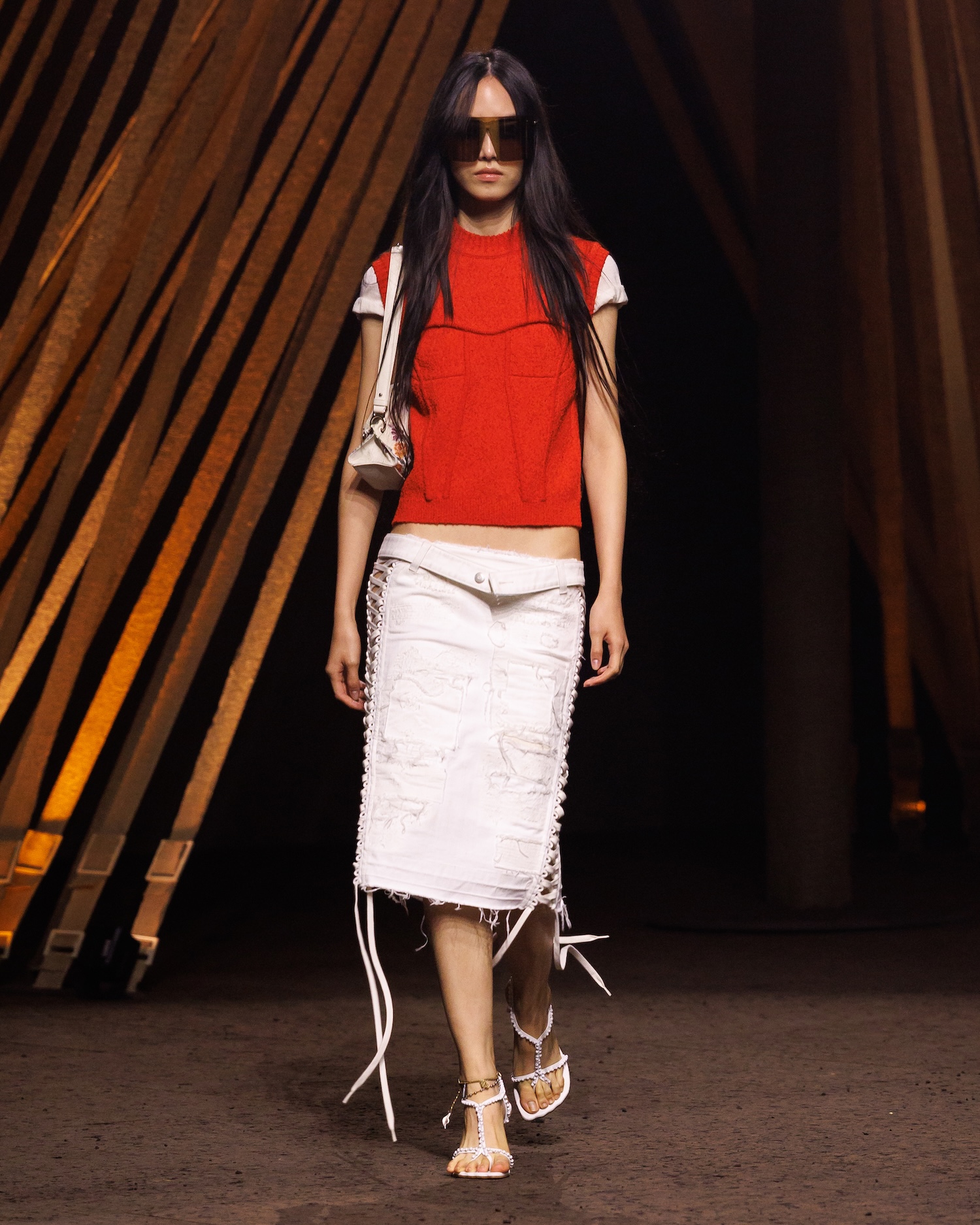
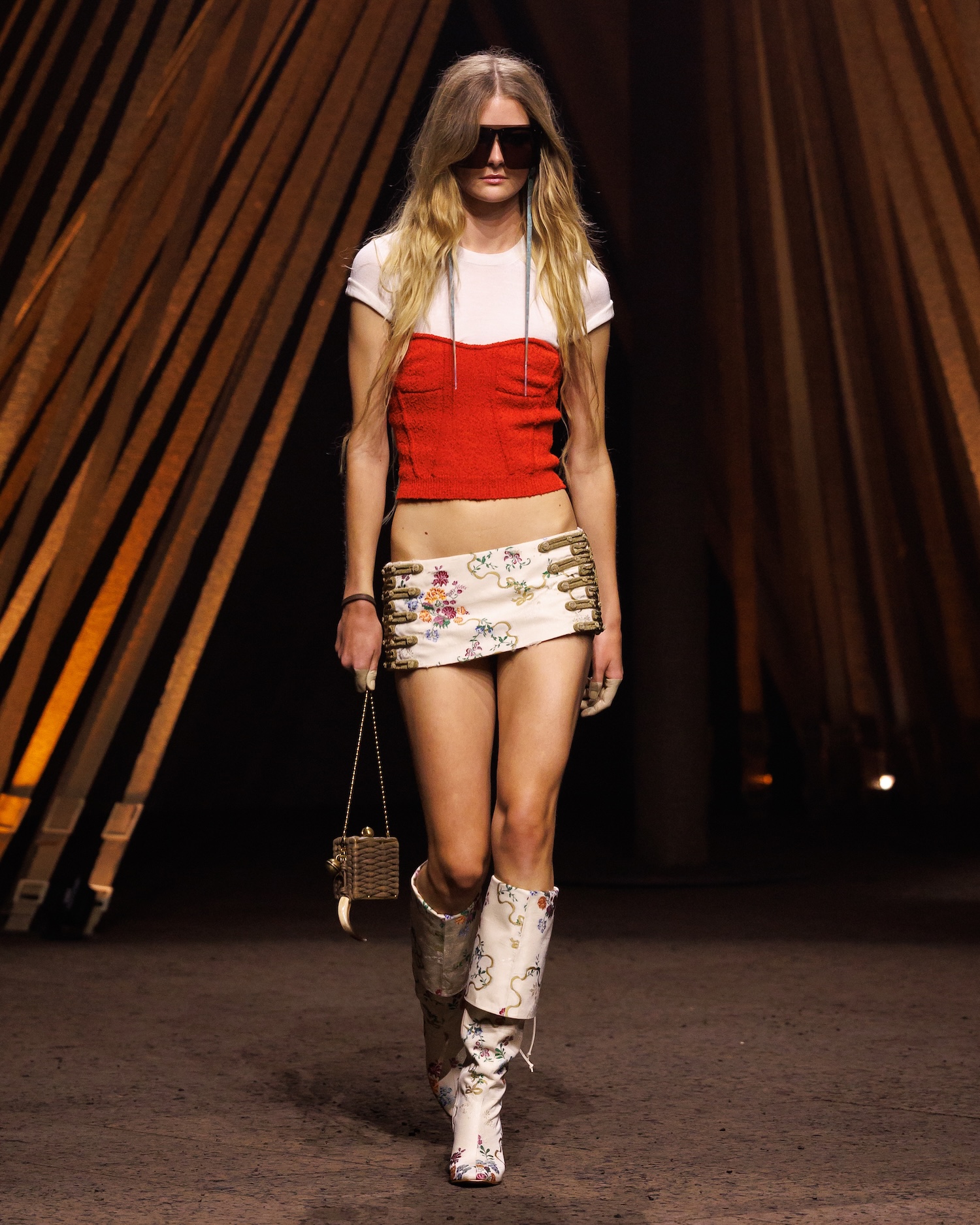
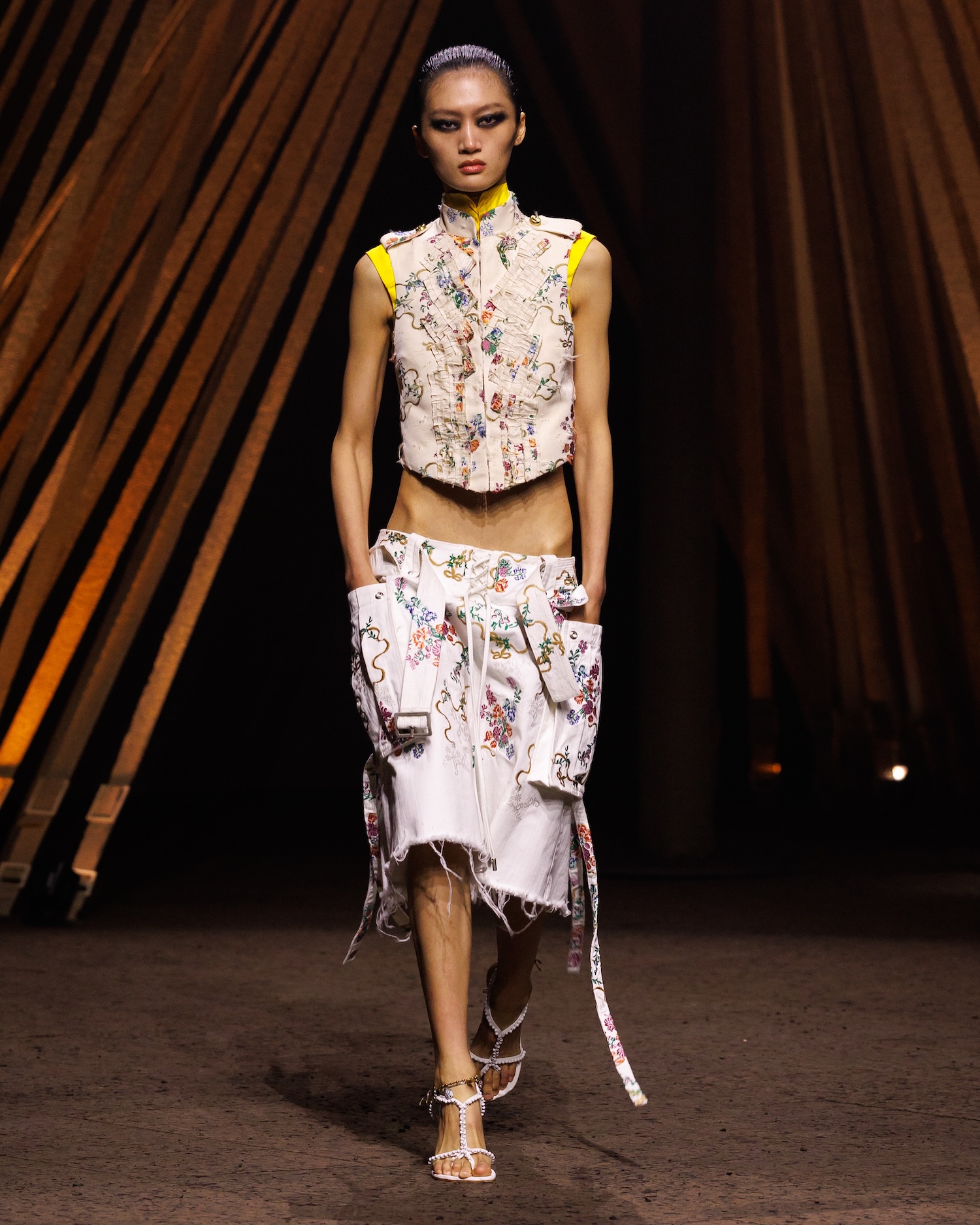
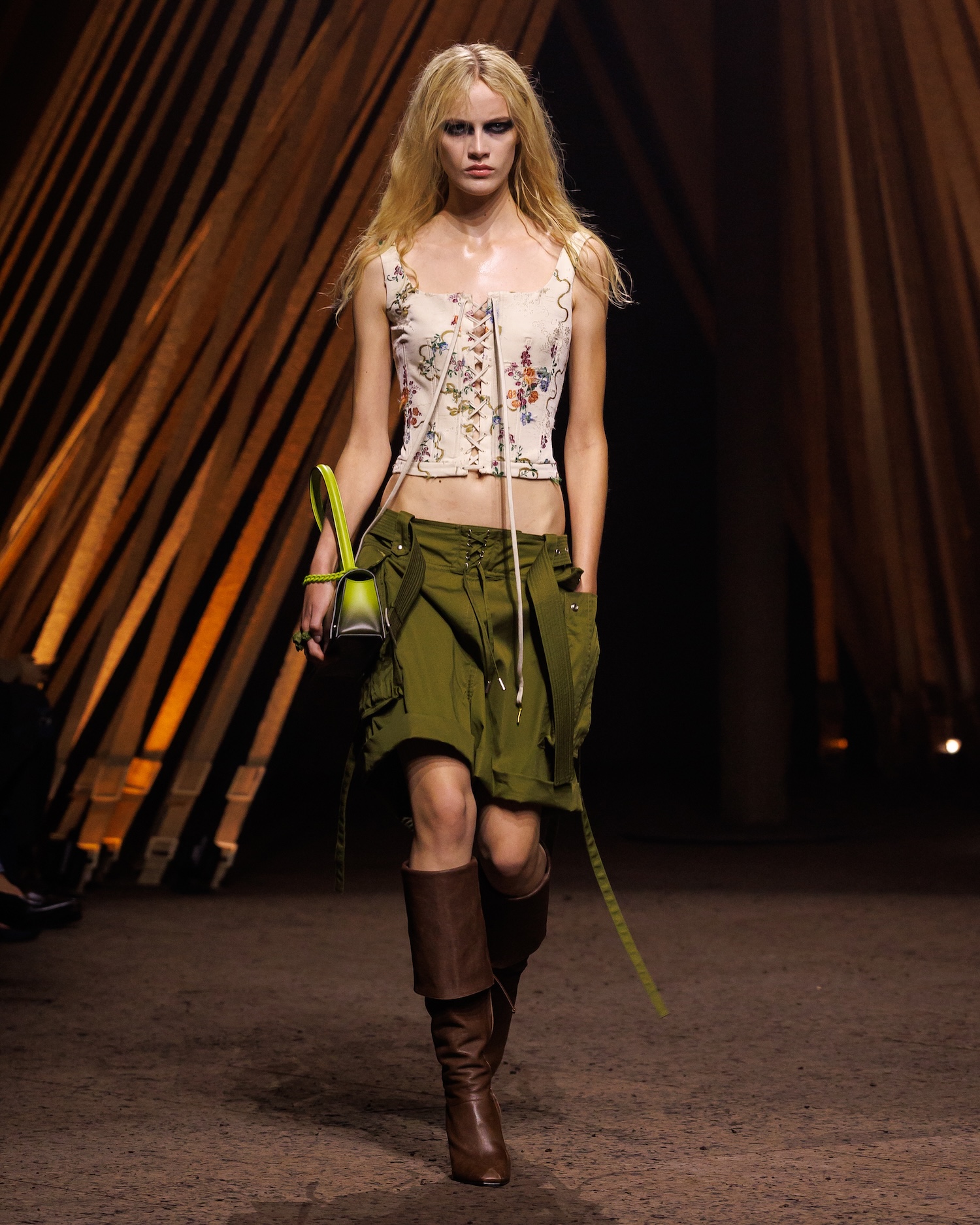
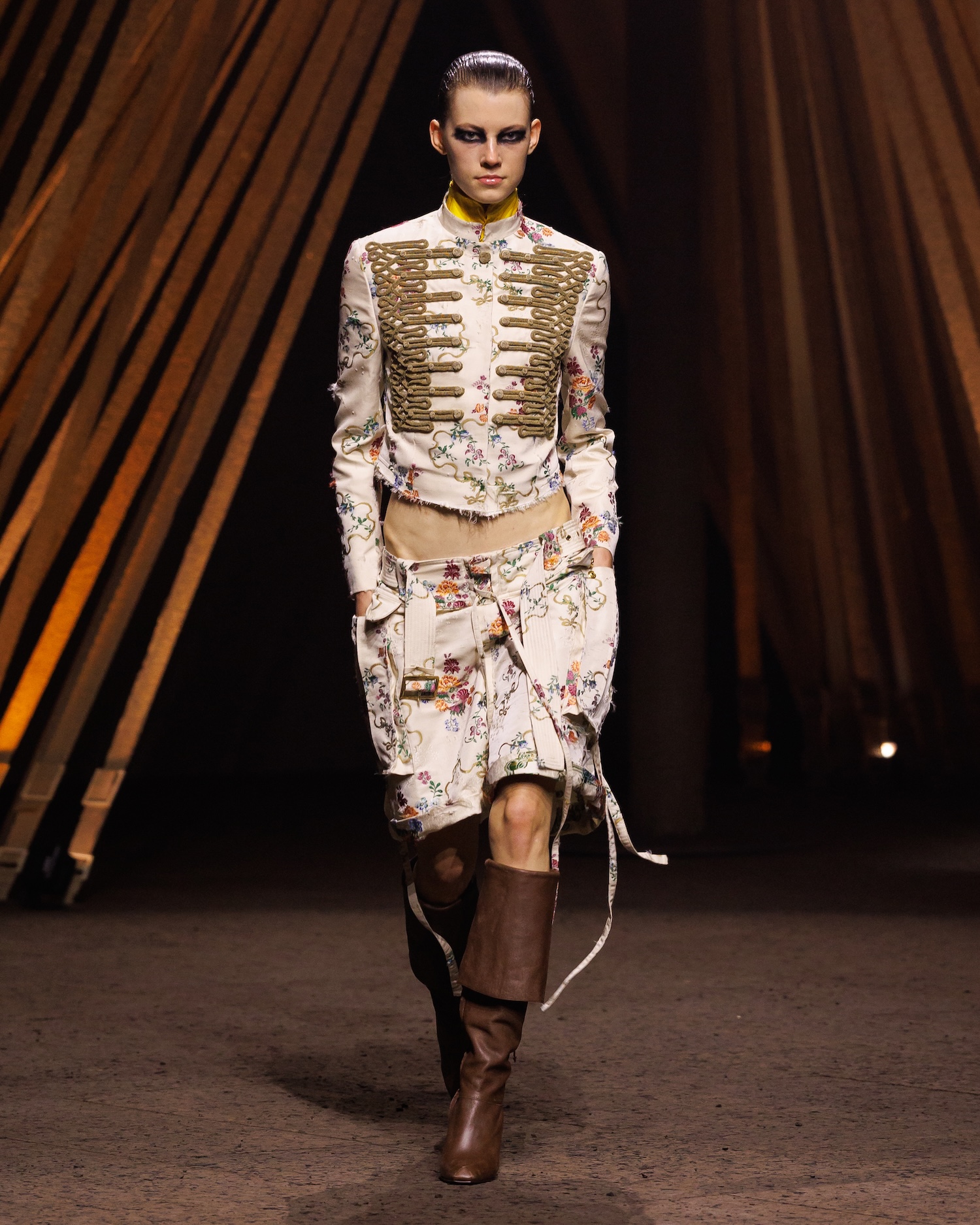
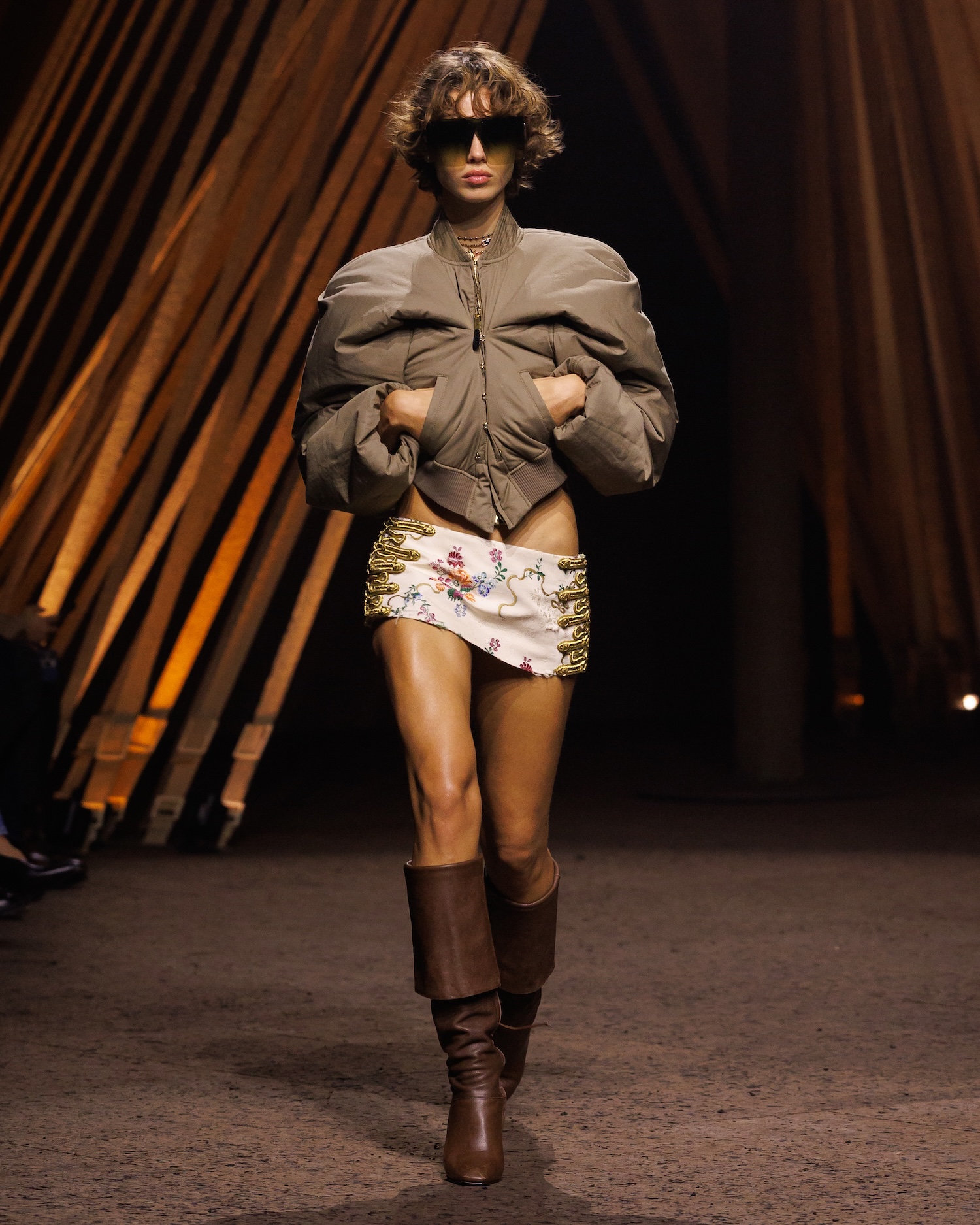
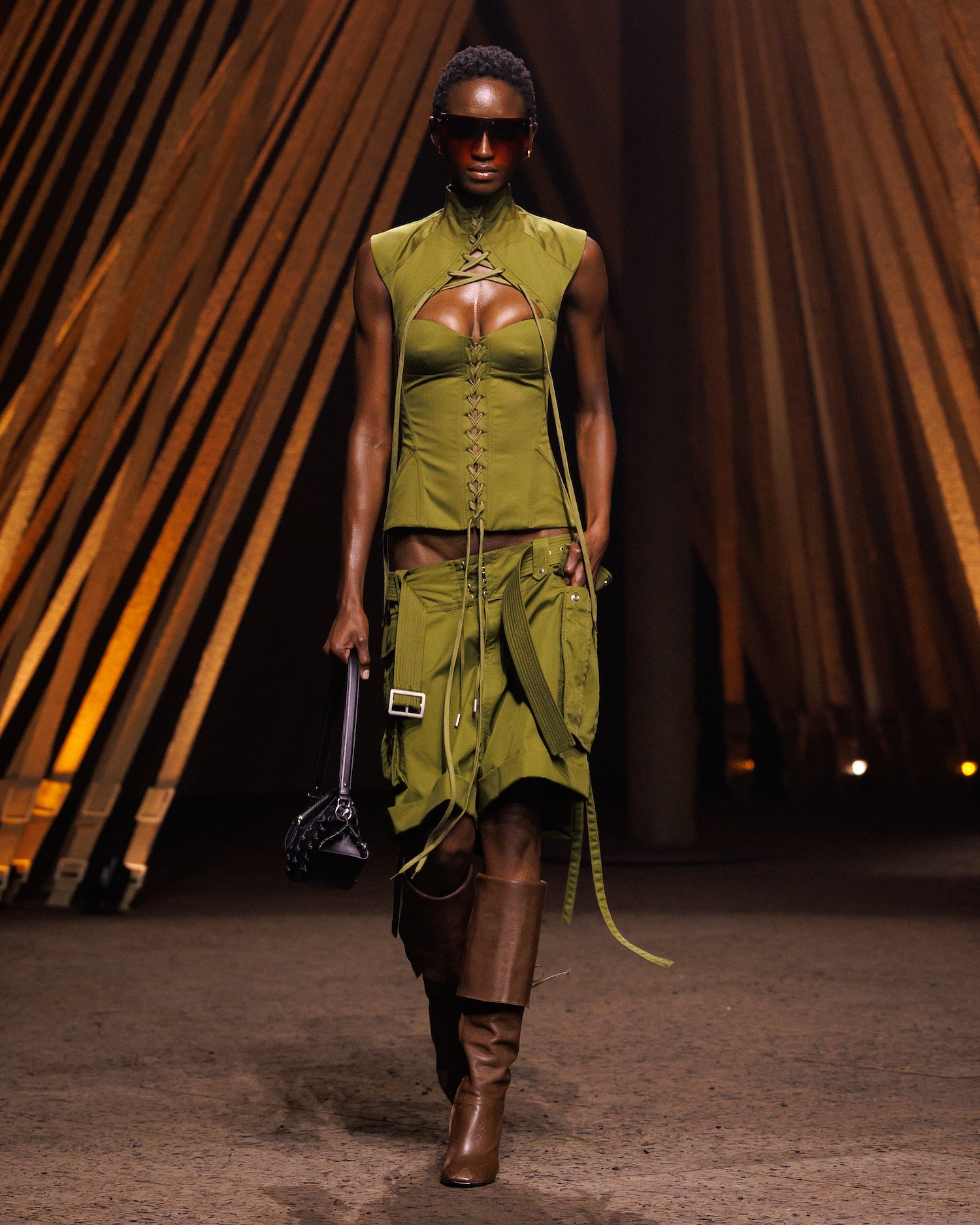
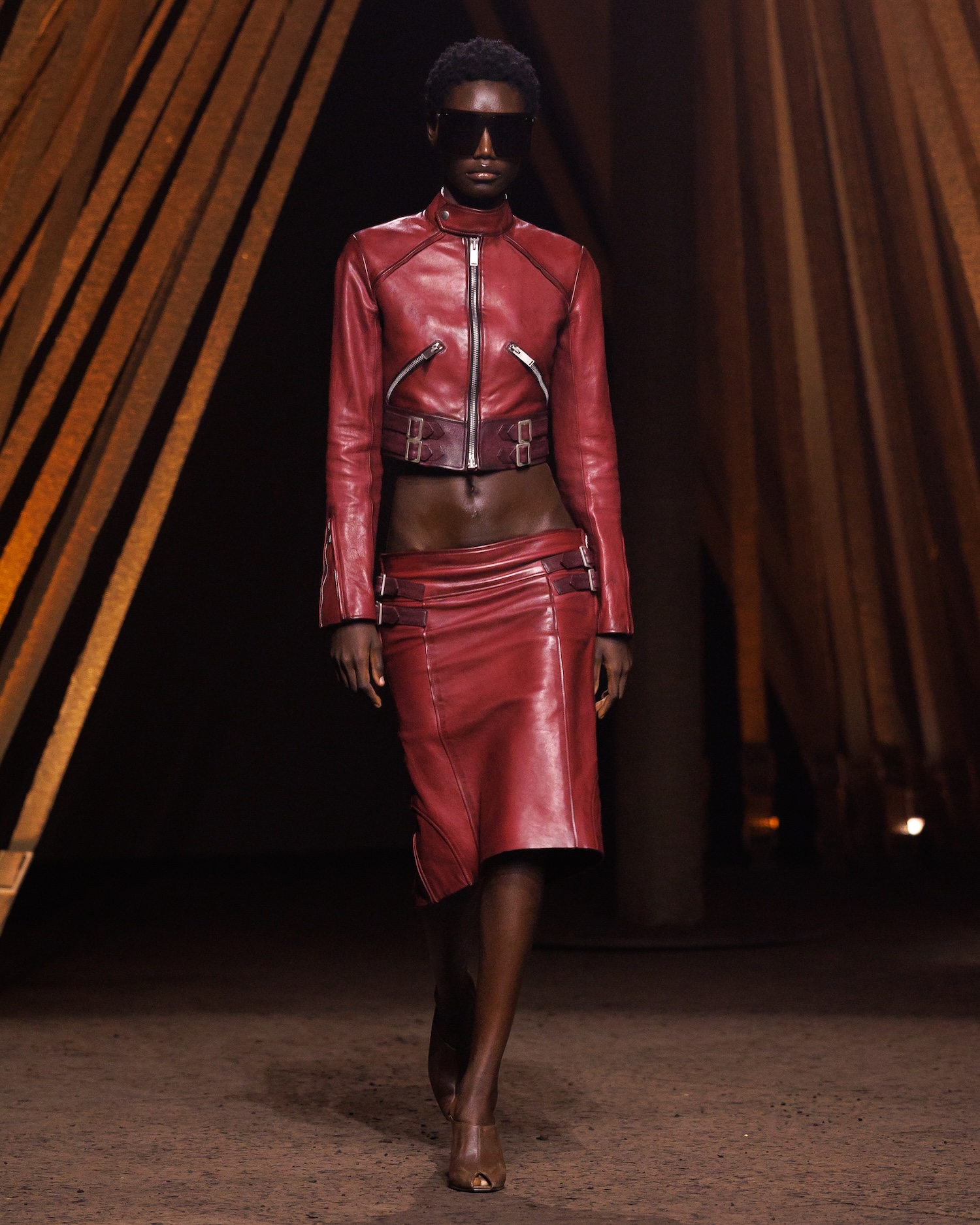
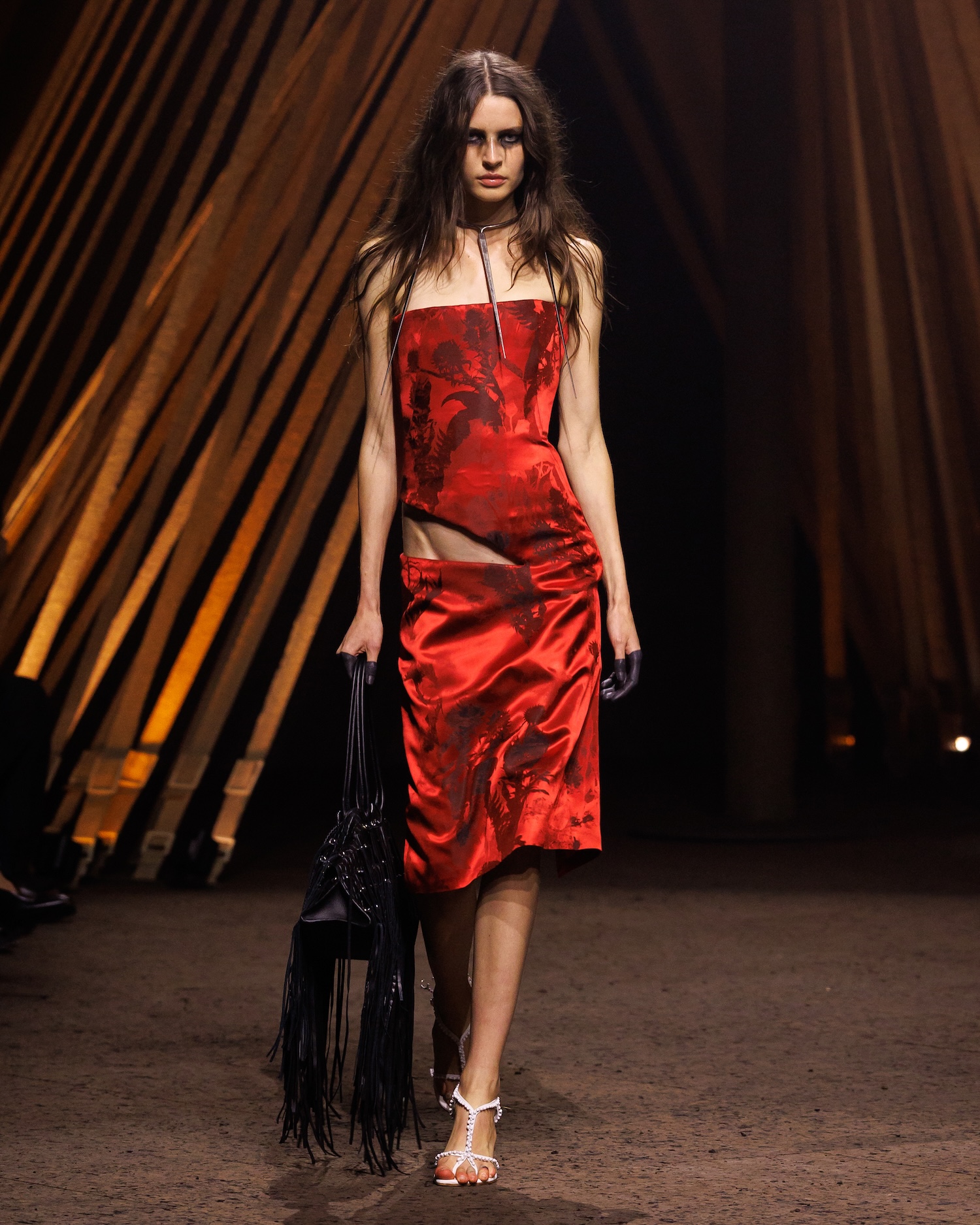
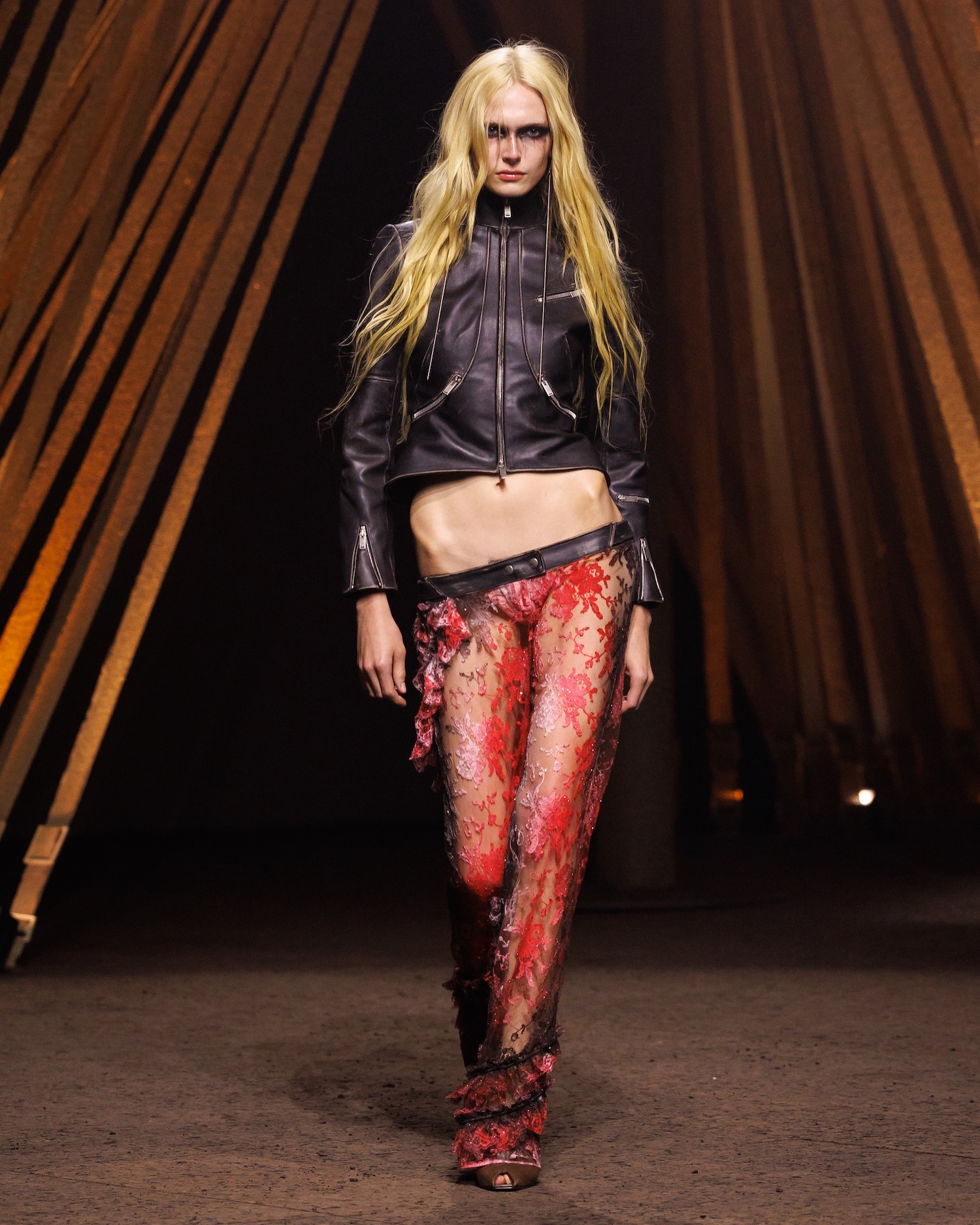
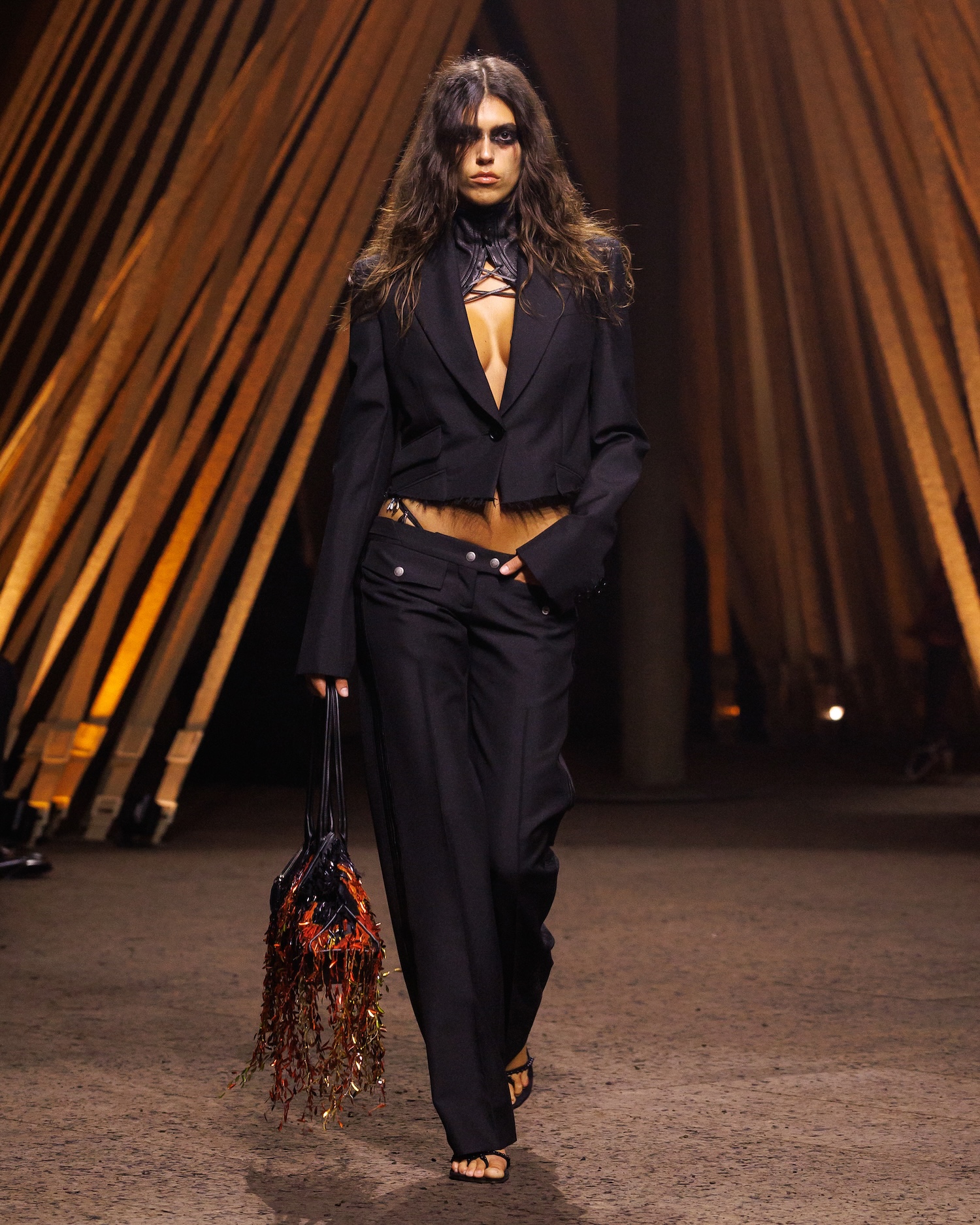
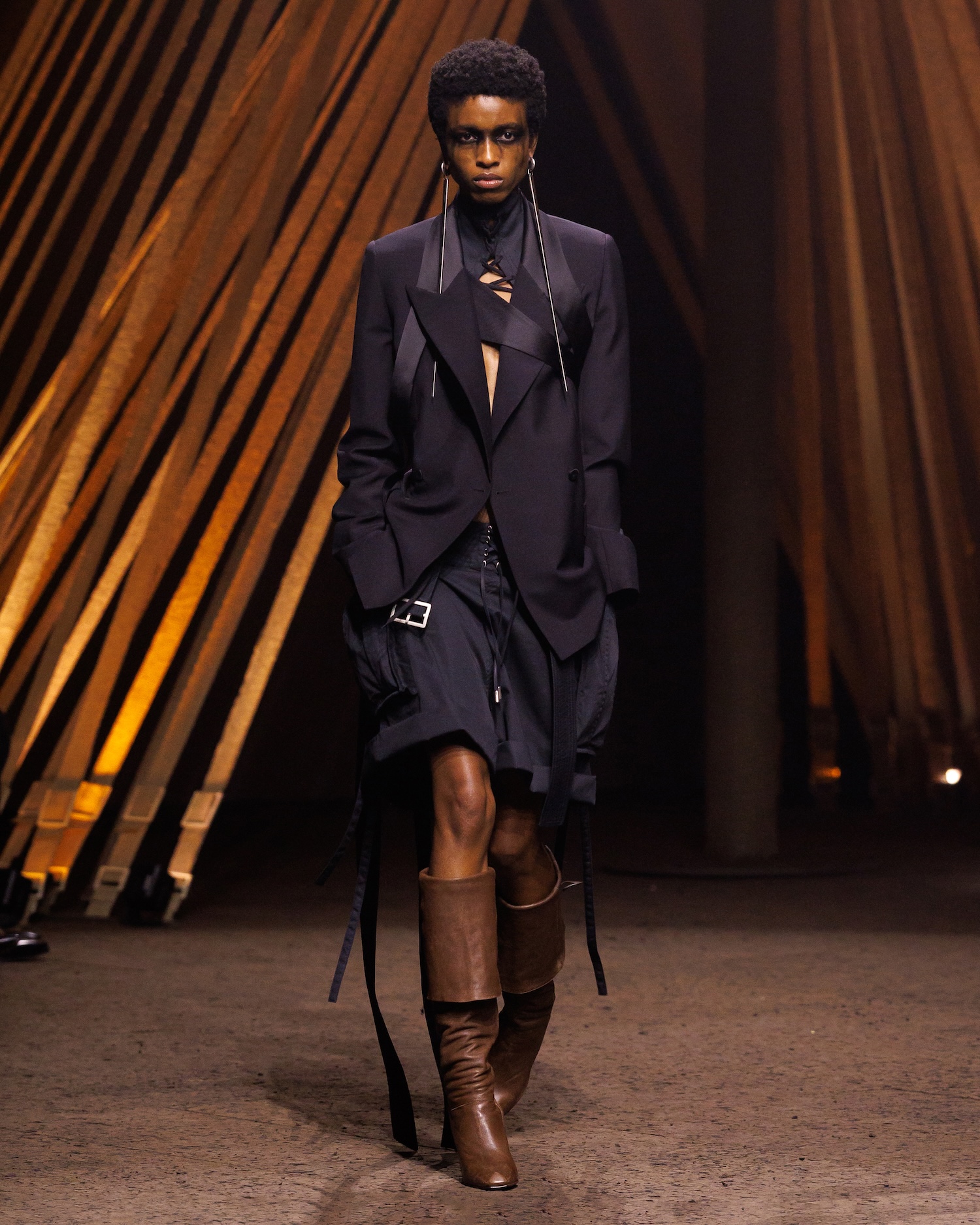
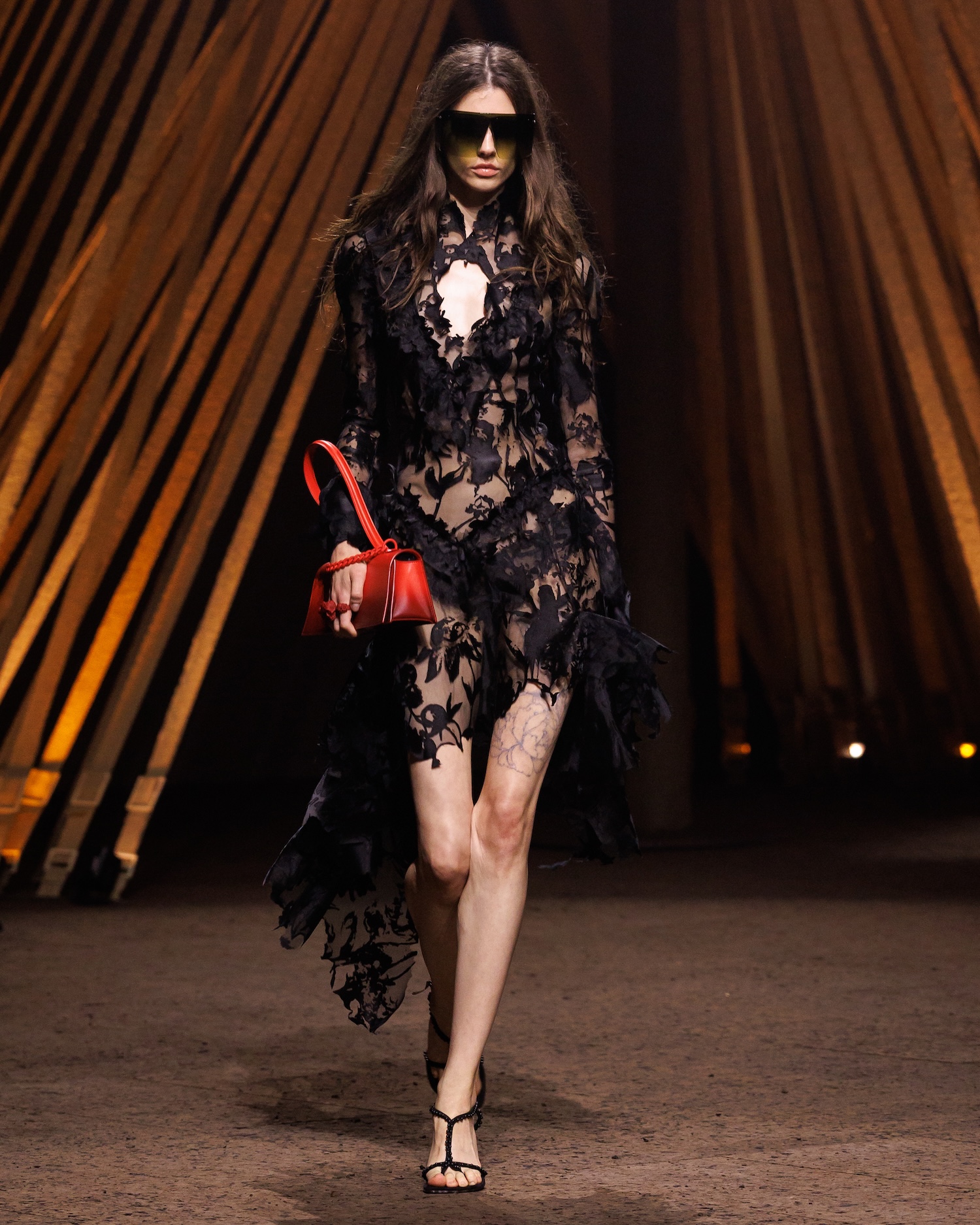
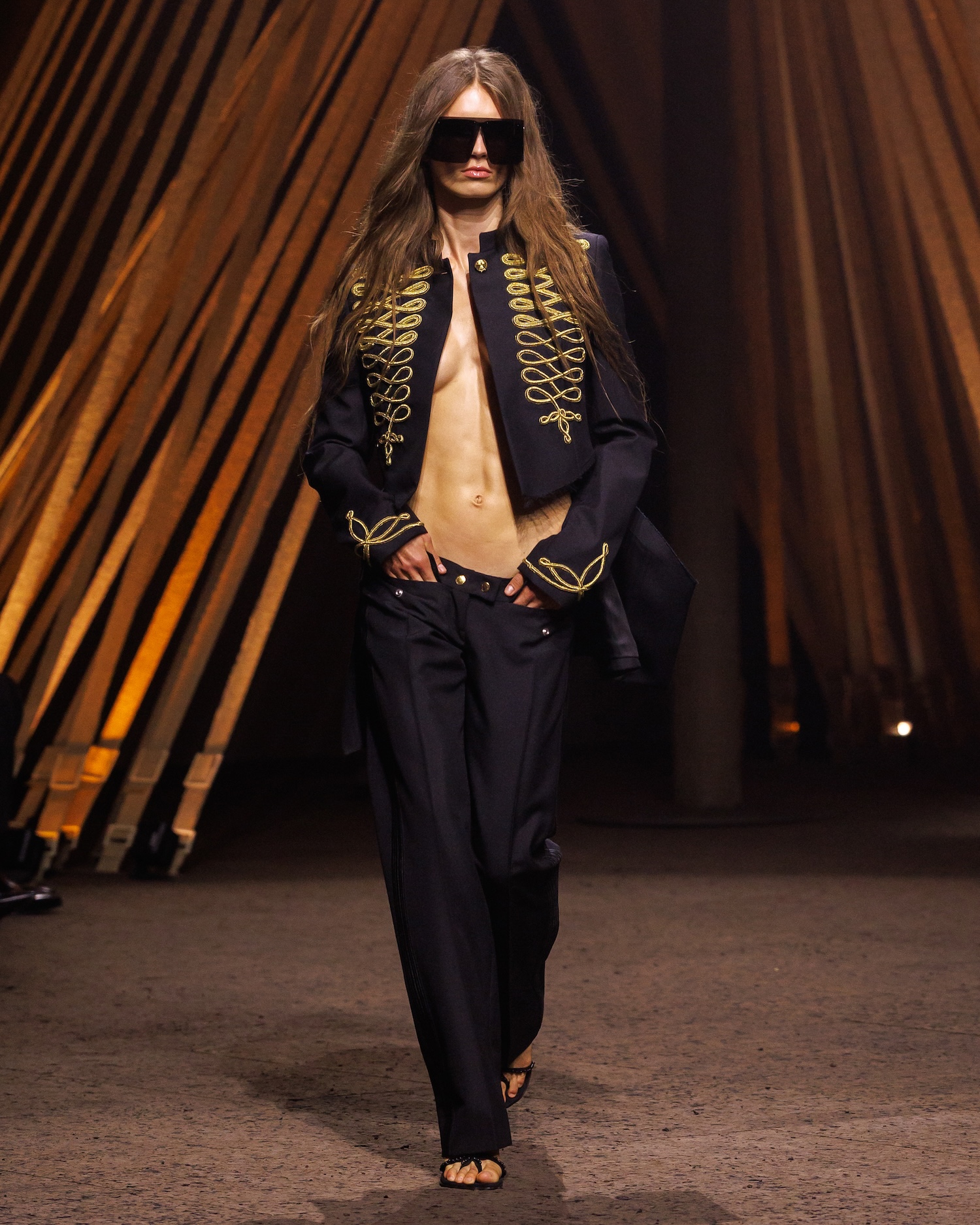
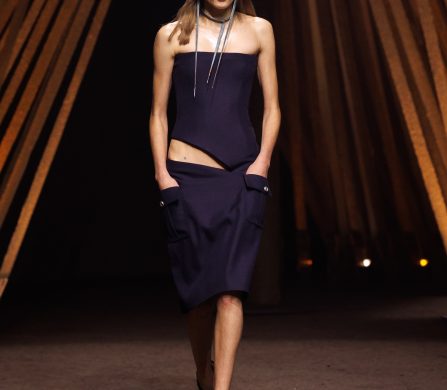
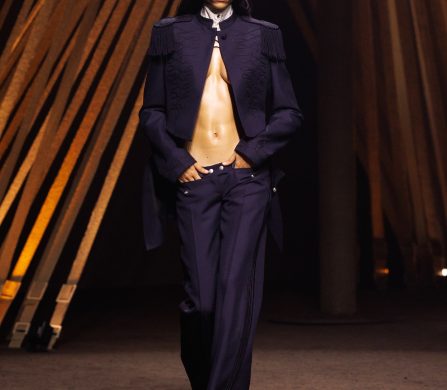
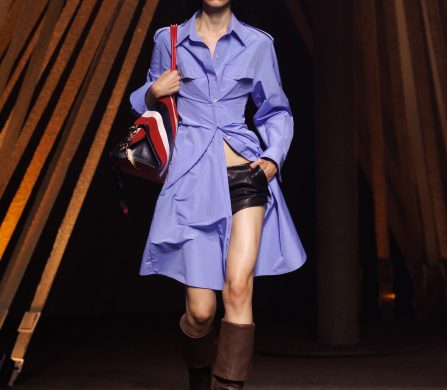
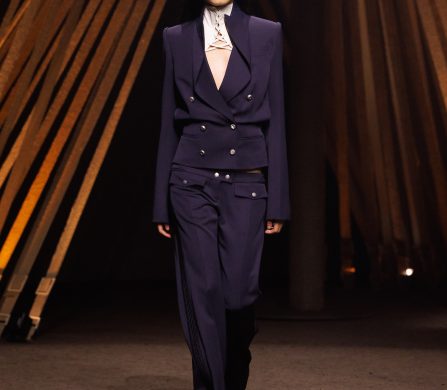
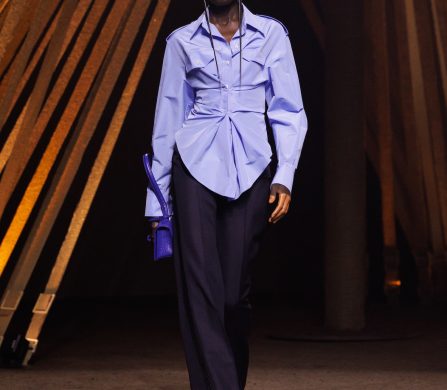
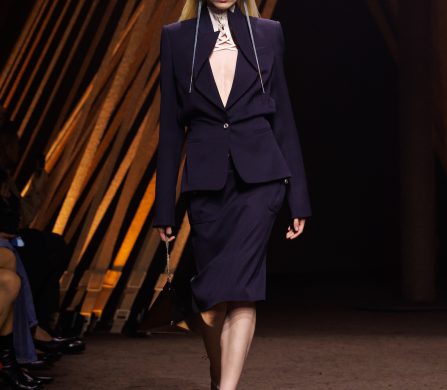
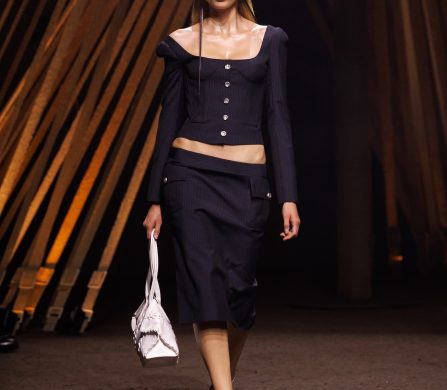
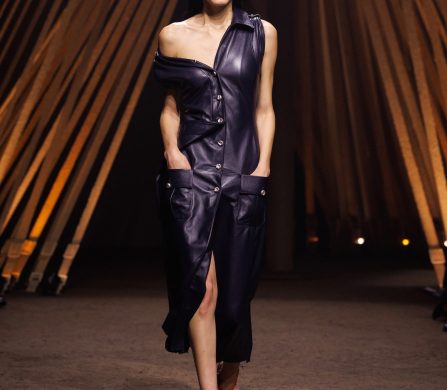
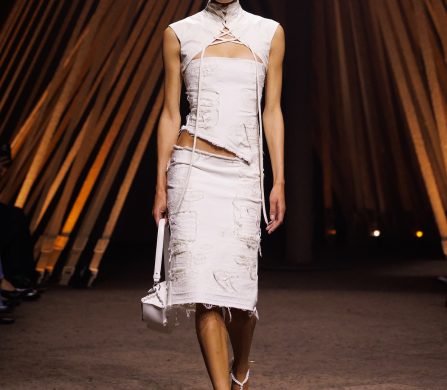
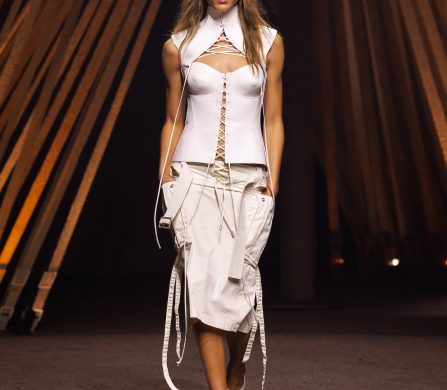
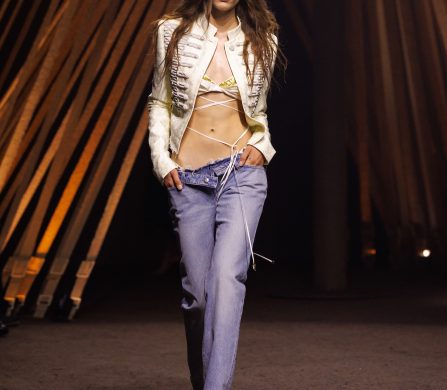
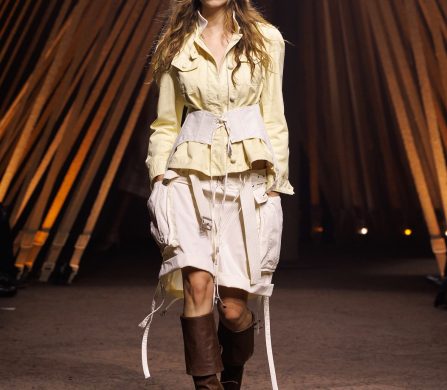
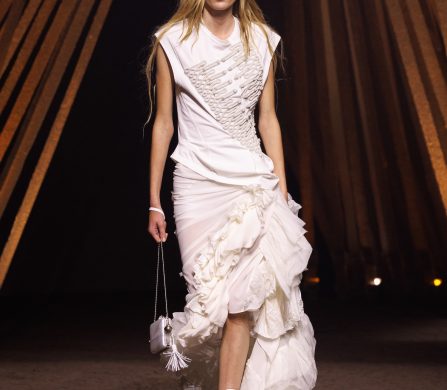
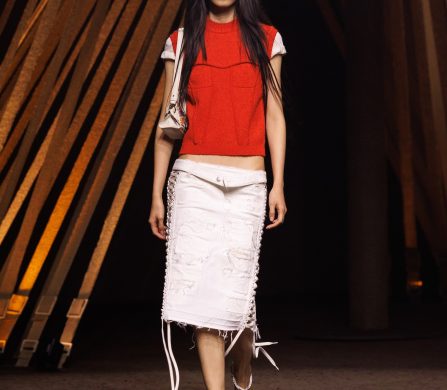
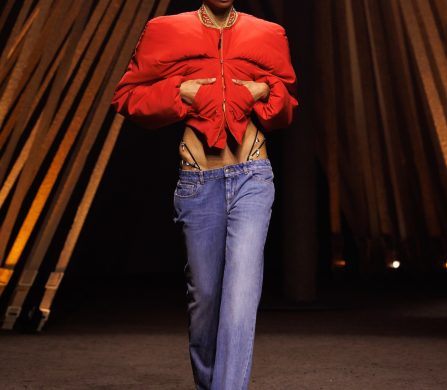
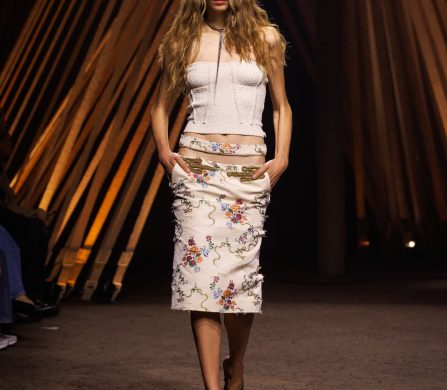
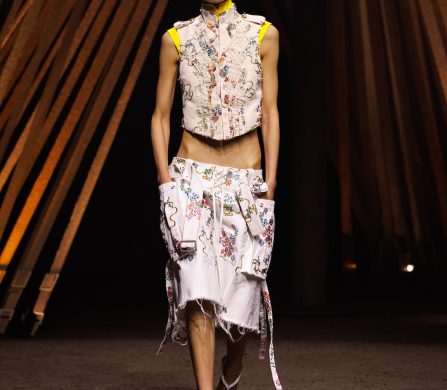
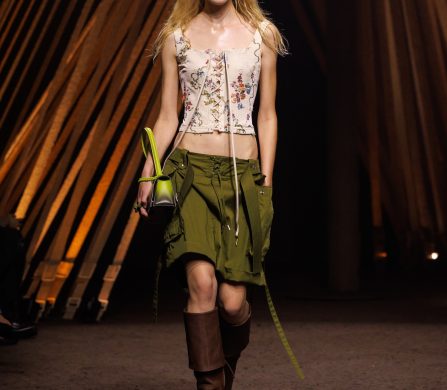
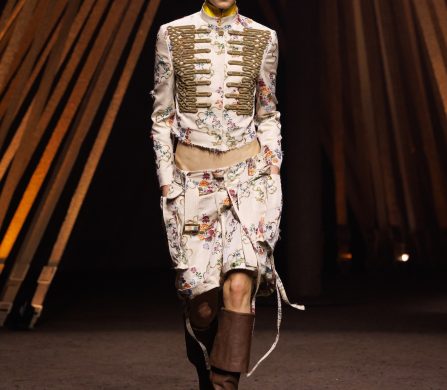
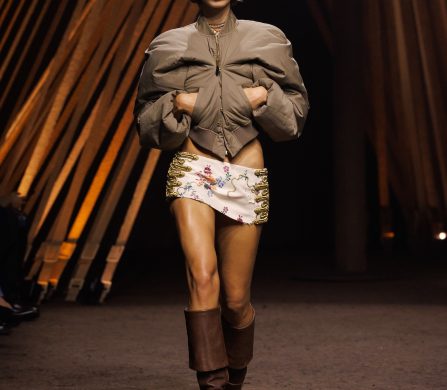
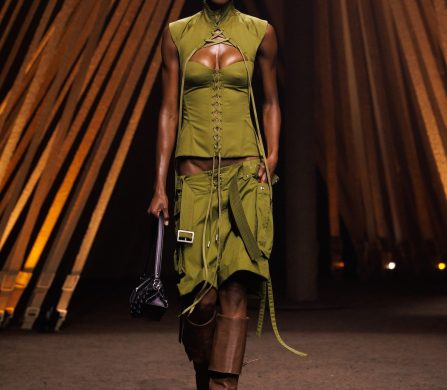
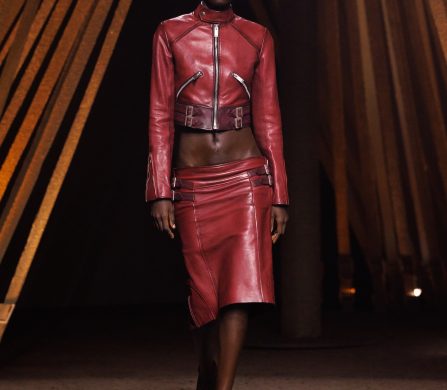
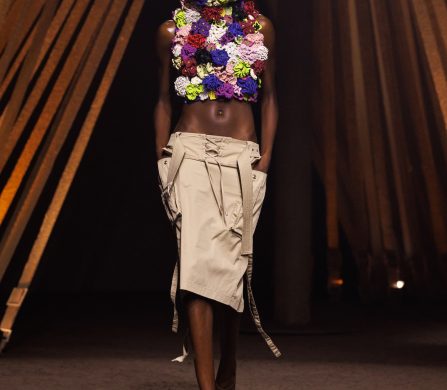
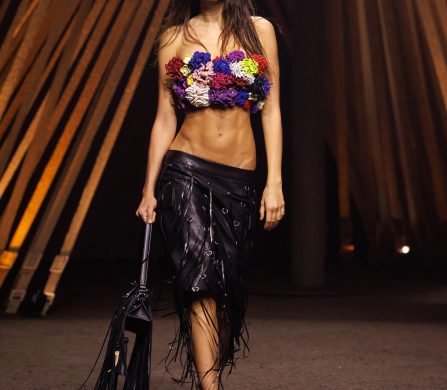
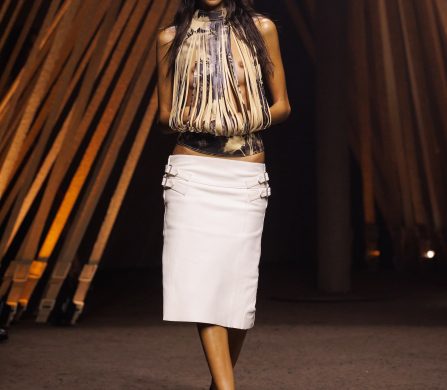
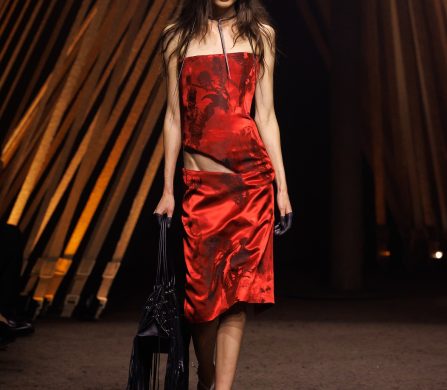
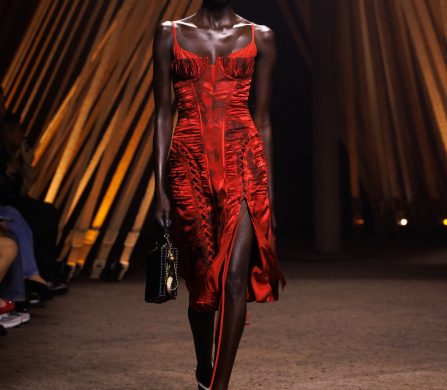
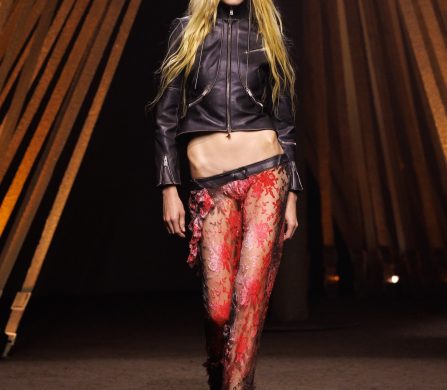
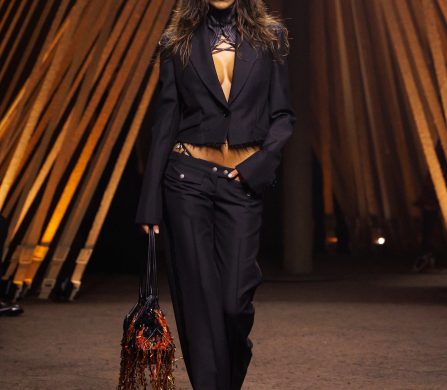
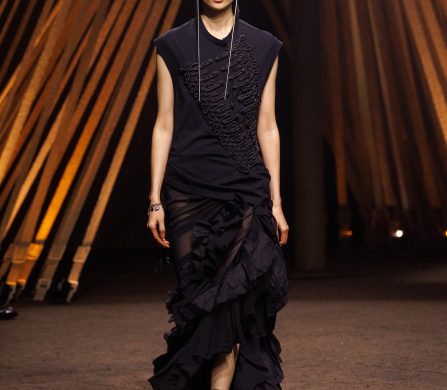
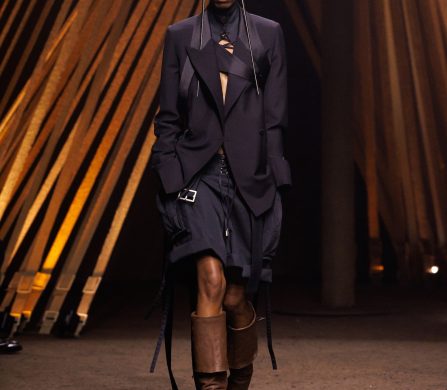
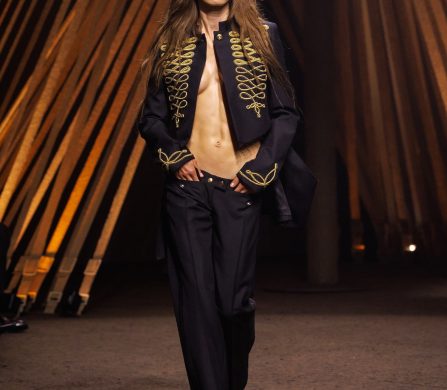
McGirr’s knowledge of the house’s architecture was crucial. He used McQueen’s signature technical tailoring as the very subject of the undoing. The discipline was preserved, but the structure was subverted. Uniforms were sliced and aggressively re-examined; the stiff propriety of jackets gave way to displaced patch pockets and slashed bustier dresses cut from precise uniform fabrics.
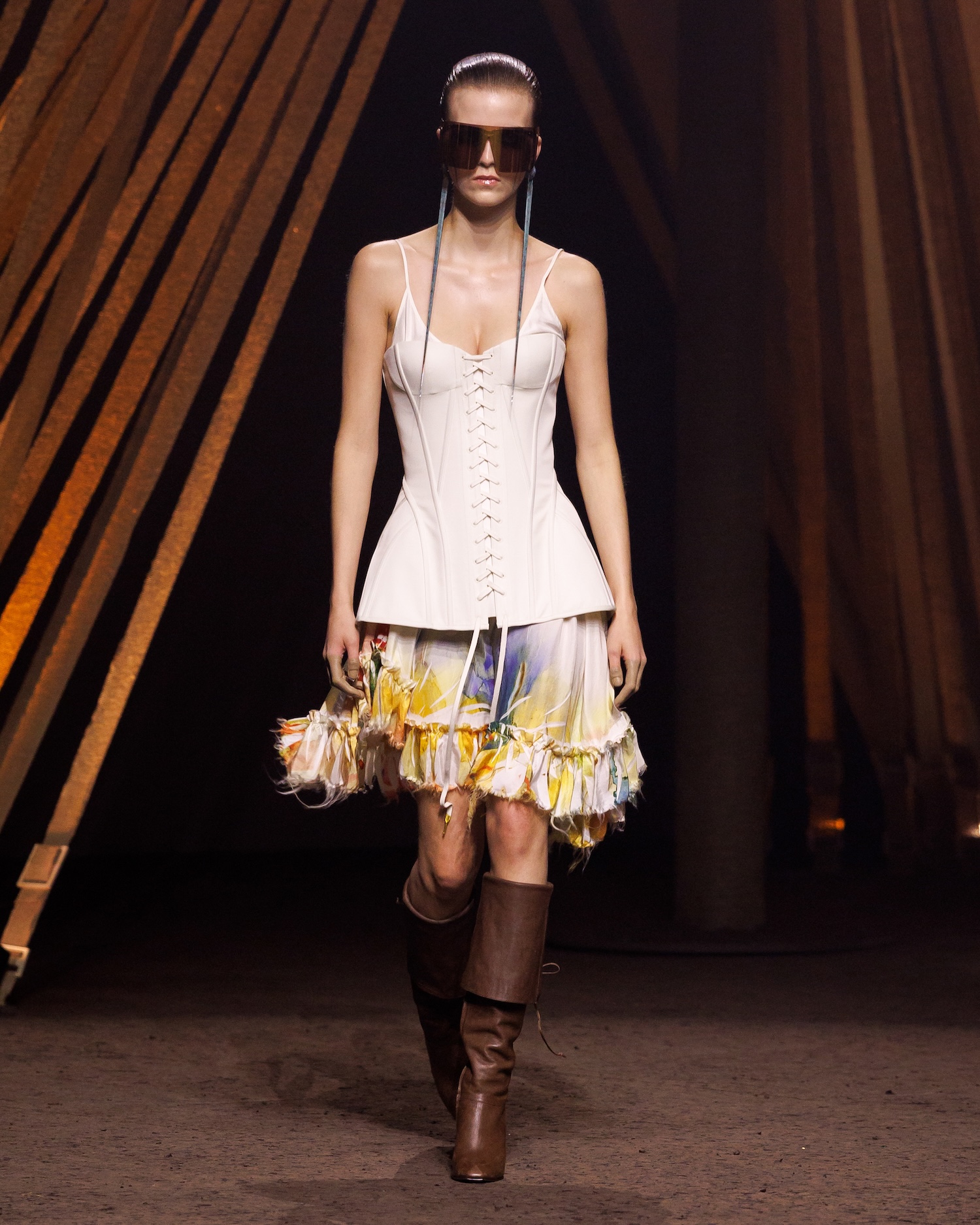
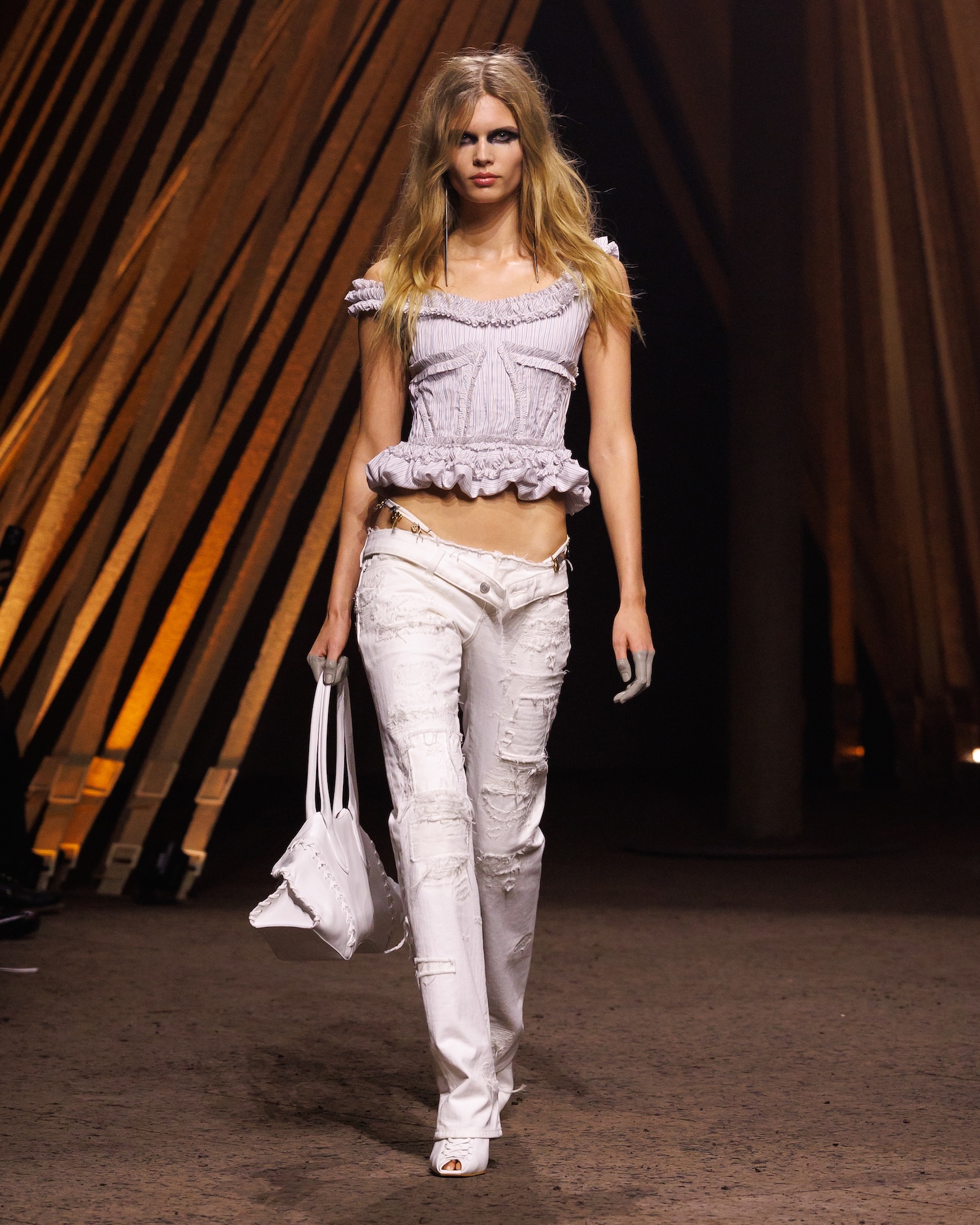
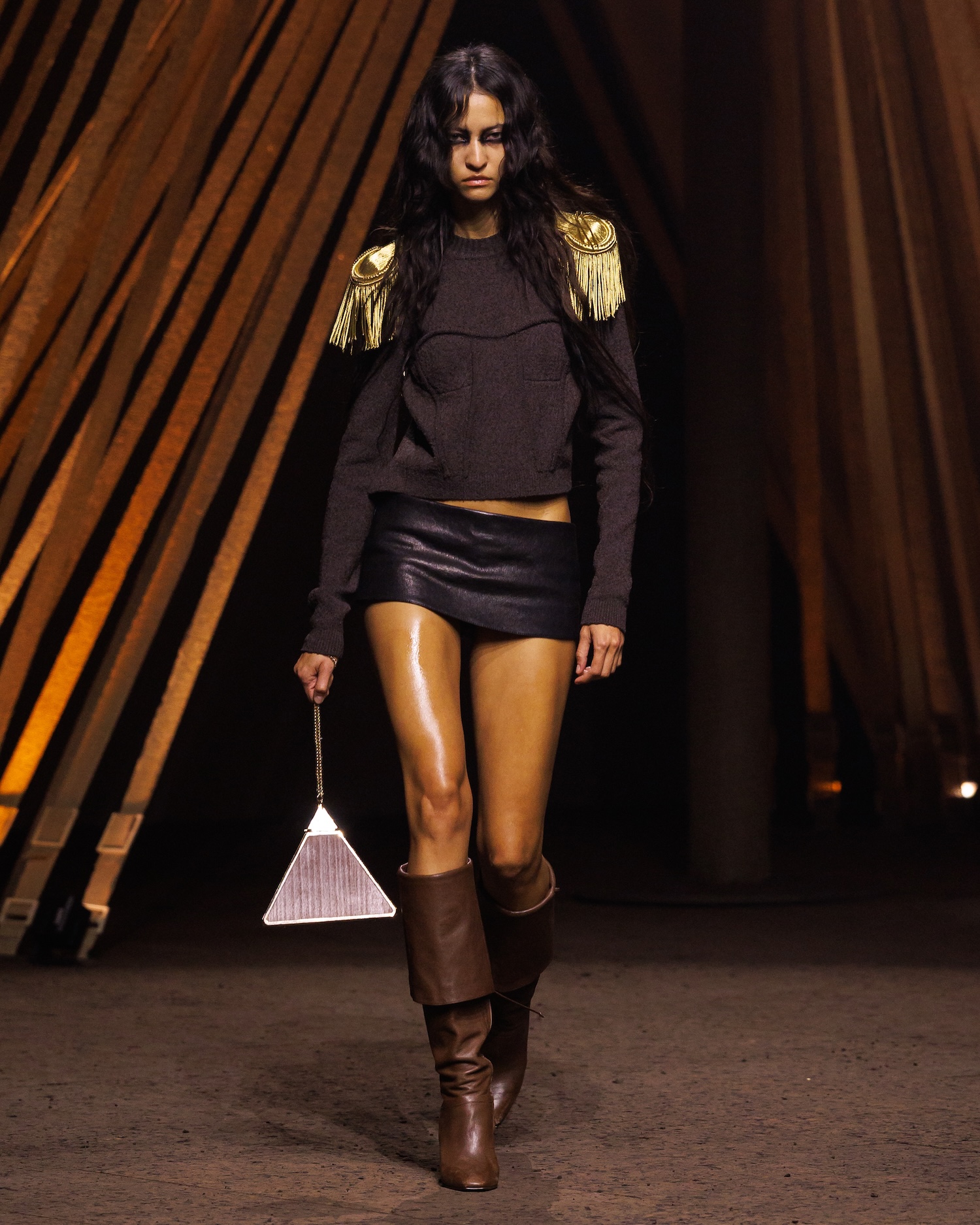
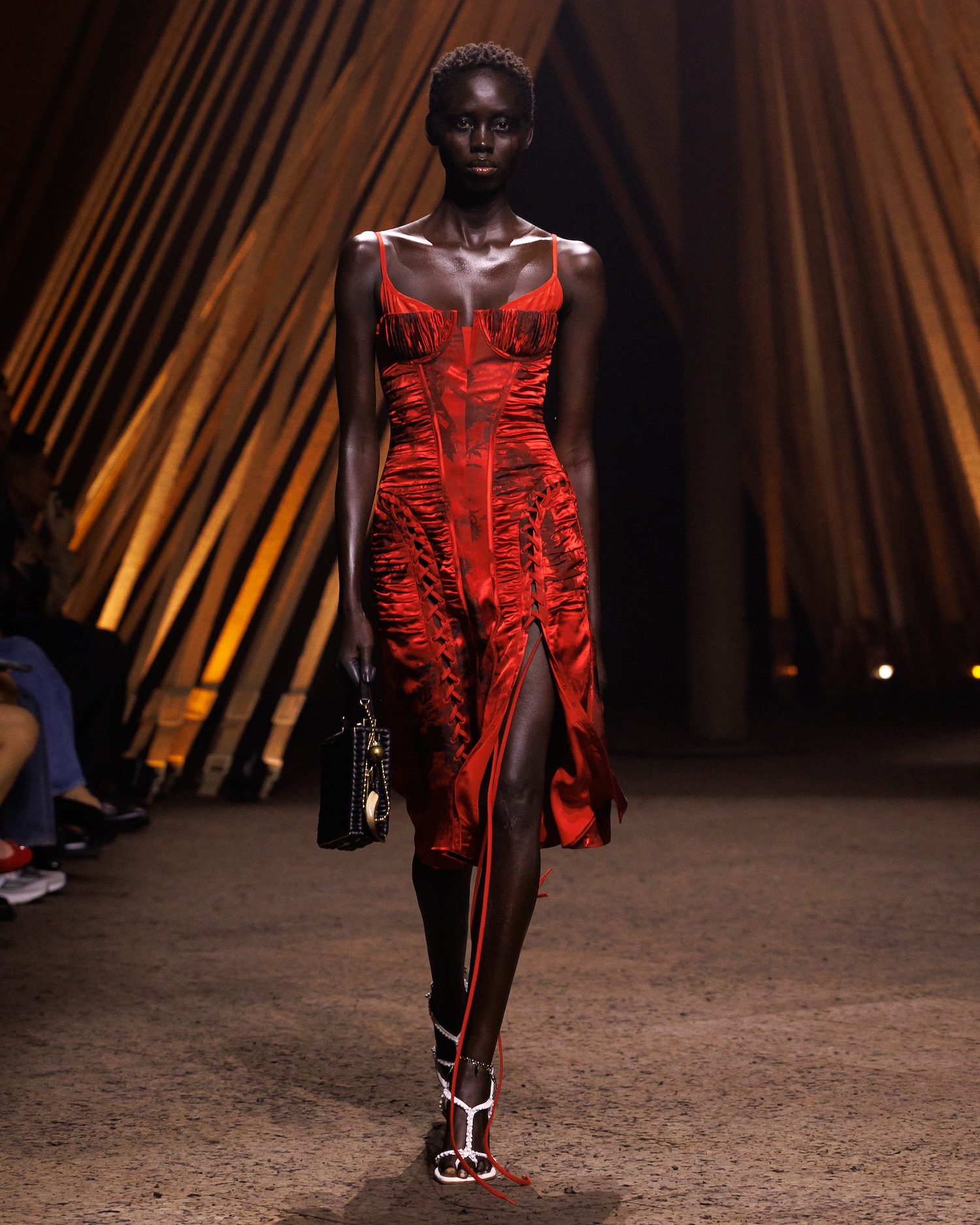
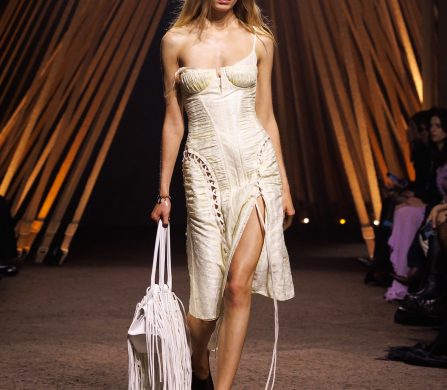
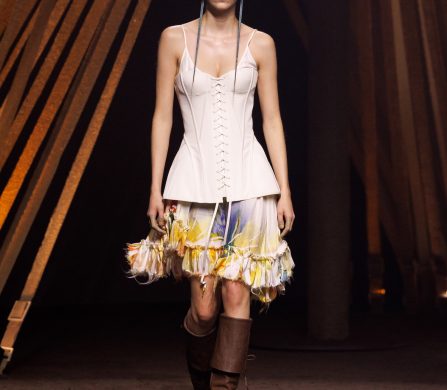
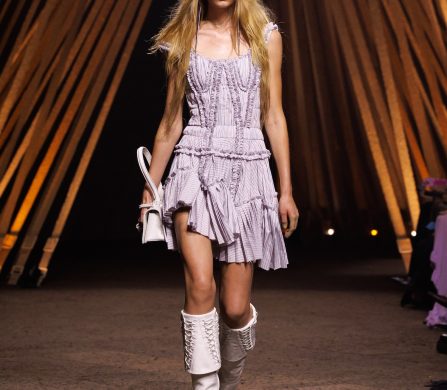
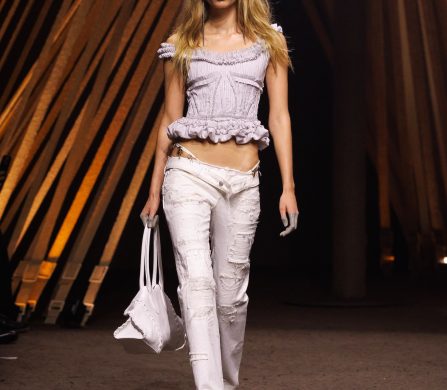
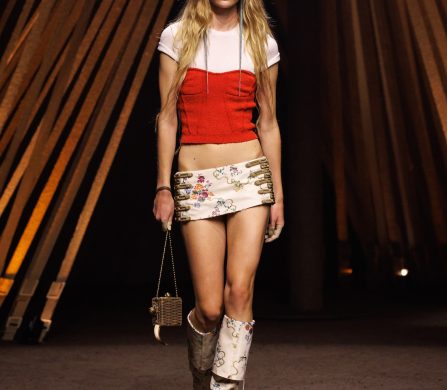
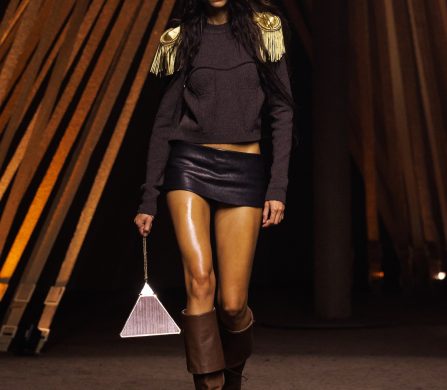
The body was central to this narrative. McGirr played with the most intimate forms of restriction and release. He brought back the iconic, low-slung bumster, updating it with polished buckle hardware to emphasise the visceral cling to the torso. Even more subversive was his treatment of the corset: liberated entirely from its historical function as a cage, its form was applied decoratively to jacquard dresses and tall leather boots, transforming a symbol of bondage into an affirmation of free instinct.
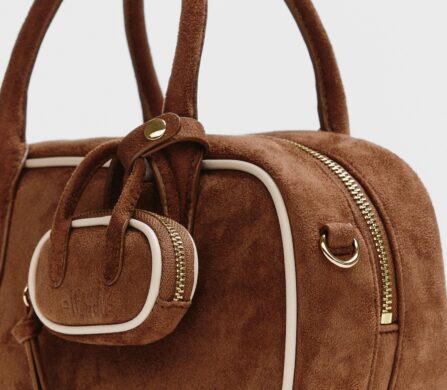
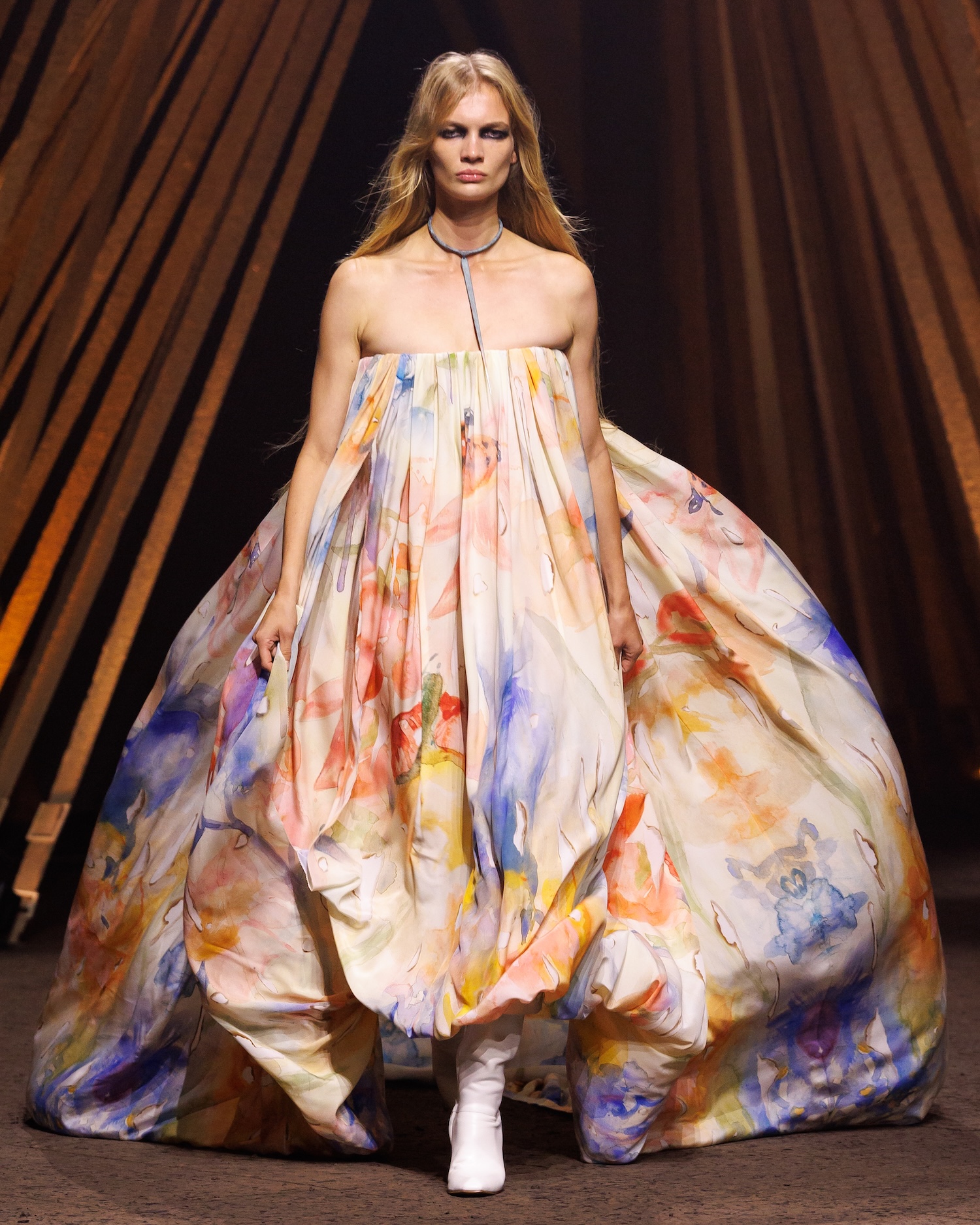
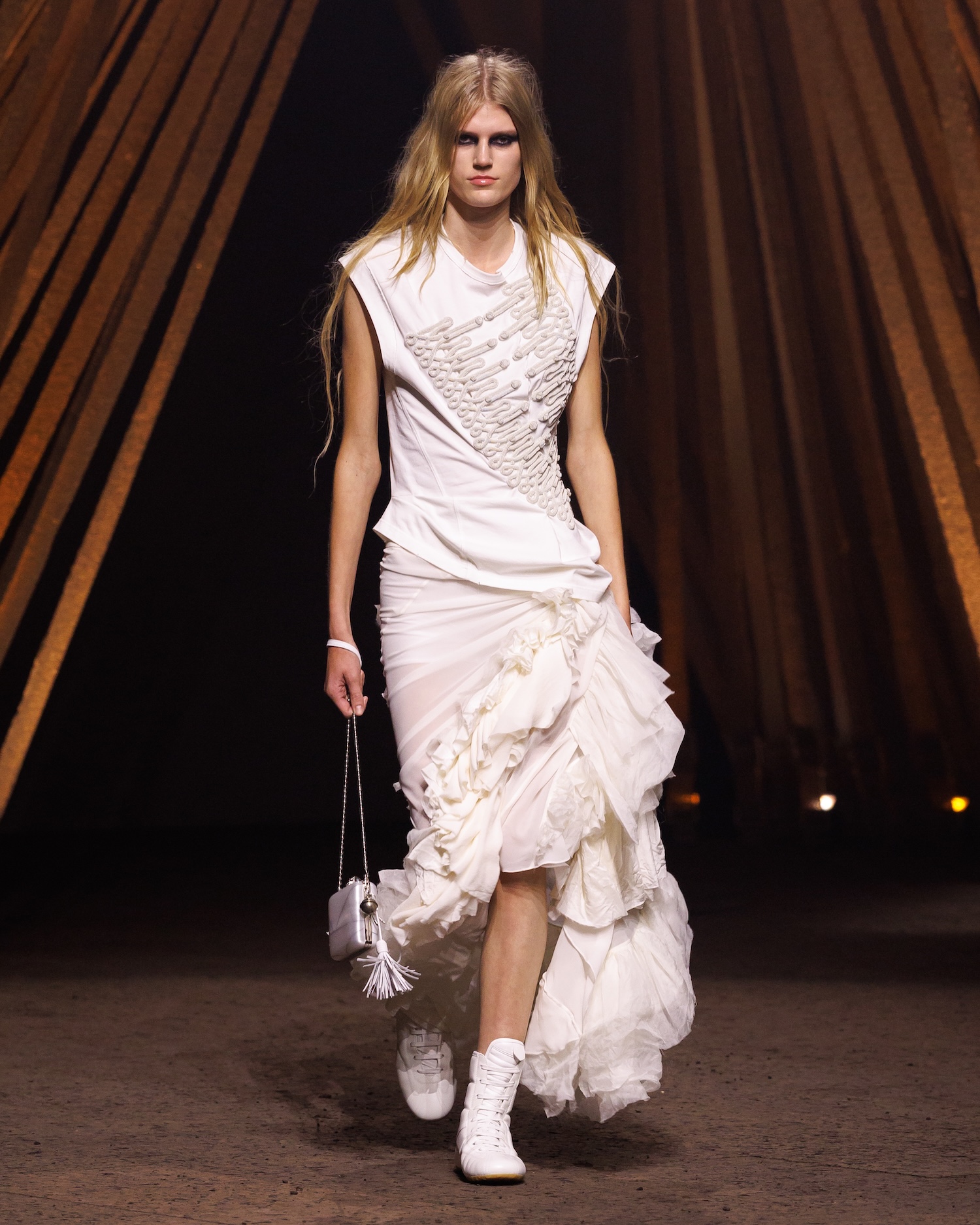
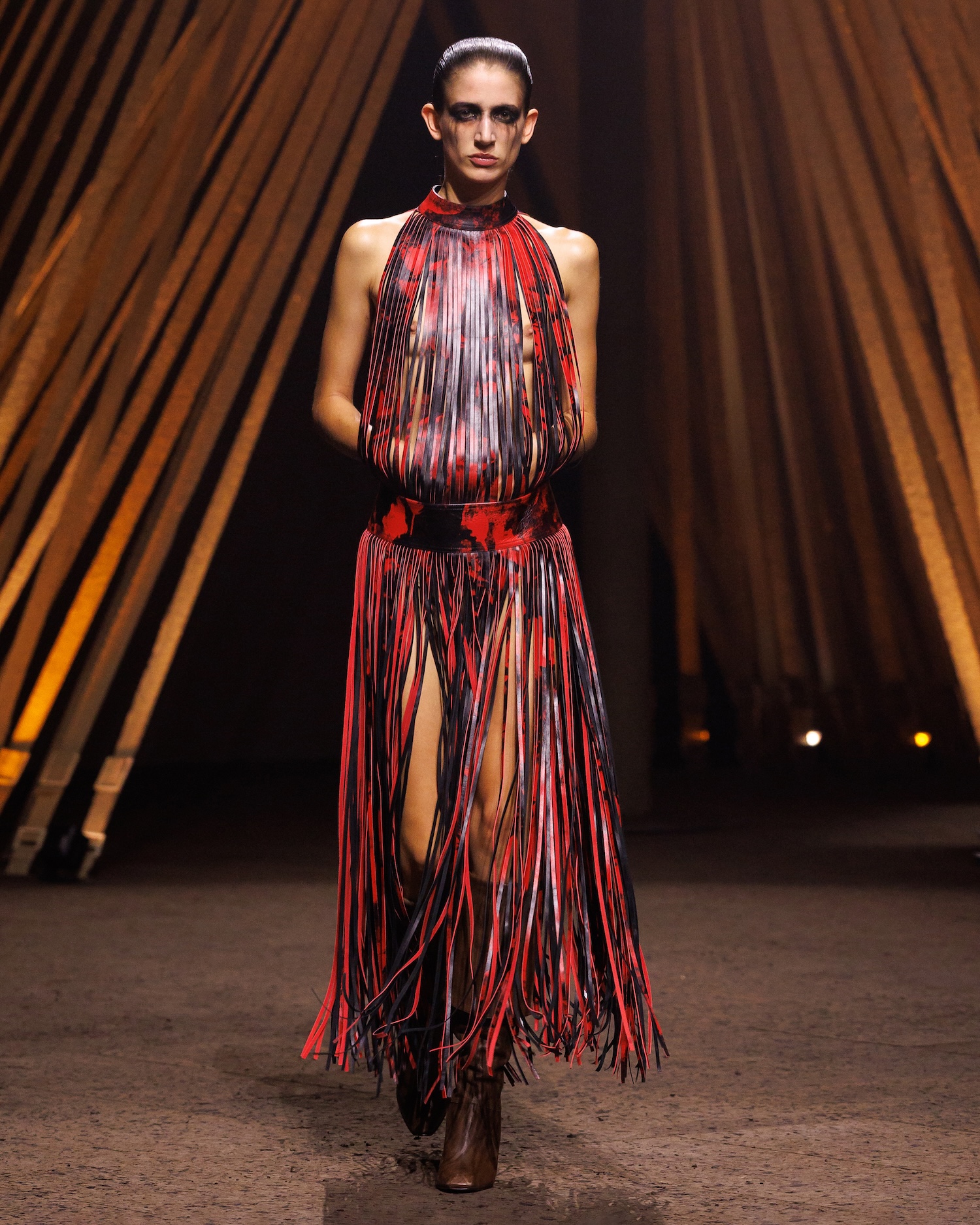
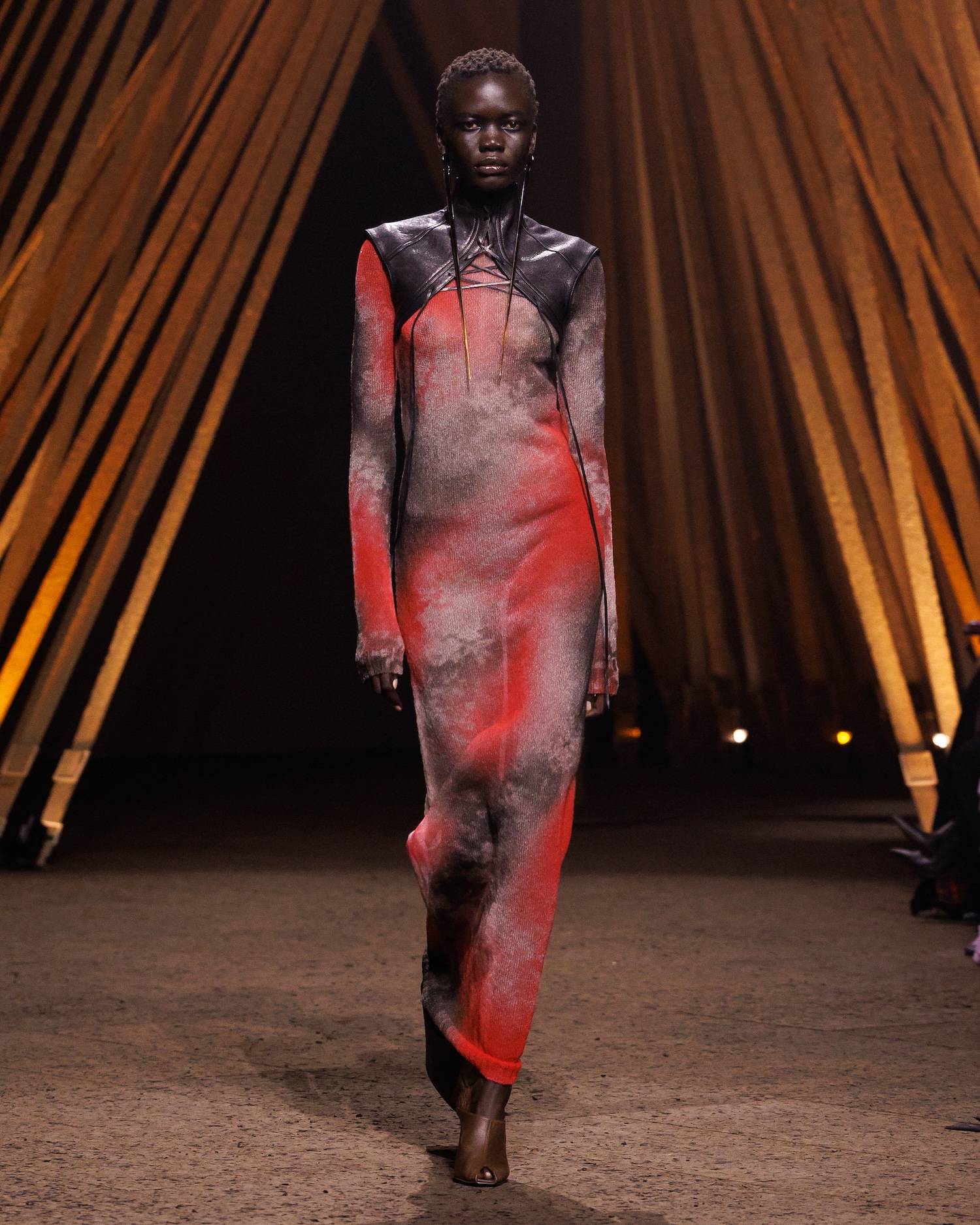
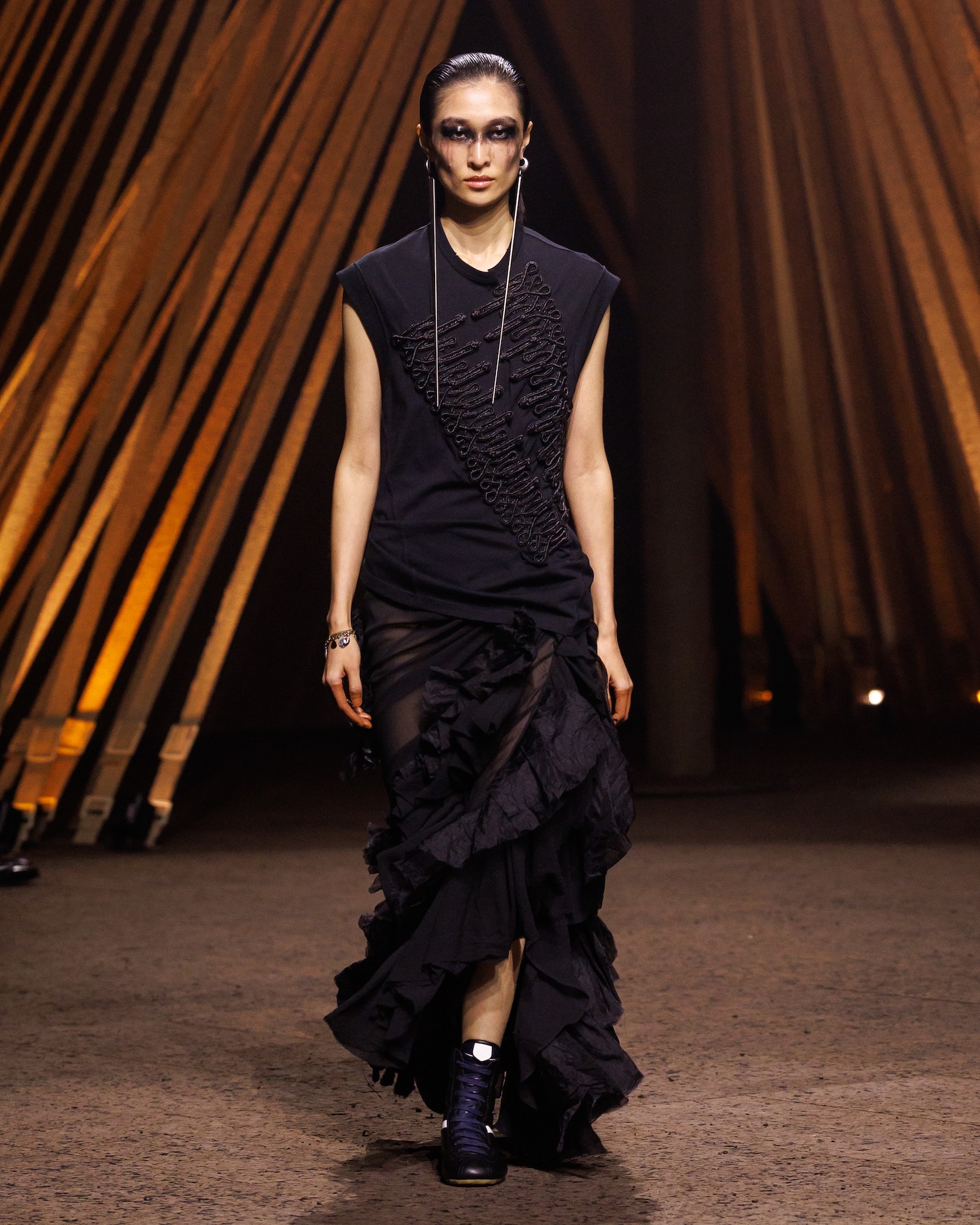
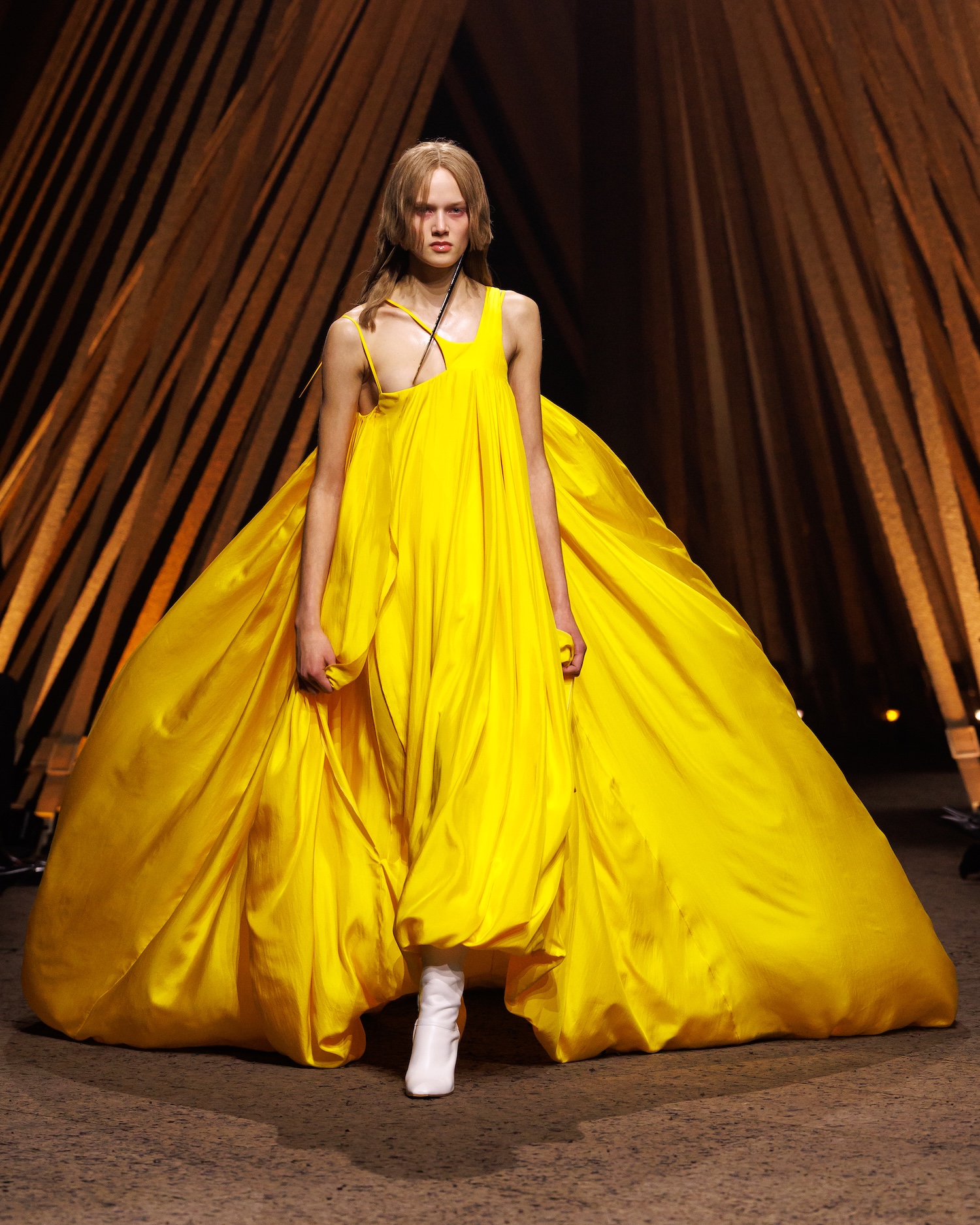
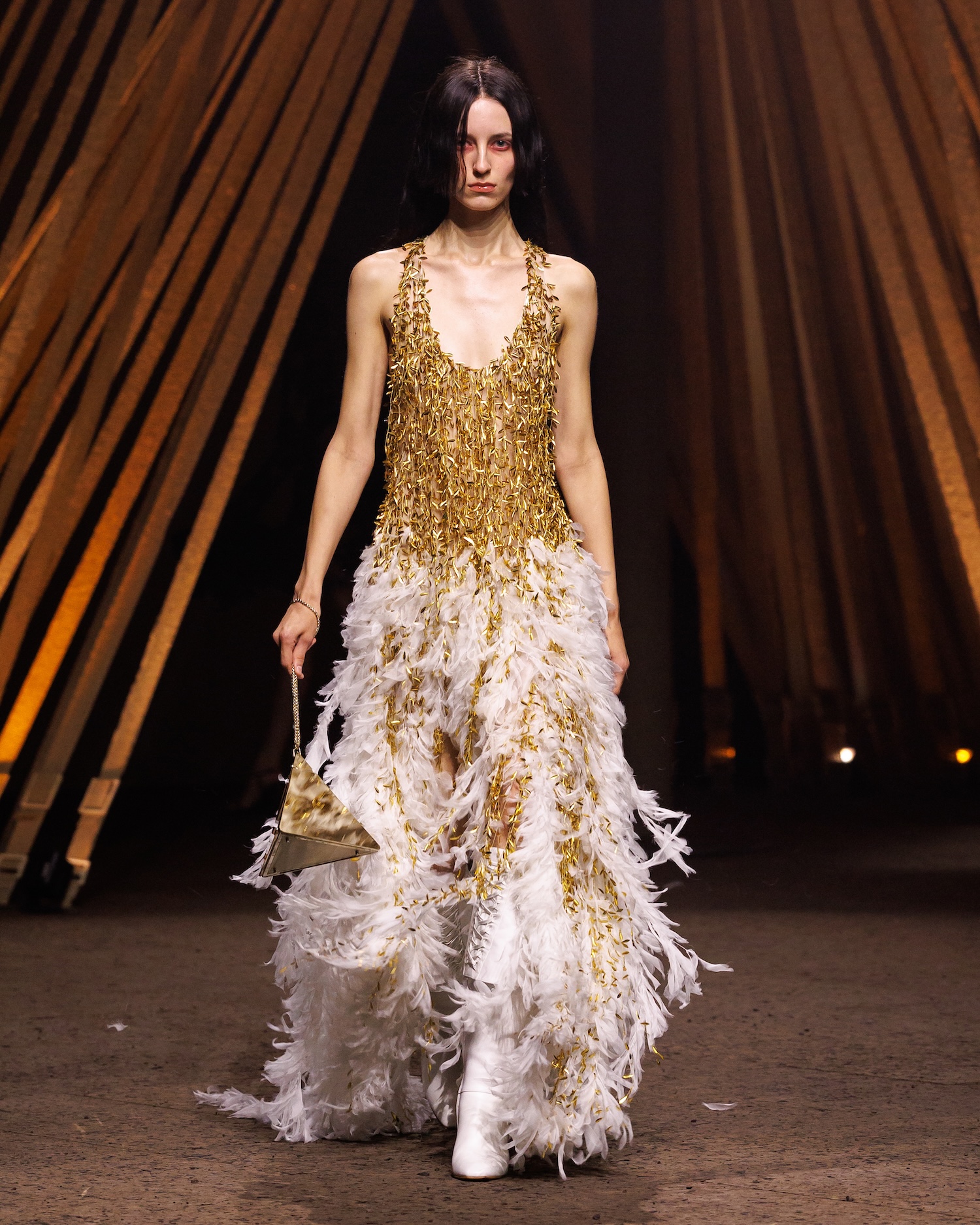
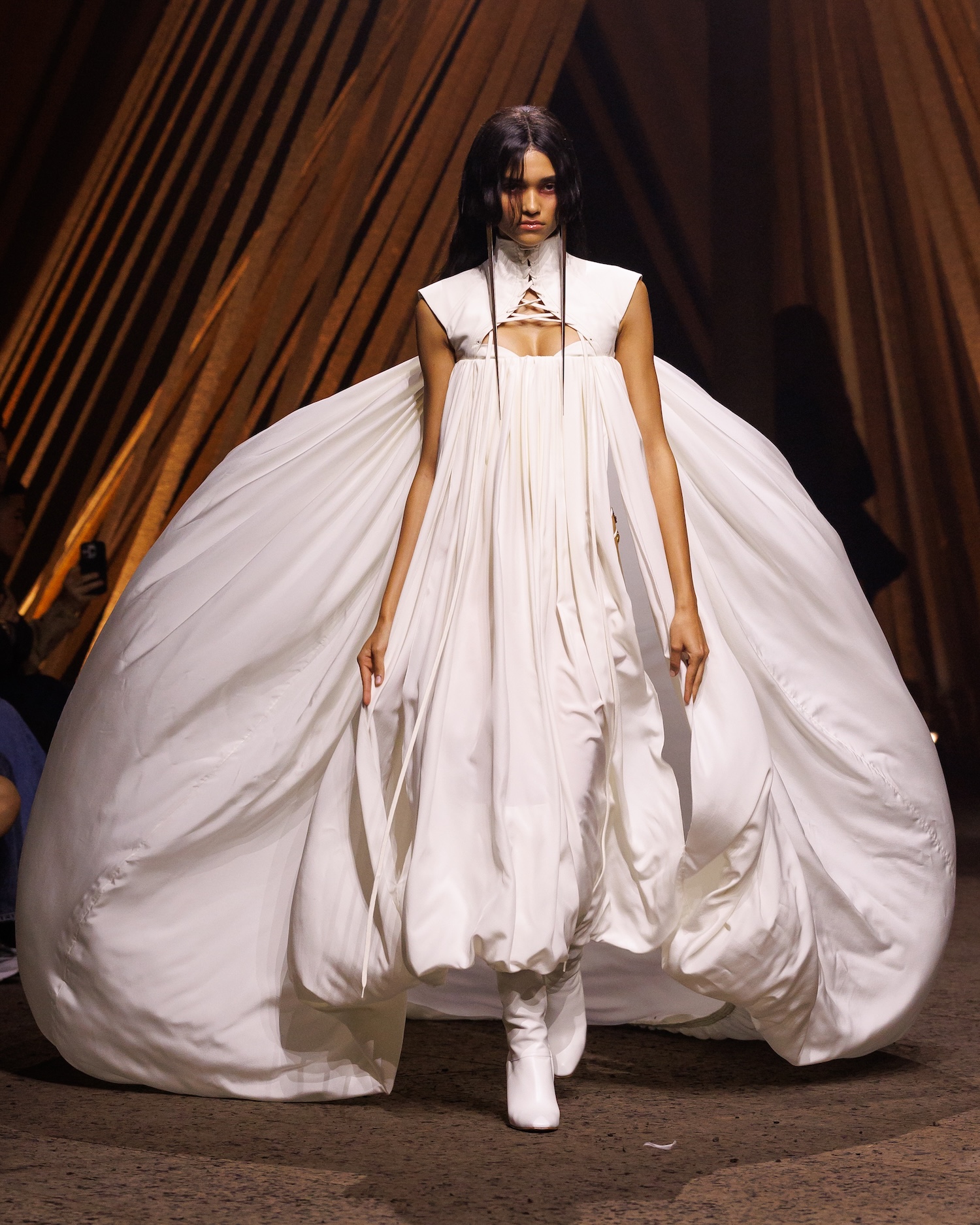
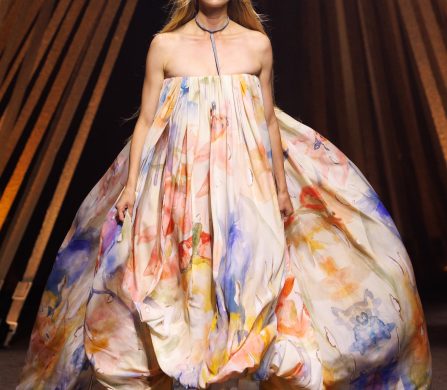
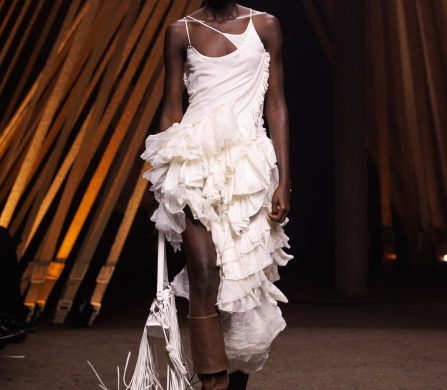
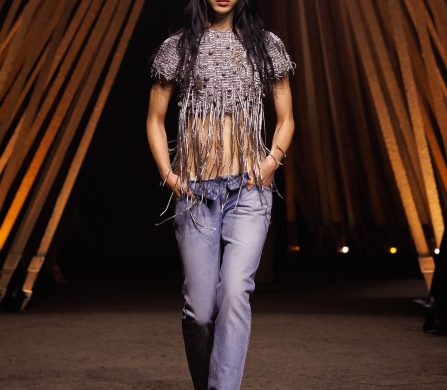
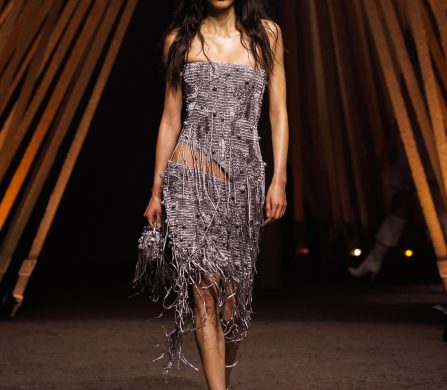
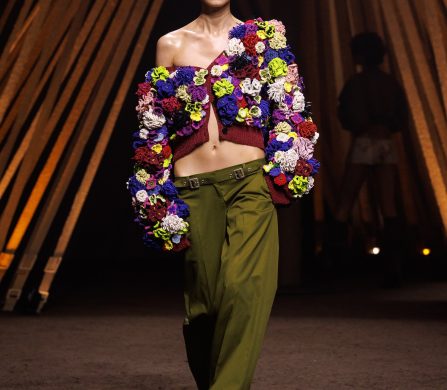
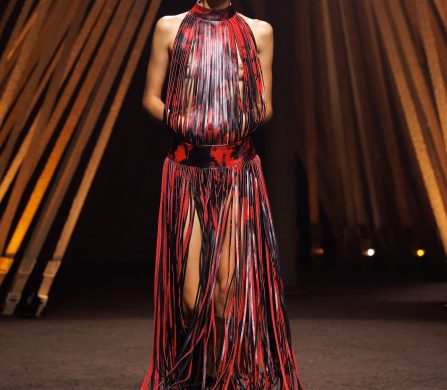
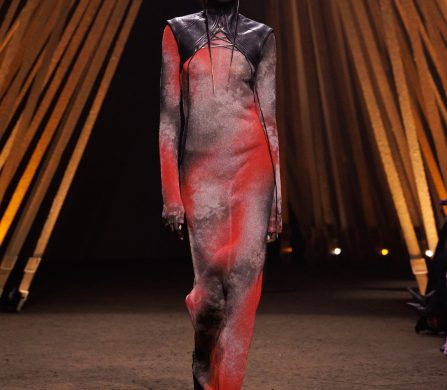
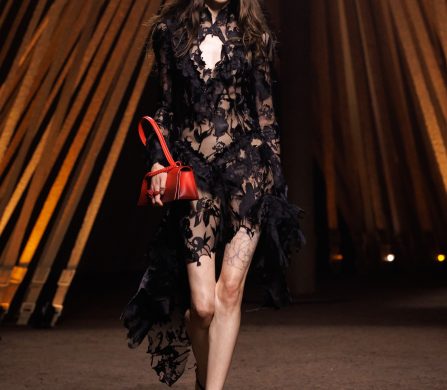
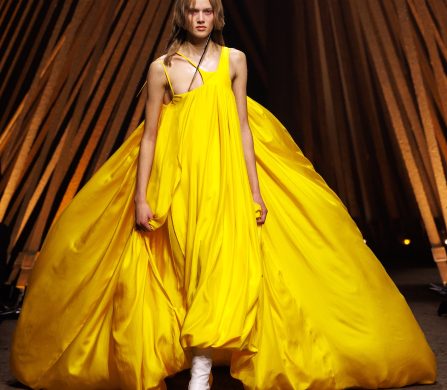
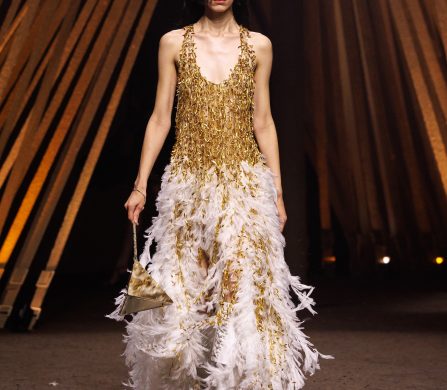
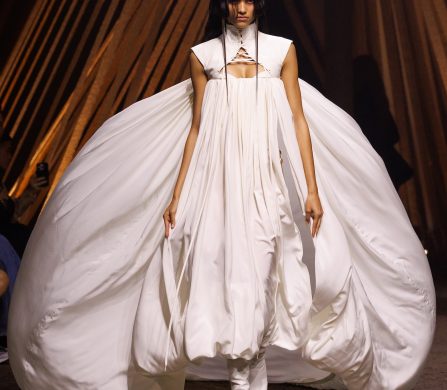
As the collection climaxed, the urban aggression yielded to the elemental. The transition was visually explosive, complemented by the models’ heavy, dark eyeshadows and runny mascara, lending an immediate sense of emotional release. Fabrics moved from rigid wool mohair and sliced printed leather to the weightless, ethereal freedom of billowing parachute silk gowns. The final sequence was an incendiary release, with garments catching fire through fierce spray paint dégradé and glistening embellishments that cascaded in flaming tendrils of chiffon. Accessories, too, were the necessary disturbances: skull scarves, charms, wishbones, and talismanic embroidery layered the collection with pagan mysticism.
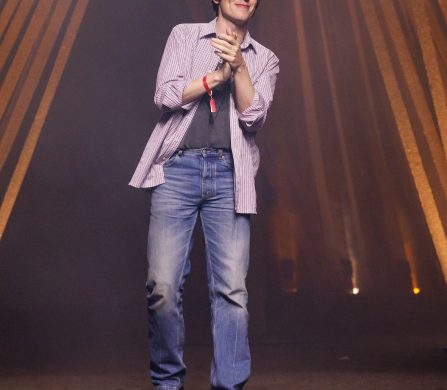
Under the pulsing, cinematic score by A. G. Cook, McGirr affirmed his tenure by dissecting the house’s core fascination with the dark side of beauty. This collection was an unflinching, sophisticated exploration in the architecture of desire, proving that the most compelling fashion is always the one that makes you feel profoundly unsettled, and deeply alive.
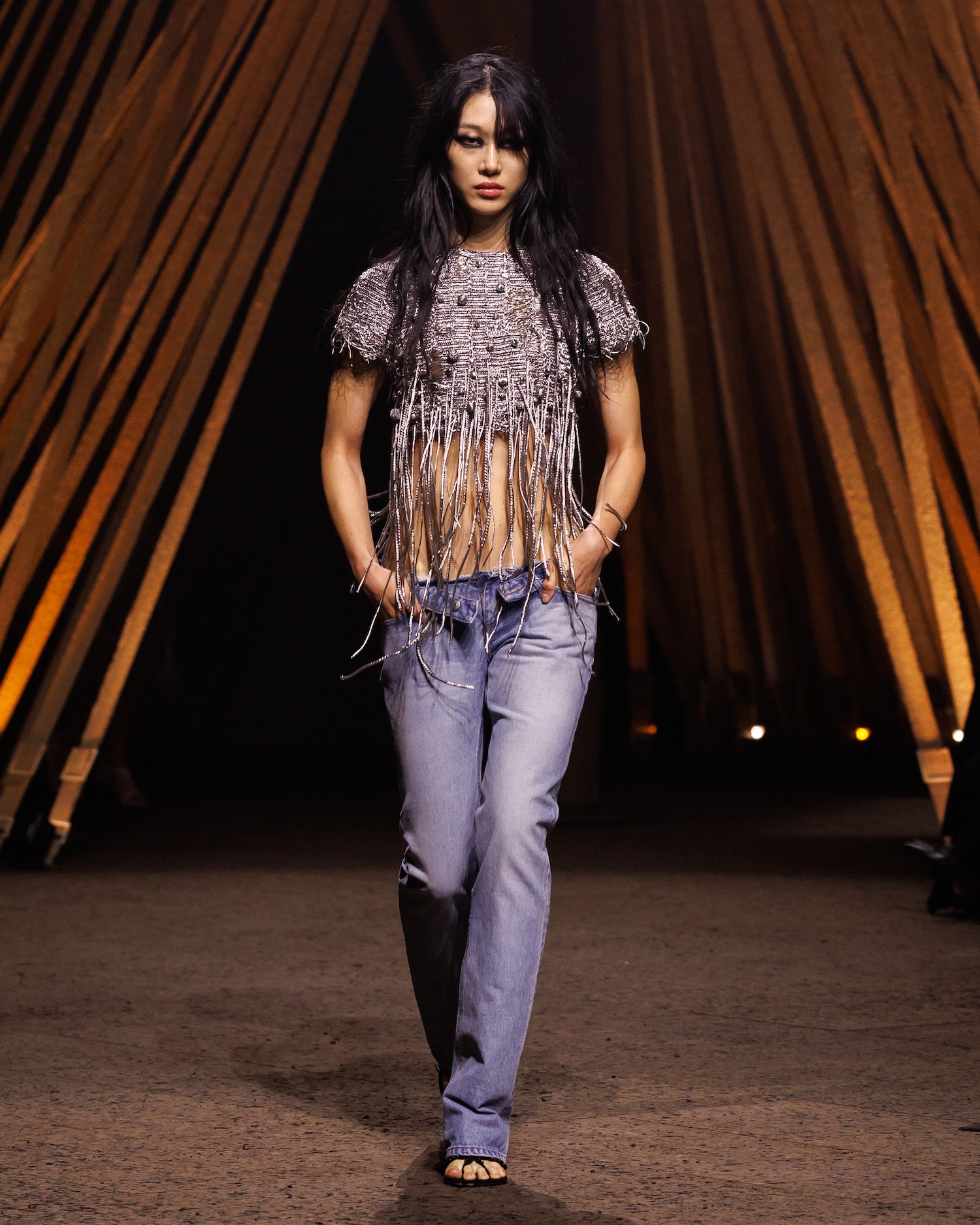
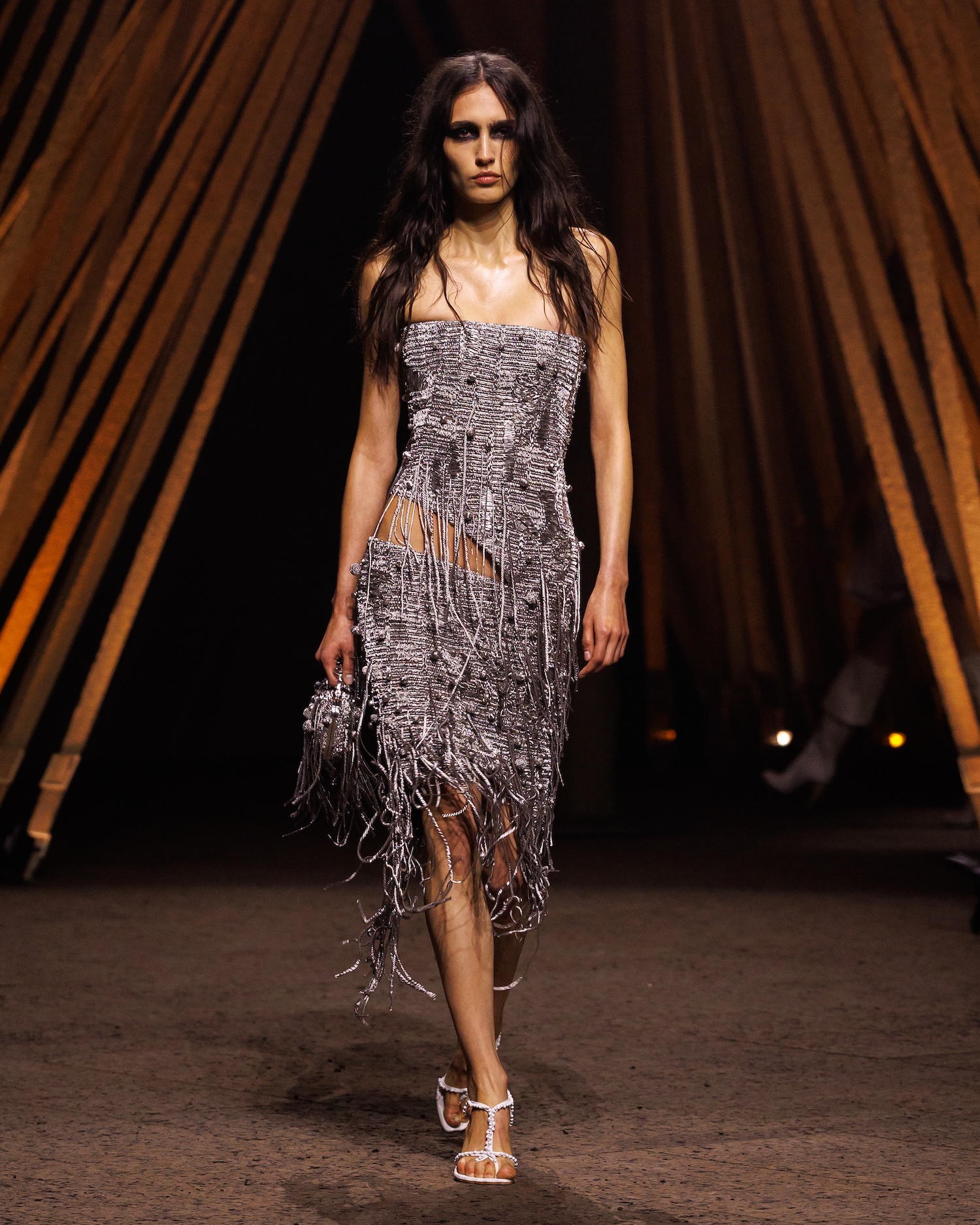
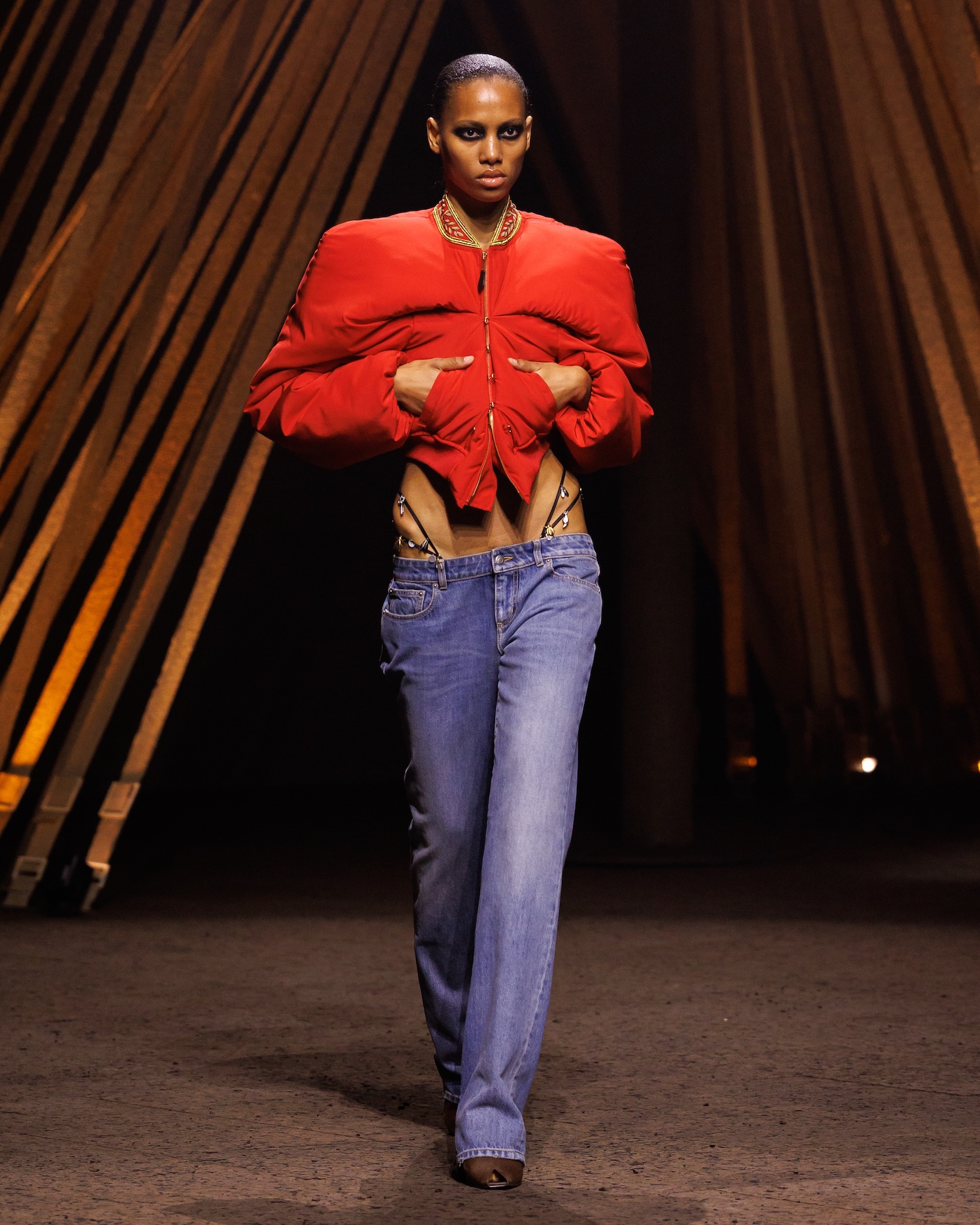
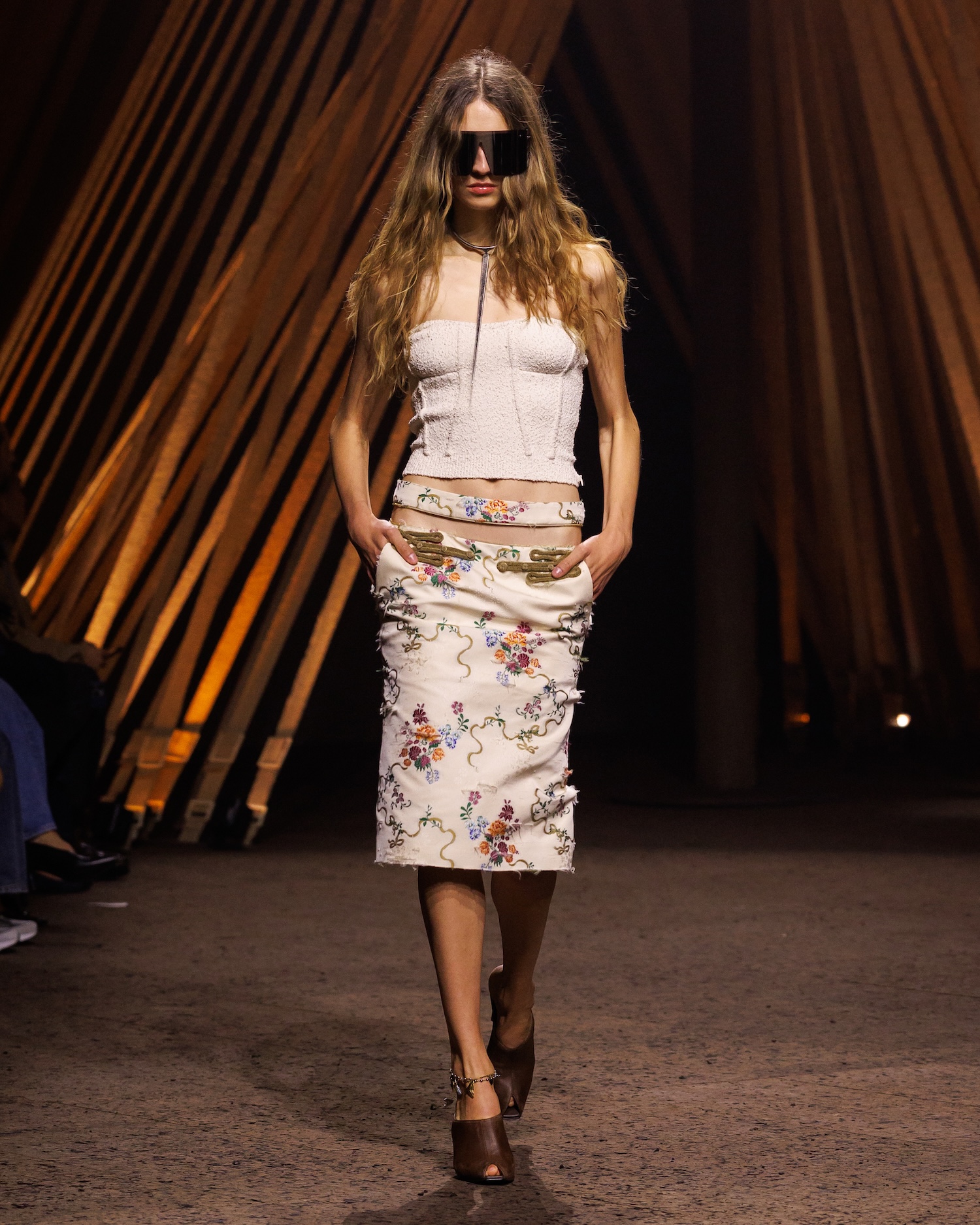
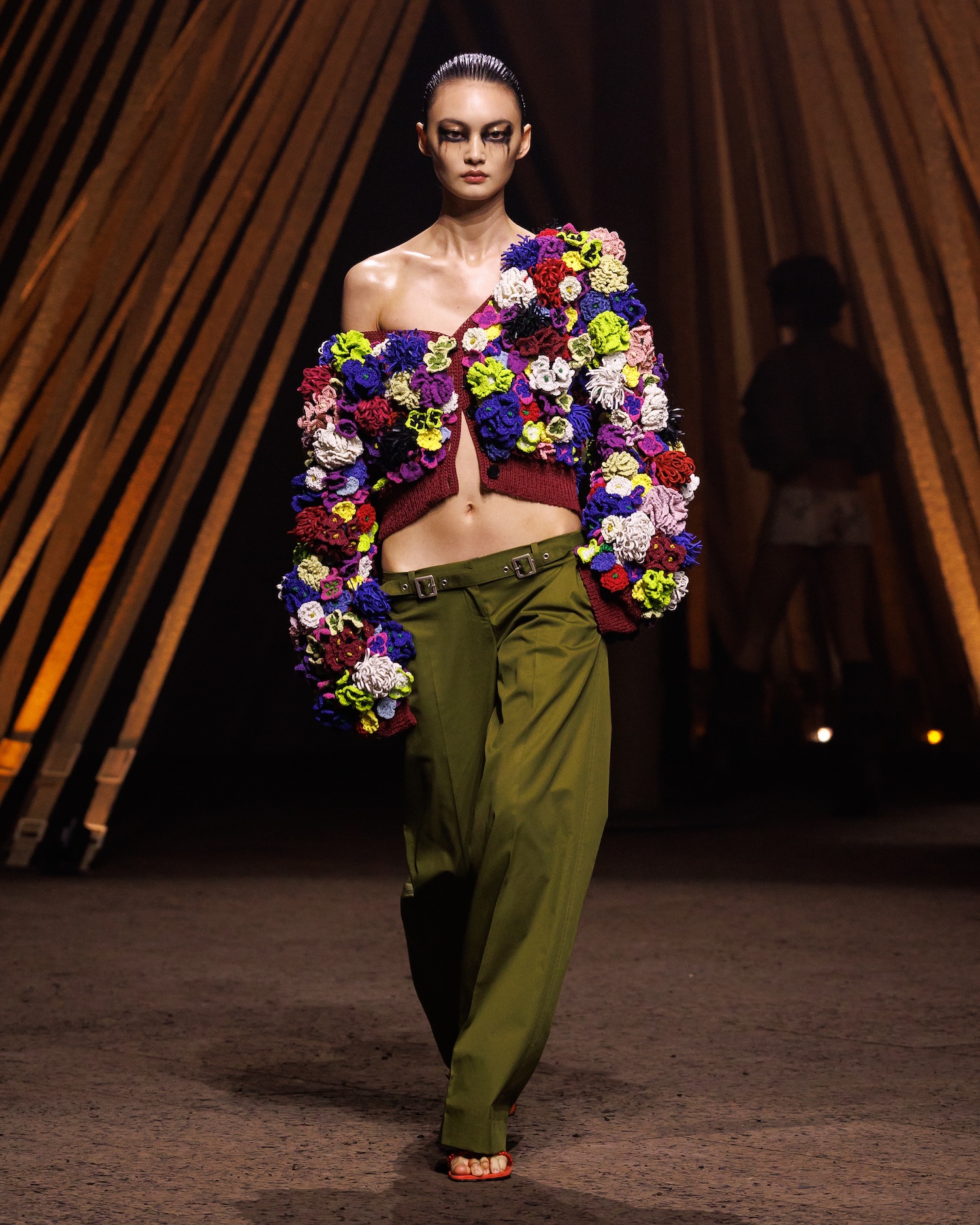
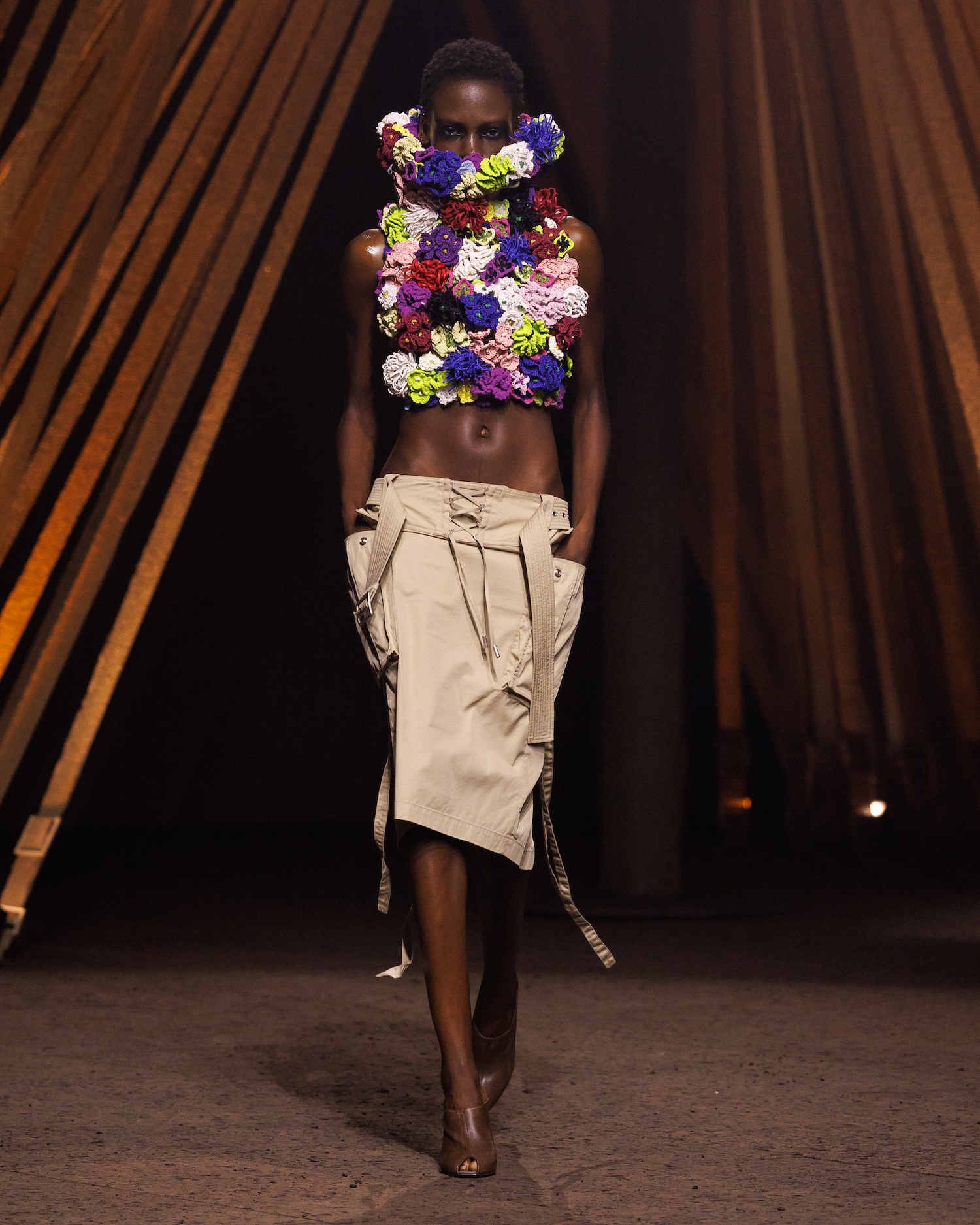
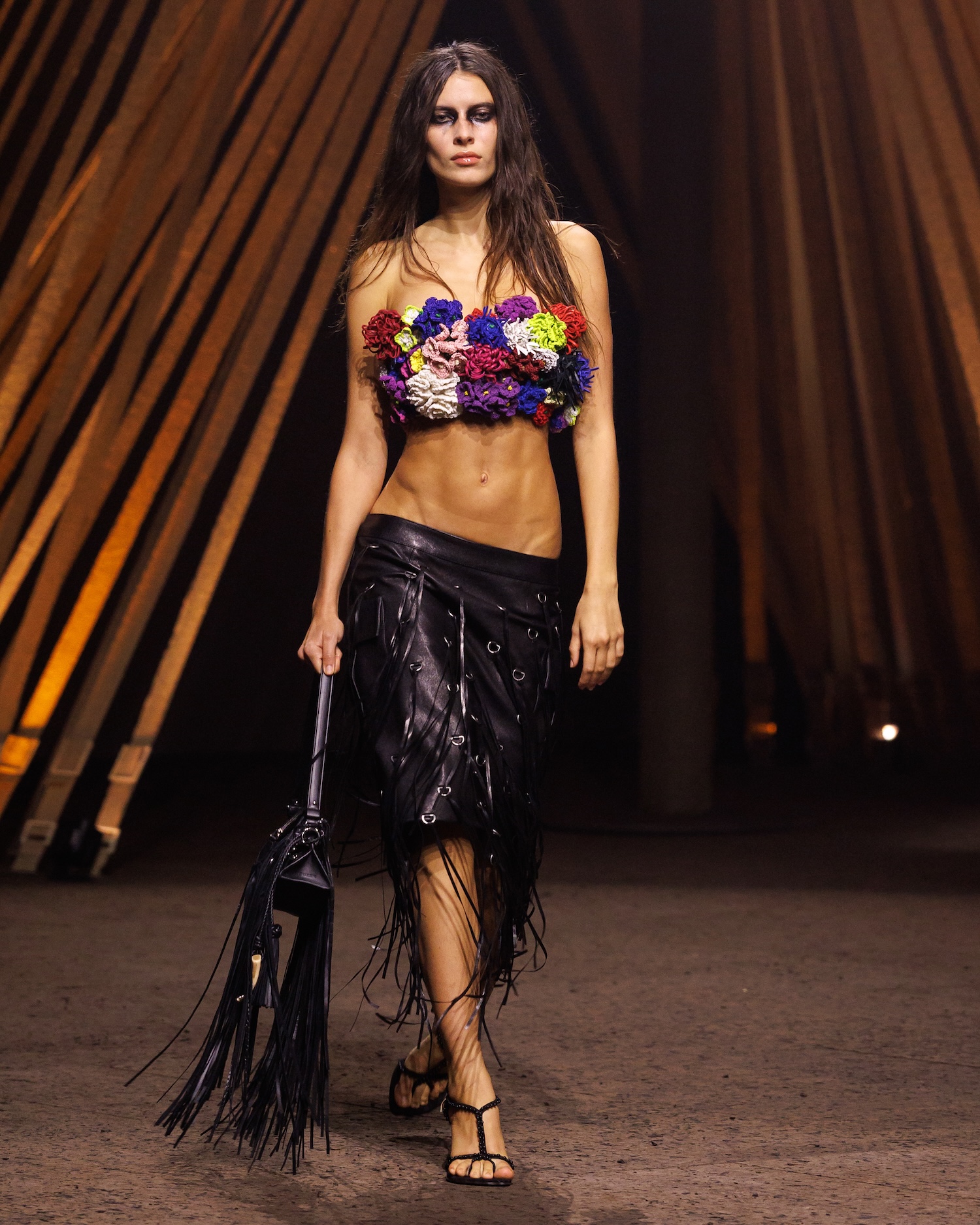
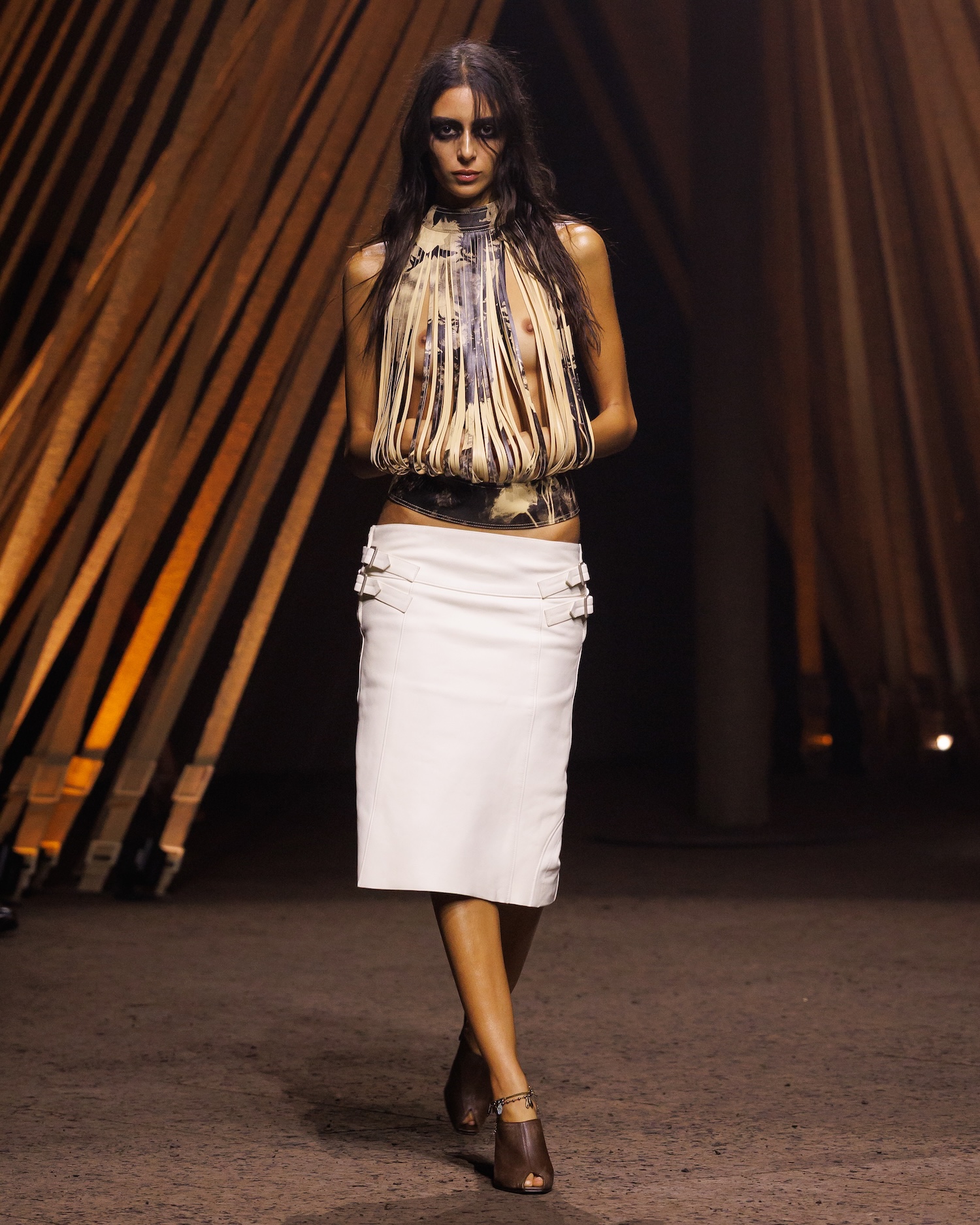
Discover the collection here.
photography. courtesy of McQueen
words. Gennaro Costanzo