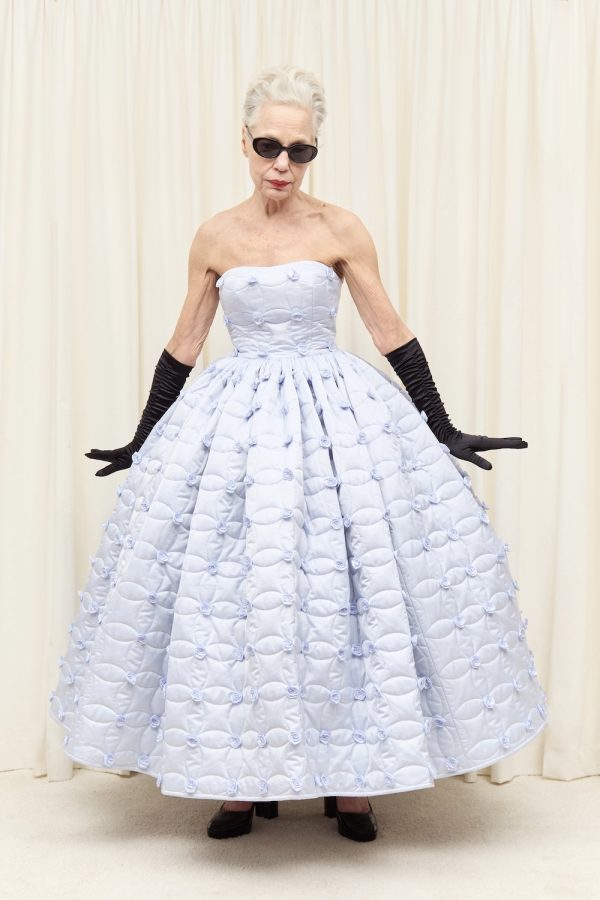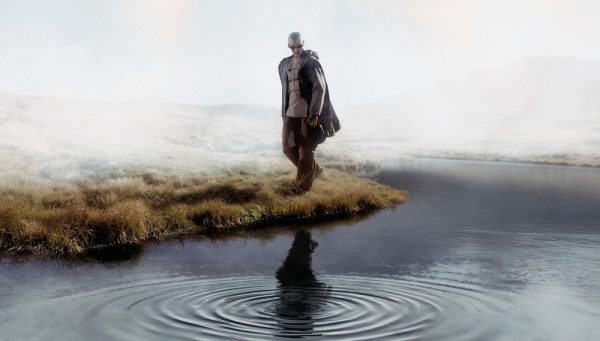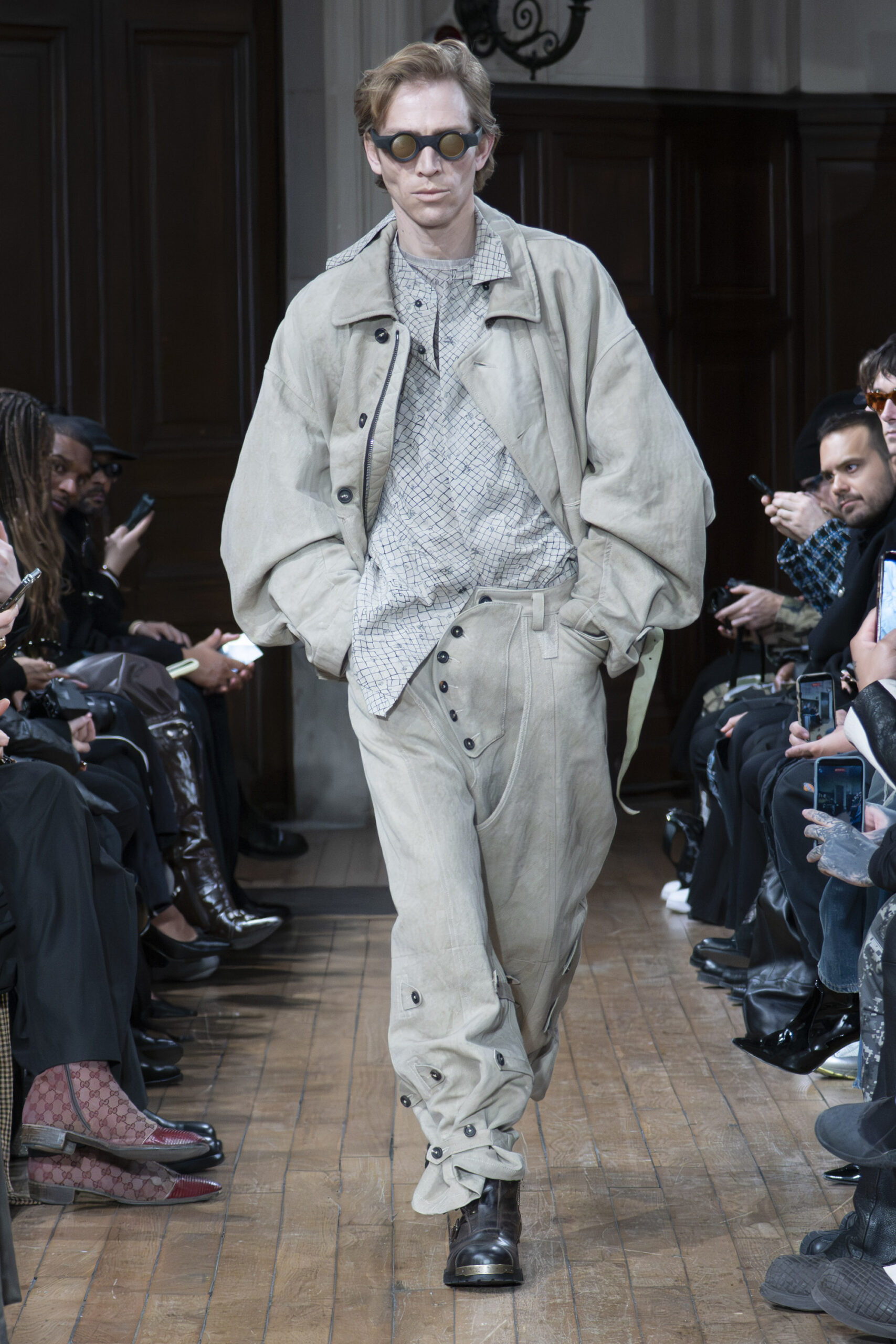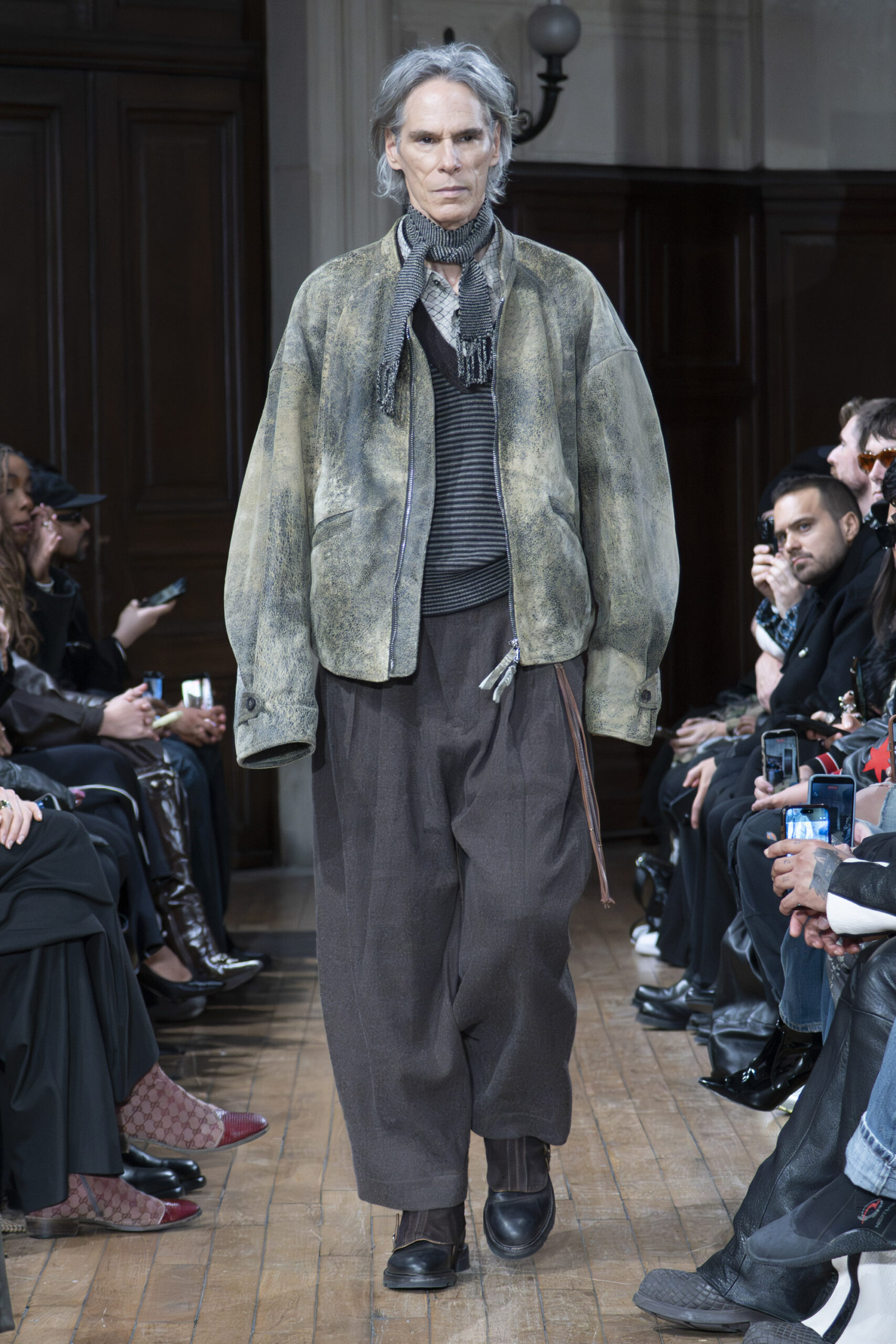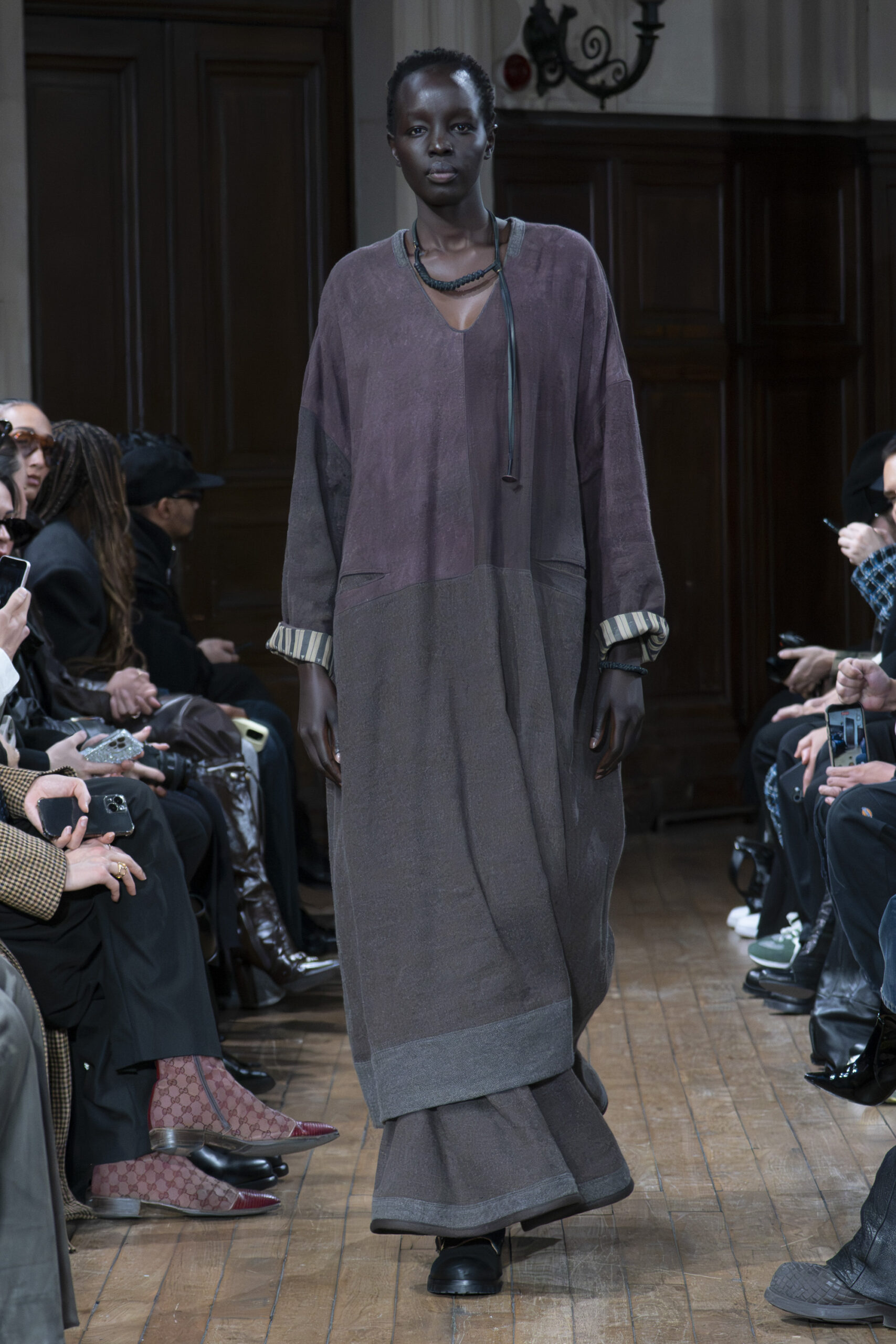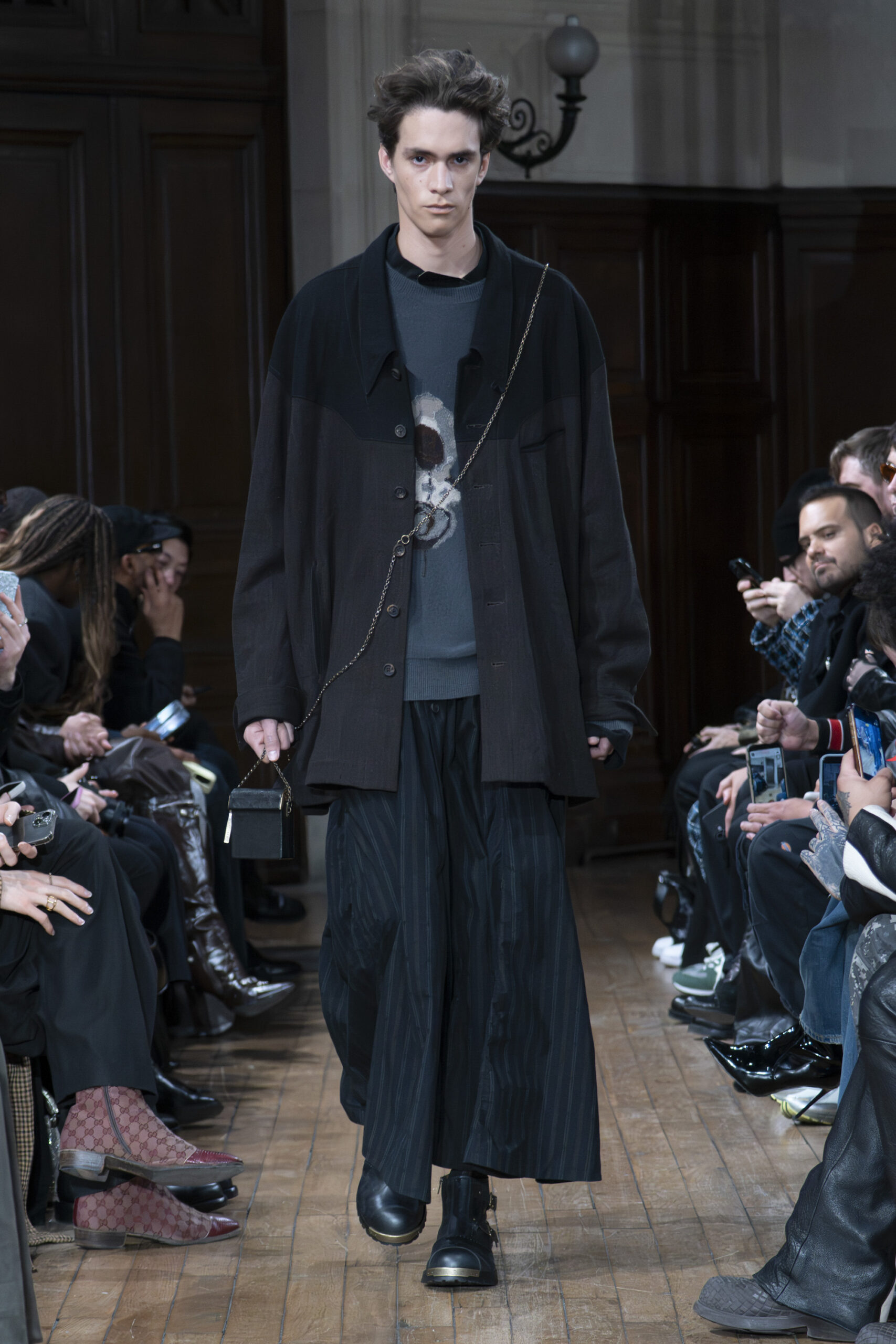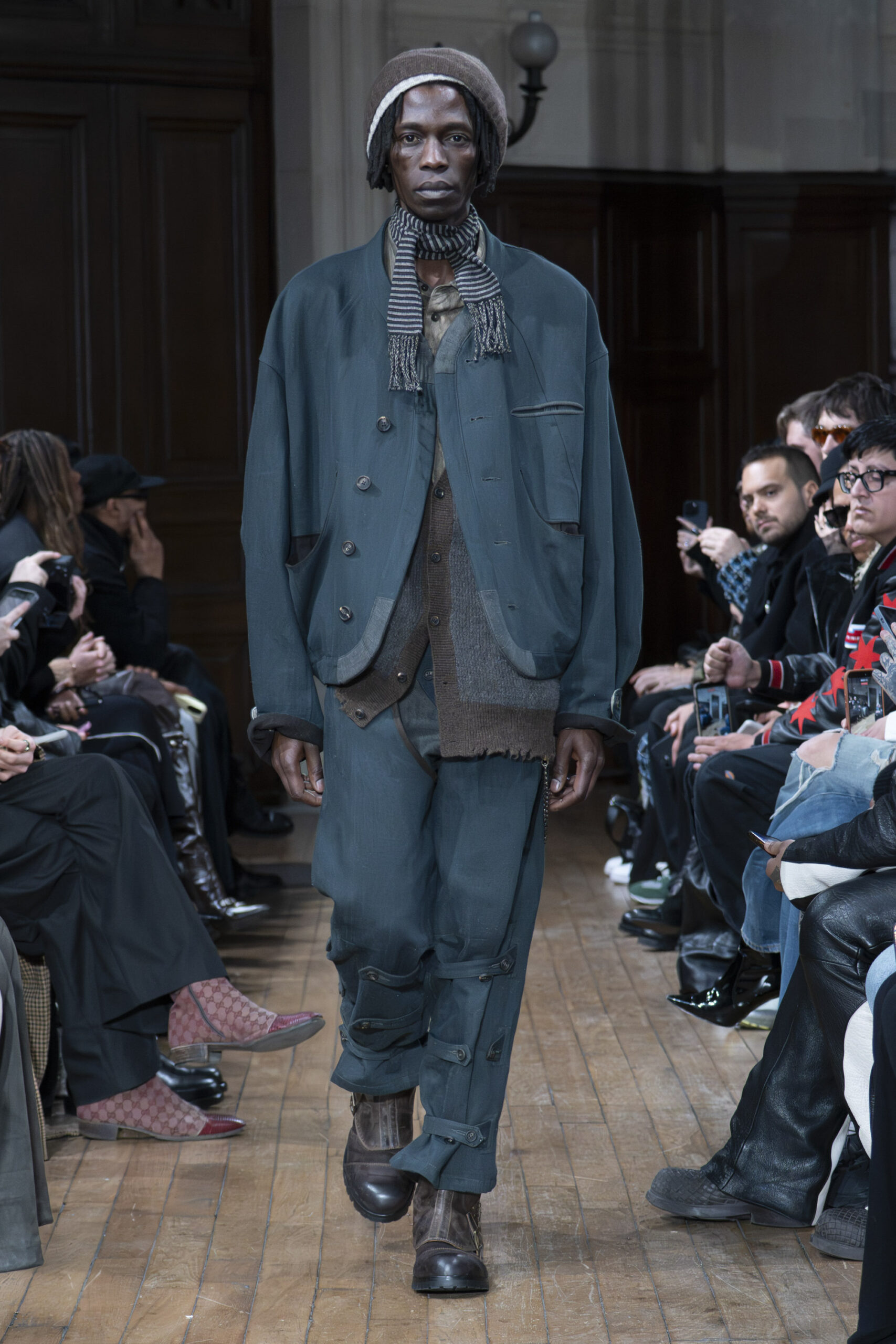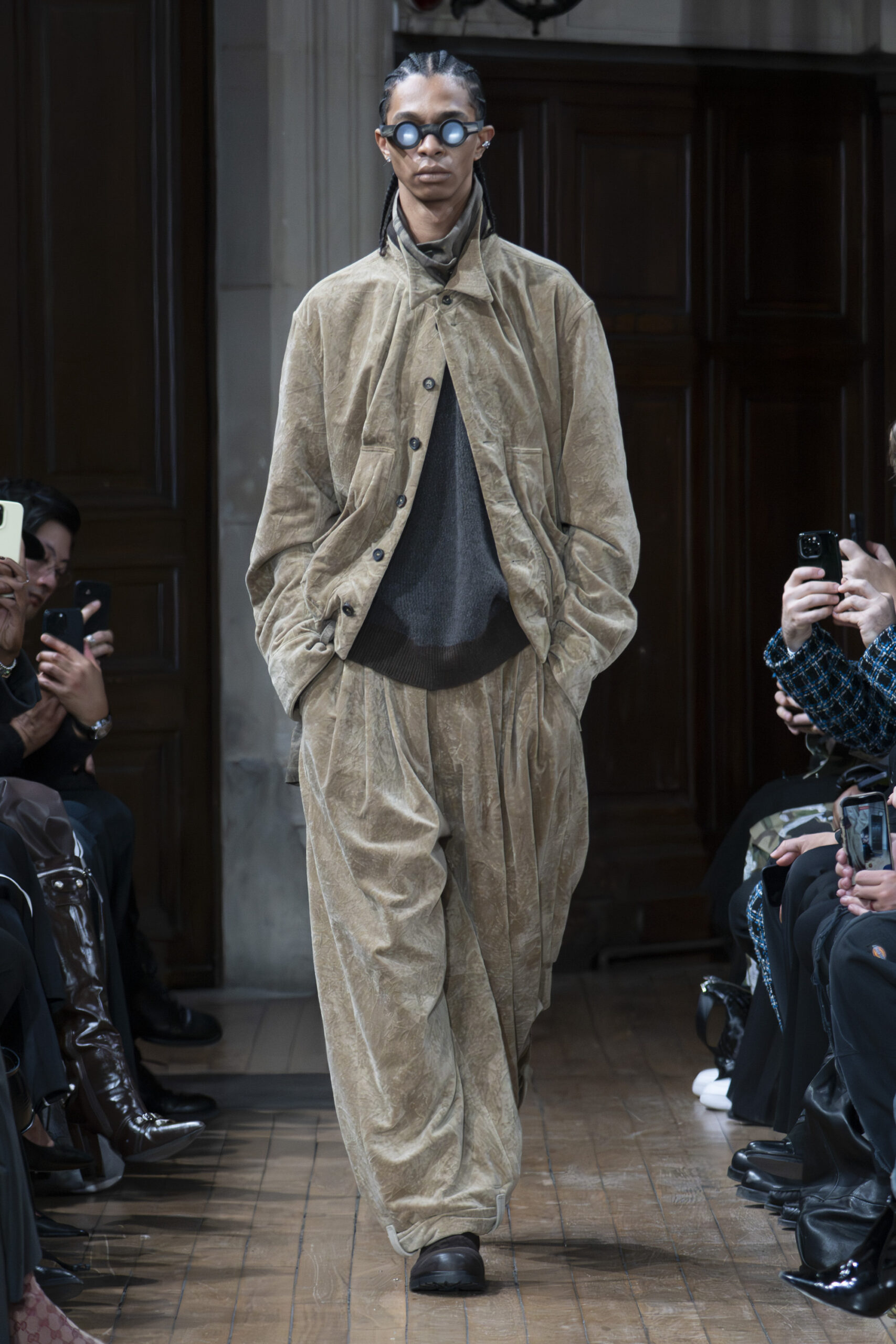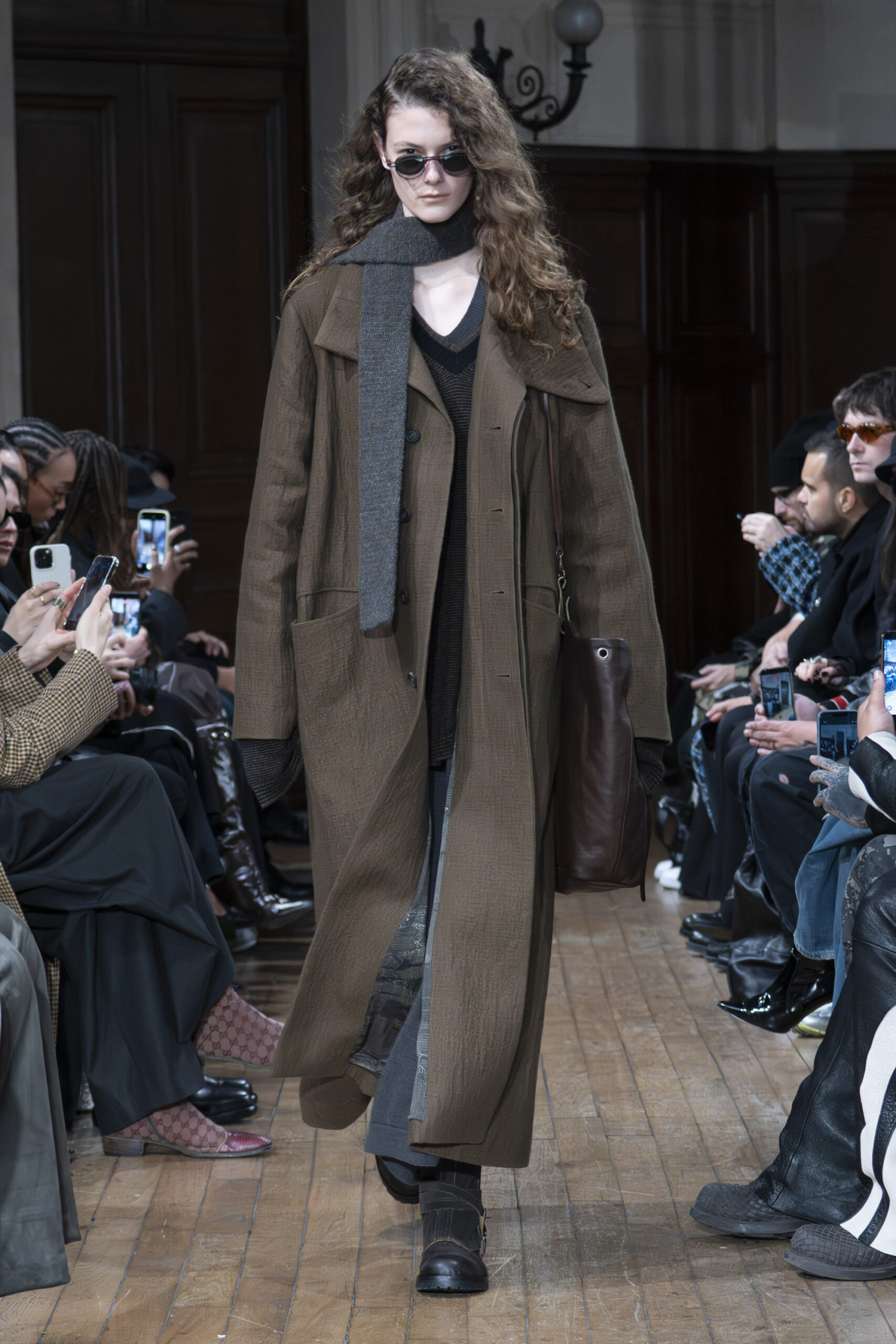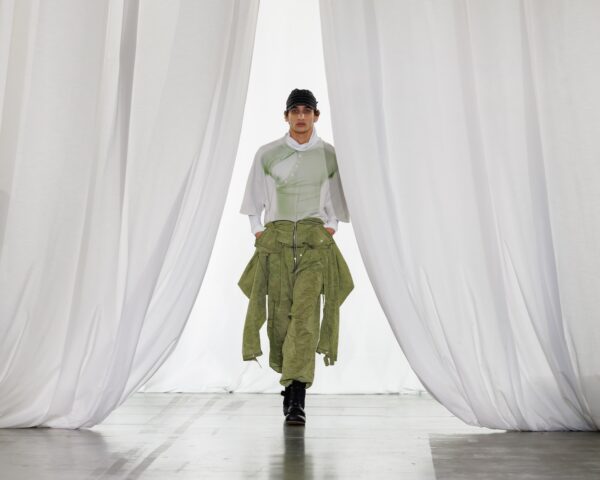


“I’m not someone who’s good at telling stories,” says Ziggy Chen, “I prefer to let colours, materials, textures, and silhouettes tell their own.” This sentiment pulses through every thread of PRITRIKE, his Spring/Summer 26 collection, which he hopes evokes, in his words, “simply, a gentle happiness.”
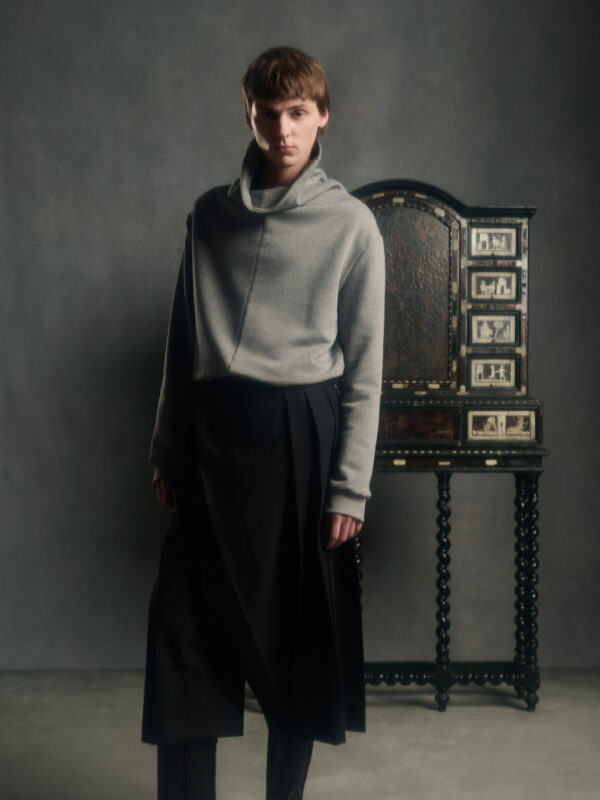
For those who haven’t yet discovered Chen, the Shanghai-born designer is a radical force in modern menswear, celebrated for his masterful layering and a nuanced aesthetic that fuses the organic with the architectural. His clothes wear like second skin, they’re lived-in, familiar, yet rigorously crafted. With PRITRIKE, Chen explores an elemental theme: the primal power of nature, distilled through fabric and form into garments that feel both ancient and freshly vital.
Chen, who launched his label in 2012 after founding the boutique Decoster Concept, has long been drawn to contradiction. His work balances restraint and rawness, Eastern silhouettes and Western tailoring, and now, nature’s duality.
The name PRITRIKE itself is a collision of Primal and Strike, hinting at nature’s ability to both nurture and erode. Inspired by the persistent summer rains of Jiangnan, the collection hums with power, much like a soft downpour that reshapes the land over time. This mood permeates every piece, evoking a lived-in intimacy and natural ease.
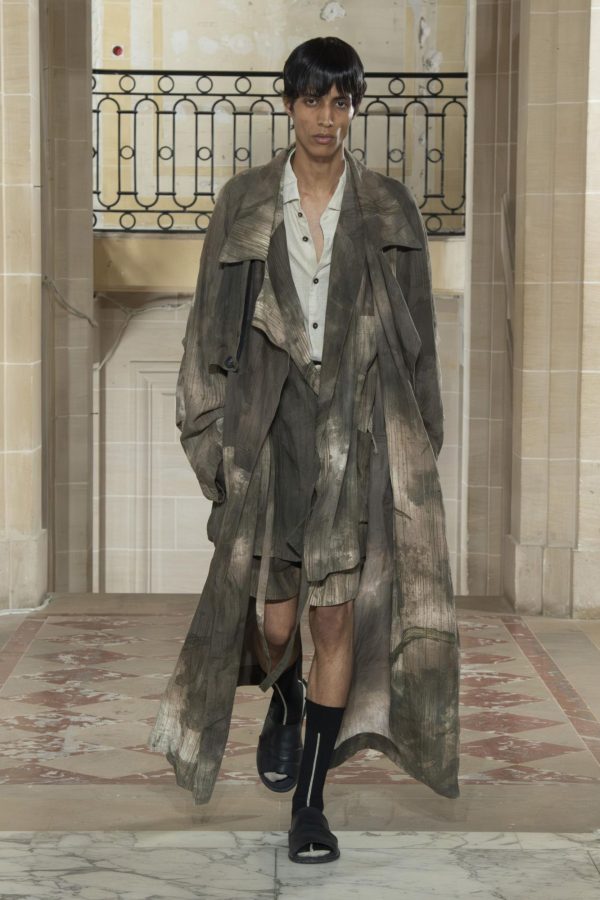
This sense of grounding is immediately tangible in the fabrics. Chen’s devotion to natural fibres, such as hemp, silk, cotton, and linen, anchors the collection in earthiness. But it’s what he does with them that sets the tone. Through delicate techniques like garment dyeing and bonding with gold, he transforms the raw into the refined. “The raw roughness of the fabric becomes soft; the fibre’s intrinsic energy is vital and radiant,” he says. What results is clothing that feels almost alchemical, with textiles that seem to remember the elements they came from.
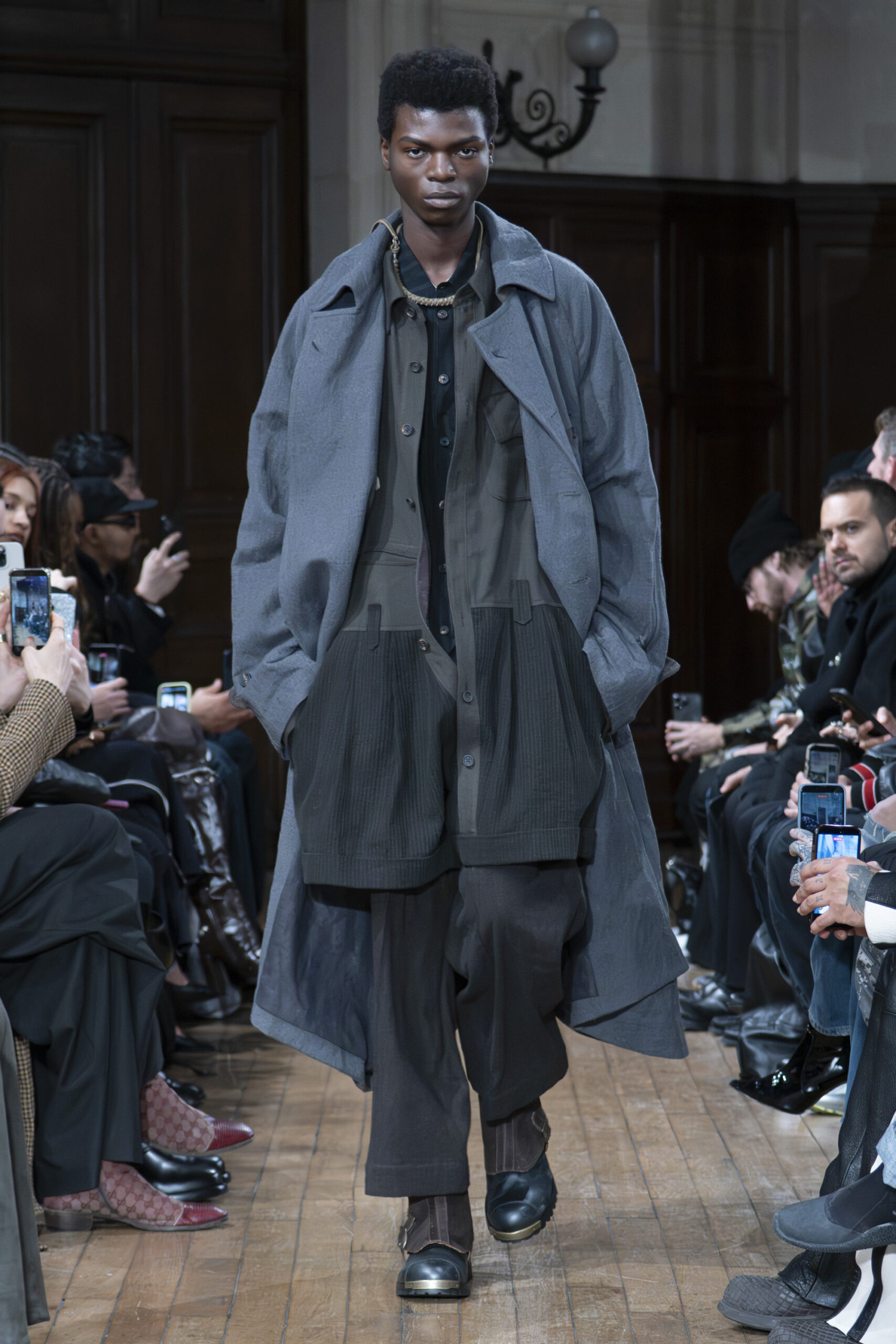
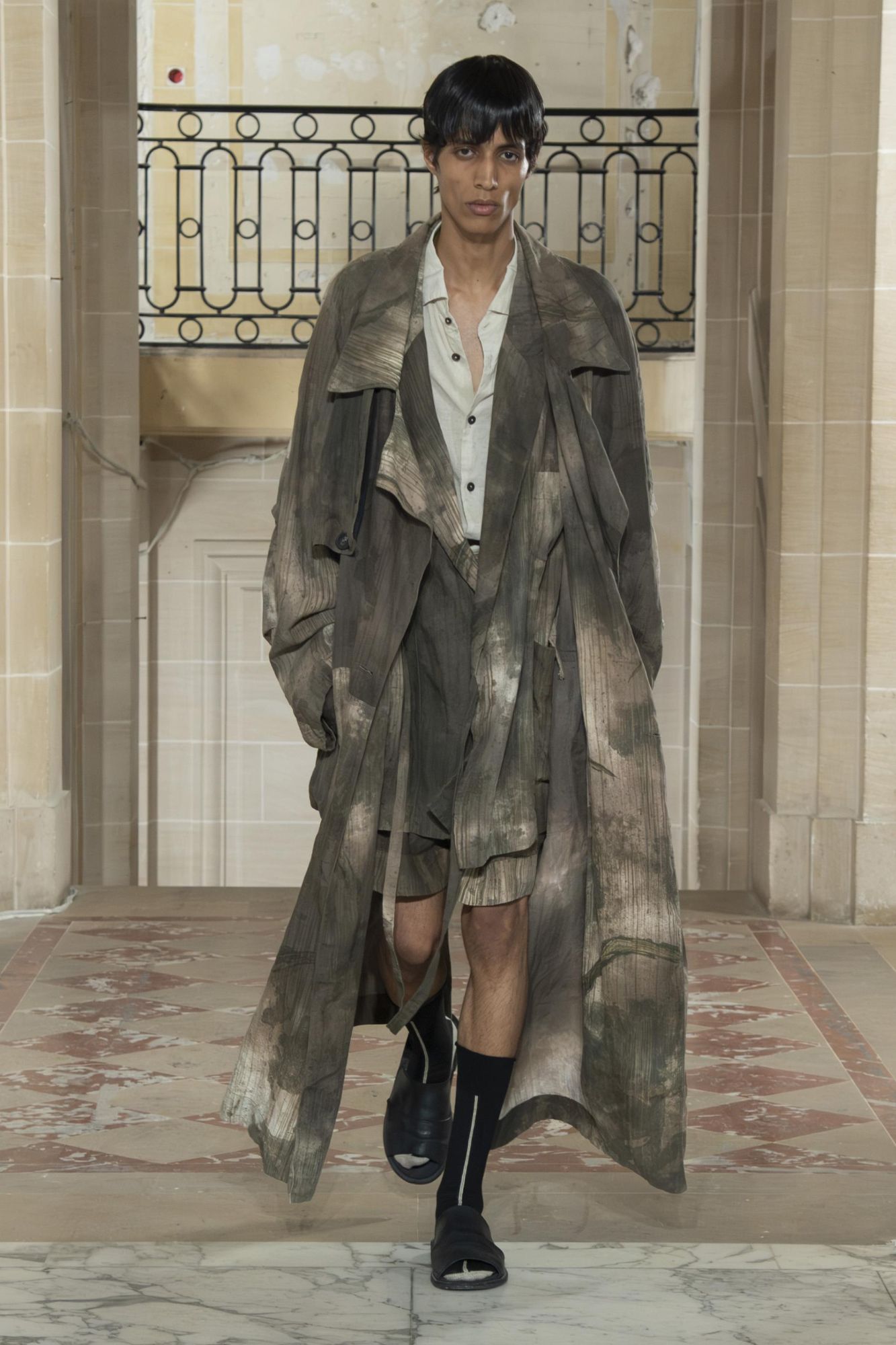
The palette tells its own story, too. It begins in a deep, ancestral black and extends to a murky, weathered white. In between lies a spectrum drawn from timeworn surfaces: the grey of eroded concrete, the brown-green patina of oxidised metal, the blush of sun-faded wallpaper, and the chipped lacquered wood.
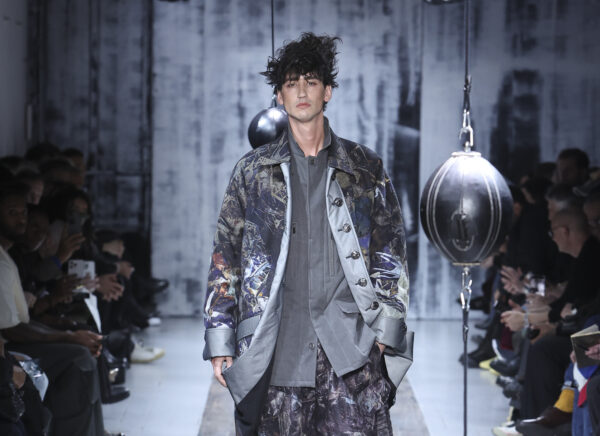
That same sensibility appears in the prints: abstract, organic patterns that recall ink dispersing on damp paper or rainwater soaking through stone. “Rain-soaked summer walls, with their accidental marks intertwined with ink stains, generate evocative patterns of a time gone by: silent, slow, yet charged with that primordial energy,” Chen notes. Like the garments themselves, these prints strike a balance between silence and intensity that is so fundamental to the collection’s theme.
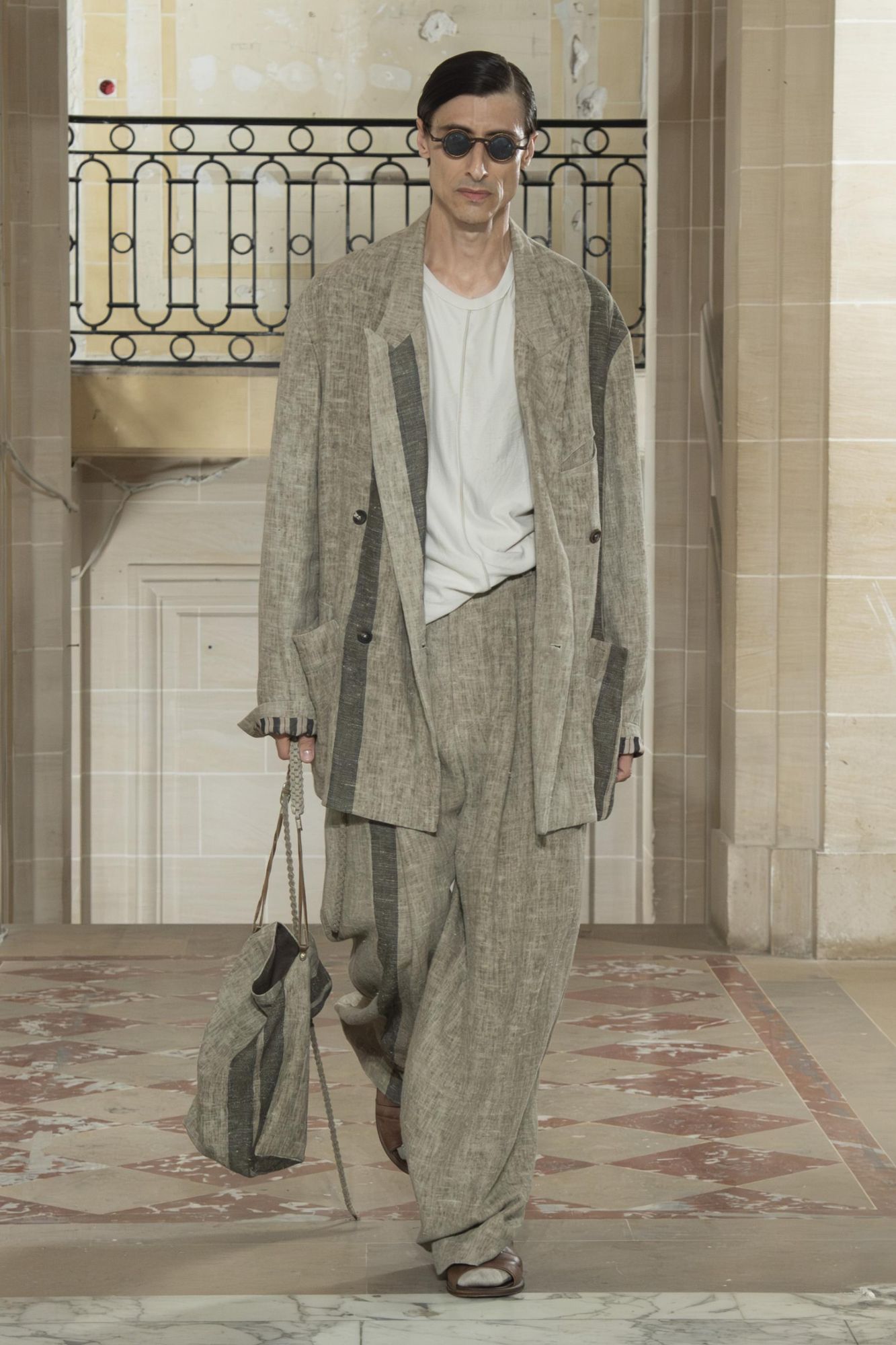
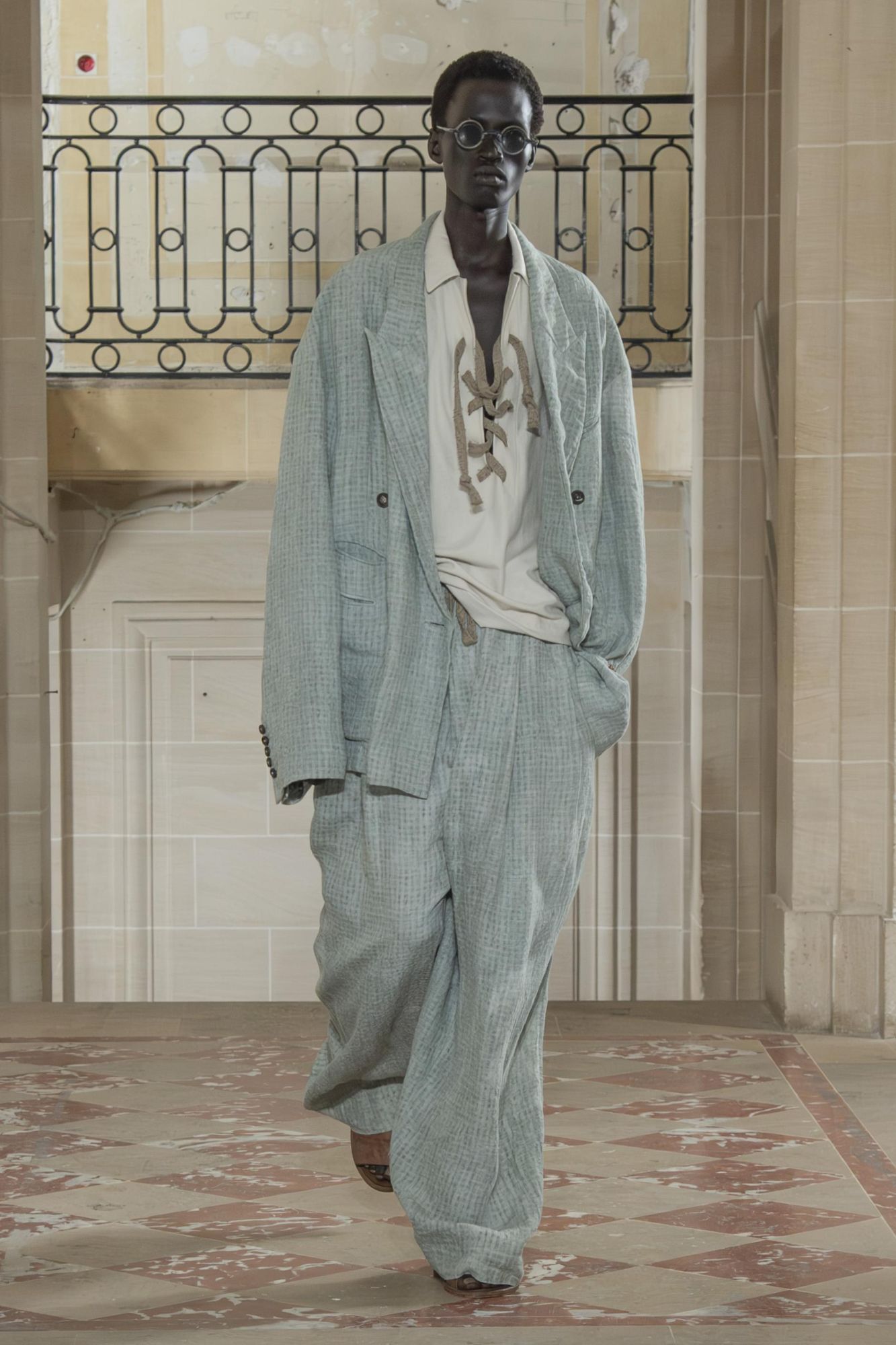
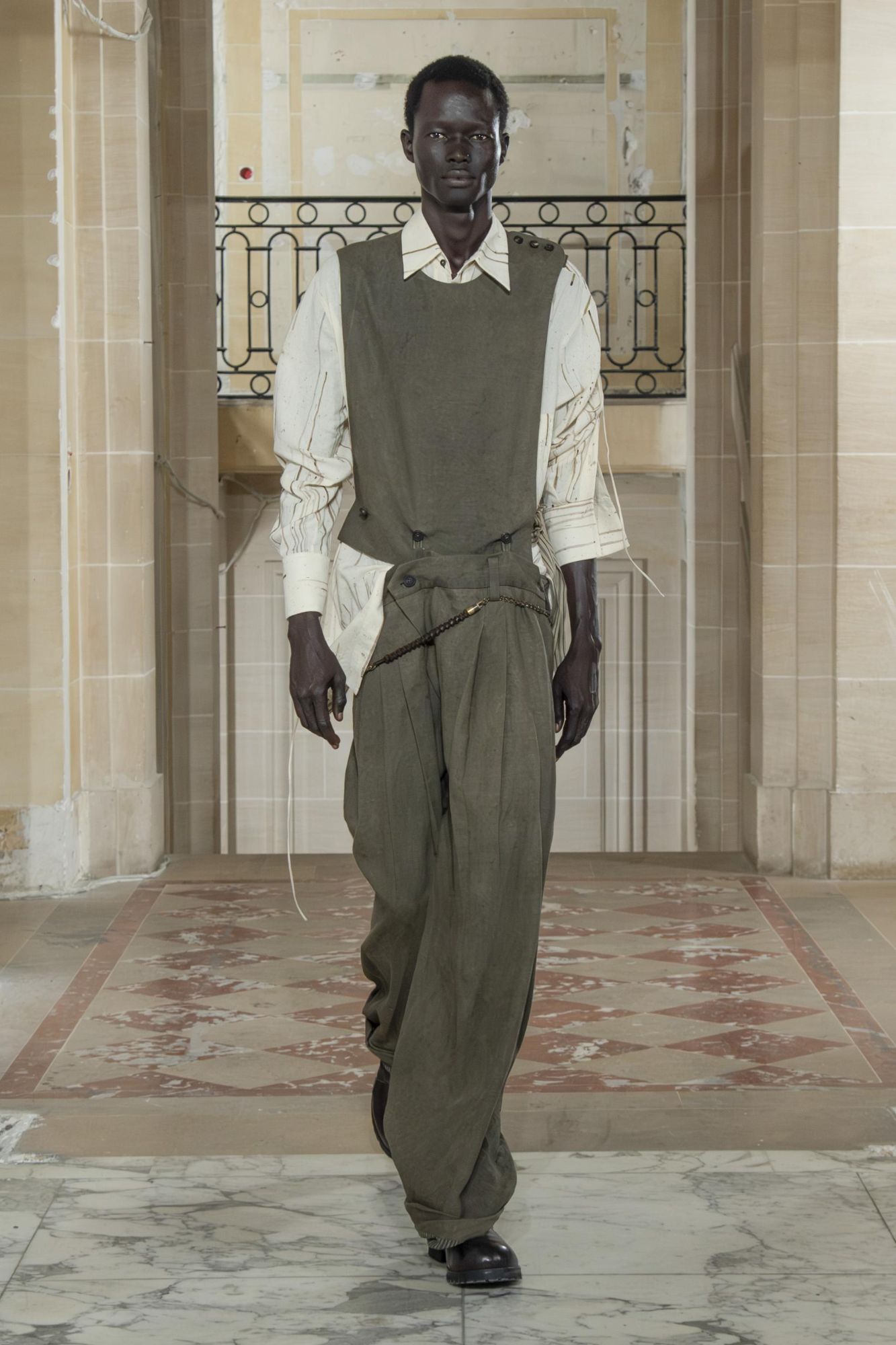
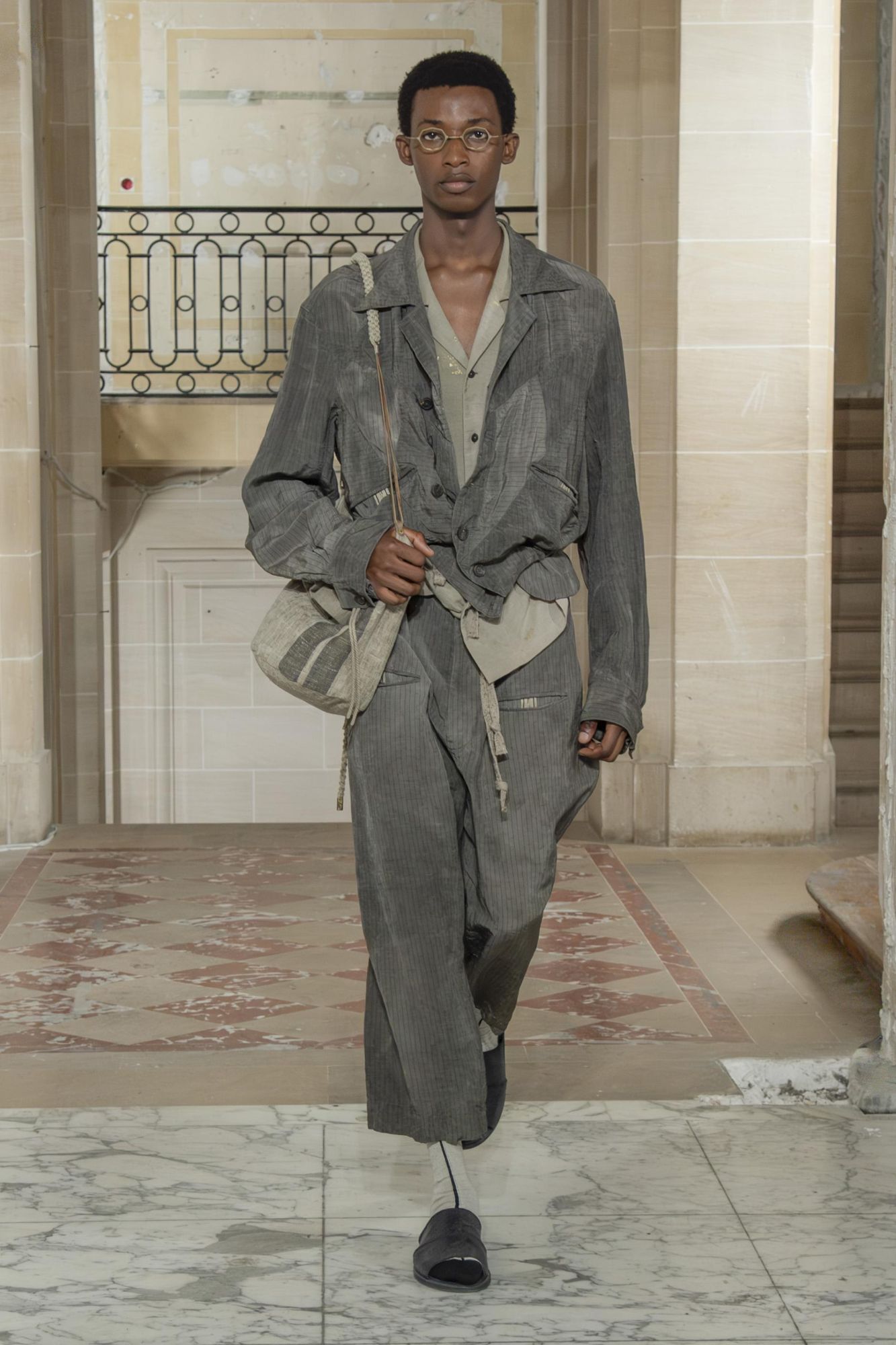
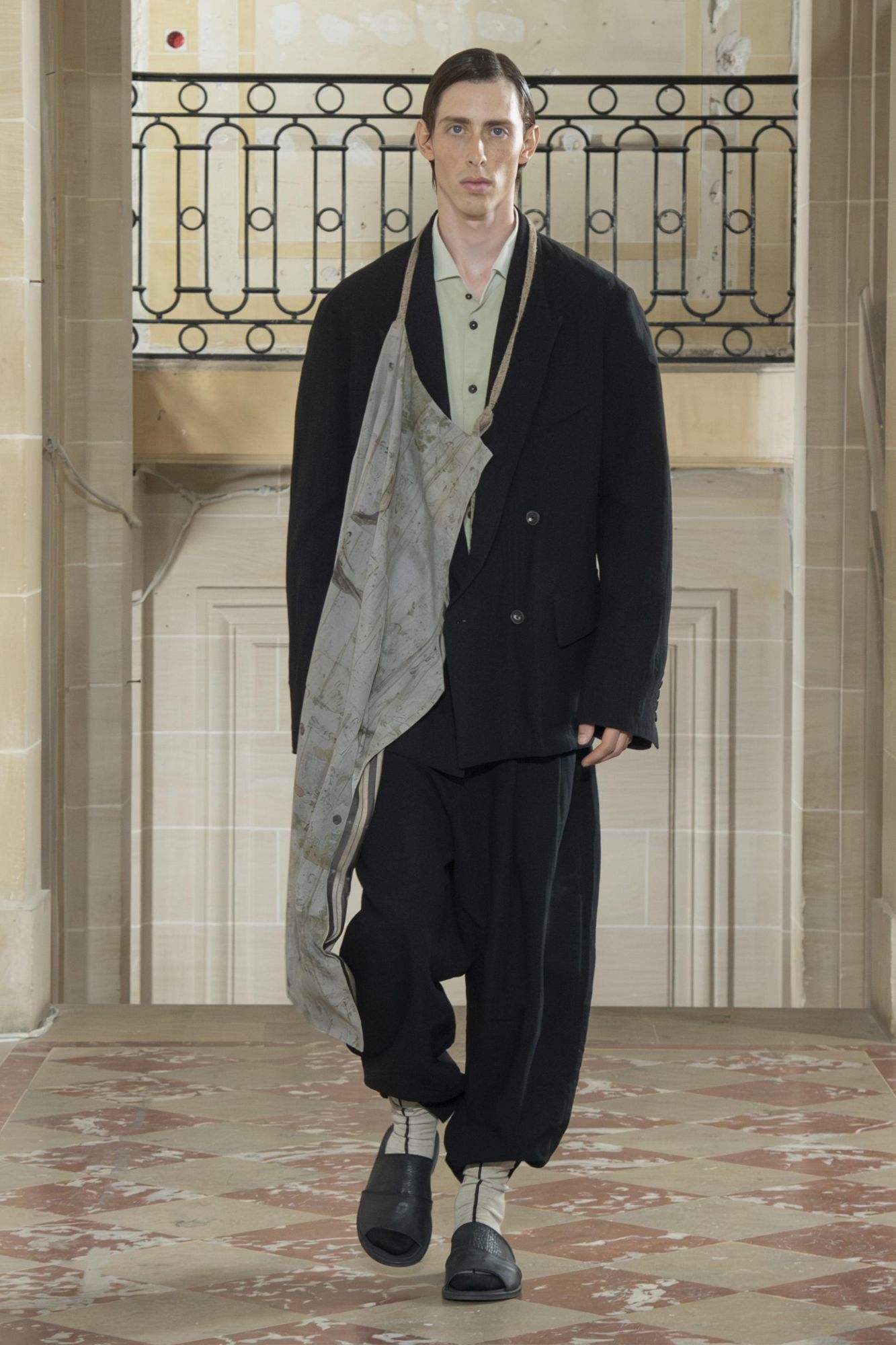
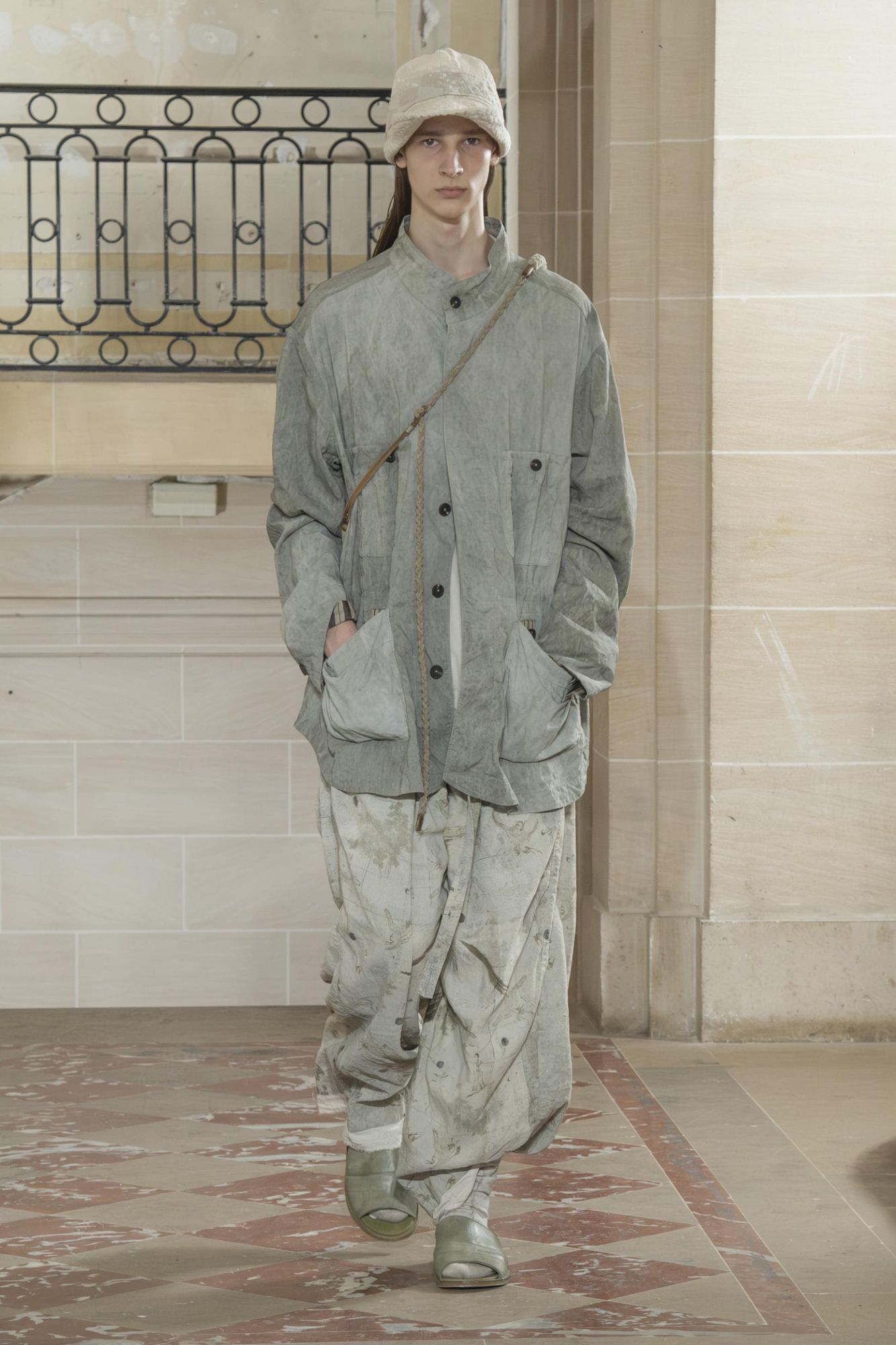
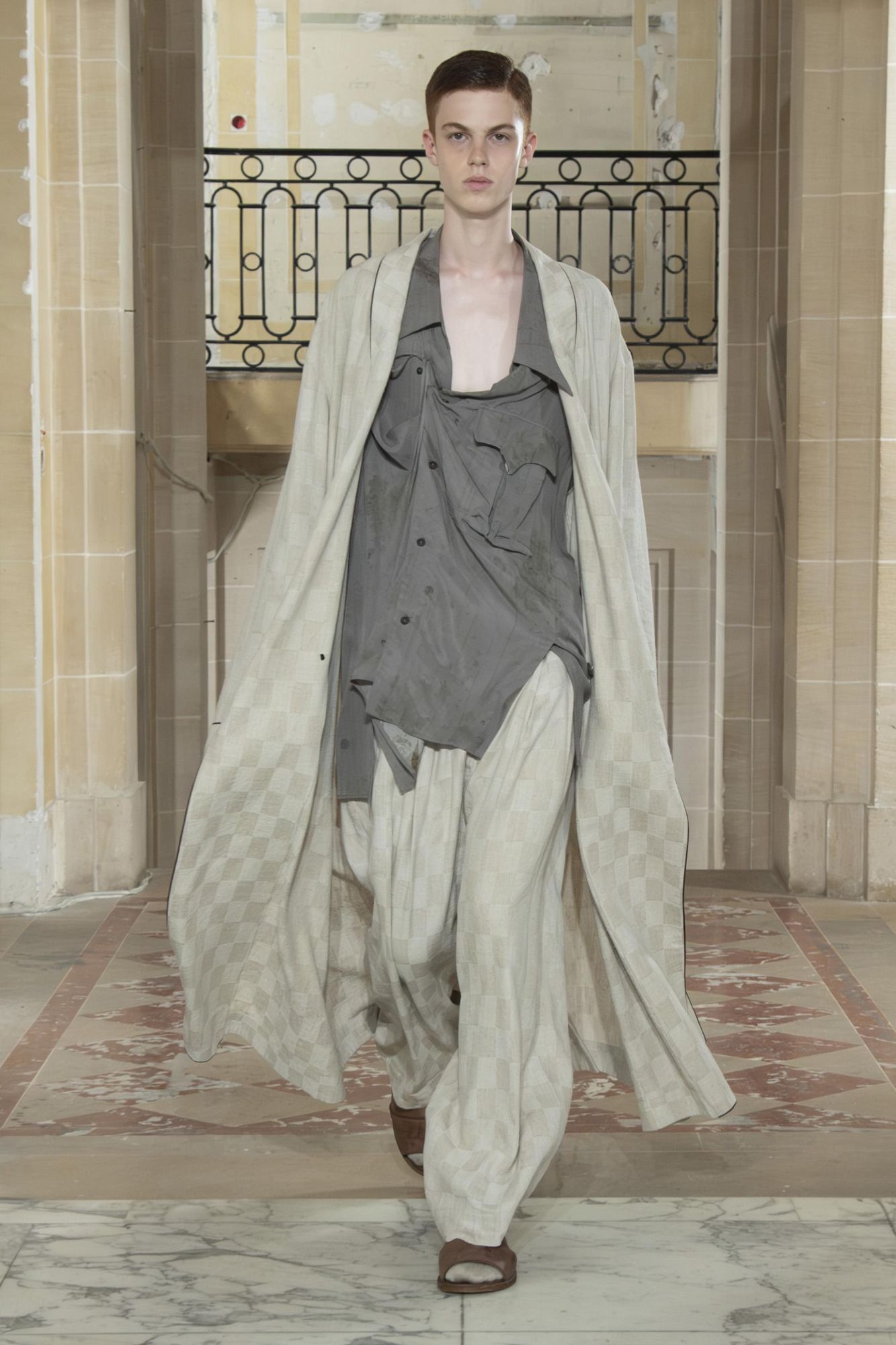
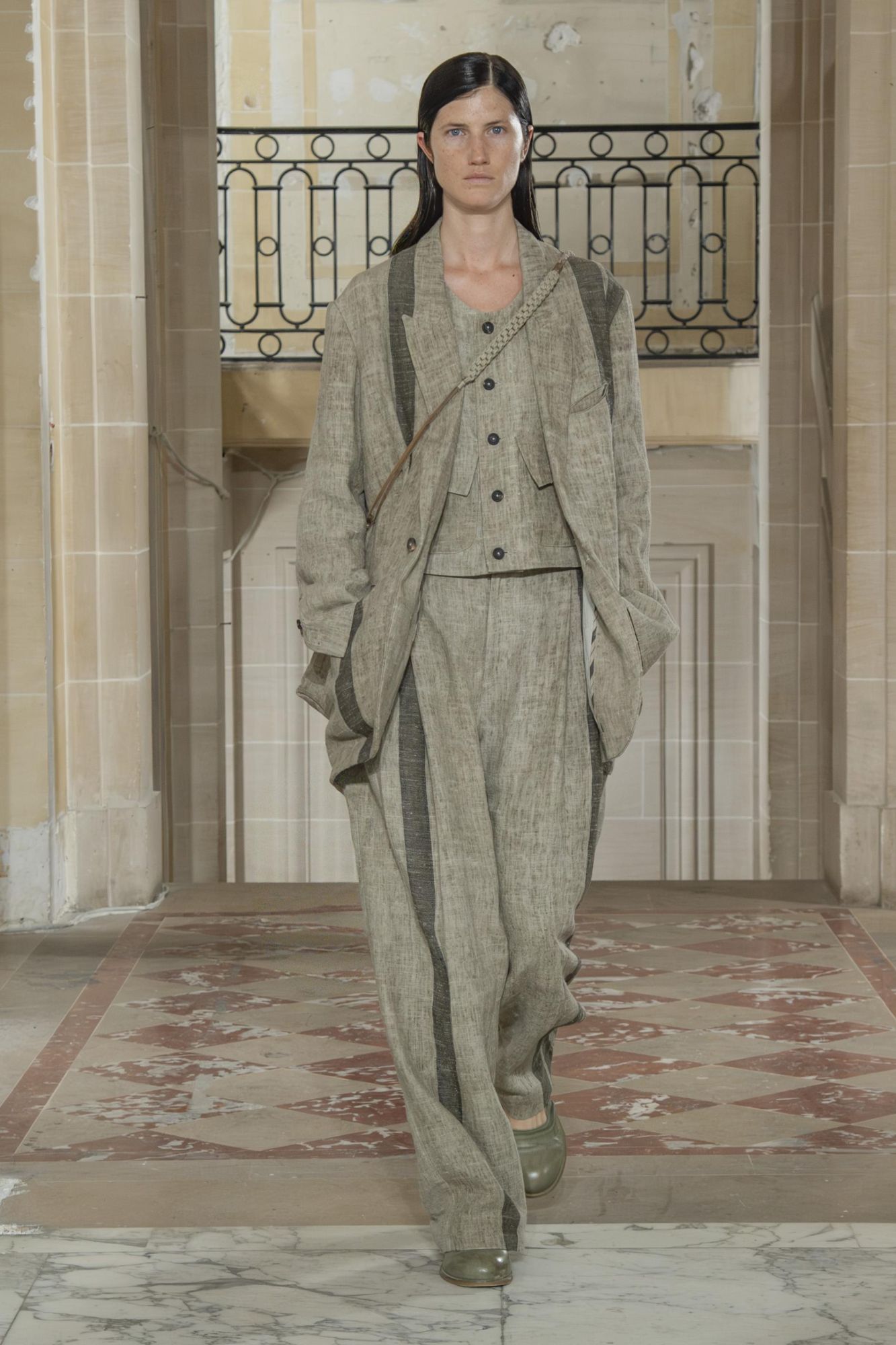
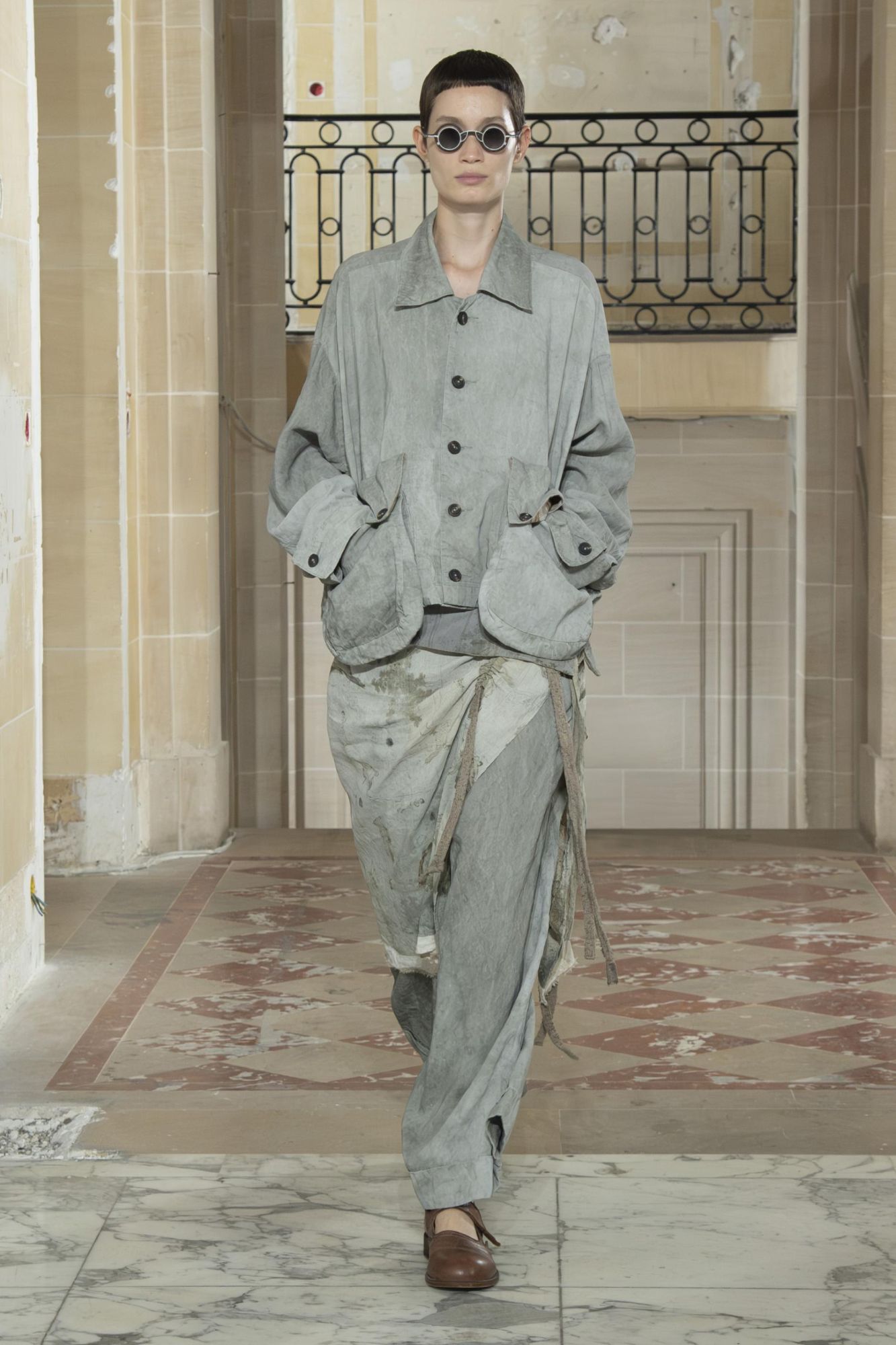
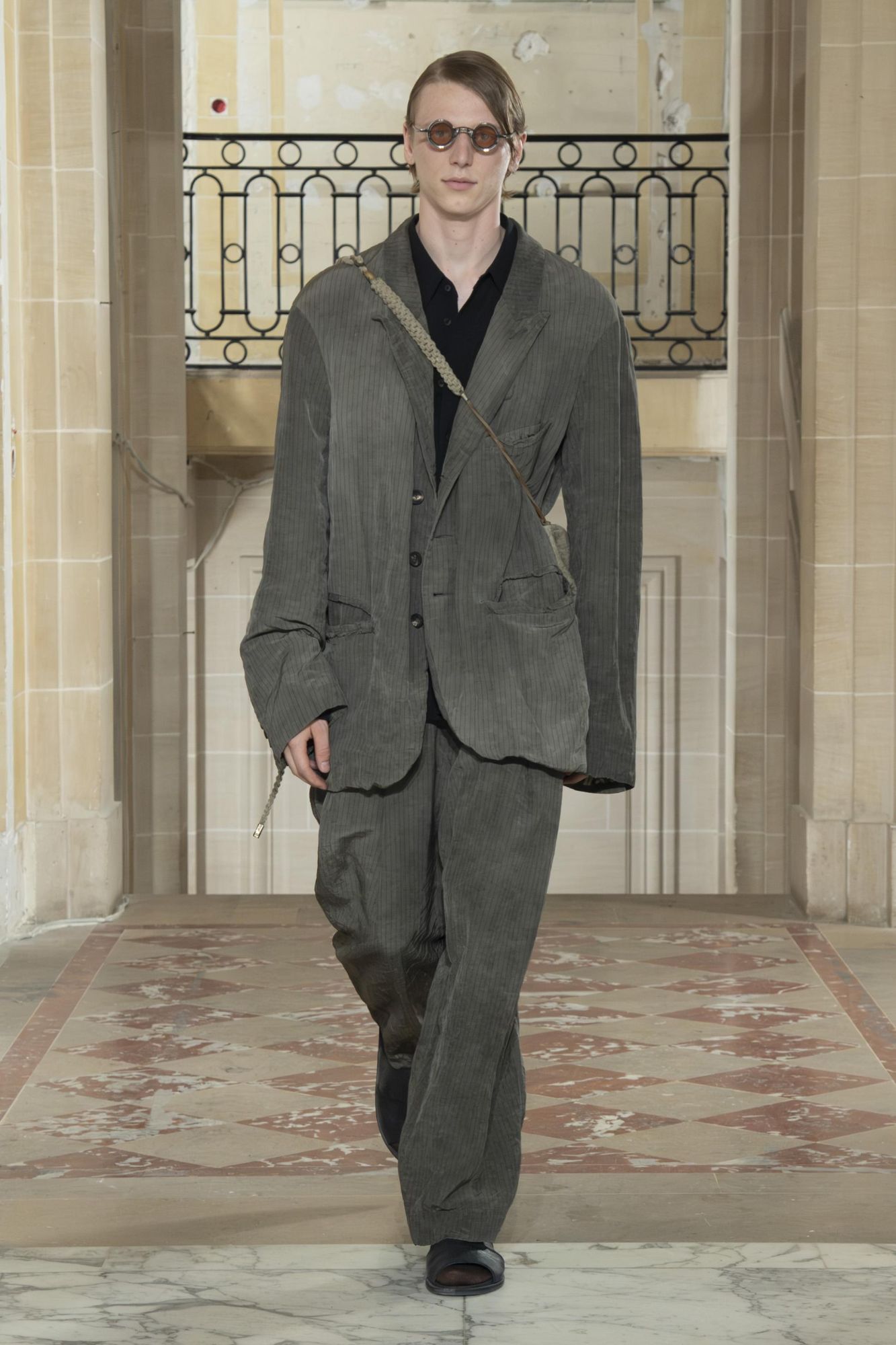
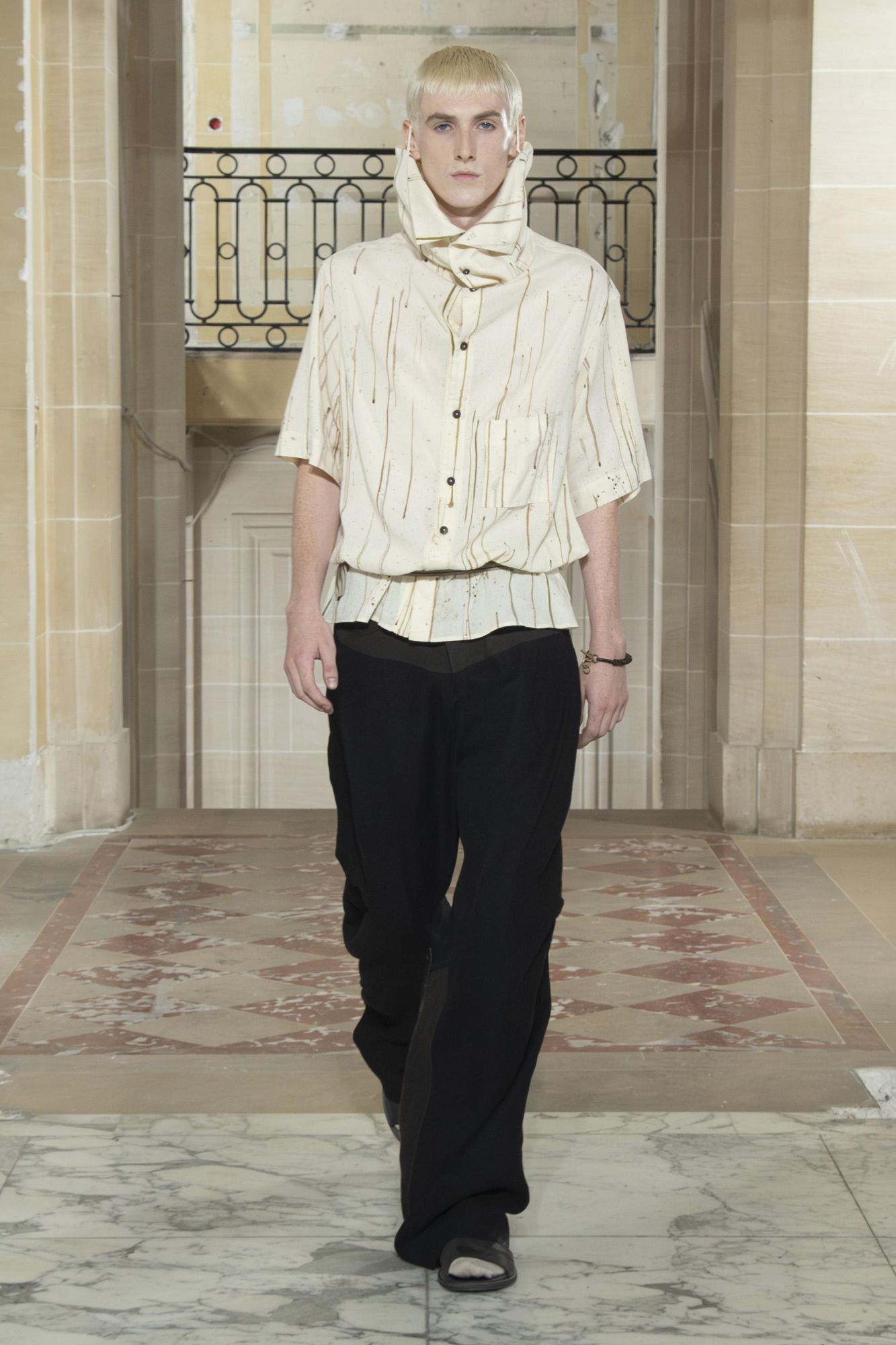
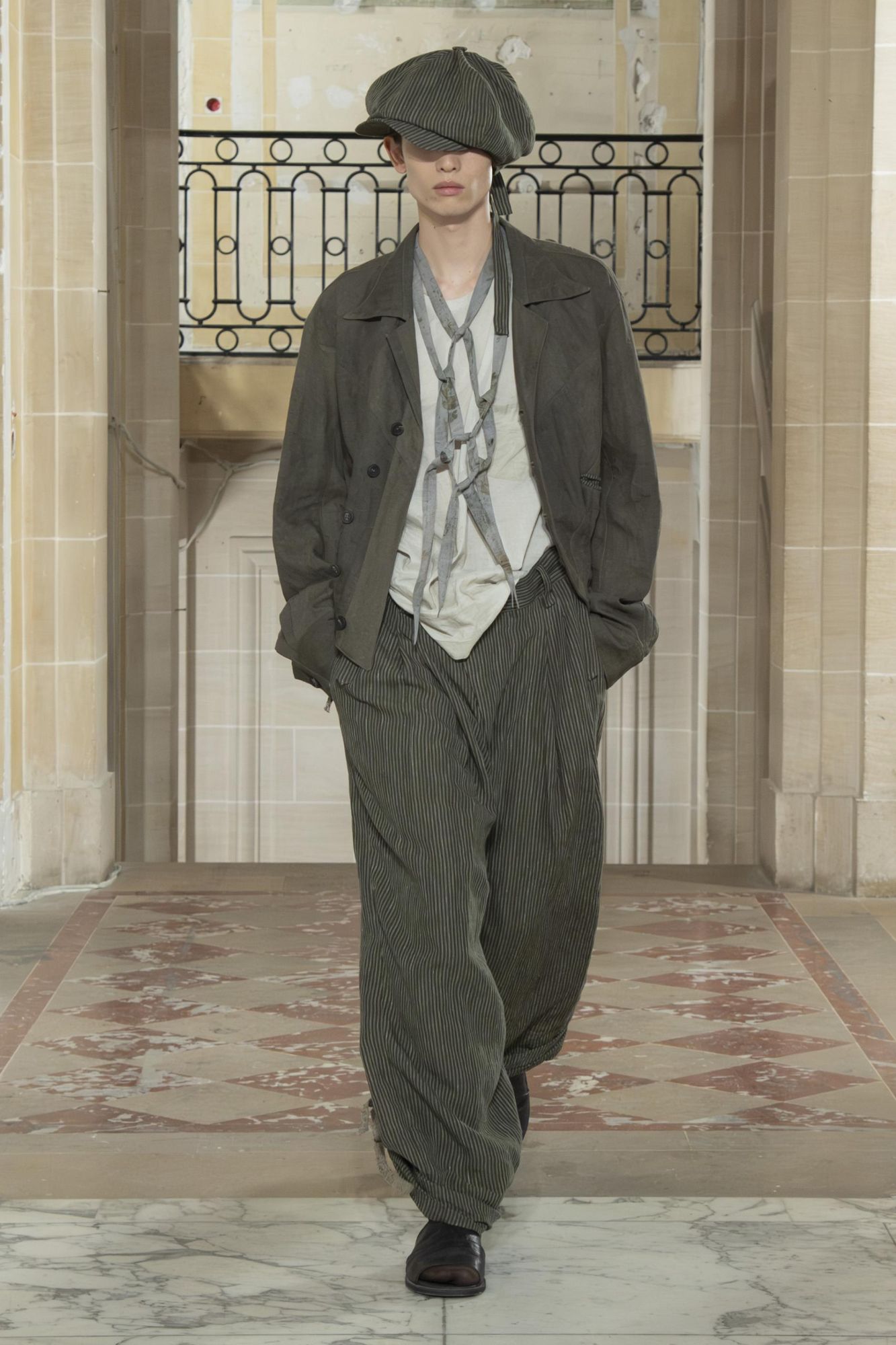
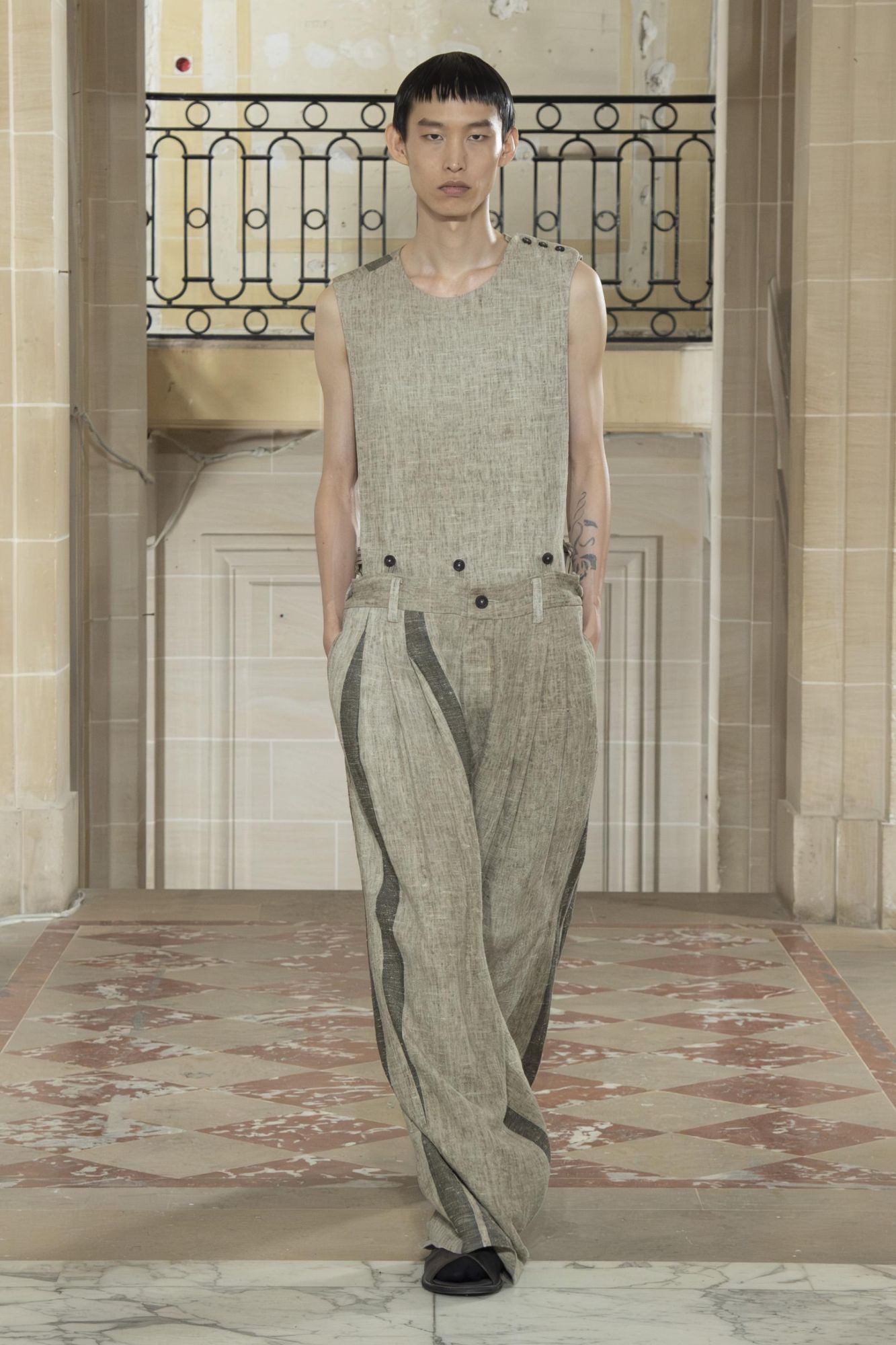
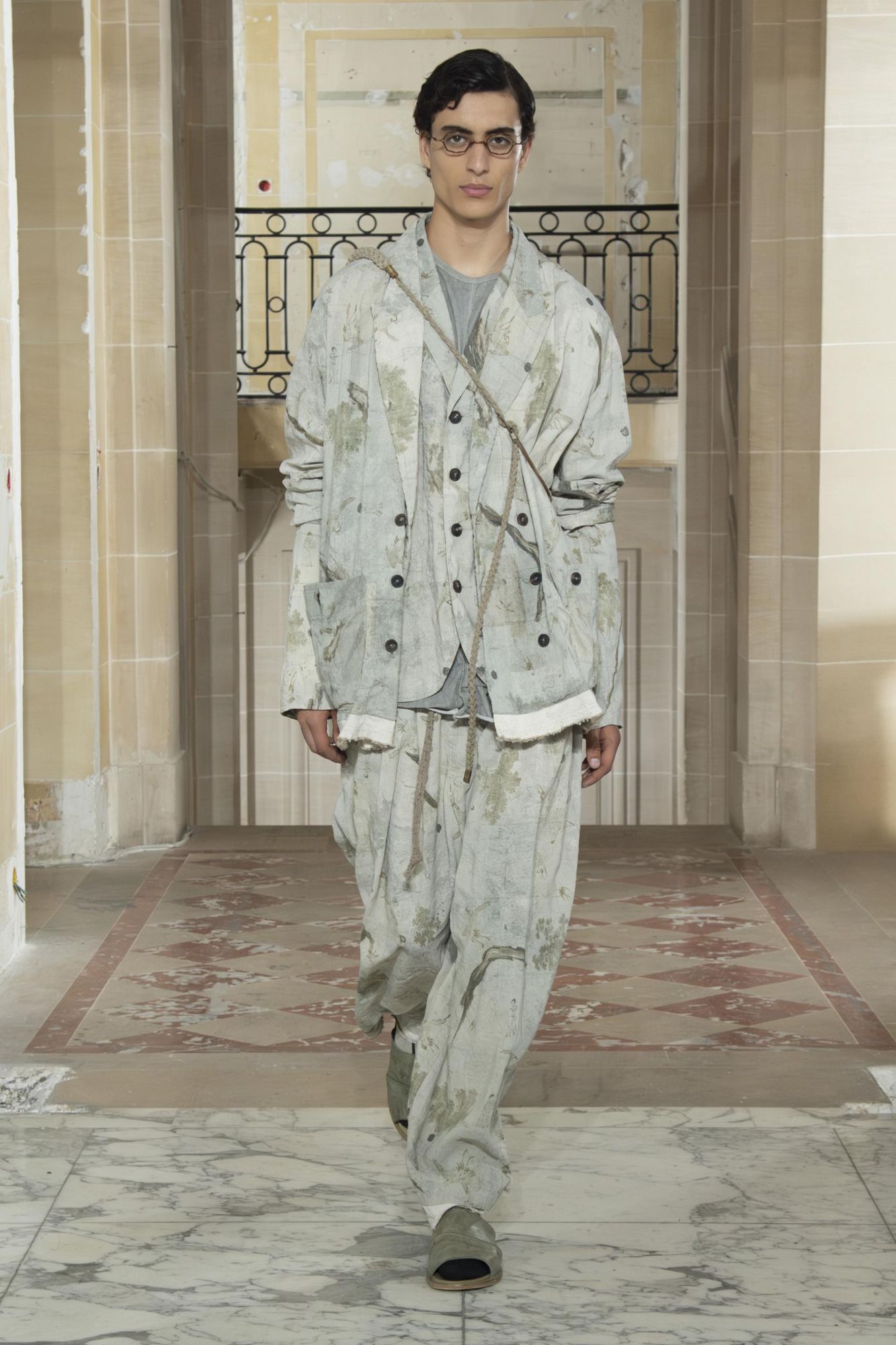
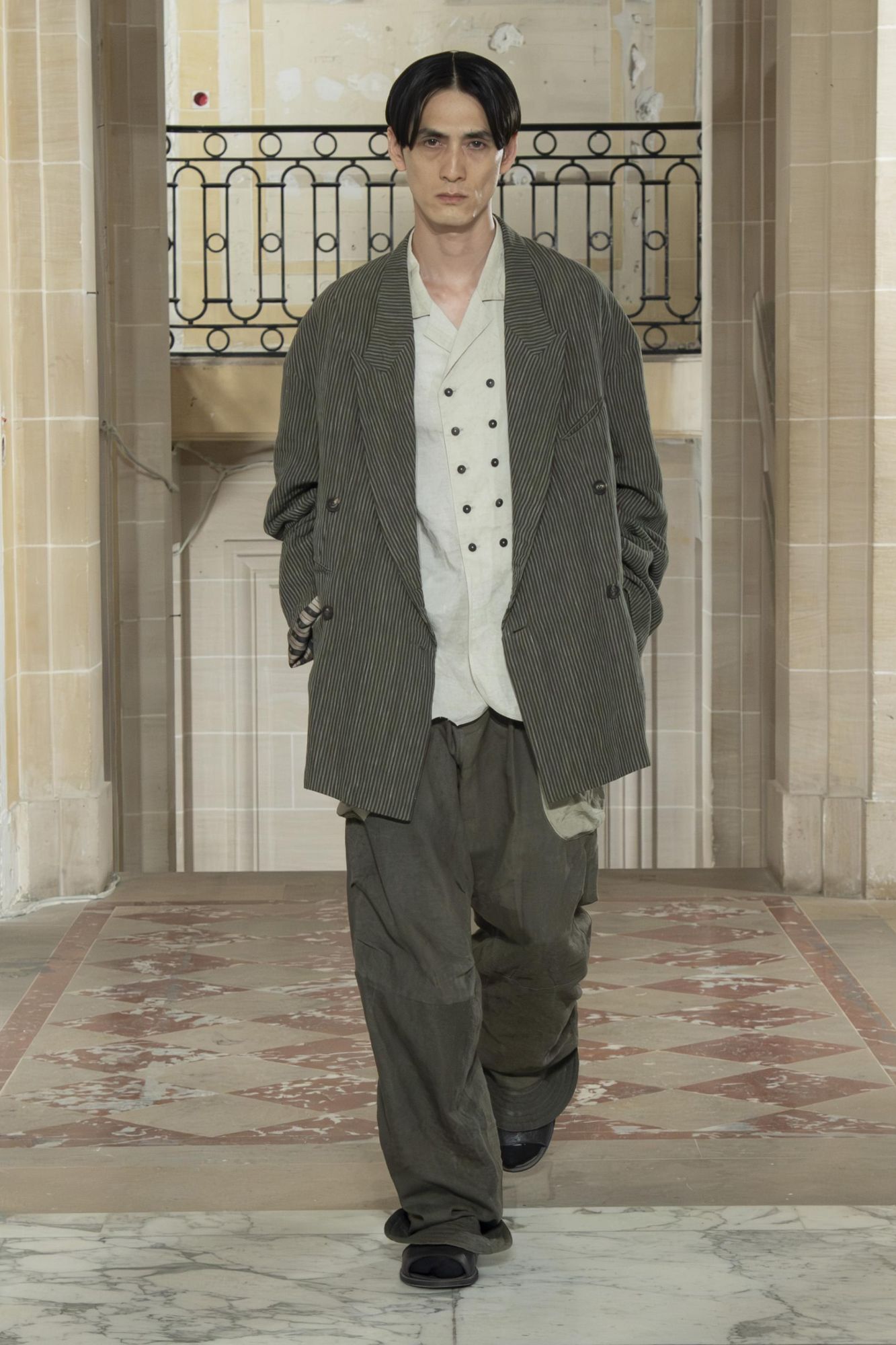
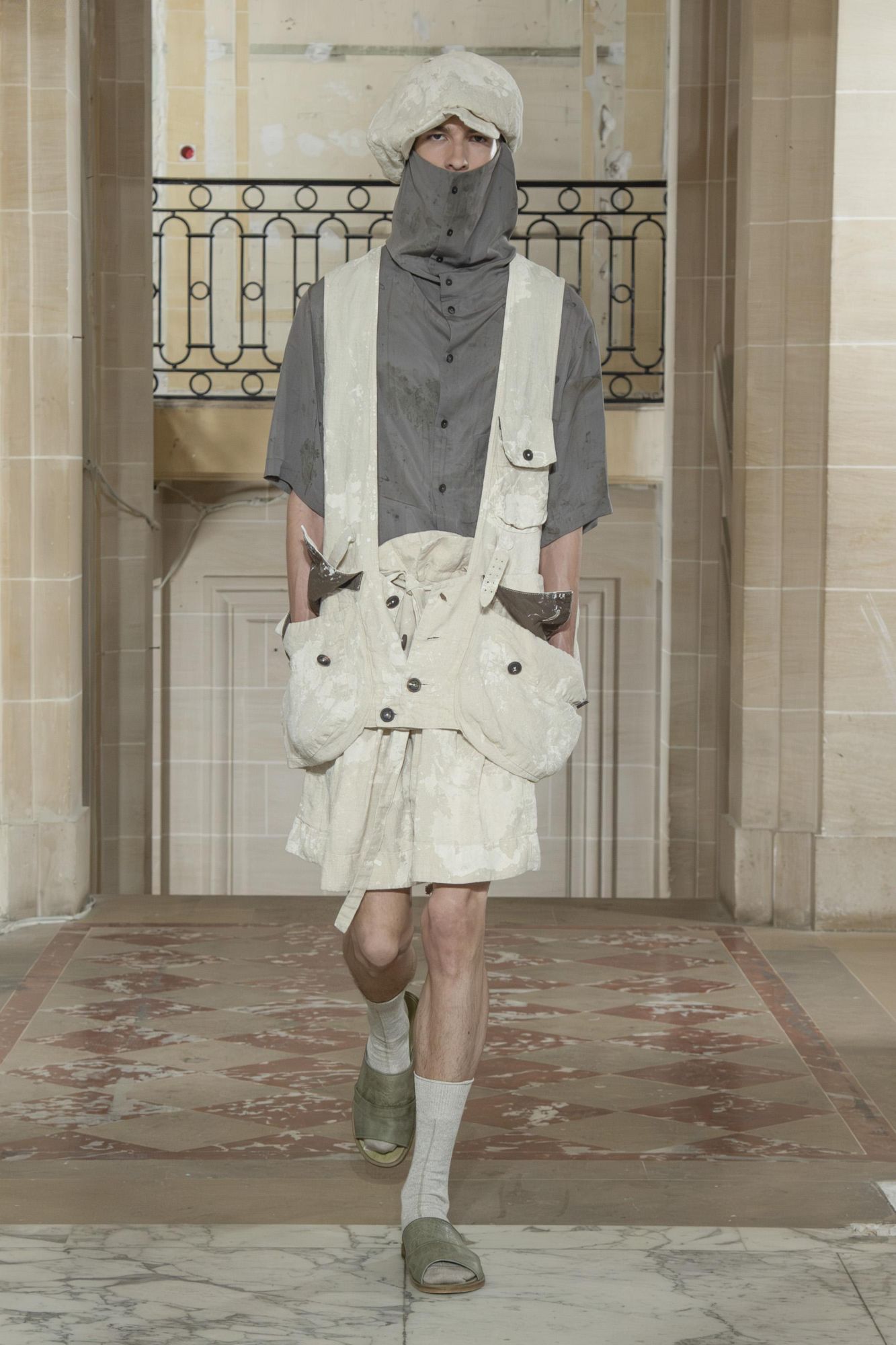
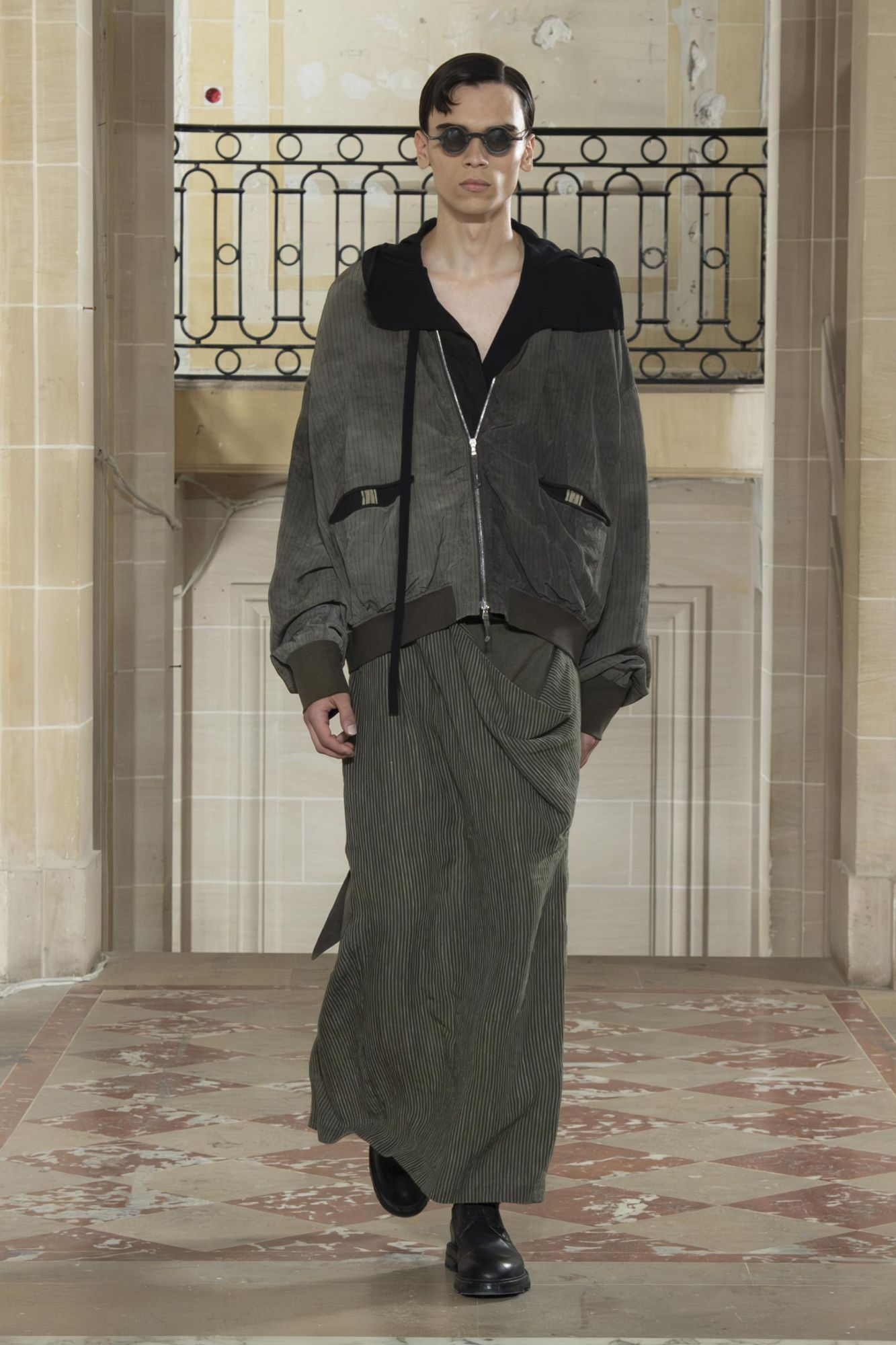
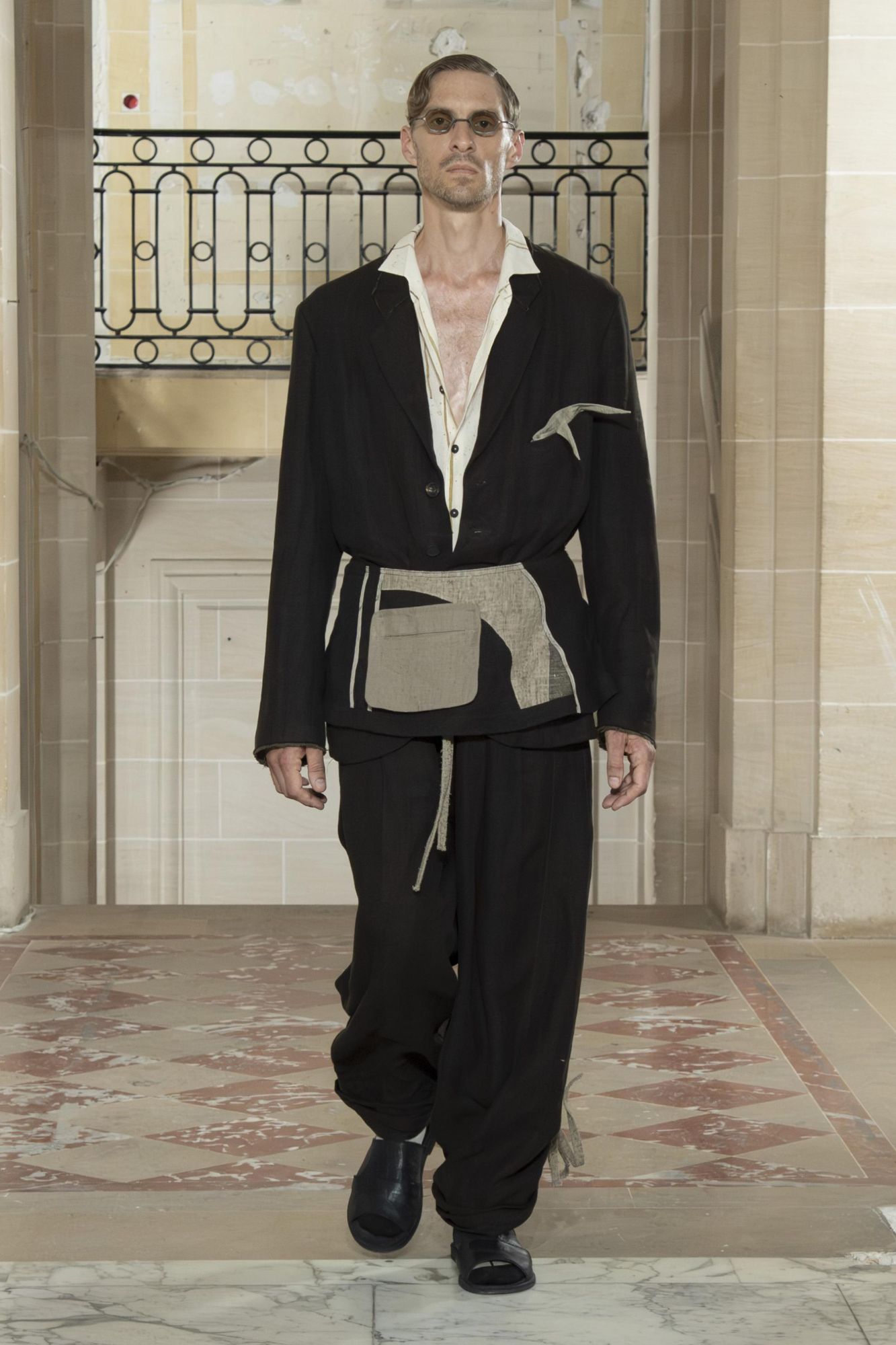
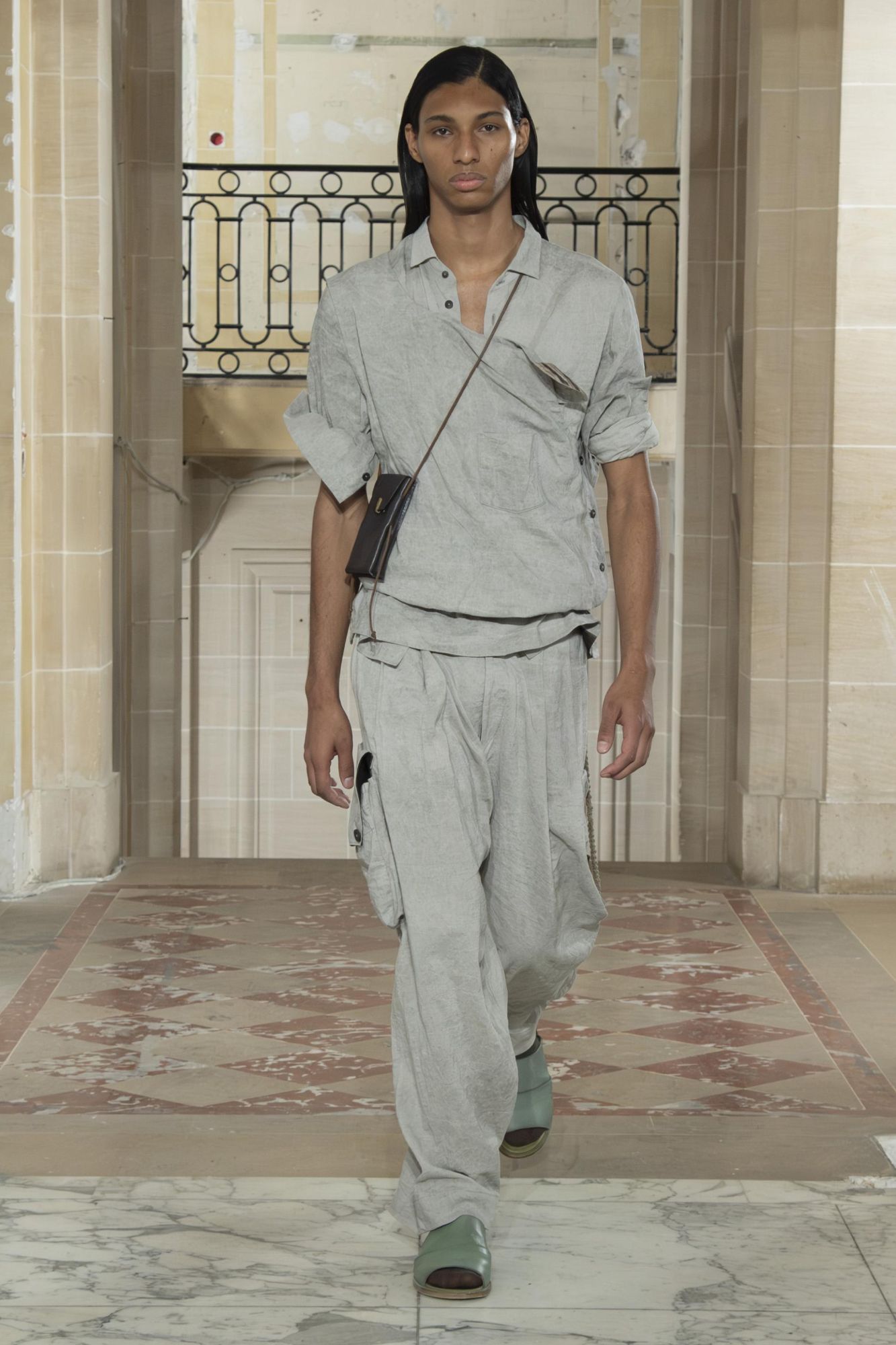
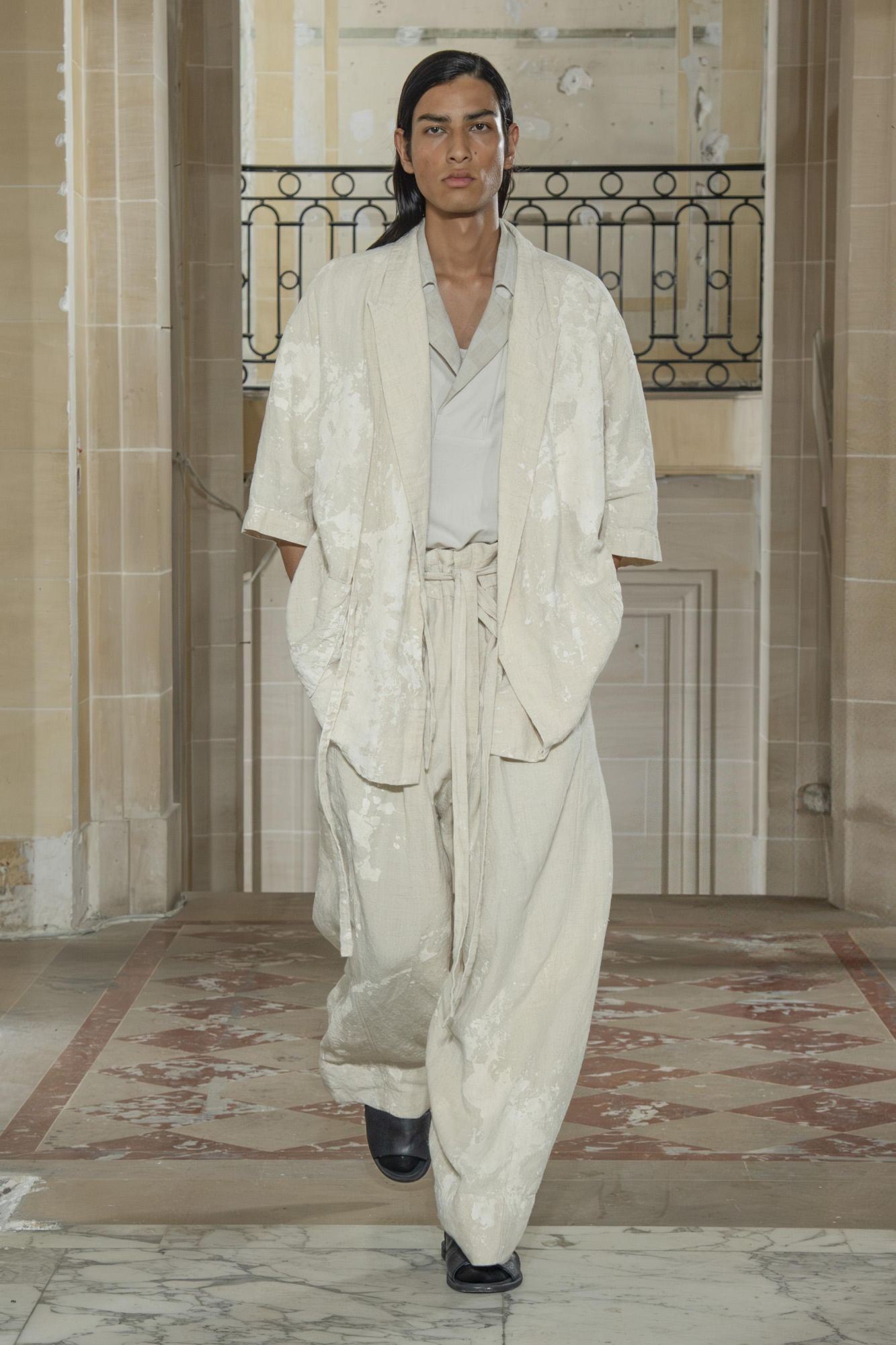
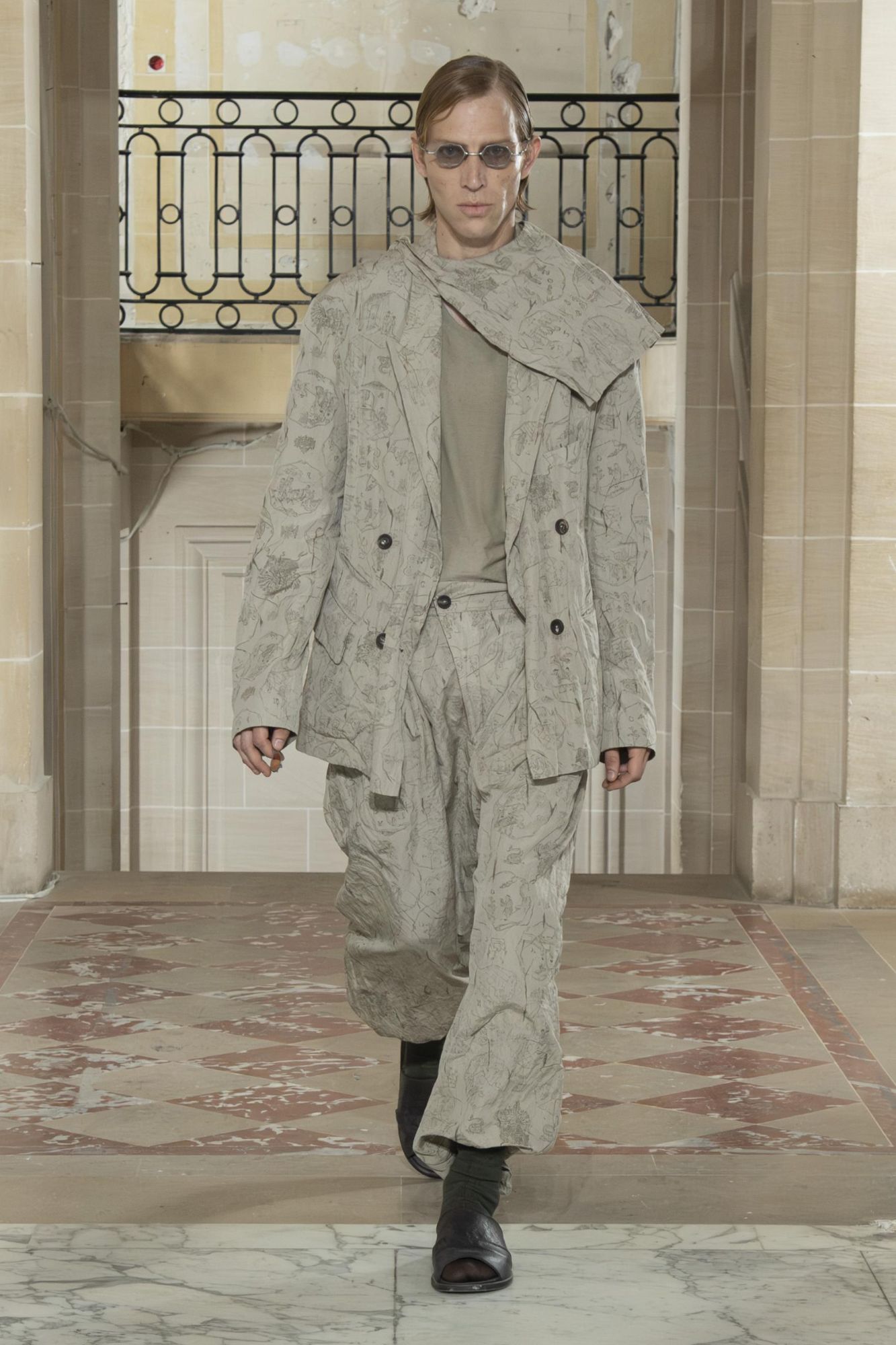
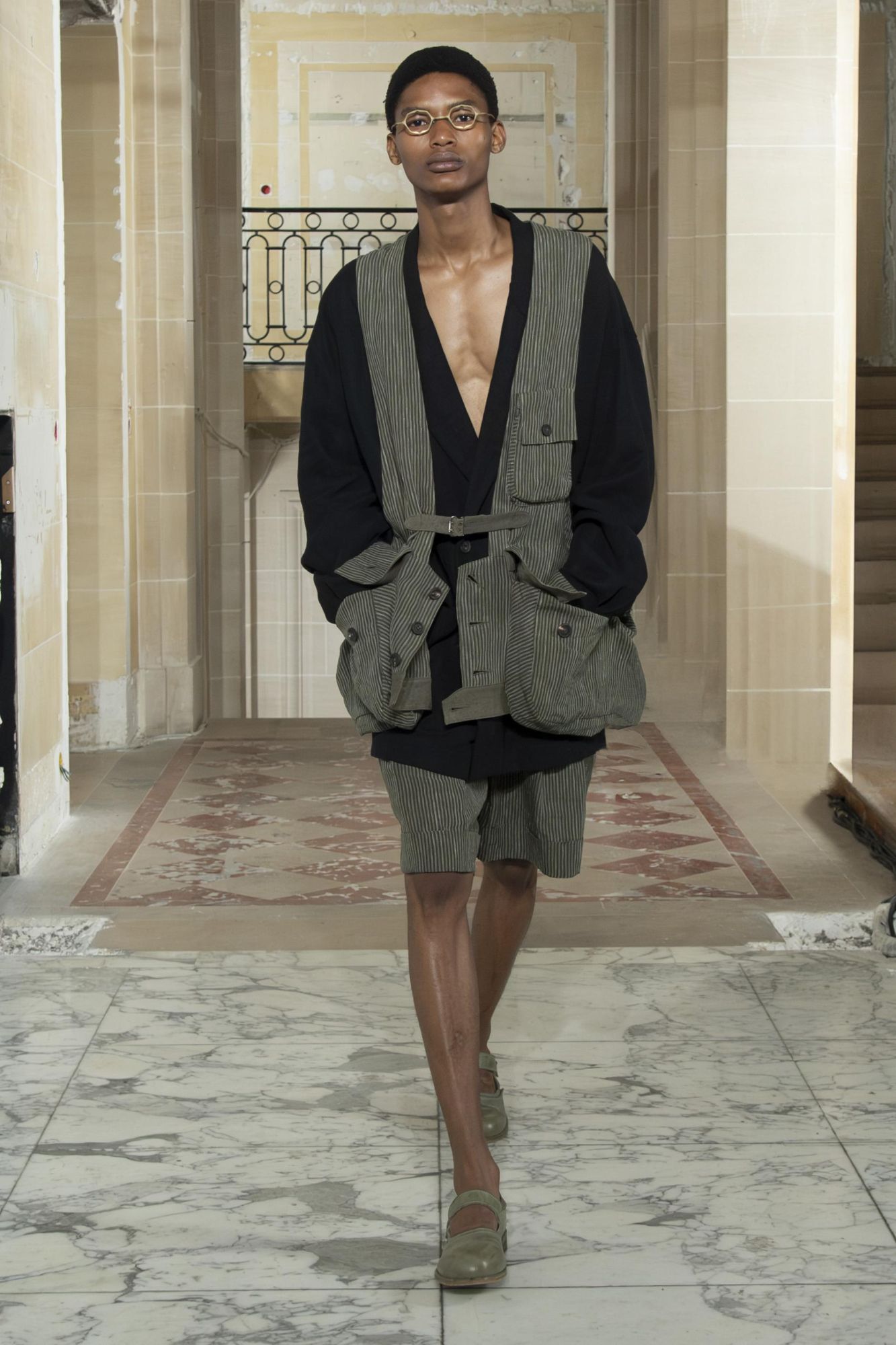
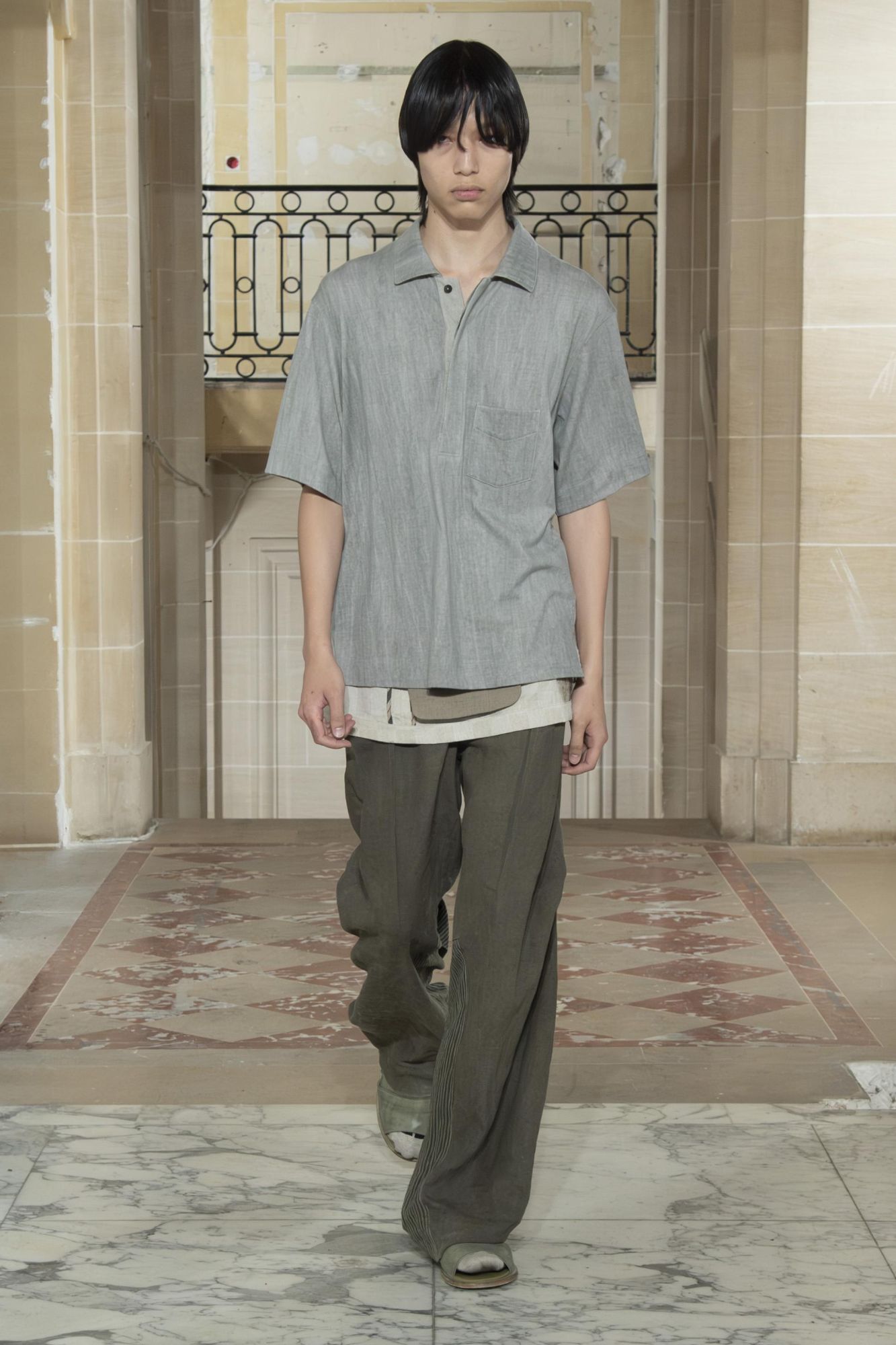
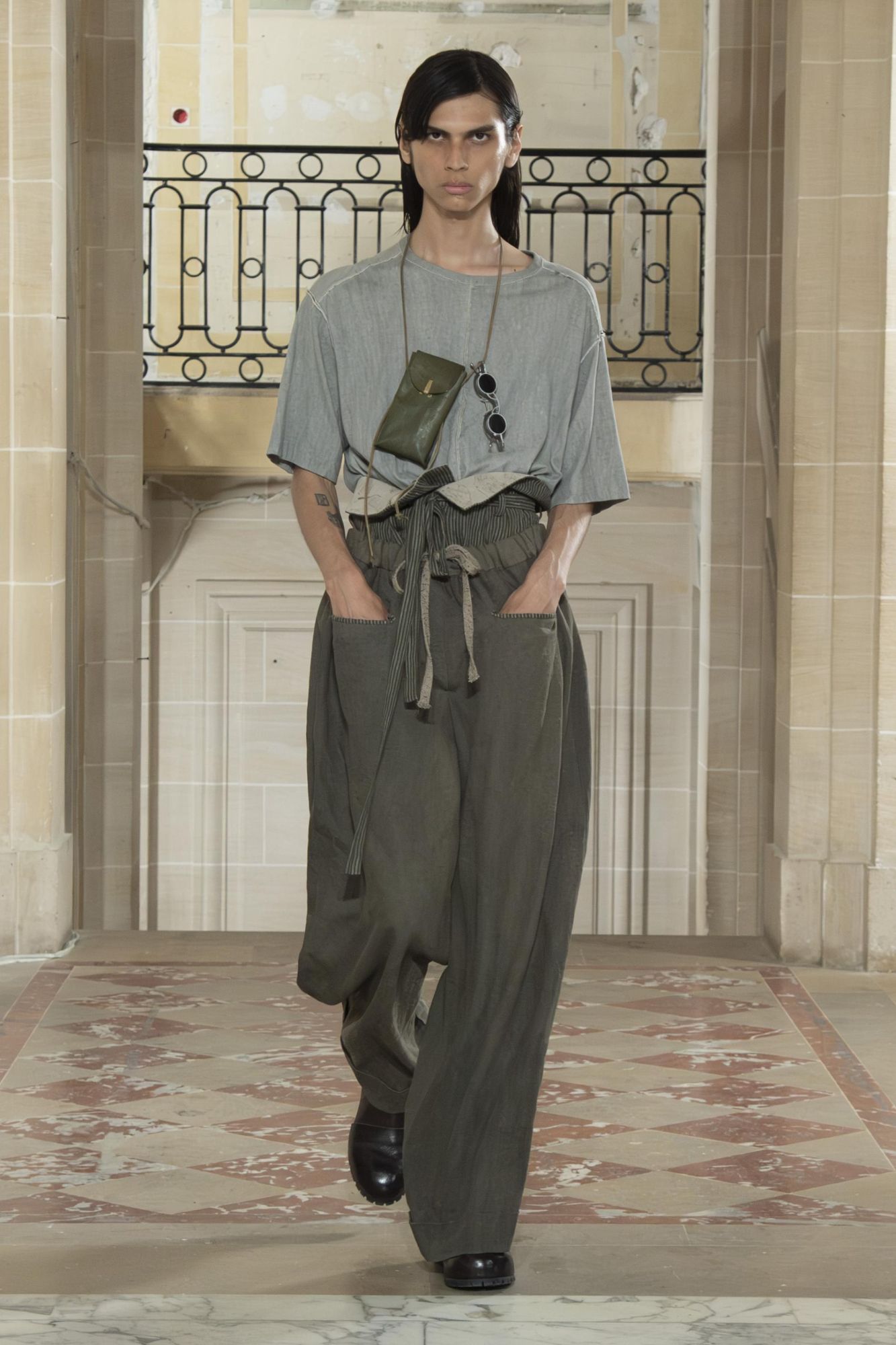
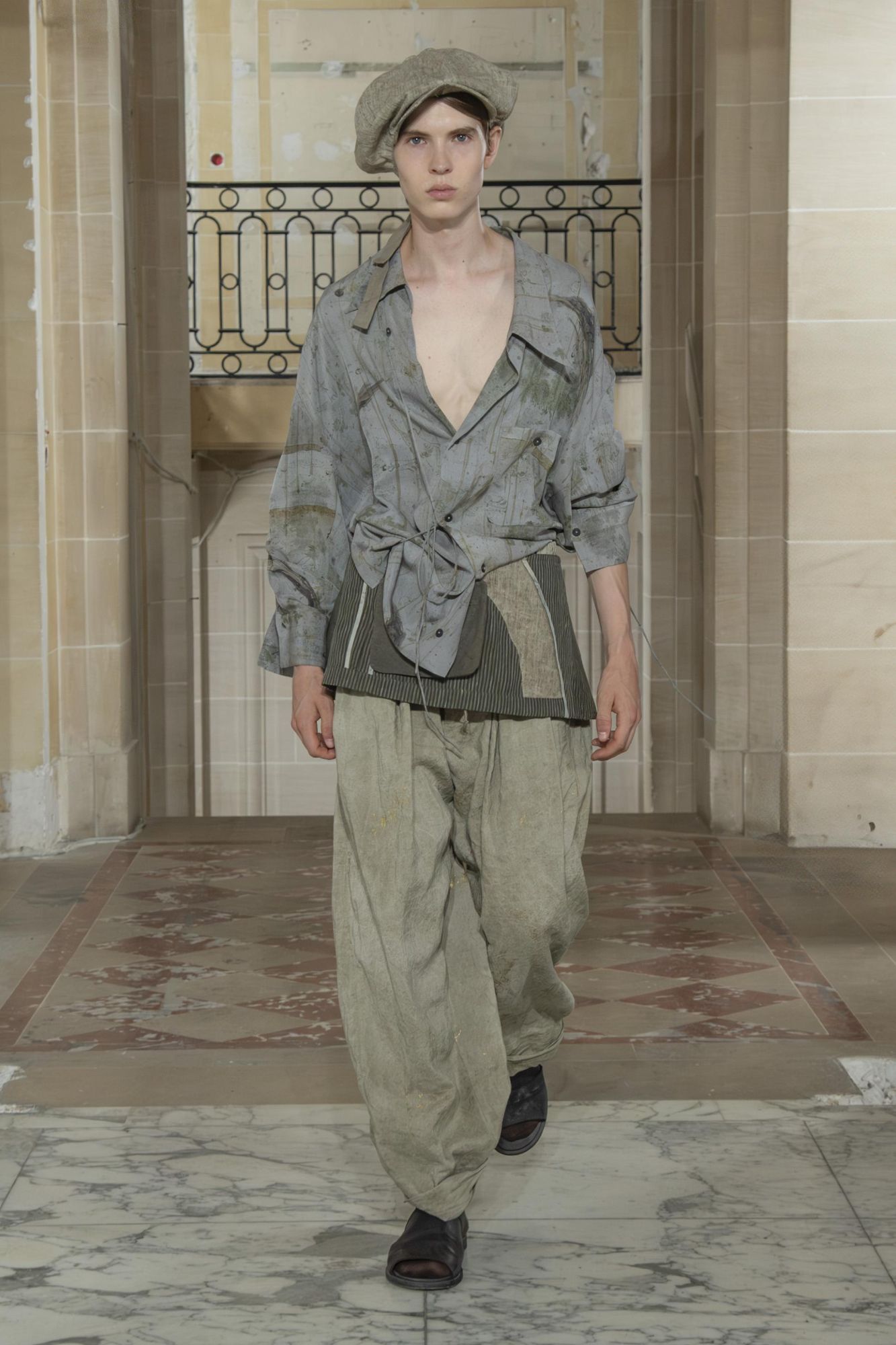
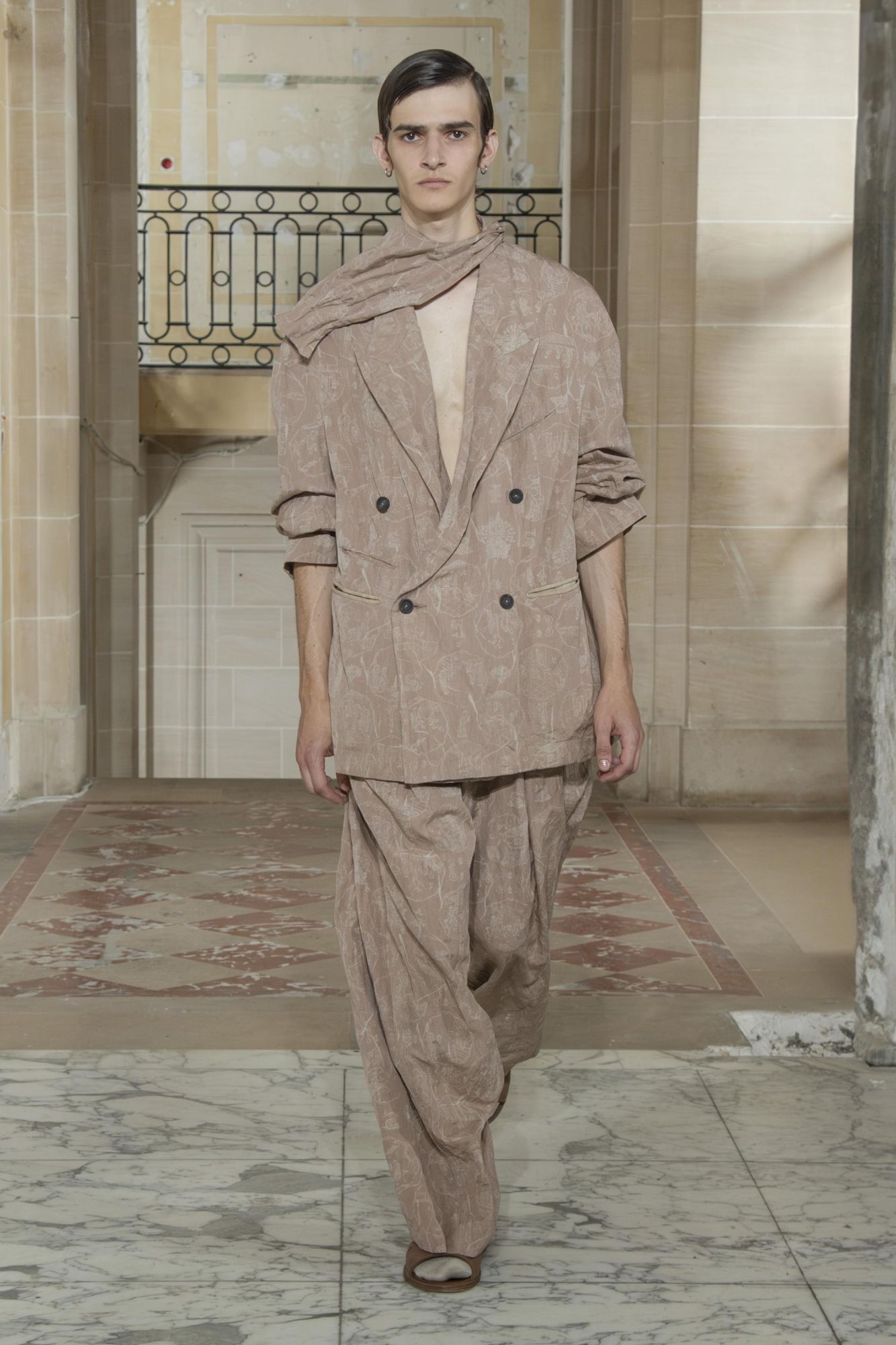
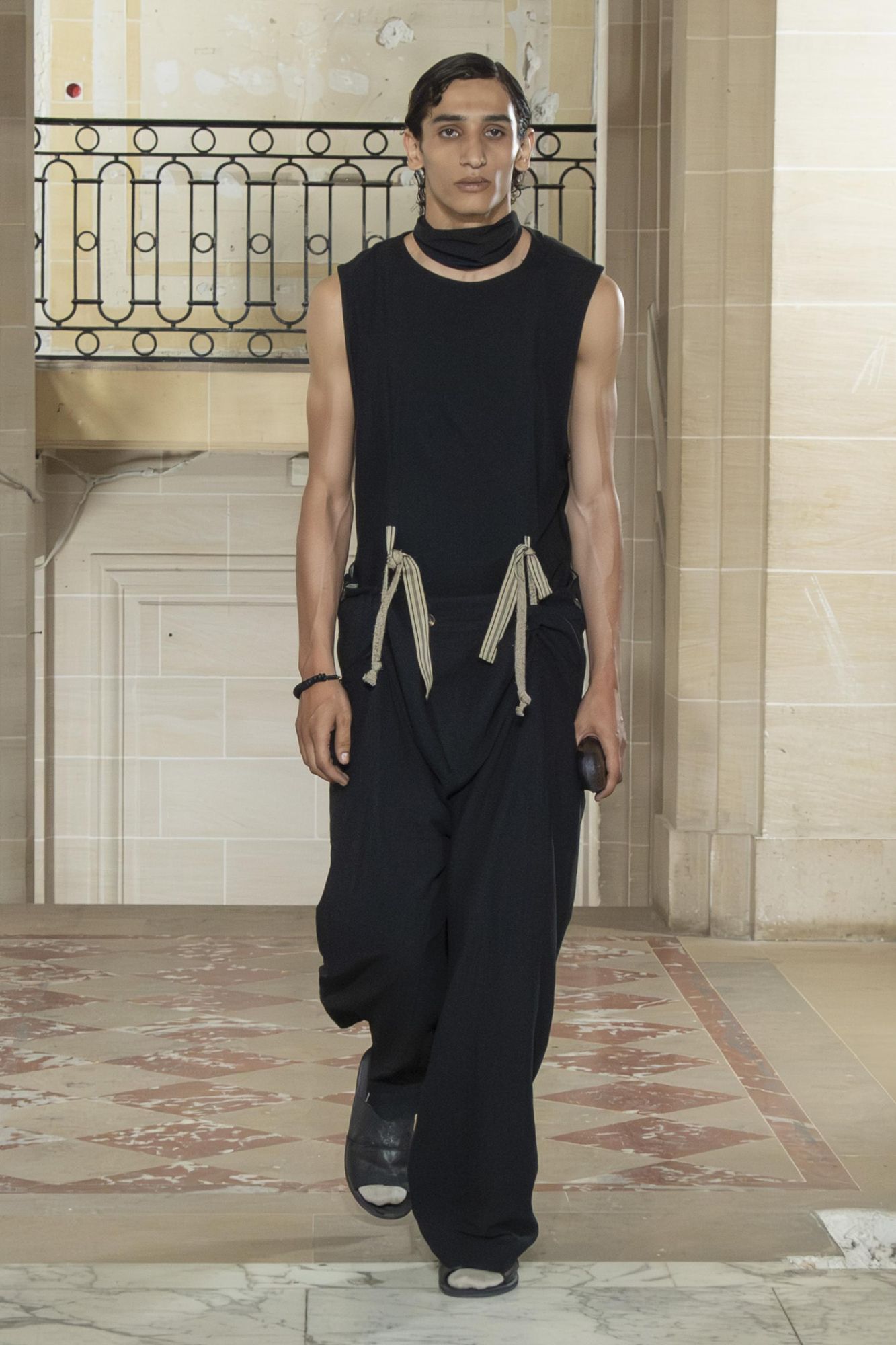
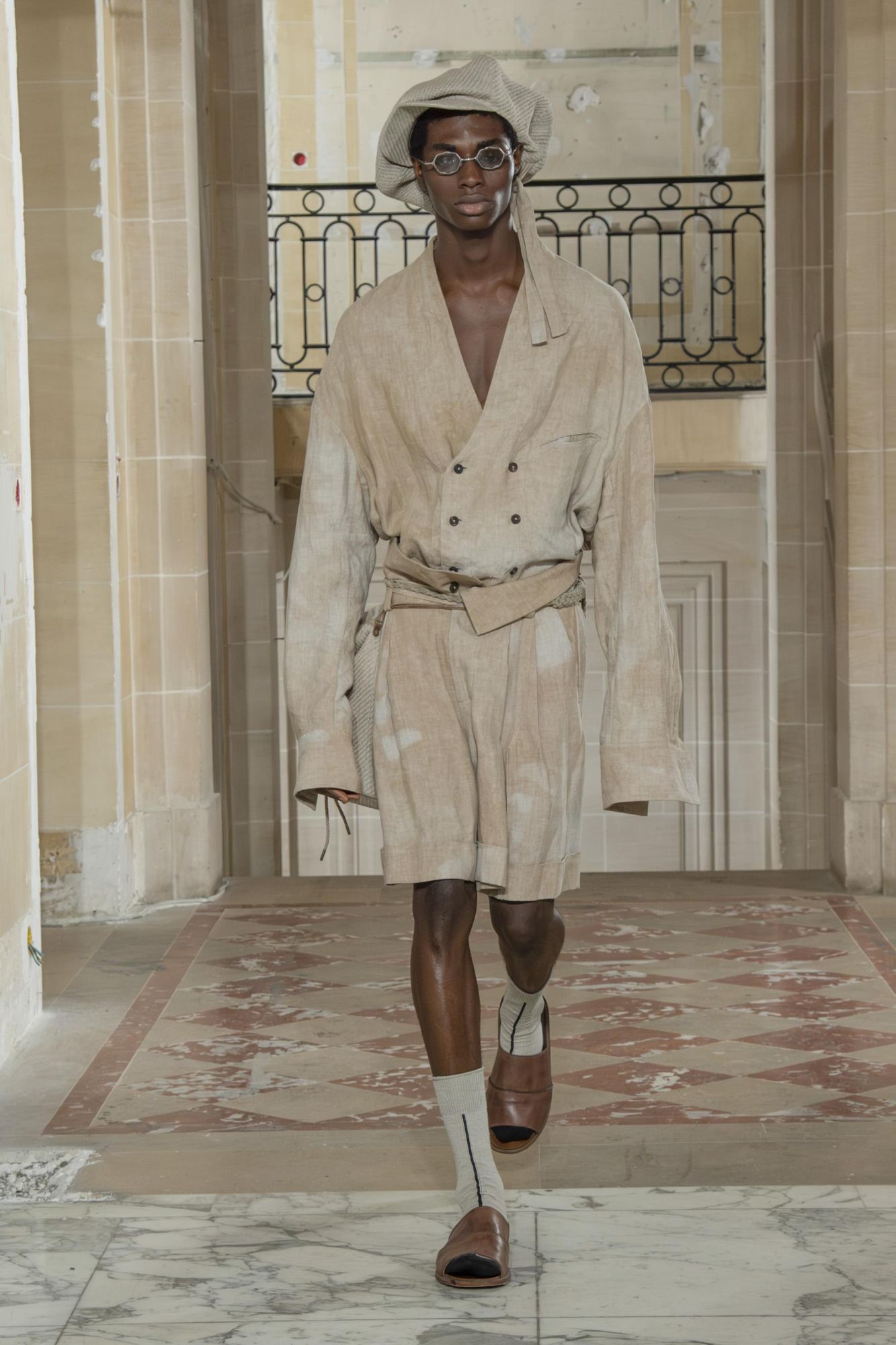
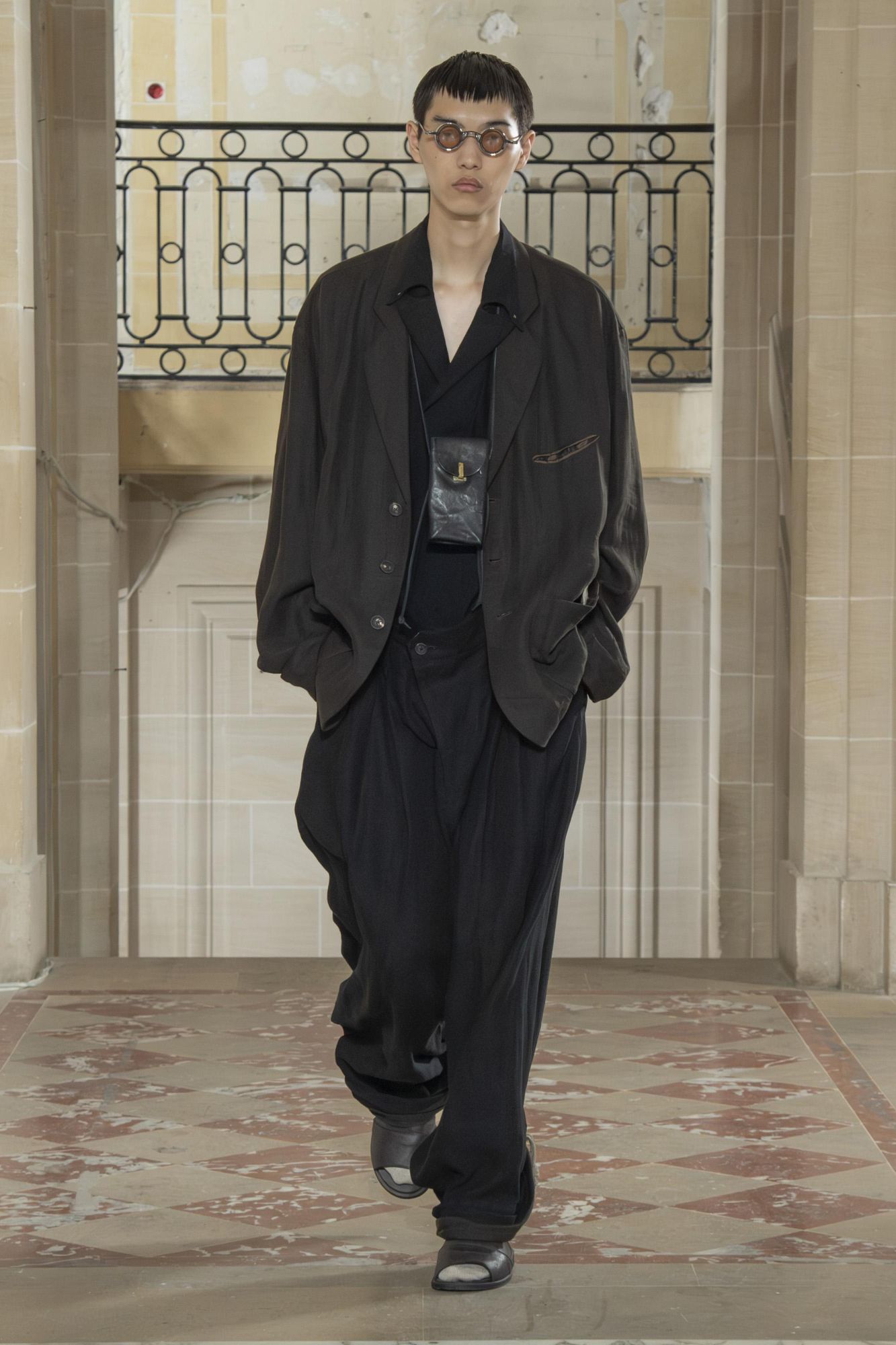
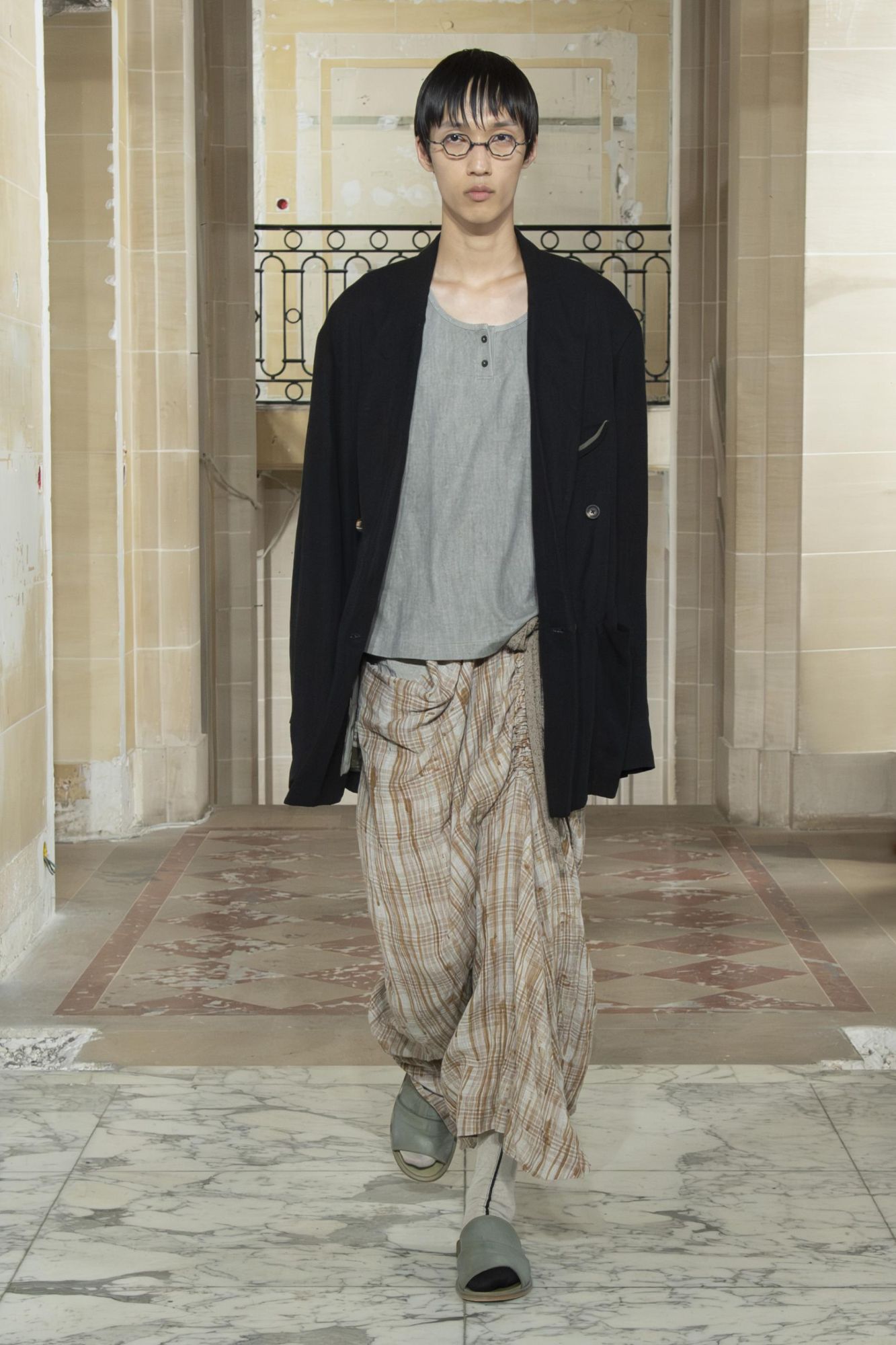
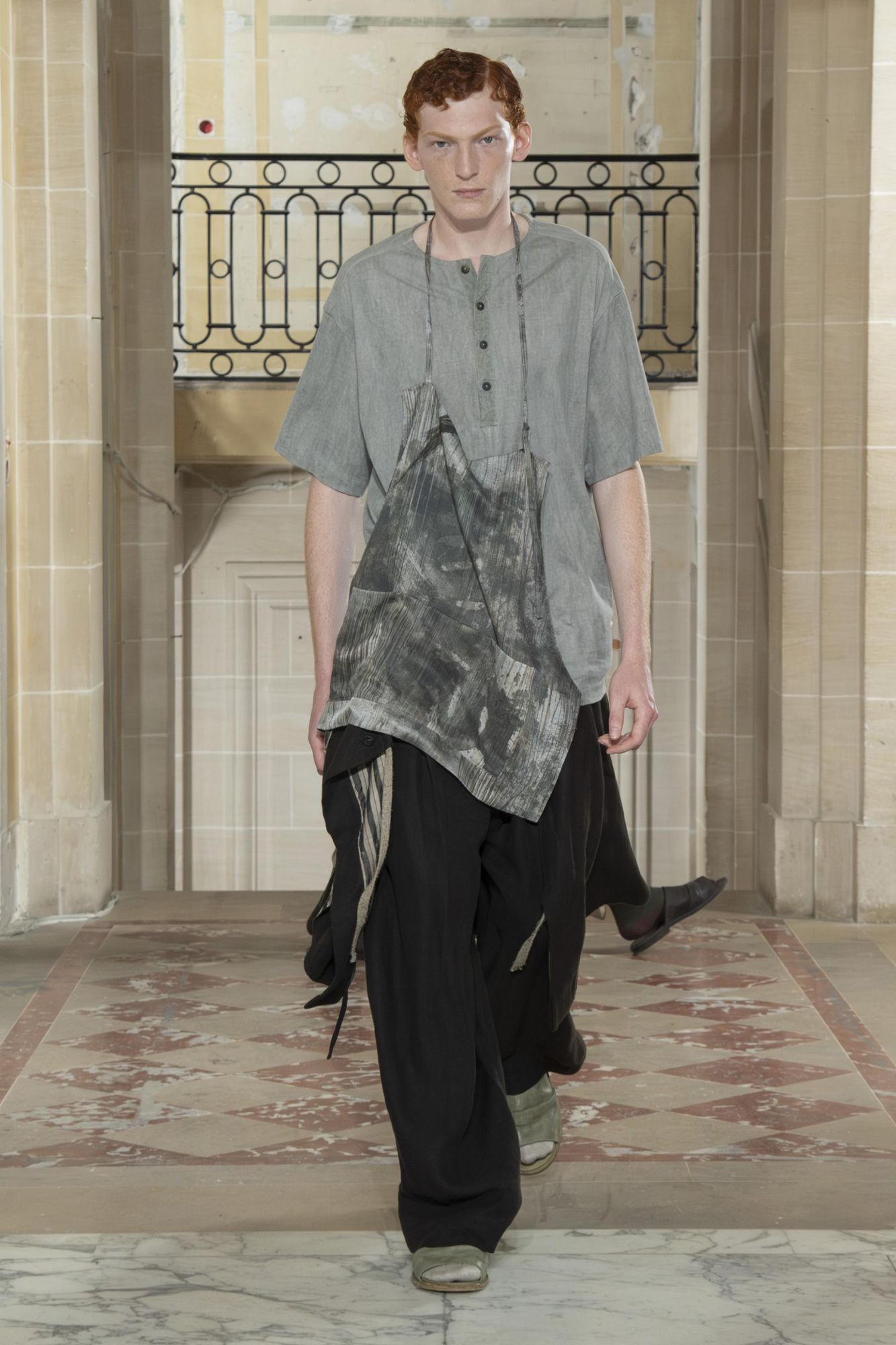
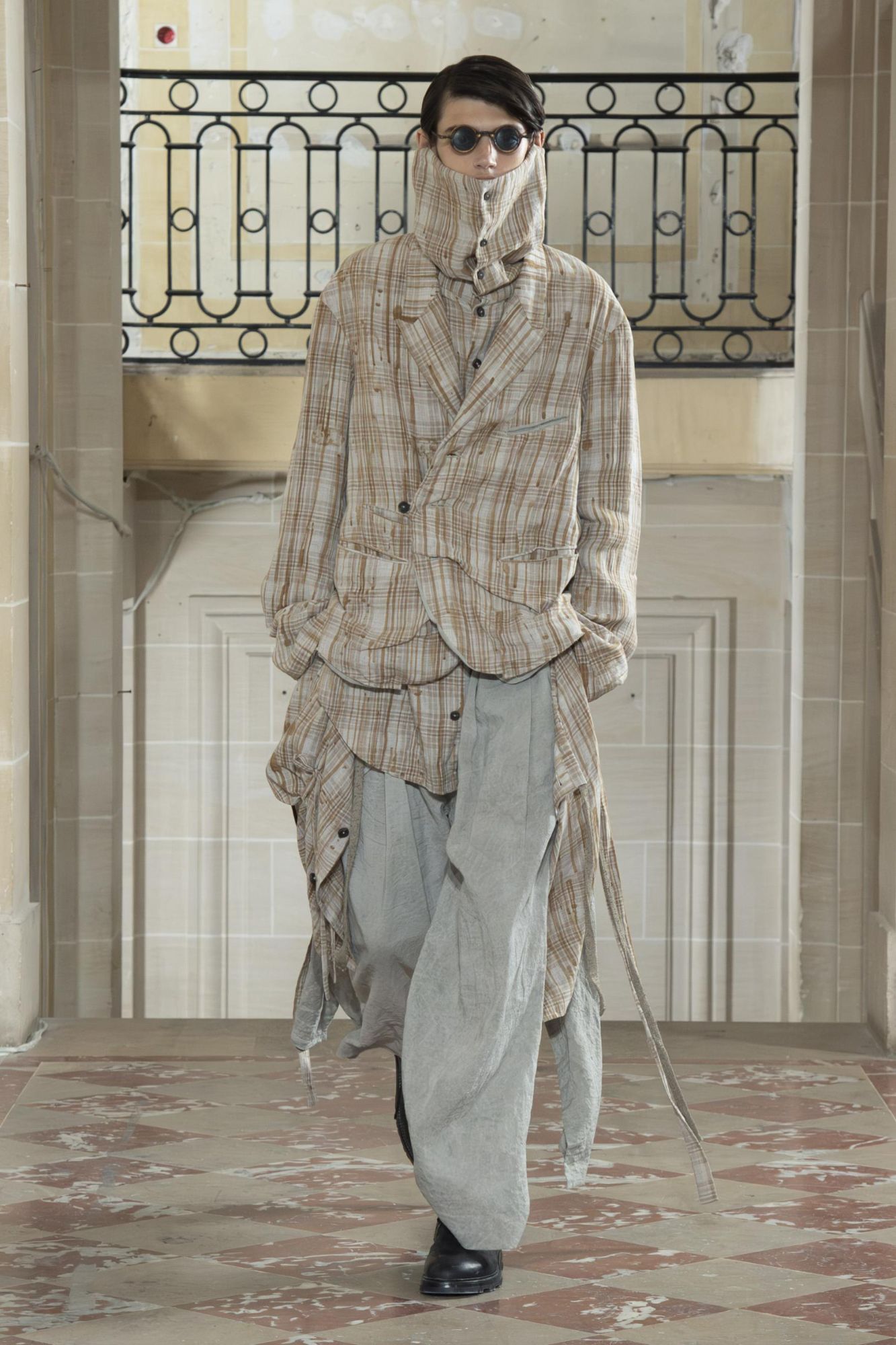
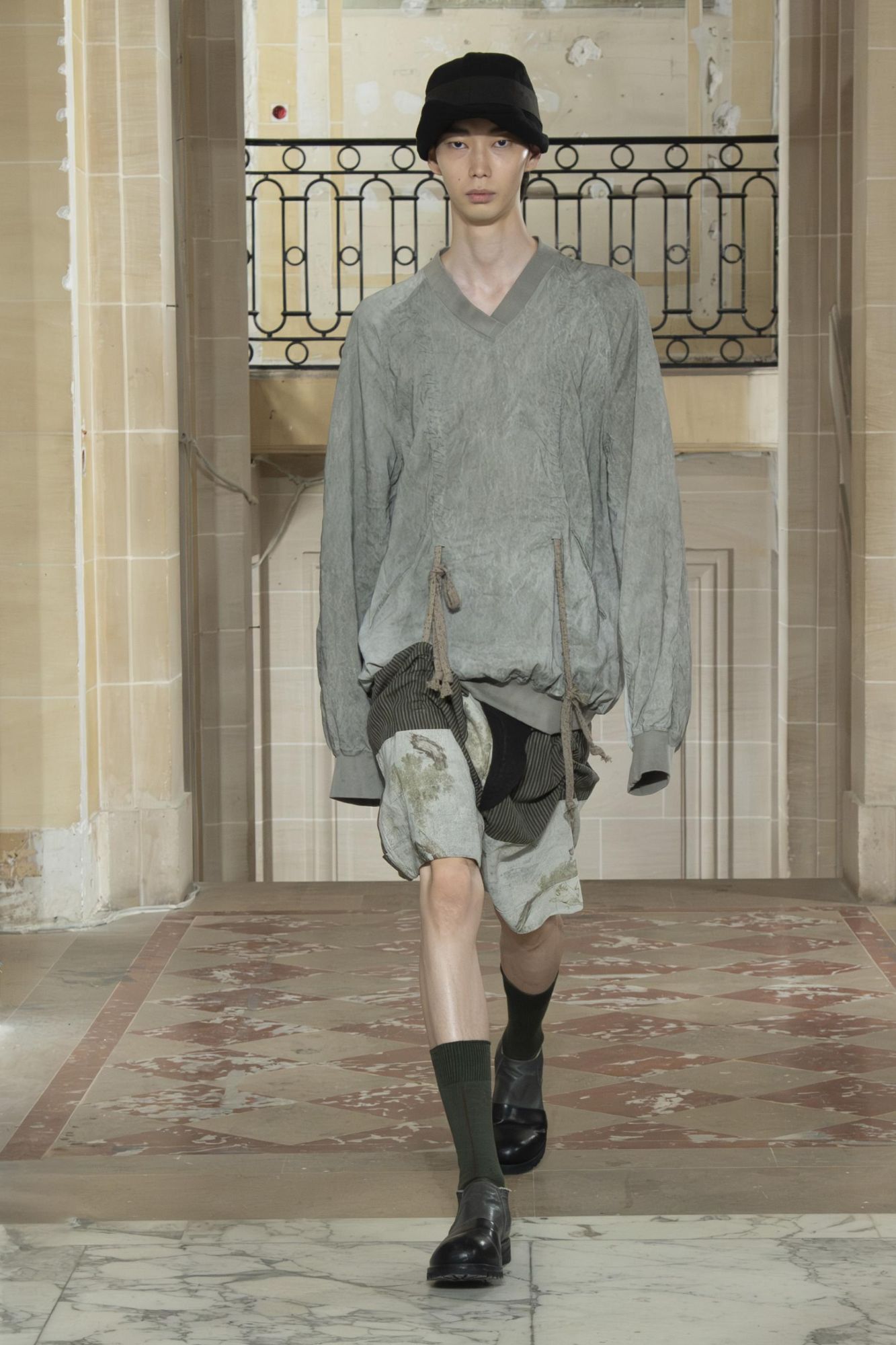
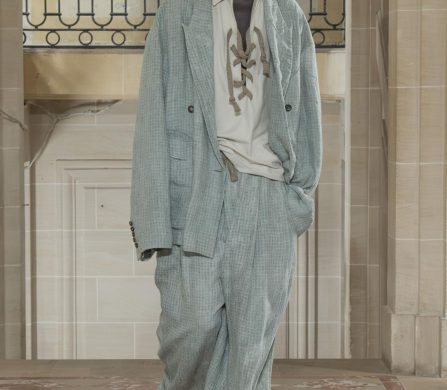
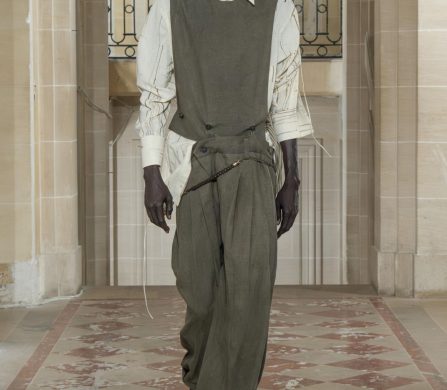
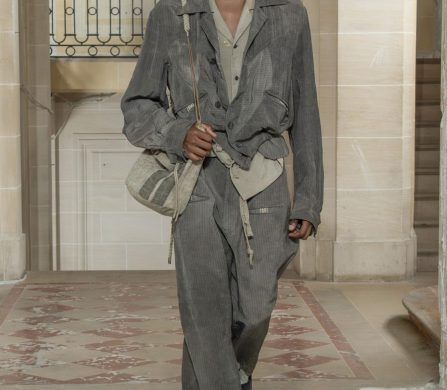
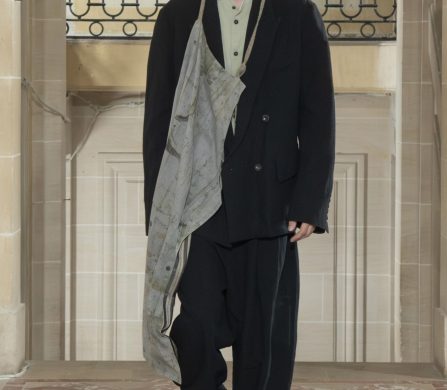
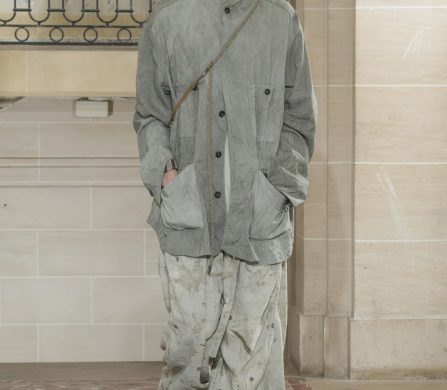
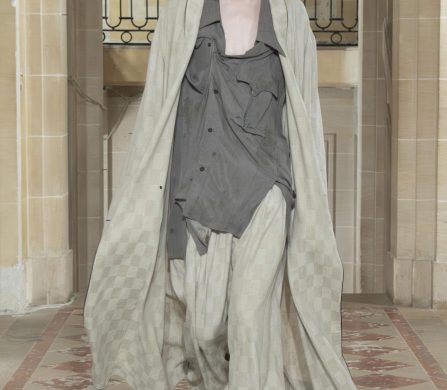
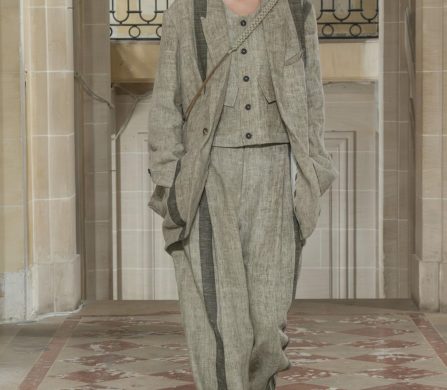
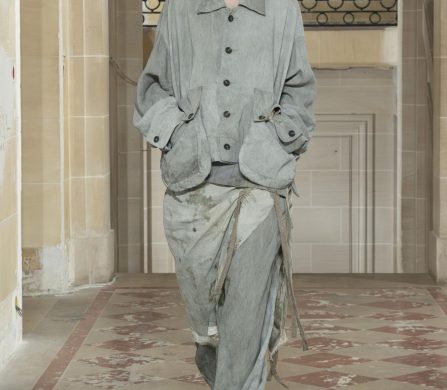
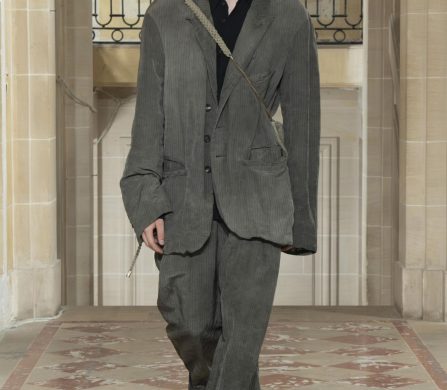
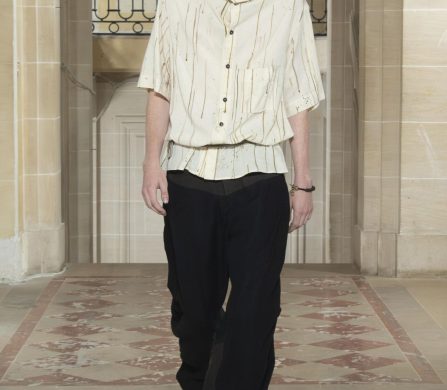
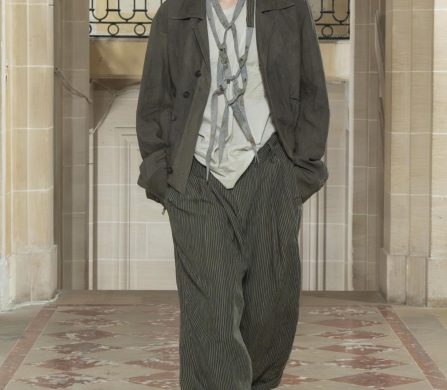
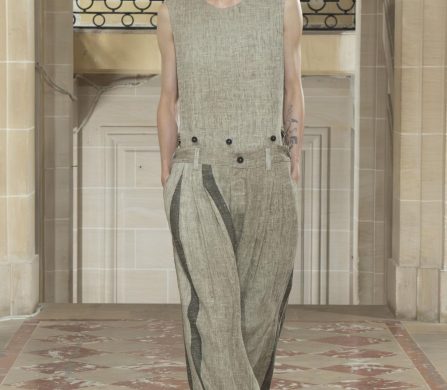
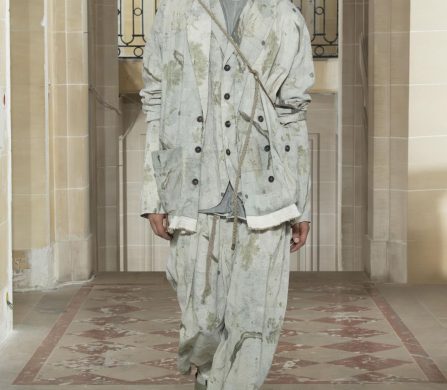
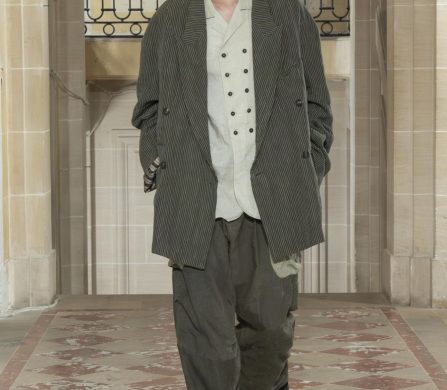
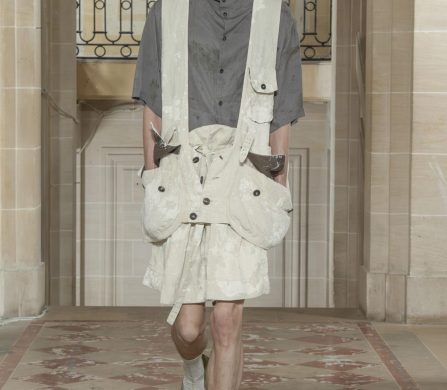
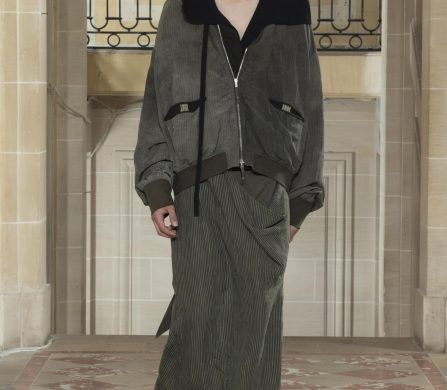
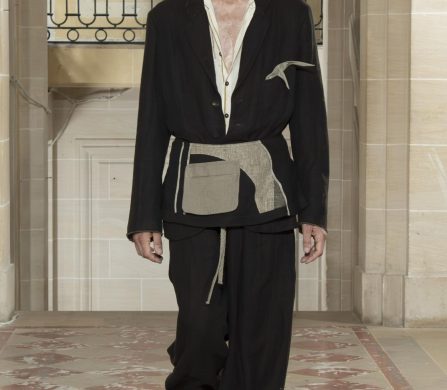
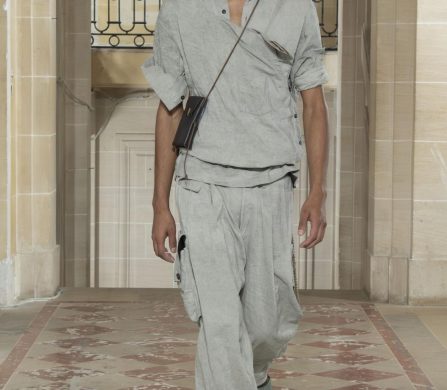
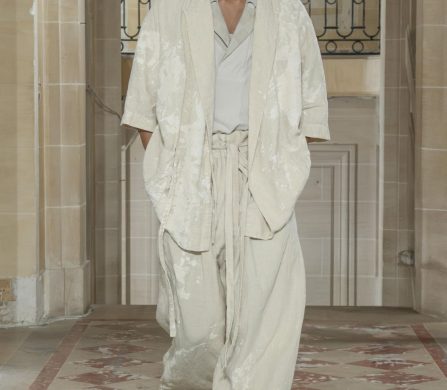
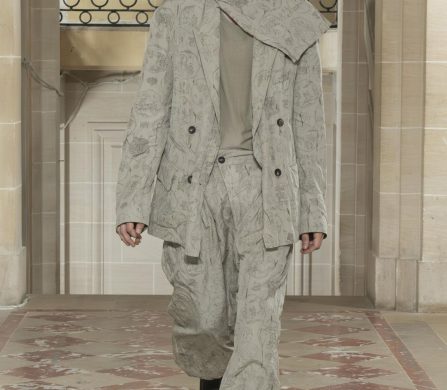
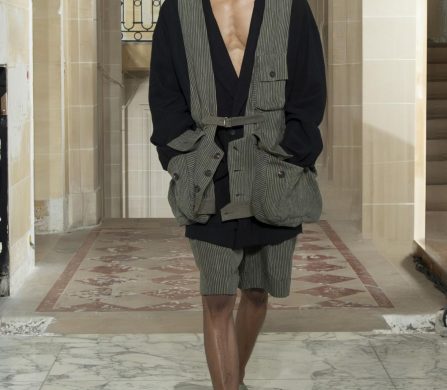
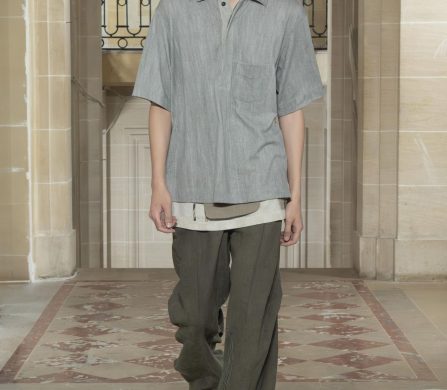
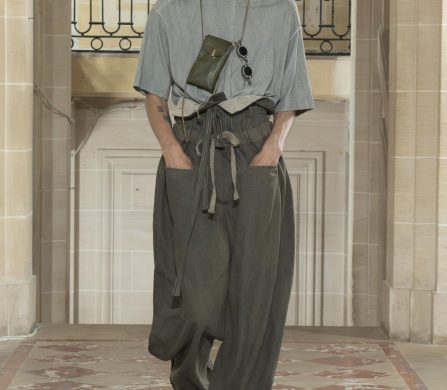
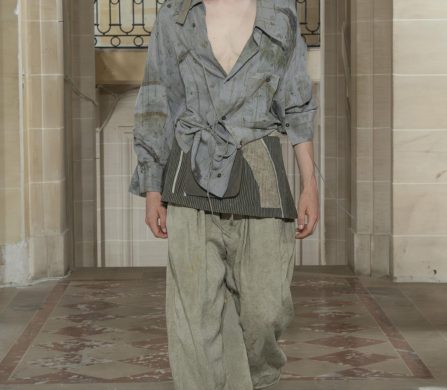
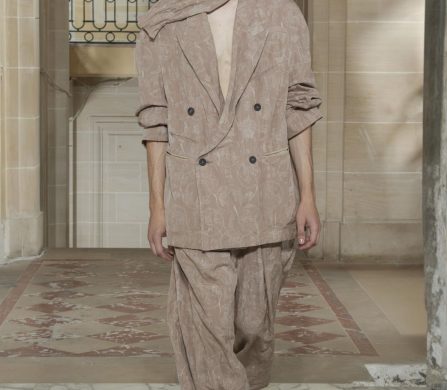
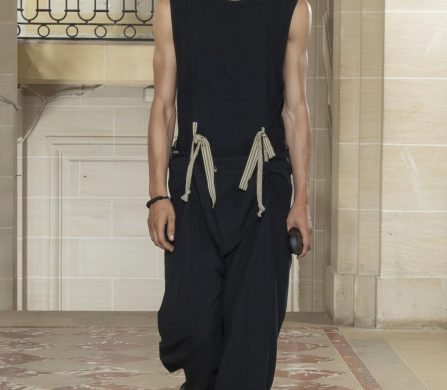
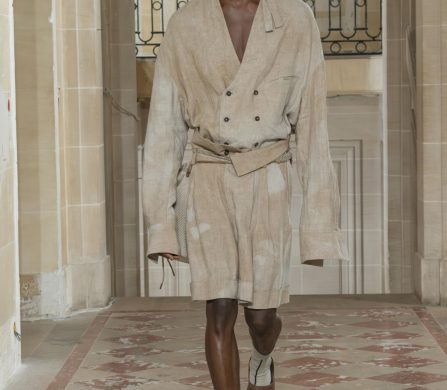
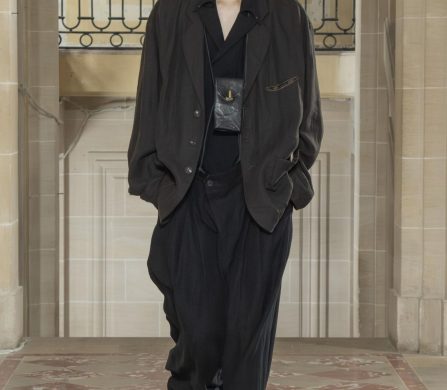
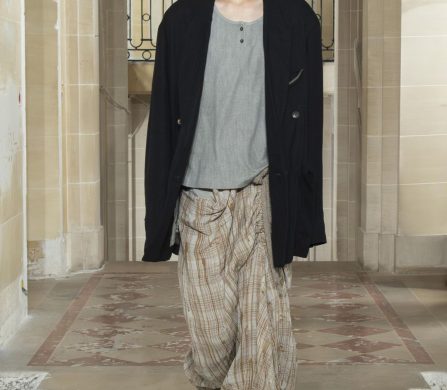
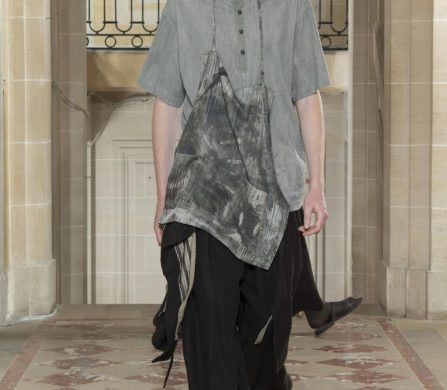
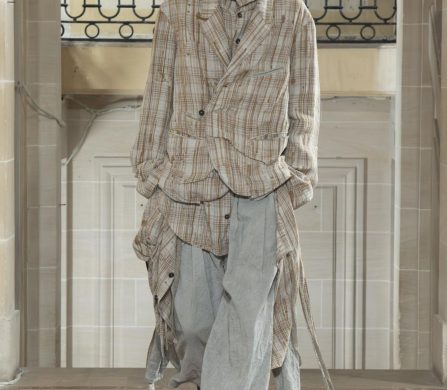
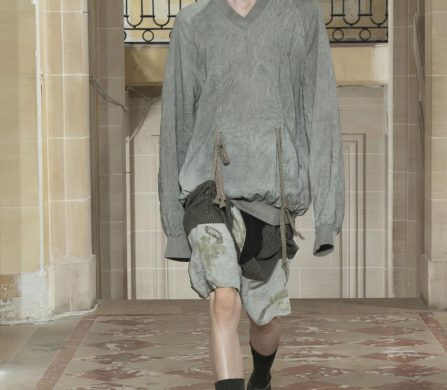
While his earlier collections leaned into rugged asymmetries and abstract tailoring, PRITRIKE reworks Chen’s iconic layered, worn-in aesthetic into something softer and more fluid. “The primary idea was to introduce fresh colours into our palette and steer everything toward a softer direction. This applies not only to colours but also to the composition of materials, craftsmanship, and silhouettes,” he explains. Each element is meticulously adjusted: new yarn counts, blends, and weaving techniques combine to create textures that feel both natural and nuanced. The dyeing process favours softness and a natural unevenness, steering away from harsh fades or stark contrasts.
Still, Chen’s hand remains unmistakable. Although asymmetry takes a backseat this season, experimentation surfaces elsewhere, most notably in the use of hemp ropes and webbing, utilitarian details that lend the garments a tactile honesty. “Each season, we incorporate treatments unique to that moment,” he says. “Asymmetry and unconventional cuts aren’t something we pursue every season.”
Though Chen draws inspiration from his hometown of Shanghai and its rich cultural contradictions, this collection aims to capture its atmospheric reflection. “The culture of Shanghai and its surrounding regions continues to inspire and influence me. I can’t say this collection was shaped by any specific, direct influence from the city, but rather that it subtly impacts my aesthetic preferences and views,” he says.
The show reflected Chen’s resistance to storytelling in favour of emotional resonance, with looks curated to emphasise individual character rather than grouped by fabric or colour. “Perhaps different people will feel different things when they see it, and that’s not a bad thing,” he says. “After all, clothes are meant to serve people.”
Discover the collection here.
photography. Courtesy of Ziggy Chen
words. Gennaro Costanzo