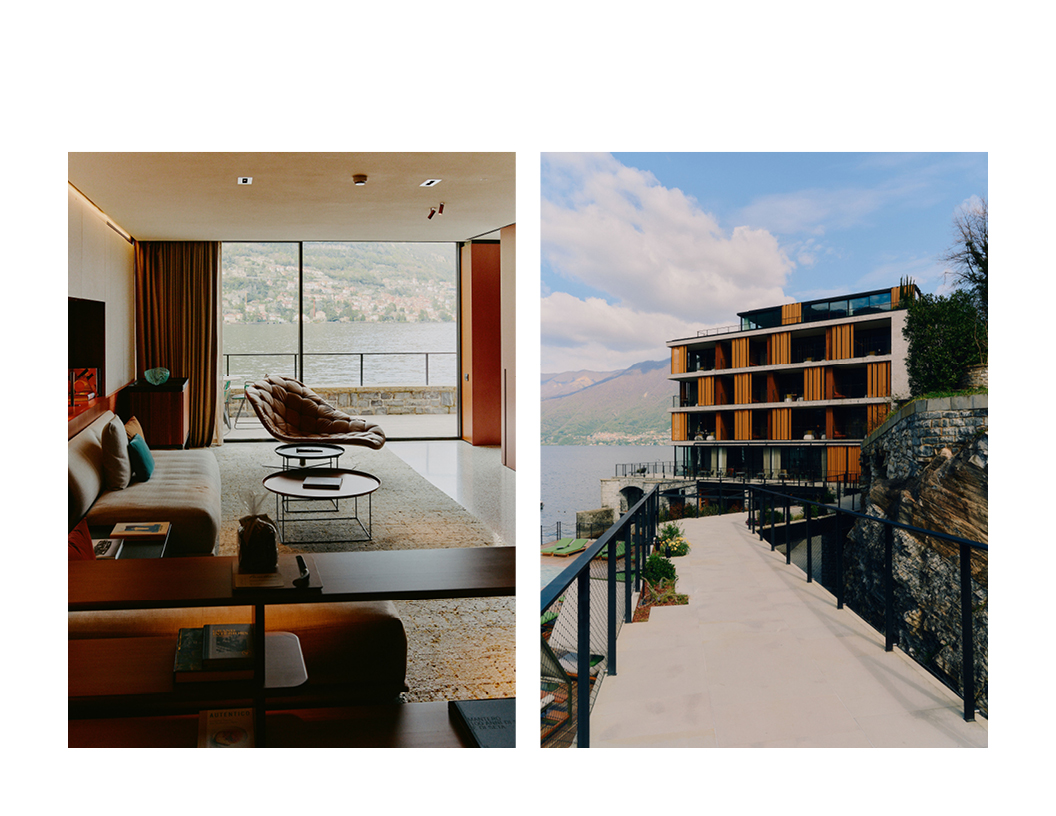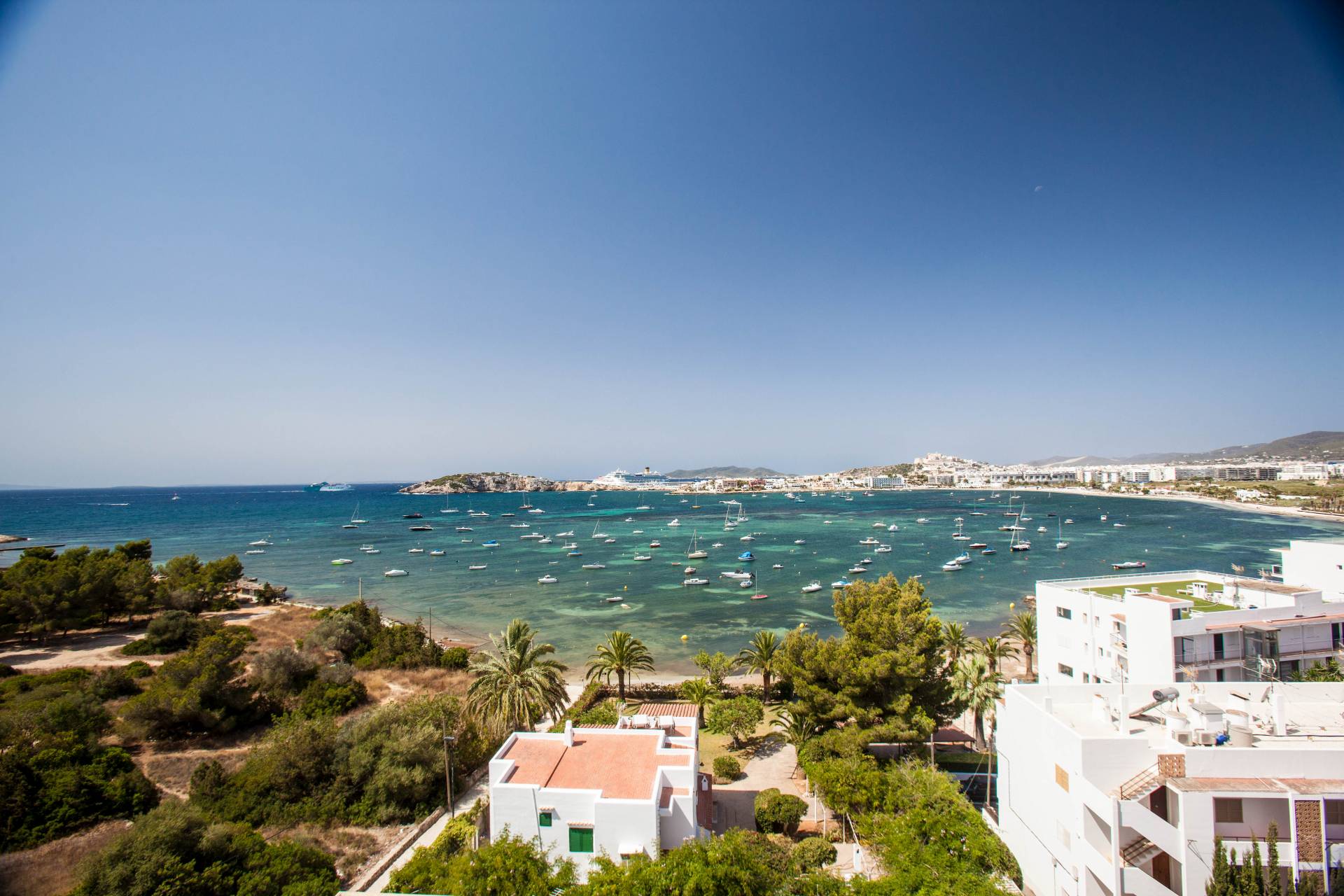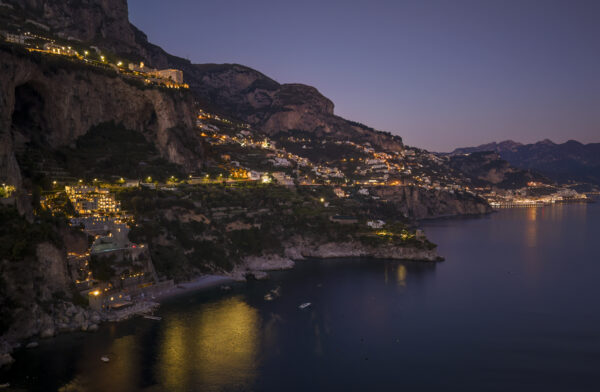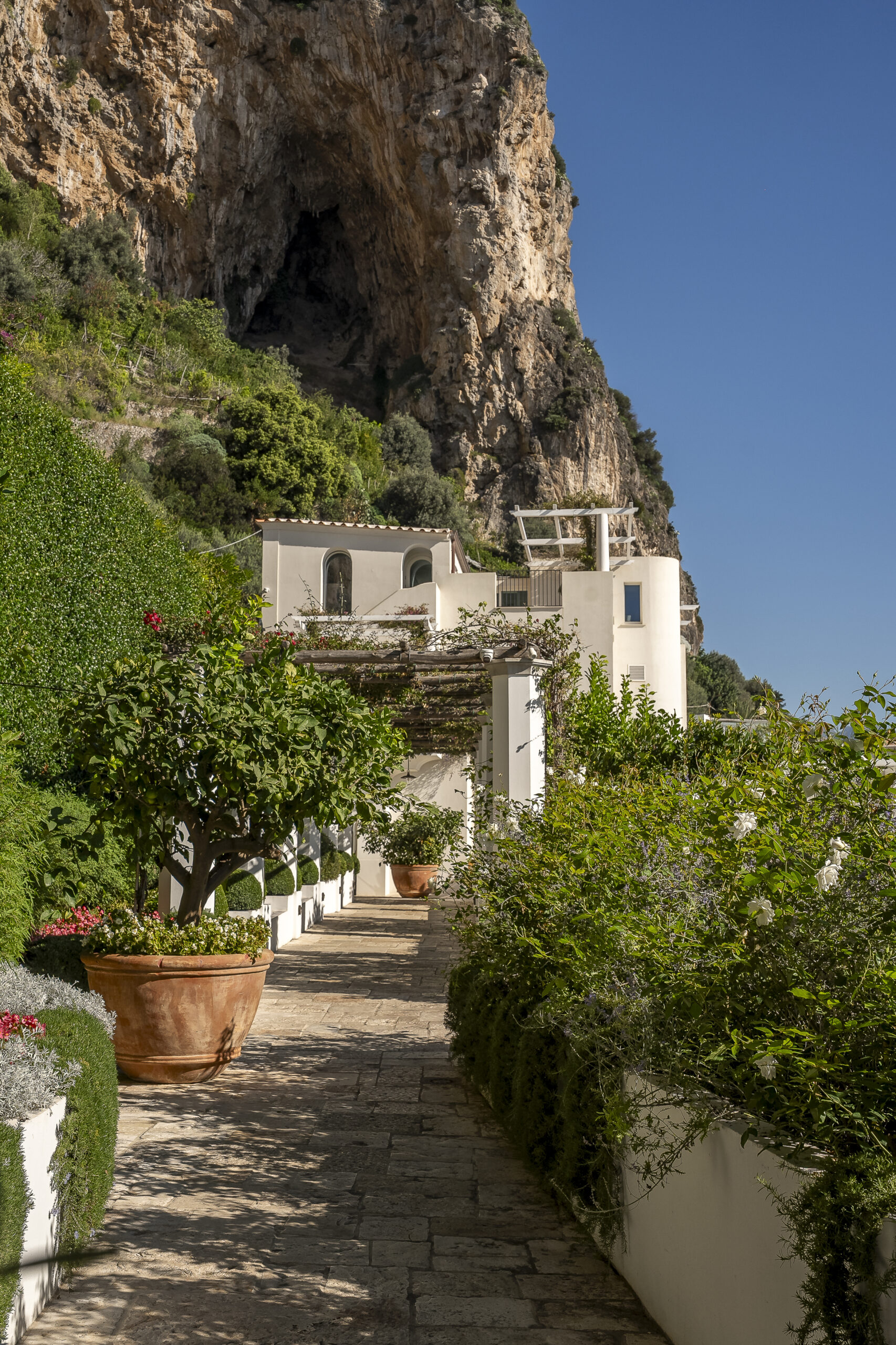
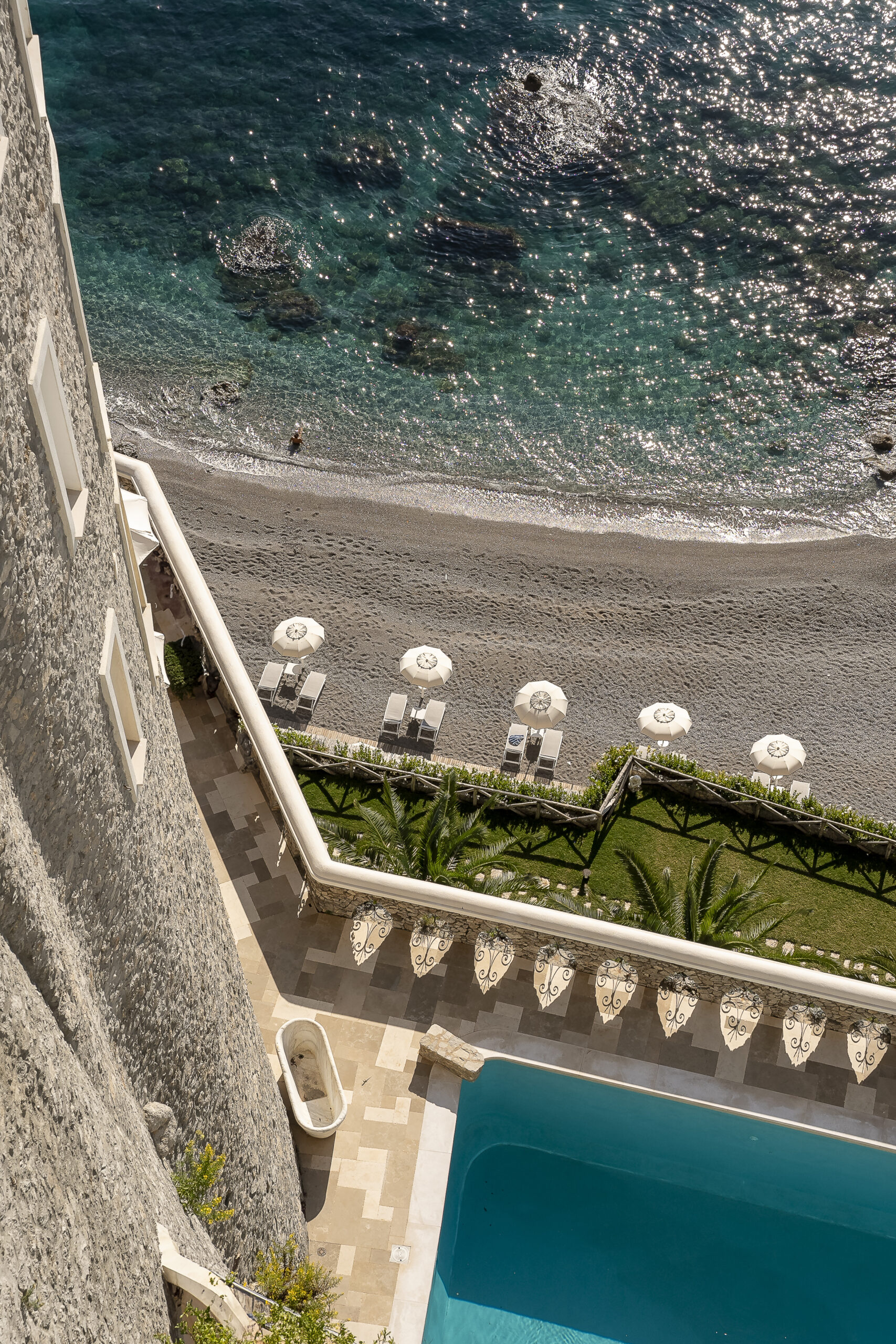
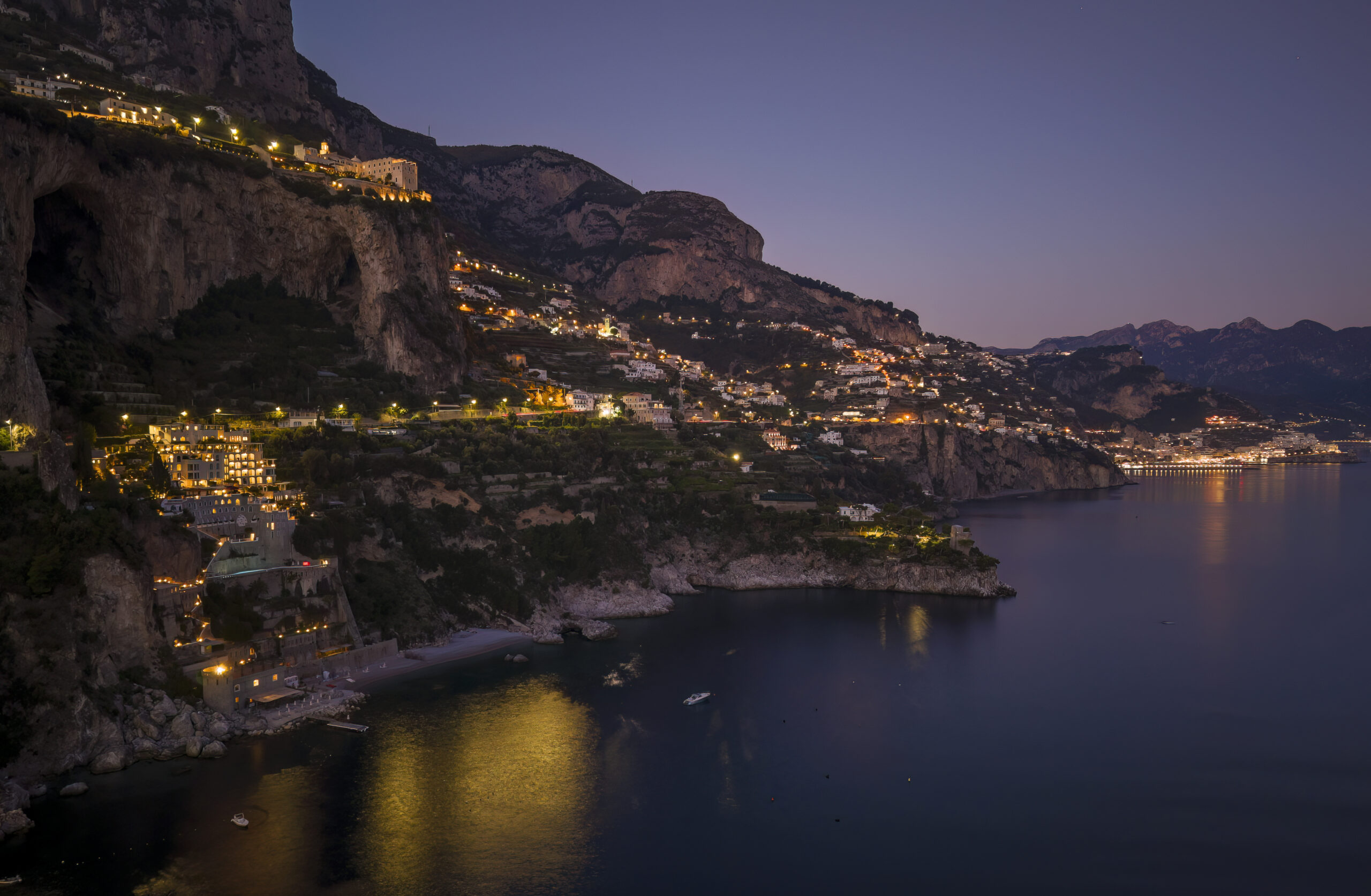
Italian sun, excellent cuisine and breathtaking views over the turquoise-green sea of the bay from the spacious suites and expansive gardens: Perched dramatically on the cliffs of the Amalfi Coast, 90 metres above sea level, Borgo Santandrea is one of those rare places where architecture, landscape, and lifestyle exist in perfect harmony.
Overlooking the fishermen’s hamlet of Conca dei Marini, renowned as Jackie Kennedy’s elegant summer retreat in the 1960s, the impressive mid-century hotel is built directly into the coastal cliffs. A steep staircase (or a lift) leads down through the lush terraced gardens, designed by hotel manager and landscape architect Tano Amato himself, to the private beach and the chic Marinella Beach Club.
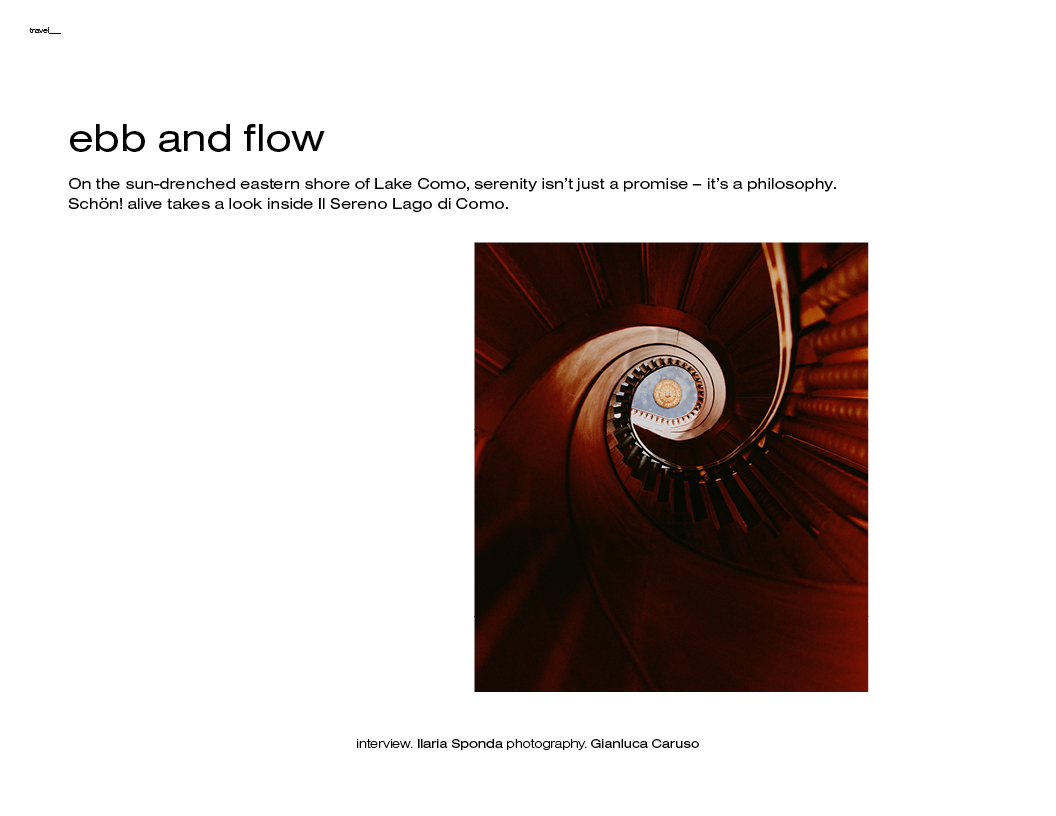
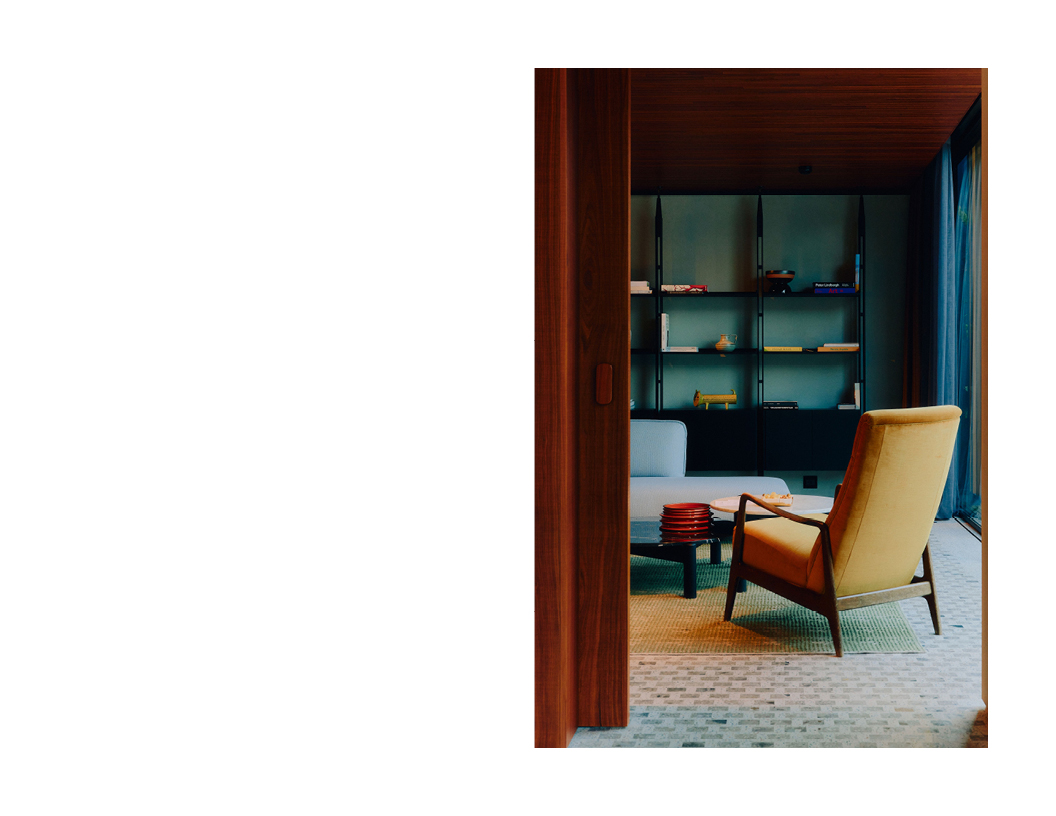
While its setting alone is breathtaking, it is the hotel’s interiors, and especially its masterful use of tiles, that leave a lasting impression. Here, design does not simply decorate the space — it defines the emotional rhythm of the entire experience. Originally built in the 1960s and recently renewed, Borgo Santandrea feels both timeless and distinctly Italian in spirit, embracing a philosophy of “quiet luxury,” where craftsmanship, texture, and material authenticity are key. The result is an environment that feels elegant yet intimate, curated yet never showy.
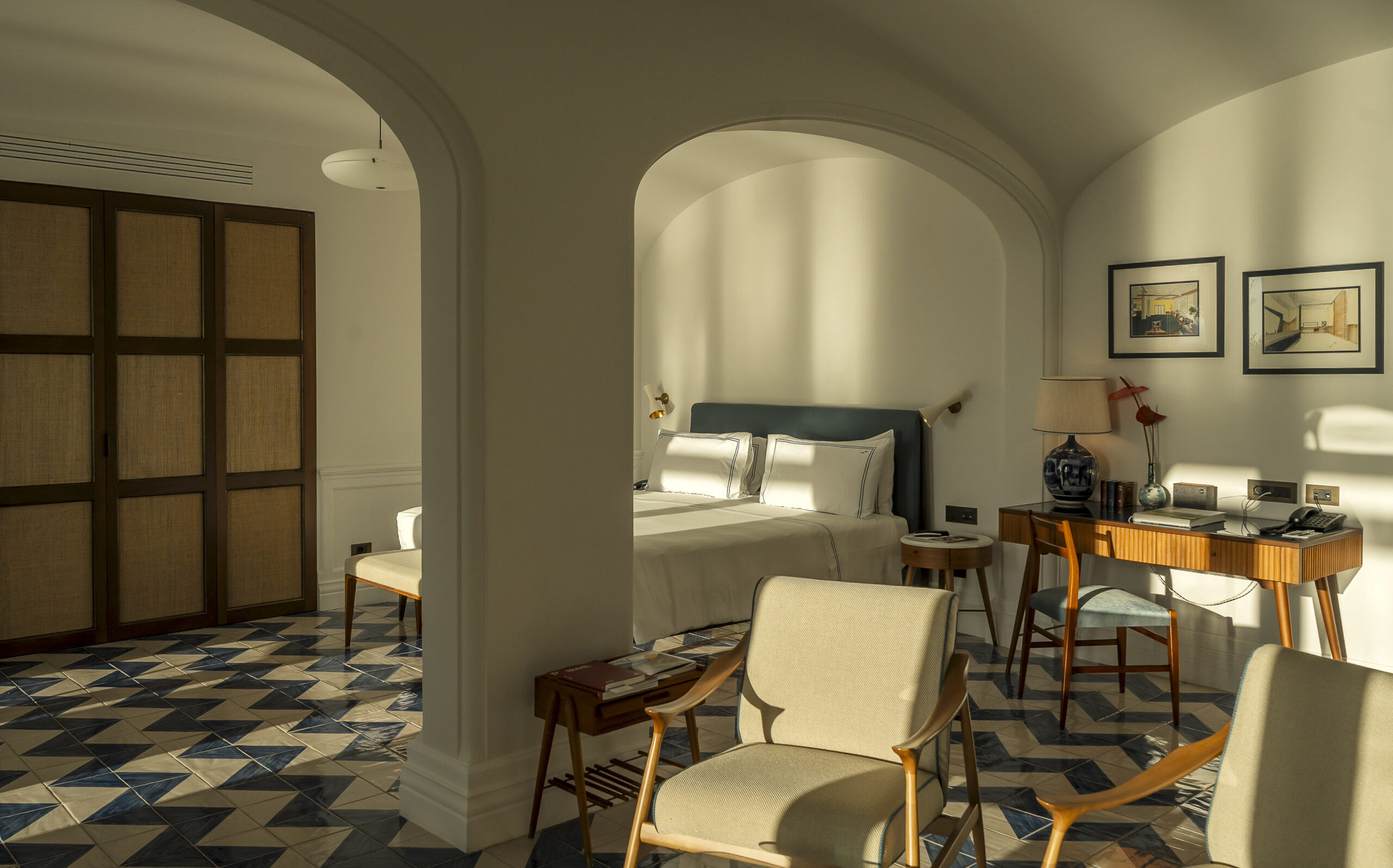
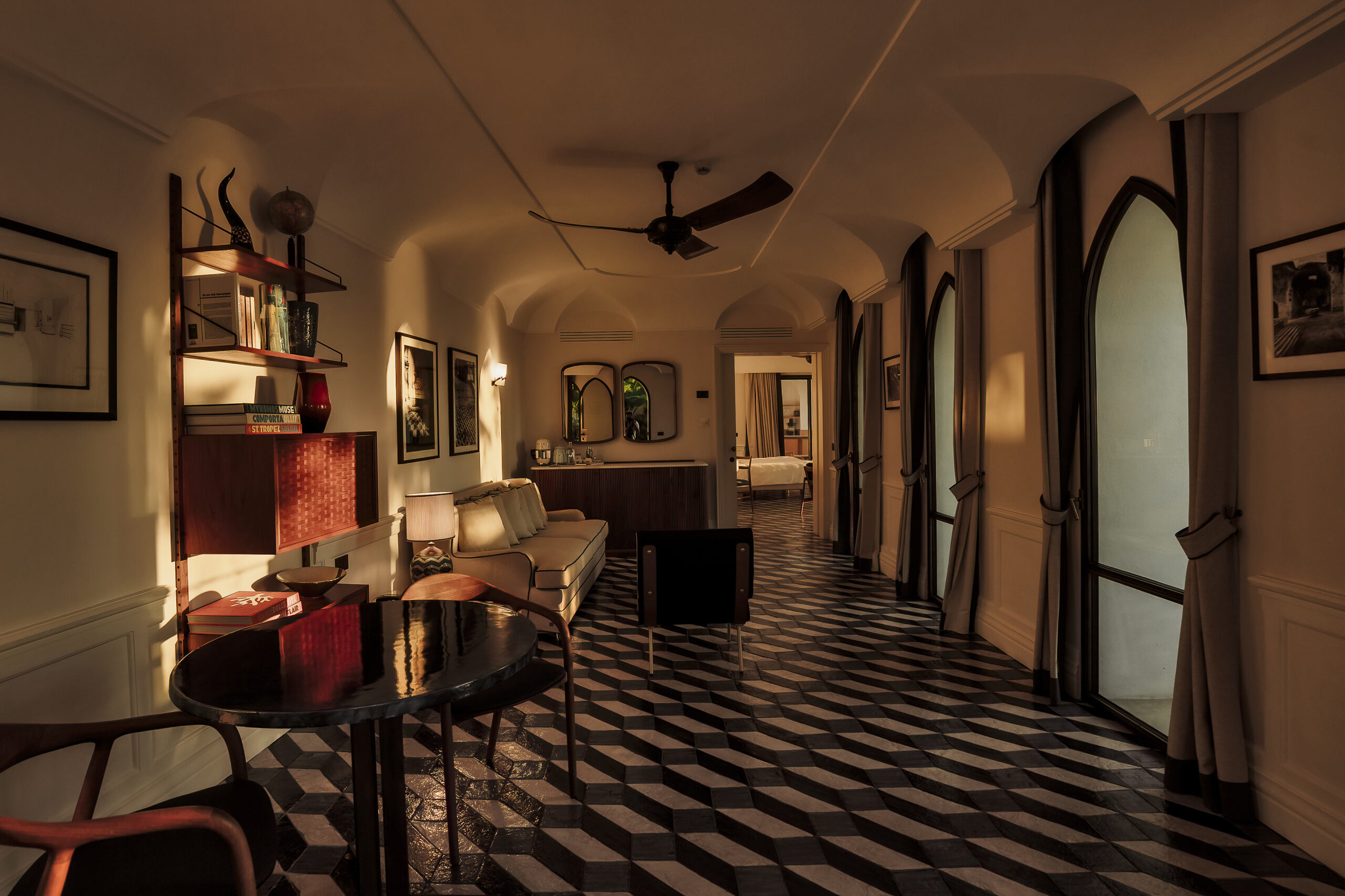
The hotel captures the essence of mid-century Mediterranean style, deeply inspired by the legacy of design star Gio Ponti. Throughout the hotel’s 52 rooms and suites, Ponti’s signature geometric patterns appear in bespoke ceramic floor tiles, produced by local artisans in a palette of Amalfi blues and soft neutrals. The ceramic tradition on the Amalfi Coast is one of the oldest and best-known crafts in southern Italy, dating back to ancient times. It combines Mediterranean influences, maritime history and local raw materials – and remains a hallmark of the region to this day.
Tiles are the soul of Borgo Santandrea’s interior identity. Handmade ceramic tiles appear in guest bathrooms, corridors, terraces, and pool areas, each surface treated like a canvas. Rather than using uniform patterns, the designers curated tile compositions that feel artisanal and personal. Some feature classic Amalfi motifs, floral flourishes, geometric borders, or subtle Moorish references, while others are delightfully irregular, with glazes that shift in tone depending on how sunlight hits them throughout the day.
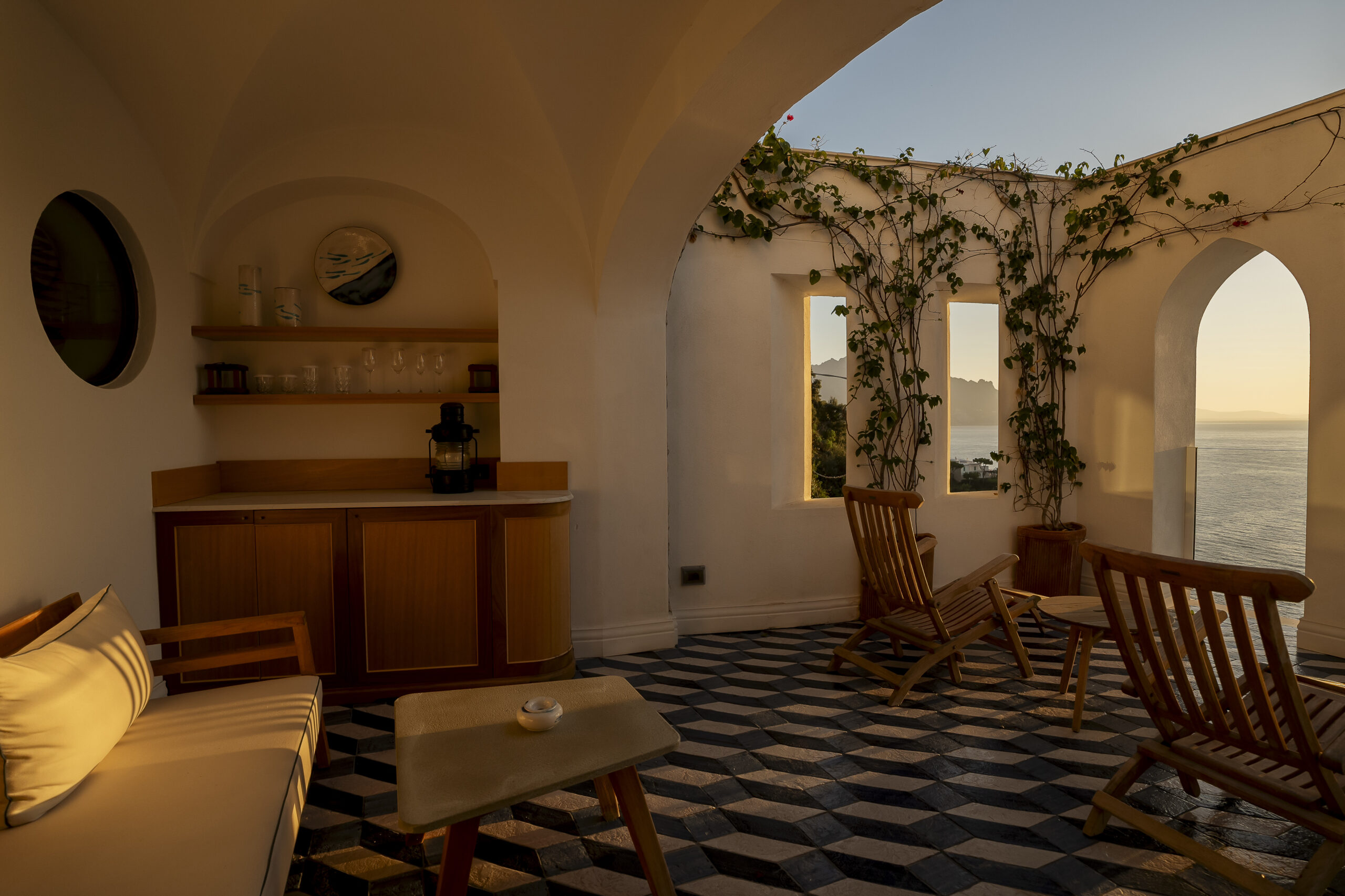
Gio Ponti is not the only designer who influenced the hotel’s aesthetic. Borgo Santandrea boasts an extraordinary selection of pieces by designers including Carlo Mollino, Frederick Kayser, Hans Wegner, and Isamu Noguchi. These works are carefully integrated across the hotel’s public spaces and dining venues, including the clifftop Plumbago Bar – bringing a museum-level design sensibility to a relaxed coastal setting.
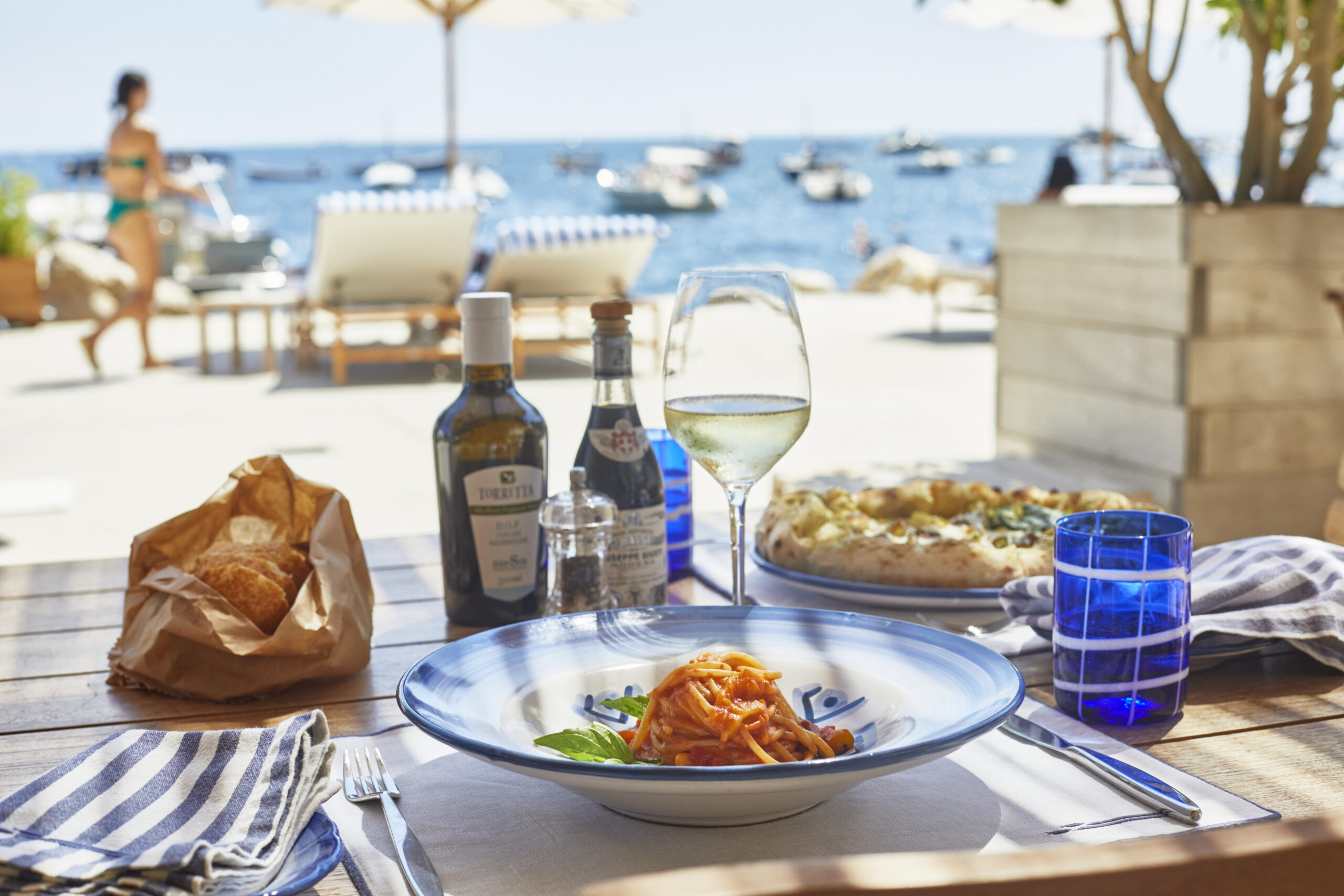
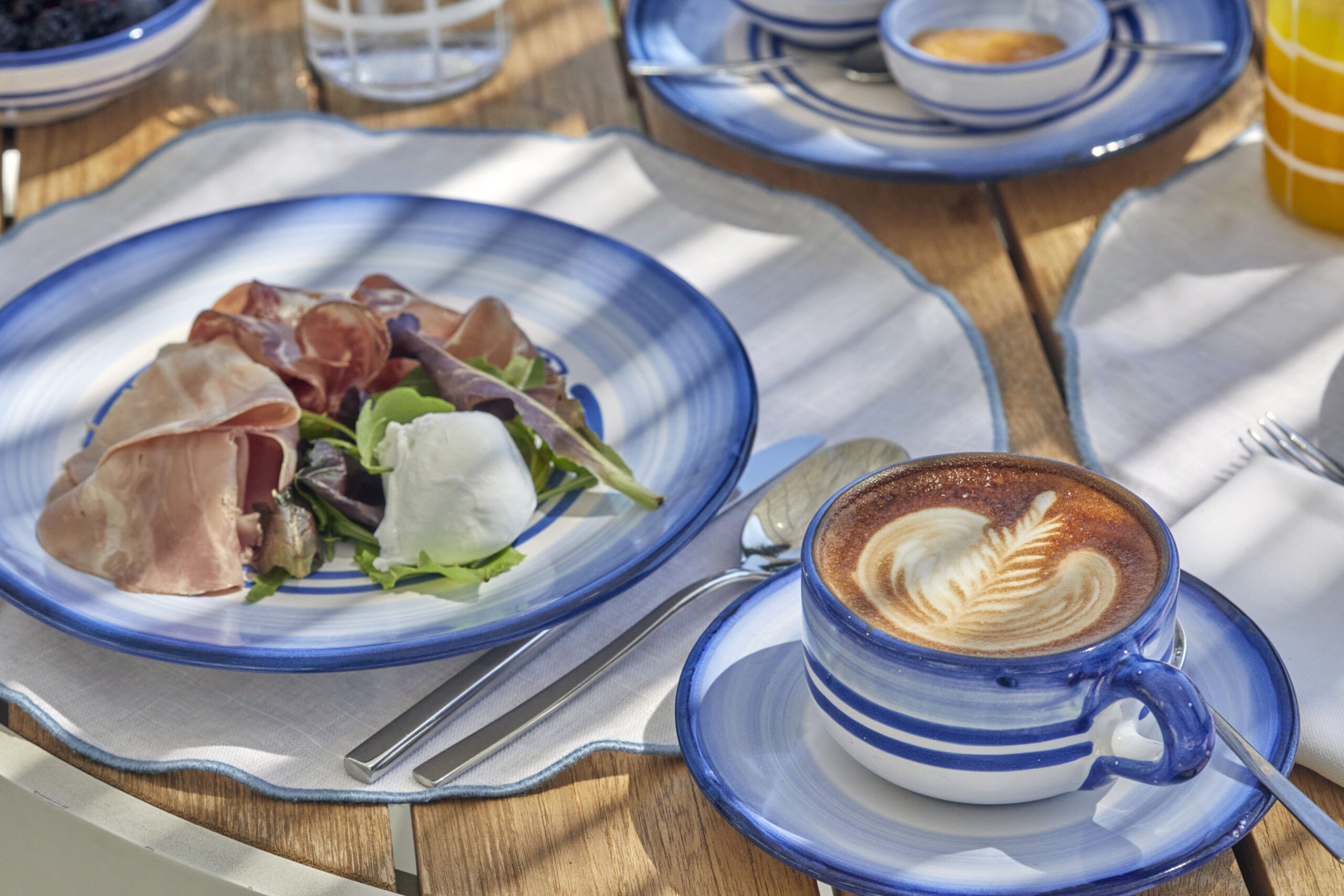
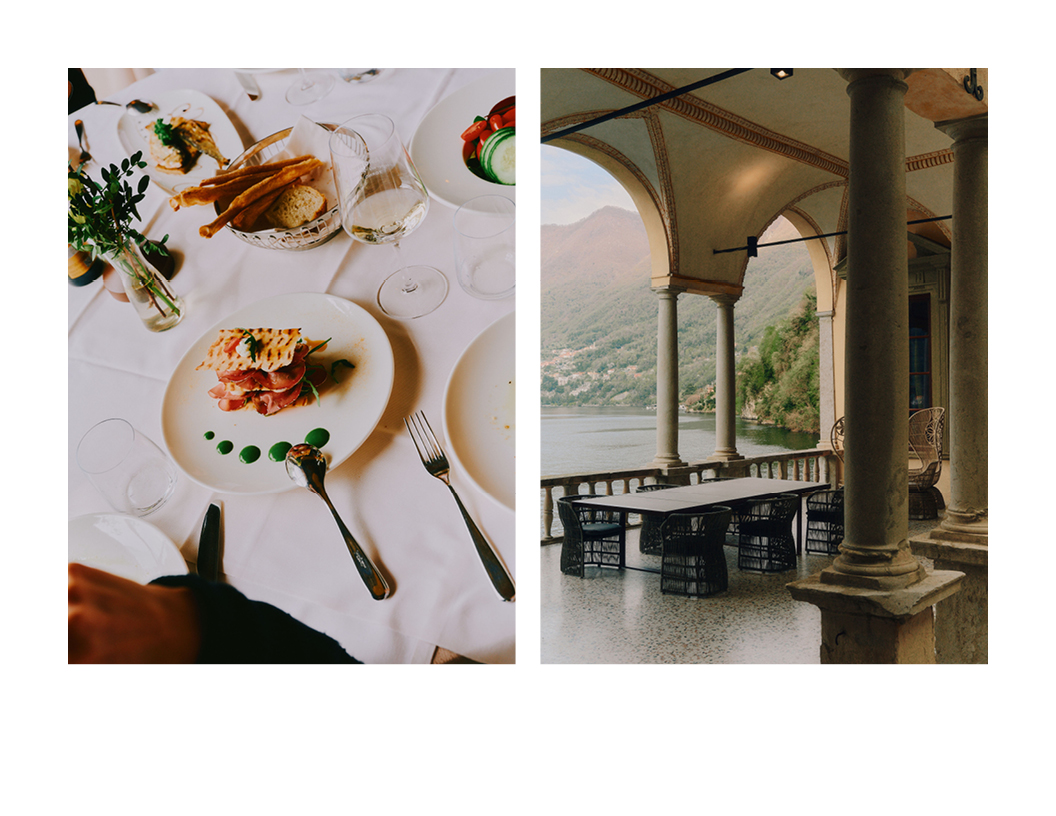
No Italian holiday is complete without extraordinary food: Borgo Santandreas culinary offerings include three restaurants. Alici, the hotel’s Michelin Starred fine dining restaurant, offers pasta-anchovy risotto to inventive “Mediterranean Cappuccino” with blue lobster, served on a cliff-side terrace with panoramic Tyrrhenian views. Delicious fresh produce, vibrant Med flavours and eye-pleasing presentation are served at Marinella Restaurant whilst along the beach front, The Beach Club offers a relaxed counterpoint: woodfired pizza – like the Sole di Amalfi crowned with lemon zest and bottarga, alongside fresh seafood platters.
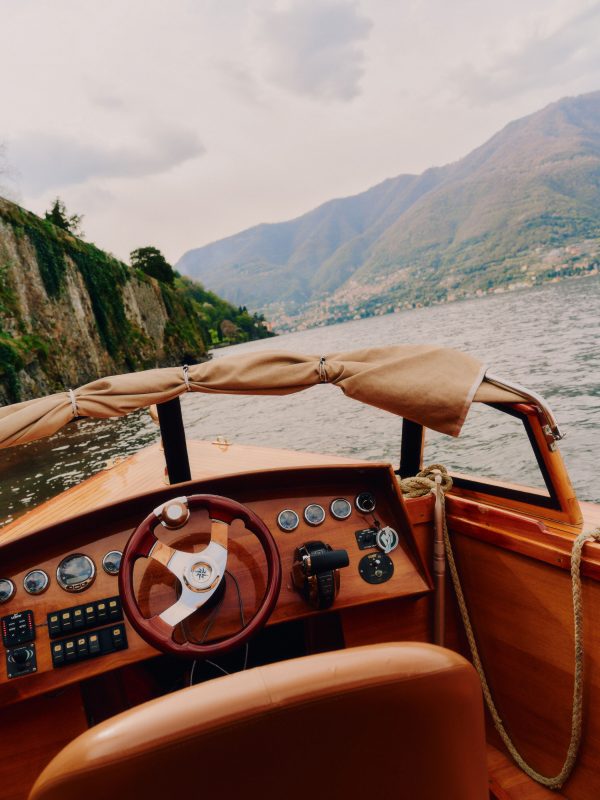
Should guests wish to venture beyond this beautiful setting, the hotel’s new fleet of private boats offers seamless sea transfers to Naples and Salerno. Not to be missed is a boat trip along the Tyrrhenian coast, discovering hidden coves and the centuries-old villages of Amalfi, Atrani and Minori. On the way, a lunch stop at waterside restaurants such as Il Pirata in Praiano, an iconic family-run establishment serving guests for over 60 years, completes this “Amalfi-Glow” experience.
words. Bettina Krause