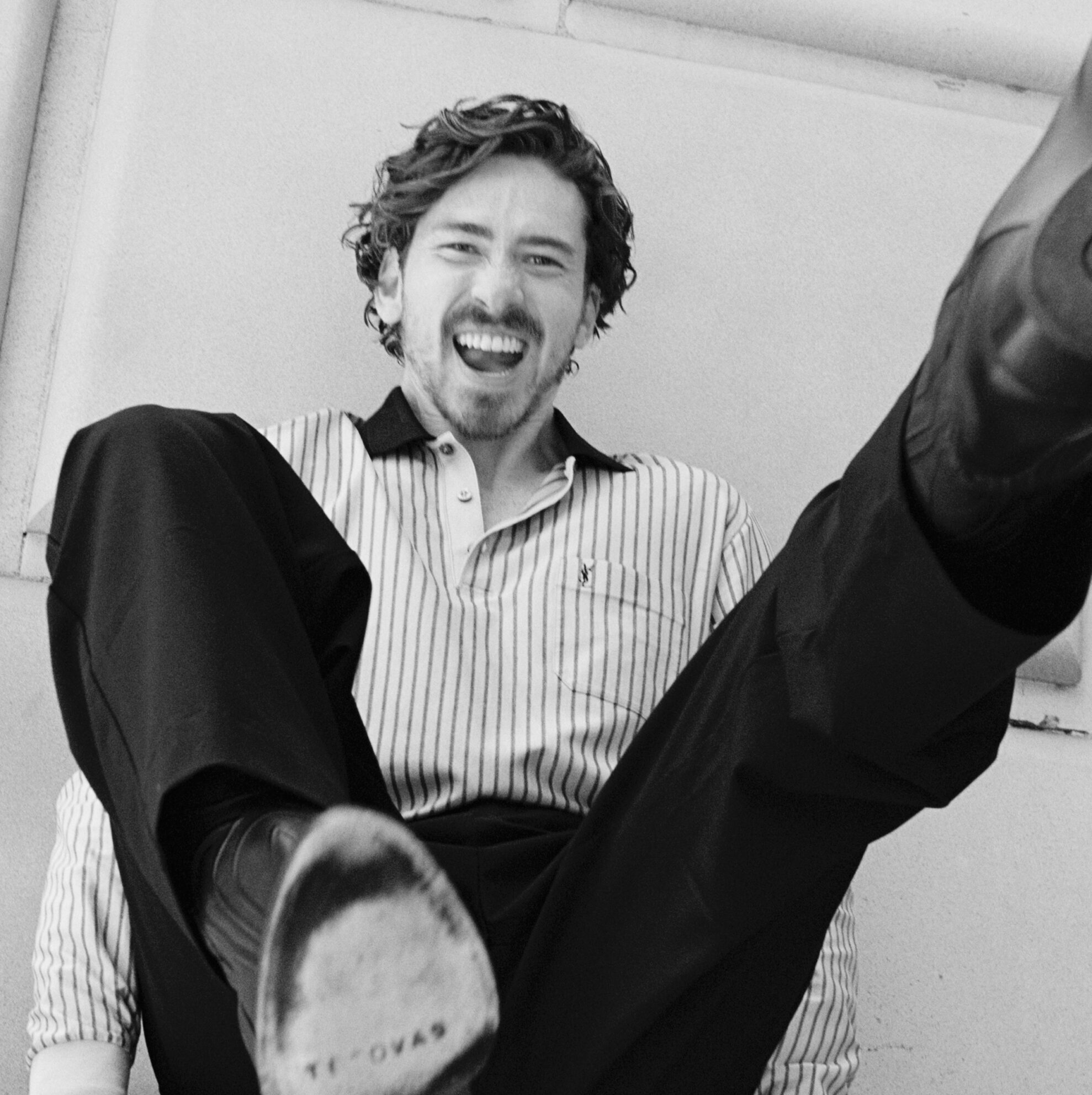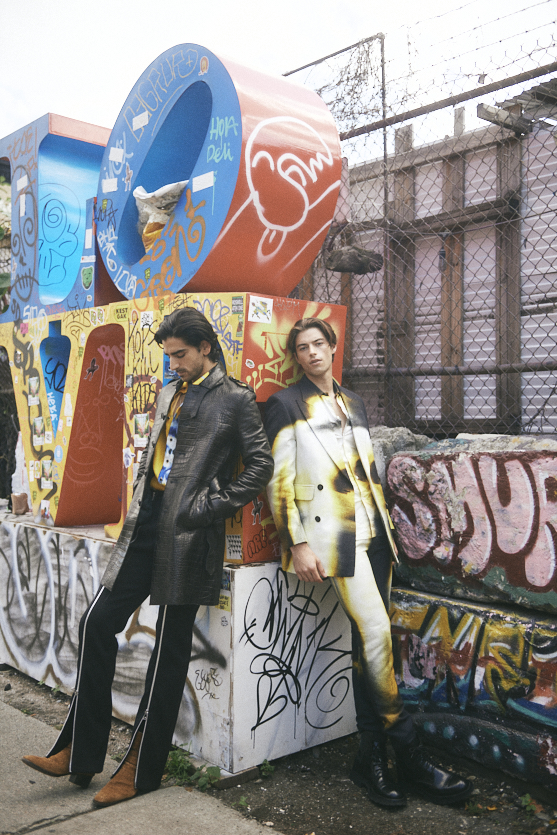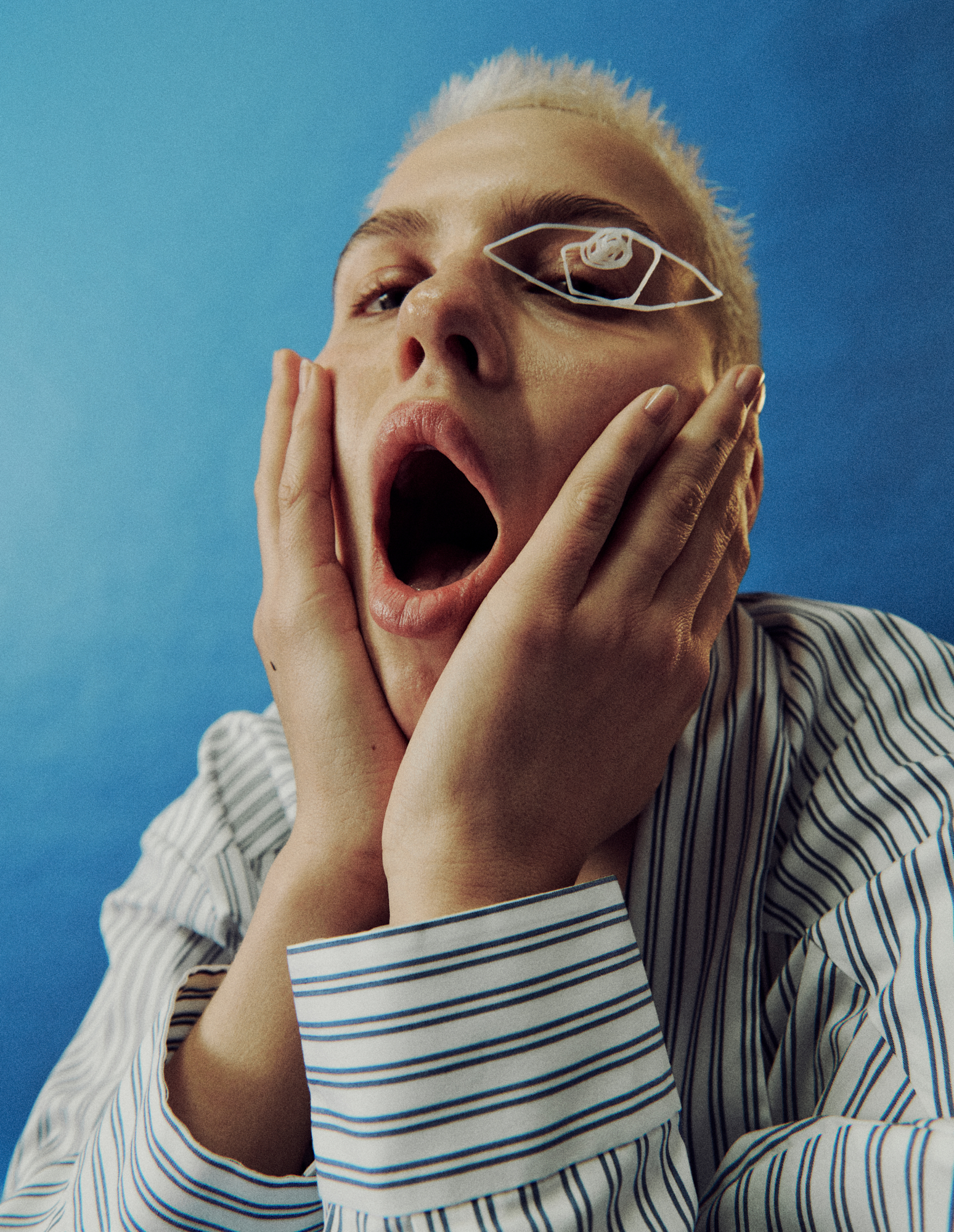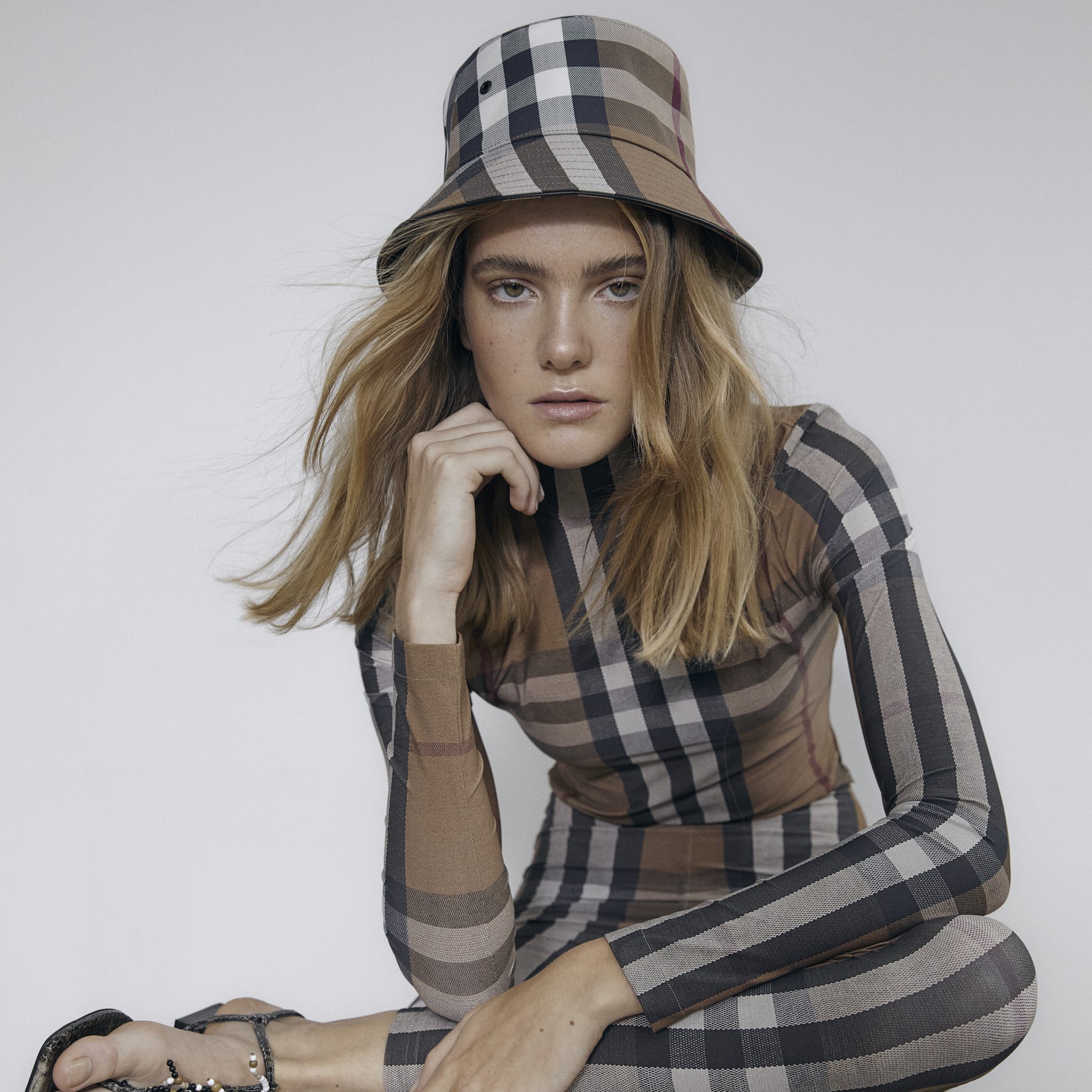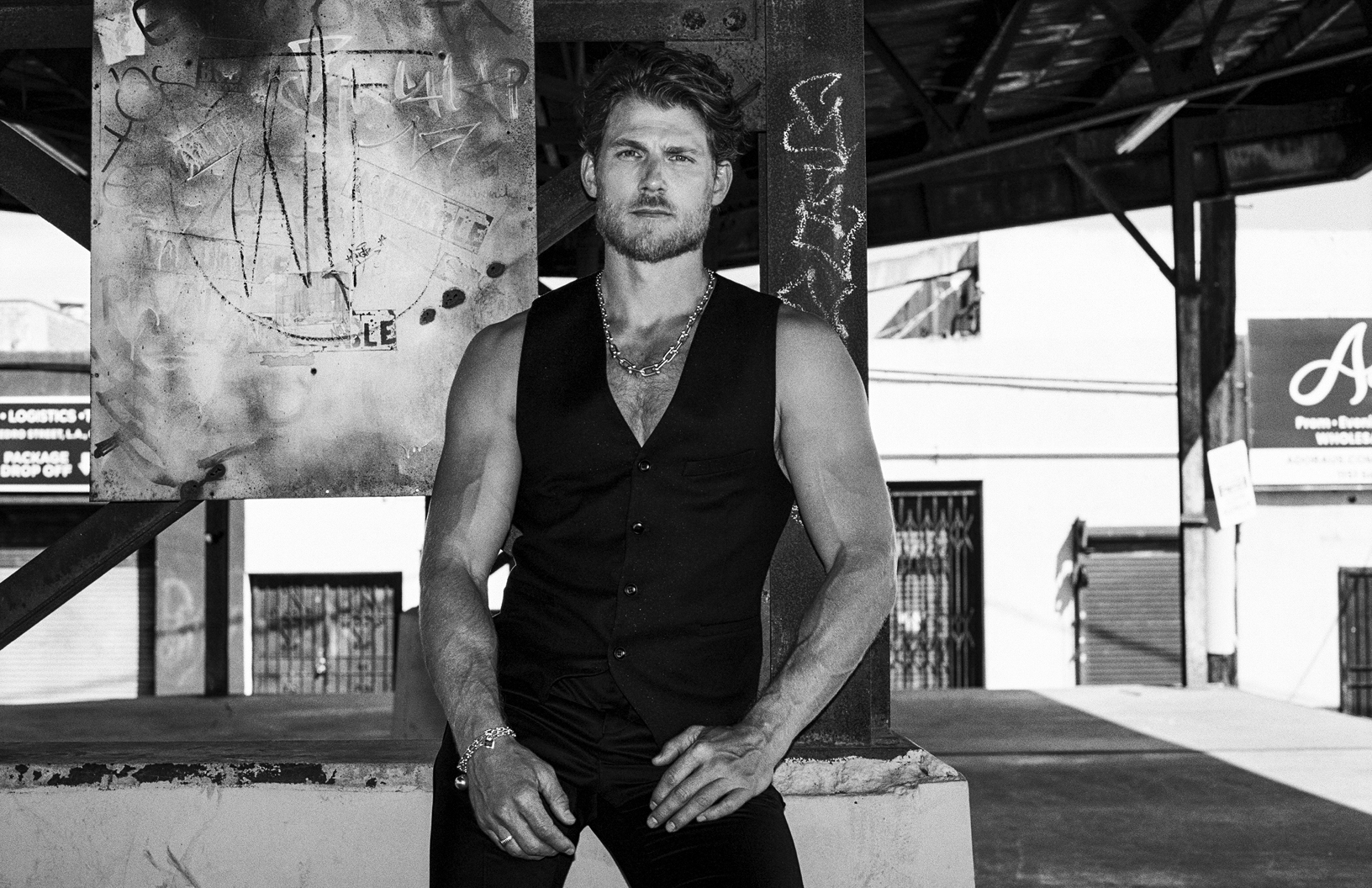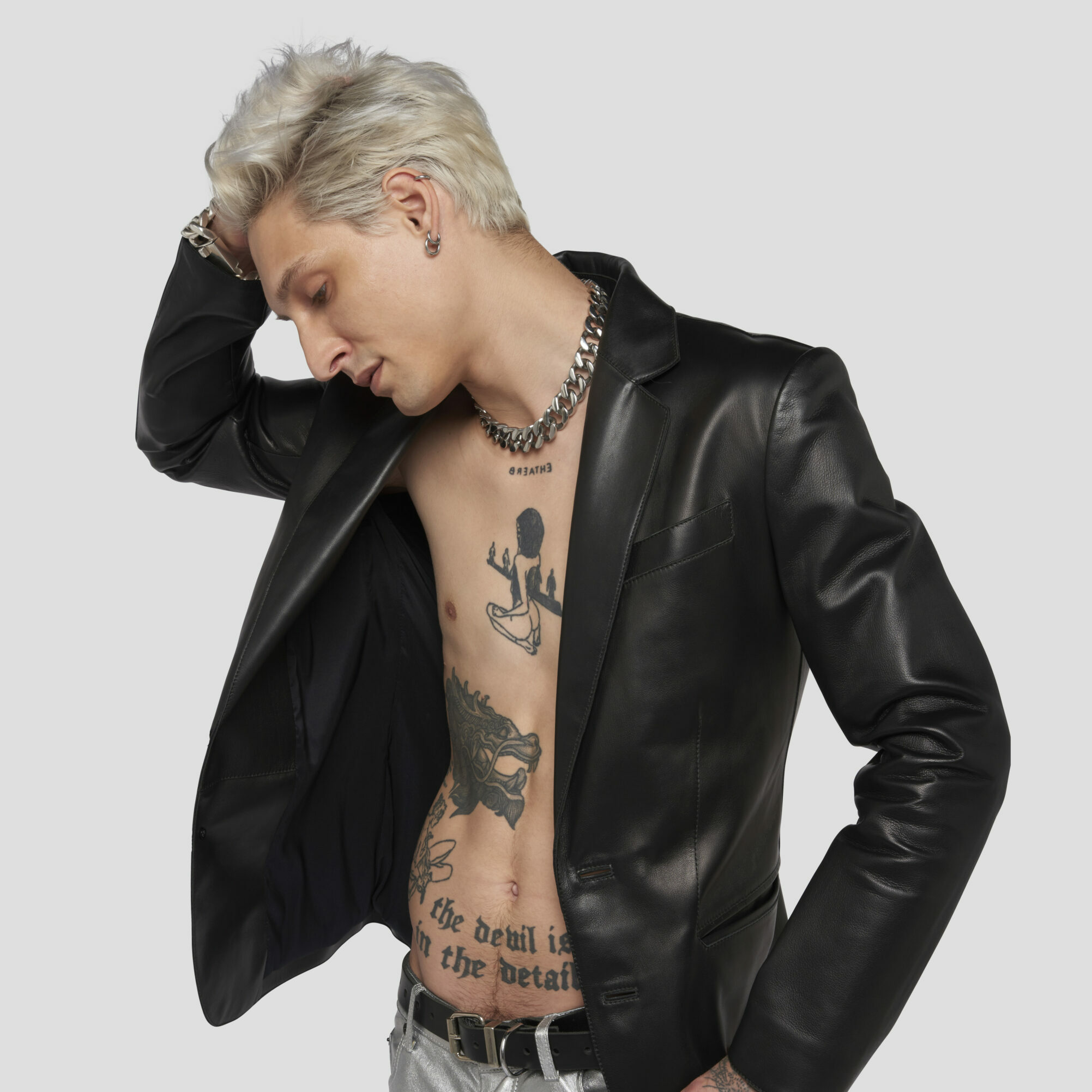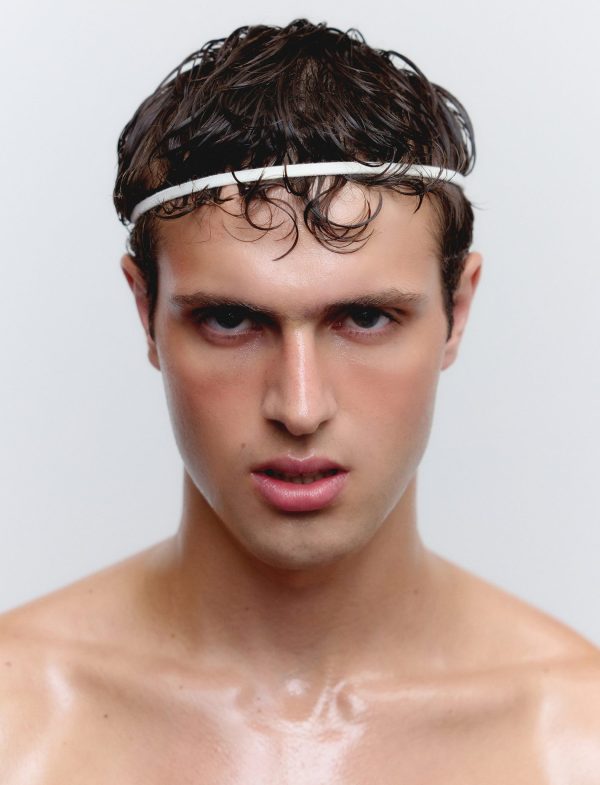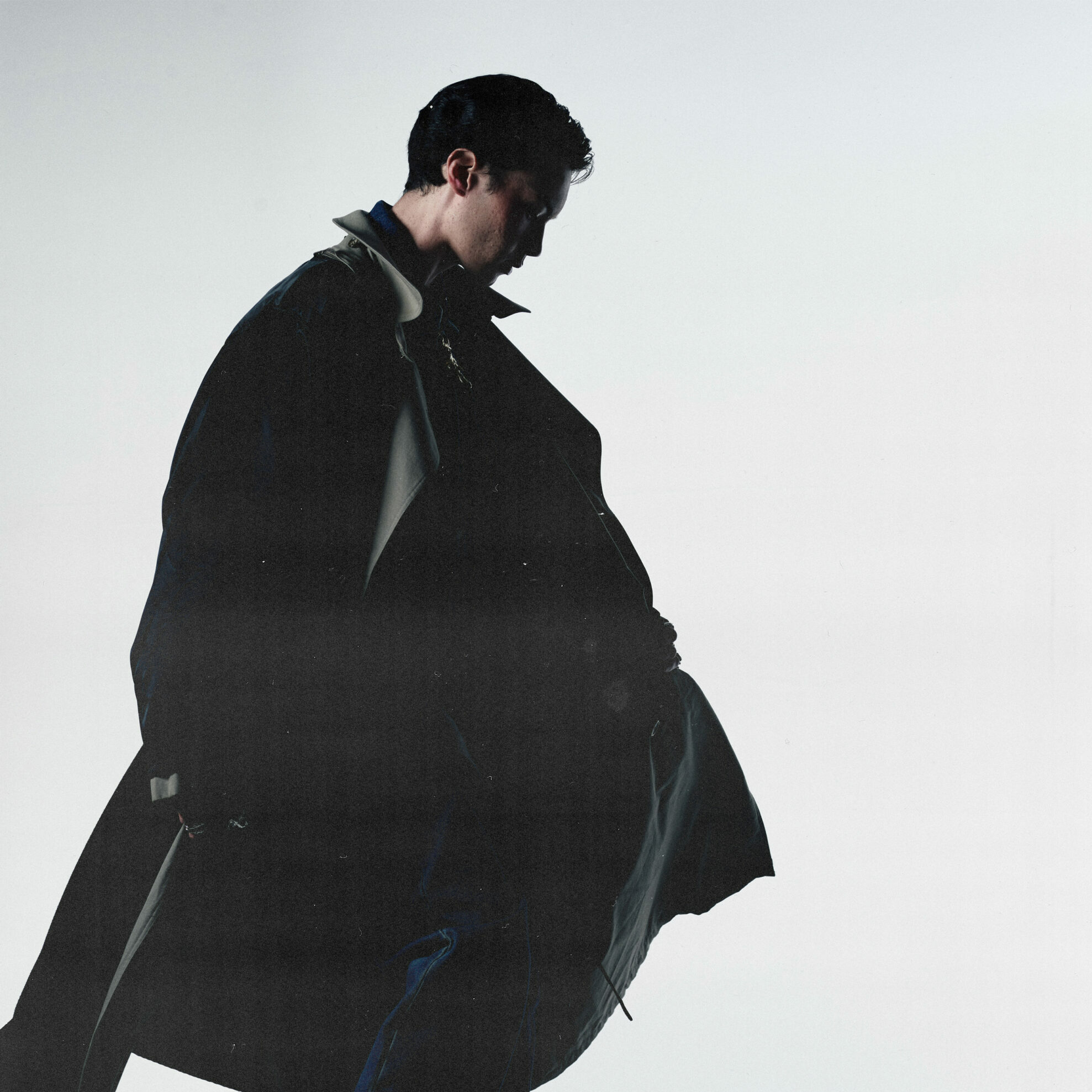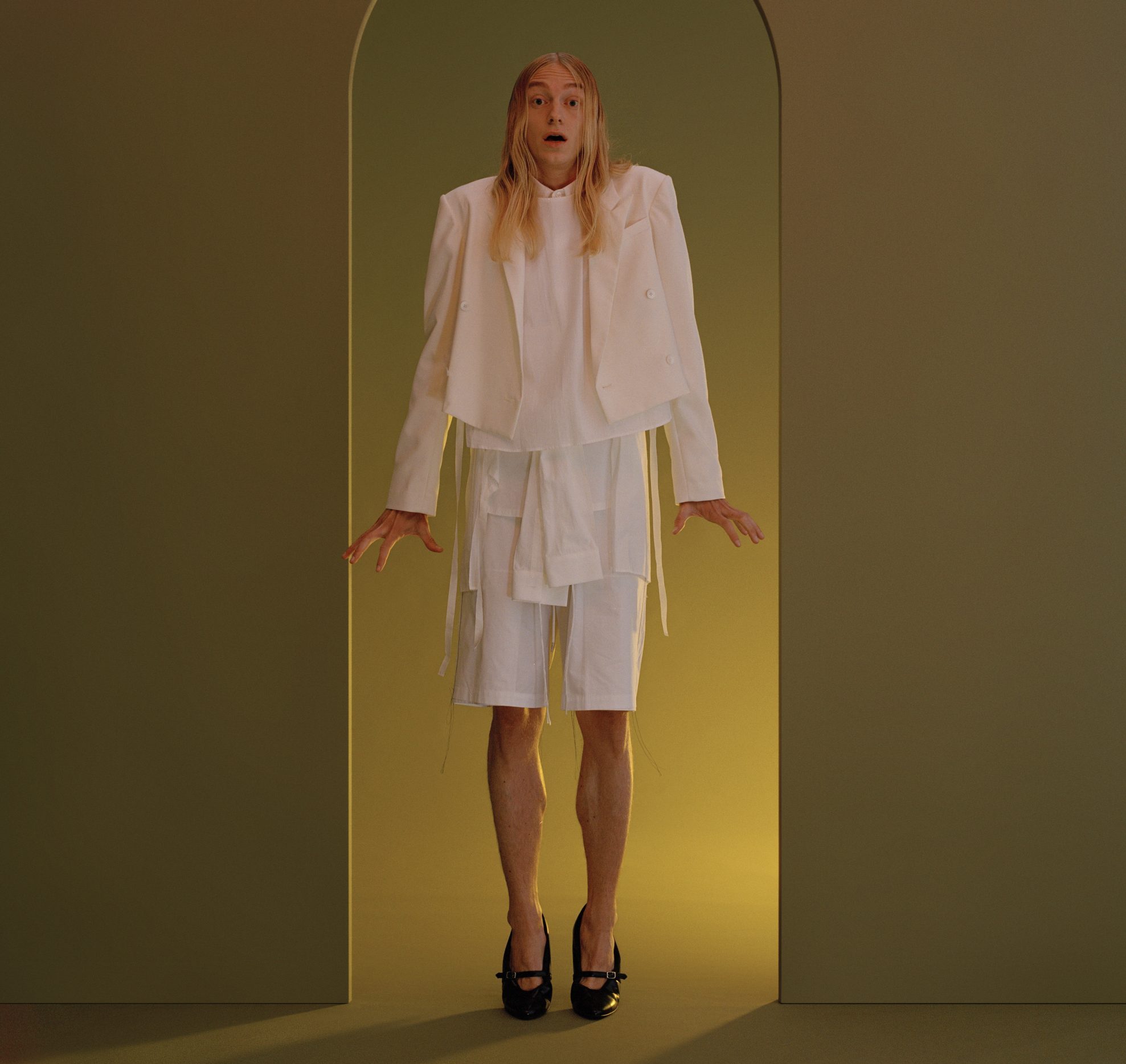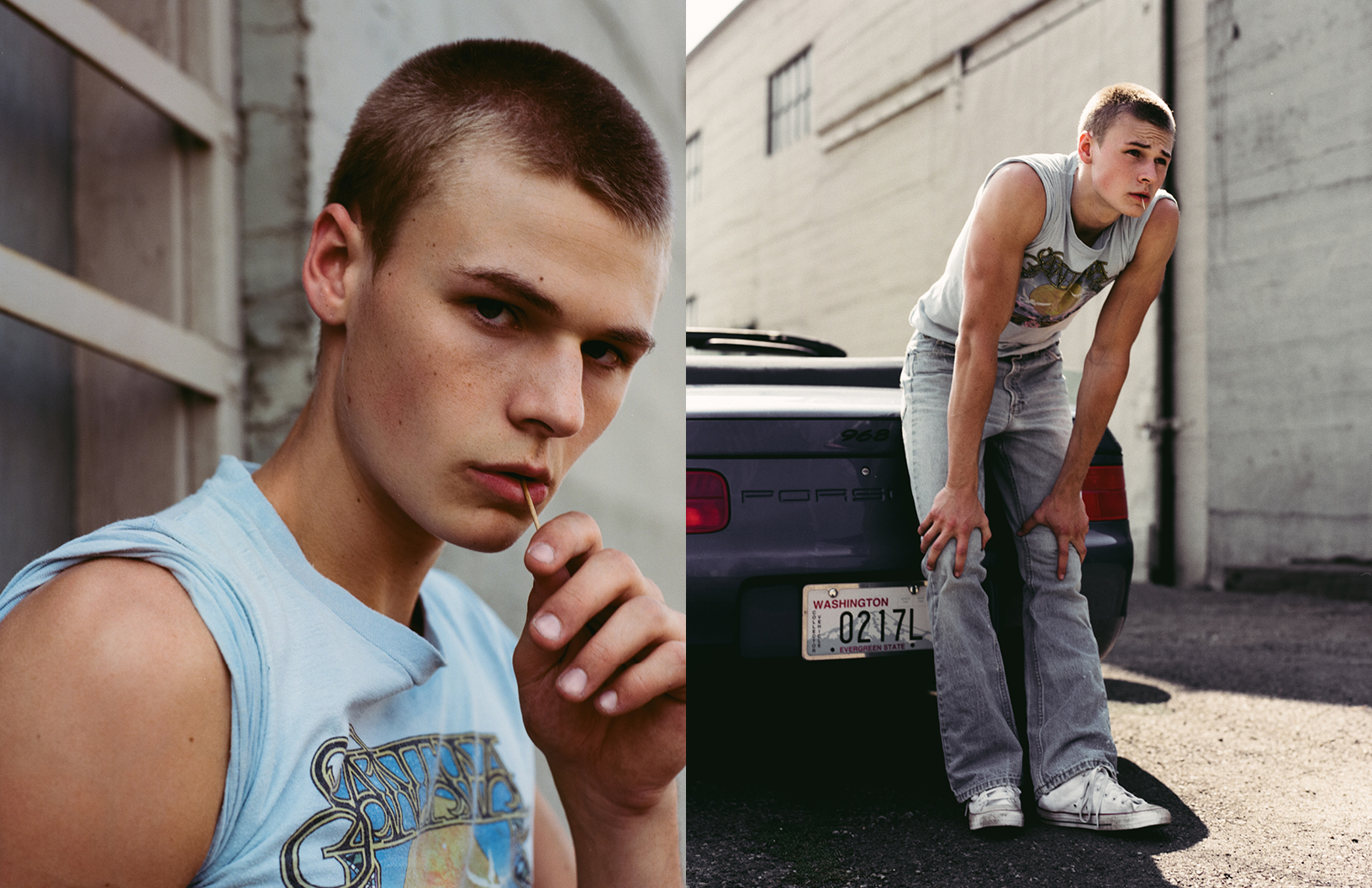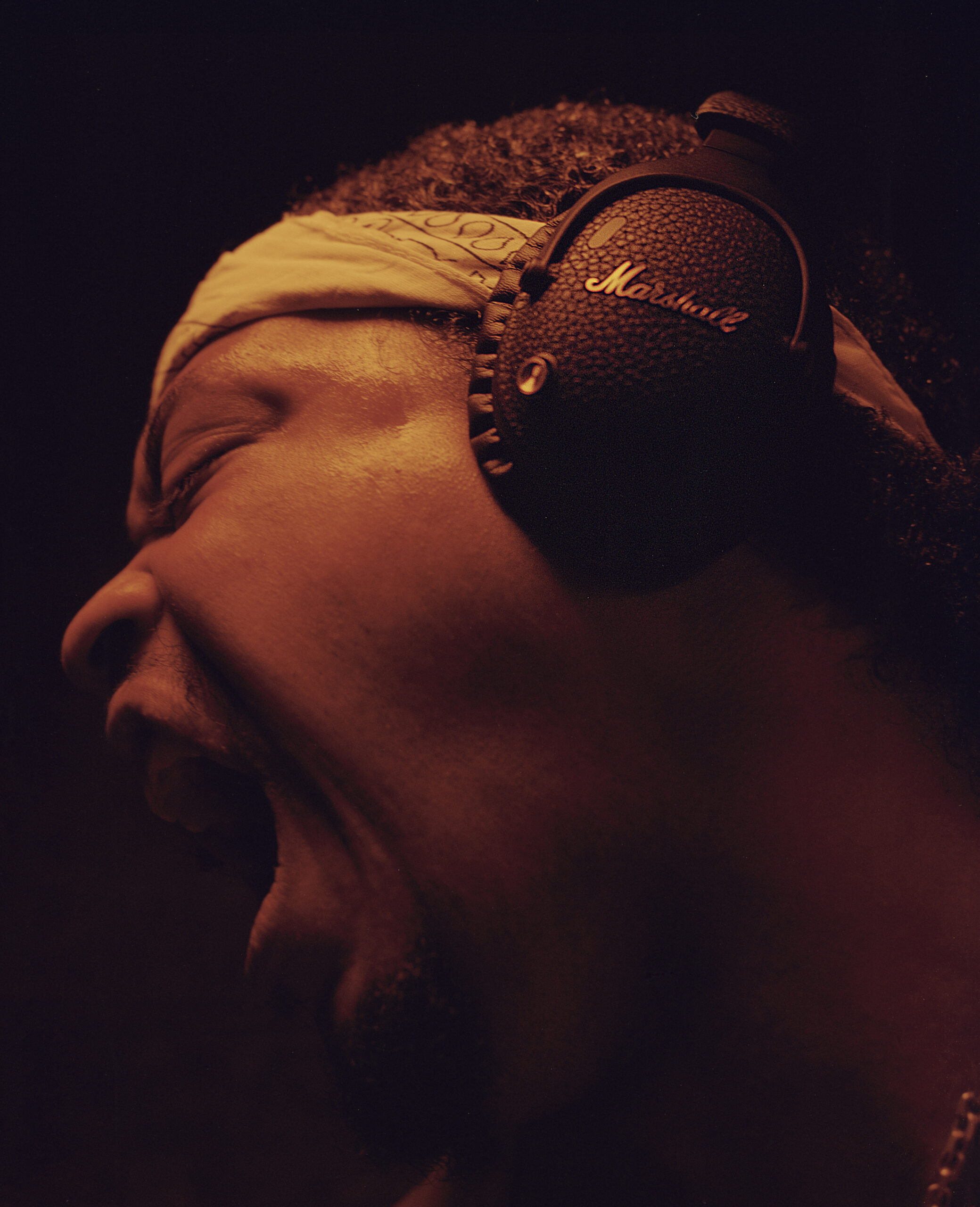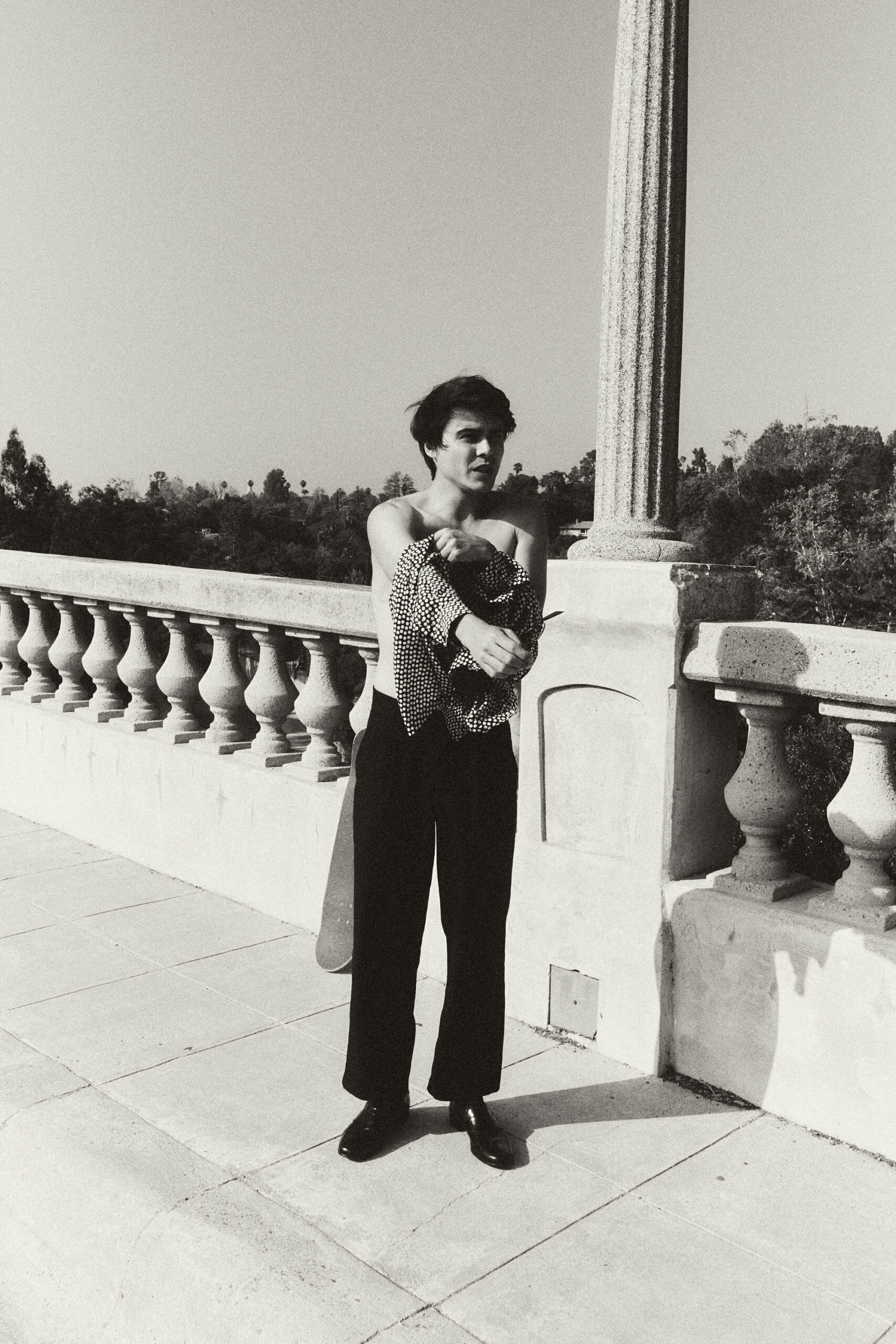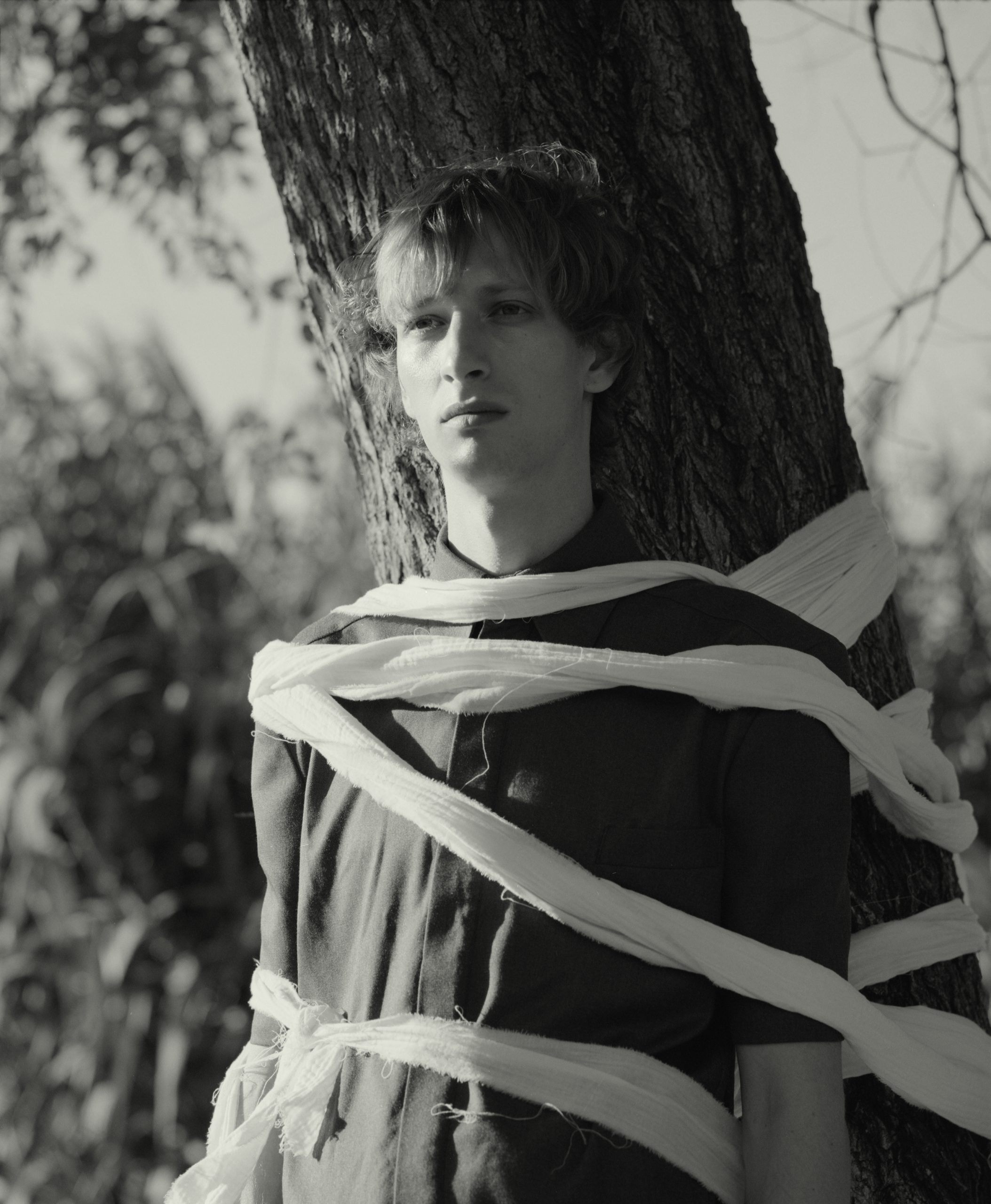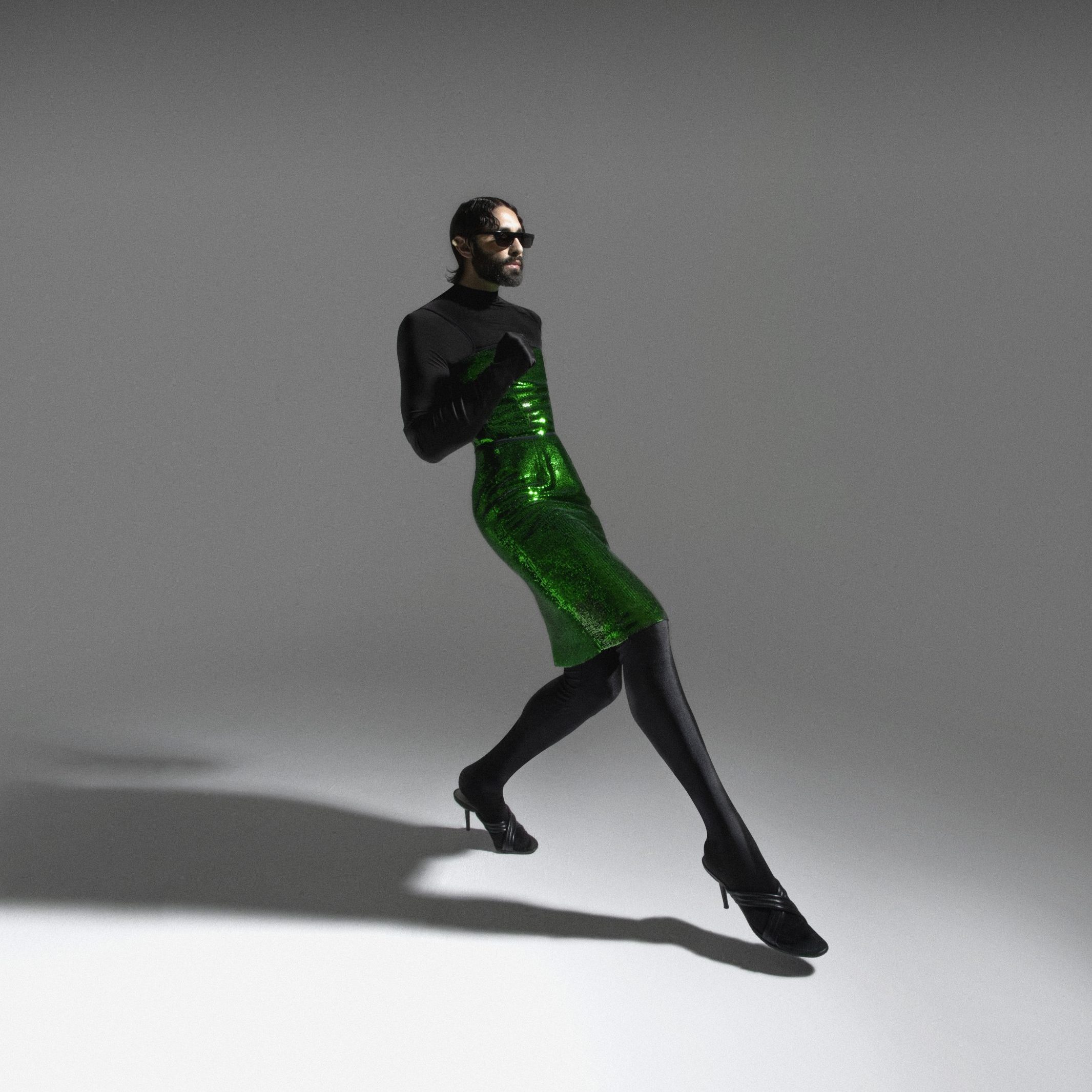


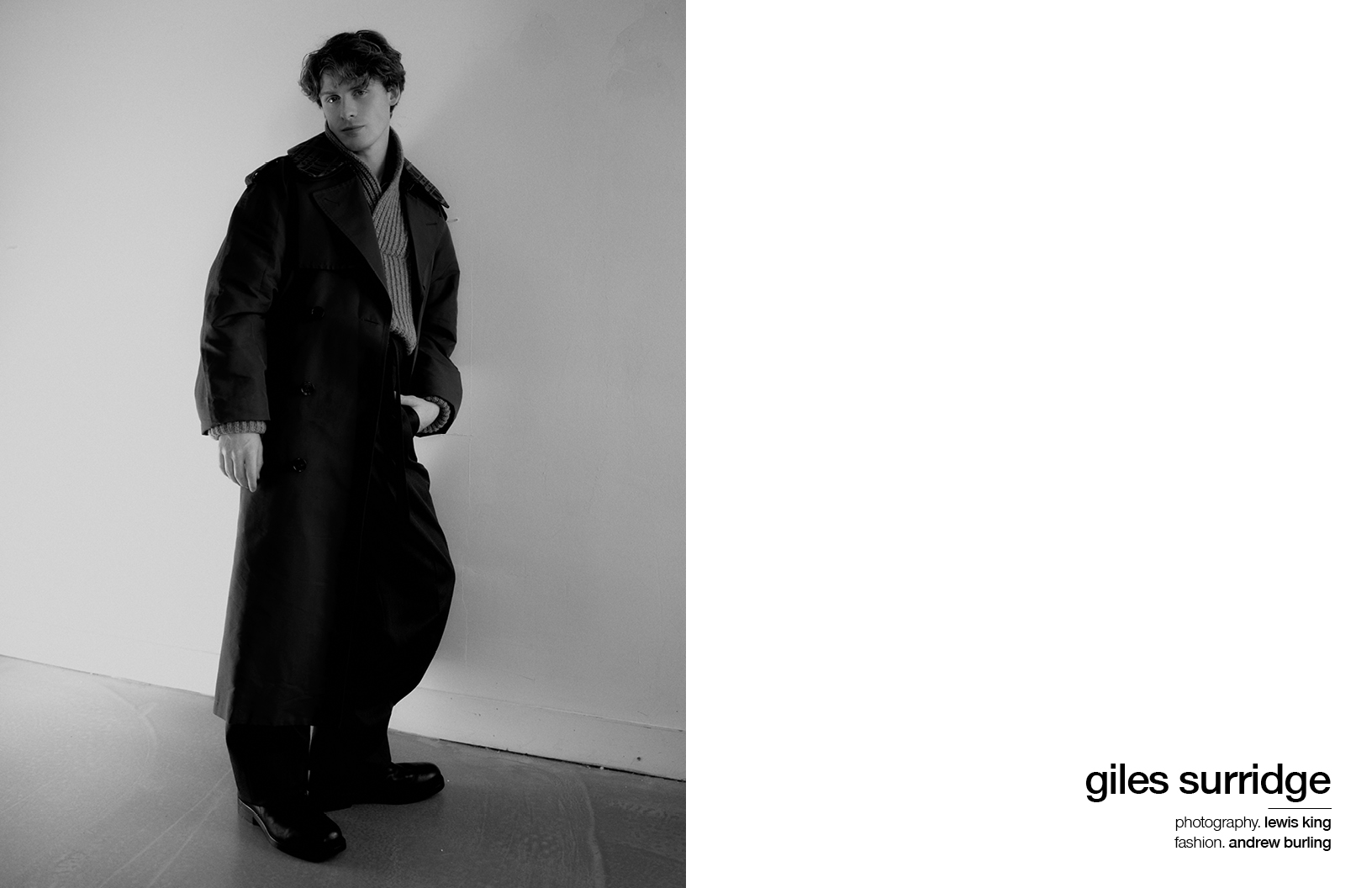
full look. Burberry
Life often imitates art, and Richard Linklater’s Blue Moon reflects that in every frame. Reuniting one of Hollywood’s most enduring collaborations – Ethan Hawke and Linklater, together on nine films over three decades – it tells the story of Broadway legend Lorenz Hart (and his collaborator Richard Rodgers).
Where Hawke and Linklater have the Before Trilogy, Rodgers and Hart left behind more than 500 songs, from The Lady Is a Tramp to My Funny Valentine and the titular Blue Moon. But the film begins after the duo’s partnership has ended: Rodgers, played by Andrew Scott, is already moving on to Oklahoma! with Oscar Hammerstein II.
While Hart, facing obsolescence, is undone by a broken heart, for Giles Surridge, landing his first feature role marks the start of a new chapter. He plays Troy, a shy flower delivery guy who drifts into Hart’s world, far removed from Broadway’s glitter. Off-screen, Surridge is no stranger to the musical world – years of theatre and dance have shaped him – but stepping onto a film set for the first time, surrounded by seasoned collaborators, mirrors Troy’s own tentative journey into a world unknown.
In conversation with Schön!, Surridge reflects on stepping into 1940s New York, navigating his first feature alongside Hawke, discovering the parallels between his journey and his character’s, the one thing that might be missing from Blue Moon and why starring in a Yorgos Lanthimos project would be the ultimate next step.
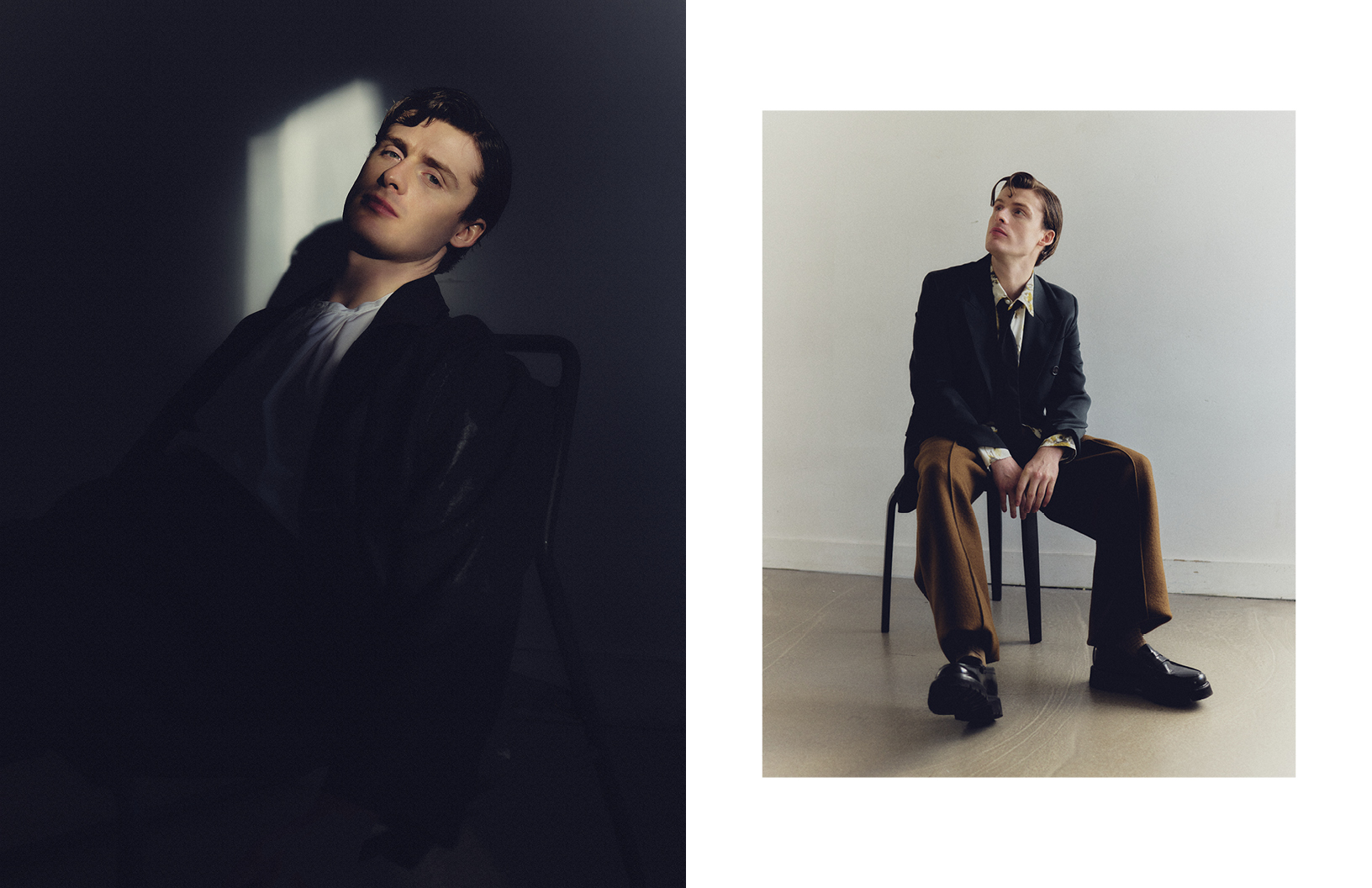
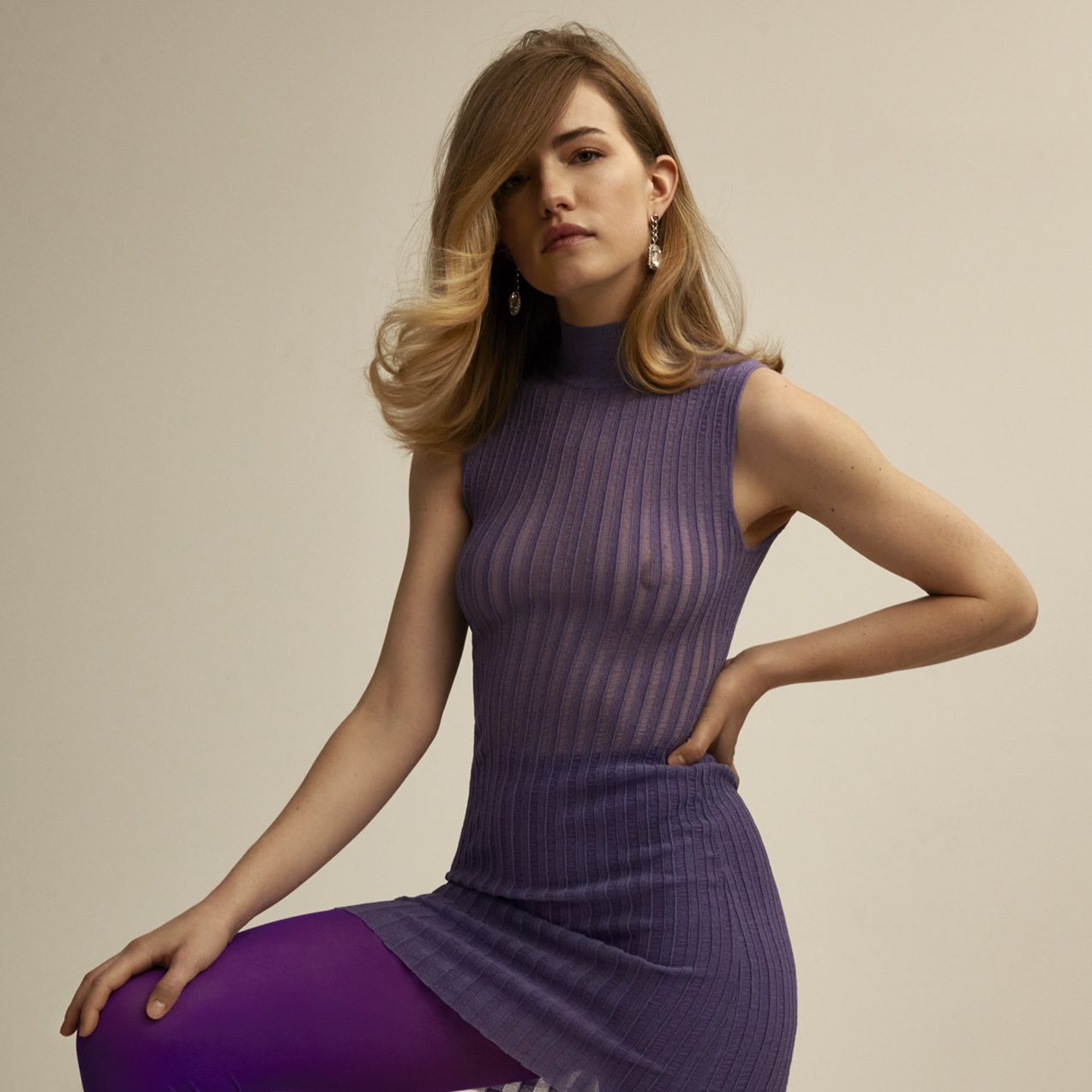
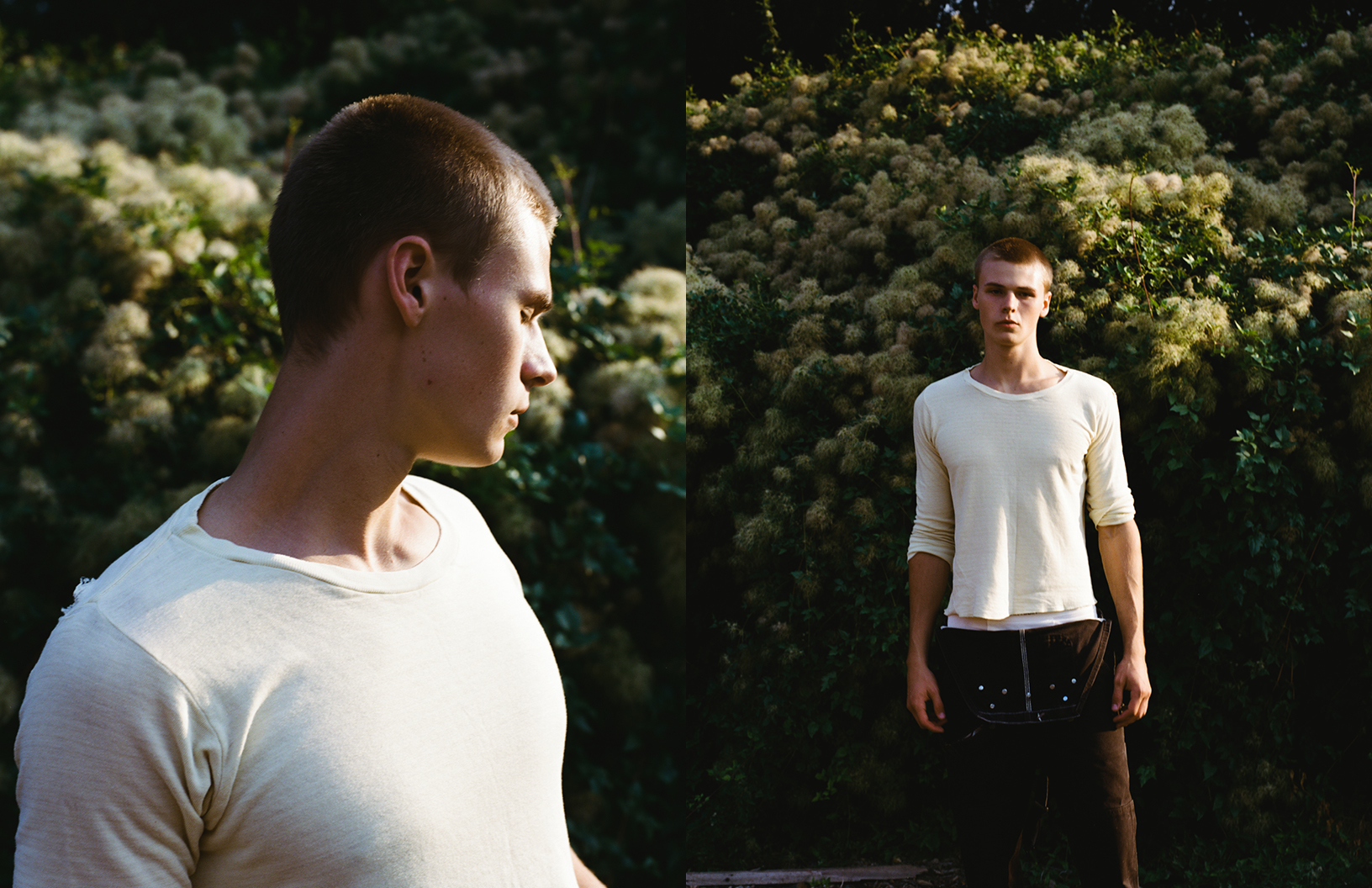
full look. Prada
opposite
blazer, shirt + trousers. Ami Paris
shoes. Grenson
full look. Prada socks. London Sock Co.
Before we properly dive in, can you set the scene and give us a brief intro to Blue Moon?
It’s set in 1940s New York during the golden age of Broadway. It focuses on Lorenz Hart, an iconic lyricist and composer, and explores the aftermath of his split from his musical partner Richard Rodgers. He’s at a crossroads between his personal life and his work, and neither is going well. It’s really a character study of Hart, set against the glamour of Broadway. My character, Sven…
…who’s actually credited as both Troy and Sven, if I’m not mistaken?
Yes, I was originally credited as Troy, but I think they changed it to Sven because it felt quippier. It’s actually the nickname Hart gives me because of my, I suppose, Scandinavian-looking appearance [laughs].
Right – so Sven, or Troy – what’s his story?
My character is one of the few characters who meet Hart during the evening at Sardi’s. Our characters are polar opposites; he’s glamorous and outspoken, while I’m more innocent and an outsider to the world of musical theatre. I’m just the flower delivery guy who comes to pay a visit and ends up getting roped into a conversation with him.
Hearing you talk about him, and thinking about your own journey, I can’t help seeing a few parallels…
I hadn’t even thought of it that way, but I completely agree. It was my first feature film and also my first time working with such a prolific director. And, of course, there was Ethan – he’s a textbook actor. So yes, I was very much mirroring Sven’s experience, stepping into the glamour of Hollywood.
Still, you weren’t exactly new to performing. You studied musical theatre and dance, didn’t you?
Yes, I ended up falling into musical theatre from a young age because I was quite an energetic child. I could never sit still, so my parents put me into dance class and karate. It turned out I was a natural at dancing, which then led to singing and acting. I remember the first one I ever saw was ‘The Lion King’, with my grandparents, and I thought, “I can see myself performing that.”
Eventually, I trained for three years in musical theatre and did a couple of West End shows, but I’ve always loved films and dreamed of being in them. The journey just took a different direction, and I let it happen.
Let me draw another parallel between the movie and your experience in the theatre because, in a way, Blue Moon feels quite theatrical. Most of it takes place in one location, right?
Exactly, they call it a chamber piece. It’s set in real time, 100 minutes, in the same bar – Sardi’s – in New York, which is funny because my flatmate was actually there last week. He brought me back a Sardi’s mug and some matches as a present. All the dialogue is contained within that one bar, which was frequented by all the stars at the time.
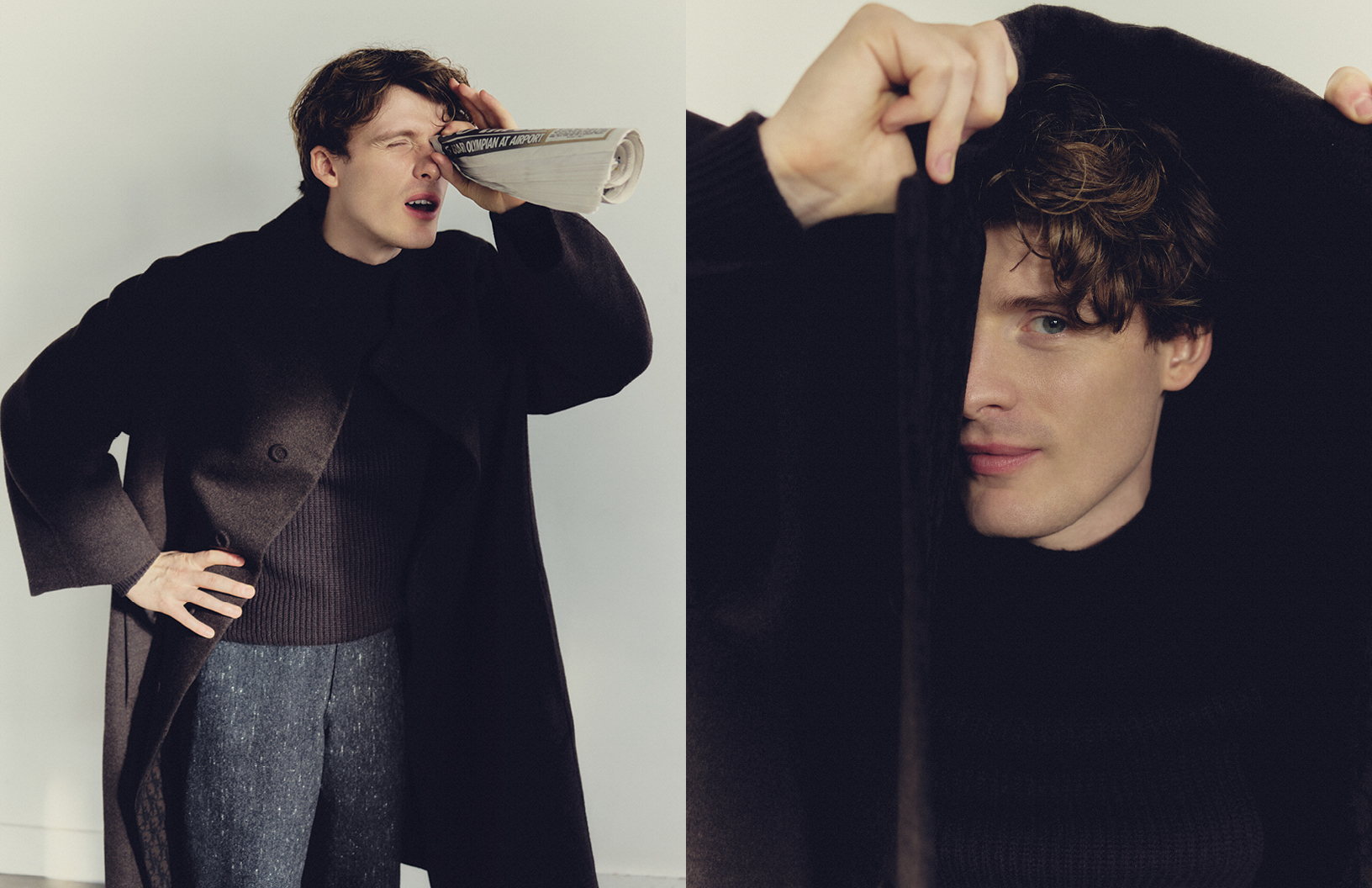
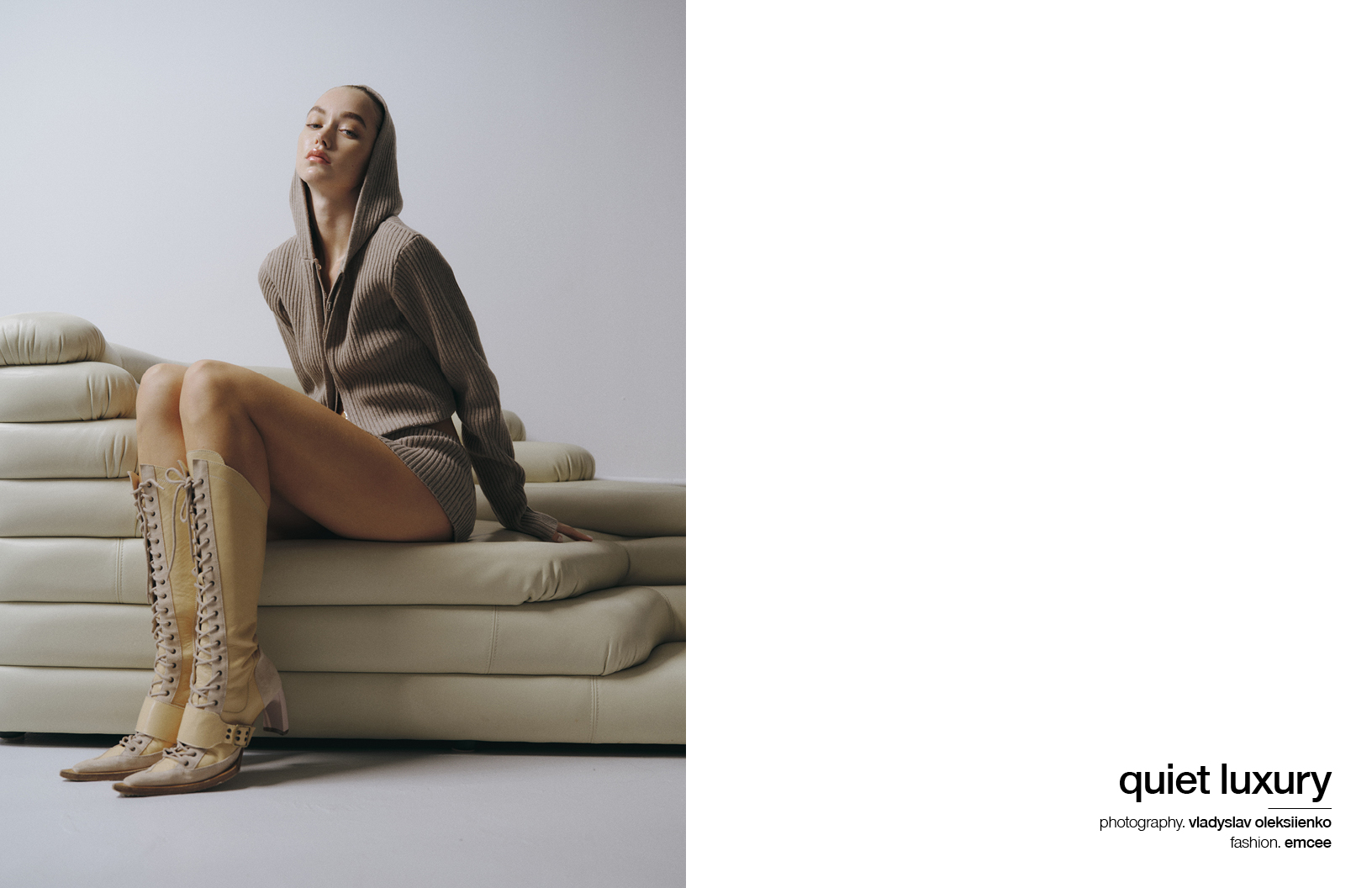
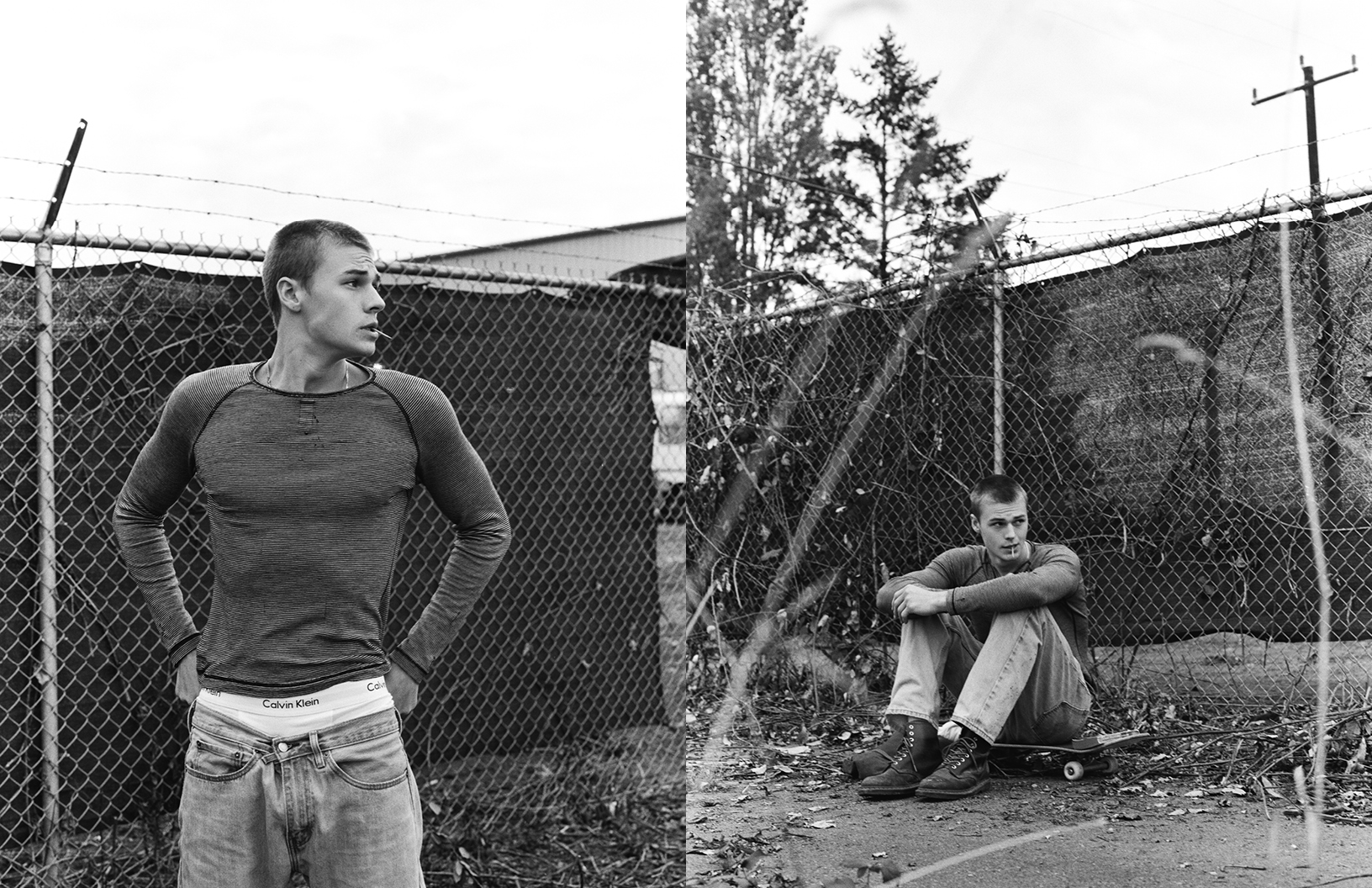
full look. Dior Men
opposite
full look. Dior Men
Not to ruin the movie magic, but I read that you shot the movie in Ireland?
We did, yeah, and it was also my first time in Dublin, which was great, but it was very surreal being transformed straight from Ireland into New York City.
With your theatre experience, and knowing Linklater values rehearsal, did that play a role in ‘Blue Moon’?
The rehearsal process was extremely lengthy, yes. It started off partly social and partly about fleshing out the process. We would sit in a circle and just talk about life. Nothing to do with the film. Ethan and Rick would riff about rock music, baseball, and I’d chime in where I could, but most of the time I was just in awe, having just arrived on set.
Then, we fleshed out the piece extensively and blocked it as you would a play or a musical. By the time shooting began, you knew exactly what you were doing physically, but there was still room to play in each take.
I imagine that helped take some of the pressure off being “the new kid” on set.
100 per cent. By the time we got to set, everybody was comfortable, which was lovely. I imagine on some Hollywood sets, you’re thrown straight into the thick of it, barely having said hi to the lead before you’re doing a scene or having to build an emotional connection. It was really nice to get to know these people as humans before they transformed into their characters, particularly Ethan.
His transformation is incredible, he’s almost unrecognisable…
Oh, it was major. The moment he came out with his shaved head, the contacts and the suit, I could see it instantly. You just knew the character he was going to portray.
There’s also a significant height difference between Hart and Ethan Hawke. Is it true that they digitally shortened him on screen?
Every scene I did with him was with him sitting at the bar in Sardi’s, so I can neither confirm nor deny that, but him sitting down actually helped. There were talks about camera tricks, dropping the
floor, and creating runways for certain characters. That way, it would seem like he was 5’4”, especially next to someone like Margaret Qualley, who is a 5’10” movie star.
Let me get back to the rehearsal process for a moment, though. How did you personally prepare for your role in the film?
For me, the most important thing was to understand where my relationship with Hart starts and where it ends. You can only get that from the script. I’d think about what the other character is saying about me, what I’m saying about them, and how that all connects.
Even the stage directions help: what the bar looks like, what Hart might be wearing, the smells in the air, and whether there’s smoke. All of that paints a picture in your head. At the same time, I’m someone who believes that too much preparation can sometimes spoil the end result.
And of course, too much prep can take away the fun of playing off someone, right?
Yes, especially with someone like Ethan. He would change up every single take, which meant that I would then have to react in a different way. It kept me on my toes, which I enjoyed.
Was there anything from the whole experience that you’ll carry into future projects?
One piece of advice Richard gave me, and it’s such a simple one, is just: don’t act. “You’re not acting. None of us are actors. We’re living their real lives. You’re a flower delivery guy – you’ve never even acted.” I think that’s the key to a performance that feels realistic.
He also said not to sweat the small stuff. We’re all in this together; it is collaborative. It’s easy to get in your head: “Am I going to deliver my lines? Am I going to do as well as I did in the audition?” But it’s not about you. Everyone’s doing their part, and it’s a collaborative effort. It’s not a solo project.
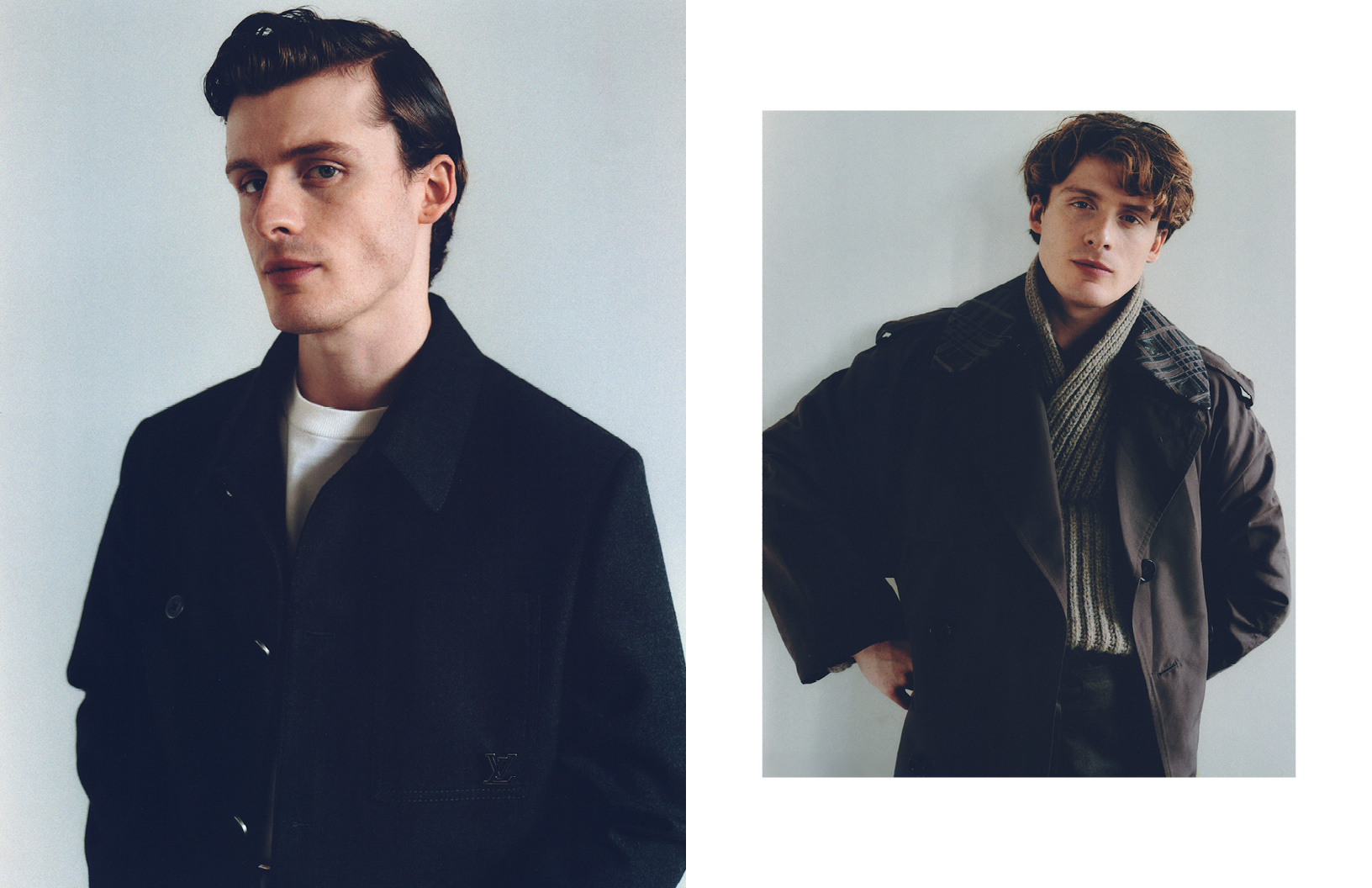
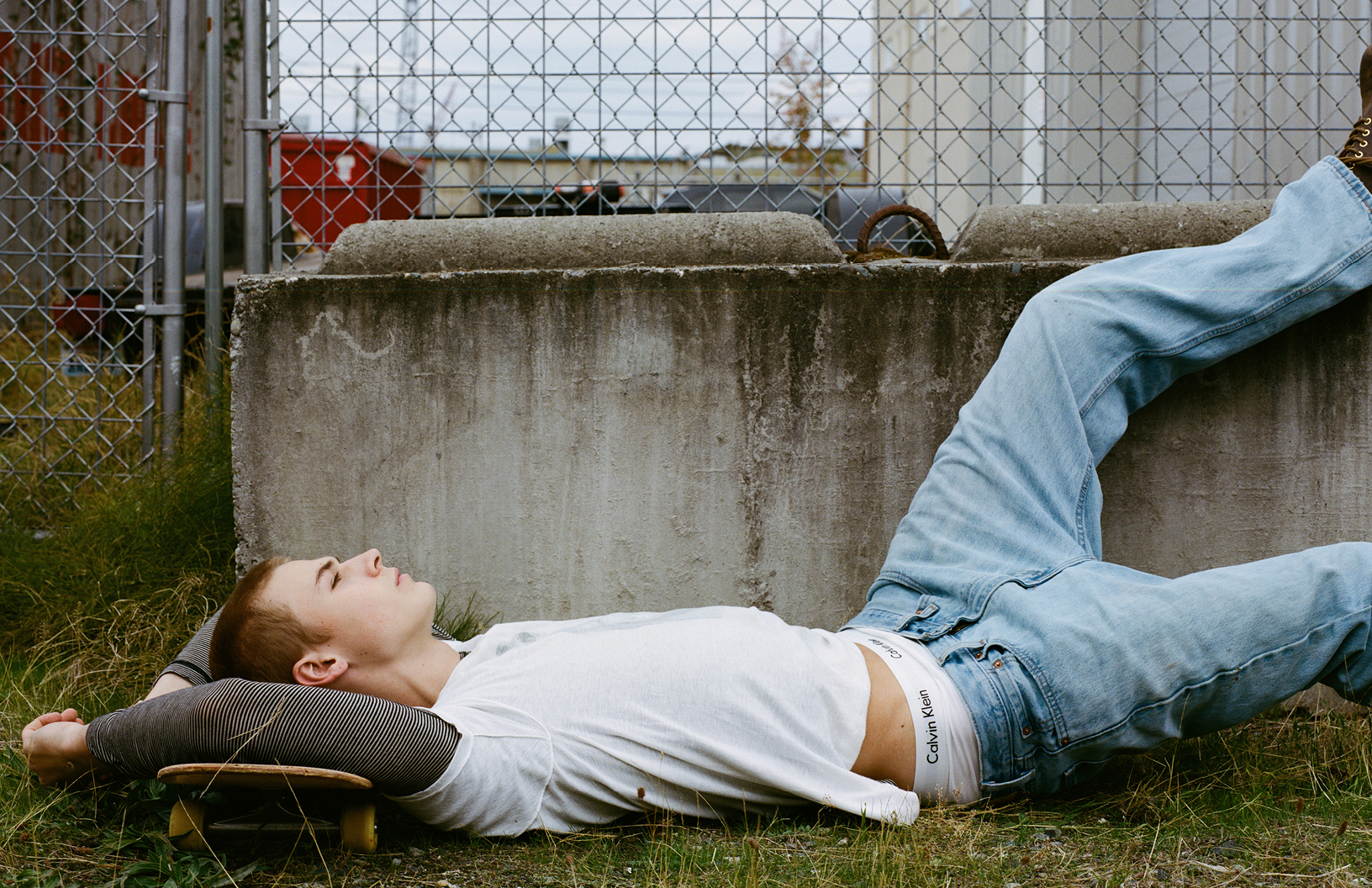
full look. Louis Vuitton
opposite
full look. Burberry
Speaking of auditions, what was that process like for you?
It was really quick, just one tape, so when I got the call, it was a surprise. They didn’t go through multiple rounds. I think the day after I was cast, Deadline ran a big article that they had cast Margaret Qualley and Andrew Scott, and that’s when I knew what the scale of the project would be.
Are you glad you didn’t know too much going in?
Yeah, even though I obviously knew Linklater was the director.
You knew Linklater was the director, but how familiar were you with Lorenz Hart and his story before you signed onto the project?
Rodgers and Hart, as a songwriting duo, I’d known about since before college, but I was properly introduced to them during my first year, when we were studying ‘legit’ musical theatre. That golden era of the 1940s and ’50s that they essentially initiated. In fact, my jazz standard was from ‘Pal Joey’, a Rodgers and Hart musical. I performed ‘You Mustn’t Kick It Around’.
So I’d say I was pretty familiar with their work, but in terms of Lorenz as a character and his personal life, I didn’t have a clue.
I think that’s true for many people. Some might be familiar with his songs but hardly know anything about his personal life, let alone some of his struggles and – something the film also explores – his sexuality.
Yes, at the time Hart’s sexuality was relatively unheard of, and even now, I wasn’t aware of it before I worked on the movie. I didn’t know he was supposedly bisexual, which is an element that is explored in the film. My character walks into the bar, and a little flirt happens, even though it is mostly one-sided.
Hart isn’t the only creative genius whose legacy feels overlooked, but is there someone else you personally think deserves more attention?
That’s a really good question. I think if we’re going down the route of composers and lyricists, Stephen Sondheim absolutely has to have his story told. He didn’t pass away all that long ago, so it might still feel a bit fresh, but there must be some incredible stories there. And in Blue Moon, we’ve got little Stevie, who must be about seven, this amazing young actor, and it just makes you think about the legacy Sondheim’s left behind. There’s got to be so much material, so many incredible stories waiting to be explored.
Speaking of things worth exploring, what kind of project would you be keen to dig your teeth into next?
I’d love to do a TV series, like something where the narrative develops over six parts. Even just to be on location for six months would be incredible. And my dream would be to be in a Yorgos Lanthimos film. I saw ‘Bugonia’ last week, but I’ve been a fan of his for ages. Anything visually driven really inspires me. I’m an artist on the side – painting and drawing – and the visual elements of his films really scratch that creative itch in my brain.
Let me ask one final musical-related question to wrap things up: is there a show you’d love to be part of, on stage or in a film version?
If I had to choose something from Rodgers and Hart, I’d go back to ‘Pal Joey’, because that holds a special place in my musical theatre heart. Aside from that, I’d say ‘Guys and Dolls’. I’m not sure which character I’d play, but I love that musical so much. I think it deserves a brand-new film adaptation, and something where I could have a little dance, a little jig, and a little sing-song.
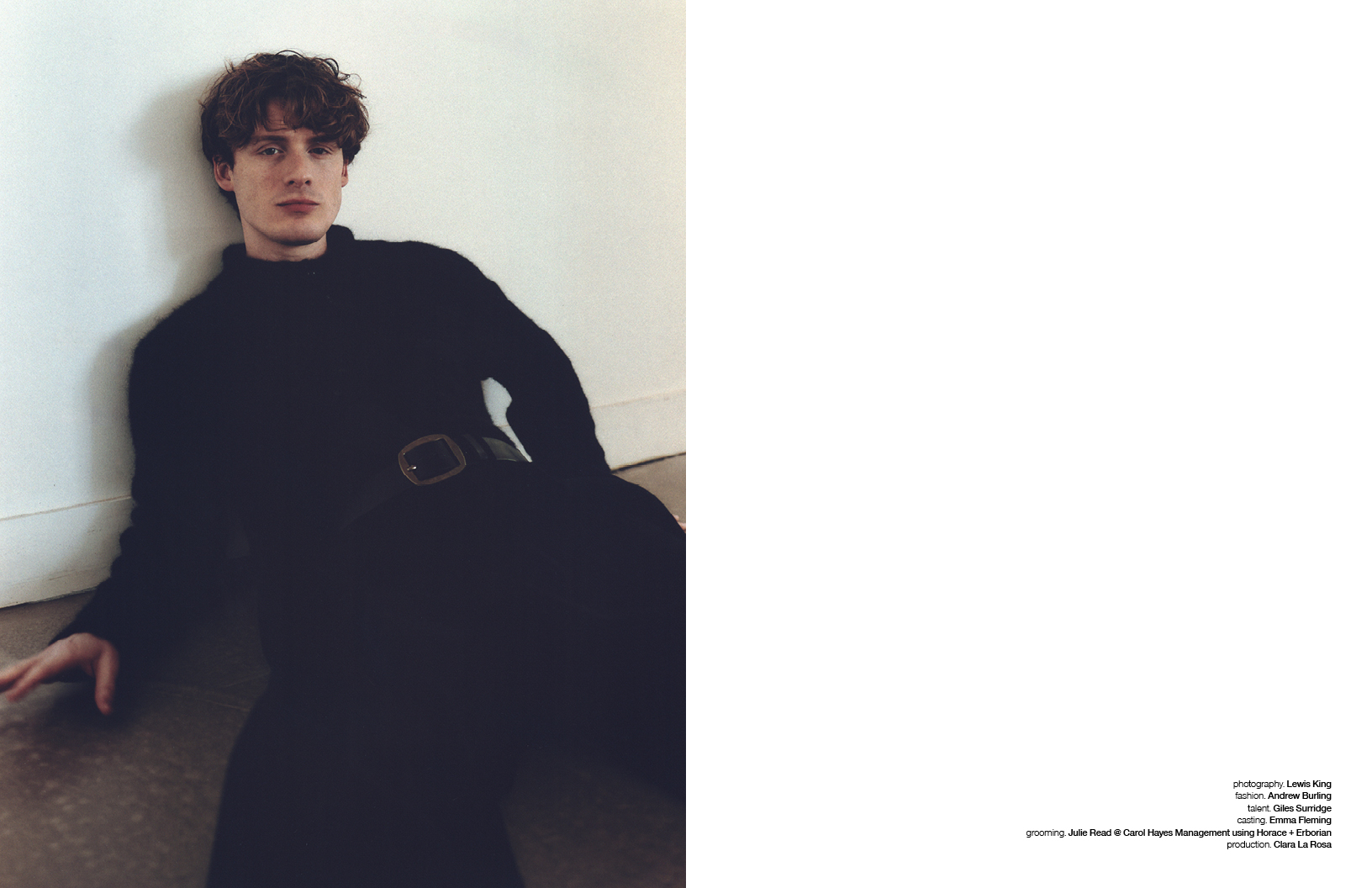
full look. Dolce & Gabbana
photography. Lewis King
fashion. Andrew Burling
talent. Giles Surridge
casting. Emma Fleming
grooming. Julie Read @ Carol Hayes Management using Horace + Erborian
production. Clara La Rosa
interview. Jule Scott