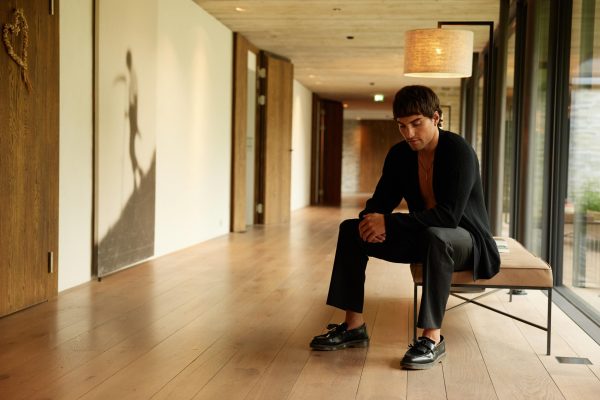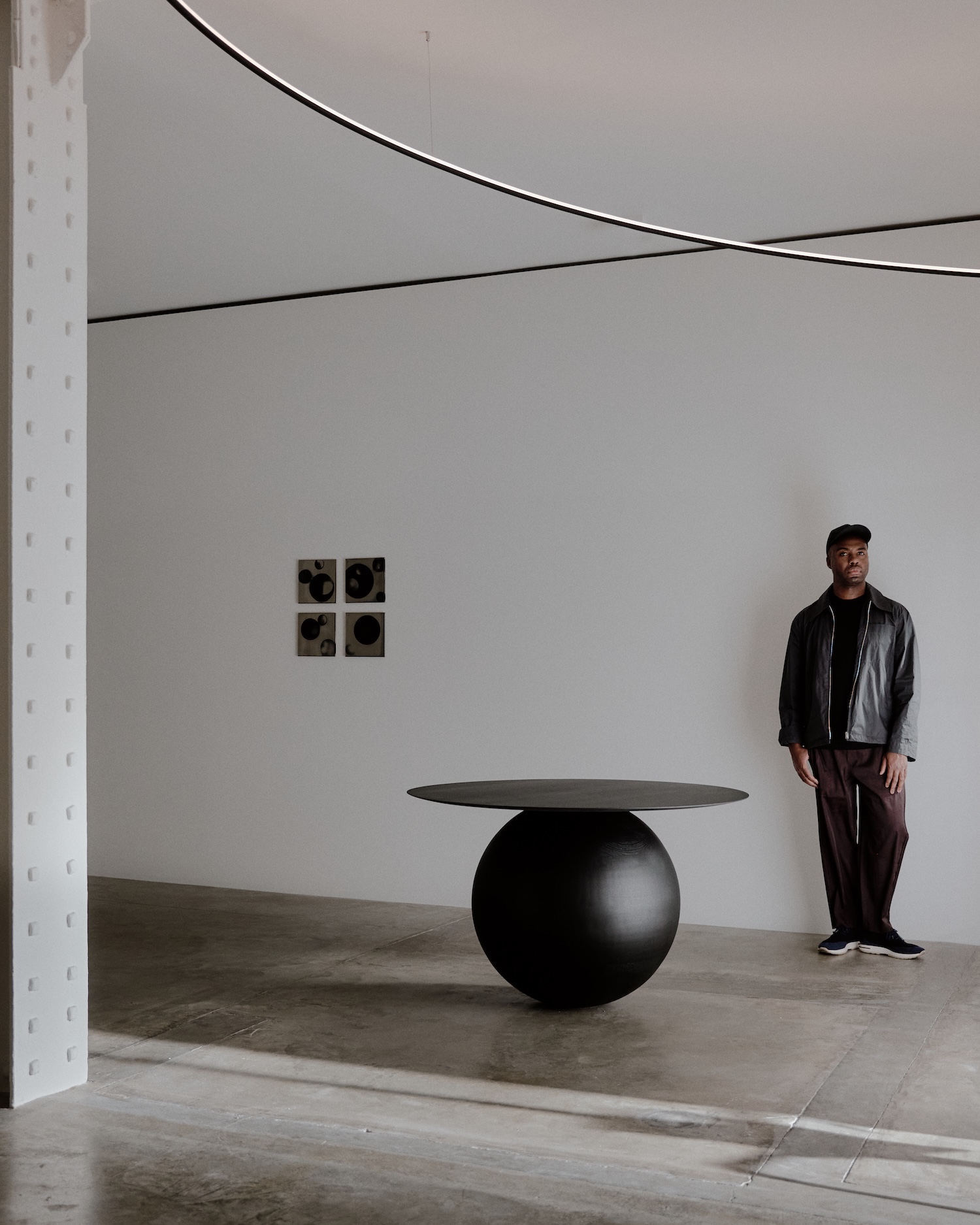



James Watson.
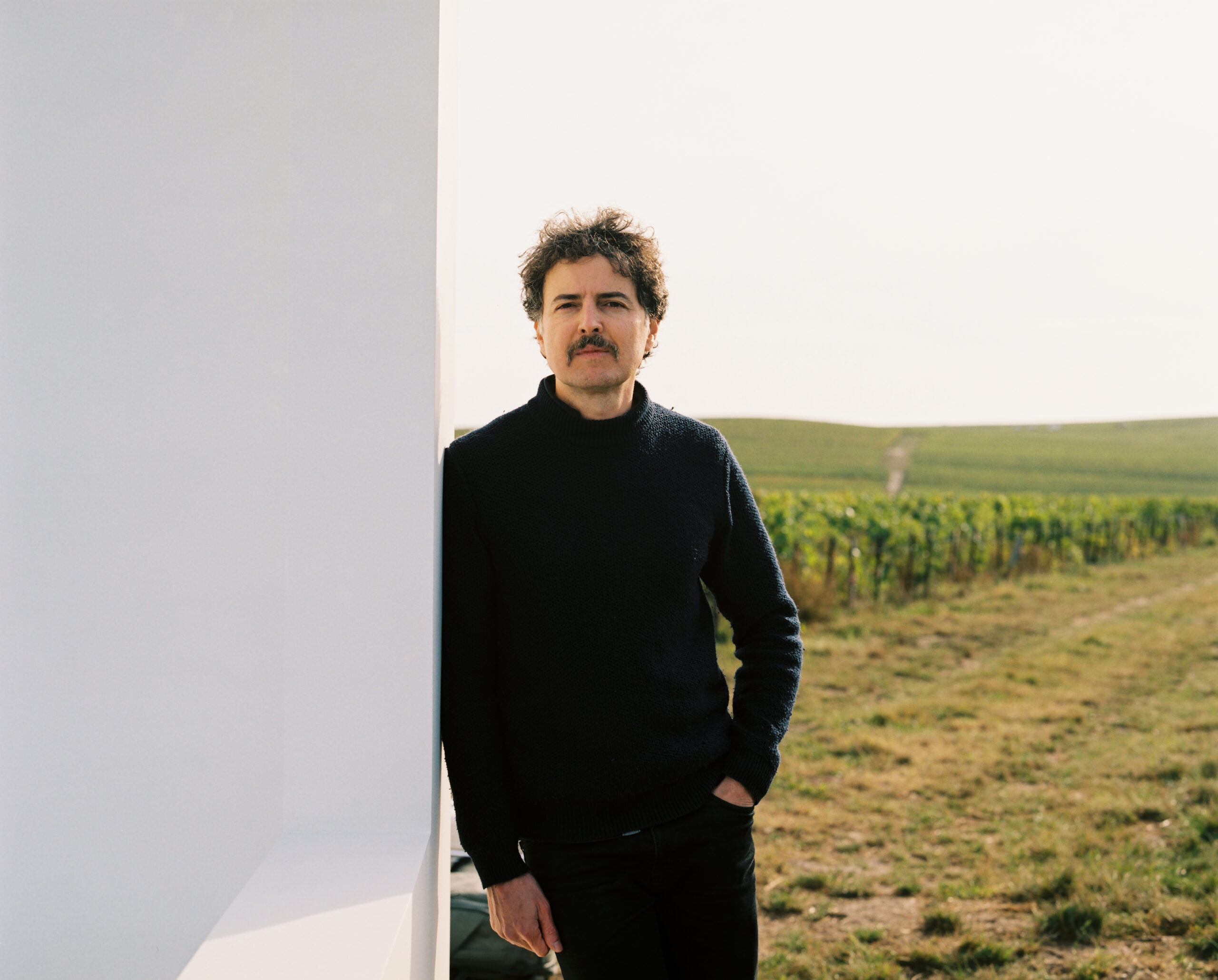
Managing Director of 1838 Wallcoverings
Although a lick of paint helps bring personality to a space, there is something special about hand-selecting a roll of wallpaper that speaks to the personality and style of both the inhabitant and the home itself. The design of a space is more than just the furniture that’s in it; the right wallpaper can make a space more luxurious, cozy, or atmospheric, turning a bare and plain room into something with depth. This is something that 1838 Wallcoverings understands wholeheartedly.
A true family business, the company boasts over four generations of wallpaper printing. The name itself is a direct nod to the year the first surface print machine was created, only a short distance away from the company’s factory in Lancashire, England. “There is a passion for what we do that is deep-rooted,” explains Managing Director James Watson. “It has never been a Monday-to-Friday day job; it’s something I have grown up amongst, with the family talking wallpaper over Sunday lunch.”
Opulence is the word one thinks of when gazing at 1838 Wallcoverings. Using a print machine – a rarity in the wallpaper business now – that is over a century old, the brand crafts wallpapers using the finest materials and prints on responsibly sourced, non-woven substrates which make them easy to hang. What makes 1838 Wallcoverings unique, though, is its commitment to design innovation.
Where some might just reuse traditional, monotonous patterns, 1838 fuses a long heritage with both timeless and modern designs, combing through archives and collaborating with other unique tastemakers. In particular, it has a longstanding collaboration with London’s Victoria and Albert Museum (V&A), featuring designs directly inspired by their immense archives and history.
Schön! alive speaks to Watson about 1838, his family’s history as wallpaper crafters, upcoming work with the V&A and more.
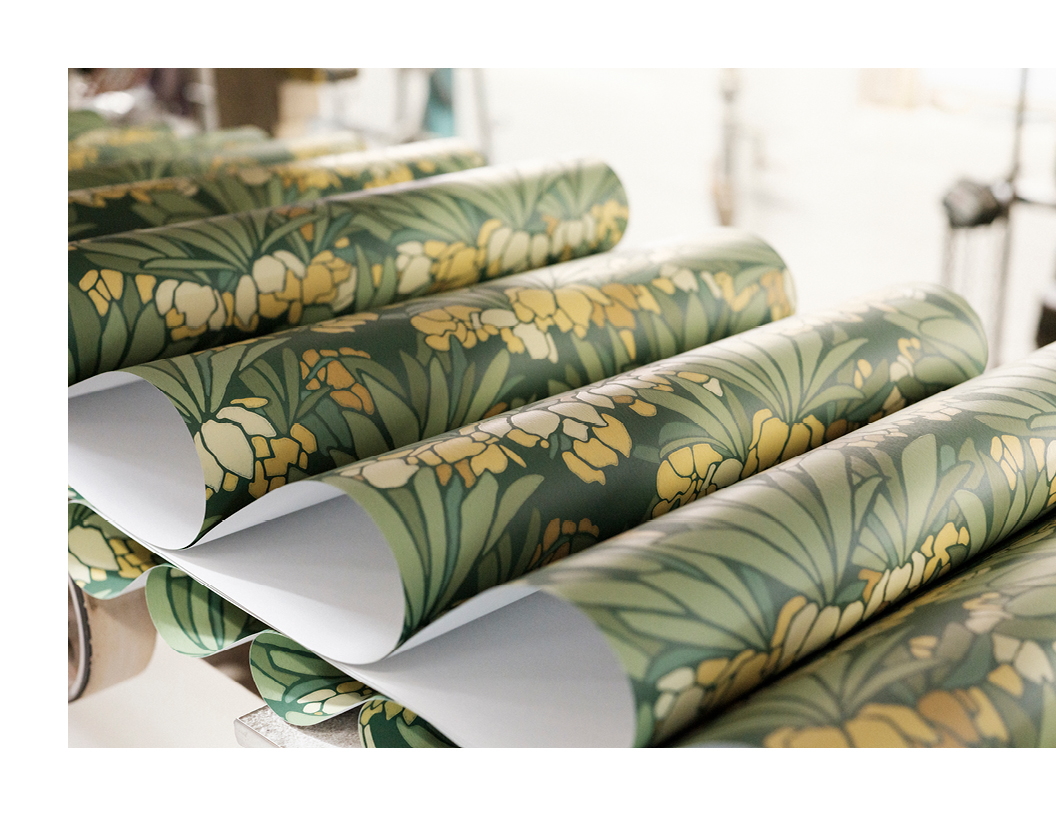
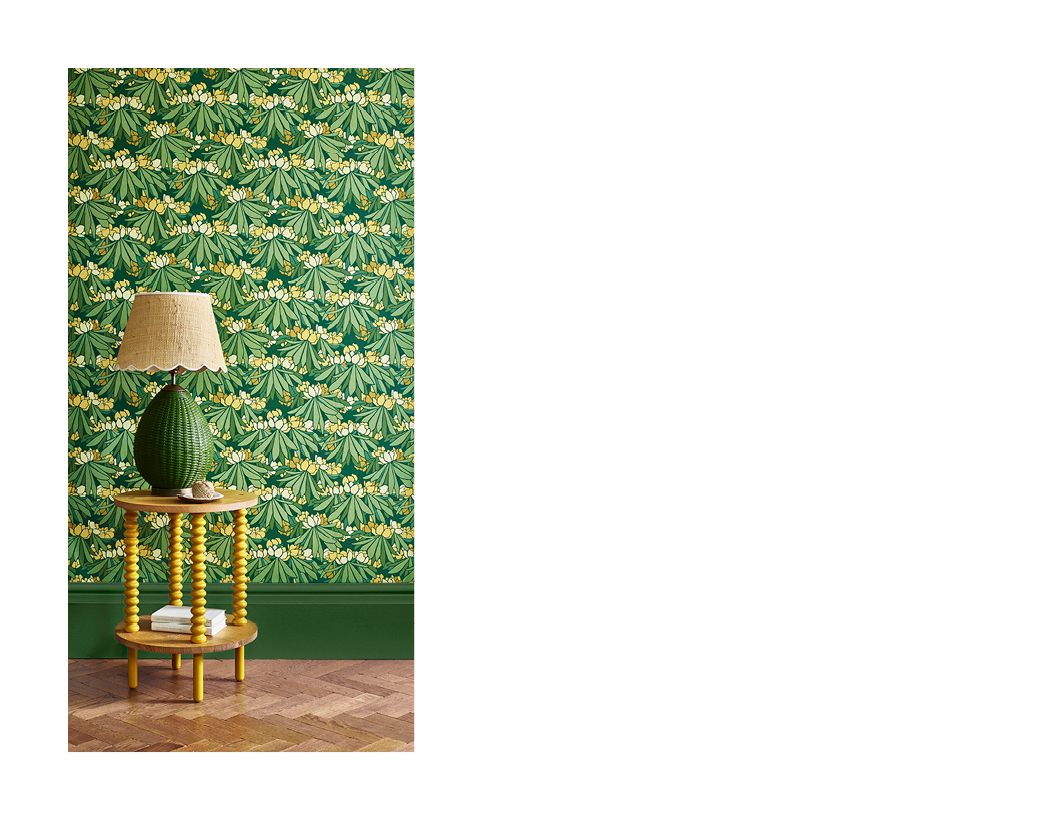
V&A Rhododendron Wallpaper.
Rhododendron Archive inspiration:
Woodblock printed wallpaper sample
England, about 1920–30
1838wallcoverings.com
The name 1838 Wallcoverings pays homage to the year the first wallpaper machine was pioneered. How does this historical connection influence your brand identity and product designs?
1838 was the year that the first mechanical roll of wallpaper was produced on a surface print machine, just a few miles away from our factory, and the first time that the beautiful hand-painted technique of printing was pioneered, an effect that combines layers of ink with pattern and a wonderfully tactile finish.
Today, the majority of our designs continue to be produced using this historic printing technique; the machines that we print on are over 100 years old and the process is very much as it would have been at that initial stage of wallpaper manufacturing. This area is rich in wallpaper history and, being a family business with four generations of wallpaper printing in our heritage, we felt we should pay homage to this by marking the year within our brand identity.
How do family values and traditions shape the company’s culture and operations?
We pride ourselves on the fact that we are a family business, and this extends to the 65 members of staff who work with us. My sister [Abigail Watson] and I are the fourth generation of Watsons to be in wallpaper, and although our father has retired from the business, he still comes into the factory. There is a passion for what we do that is deep-rooted. It has never been a Monday-to-Friday day job; it’s something I have grown up amongst, with the family talking wallpaper over Sunday lunch. I have many memories of coming to the factory as a child. The day the machines were installed is still such a clear memory, seeing these huge machines being unloaded and feeling in awe of their sheer scale.
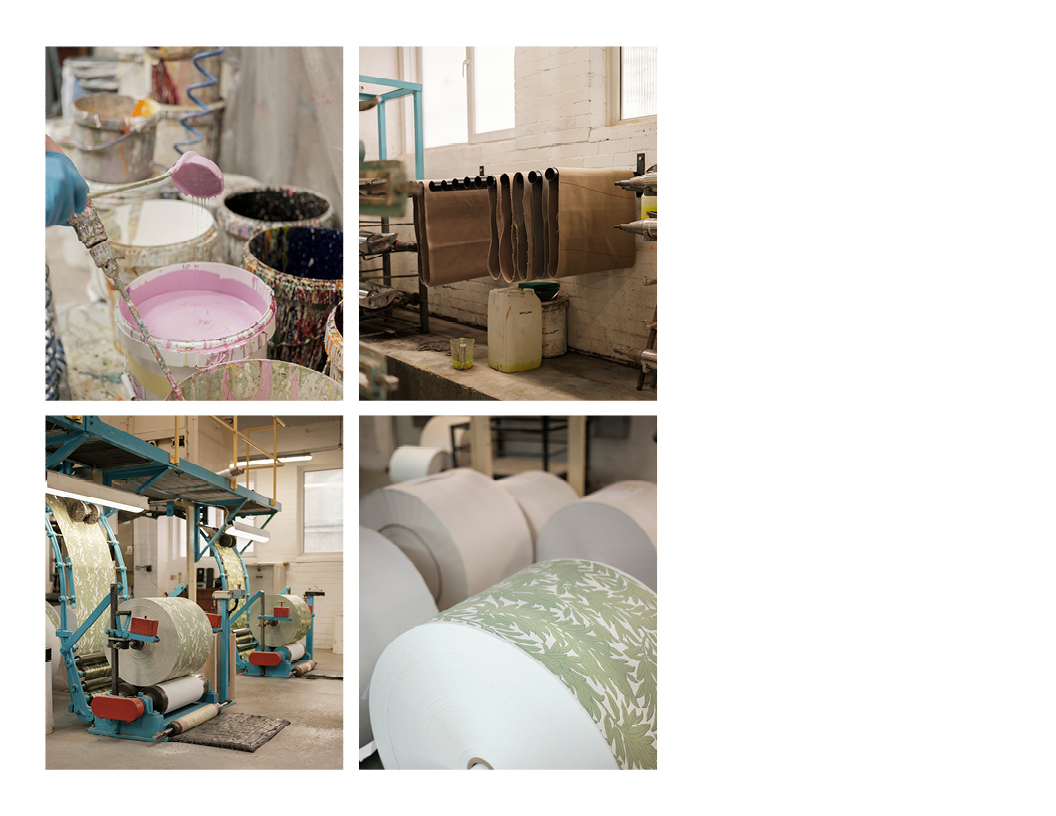
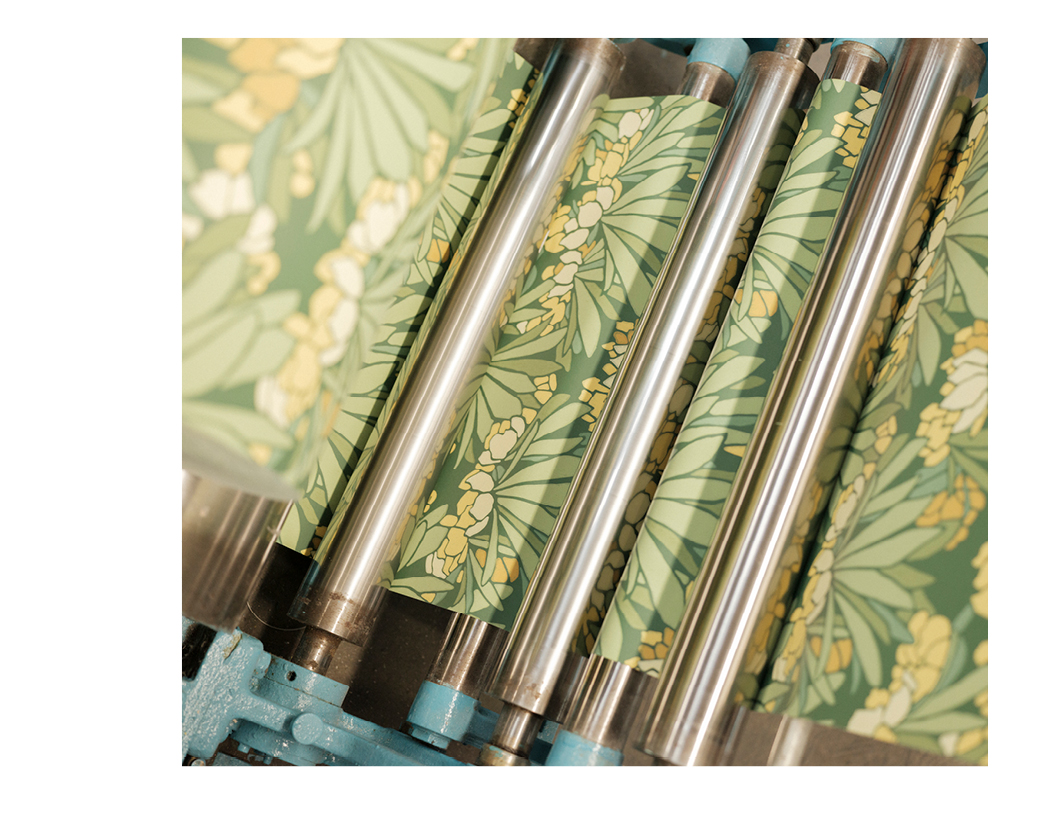
At 1838 Wallcoverings’ factory in Lancashire,
the traditional surface printing process results in a hand-painted effect.
Can you elaborate on the significance of your century-old machines and how they contribute to the unique quality of your wallpapers?
There are only a few of these machines left in the world. They are collector’s items, and we are very fortunate to have four operational machines here in our factory, plus a fifth, which stands proudly outside displayed as a sculpture. They create a unique print mark which is impossible to replicate through more modern methods, layering large amounts of ink on the paper, which delivers a hand-painted effect, evoked not only through colour and pattern but also through the texture. You can run your hand over the design and really feel the depth of the ink. It is like having a piece of art on your wall.
How do you strike a balance between maintaining traditional craftsmanship and embracing modern digital printing techniques?
We are in a wonderful situation where we can offer both traditional, as well as digital, printing and, although the majority of our work still tends to be surface printing, both techniques are key when it comes to wallpaper production, offering very different finishes. Digital is much more tonal; there is a limitless number of colours that can be printed, and it is also the only option for larger-scale murals, whereas surface printing offers a hand-painted effect and great vibrancy and depth of colour. When it comes to deciding whether to use traditional or digital printing, we are always led by the design itself, as the whole point of our work is to bring to life the beauty and integrity of the design.
Can you discuss some of the eco-friendly practices you’ve implemented and their impact on your production process?
Sustainability and environmental responsibility are at the heart of 1838 Wallcoverings. The designs in our V&A collections are printed on a high-quality, eco-non-woven substrate, 79% of which is made up of natural, renewable fibres; 59% are cellulose [wood pulp] fibres from FSC® certified forests [C119803] and other controlled sources, and 20% are PLA [plant-derived thermoplastic] fibres from the naturally occurring sugars in sugar beet and corn. There are no oil-based polyester fibres used, and the remaining 21% is made up of a water-based latex binder. All the printing inks are water-based, non-toxic and free from VOCs [Volatile Organic Compounds].
We have also as a company just achieved the ISO14001 accreditation, a set of standards which aims to clarify the best practices for organisations that wish to reduce their environmental footprint. It covers not only printing procedures, but your staffing, local community; making sure that we are picking the best route in terms of impacting the environment.
Your collaboration with the V&A is very prestigious. How did it come about?
The collaboration began in a very serendipitous way. I was at Decorex and visited the V&A stand, and we began talking with the team, sharing more about our own brand and it very much naturally led from that first conversation. With innovation, craft and quality as the key values at the very core of our family business. It has been an incredible privilege working with the V&A on these collections. Working with their archive, we not only want to discover designs that immediately speak to us on an aesthetic level, but that we also feel a synergy with, which resonates with our own heritage.
Many of the items we have chosen were originally manufactured in the UK, with a few of the pieces hailing from Manchester and Lancashire, which makes this collaboration feel very personal.
Can you walk us through the process of developing a new V&A wallpaper collection?
We work closely with the museum’s licensing team, selecting items from the vast archive. As you can imagine, it is such a treasure trove of inspiration, and the most difficult part of the process is editing a final selection. From watercolour illustrations, decorative furnishings, fabrics and wallpapers, to embroidered kimonos, our V&A collections draw on a multitude of artistic influences collected by the museum since its foundation in 1852.
V&A Rhododendron Wallpaper.
Rhododendron Archive inspiration:
Woodblock printed wallpaper sample
England, about 1920–30
1838wallcoverings.com
images. Courtesy of
1838 Wallcoverings
How do you go about selecting and reimagining classic patterns from the V&A archives for modern collections?
When it comes to interpreting the V&A archive pieces as wallpaper, the scale and layout have to be carefully considered, and it is a case of rescaling and editing the original layout, so that we can ensure the patterns would work as a wallpaper repeat. There is an element of this alchemy behind each of the designs. None are an exact copy; some of the changes are less dramatic, such as the ‘Macaw’ design, where we played with the scale of the original archive document to make the pattern appear even more abundant and verdant with new leaf motifs added, and gave the original parrot’s face a slightly friendlier expression!
What are some of the latest trends and innovations in wallpaper design that 1838 Wallcoverings is excited to explore?
1838 has its own handwriting and identity that isn’t led by trends. Instead, our focus is to bring the artistry and craft of traditional printing to life. We are excited to be producing a new collection with the V&A, which launches this month. V&AIII will reimagine a plethora of historic patterns and details as wallpaper designs to suit both period and contemporary interiors alike.
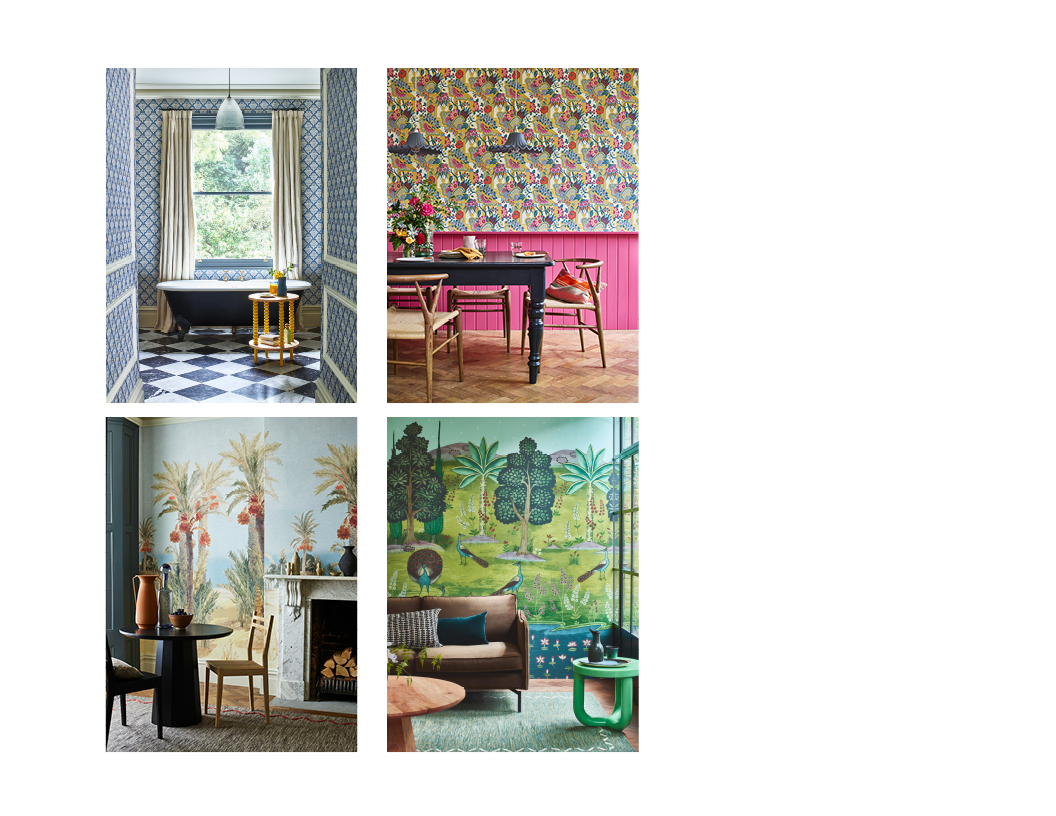
V&A Calico Shell Wallpaper.
V&A Pineapple Garden Wallpaper.
V&A Date Palm Wall Mural.
V&A Garland of Ragini Wall Mural.
1838wallcoverings.com
images. Courtesy of
1838 Wallcoverings
Get your print copy of Schön! alive at Amazon.
Download your eBook.
words. Kelsey Barnes
photography. Thomas Duffield