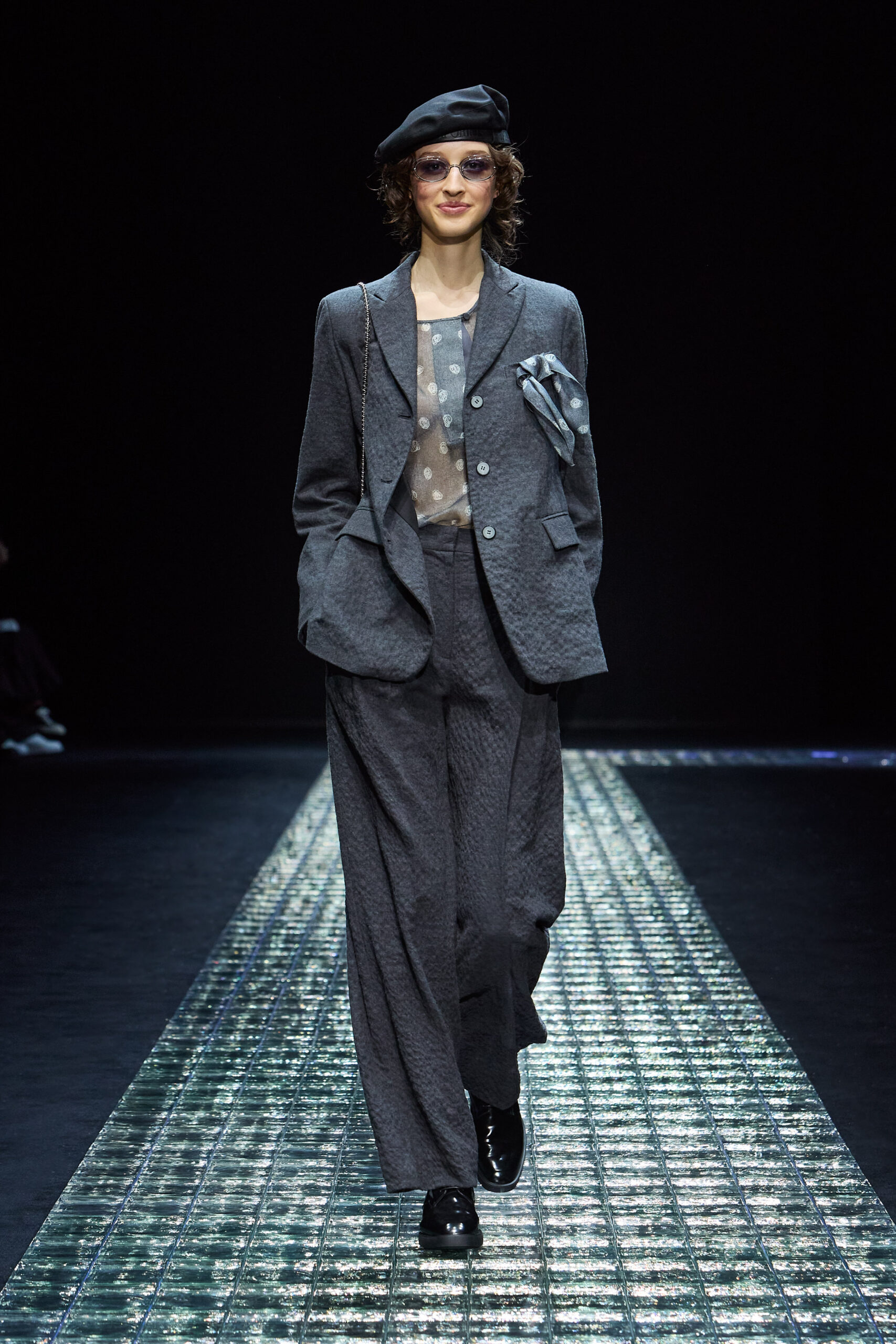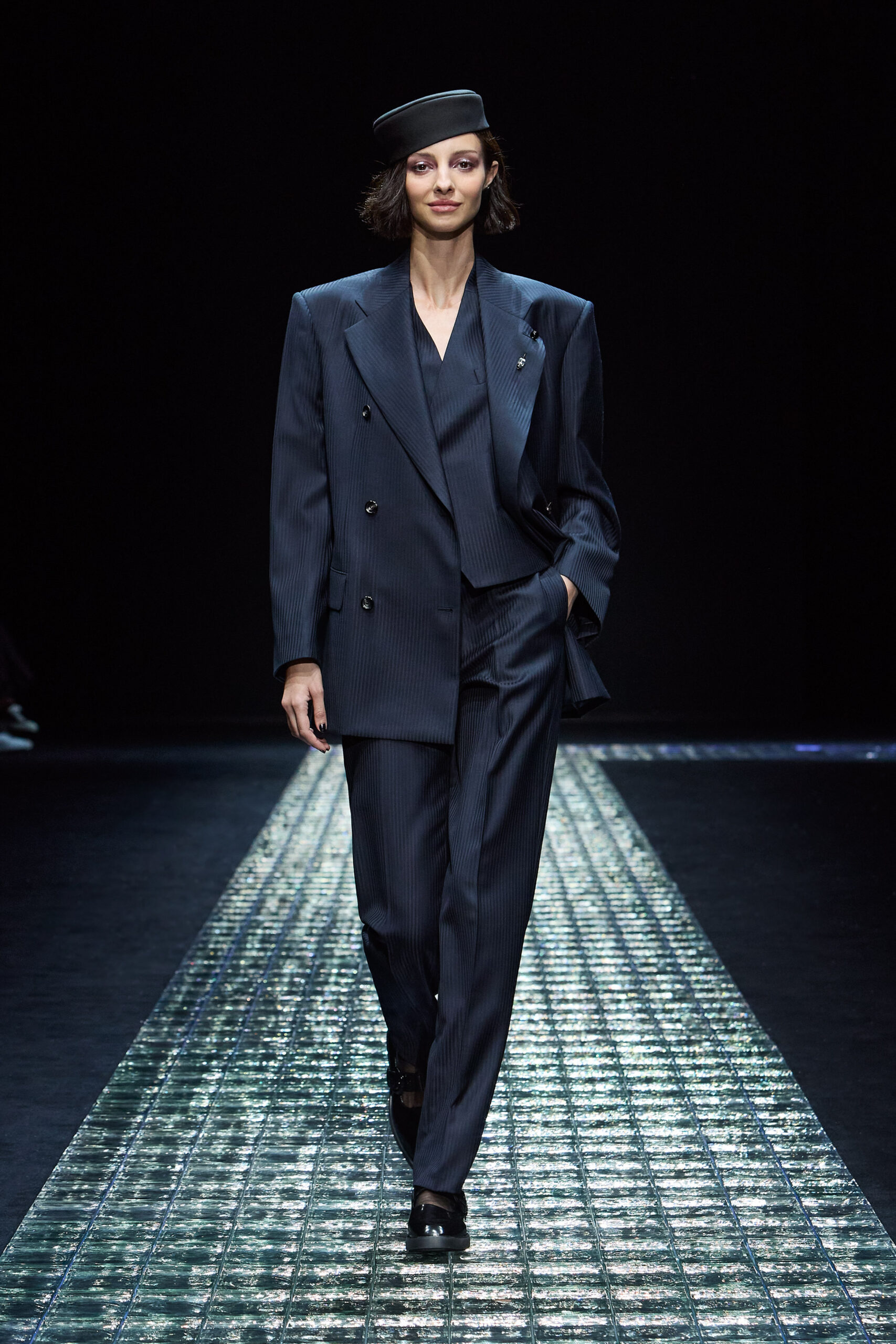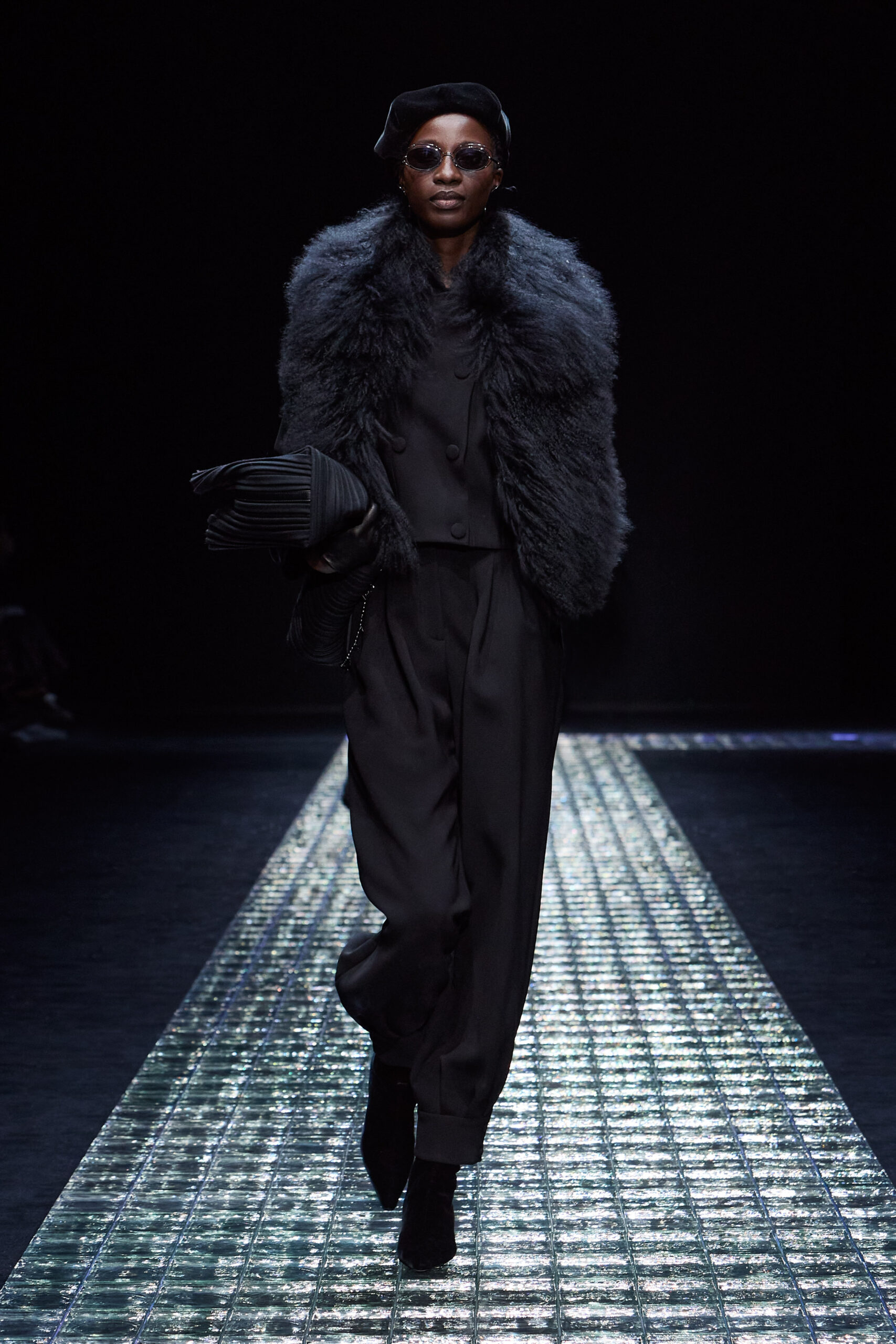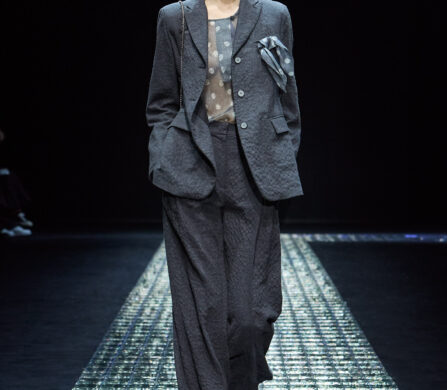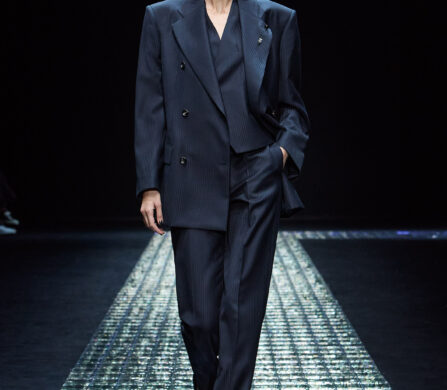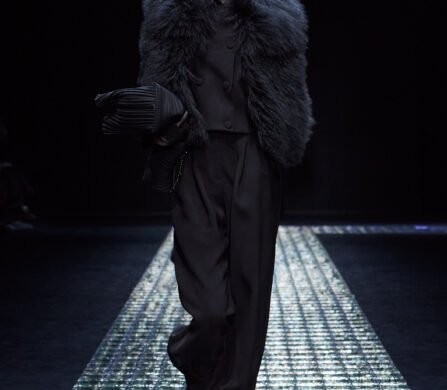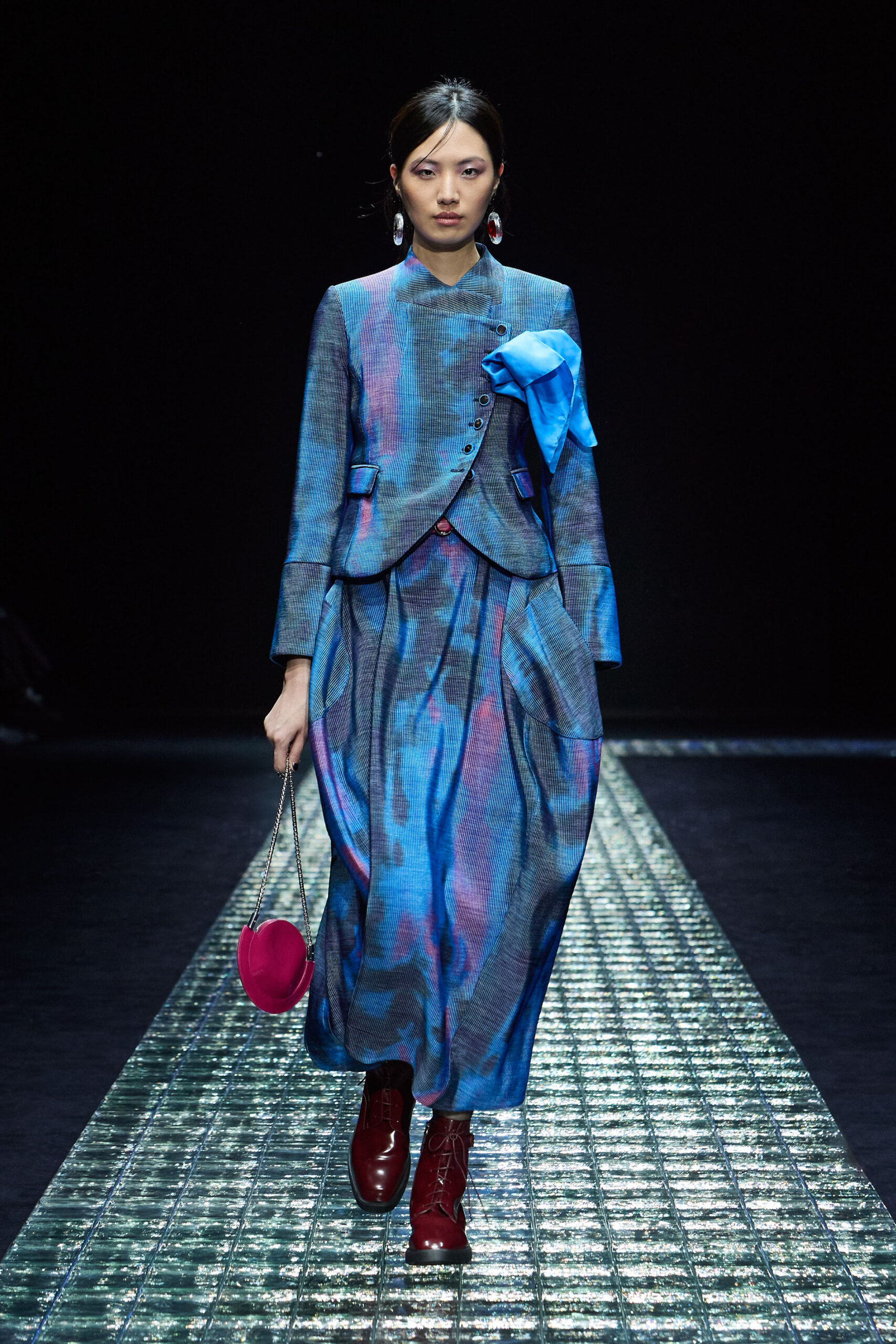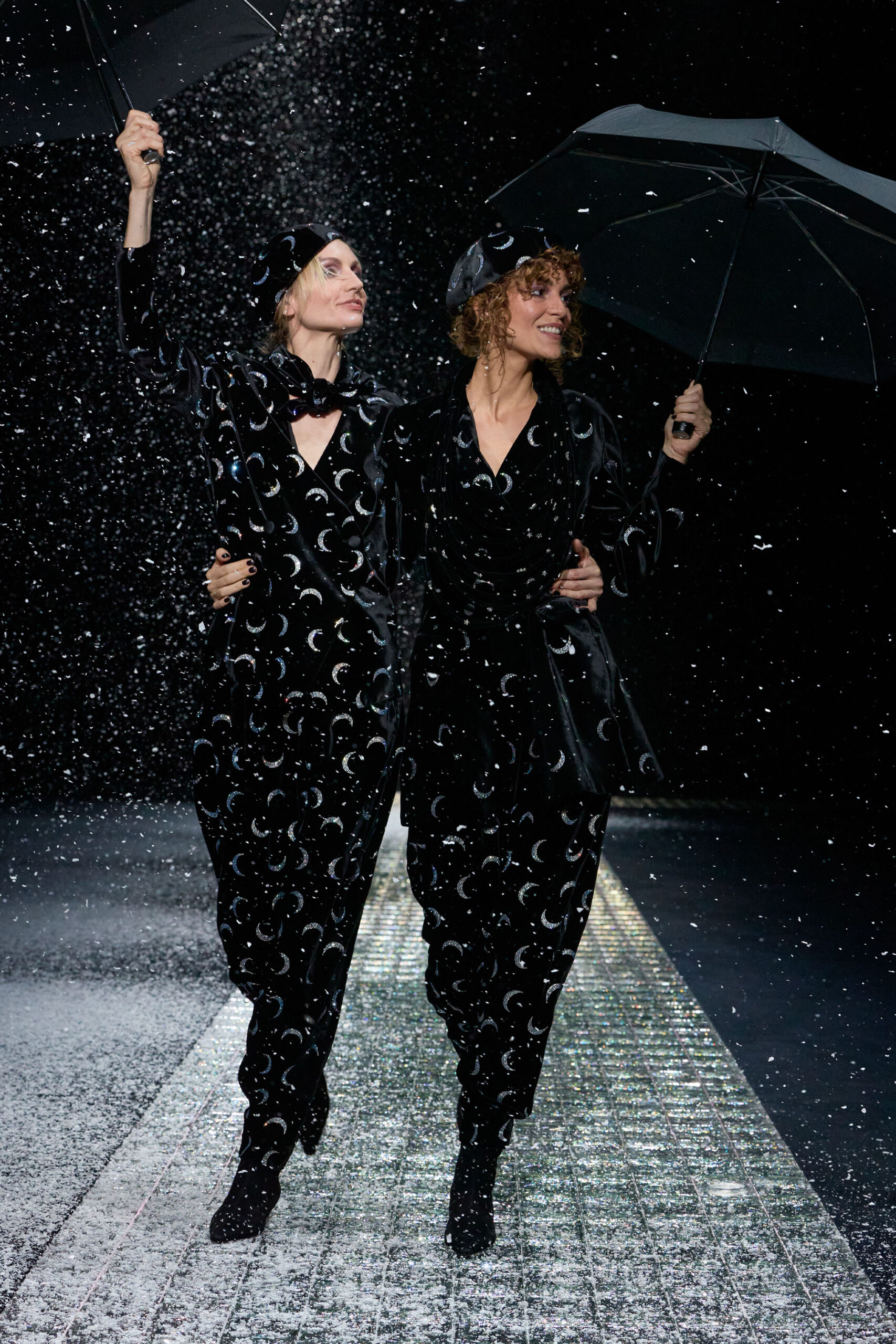
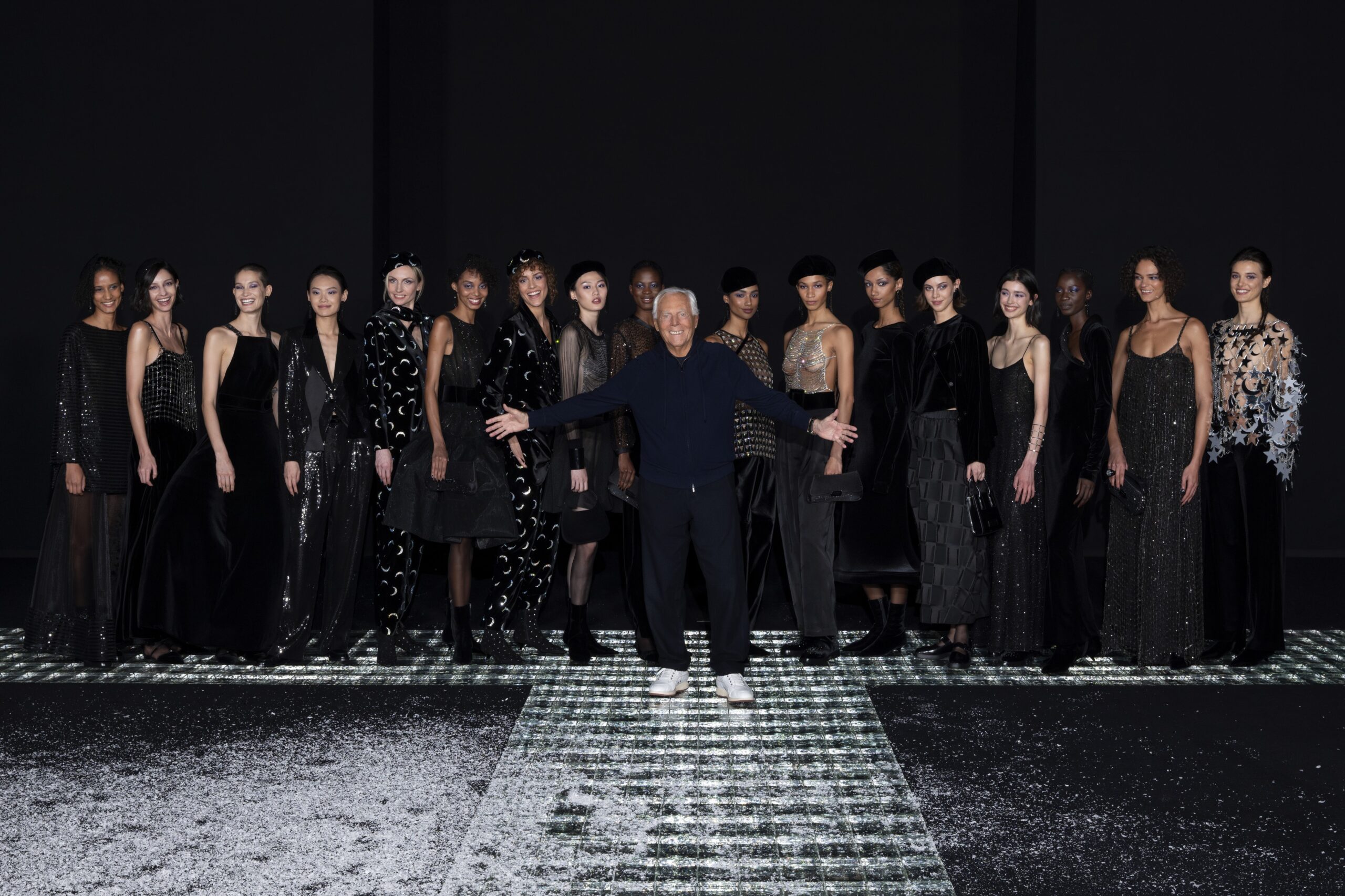
Emporio Armani’s Fall/Winter 2024 collection was a riveting representation of the beauty and complexity of nature. Creative director Giorgio Armani dubbed the collection, titled Night Glow, a “tribute to the night sky,” revealing a deep colour palette offset with dazzling metallics, embroidered stars and moons, and rhinestones. Embracing these elements, the Armani girl became an everlasting symbol of freedom this season.
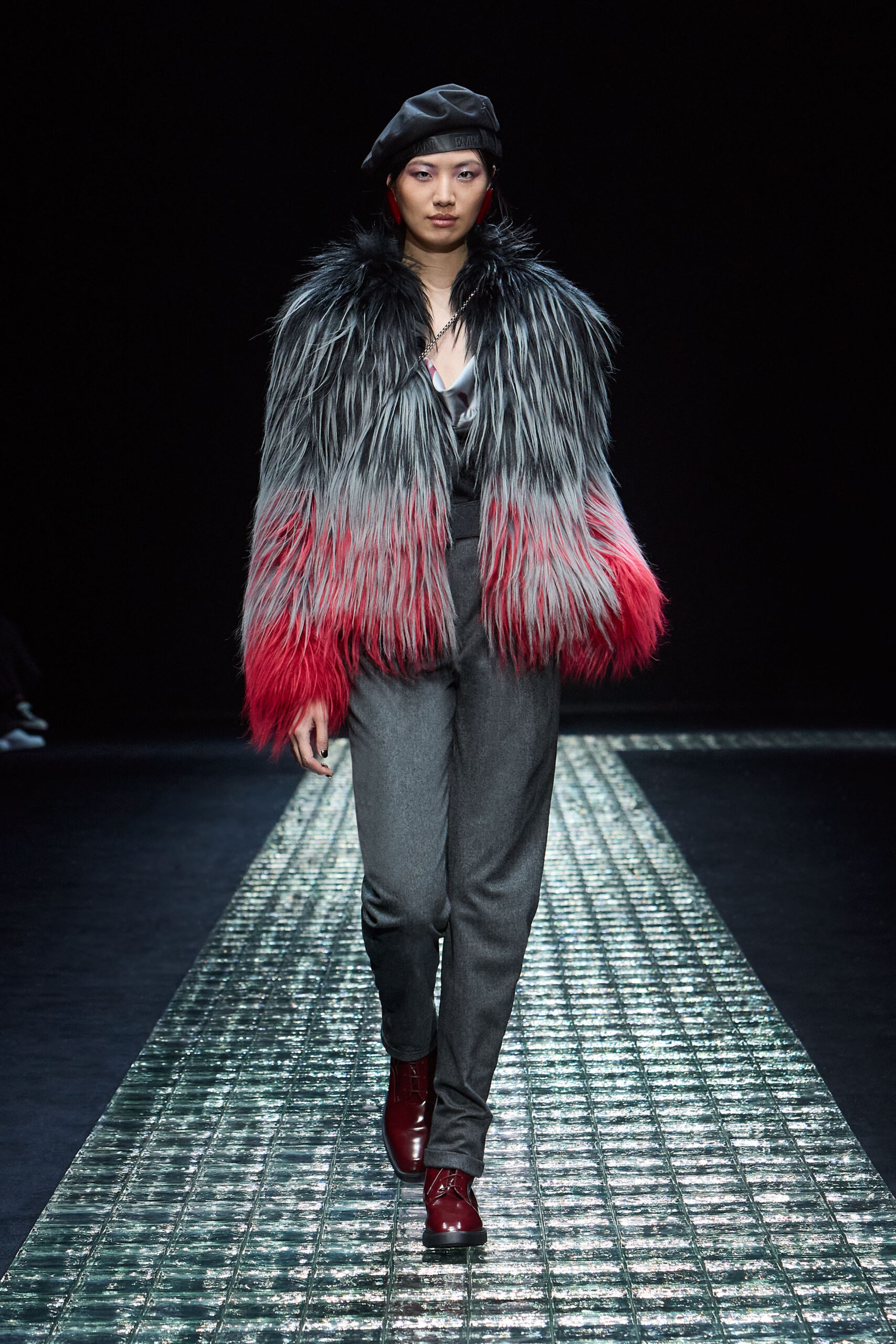
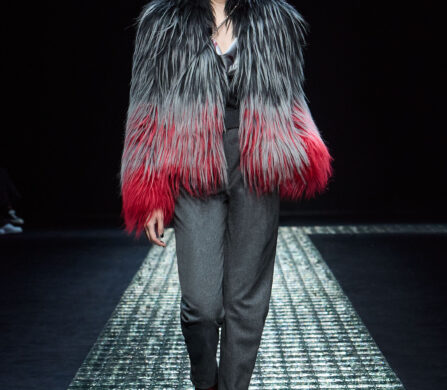
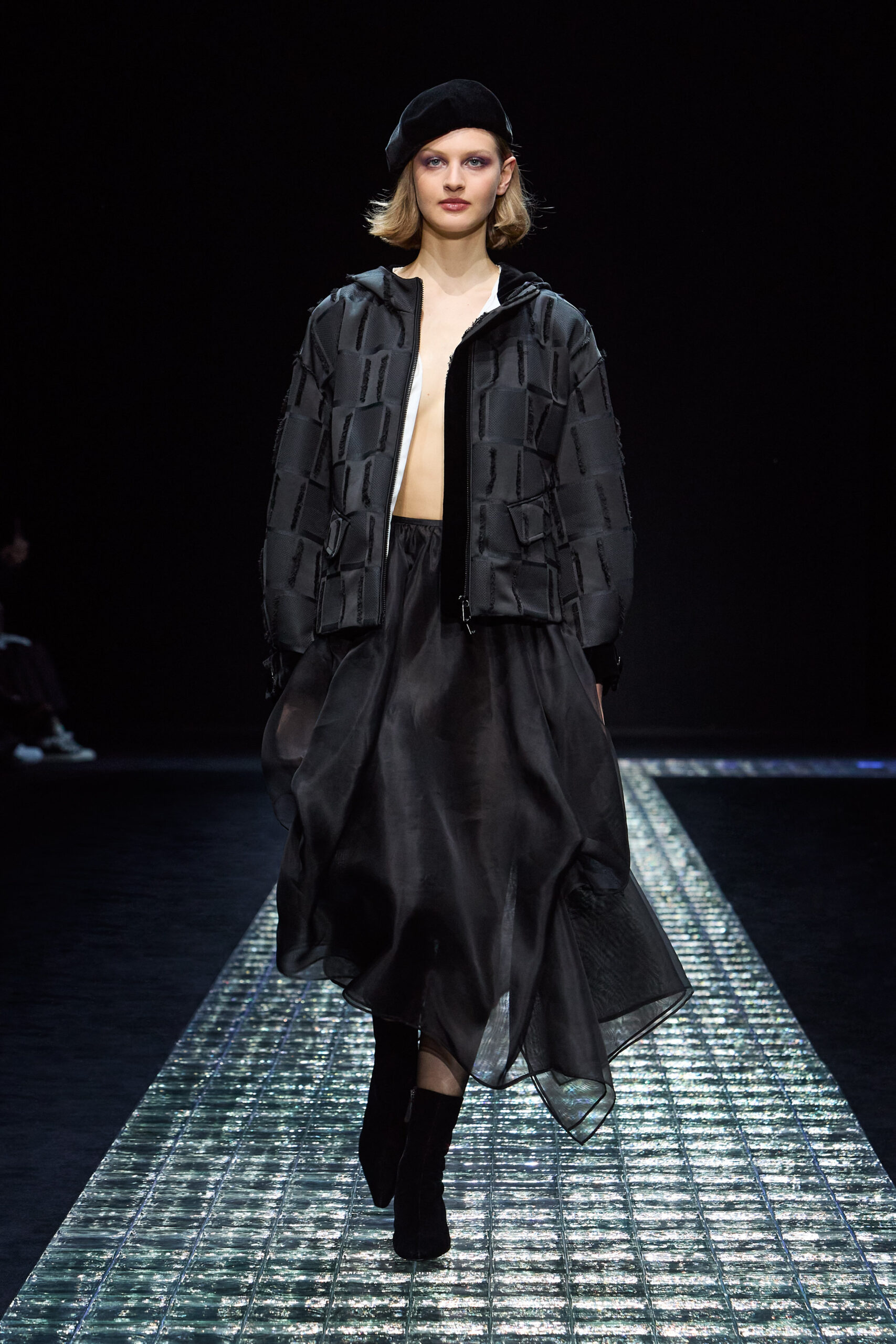
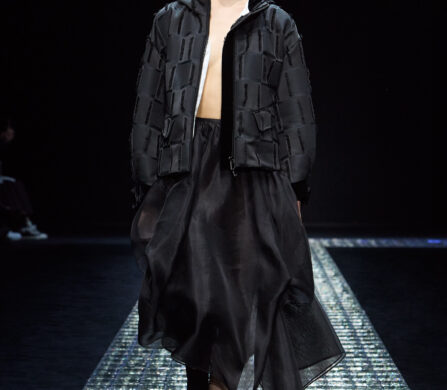
The first look, a faux fur jacket that faded from black to grey to red – resembling the tail end of a vibrant sunset – tapered grey trousers, burgundy patent boots, and black beret, set the scene for the show. Models strolled around the runway with bright smiles, which was strange to see in a fashion setting – especially on a catwalk in Milan. Deep grey wool suits were spruced up with sheer grey polka-dot blouses, navy three-piece pinstripe suits screamed quiet luxury, and flouncy black skirts complemented boxy zip-ups with open white button-ups peeking out.
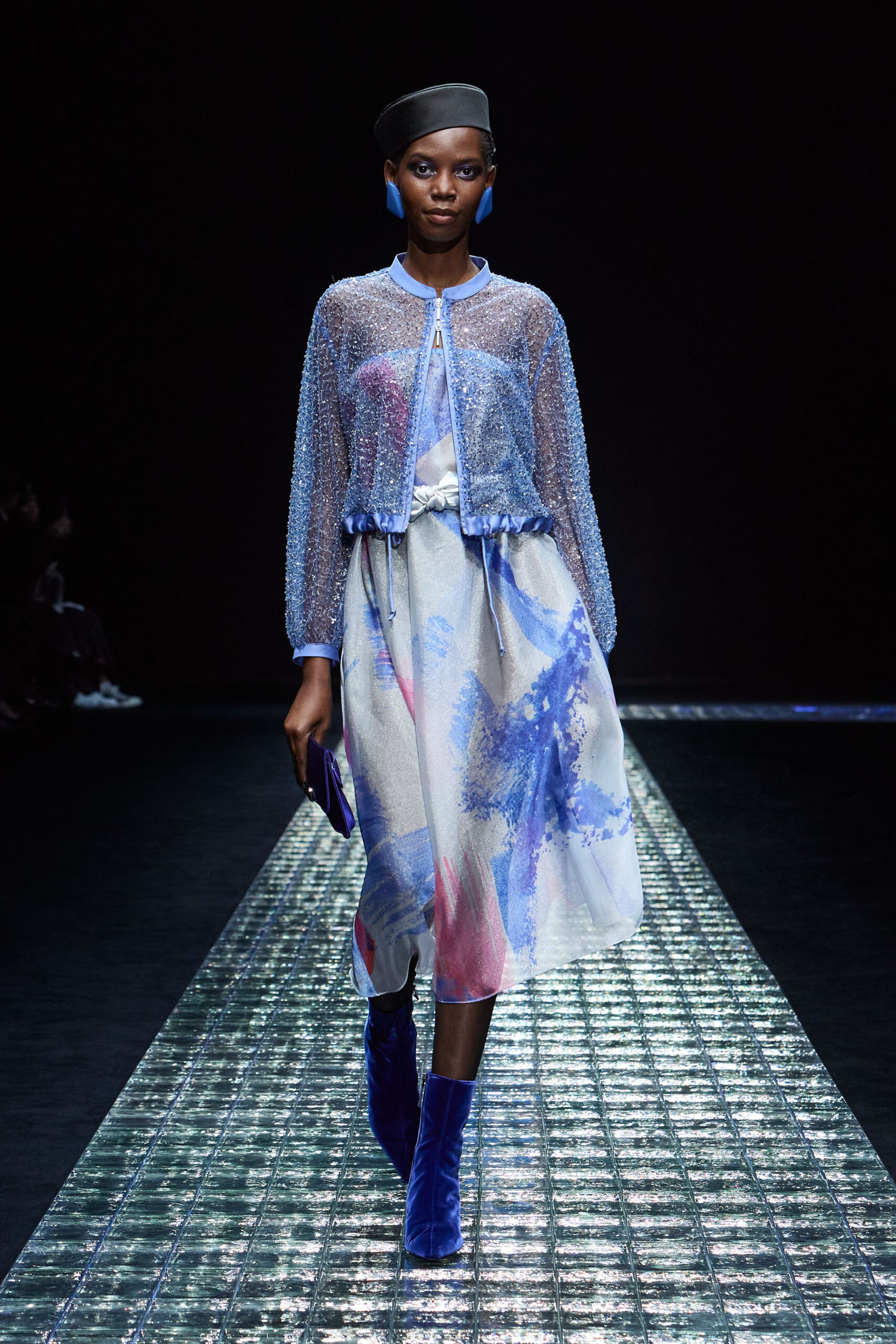
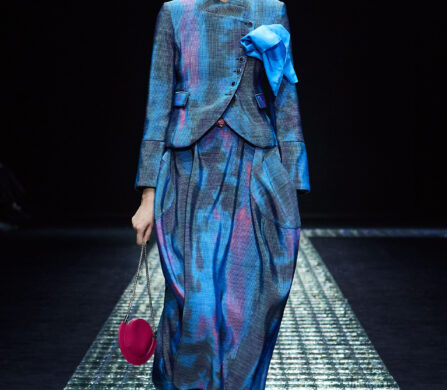
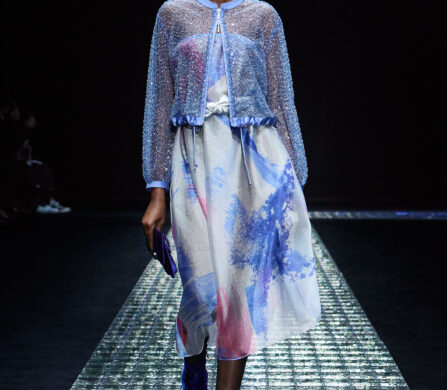
Hence the collection’s name, the colour palette consisted of crisp black alongside cool-toned grey, navy, and deep mauve. The cherry red from the first look was transferred onto tailored grey blazers with abstract prints and an asymmetrical jacket with a faux fur-lined collar. The reds dissipated and in their absence, cobalt blue suits briefly commanded the runway before fading into a pale blue splashed on button-up shirts, printed skirts, and sheer bomber jackets. Armani also played with jade, deep greens, and ultra-violet, weaving several monochrome black looks in between each colour shift.
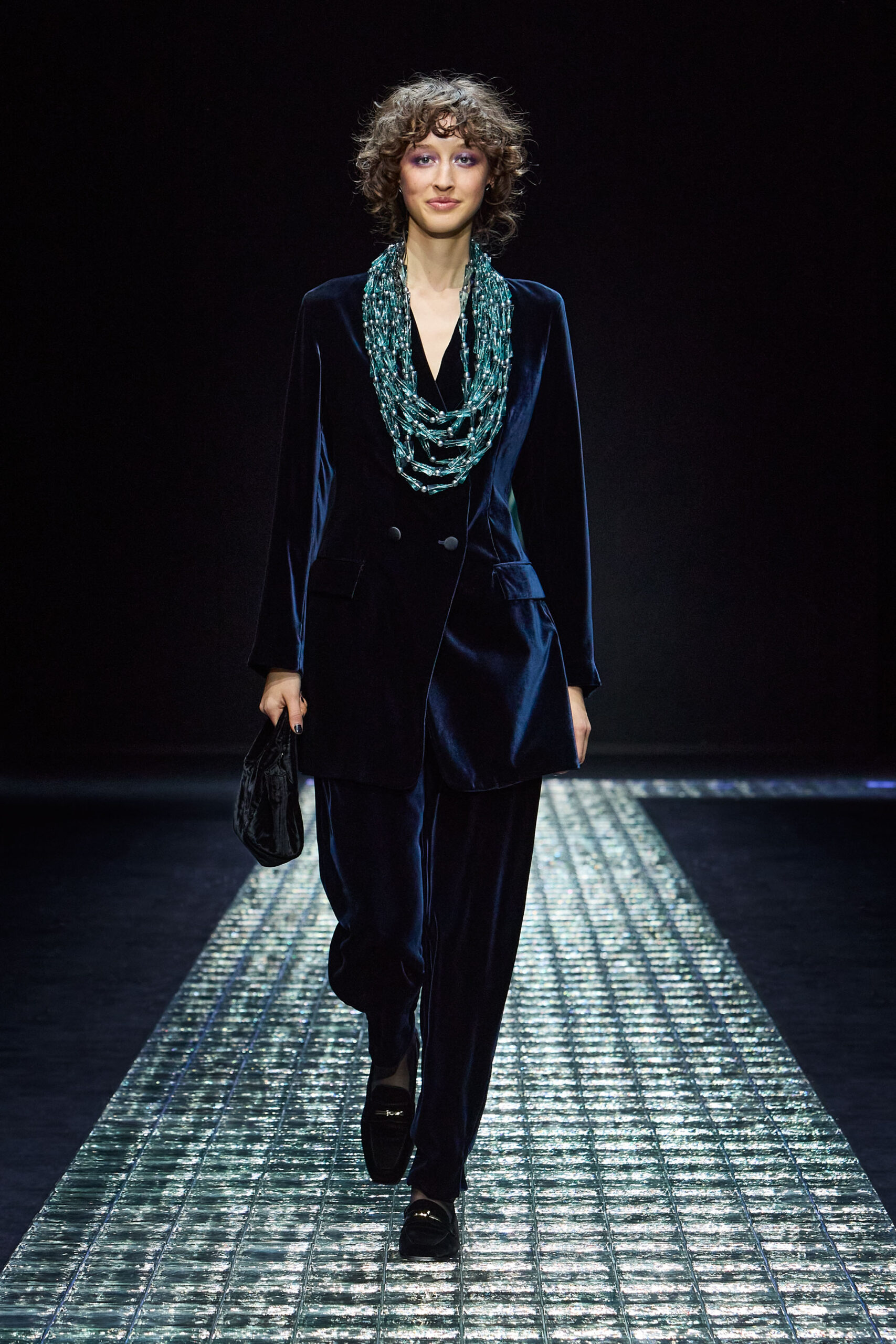
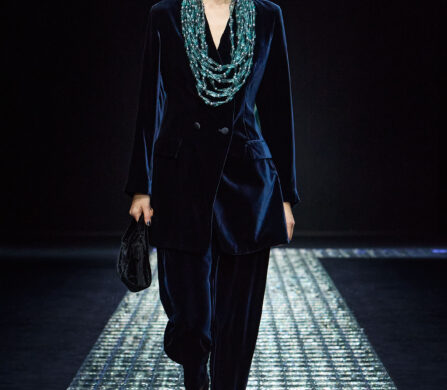
Capacious quilted leather totes, sparky fringe ornamented clutches, and velvet shoulder bags were standouts in the collection, representing Armani’s inspirations all on their own. Chunky beaded opera necklaces and bejewelled neck scarves took after stars while maxi-flowers pinned to lapels and oversized blue and red earrings nodded to nature in the daytime.
If the outfit wasn’t made interesting by colour, it took on an array of textures – think shiny cire, matte and shiny wools, textured jacquards, and multi-coloured faux fur. Velvet suiting dominated the beginning and end of the show, but crystal embellished sheer jackets, puffy bell skirts with light blue and pink abstract prints, and vibrant striped outfits – which looked like optical illusions as they traipsed down the runway – brought a lighter feel to the middle of the collection.
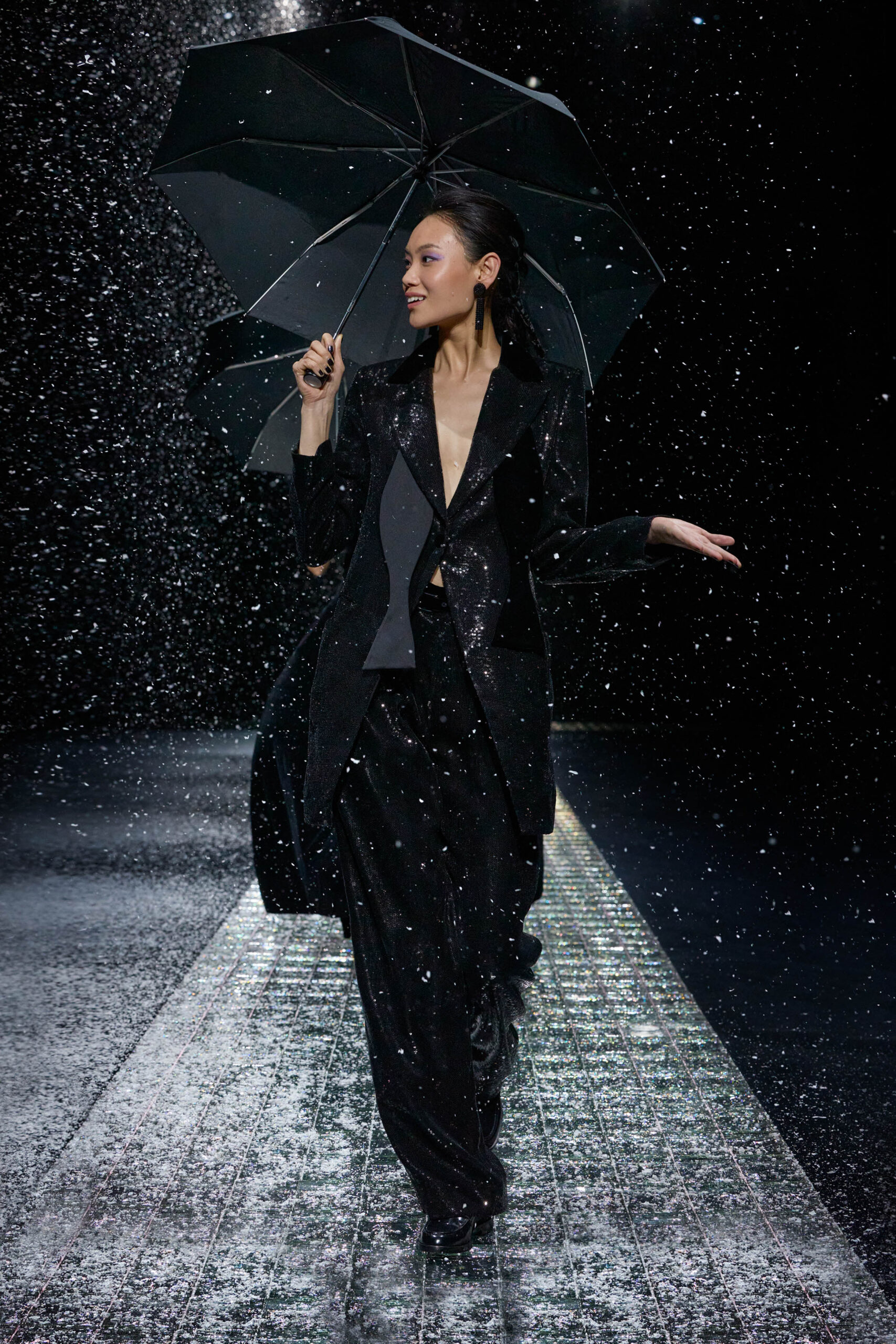
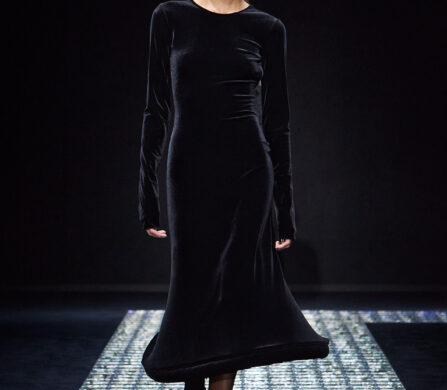
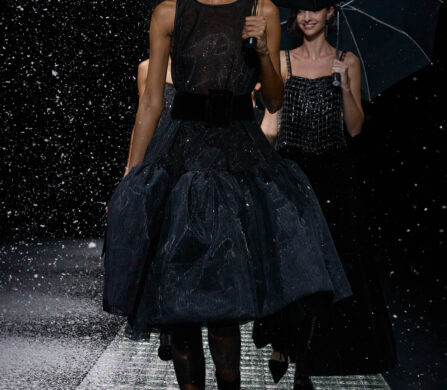
Towards the end of the show, the starry night truly came to fruition. Transitioning into an all-black colour palette once more, models were decked out in velvet maxi dresses, tulle floor-length skirts with star embroidery, and sequined tracksuits.
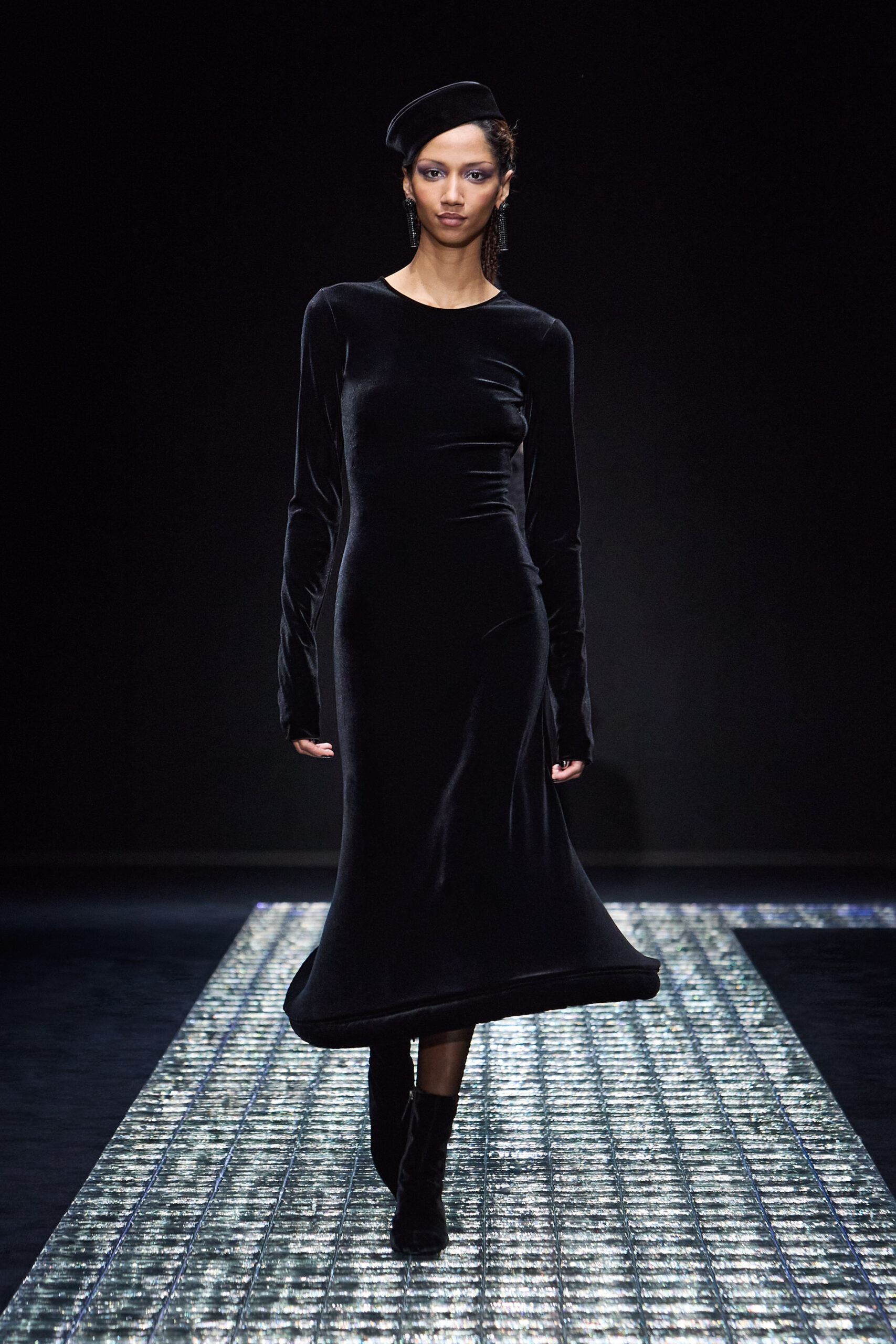
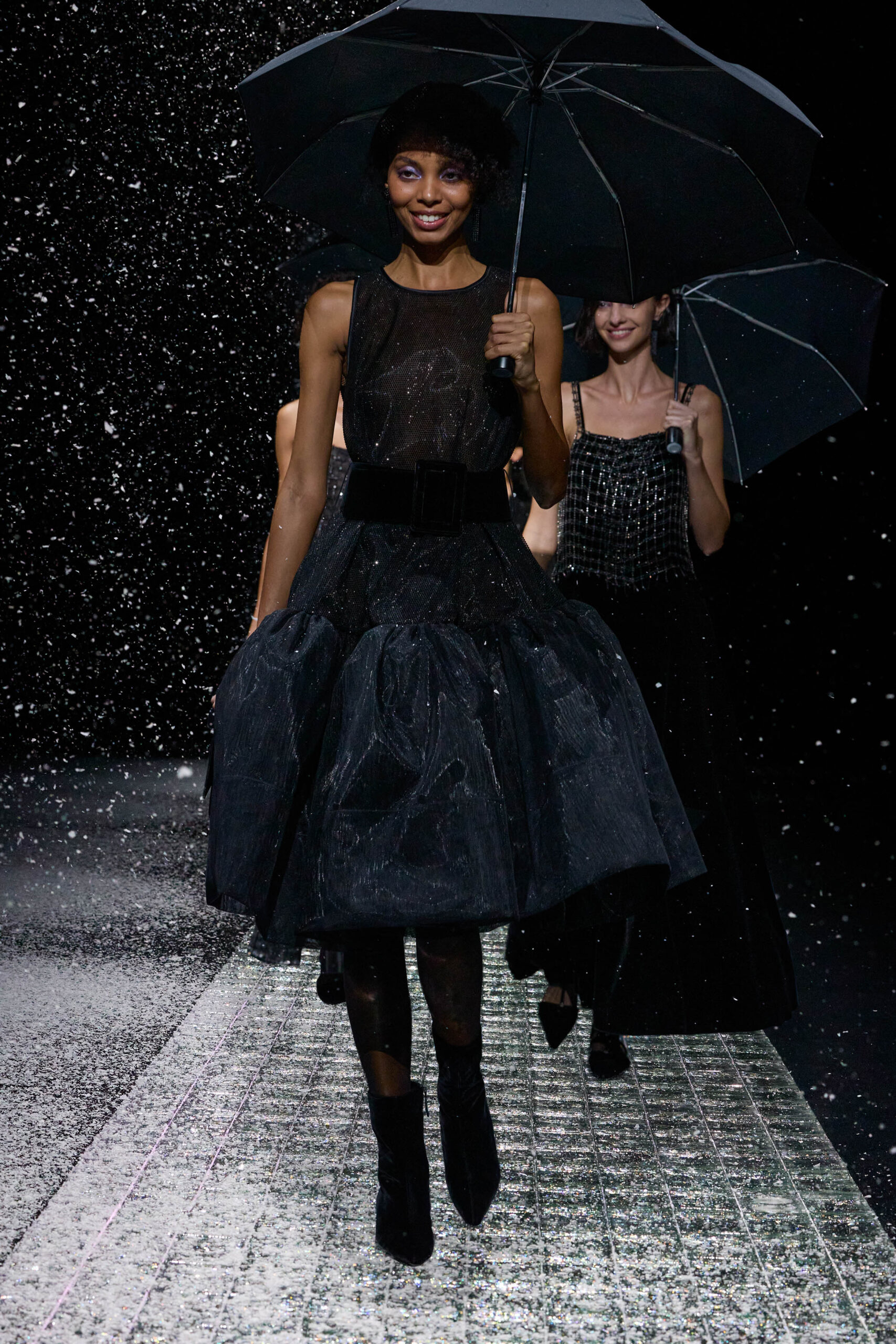
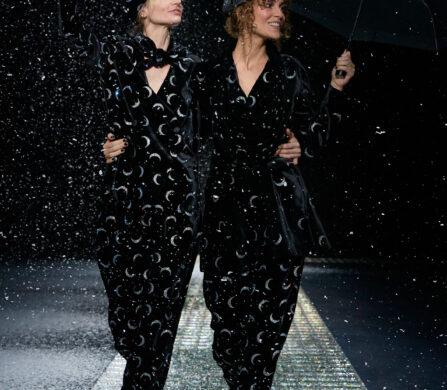
After a brief pause, in which the lights dimmed, the runway was enveloped in snow, with models appearing one after the other – some arm-in-arm – holding umbrellas over their heads. The last 16 looks consisted of lush evening gowns and crystal and mirror-bedecked sheer tops. Two matching moon-embroidered velvet suits closed the show, complemented by black kitten-heeled boots, as well as matching neck scarves and berets.
All-in-all, Armani captured the essence of nature and translated it into a collection filled with elegant suiting, sumptuous embroidery, and bold pops of colour.
When Harry Lighton’s feature debut, a truly compelling ‘Pillion,’ premiered last year in Cannes, no one expected it to be a dark horse of the entire festival. It tells the story of Colin (Harry Melling), a loving and sweet young man still living with his parents. Everything changes when he meets mysterious Ray (Alexander Skarsgård), a handsome member of a local biker gang. This encounter will change Colin’s life forever, as both men will start a dominant/submissive relationship shortly.
Melling constantly smiles when we speak on Zoom, right before Christmas. One can tell that he finds great joy in discussing this project, which means everything to him. On top of that, this might even be his best role in Melling’s entire filmography. His Colin is full of curiosity, which leads him to find affection in the most unexpected places. But, can we even call it love? Or, maybe, Colin’s relationship with Ray is something less (or even more) than that?
In conversation with Schön!, Harry Melling analyses his performance in ‘Pillion’ without fear of touching on any spoilers, discusses the most significant sequences, and searches for parallels between himself and his character, Colin.
When Colin meets with his soon-to-be lover on the first date, Ray tells him to leave his jacket on the ground. When they see each other next time, Ray throws it right on the floor to assert his dominance. This nuance foreshadows a lot, and I’m curious how important those little moments were for you while shooting ‘Pillion.’
One of the amazing things about Harry Lighton’s script is the level of detail, especially in a moment like the one you have just described. They allow the audience to understand the characters’ dynamics and see why Colin wants this relationship, even if he is treated just like his jacket. Ray’s disregard for this jacket tells us everything about how he is going to act in there. Meanwhile, Colin is always second-guessing Ray because he is a mystery to him. And, this is why he finds him so attractive, as he has never been in a situationship like this one.
There is also another “little moment”, quite similar to the one you brought up, when they’re having a family dinner, and Ray finishes his beer. He doesn’t even ask Colin to bring him another one – my character just does it, leaving his mother astonished. This scene shows the progression of their dynamics, as Colin becomes a submissive force in this relation. All those moments constitute their complex bond.
There’s also a scene when Colin is cooking for Ray seconds after his mother’s funeral. And, he even did the shopping right before it, right?
Yes!
coat. Burberry
t-shirt. Hemen Biarritz
trousers. BOSS
opposite
shirt. Dsquared2
trousers. BOSS
full look. Vivienne Westwood
opposite
full look. Thom Browne
While preparing the dish, Colin drops the pot, burns himself, and then suddenly starts crying. Sobbing, even. Was it a moment when he couldn’t take it anymore? Or, maybe this happened earlier, and that was his physical response towards all of it?
The core of Colin’s journey is this scene. We spoke a lot about Harry, discussing how we should portray my character’s cracking and how to get it right. After his mother’s death, he is still trying to keep going, to remain as strong as one can only imagine. Colin still wants to pursue this relationship with Ray, but at some point, he is just hitting the wall. I wanted this scene to portray the moment when something has to break for something else to happen. And, he provokes it himself by putting his hand on a pot.
Why is he doing that?
Colin wants to feel something, as he’s just numb after everything that has just happened. He wants his grief to be let out. Also, Ray’s reaction is truly unexpected. We have this sudden U-turn in their rapport. Suddenly, Ray is the one who has to care for his partner and somehow comfort him.
Is Colin reclaiming his independence by this? By causing himself some pain, he is the one responsible for that. He is in control of what is actually happening.
Yes – no one else is doing that, but him. It’s a moment true to life. Sometimes, you don’t realise you’re doing something in hindsight, and then it hits you much later. His mother’s death becomes a catalyst for Colin to try to work out what he wants. Consequently, he starts realising that there are certain elements in this relationship with Ray that he doesn’t find healthy. He needs a change, and he also needs to be able to say it to his partner. The “pot moment” is the beginning of this reflection, although he doesn’t know it yet.
Your character is second-guessing everything, but you can’t do it as an actor, right?
Well, it depends on a project – here, one of the gifts of this particular project is that Colin is learning a lot about this subculture, just like the viewers. In a way, he is the audience; in this sense, I could ask questions and act as if I’m entering this fascinating microcosm. It means that all those surprises resonate dually – with the character and the people watching Pillion.
Or even triply – we can also count you in.
To be fair, I didn’t want to come up with too many concrete ideas. I just wanted to build his character – from the way he spoke, articulated and moved – and then let myself immerse in everything that Colin experiences. I hoped that by just being in the space with Alex, all those unknowns would be living in the scene. Hopefully, this is what the director’s camera has caught! With his film, I really tried to make sure that the discovery happened on the day. Not knowing what Ray would do was actually a sweet spot for me. It allowed me to act reactively and, to be even more precise, organically.
full look. Paul Smith
opposite
full look. Maison Margiela
full look. Vivienne Westwood
opposite
shirt. Dsquared2
trousers. BOSS
The most heartbreaking theme is the unfortunate timing of all of this. While Colin’s mother, Peggy, is dying, he becomes even more attached to Ray. Instead of spending time with Peggy during her last days, he does everything for Ray. Does he not see that his mom is actually dying? Or, maybe he doesn’t want to see it? Maybe this is his own way of escaping reality?
He is escaping the truth that his beloved mother is dying. Instead of trying to spend more time with his parents and bringing them in to let them understand what is currently happening in his life, Colin shuts them down. They care about him, protect him, and acknowledge his sexuality, but still, there is a distance between the three of them. After meeting Ray, Colin doesn’t want to go back to living with his parents. He needs a change. But, as you already have said, the timing is pretty awful. He ignores this monumental moment in his life, which is obviously his mother’s passing.
You can tell Colin regrets that later.
During the funeral scene, he has a lot of tension inside him. He knows he fucked up with his mom, and he is also aware that his relationship with Ray is far from ideal. The collision of all of this is crushing him and leads him to touch the aforementioned pot. It’s the first time he has released his grief. And, I think grieving for him is even more difficult, because he knows he wasn’t there for his mother when he could have.
Let’s touch on Colin’s somewhat amusing relationship with his parents. They’re (over)protective, but loving and caring at the same time. One can tell that both his dad and mum make up his character.
During one of our early conversations, we established that Colin is not escaping from any family trauma. His home is a loving and caring space, and Colin means the world to his parents. And, we wanted to show it. We can argue that your mom setting you up on a date is, perhaps, pushing it too far, but she still does it out of her maternal feelings. So, the comfort is there!
This is why Colin’s new dynamics with Ray confuse his parents, especially his mother, who – at some point – doesn’t recognise her son. And, by this, she starts worrying about him by being overprotective and hostile towards Ray. The theme of family is crucial in our film, especially when it comes to understanding Colin. Lighton always said that he wanted ‘Pillion’ to feel like a warm hug, as well as be a little bit confronting. And, Colin’s family provides both of those instances throughout the plot.
There is even this recurring theme of the mother, Peggy, constantly telling Colin that she wants to meet his second half. Colin thinks she’s just being a typical, too-intrusive mom, but he doesn’t realise that she wants to meet Ray, because she is dying and the time is running out.
Harry plays with this rom-com cliché. Peggy inquiring Colin about his boyfriend feels familiar, as it plays like a running joke through the first half of ‘Pillion.’ And then, Lighton subverts this theme in this strange way, as it hits us that there was something else behind it. You know that she’s going to die, but you just don’t know when.
full look. Maison Margiela
opposite
full look. Paul Smith
Let me know if it’s too personal, but I am curious about your own relationship with your parents, especially considering how young you were when you shot the ‘Harry Potter’ franchise.
You’re often pulling in experiences that made you, so I suppose I stole something from my own life. Long story short: my parents are wonderful human beings, just like the ones from ‘Pillion.” When I got my ‘Harry Potter’ role, she was incredibly understanding and supportive about it, as she comes from a family of actors. We all love theatre, and it shaped my love towards making stories. In this sense, cinema was an evolution of that. My parents were always committed to my career and interested in my roles and preparation process. I suppose it helped me a lot during that time. And, still does. I think Peggy is just like my mother, and that helped me understand Colin’s relationship with her even more.
Do you believe that there exists another multiverse where Roy and Colin are happy? Was there any possibility that they could become a healthy couple while still maintaining this dominant versus submissive relationship?
When we meet them, we’re already aware that Ray knows what he wants. However, Colin is still searching. When you follow their dynamics, I think you feel this inevitable moment of ending. And then, you even see it when they kiss together for the last time! They have never been meant for each other, no matter the circumstances.
Did you feel sorry for Colin?
I never felt sorry for him. When I read the script for the first time, I thought this was quite an abusive relationship. But then, during the shooting process, I felt empowered by Colin in lots of ways. I could see how he starts to build who he is as a person. His attitude has really inspired me.
full look. Thom Browne
opposite
full look. Vivienne Westwood
This Schön! editorial directed by Toni Ducet and Laria of bycontrast speaks about that last day before disappearing, it’s an ode to rebirth. Through a series of voicemail messages, we retrace their final day through their city and home, in an everyday journey. It’s not about showing loss, but saying a last goodbye to their old life, a gesture that opens the door to a new beginning full of hope.
For Berlin-based DJ, Nina Doll, sound and image are inseparable. Her practice moves fluidly between the booth and the studio, where rhythm becomes structure and atmosphere becomes form. “My work as a DJ definitely influences my work as a designer,” she says. “Community is so important to me as an artist — especially as a female artist in Berlin.”
That sense of togetherness shapes everything she does. Nina is surrounded by a circle of sharp, fearless women, and that proximity fuels her confidence and curiosity. It’s an empowering moment, she feels — one where collaboration replaces competition, and growth happens in plain sight. Community, for Nina, isn’t just support; it’s the engine that helps artists learn, evolve, and take risks.
There’s also joy at the core of her work. Drawing from the early-2000s girly-pop era — something that’s always playing through her Marshall Kilburn III speaker or Marshall MAJOR V headphones — she embraces an attitude rooted in play, freedom, and collective release. “It was always about having fun with your girls, going out, partying, and really not giving a f**k,” she says — a spirit that still echoes through her sets and designs today.
Berlin provides the backdrop: raw, permissive, and constantly in motion. It’s a city that allows her to exist fully as herself — loud, soft, serious, silly — often all at once. Nina isn’t chasing perfection or approval; she’s building spaces where people feel seen, connected, and free. In the end, her work is less about defining a scene and more about sharing a feeling — one that’s best experienced together.