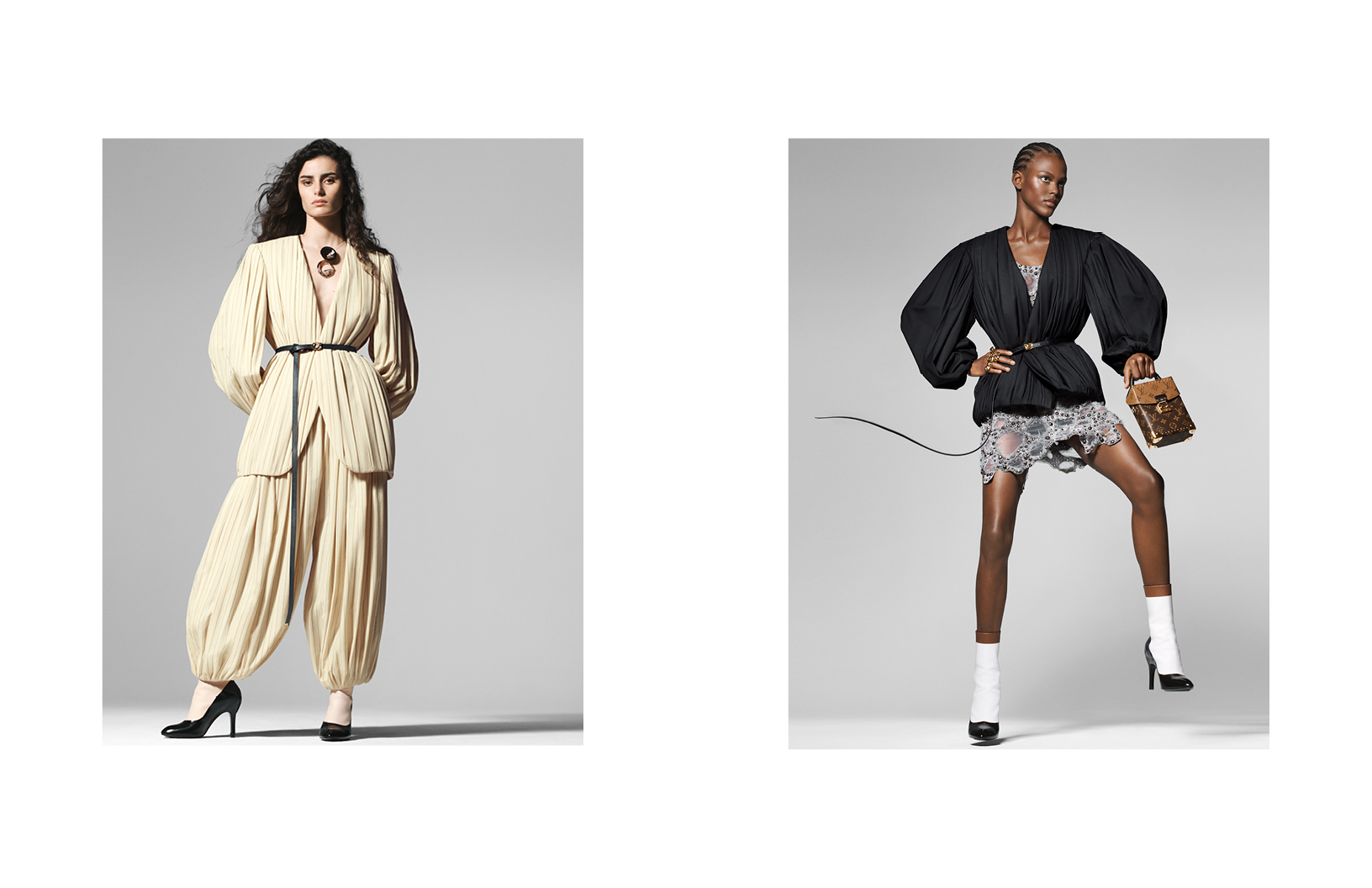

top + shoes. Ralph Lauren
shorts. Umbro
Chris Olsen is a multimedia talent in the truest sense. He has made millions of followers laugh and cry on social media, taken to the stage as an opening act on Meghan Trainor’s Timeless Tour and now turned his life into a book. In his memoir, ‘I Think My Therapist Hates Me’, the 28-year-old creator goes deeper, revisiting his childhood, coming out, addiction and treatment. Structured around recurring therapy sessions, the book makes space not only for its darkest chapters, but also for the humour, love and light woven throughout his story.
In conversation with Schön!, Olsen discusses meeting his younger self again, learning to let go of control and which musical he would choose if Broadway called tomorrow.

suit. Campillo
shoes. Camper
opposite
shirt. Rag & Bone
trousers. Kid Super
Chris, congratulations on the book.
Thank you. I am excited that I can finally talk about it in this way. It feels like I finished it yesterday and years ago at the same time, and now it is finally here.
How did the idea for the book come about?
The idea for the book was very abstract initially. I remember thinking that I had been through quite a lot of things and would definitely write a book at some point, but I was not thinking I would be writing a memoir when I was 26. I posted a video sharing a lot of the things I have been through in my life. It was kind of like a spoken-poem type of video, and the top comment was to write a book. That was around the time I had been thinking about beginning something like that, and it was just the universe confirming that it was what I needed to do. From that moment to the book actually coming out, I could not have imagined getting here.
Most memoirs follow a clear beginning, middle and end, but you use therapy sessions as a way into your story. When did that structure take shape?
Those therapy-session interludes came as I was writing. Before I started, I did not have an idea of exactly how I was going to do it. I had never written a book before, and it was a very daunting, overwhelming thought and task. I was following my impulses on what would feel right to write about and how it would feel right to write it.
Because I knew I was going to be talking about so many therapy sessions, I thought that could be a cool vehicle to bring us back to the present, because we are talking about the past so much. It contextualises all the things I have gone through and how they still affect me today.
You had already shared parts of your past online and on podcasts. How did writing your life for a book feel different?
It was very different, and I was not prepared for that. I thought, ‘Well, I have told this story online, so writing it down for the book should be pretty easy.’ But a book involves so much more of the story than you realise you have been leaving out. You start thinking about your thoughts at the time and how you felt during each moment.
Because I was writing chronologically, I became much more connected to my childhood self and then my teenage self. I began to understand so many of the things I had gone through differently. It made me reprocess a lot of them for the first time because I had not realised how little I had explored what I went through and how I felt at the time. It was very cathartic, but also very vulnerable, even before the book came out. I am so grateful I did it, but nothing could have prepared me for how emotionally difficult it would be.

top + shoes. Ralph Lauren
shorts. Umbro
opposite
jacket. Sportmax
shirt + trousers. Rag & Bone
Which version of your younger self was the hardest to meet again?
Writing about myself at 13 was harder emotionally than I expected. I had just come out and was trying to figure out who I was while my mom went to rehab and my parents got divorced. At the time, I was happy to have a bit more independence because no one was home, but looking back, I realised how lonely and scary that must have been. I have so much more compassion for that version of me now.
Revisiting the period when I was in active addiction was not as difficult because I had already processed so much of it in treatment. What was scary was putting it on the page and knowing that I was sharing all the colours of who I have been. It does not feel good to be the villain of the story, but we cannot get to where I am now without talking about my villain arc.
Was it difficult to return to those darker periods when our memories can sometimes protect us from them?
I think that is something I have maybe always had a bit of an easier time with, in terms of connecting with or sharing those things. That was such a theme of the treatment centre I went to: owning the things you have gone through and owning the way you were so you never go back to those things.
But I frequently get caught in talking about the hard parts of my life that I wrote about. Then I remember that most of the book is fun, funny and light-hearted, because my life was not just a story of trauma. There are so many different colours to the story that make the darker parts so much more vulnerable. You have just seen a kid who has been happy his whole life growing up turn into someone who is having these kinds of issues. There is so much love woven throughout the book, and I think that brings me so much joy too. Yes, there are really dark parts to it, but the dark parts are there because we found so much light. If it were all dark, this book would not even be here.
Did writing your book offer you an understanding that had not emerged in therapy?
I was 19 or 20 when I was in rehab and around 25 to 27 when I was writing the book. By then, my brain was completely different. I could look back with so much more nuance and understanding of who I was and who I am. I had more compassion, but that also made it more painful because I was able to look at the story and feel for that version of myself for the first time.
When I was in treatment, it was all still too close. The person I had been before entering the centre was only months behind me, so I looked back and thought, ‘Yeah, I sucked. That guy has got to grow up.’ Now I have years of hindsight and understand more about why I reacted or acted out in certain ways. I am also so grateful that I had the support system that allowed me to reach a completely new understanding of it at 28.
The treatment centre used methods rooted in shame. How did that experience shape your ability to trust therapy again?
What is really interesting is that my therapist now is the same therapist I worked with at the treatment centre, and that is also where the title comes from. The centre had a very different philosophy and way of treating people, so thinking my therapist hated me would have been much more understandable then. Now the title is more of a nod to that time and to the fear any of us can have that someone hates us. I think the word ‘therapist’ could be substituted for anything.
We have worked together since the treatment centre, and now we are undoing some of the ways I was therapised there. It is a unique situation because she no longer fully agrees with the way that place approached therapy. Being able to hear her validate that shame was not the right way to make me understand something has been so healing. She is reading the book now, which is interesting. I am so grateful she has been in my life. She has been my therapist for about nine years. Here is to nine more.

shirt. Rag & Bone
trousers. Kid Super
What is the biggest lesson you learned in therapy?
Releasing control. I really like being in control of my environment and the things around me, but that can be a cause of my anxiety. It also makes it hard to have a public-facing job because you are never in control of the internet or what people think about you. You can never make everyone like you at the same time.
A lot of the therapy we have been doing over the past few years has been about accepting that I do not have power there, and that is okay. What I can control is what I decide to look at and respond to. There have been times when I responded to negativity online, and I use those moments as data: it did not feel great, it did not look great and I did not like any part of it. Not saying anything may not always feel as cathartic, but I will never really regret it. I will be working on releasing control for the rest of my life.
What do you hope readers take away from your story?
I hope they take away whatever they need. There are so many different things I have been through that each person will find a different point they relate to or resonate with. That is what is so beautiful about a life story. Maybe you had a coming-out story similar to mine, struggled with addiction or experienced hate online.
I am speaking about my human experience throughout the book. Even if someone cannot relate to the exact things I went through, they may know someone who can. I hope people feel seen and understood. I hope they know they are not alone and that if they have a bit of a villain arc or a dark moment in their life, there will always be another side to it.
On a lighter note, some people may not know that you also studied musical theatre. If Broadway called tomorrow, which show would you want to be in?
If I had to choose something that is currently playing in New York, I would go with Little Shop of Horrors. I love that show so much! I have been a theatre kid my whole life. I just saw the Rocky Horror Show and thought, “Oh man, I will do anything. Put me in.” Put me in a Sondheim show! Oklahoma by Rodgers and Hammerstein, but also something new and experimental. Theatre is just so magical to me, and it always will be. But if I had to choose one, I would go with Little Shop.
You are only 28 and have already written a memoir. What might the next one be called in ten or twenty years?
Something that shows growth. Maybe I Know My Therapist Loves Me? Yes, I’ll go with that.

suit. Campillo
shoes. Camper
opposite
jacket. Sportmax
shirt + trousers. Rag & Bone
photography. Diego Villagra Motta
fashion. Heidi Cannon
talent. Chris Olsen
grooming. Zeik Stevens @ Exclusive Artists using Kiehl’s
production. Cassidy Cocke
editor. Kelsey Barnes
interview. David Baczyk