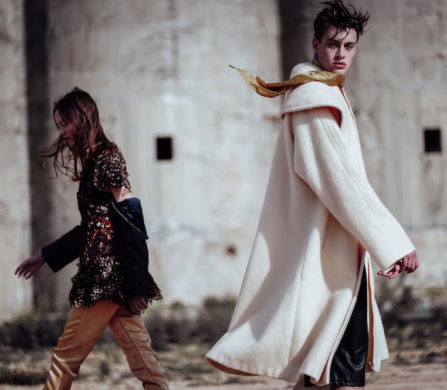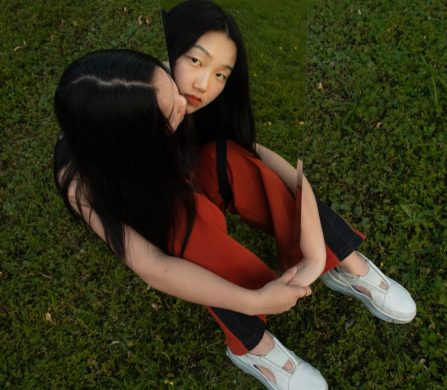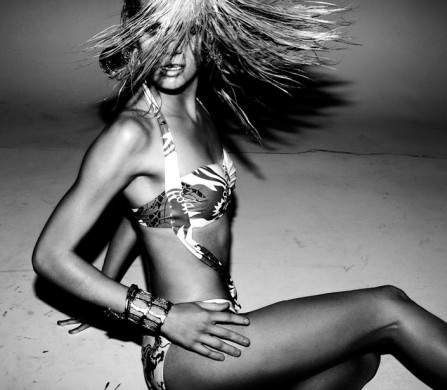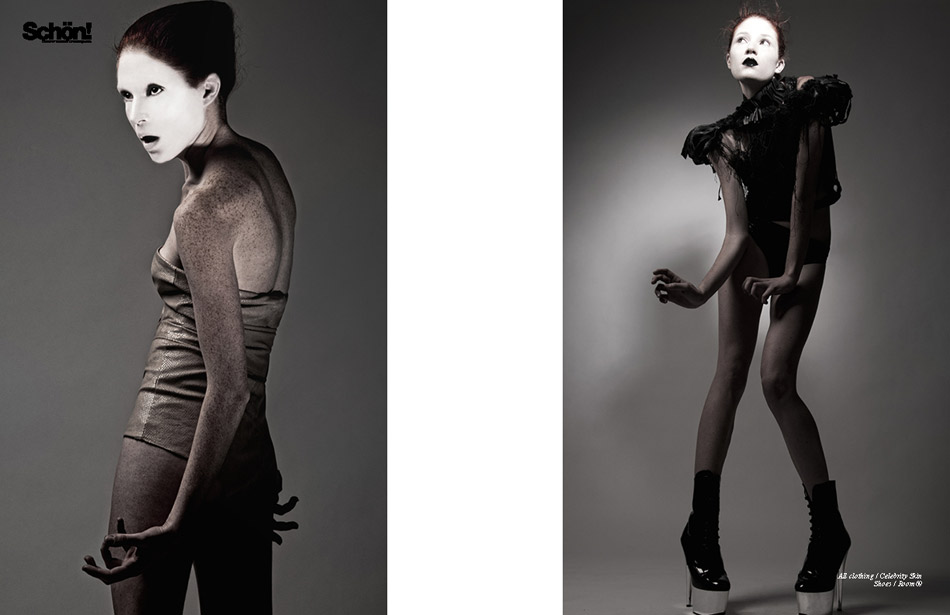
Don’t let anything get in the way. Photographer Thodoris Kaimenakis gives us a view of what is not to be seen.
More designers and contributors featured: Celebrity Skin, Room69, Antonis Spathas, Jessica Anthis, Audrey, Davide W, Bo
Don’t let anything get in the way.
Don’t let anything get in the way. Photographer Thodoris Kaimenakis gives us a view of what is not to be seen.
More designers and contributors featured: Celebrity Skin, Room69, Antonis Spathas, Jessica Anthis, Audrey, Davide W, Bo

graphic t-shirt. The Society Archive
watch. Rolex
Melvin Gregg’s face once lived in six-second bursts—quick jokes, exaggerated expressions, instant laughter. Rising to fame during Vine’s golden era, he became one of the platform’s most recognizable creators. Today, his performances unfold more slowly and with greater emotional depth. From Snowfall to The Paper, Gregg has shifted toward characters defined by vulnerability, uncertainty, and quiet tension. His career now exists in the space between viral visibility and long-form storytelling, tracing not just a change in medium, but an ongoing search for identity beyond first impressions.

graphic t- shirt + trousers. The Society Archive
opposite
knit cape. Giorgio Armani
underwear. The Society Archive
necklace. Talent’s Own
watch. Rolex
You transitioned from making millions of people laugh on social media on Vine to carrying deep pain in front of the camera. In this journey between two extreme sides, what was the sharpest conflict between the version people expected from you and your true self?
What was the biggest difference between the version people expected and my true self? I think people often expect me to be exactly how they first encountered me. But like most people, I have many different sides depending on the moment, the person I am speaking to, and what is happening in my life.
Throughout my career, I have been able to tap into different sides of myself, but people tend to hold on to that first impression. If they discovered me online, they expect me to be very outgoing and energetic. That platform was centred on comedy, and with only six seconds, you had to be big and animated. In real life, I am not really like that. I am much more relaxed and low-key.
If someone meets me through Snowfall, I am playing a gangster, but I am not a gangster in real life. And now in The Paper, my character is a people pleaser. He is optimistic, enthusiastic, carefree, and awkward. I am not really like that most of the time. Maybe around certain people, but generally, I am more cynical than enthusiastic.
I am optimistic in my own way, but I am definitely not a people pleaser. I think all of my characters contain parts of me, but they also distort certain traits. It is a mix of truth and exaggeration. I actually miss the Vine era sometimes. TikTok is great too, but Vine was all about six or seven seconds. It felt more playful and spontaneous. It was definitely a moment.

trousers. Levis Baggy Capri
underwear. Calvin Klein
beanie. The Society Archive
necklace. Talent’s Own
opposite
hoodie. Eckhaus Latta
shirt. Aubero
jeans. The Row
shoes. Timberlands
watch. Rolex
How did you reframe your career from going viral to leaving a lasting mark? What was the most frightening aspect of that transformation for you?
The thing about going viral is that you get a lot of attention, but not all attention is equal. People care for a few days, then something else goes viral, and they move on. It is very short-lived. You might reach more people, but the content itself is brief, so the impact does not last.
You do not go viral just once. You have to keep doing it constantly to stay relevant. That can be exciting, but it is also exhausting. In more traditional formats like television or film, you may not go viral, but the people who do watch your work carry it with them much longer.
When someone sits down to watch a film for an hour and a half, they get to know the character. They go on a journey. That experience stays with them. There are movies we watched as kids that still affect us today. A viral video usually does not have that kind of lasting effect. You may reach fewer people, but the attention you receive is deeper and more meaningful.

button up. Aubero
t-shirt. Barneys @ The Society Archive
opposite
blazer. Emporio Armani x Our Legacy
t-shirt. Barneys @ The Society Archive
trousers. Giorgio Armani
shoes. Birkenstock Boston Clog
belt. Talent’s Own
In productions like Not Perfect, Strangers, and The Way Back, we often hear an inner monologue shaping your characters. How do you construct those inner voices, and how close are they to your own?
I always try to find parallels between the character and things I can relate to in my own life. That might be something I am experiencing now or something I went through in the past. That connection helps me understand and justify the character. Once I understand who the character is, what they want, and how they see the world, I can exist in that space and let the environment affect me naturally.
In Not Perfect Strangers, a large part of my character’s story did not make the final cut. He resented social media because his wife wanted attention from people online more than from him. She was chasing validation from strangers, and he kept questioning what really mattered. Was it the attention of people you will never meet, or the attention of the person right in front of you? That idea connects directly to my own experience. Coming from social media, I sometimes felt like I was performing for people I did not know instead of focusing on the people closest to me. That parallel helped me live truthfully inside the character.
In The Paper, my character is in love but not receiving attention. He starts spiralling, trying to figure out how to get it. Should he play hard to get, or should he be honest and vulnerable? That is something most people have experienced, and it is something I have lived through myself. I try to find those shared emotional truths and let them guide the performance.

shirt. The Society Archive
trousers. Nili Lotan
watch. Jaeger La Couture
During your Vine days, was comedy a kind of protective shield? Looking back now, were there emotions you thought you were hiding that still came through on camera?
I would not say it was a shield. It was more about what worked best on that platform. Vine was built around shareability, and comedy is the most shareable form of content. People tell jokes all the time. You do not usually walk around sharing traumatic stories. Comedy simply worked, so that is what most of us leaned into. I do not think I was hiding much emotionally.

shirt. The Society Archive
trousers. Nili Lotan
watch. Jaeger La Couture
belt. Giorgio Armani
opposite
t-shirt. Barneys @ The Society Archive
trousers. Giorgio Armani
belt. Talent’s Own
How do you challenge dominant portrayals of Black masculinity as strong, stoic, and unbreakable when choosing roles? Do you actively look for vulnerability in a character?
I look for characters I can bring humility to. Black men are often portrayed as a single type or trope. If I can break that down and add more layers, then maybe audiences can walk away with a deeper understanding of masculinity, and specifically Black masculinity. With The Paper, I get to play someone who is not the traditionally cool or hyper-masculine guy. That feels important. Being Black and being a man is not a monolith. We come in many forms, personalities, and emotional registers. Exploring that range on screen feels necessary.

blazer. Emporio Armani x Our Legacy
button up. Aubero
t-shirt. Barneys @ The Society Archive
trousers. Giorgio Armani
belt. Talent’s Own
opposite
shirt + necklace. Talent’s Own
beanie. The Society Archive
If your career were a basketball game, where do you see yourself right now? Are you still playing offence, or are you beginning to direct the game?
I feel like a player who understands the game deeply. When I retire, I will probably coach. Right now, I am coming off the bench. I have strong games, but I am not a starter yet. I am not the star of the team. I have not yet been given the opportunity to fully take control and show everything I can do. At this point, I have mostly been a role player, but I believe I have the potential to be a key player on any team.
Is social media still a big part of your life today? Who is Melvin Gregg when the camera is not rolling? Are there habits or rituals we do not get to see?
I am still figuring out how social media fits into my life now. The perception around it has changed a lot. In the early days, it was not taken seriously because it was new. Now people understand its value, the reach, the numbers, the influence. I am trying to find a balance where I can benefit from having an audience without getting distracted by chasing virality. Sometimes productions want someone with a large following, but that is not really who I am anymore. It would not be genuine to my goals.
I try to create content based on my real interests rather than trends. Most of my life is not online. I am very intentional about what I share. If I post my family, it is because I hope it encourages people to spend time with theirs. If I post myself building something, I hope it inspires someone to put their phone down and create something themselves. If it does not serve that purpose, I usually do not post it.

graphic t-shirt. The Society Archive
watch. Rolex
opposite
shirt. Giorgio Armani @ The Society Archive
trousers. THE SOCIETY ARCHIVE
underwear. Calvin Klein
necklace. Talent’s Own
You have spoken about your desire to write and tell your own stories. Is there a character or scene that has lived in your mind for years but has not yet been brought to life?
There are too many to count. When I was doing social media, I created new ideas every day for four years. When I stopped posting, the ideas did not stop. I just stopped sharing them publicly. I have written several scripts that I want to bring to life one day. The challenge is getting them made, especially in today’s industry. I have scripts I want to produce, ideas that are not even on paper yet, and projects I have already filmed that I am waiting to complete and release. The creativity never stops. Right now, it is just about navigating the process.
Are you currently writing? Are these scripts, or do you work in other forms as well?
Mostly scripts. I have written television shows and films across different genres. I am also working on a short film series right now. I have completed the first two and I am working on the third. I am always creating. It just takes longer to bring things into the world than it did with social media. Hopefully, when they do arrive, they resonate more deeply.

graphic t- shirt + trousers. The Society Archive
photography. Torian Lewin
fashion. Izaake Zuckerman
talent. Melvin Gregg
grooming. Lynda Esparza
fashion assistant. Cole Norton
interview. Alper Kurtel
special thanks. The Refinery Hotel, New York
Zeyne is emerging as one of the most compelling voices of her generation. She stands as a modern muse for Arabic music with a clear understanding that the future doesn’t arrive through erasure but through evolution. “It’s the responsibility of us as artists, as filmmakers, as painters to speak up, represent and reflect the times,” she tells Schön! over Zoom.
Everything the Palestinian-Jordanian singer puts forward is done without negotiating her identity. Her debut album ‘AWDA’ — meaning return in Arabic — is an intimate exploration of return to self, to memory and to meaning. Written entirely in Arabic, it tells her story without need for translation as it speaks entirely on its own terms. “That was very intentional. I wanted to tell my story fully in Arabic. The language itself is so beautiful, I didn’t want to include just a few words here and there in English, or in another language, just to make it easier to commercialise,” she says.
Sonically, it’s measured and emotive, leaving as much space for reflection as it does for release. Zeyne explores the arcs of love, grief, mental health, origin, belonging and displacement. These are all personal experiences that inevitably echo collective ones, allowing the album to function as both an intimate diary and a wider cultural statement. “We’ve gone through so much as a community [and] as a region so it talks about returning to so many parts of yourself if you’re ready to confront them,” she explains.
Beyond the music, Zeyne’s visual language is just as considered. She doesn’t reference heritage as an ornament, she inhabits it with the same intention that defines her sound. “That’s one of the few ways we can keep our identity alive. Through art, through dance, through music, through shared memory,” she says.
Marrying tradition with contemporary experimentation, her work is rooted in Palestinian ancestry but shaped by a generation that refuses to inherit it passively, instead making space where there was once friction. “We always had this imposed narrative on us that we’re just not enough as Arabs,” she says. “I wanted to challenge that and say…we are enough as we are.” In doing so she claims full authorship over the narrative, reshaping the space she moves through rather than asking to enter it.
To experience Zeyne is to witness a return that looks forward. She is a reminder that identity, when embraced fully, can be both an anchor and a horizon. Fresh from her tour of the Gulf, Schön!’s 2025 Rising Star opens up about keeping her culture alive, the rise of Arab stars in mainstream music and how she’d love to take legendary Lebanese singer Fairuz out for lunch.
Hey Zeyne, thank you for joining us! You released your debut album ‘AWDA’ which means “return” in Arabic. What parts of yourself did this album ask you to return to the most?
I realised that, as I was finishing the album, I had just been writing about the past year and a half of my life. It felt like I lost myself with the amount of things that were happening. Then by the end of it, I felt like I was slowly coming back to myself. It’s truly just a cycle. We’re always going to be going through life, losing ourselves and then finding ourselves again through community and through identity.
Let’s talk about the opening monologue on the first track ‘Asli Ana.’ It introduces these ideas very powerfully. What did starting the album that way mean for you?
The whole album starts with ‘Harrir Akla [Free Your Mind]’ and ‘Asli Ana [My Origin].’ They’re a statement at the beginning of the album to let the listener know exactly who they’re listening to. Someone who is unapologetic about their identity, about who they are, where they come from, their roots, their heritage, their lineage – everything that makes them who they are.
Listening to the album, it feels very personal. How does the theme of identity unfold through ‘AWDA’?
It goes through different themes of loving yourself and then finding love, running out of love, confronting yourself [and] your mental health, going through grief and then realising when you’re at rock bottom that there is hope. There is a chance to find yourself again and regain that strength and resilience through the people that are around you. We tend to forget where we come from and who we are as a people. ‘Kollo Lena [It’s All Ours]’ which is the end track talks about the kind of people we [Palestinians] are, how we have unbreakable spirits and unerasable culture. I was inspired a lot by Mahmoud Darwish’s poem, ‘On this land.’ He’s just my favorite poet in the world.
How does that sense of self translate into your visual identity? Particularly in your music videos.
If you want to represent culture visually, it has to be based on research. It can’t be based on surface level, stereotypical accessories that people are used to. For example, the keys on the black outfits in the ‘Asli Ana’ clip. The story behind the keys is that in 1948, a lot of people were forcibly displaced from their homes and were promised they would be able to come back after a couple of weeks. So, a lot of people held onto their keys. My grandmother still has hers to this day. It’s a reminder that we’re never letting go of the keys. They symbolise the right to return. What [creative director] Farah did was use newer looking versions of the keys to represent our generation holding onto that promise. It’s not just our grandparents. Also, I love referencing other artists. Slimane Mansour was a painter that we referenced. We recreated one of his paintings, the one with all the farmers harvesting.
That carries into your performance, as well. Dabkeh has become central there.
Dabkeh is the traditional Levantine dance. Living in Jordan, where almost half of the population is also Palestinian, we have many Dabkeh groups. The one that I was in is Palestinian. It’s called the Al Quds folkloric group. I joined it when I was five, my mum used to run the group. For the longest time during school years, I was a bit shy to tell my friends that I did that because somehow being connected to your roots wasn’t cool and we always wanted to do what the West did. In my family, maintaining cultural ties through storytelling, through making sure that we have good relationships with our grandparents, traditions – it was very important.
Can you tell us more about that?
It was really special because it’s not just dancing, it was being a part of a community. In a time where people are trying to erase our culture and ethnically cleanse Palestinians, it’s very important for us to hold on to what we have. Dabkeh originates from people who used to jump on the soil when harvesting. It was a mechanism to make the soil more fertile. It evolved into them connecting hands and singing folkloric songs. They literally created that dance from our land. So yes, it looks really cool, but it’s also a very intimate personal dance for Palestinians. When I’m singing about decolonising your mind, embracing your identity, and about unbreakable spirit, it’s important to match that on a performance and movement level.
It feels like artists of your generation are shaping a whole new language around what it means to be an Arab singer today. What does that look like from your perspective?
As time will pass, more and more artists are going to emerge. Growing up I didn’t have that. I didn’t have a Palestinian female artist to look up to or someone that I could resonate with from my own generation. Hopefully it also inspires the younger generation to be proud of where they come from and not shy away from that. I remember when I was in university people would ask, “where are you from?” I would say “Palestine, Jordan,” [and] they would just give me a weird look. I’m pretty sure if this happened now it might evoke a different emotion which is really cool. I think the shift is not only in music, it’s the general conversation around the world about Arabs in general. I feel like everything Arab related is now becoming more popular.
What does singing in Arabic mean to you?
There’s a shift in how people look at the Arabic language. We have the most poetic and romantic language to exist. It’s so cool to see people from all around the world sending me messages saying they don’t understand Arabic but they’re starting to learn the language. It’s very touching when I get these messages because it feels like we’re bringing people closer to who we are and not trying to bend over to kind of get to them. The Arabic language is becoming a bridge in my music.
You’ve described yourself as a dreamer. As you look ahead into the new year which dreams feel realised and which ones are still calling you?
I’m finally doing my headlining tour in the spring which I’ve wanted to do for a really long time. It’s very surreal for me. You know what I would love to do? I’d love to sit down with Fairuz. Just for lunch or breakfast or anything she wants.
This Schön! online exclusive has been brought to you by
photography. Vicky Grout @ Soho Management
fashion. Yasmine Sabri
talent. Zeyne
casting. Shama Nasinde
hair. Tarik Bennafla @ Stella Creative Artists using Oribe
makeup. Joy Adenuga @ Forward Artists Movement
movement direction. Elettra Giunta
set designer. Elena Horn
photography assistant. Alex Galloway
production. Clara La Rosa
location. Sunset Studios
words. Sarah Diab

striped vest. BODE
striped button down top. The Frankie Shop
pleated skirt + bow loafers. Shushu/Tong
tie. The Tie Bar
rings. SHAY JEWELRY
sheer socks. FALKE
At just nineteen, Dior Goodjohn is quickly carving out space for herself as one of Hollywood’s most compelling new talents. A performer with range that stretches from music to emotionally rich screen work, she carries a presence that feels both grounded and electric — the kind that makes you curious about the person behind the performance.
In ‘Percy Jackson and the Olympians’, Goodjohn steps into the role of Clarisse La Rue — the fierce, no-nonsense daughter of Ares, the Greek god of war. Season 2 gives her more room to command the screen, revealing layers of vulnerability, pressure, and power beneath Clarisse’s armour. Schön! sat down with Dior to talk about finding humanity inside a mythic world, what it means to embody a character shaped by legacy and expectation, and how a girl once seen as an antagonist may become an unexpected symbol of strength for young audiences.

polka dot corset. Valentino
pinstripe shorts + platform boots. R13
chain necklace. Laura Lombardi
opposite
striped bolero. Erik Charlotte
pinstriped trousers with skirt. Jean Paul Gaultier
patent pumps. Malone Souliers
rings. SHAY JEWELRY
In season 1 of ‘Percy Jackson & The Olympians’, you play the role of Clarisse La Rue as a recurring guest. How did you feel when you knew she was taking a more prominent role in season 2?
I felt really blessed and really lucky. I’d been aware of Clarisse’s arc since my initial audition for Season 1 back in 2022, and I was always so intrigued and fascinated by her story. I had so many ideas about how I could play her and build her — especially in the adaptation of books two and four. When I found out we were renewed for Season 2, and saw how dedicated the writers were to creating Clarisse and introducing the same vulnerability she has in book four into Season 2, I was just ready to get to work and bring her story to life.
The world of Percy Jackson is a collision between the divine and the human. Where did you personally feel that tension in Season 2 – in the stunts, the relationships, or your character’s evolution?
Man — would it be a cop-out answer to say everything? In all seriousness, I think there’s something deeply human about Clarisse’s evolution and her relationship to her father. I feel like Clarisse really channels the divinity that all the demigods have whenever she gets to express her godly talents — when she’s put in a position to be tactical, to lead the charge, and to fight for, defend, and protect her family’s honour. Over the course of the season, we get to watch the origin of that shift. We see her become motivated to fight not just for glory, but to protect the people she loves and cares for—and to defend the honour of everyone around her.

ruched chiffon victorian-style top. Alexander McQueen
striped bloomers. Erik Charlotte
mary janes. Sandy Liang
rings. SHAY JEWELRY
Speaking about the divine! In a world filled with gods, symbols, and stories, I’m curious. Is there a mythological figure or spiritual practice that holds meaning for you off set?
Oh, of course. Nothing in this world is more powerful than the human mind and prayer. Making sure I take time to slow down, meditate/pray, sit in gratitude and be with God whenever I can is a big reason why I am where I am today — and how I’m able to keep my sanity in an industry that moves so fast.
Is there a scene that pushed you in a way that felt particularly demanding – emotionally, physically, or creatively?
There’s a scene in Episode 3 where she starts off defeated and then makes the decision not to let the voices in her head decide her fate. She gives this gorgeous, motivating speech to all the men on board her ship, which changes the course of her quest. We called it Clarisse’s “Saint Crispin’s Day” speech — that’s what we modelled it after. Our acting coach, Andrew McIlroy, and I spent a lot of time with that monologue trying to get it as raw and layered as possible because, for me, tapping into sadness or vulnerability can be easier than tapping into true hopefulness and resilience. That’s what that speech was all about.

striped vest. BODE
striped button down top. The Frankie Shop
pleated skirt + bow loafers. Shushu/Tong
tie. The Tie Bar
rings. SHAY JEWELRY
sheer socks. FALKE
opposite
striped polo. Sporty & Rich
floral knit briefs. Coperni
lace bow pumps. Black Suede Studio
rings. SHAY JEWELRY
Clarisse’s intensity and sharp edges sometimes read as rudeness, but they can also be a shield for someone under immense pressure. Do you see her competitiveness as a response to what’s expected of her, rather than who she truly is?
Absolutely. We actually have a saying on this show, “There are no villains.” A big part of being able to play your character properly is learning not to judge them and understanding all of their reasons ‘why’. When I first got to work on Clarisse back in Season 1, my main objective was to discover what the aggression was a cover for. At the end of the day, she’s a girl who’s hurt, exhausted, and still trying to earn validation from the one person who will probably never give it to her. And once you understand that as her paradigm… You can’t really blame her for being sharp. It’s a survival strategy.
In shaping Clarisse this season, was there a castmate or mentor whose presence helped guide you into her physicality, her intensity, or her emotional rhythm?
Andrew McIlroy! He’s one of the greatest coaches I’ve ever had the pleasure of working with. The way he’s trained us as a cast has centred on being in touch with our nervous systems. It’s a very beautiful, complex method and always feels rooted in fact and truth — never in fiction, fantasy, or role-play. In the time I got to spend with Andrew this past year, I’ve gotten a greater education in my craft than I ever could have received from a traditional school.

striped wool sweaters + sequin bra top. BODE
chiffon polka dot floral shorts. Valentino
patent pumps. Aleví Milano
rings. SHAY JEWELRY
There’s something almost liberating about playing a character who isn’t afraid to occupy space. Has Clarisse helped you channel your own sense of presence, voice, or self-worth in your daily life?
Oh, 1,000,000%. I’ve said this before, but I feel like a big reason I’m able to be the person I am in my life is because Clarisse created a space for all of my raw emotions to exist safely. I don’t think people realize how rare that is to get to explore that kind of power and intensity and truth, and to be allowed to take up space without apologizing for it.
What’s even crazier is that the journey Clarisse is on — learning what it means to lead her own life and trust herself— was something that I was going through in real time while we were shooting Season 2. Playing her and facing those demons with her was a very out-of-body and life-changing experience for me. In a way, we were healing in parallel. I’ll never forget it.
Season 2 pushes Clarisse into situations where vulnerability becomes unavoidable. How did exploring her softer moments affect you personally – did it bring up anything surprising about your own emotional boundaries?
It made me realize that being strong is not about persevering through brute force. Real strength comes from honesty and resilience. Strength is being willing to feel the thing and still keep going— that was a lesson I think was very important for me to learn at this point in my life. I’m very grateful that I got to do it through her, and with the support system of our entire crew and cast around me. They made it possible for me to feel safe experiencing all of that.

track jacket. WILLY CHAVARRIA
striped polo. Sporty & Rich
mesh polo. Alexander Wang
floral knit briefs. Coperni
lace bow pumps. Black Suede Studio
rings. SHAY JEWELRY
opposite
striped bolero. Erik Charlotte
corset. Ludovic de Saint Sernin
jeans + floral boots. R13
Young girls watching Percy Jackson often look to the female characters for guidance or representation. Do you believe Clarisse La Rue is a character young women can be inspired by? And if so, what aspect of her do you hope resonates most?
I think Clarisse’s relationship with strength and with her father is something a lot of young people will recognize themselves in. We don’t see dynamics like that represented in YA media often, and even when we do, we rarely get to see a version of it that leads to real hope.
What I love about Clarisse’s story this season is that we watch her go through all of this pain, pressure and loneliness, but then we get to watch her find her way back to the light. She doesn’t just survive, she transforms. I hope young women walk away from this season knowing that just because it feels bad right now, doesn’t mean it has to stay bad. You can fight for your happiness, choose yourself and trust your instincts. You know what’s best for you more than anyone else.
As your career evolves, what kinds of roles or stories do you hope to explore next?
I’d LOVE to play in a psychological and an emotional thriller! But honestly, I’m so open to anything that comes my way- I’m just excited to meet new people, make all kinds of art, and get the next generation back into theatres!

polka dot corset. Valentino
pinstripe shorts + platform boots. R13
chain necklace. Laura Lombardi
photography. Pooya Nabei
fashion. Marisa Ellison @ Opus Beauty
talent. Dior Goodjohn
hair. Sabrina Porsche
make up. Kimora Mulan
production. Cassidy Cocke
fashion assistant. Isabella Sofia Lopez
interview. Kitana Lourens