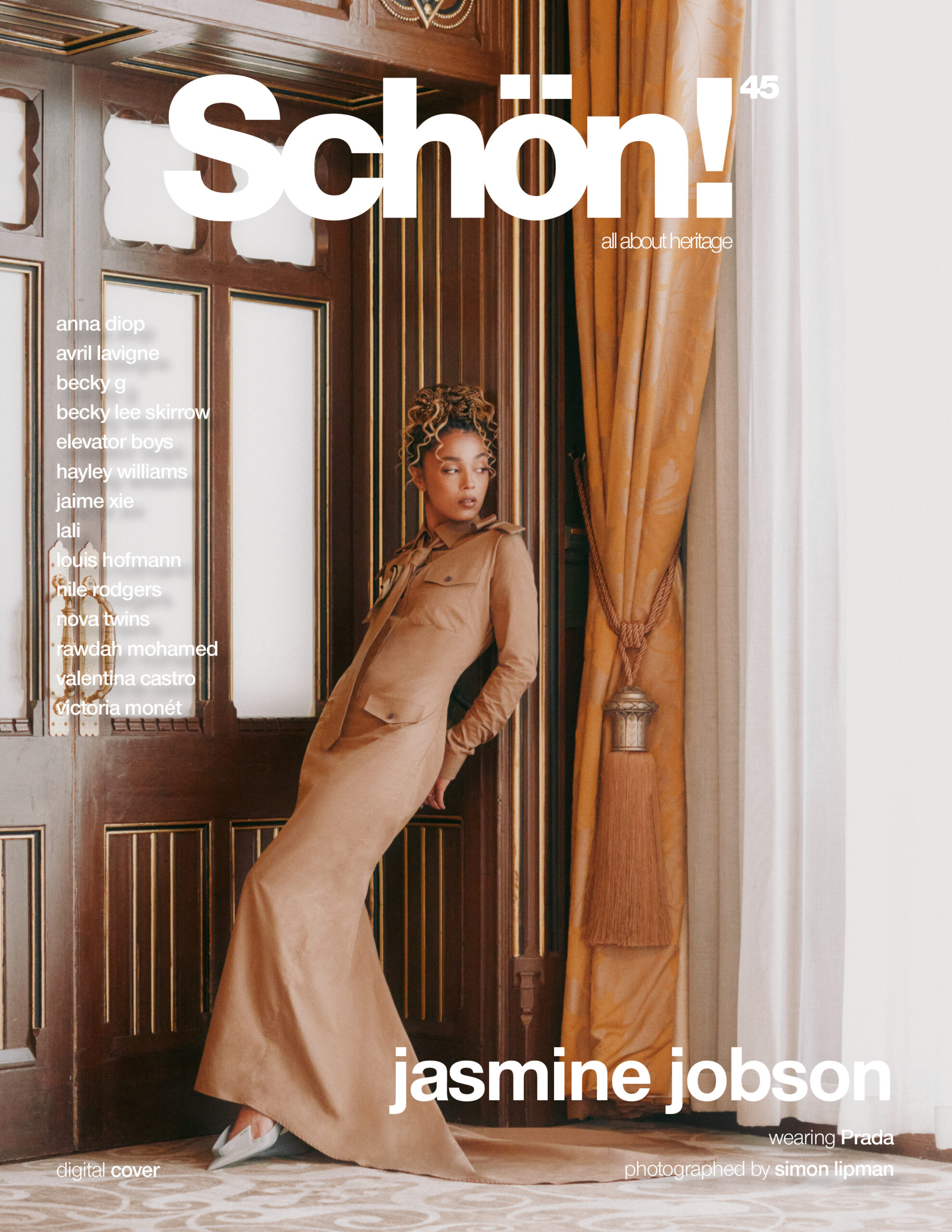
Schön! 45 digital cover | jasmine jobson
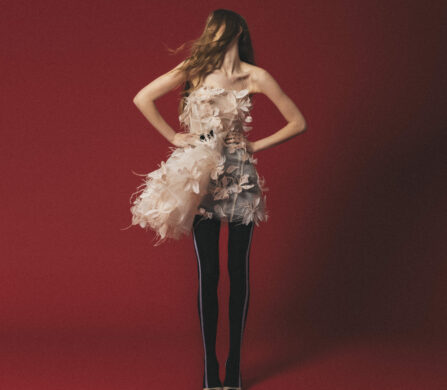
full look. Prada
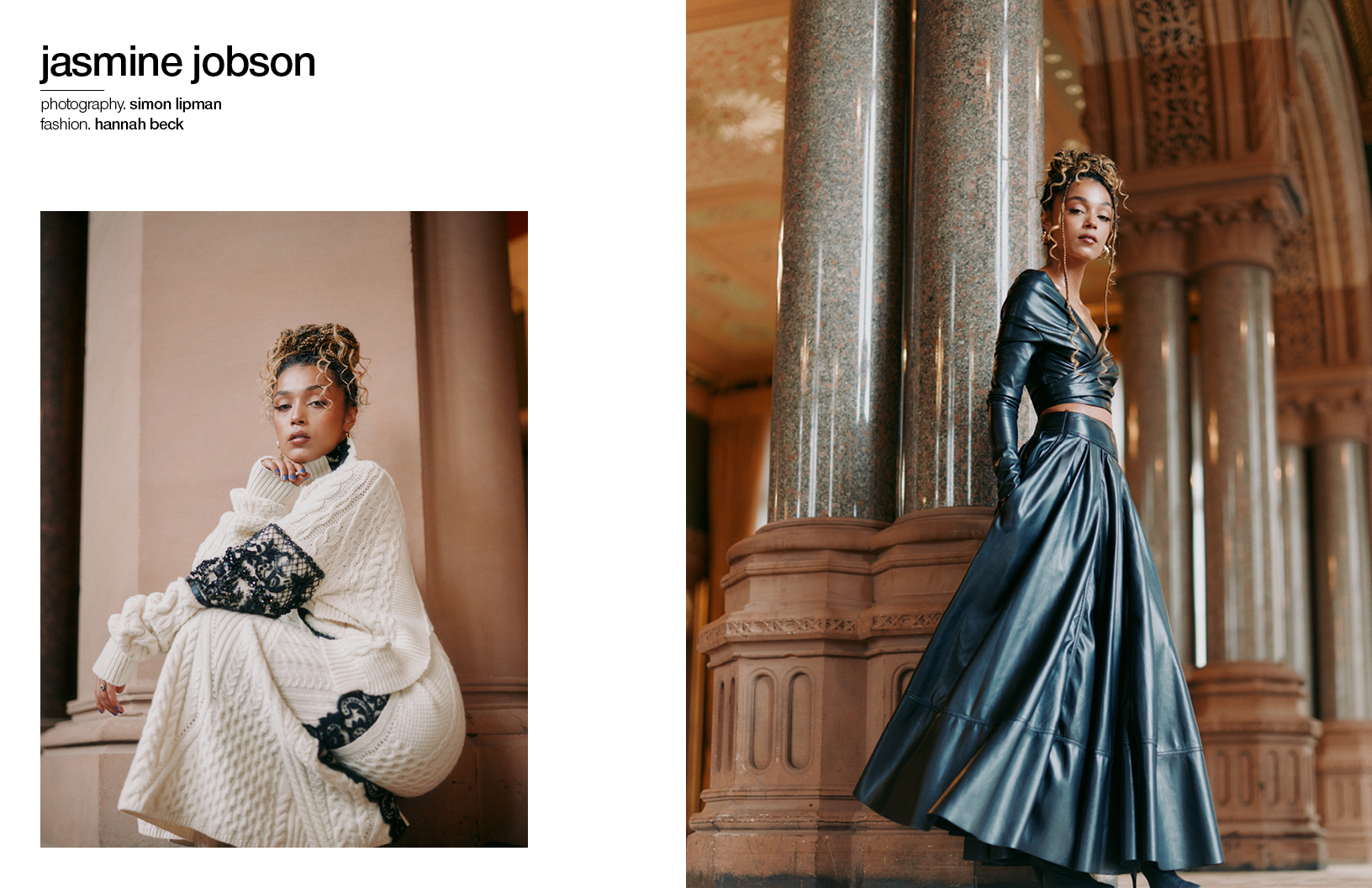
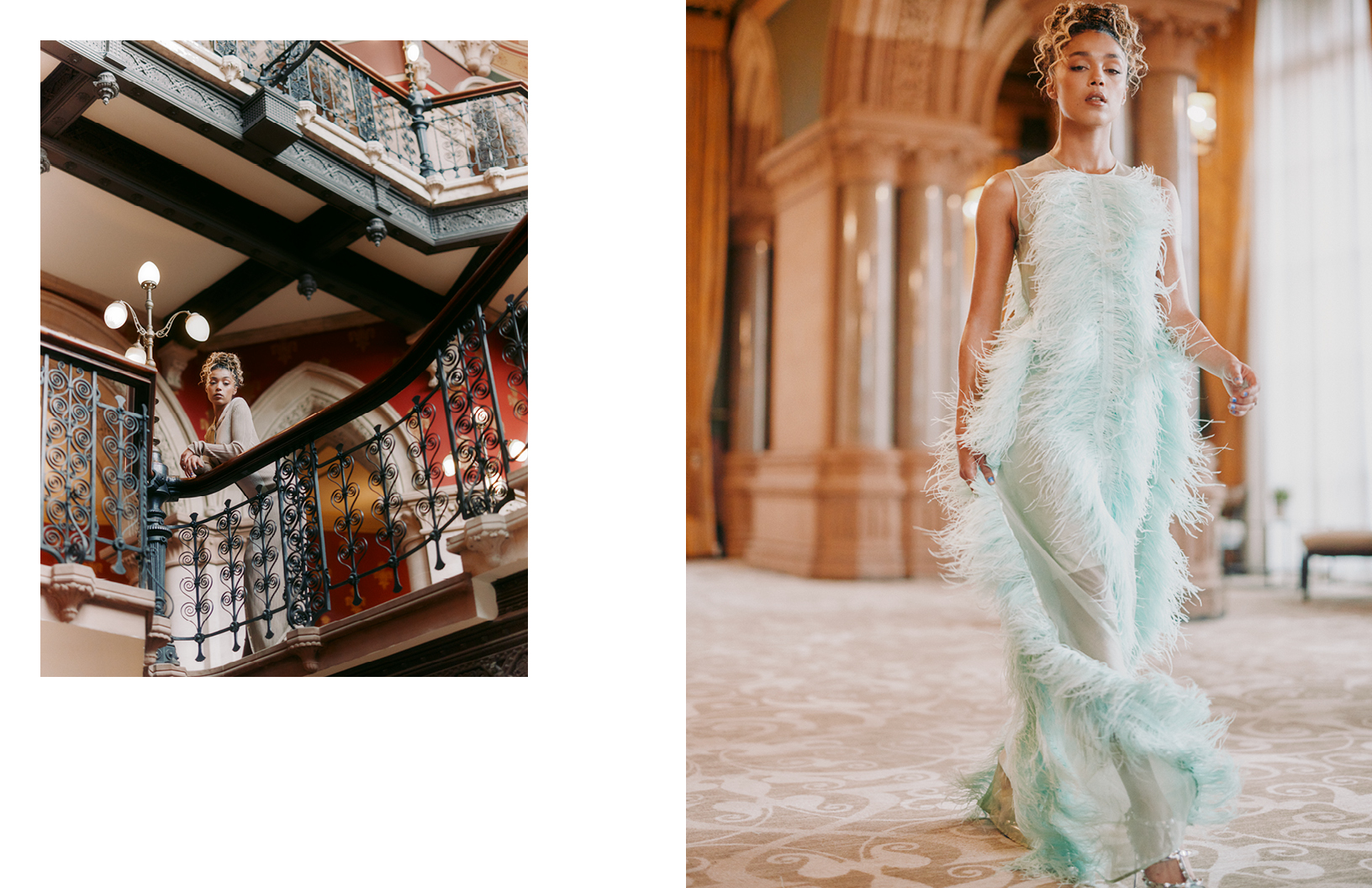
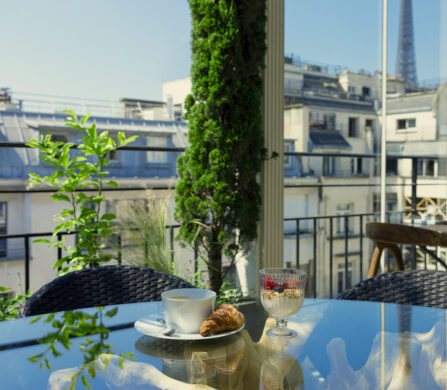
Jasmine Jobson has a knack for turning plot twists and roles into award-winning and powerful performances. Dressed in head-to-toe Prada and waltzing around the St. Pancras Renaissance Hotel for her Schön! 45
After nabbing two BAFTA nominations and a Best Emerging Talent Movie Video and Screen Award for her work in Top Boy , Jobson has seen her career grow with her. It’s a crazy thought for a girl who always longed to be on the stage. “It all started from Walt Disney movies: Bedknobs and Broomsticks, Chitty Chitty Bang Bang, Mary Poppins… You name it, I’ve sung it,” Jobson says, touching on her childhood spent at a local performing arts club.
Looking ahead, Jobson has her sights on ITVX’s Platform 7 where she plays the lead role of Lisa. “It’s a psychological thriller, definitely something that’s gonna keep people on their toes,” she explains. “I’m excited to watch it because I’m playing a completely different character. You get to see more of my vulnerable side, which I love.” Without a doubt, Jobson’s ascent is truly written in the stars.
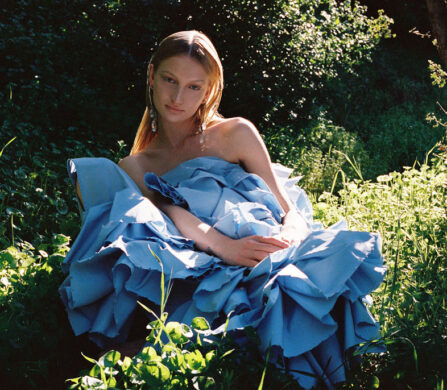
all clothing. ERDEM
full look. Prada
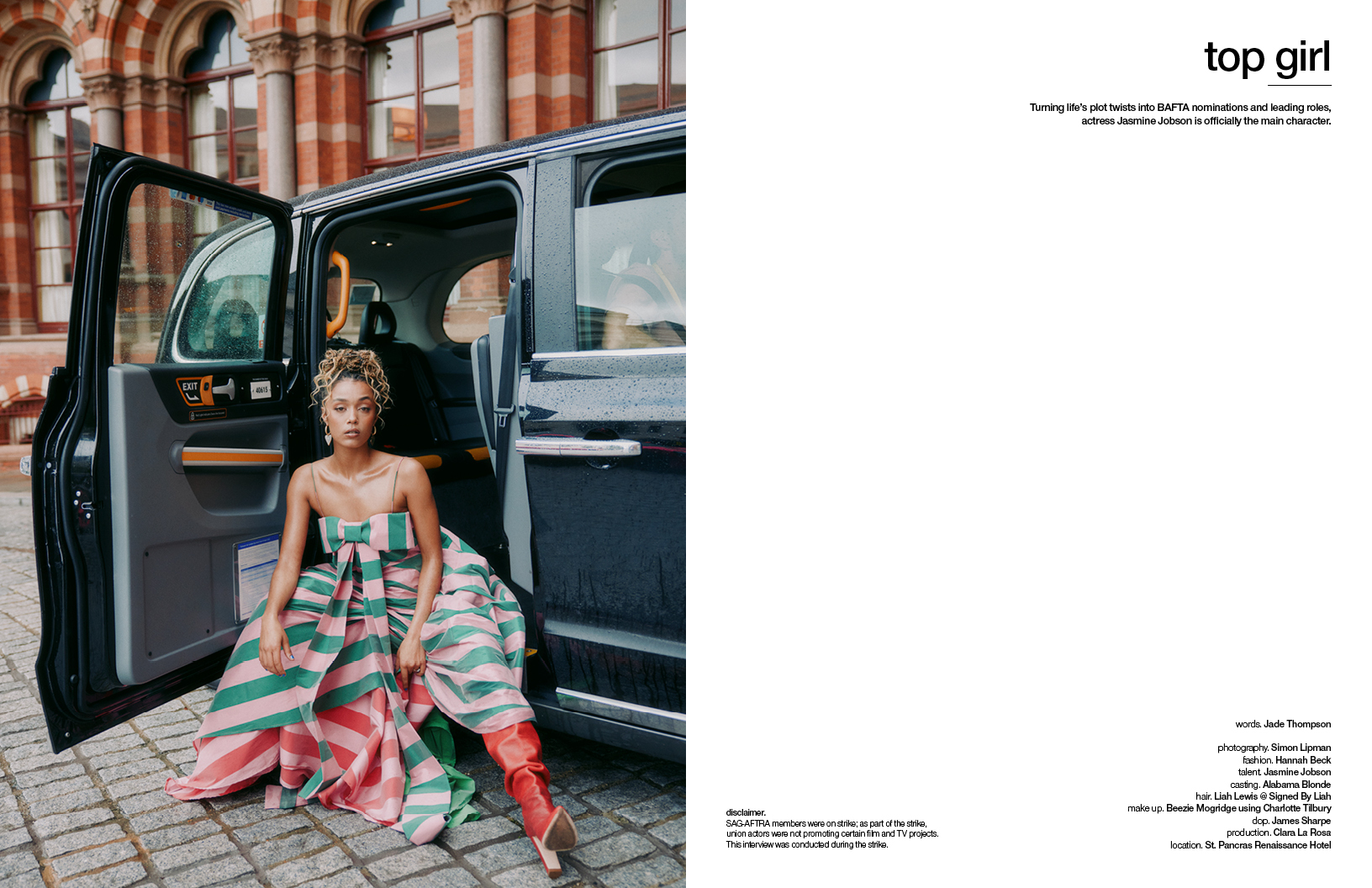
dresses. Bernadette
Platform 7 airs on ITVX this winter.
Discover the full editorial and our chat with Jasmine Jobson in print in Schön! 45 here
Get your print copy of Schön! 45 Amazon Germany , Amazon UK , Amazon France , Amazon Italy , Amazon Spain , Amazon Netherlands , Amazon Poland , Amazon Belgium and Amazon Sweden .
This digital cover + print editorial from Schön! 45
photography. Simon Lipman Hannah Beck Jasmine Jobson wearing Prada Alabama Blonde Liah Lewis @ Signed By LiahBeezie Mogridge using Charlotte Tilbury James Sharpe Clara La Rosa St. Pancras Renaissance Hotel Jade Thompson
by Schön! Magazine /
December 5th, 2023
Tags: + Napoleon Marios Mitsis , 3.1 Phillip Lim , 404 Studio , 8 by YOOX , A-Jane , Acne Studios , Ada Yıldırım , Adam Jones , adidas , Agence Silver + Alisson , Agmes , Ahzab Günel , AIGLE , Ajak Noi Dwol , Alabama Blonde , Alan Opio , Alana Schober , Alba Esteban , Alberto Murtra , Aleisha Digby , Alessandra Rich , Alex Eagle , Alex Echeverri , Alexander McQueen , Alexandre Gloaguen , Alexis Bittar , Alice + Olivia , Alper Kurtul , Alysi , Amar Faiz , Amber Louise , AMI PARIS , Ana Tess , Anabela Chan , Ancient Greek Sandals , andreeva , Anel Yaos , Angara Jewelry , Angèle Rose , Angelina Kendall , Ani Hovhannisyan , Ania Kisiel , Ann Demeulemeester , Anna Diop , Anna Sui , Annakiki , Anthony Pedraza , Antonia Künzel , Any d’Avray , Any Old Iron by Andrew Clancey , Aquamarine Models , Arch the Agency , Arda Anıl Kara , Area , Armand Basi , Art Department , artnest , AS by DF , Ashley Simmons , ASQUIN , Atahan Küçükatalay , Athena Son , Atsuko Kudo , Avril Lavigne , B Agency , BADD by MONSTER MANAGEMENT , Bally , Balmain , Baracuta , Bárcena Joyas , Beauty Omelette , Becky G , Becky Lee Skirrow , Beezie Mogridge , Ben Reeves , Benfourmi , Benjamin Schiffer , Bernadette , BEVZA , Beyond Retro , BIELO_OSCARLEON , Bigoudi , Birdy Lashes , Birkenstock , BLOW Models , Blumarine , BMW , BMW Motorrad , Bondeye Jewelry , Boss , Botter , Braden Bjella , Brando , BraveModels , Brian O’Connor , Brioni , Briwok , Bronx and Banco , Brooks Modeling Agency , Brunello Cucinelli , Buerlangma , Bumble and Bumble , Burberry , By Loleiro , Byredo , Calvin Klein , Camper , Can Büyükkalkan , Caovilla , Cappadocia , Capucine Clowes , Carlos Mangubat , Carlos Roca , Carly Hildebrant , Carolina Herrera , Caroline Noseworthy , Carrera , Cartier , Casablanca , Casadei , Cassiopée , Catie McGuinness , Cavusin , Cecilie Bahnsen , Celine , Ceren Altun , Chanel , CHANEL Beauty , Chantecaille , Charles & Keith , Charley McEwen , Charlotte Tilbury , Charlotte Watts , Chiara Ferragni , Chris Aaron Management , Chris Combs , Christian Louboutin , Christian Siriano , Christine Skowron , Christopher Miles , Claas Cropp Creative Productions , Clara La Rosa , Clarissa Carbone , Cody Rogers , colmar , Commando , Compte Spain , Converse , Coperni , Copertinamia , COS , Courreges , Craig Taylor , D Model Agency , D-Tales Creative Agency , Damian , Damian Weilers , Dana Gambini , Dana Reboe , Danasia Sutton , Danielle Hawkins , Danielle Sims , Dave Lantinga , David Andersen , David Koma , David Yurman , Davines , DAY ONE , Delphi McNicol , Denise Agency , Dennis Stenild , Diellza Jahiri , Diesel , Diletta Ariano , Dion Lee , Dior , Divergence Studio , Dolce & Gabbana , Dominique Cosmetics , Dominnico , Douglas VanLaningham , Dr Martens , Dr. Barbara Sturm , Dries Van Noten , Drunk Elephant , Dsquared2 , Dundas , Early Morning Riot , Edda Gimnes , Edoardo Montaccini , EENK , Ekene Ofuzor , Elevator Boys , Élise Morichon , Ella Citron-Thompkins , Elliott Smith-Hastie , Em Verleun , Emily Conrad , Emily Schembera , Emma Balcomb , Emma White Turle , Emporio Armani , Empty Behavior , Eñaut , era management , Erdem , Erika Cavallini , Established Models , Ethan Elliot , Ethan James Green , Etro , Eva Tsabriya , Eye Productions , Factory Downtown , Falke , Faraway , Fashion Model Management , Federica Barletta , Felix Dupuy , Fender , Fendi , Fenty Beauty , Ferragamo , filipe augusto , Flor de Maria , Frank Agency , frankagency.co.uk , Frankie Benkovic , Free people , Fusion Models , Gabriel Córdoba Acosta , Ganni , Gant , GCDS , Gennaro Costanzo , Gentle Monster , Georges Hobeika , ghd , Ghost Bond Professional Hair Labs , Gianvito Rossi , Gigi Fernandez , Gilbert Estrada @ Peechy Group , GIRL mgmt , Giuseppe Palazzolo , Giuseppe Zanotti , Givenchy , Glossier , Got2b , Greta Hajwos , Greta Oberwalleney , Gucci , H&M , Haikure , Hailey Hoff , Hair & Make Up , Hair by Sam McKnight , Hako Industries , Handsome Stockholm , Hannah Beck , Hartford , Havaianas , Hawes & Curtis , Hayley Williams , Heather Huey , Hellessy , Hermes , Hina Suleman , Hogan , Hotel Hilton Montera , House Of Emmanuele , Huishan Zhang , Huma Humayun , Hunter , i-d.studio , Ida Fiskaa , Ida Nyjordet , Idol Looks , iL Fratellino , Ildjima Masrangar , Illesteva , Imanniar Susanto , Imprimere LTD , Ingo Nahrwold , Ioana , Irida Anca , Isabel Raven , Isabella Pesina , İsmail İnan , Istante , IWC , Jacke Wie Hose , Jacquemus , jade thompson , Jaime Xie , James Sharpe , Jamily Wernke Meurer , Jasmine Jobson , Jason King , Jaxon Lane , Jazmin Kelly , Jean Paul Gaultier , Jean-Paul Guzman , Jeanne Friot , Jerome Cultrera , Jil Sander , Jimmy Choo , JO PLUS , Jocelyn Cabral , Johnny Castro , Jonas Huckstorf , Jonathan Tasker , Josh Showell , JStayReady , Juan Martí , Julia Bartsch , Junya Watanabe , JW Anderson , Kamil Sznajder , Kasteel Artist Management , Kate Hundley , Katie Johnson , Katie Shuff , Kegan Lambert , Kelly Koffi , Kelsey Barnes , kendall saretsky , Kenya Vallet , Kenzo , Kess Berlin , Kevin Cecil , Kévin Félicianne , Kilian Kerner , KIMHEKIM , Kinga Ludwin , Kiska Lab , Kostas Avgoulis , Kriba , Krizia , L’Atelier NYC , La Mer , LA Roxx , Lacoste , Lady Grey Jewelry , Lali , Lancôme , Landon Rivera , Lanvin , Lapoti , Laretta , Laruicci , Las Vegas , Laviea Thomas , LE PURE Organic Skincare , Le Vian , Leisly Muaka , Leo Braun , Leon Hoffmann , Leonor Greyl , Less Is More , Levi's , LGN Louis Gabriel Nouchi , Liah Lewis , Lillian Shalom , Lilou Paris , Lindsey Hartman , Lock & Co Hatters , Loewe , Lola Casademunt by Maite , Lonnie Dean , Louie Cobo , Louis Hofmann , Louis Vuitton , Luca Falcioni , Luna B , Lunar Beauty , Lyla Cheng , M T O F , mac cosmetics , Machka , Madison Lynn , Madrid , magda butrym , Maisie Wilen , Maison Alaïa , Maison Margiela , Maja Sharon Bebber , MAKE UP For EVEr , Makers , Mara Hoffman , Marc Jacobs , Marcello Bona , Marco Rambaldi , Maria Troumpouki , Marie-Amélie Sauvé , Mariemur , Marilena Angelides , Marina Venancio , Marine Serre , Mark Gong , Mark Kenly Domino Tan , Marni , Marshall , Marshall Headphones , Mattia Guaglianone , Mattia Marazzi , Max Kastelyn , Max Mara , Max Mikulecky , MAX&Co. , MEDIA25 STUDIO , Mehdi Bensalah , Meral Büyükkalkan , Merilyn Chang , Meruert Tolegen , MFT Agency , Michael Kors Collection , Michaël Vafiadis , Mika , mike furey , Milena Gorum , Milena Paladini , Mina Vestnes , Minna Schümann , Mint Management , Misho , Miu Miu , Miwa Moroki , MM6 Maison Margiela , Moana Grau Nina Raasch , Mohamadou Diakhité , Mônot , Monsoori , Montblanc , Mood Mode , Moritz Christoph Ullrich , Moroccanoil , Moschino , Mother , Mouna Models , Müge Yorulmaz Güven , Mugler , Mulberry , Mynxii White Jade Thompson , MyTheresa , N°21 , Nadin Narod Agopyan , Namilia , Natalia Rizou , Nemozena , New Relation , Nicolas Eftaxias , Nicole + Felicia Couture , Nicolò Parsenziani , Nikki Kauten , NILE RODGERS , Nina Raasch , Nina Ricci , Nirina Metz , Noah Kächelin , NOKI , Nova Twins , nu , Olatz Azcona , OLYMP , Omega , One Represents , Oribe , Ottolinger , OUAI , Our Legacy , Pablo Rodriguez , Paffen Sport , Pandora , Paolo Leduc , Pat McGrath Labs , Patrick Clark , Paul & Joe , Paula Rowan , Paula Tabanera , Pauli Beutel , Peggy Hartanto , Petar Petrov , Philip Margalias , Philipp Kurepin , Philosophy Di Lorenzo Serafini , Piers Atkinson , Piferi , Prabal Gurung , Prada , Premier Model , print. Huma Humayun , Priscavera , Qisi Feng , Quin Jaye , R.E.M Beauty , Rabanne H&M , Rabat , Rachel Martin , Ralph Lauren , raoul Keil , raphael balzer , Rare Beauty , Rare Romance , Rawdah Mohamed , Ray Brown Productions , Raynald Bernard , Rebecca Teldja , Reilly Sullivan , Ren Pidgeon , Reza Rage , Rhonda Repotente , Rhys Frampton , Richert Beil , Rick Owens , Roberto Cavalli , Rockins , Roger Vivier , Roksanda , Rosetta Getty , Roxane Mercerat , Saint Laurent , Sam Dameshek , Sandy Aziz , Sara Francesca Ferroni , Sara Herdzik , Sarah Sokol Millinery , Sarah Willmeroth , Saskia Jung , Savas Hayri , Sébastien Poirier , Seiko , Self Portrait , Sergi Pons , Sergi Pons Studio , Sergio Rossi , Seyma Erikçi , Shama Nasinde , Shamara Roper , Shannon Studios , Sheika Daley , Sheri Chiu , Shine Like Me , Shu Uemura , Signed By Liah , Simon Azoulay , Simon Lipman , Simone Bodmer-Turner , Simone Rocha , SOBOYE , Sofia Peralta , Sofia Troyano , Sony Music , Spiros Daskalou , Sportmax , Sprado Jewels , Ssheena , St. Pancras Renaissance Hotel , STATE Artist Management , State Management , Stefanie Mellin , Stella McCartney , Stephan Lesger , Stephanie Hui , Stephanie Pistel , Stine Goya , stolenbesos , Studio Albatros , Studio Apolo , studio navona , Success Models Paris , Suzanne Rae , Swarovski , T-Mobile Arena , Tabea Widmann , Tempomedia , Tessa Swantek , The Atrium , The Frankie Shop , The Great Frog , The Hive , The ONLY Agency , The Row , The Team , Tiffani Greene , Tiger Bahmb , TMG , To Allo Miso , Tom Marshak , Tommy Hilfiger , Tony Ibarra , Treslúce Beauty , TWO MANAGEMENT , Tyema Shelby , Tyler Roste , Ulla Models , Underground , Ungaro , Unite Hair , Untitlab , Vagabond , VALENTIN LESSNER , Valentina Castro , Valentina Zanardi , Valentino , Vautrait , Verguenza , Versace , Vex Clothing , Victoria Monét , Virgile , VISORI STUDIO , Vivienne Westwood , VN MODEL MANAGEMENT , Wendy Turner , White Retouch , William Bru Waardal , Wing + Weft Gloves , WMA , Wolford , WOW Concept , XAVIERLUGGAGE , Xavio Leanza Trentanove , XIMONLEE , Y/PROJECT , Yaelle Couhé , Yohji Yamamoto , Yolancris , YPARIS , YUME YUME , Zachary Gray , Zara , Zegna , Zelve Open Air Museum + , ZHONG Studio , Zilan Ikinci