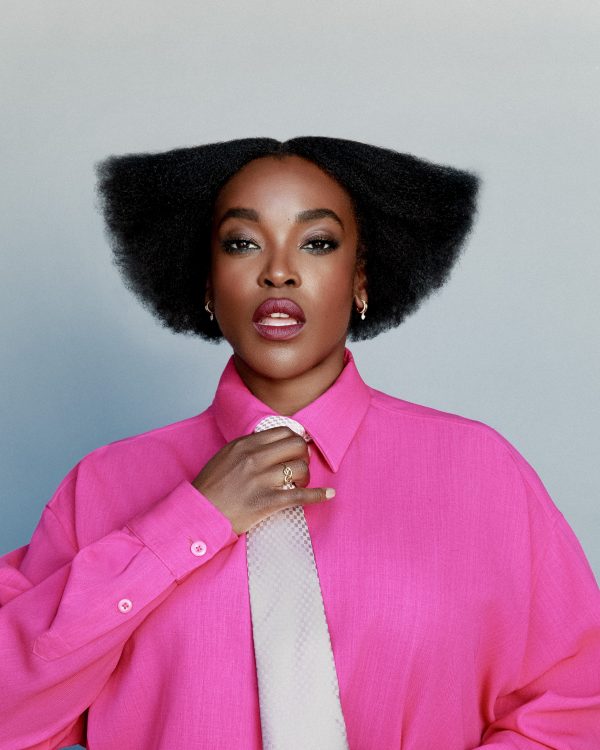
Being brought up around sets her entire life, Lilah Pate never took a moment of it for granted. Though show business was never an option before the age of 18 due to her parents’ reservations, Lilah made a point of absorbing everything around her like a sponge, knowing very early on that creating was in her future. Carefully cultivating her voice away from prying eyes and keeping it as close to the chest as possible, music, songwriting and acting just felt right. The perfect conduit to Pate’s ravenous creative appetite. From writing her own music to taking improv classes to add another skill to her acting repertoire, she was always determined to find herself in a creative environment. Now, in Rebel Wilson’s ‘Girl Group ’, Pate has the best of both worlds. Acting and singing. A blend of two disciplines she holds most dear; she was able to put the range of her abilities to the test.
And she got to see the fruits of that labour play out on one of the biggest screens on the international stage. Premiering at the Toronto International Film Festival, Pate was watching the final cut of ‘Girl Group,’ alongside the audience for the first time. It was a true ‘pinch me’ moment, and one that she isn’t likely to forget anytime soon.
Chatting with Schön! Magazine, Lilah Pate discusses growing up in the industry, blending her love of music and acting, why everyone should take an improv class at least once in their life, and so much more.
You grew up in the industry, you’ve spent time on film sets, you’ve been all over the world, and you said in another interview, you were able to focus on your craft outside of the world’s opinion. I think that’s huge. How did growing up in the industry and being able to hone your own voice help shape you into the artist you are today?
What a great question. Not many people have the privilege of letting their minds run wild with creativity because they’re constantly burdened by the realities of life and its responsibilities. I’m one of the very lucky few who got to explore my imagination and creative side in a real way. From the time I was born, being around film sets and those creative worlds was what I knew. That was what a job looked like to me. Because of that, I had the opportunity to explore my craft and learn, but I wasn’t allowed to act professionally until I was 18.
I was almost 18 when I finally convinced my parents to let me give it a shot. They wanted to make sure I wasn’t pursuing acting for fame or fortune, because the odds of achieving that in any artistic field are so slim. They would ask me, “If you’re 80 years old and an acting teacher in your hometown, would that fulfill you? How much do you love the craft?” They reminded me that if I wanted to act, I could do local theater, take classes, or make iPhone movies with my friends. I didn’t have to pursue it professionally. They wanted to make sure I could handle the rejection and competitiveness of the industry, but they also wanted me to be a kid for as long as possible and do it simply for the joy of it. I think that approach allowed me to be around professional environments while still being a free spirit who was just getting to play.
Eventually, I found an open casting call posted online by an agency in Raleigh, North Carolina. I was 17, and I kept asking my parents, “Can I please go? Can I please go?” They told me I could drive down and audition, but they weren’t going to call in any favors. So I went, and I signed with the agency. My second audition was for ‘The Summer I Turned Pretty’, which I went on to do in the first season. I filmed it during my senior year of high school, shortly after turning 18. Even then, my parents still wanted me to go to college.
The rule was that they would help support me as long as I was in school and getting an education. If I wanted to pursue acting professionally, that was amazing—they loved me and supported me—but I would be completely on my own. I knew I wanted to stay in school and keep learning, so I took two years to just be a student and focus on getting better. Eventually, I told myself, “Okay, I’m really ready to audition again.” Then I got a manager in L.A., and things started to change. Now, I’m fully working.
What does your unique brand of creativity look like?
I primarily live in Wilmington, North Carolina, although I travel all the time and work all over the world. When I’m home, like I am right now, I really like being in nature. I just wrapped a movie here last night, fortunately only about an hour outside Wilmington, so I’ve been able to spend most of the past month at home, aside from my lovely adventure at TIFF. I like having my feet on the earth. I meditate a lot and imagine my feet growing roots into the ground to help me feel grounded. I love watching the sunrise every morning, doing puzzles, and colouring. I make these really bad little sketches because I’m not good at drawing, but they make me so happy. They’re little characters, and I have hundreds of them all over my room.
I always want to have artistic outlets that are purely for expression. I have a keyboard, and I’ll write a song; I have my guitar and ukulele. I spend a lot of time in nature, too. We live on the water, so I take our boat out. I think being free and living your life is the best way for me to maintain an open dialogue with whatever creative forces move through me. I never want to close myself off to that. In the past, I didn’t fully understand when my mom would tell me, “You’re such an open vessel. Don’t close yourself off.” It’s instinctive for me to feel everything and then pour it into something creative. As I’ve gotten older, I’ve realized that you have to keep that communication open. When I write a song, for example, inspiration usually comes when I’m in the shower, out on a walk, or not distracting myself with a device, music, a podcast, or television. Something will just shoot through me, and I have to write it down right then.
That’s my creative process. It looks different depending on what I’m doing, whether it’s acting, screenwriting, or music. But I think having these outlets that are just for play keeps that part of me alive.
I feel like the more we disconnect from social media and other distractions and get in touch with ourselves, the more creativity can flow.
Absolutely. With social media, you start focusing on the outcome, how something will be perceived, and how to game the system so it’s received well. But creating art stems from the purest feelings of human emotion and the need to create. I try to remind myself that I’m not on a specific timeline. There isn’t a goal I have to achieve by a certain age. As long as I keep creating things that mean something to me and continue getting better, I have faith that things will work out. I just try to keep that at the core instead of getting lost in social media and the comparison game.
With ‘Girl Group’, what were your immediate thoughts when the script came across your desk?
The script is just hilarious. The second I saw the audition pop up in my inbox with Rebel Wilson attached, I thought, “Oh my gosh, I want this one.” I knew I needed to be as free as possible in the audition, especially because they were putting together an ensemble of people to create this girl group in the film. I loved it and wanted to be part of it. I’d recently gotten more into improv and comedy. I took a couple of comedy classes in college and some outside of college, too. It was something I really wanted to explore, which is funny because my mom was always telling me, “Go into comedy, go into comedy, go into comedy!” And I’d say, “I want to be a dramatic, serious actor.” Of course, you can do both.
I also think improv really pushes you to be fully present in the moment. I genuinely never know where a take is going to go. It’s not a system where I say my line, and we fall into a rhythm without actually hearing each other. Improv brings you back to the root of what acting is in such a fun way. It allows you to be completely in the moment and have those pure reactions. I was obsessed with it and couldn’t believe I got to bring it to life.
What was your first improv class like?
My first-ever improv class was when I was really little. These days, I don’t have social anxiety. If anything, I feel like I have the opposite. I’m very free to be myself. I have this “We’re on a floating rock; it doesn’t matter that much” mindset. Have fun, live your life, make it an adventure. But when I was little, I remember taking my first improv class in New York City, where I think we were living for about a year. I was pushed into a circle and told to do something, and I just started crying. I was so anxious! I think it was because I was around a bunch of younger kids, and I thought I should have been in the teenage class.
I went back to improv before college, when I was living in Charleston, and took a class where I was the youngest person in a room full of adults. I had so much fun with them, even though some of the exercises involved just staring at each other. It’s a humiliation ritual! That’s half of what film and theatre classes feel like, too. I studied film and theatre in college, and you do things like movement for the actor, where you’re walking around on the floor like animals. Anyone who hasn’t taken a theatre class would look at you and wonder, “What is going on?”
But those exercises help you get out of your head and into your body, in a way, so you can perform onstage or in front of 100 crew members without being so self-conscious. You learn to let go. It’s about recognizing that if I’m feeling really insecure in an interaction, I’m not actually listening to you or connecting with you. All these classes and exercises are designed to get you out of that fixation on how you’re being perceived. They help you be emotionally honest and present with other people, whether in conversation or in a scene. I think all of those experiences have come together to help me grow as an actor.
You’re making me want to take an improv class.
I genuinely think everyone should take an improv class, especially people in long-term relationships. In any relationship, we can get so used to hearing things a certain way that we assume we know what the other person means. Half the time, during an argument, we’re not even listening to each other. We’re thinking, “I know you’re upset with me for this reason, and I’m upset with you for that reason.” But in improv, you have to listen to each other. I’ve seen married couples I’m friends with take improv classes even though they aren’t actors, and it has helped fix their marriages. After years together, couples can stop really hearing each other. They assume they’re going to be criticized or nagged about something, so they react before the other person has even finished speaking. Improv makes them actually listen to each other again. It’s beautiful.
As a millennial, I loved the film because I grew up with Destiny’s Child, the Spice Girls, and the Pussycat Dolls. Now we’re seeing a resurgence of girl groups, from KATSEYE and BLACKPINK to BABYMETAL. Why do you think this formula continues to work so well?
I think there’s nothing more powerful than a group of women coming together and singing about female empowerment, independence, and not needing a man. Those messages are so important for young people. That’s something I love about groups like the Spice Girls in particular: each member has her own individual identity. What I loved about this movie is that we’re all so unique. Each of us brings something special to the group, and I think the way that individuality is highlighted is really beautiful.

You’re a musician yourself, and you got to blend both of your loves together. How rewarding was that?
This was honestly one of the most rewarding experiences of my life. I grew up singing. It was my first love and what I always wanted to do, but it was also something I lost confidence in. I remember being at a talent show when I was little, and the girl who performed before me had one of those voices that made you feel like she was put on this earth by God to sing. It was beyond natural. Her tone was unlike anything I’d ever heard. I knew I had a pretty voice and good pitch, but I didn’t have that jaw-dropping voice. I thought that meant there wasn’t room for me. I think there’s this mindset that there’s a limit to how much music, talent, or success the world can accommodate, and it causes so much inner turmoil.
I continued singing for myself, but I largely stopped singing out loud. I’d write little songs, but I became shy about sharing them. I thought, “I love doing this, but maybe I’ll just be a songwriter.” I’ve always written poetry, so I figured I could write for other people because I still didn’t have the confidence to pursue music on my own. But when you open your heart to something you feel you’re meant to do, the universe can align with that pretty quickly. I always had this nagging voice telling me to pursue music, but I kept thinking, “I’m not good enough, and I don’t want to try something when there are people who are genuinely so talented at it.”
Then I directed a short film, and I went to lunch one day with the people who composed the score. I asked them, “Do you guys ever produce music? I’ve written so many songs, but I’ve never heard them.” They invited me to come by, and I spent a week recording songs I’d written. I showed up with a 100-page document of songs I’d written over the years, starting when I was 14. I just wanted to hear what some of them sounded like, and it was so much fun. Literally two weeks later, I got the audition for this movie, and I had to sing. It was one of those situations where I just had to fake it till I made it. I’d taken vocal lessons my whole life and done musical theatre, but when I booked the role, I remember thinking, “They think I can do this.” I was hearing everyone else’s voices, and they were incredible. If they thought I could blend into this world, why shouldn’t I believe it, too?
That experience lit a fire under me to pursue music without expectations. I want to make songs and art that I feel called to create and continue getting better. Rather than comparing yourself to other vocalists, admire them, look up to them, let them motivate you, and then make your own work and see what happens. That’s what music is to me: a creative art project that I’m taking seriously. I’m trying really hard, but I also have acting and screenwriting to fall back on. Music is something I do after work or between days off. This movie reignited that passion for me.
“Fake it till you make it” is such a powerful statement because eventually, it stops being fake and becomes real confidence. Speaking of confidence, you debuted your first single, “Shoebox,” last month. Why did now feel like the right time to share your music?
It’s funny because, despite knowing so many people in the music industry, I knew absolutely nothing about how it worked. I didn’t know how to sign with a label or what a producer really did. I knew less than nothing, and I was learning very quickly. After I came back from London, I wrote some more songs and sent them to a connection in the music industry, basically asking, “Are these horrible?” I’m fine with the answer being yes. I’m not an artist who hates their work or a tortured artist. When I work really hard on a project, I can be very hard on myself. I don’t just gas myself up all the time.
I also feel a real sense of fulfillment in starting something and finishing it. Those demos ended up being shared around without my knowledge, and suddenly I was hearing from different labels. I remember thinking, “Whoa, what’s happening?” I decided to go to L.A. for a couple of months to work with producers, which I’d never done before. I knew I was going to book something by April that would require me to move, so I thought, “Okay, I have half of January, February, and March to go to L.A. and work on music. Let’s see if I can start a music career in two and a half months.”
My dad thought I was putting a lot of pressure on myself by setting a deadline to book a major project by April. I told him I wasn’t going back to school and wanted to pursue this. He’s always encouraged me to take screenwriting seriously rather than waiting for my dream roles to come along, empowering myself as a woman behind the lens and creating those opportunities. So he told me that if I didn’t book something by April, I had to go somewhere for a month and write a script from start to finish.
That sounds like a good deal.
I knew I was going to book something, so I wasn’t worried. I would have loved that alternative, too. Either I was going to take writing seriously and really focus for a month, or I was going to L.A. to make music. I went to L.A., started making music, and began meeting with music managers. I created an entire pitch for my project. I also got my heart broken while filming this movie, so I had a whole body of work that I needed to bring to life. I had so much I wanted to say and create. I wrote and completed so many songs while I was in L.A. Eventually, I chose a label I loved, knew, and trusted to give me agency over my art and creative process. Then I went off to film the show.
My dad was so kind to get my song placed in ‘Outer Banks’, which I didn’t even know was happening. He’s my biggest supporter, and I know how much he loves me, but I never really thought that would happen. That placement meant I had to release “Shoebox” sooner than expected. I’ve written so many songs and made so many demos, and I think I always told myself, “I’m going to keep getting better.” The next batch is always better than the last.
It’s scary to start something, especially when you don’t have an audience yet. Beginning anything from scratch makes you feel vulnerable. But at a certain point, you just have to start. I know I’m going to grow, but these songs mean something to me at this point in my life, and I’m proud of them. I’m directing my own music videos, too. It’s time to stop saying you want to do something, going back into the studio, and waiting. You have to choose your favourites and move forward.
Bringing it back to ‘Girl Group,’ take me back to the premiere. What was it like watching the film alongside an audience?
I was terrified! First, I’d never watched myself with such a large audience. Second, I’d never watched something on that scale without seeing it beforehand, and I hadn’t seen the film at all. There was so much improv, and Rebel’s original cut of the movie was three hours long, so I knew a lot would be cut. I didn’t know which jokes would make it or what the final shape of the movie would be. With a comedy that has so much improvisation and so much plot to fit into a certain amount of time, I had no idea what to expect. But I felt so much joy and pride for everyone involved, and I didn’t go in with too many expectations.
I’ve been to other premieres where I was really nervous beforehand, but this time, I got ready super early. My parents came, which was so much fun, and I love this group of people so much. Being reunited with them meant everything to me. The TIFF atmosphere was incredible. The red carpet, the people, the whole experience—it was amazing. They made me feel like a star, which was the sweetest thing ever. I remember thinking, “You don’t know who I am, but thank you for pretending you do!” It was such a great experience, and I’m so proud of the movie.
I can’t wait for the film to get a wider release so more people can see it. I think it’s going to be a hit. It’s giving ‘Pitch Perfect 4′ vibes. What’s something you learned from making this movie?
The biggest thing that comes to mind is watching Rebel Wilson direct, write, and star in the movie. Wearing that many hats is incredibly difficult, and she did it with such grace and kindness. I want to direct and write in the future. I’ve written and directed a short film, but I deliberately didn’t star in it because I wanted full control over the shots and frames I was creating. I didn’t want to get caught up in taking extra time to watch everything back.
Since then, I’ve directed two music videos that I also starred in, and I learned so much from that experience. Watching Rebel taught me a lot about running a set while also performing in it. It’s a lot to balance. I was also so inspired by the improv skills of these veteran actors. They kept me on my toes. Sometimes, I’d forget I was even in the take because I’d get so caught up watching a back-and-forth between Rebel and Jamie Lee Curtis. They’d be going back and forth like a ping-pong match, and I’d think, “Oh my gosh, I’m still in the frame!” I was completely enamoured with them.
If you could write a song for Xplode, what would it be about? What would it center on?
So many ideas come to mind. I think it would be a “Misfit” song, something like a Bad News Bears anthem. A song about underdogs and ride-or-die friendship. So many of us are unique and awesome, and I think capturing that energy in a song would be really fun.
When do you move from creating art for yourself to feeling like it’s good enough to share?
That’s a really good question. I’m someone who needs silence to create. I have ADHD and dyslexia, so even the sound of rain can make it difficult for me to concentrate. I can’t go to a coffee shop and socialize while I’m writing. It’s a very solitary experience. Even when I’m developing a character, I’ll journal as that person and try to understand everything about them. Eventually, I reach a point where there’s this bubble of excitement and I want to share what I’ve created.
The people I share my work with most are my parents. I’ll be in my room writing, and a few hours will go by. Then I’ll reread what I’ve written and sprint to my dad’s office shouting, “Read this!” even if he’s in the middle of a meeting. I definitely share things with my parents first, sometimes before they’re even finished, because I’m just so excited. With other people, I’ve learned that it’s important to seek opinions without becoming emotionally dependent on them. At the end of the day, you have to trust your gut.
There have been times when I’ve really liked something, shared it with someone, and they’ve called it “cringey” or criticized it in some other way. Suddenly, you start carrying that judgment around with you. So it’s important to know what you genuinely like and trust your instincts. I have a core group of people whose opinions I really value.

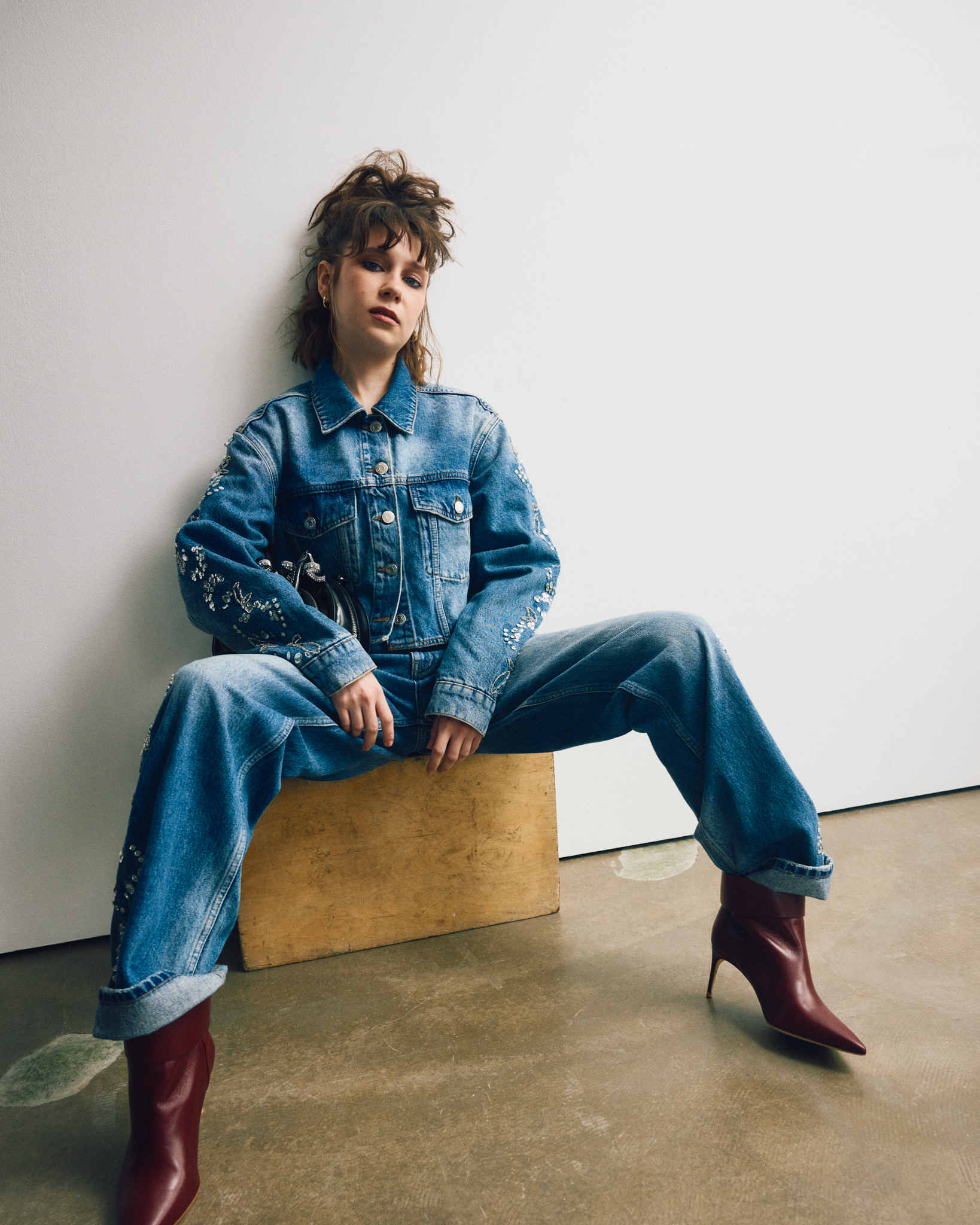
photography. Mallory Turner
talent. Lilah Pate
make up. Dani Parkes
hair. Joseph Chase
editor. Kelsey Barnes
interview. Dana Reboe
















 Sporting a Canadian tuxedo for the Midnight Madness premiere of his latest film ‘Vintage Violence,’ Cole Sprouse walks casually down King Street West, cutting through festivities after hopping off the 504 streetcar. His first