

Few faces have come to define an era quite like Twiggy’s. With her cropped hair, doe eyes and unmistakable presence, she became the face of the 1960s almost overnight — a working-class girl from London who never set out to become a global icon and a cultural monolith. More than six decades later, the woman behind that image remains just as compelling.
In ‘Twiggy’, director Sadie Frost revisits the extraordinary life of Lesley Hornby, tracing her unexpected rise from aspiring fashion designer to the world’s first supermodel, and following the many reinventions that came afterwards: actress, singer, Broadway performer, designer, television personality, wife, mother and grandmother. Featuring an extraordinary archive alongside reflections from friends and collaborators including Paul McCartney, Dustin Hoffman and Joanna Lumley, the film looks beyond the mythology of Twiggy to the person who lived through it.
For Twiggy, agreeing to the documentary was no small decision. Her life, she says, is also the story of her family, and putting it on a screen meant opening a deeply personal archive. But Frost offered something that felt different: a shared understanding of what it means to grow up in the public eye, to reinvent yourself and to navigate a career that never followed a straight line.
What emerges is a portrait of a woman who became a fashion icon almost by accident, but whose life was never defined by the image the world created around her. Her story is one of instinct, reinvention and an openness to whatever came next — from the fashion world to film, Broadway, television and design. She has spent a lifetime embracing the unexpected, often saying yes before she knew quite how she would do it. And perhaps that is the enduring appeal of Twiggy: beneath the extraordinary photographs and cultural mythology is someone remarkably grounded: curious, warm, funny and deeply devoted to her family. Her story is ultimately less about becoming an icon than about remaining herself — and finding, along the way, that kindness, humour and an open mind can take you somewhere you never imagined.
In conversation with Schön!, Twiggy and Sadie Frost sit down to discuss the making of the documentary and why now was the perfect time to share her story.
You said you’d been approached many times before to make a documentary and always said no. What was different about the way Sadie framed it that made you say yes?
There were some old documentaries that were done by various people years ago, and over the last 20 years or so I’ve been approached to do a big, proper, in-depth documentary. But it’s a big decision to make because it’s very personal to me. It’s my life and my family, and you have to consider everybody. Most people have a family album where maybe once a year at Christmas the family sit down and go through it, but to actually have your life up on a big screen is a very big decision.
I also knew that if I didn’t do it with somebody soon, somebody might do it anyway. Sadie had just done her first documentary about Mary Quant, and she came on my podcast, ‘Tea with Twiggy’, to talk about it. I watched ‘Quant’ and thought she’d done a brilliant job. I said to her, “So you’ve got to do another documentary now. What are you going to do?” She said she’d loved doing Mary Quant because so much of the research was about the ’60s, and she’d love to find somebody else who was involved with that era. Then she said, “Oh, I should do you.” I said, “Oh, okay. Let’s meet privately and talk about it.”
We went to lunch the following week and got on really well. I loved the fact that she’d had a similar existence to me. She’s been a model, she’s an actress, she’s a designer — and I’m very passionate about designing clothes too. It just gelled. She took the idea to Nick Hanson at Film Soho, who distributed ‘Quant’, and he said yes.
You have this reputation for being a real “yes” person. Throughout the documentary, there’s this sense of you thinking, “Why wouldn’t I try acting? Why wouldn’t I design clothes? Why wouldn’t I go to Broadway?” Has that openness carried you throughout your life?
To a certain extent. I didn’t plan my career at all. The ’60s seem to strike a chord with so many young people now. I get a lot of mail from girls and boys who are 14, 16, 18, up to 25, doing projects on the ’60s. They’re obsessed with it. I think they know more about the ’60s than I do.
What do you think it is about that era that continues to resonate with people who weren’t even alive then?
Amazing things happened then. England, and London especially — and Liverpool, because you can’t think about the ’60s without the Beatles — suddenly became the focus of the world. Fashion was changing too. Up until the early ’60s, fashion came from Paris and was very elegant and grown-up. Suddenly, there was Biba and the wonderful Barbara Hulanicki, making clothes for teenagers at an amazing price. I remember saving my pocket money and going down to buy things. You could get a dress for two pounds and a pair of boots for four pounds, and they were amazing clothes. She was revolutionary. Then there was Mary Quant, the music, the art — Peter Blake and so many others. London was such a focus. What’s weird to me is that it’s struck a chord with young people now. It’s amazing.
The world came to know you as Twiggy, but how important was it to you that Sadie told the story of Lesley Hornby, the person behind the icon?
Very important. I hope it shows young people that I didn’t plan what happened to me. I was a happy young girl. I had a lovely mum and two lovely sisters who are still around. I was one of those weirdos who loved school. I was planning to get my exams, go to art college and study fashion and design. I wanted to be a designer. Then all of this happened to me. If you look at the models of that day, there was Jean Shrimpton, Veruschka — all these extraordinarily beautiful women who were five foot ten, five foot eleven. I was five foot six and tiny. I didn’t look like them, and that was probably why it happened. When I went to Leonard’s to have my hair styled for a test shot, Leonard came over and said, “Can I cut your hair?” I didn’t want my hair cut, but I was so shy I didn’t say no. I just sat there.
I often think, “Wow, if I’d been a bit bolder and said no, I might not be sitting here now.” That haircut led to a journalist seeing it, and that was the missing link. Then Diana Vreeland, the editor of American Vogue, brought me over to America and, as I always say, she turned me global.
One of my favourite stories in the film is your first trip to New York and the hysteria around you, including that extraordinary photoshoot with people wearing Twiggy masks. You nearly got crushed in the crowds. Now that you’re back in New York doing press for this documentary, does it feel full circle?
I have to say, I love New York. America has been so good to me. Obviously, what happened to me initially happened in England, and London will always be my home. But America embraces something new. They love success, and they do it with love. When Diana Vreeland brought me over and introduced me to the greater world, America embraced me. When I did my Broadway show with Tommy Tune, they were so gracious and welcoming to me.
I owe America a lot because it could have all just stayed in England very easily. America embraced me and always has. That’s why I’m so excited that we’re launching the documentary here. It’s already been out in Europe, Japan and Australia, and we’ve had amazing feedback and reviews, so it’s very exciting.
When you first arrived in New York, did you have any idea how intense the reaction would be?
No, I didn’t expect it. The Beatles had come to New York earlier, in the early ’60s, and I came in 1967, so there was still a bit of that British Invasion feeling. It was weird. I did nearly get squashed. I thought the photographer was mad when he said I was going to have a bodyguard. I said, “I don’t need a bodyguard. I know I’m little, but I’m strong.” Obviously, I did need one. Crowds can get out of hand because people push from balconies, and it was a bit scary.
Sadie has spoken about the parallels between your lives — modelling, acting, motherhood and living under public scrutiny. Did that shared experience make it easier for you to be vulnerable with her?
I thought it did. Especially being in the public eye, because she understands what it’s like professionally and privately. Lots of documentary directors don’t know what that’s like, but she’s kind of been there and knows what it feels like. I also loved the fact that she was a woman. To do a story about me, I thought, “She’ll kind of get it.” That was important to me.
Was having a female lens particularly meaningful when you think back to the photographers and the world you entered as a young model, where women were often expected to just put up with difficult behaviour?
One of my favourite people in the documentary is Joanna Lumley, when she tells the stories of the earlier models and what they had to go through. They really weren’t treated very nicely. I was very lucky because I came along later and I always had a chaperone, mainly my dad. My dad was a real old-fashioned guy from Bolton. I had to get permission to leave school, and he was very adamant about it. He’d say, “When you go to these studios, because I know what these photographers are like…” I sailed through without any of that going on, so I was very lucky.
You reinvented yourself repeatedly — from model to actress, singer, designer and television personality. Was there a particular moment when you realised you could actually take control of the direction of your career?
I don’t think I ever really planned it. I certainly didn’t plan to go into performing. Then I met Ken Russell. I think most people have somebody in their life who changes their life so dramatically, professionally or personally. Ken was certainly that person for me. I was only 18 when I met him. I was doing okay as a model, travelling the world, earning my crust and loving every minute. Then Ken cast me in The Boy Friend. I thought, “Oh my God, can I do this?” I knew I could sing because I sang in the choir, but I’d never danced, and I’d never acted. He was very brave to cast me, but he did, and it changed my life. I loved making that film. It was like going into a secret garden. I thought, “Oh my God, this is amazing.”
Then, 12 years later, Tommy Tune brought me over for Broadway. When he called, I thought it was going to be a film. I was fine in front of the camera, because I was used to that. Then he said, “No, it’s not a film. It’s on Broadway.” I said, “Oh, I can’t do that.” And he said, “There’s no such word as can’t. Pack your bags and get to New York.”
And then you had to learn tap dancing for eight shows a week.
Exactly. I went into heavy rehearsal with a wonderful dance captain. I spent eight in the morning until seven at night learning tap. I could basically tap as I did in ‘The Boy Friend’, but if you’re doing eight shows a week, you have to be a bit better than that. I was never Tommy’s stand-in, but I got to the point where I could do my tap numbers.
Was Broadway the professional achievement you’re most proud of?
I loved it, and to me that was professionally what I was most proud of because I didn’t think I could do it. It just shows you that if you set your mind to something, you can learn and drag things out of yourself. I wanted to please the people who’d given me that chance. I wanted to please Ken Russell and Tommy because they’d taken a big punt on me. I didn’t want to let them down.
Hosting your own BBC variety series meant carrying a show rather than being photographed or directed by someone else. How different did that responsibility feel compared with modelling or acting?
I loved doing it. I think the success of The Boy Friend gave me courage. If you do something and it succeeds, you suddenly think, “Oh, maybe I can do this.” I try to say that to young people because I was shy, scared and not confident at all. I thought I was funny-looking. I didn’t expect any of this to happen to me. I loved clothes. I was passionate about making clothes and fabrics. Put me in a fabric house, and I’m as happy as a clam. Give me a sewing machine, put my music on — that’s my idea of heaven. It wasn’t that I was ambitious and confident, because I wasn’t. It all came as a big shock to me, just as much as it did to everybody else.
There are some incredibly famous people in the documentary, from Paul McCartney and Dustin Hoffman to Joanna Lumley. Was there anyone whose contribution surprised or moved you most?
Dustin really amazed me. I had nothing to do with those interviews — they were Sadie’s ideas — so God bless him for doing it. I love him. He’s a very, very good friend. My husband Lee, who’s an actor, director and writer, did ‘The Merchant of Venice’ with Dustin back in the late ’80s, and they became really close. So, as families, we’ve stayed very close. I was very touched that he did it, and it really makes me laugh.
His comment about you having a truck driver’s laugh really made me laugh too.
There used to be a very famous TV and radio presenter in England called Terry Wogan. He had a loop of my laugh on his early-morning show. He’d play it just to cheer people up, so Dustin was right on the button there.
Fashion critic Suzy Menkes says in the film that you changed fashion simply by smiling, and you’ve also said that kindness is central to how you live. Do you think that warmth and sense of humour helped you survive — and stay yourself — through all those years of fame?
I think that’s important. We’ve all met people, especially in the entertainment business, who take it very seriously. It’s important, and I think it’s important to work as hard as you can on something, but it’s not life and death. I’m not a surgeon. When Tommy asked me to do Broadway, and I said, “I can’t,” I suddenly thought, “Well, what’s the worst that can happen?” The worst that can happen is they’ll give me terrible reviews and the show will close. I’m not going to be killed. Sometimes you can take it all a bit too seriously, so I try and balance it. The most important thing is my life and my family — my husband, my kids and now my grandkids.
After seeing your entire life condensed into a film, what do you hope people understand about the woman behind one of the most recognisable faces of the 20th century?
I don’t really know what my legacy is. But if you put your mind to something, and again, I’ve said it all along: be kind to people. Kindness gets much more out of life than being horrible to people. It’s much easier to get along with people. There’s a saying in England — or maybe it’s worldwide — that you get more with honey than you do with vinegar. It’s true. In every life, you come across somebody who thinks the other way and does everything with vinegar, and they’re not happy, and it doesn’t make you happy. Whereas if you can get on with people, be kind and be generous, they give it back to you. It’s an all-win situation.

Sadie, after ‘Quant’, what made Twiggy feel like the natural next chapter?
I think things are serendipitous, really. I’d been an actor, a fashion designer and a producer, but I never thought I’d direct. Then I was asked to do ‘Quant’, took a documentary directing course and started researching Mary Quant. I felt like I really understood her, and once I connect with someone, I want to tell their story. The ’60s were also fascinating to me because my mum had me at 16 and my dad at 18. They were these psychedelic, rock-and-roll, mad people, so researching that period taught me a lot about my parents and the bohemian world they came from.
After ‘Quant’ came out, I was doing press and appeared on Tea with Twiggy. Twiggy asked what I was doing next, and I realised I had nothing planned after three years of working every day. I just threw it out there: “Why don’t I direct you?” It was a cheeky comment, but then it became a reality. She felt perfect. There was this incredible archive from the ’60s, she was the first supermodel and “It girl,” and there was all this amazing material with Woody Allen and Bert Stern. And she was still here, so we could really bond. I also saw a woman who had reinvented herself many times, which I really identified with. Telling her story felt like an honour.
Do you remember when you first noticed Twiggy and her cultural impact?
I’d obviously known of Twiggy because she’s such an enormous cultural figure, but what became interesting was getting deeper into the person behind the image. She wasn’t just this face from the ’60s. She’d acted, sung, made television and designed clothes. There were so many different layers to explore.
You spent a huge amount of time going through the archive. What was that process like?
I start with the big themes and work out how I want to tell the story—whether that’s through animation, diary storytelling, photographs or graphics. Then, with an archive researcher, I build the archive around those themes and the stories people tell in their interviews. I love the research and editing. The release is harder because suddenly you’re out there talking about it rather than sitting safely behind the camera or in the edit suite.
Was there anything in the archive or in speaking to the interviewees that really surprised you?
I loved Twiggy’s raw honesty and humour, and the fact that she was a child when all of this happened to her. She had to grow up in the public eye without compromising who she was. She never became a victim. A lot of famous people can get swallowed up by the clichés that come with fame, but she never let that happen.
One of the clips that really stood out to me was the now-infamous Woody Allen interview. Why was it important to include?
It’s a genius clip. It was before she was Twiggy and Woody Allen was Woody Allen, but you can see how somebody treats a woman before either of them becomes famous. He was trying to intimidate her and make her look bad, and her reaction is so telling. What’s interesting is that Twiggy has told me she was actually very nervous and embarrassed because she didn’t know the philosophers he was asking her about. So there’s another layer to that clip.
You and Twiggy have both experienced fame from a young age. Did that shared experience create trust between you?
I’ve been in the public eye, so I know how it feels to be exploited or for people to try to get things out of you that make you uncomfortable. I had to challenge Twiggy, but I also wanted her to be happy. I didn’t want to bully her. These films take two or three years, so you get to know somebody very well. I’ve had enough conflict in my life. I want to go to work, enjoy it and get on with people. It’s up to me to make people feel comfortable.
Was there something specific you wanted to avoid with the documentary, particularly when thinking about a male versus female lens?
I do think being a woman influences how I approach things. I’m interested in doing things that aren’t necessarily on the nose. I like unexpected juxtapositions and wanted to do something different with Twiggy’s story. But ultimately, I wasn’t going to make her do anything she didn’t want to do. If she said, “No, I’m not happy with that,” I’d say, “Okay, fine.”
Twiggy has spoken about kindness being central to who she is. Did you see that quality at work while you were making the film?
Absolutely. She’s very kind, caring and generous. Right from the beginning, I’d go to her house and just want to hang out because she and her husband are so lovely. They’d make you tea and cream cheese bagels, and you felt like you were visiting family. But she knows what she wants, so you don’t want to cross her either.
Were there moments during filming that changed your understanding of her?
When you work with someone for that long, you understand their vulnerabilities and complexities. Twiggy and I are both roughly from the same area. We’re both working-class girls, both models turned actors turned designers, and family comes first for both of us. I feel like we’re going to be in each other’s lives forever. The first time I showed her the rough cut, we both burst into tears and hugged each other. It wasn’t all easy, but when we got the great reviews and receptions, we did that together. That’s girl power.
You’ve got an enormous cast of voices here. How did you decide whose perspective earned a place in the film?
It’s a very evolving process. You interview people and then see what’s most relevant to the story. Sometimes you film people, and they don’t make the final cut. Sienna [Miller] was important because she knew Twiggy and they were friends. Brooke had worked with her. Dustin [Hoffman] knew Lee and had lots of anecdotes, and Paul McCartney obviously knew her well. It all just comes together. It’s very serendipitous.
What do you hope younger viewers who don’t have that original context take away from the film?
Twiggy is still on every fashion editor’s mood board, and young people at fashion school know her. My daughter Iris, who has short blonde hair and is quite androgynous like Twiggy, once called her “a goddess.” I think young women recognise that Twiggy paved the way and broke boundaries. Her authenticity is really important. There’s a desire now for something more real and less manufactured. When people see this film, I hope they understand that you can have an identity without creating an over-the-top, manufactured version of yourself. It’s not just about how you look. Your personality is the most important thing.

‘Twiggy’ is available now on a special edition DVD – with exclusive bonus features not available on digital versions – and streaming platforms.
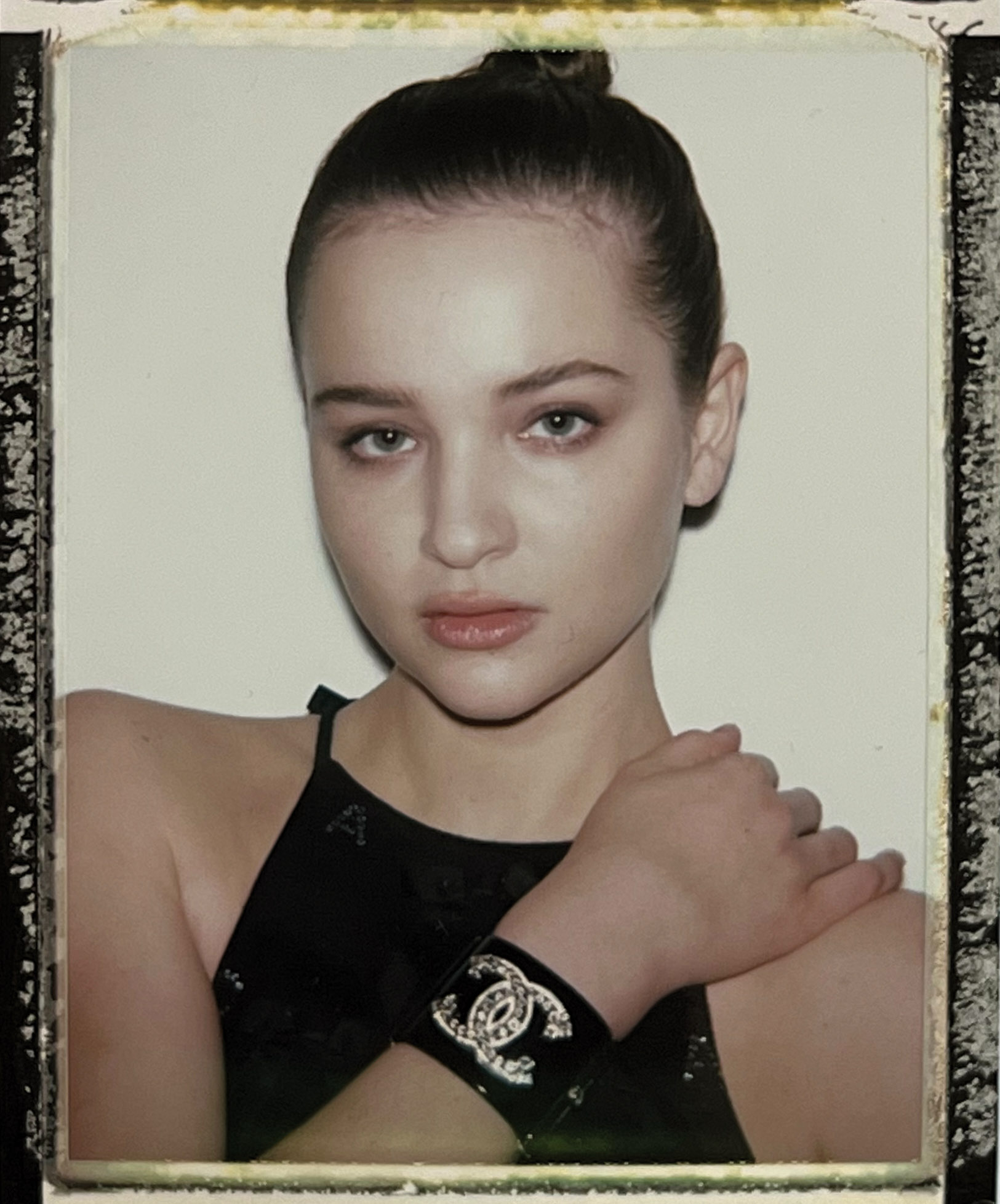
twiggy photography. Brian Aris
additional photography. Courtesy of Studio Soho
interview. Kelsey Barnes