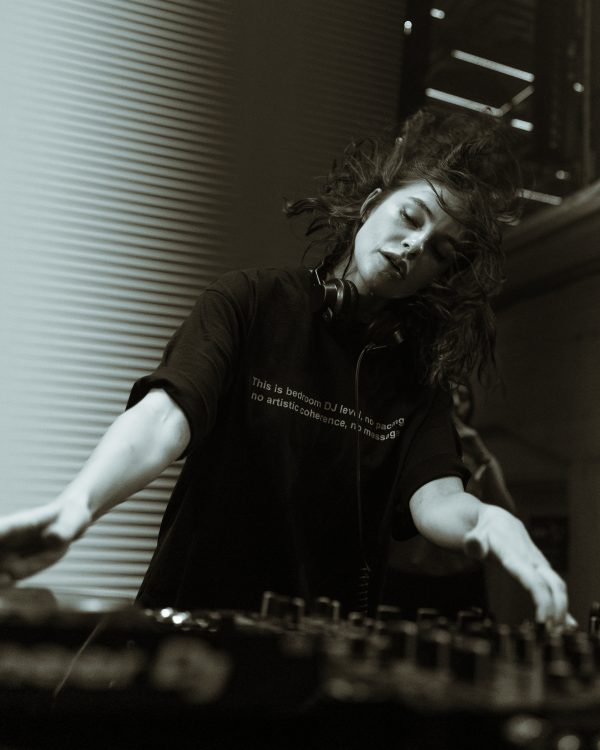
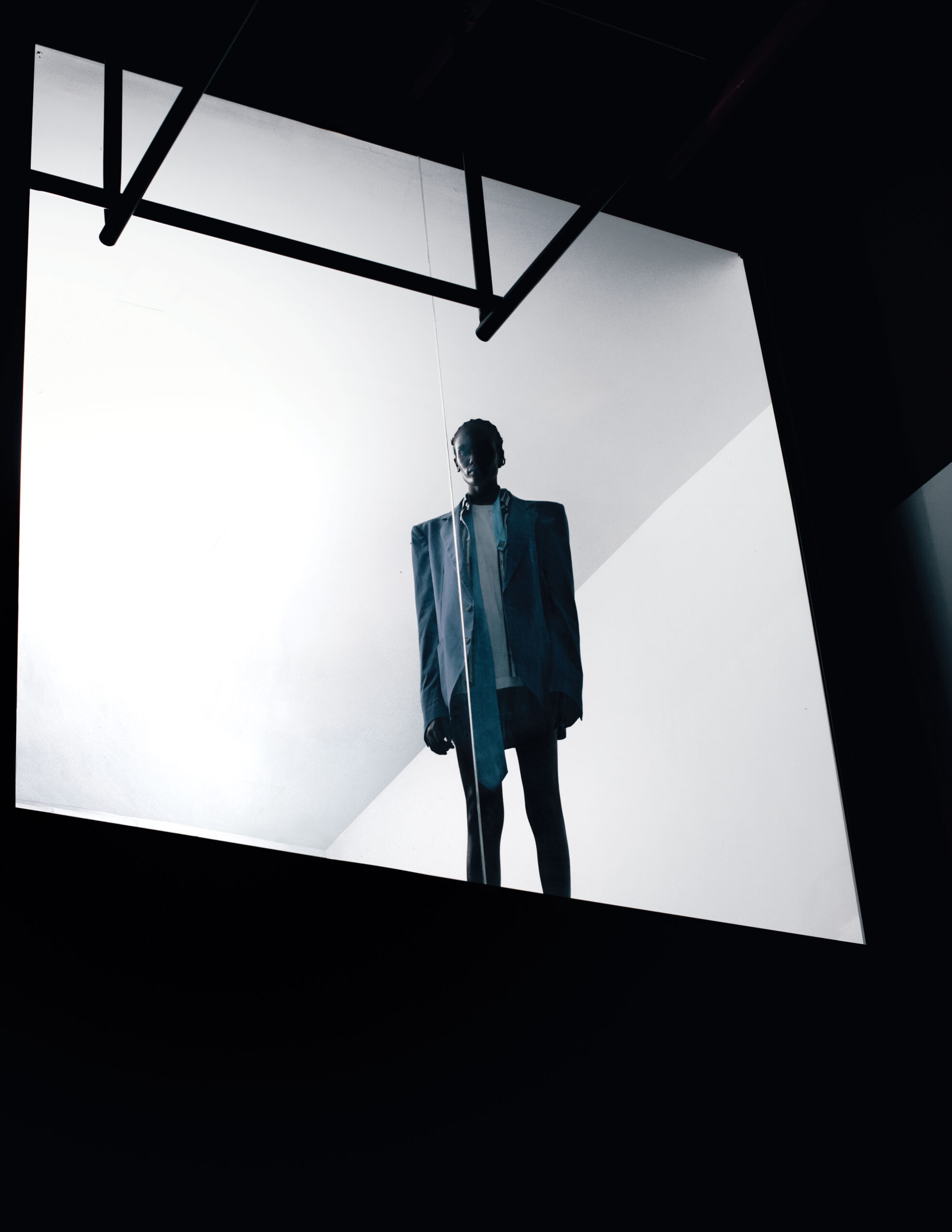
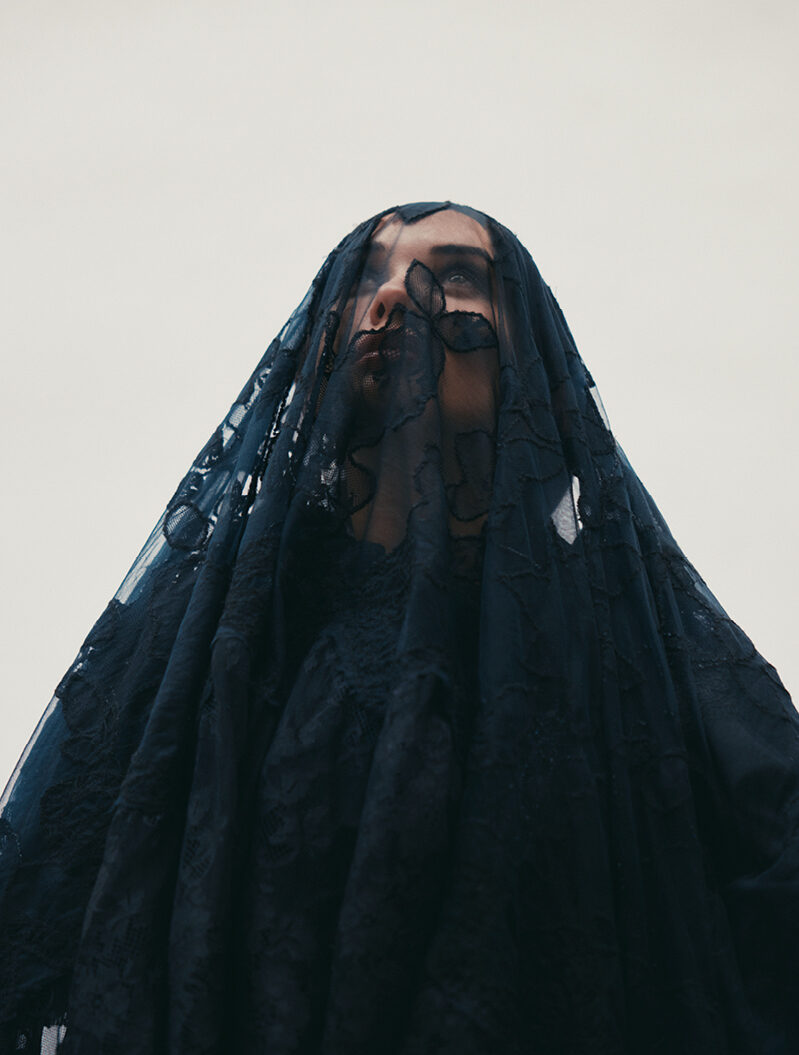
AMAYI by Alexia Mavroleon.
There is a charming piece of lore at the foundation of AMAYI: at her preschool graduation, a young Joanna Masiyiwa confidently announced to the room that she was going to be a fashion designer. Then, as all high-achieving children often do, she went ahead and ignored her own advice for the next couple of decades.
Instead, she collected the gold-star credentials that make parents proud — studying at Yale, immersing herself in art history and working in philanthropy. Masiyiwa spent most of her upbringing split between Zimbabwe and South Africa as the daughter of tech entrepreneur Strive Masiyiwa. Today, she balances her role as a designer with an active footprint across major cultural institutions — navigating the Victoria and Albert Museum’s African acquisitions committee, shaping perspectives within the Serpentine’s FutureContemporaries, serving on the Global Council of the Zeitz MOCAA in Cape Town, and working alongside the Zimbabwe Pavilion at the Venice Biennale.
She initially filed fashion away as a hobby, operating under the self-imposed belief that top marks meant she was destined to become a lawyer or a politician. But when the global upheavals of 2020 shattered the illusion that life follows a neat script, Masiyiwa found herself drawn back to her first love. A late-2022 trip to a beloved childhood art shop in Johannesburg resulted in a notebook filled with dress designs, a supportive prompt from her mother and the official birth of her label, AMAYI.
Landing in the industry without a formal fashion education meant facing some immediate, humbling realities — including early phone calls where she didn’t know what a tech pack was. Yet, what Masiyiwa lacked in conventional manufacturing jargon, she made up for with a distinct philosophy borrowed from the art world. Named after the Shona word for ‘mother’, AMAYI treats clothing as a physical archive: every collection is strictly limited, numbered and built on the premise that a garment should retain its value and emotional weight even when passed down to a second or third owner decades later.

AMAYI Showroom by Delali Ayivi.
This ethos comes alive beautifully in her showroom, which functions more like a curated gallery in the heart of Marylebone. The space is wrapped in mirror panels and lined with a custom wallpaper Masiyiwa designed from an inverted kente cloth motif, drawing on a fragment she bought on a childhood trip with her father. Almost like a jewellery box, the room is built to hold precious, slow-gathered works from across the diaspora — including numerous family pictures. Among these, deeply spiritual woodcarvings by the late South African master Johannes Mashego Segogela sit alongside contemporary paintings by Jemila Isa and the post-consumer textile art of Accra’s Kwaku Yaro.
This conversation extends across the furniture and architectural surfaces of the space, where ceremonial hand-beaded Yoruba thrones and heritage Colombian Caribbean woven seating rest on a green-and-cream checked floor. Every corner reveals a new layers of texture, from a custom mosaic table crafted in hand-cut zellige clay tiles from Fès to Martinican figurative ceramics and bold geometric wallhangings woven entirely from natural South African mohair and merino wool. It’s a space designed to establish that seemingly unrelated cultures share a deep human connection — a belief that mirrors the intricate, cross-cultural textile work found in the clothing itself.
Ahead of AMAYI’s debut, Schön! sat down with Masiyiwa to discuss patience, learning from failure and designing for the long haul.

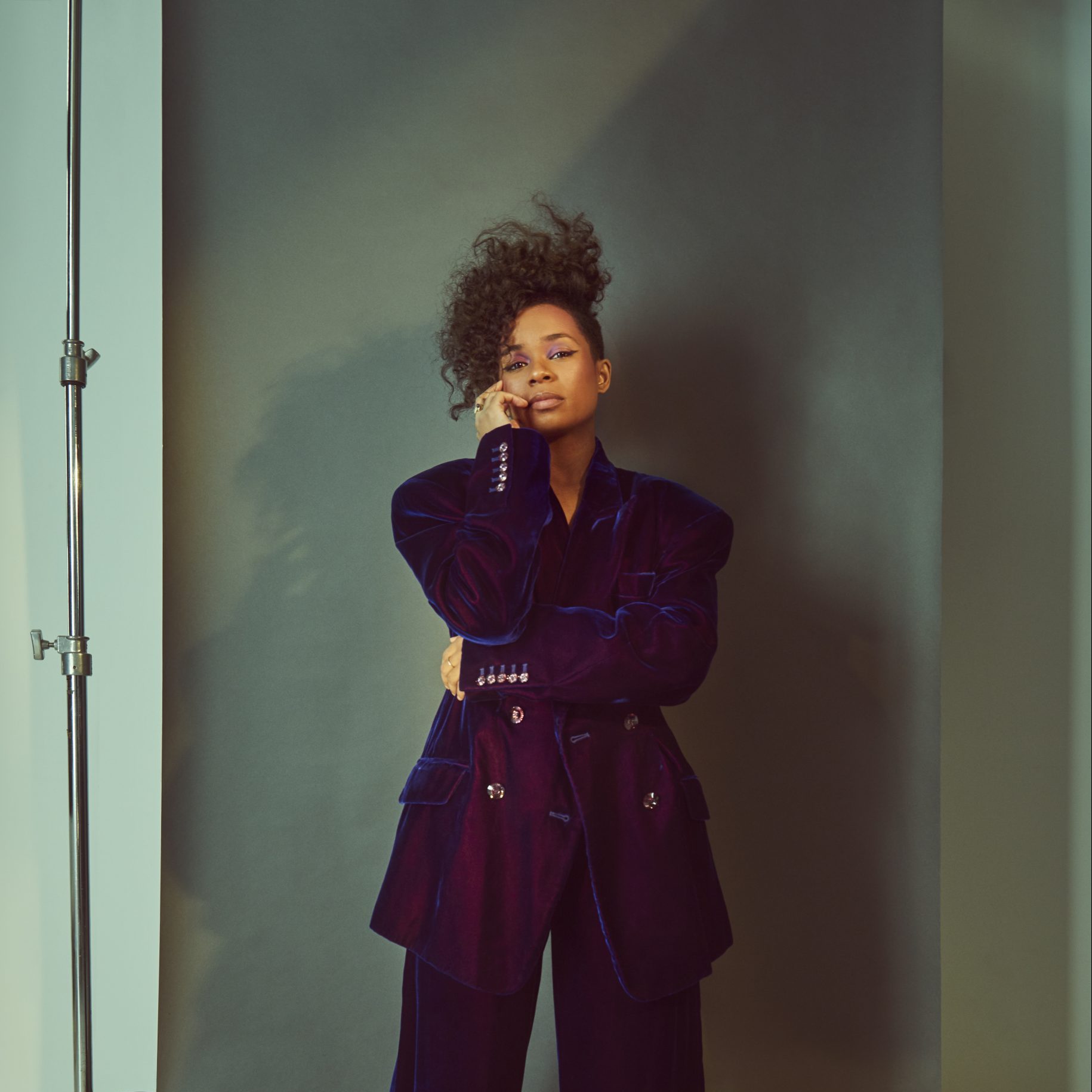
Joanna Masiyiwa by Tara Duros and AMAYI by Alexia Mavroleon.
You grew up between Zimbabwe and South Africa, went on to study at Yale, and spent much of your early career immersed in the worlds of art, culture and philanthropy before founding AMAYI. What were the experiences, places or people that ultimately made you realise fashion was where you wanted to build something of your own?
There was no single realisation. My love of fashion developed alongside my sense of self. What the years in between gave me was not the desire but the discipline. Film taught me how images construct meaning. The work in art and philanthropy taught me how institutions decide what deserves to be kept — a question I now ask of every garment.
You’ve written about how, as a child, you would spend hours drawing clothes, even asking for a mannequin for your tenth birthday, but that fashion later became something you put to one side in favour of more conventionally ‘prestigious’ paths. What do you think drew you back to it? And did returning to that childhood instinct feel like rediscovering something, or finally giving yourself permission to pursue it?
Permission — though I only understood that in hindsight. The message that fashion wasn’t a serious path was never imposed on me; I imposed it on myself. I don’t mean I abandoned fashion. I mean I filed it under ‘personal interest’ and stayed the course. It didn’t feel like rediscovery, because the thing was never lost. It felt like finally taking myself at my word.
You describe the house as being built around a permanent archive, while your own collection is clearly driven by the desire to acquire and preserve objects that you feel a personal connection to. How has looking at art – and thinking about why certain works deserve to be kept – shaped the way you design clothes?
Institutions ask a clarifying question of every object they acquire: why does this deserve to be kept? A work enters a collection because someone can articulate what it holds — technically, culturally, emotionally — and can defend the claim that it will still hold it in fifty years. I design against that same standard. Every AMAYI edition is finite; when it closes, it closes permanently, and what accumulates over time is an archive. That structure forces honesty. You cannot rely on novelty when a piece is intended to outlast its moment, so every decision — the fabric, the construction, the finishing — has to withstand scrutiny long after the season that produced it has passed.

AMAYI by Alexia Mavroleon.
AMAYI is named after the Shona word for ‘mother’, and your mother has been described as both a muse and an important part of your relationship with clothes. What does ‘mother’ represent to you beyond the literal relationship? How does that idea of inheritance inform the woman you design for?
My mother is the first AMAYI woman, that much is literal. Her faith is relentless; she lives with an authenticity and humility that I’ve come to understand as the origin of taste. But beyond the literal relationship, ‘mother’ is my shorthand for inheritance. I was raised with intangible legacy. We had few photographs and no old relics; what was passed down was a way of being — generosity, unrelenting standards, joy that comes from within. Watching my mother, I learned that legacy is not what you accumulate but what is remembered, and that it enters the world through how you participate in it.
The woman I design for possesses legacy and conviction on that fundamental level. She knows exactly who she is, which is why the clothes never have to announce her. They are the vehicle; her individuality and taste are the engine.
You describe AMAYI’s starting point as “the interrupted kind” of memory. That is a very evocative idea. What is the memory or imagined future at the heart of this first collection, and how did you translate something so intangible into silhouette, proportion and cloth?
When I say the interrupted kind, I mean the memory that has no object left to hold it. In my family, the line of inheritance is unbroken but the artefacts are largely missing. What survived was carried in people rather than things. This first edition began with that gap. If the heirloom didn’t survive, the work is to make it now, properly, so that the interruption ends with us.
Translating that into cloth is slower and more literal than the idea suggests. An heirloom is a technical claim before it is a sentimental one, so the intangible becomes tangible through fabric developed with expertise and time, through construction resolved in fittings, and through the restraint to remove anything the piece doesn’t need to carry for fifty years.

AMAYI by Alexia Mavroleon.

Joanna Masiyiwa by Tara Duros.
How do you navigate the line between being inspired by a cultural technique and actually understanding, respecting and transforming it into something that belongs to AMAYI?
I learned the difference the hard way. The first collection I ever attempted — never released — leaned on a mood board of Maasai imagery and kente cloth. I am African; I still managed to appropriate my own culture, because there was no understanding underneath the reference.
That failure set the standard the house now works to. Our method is to draw parallels between seemingly disparate traditions — to notice what one weaving culture shares with another a continent away — rather than to lift a motif wholesale. Sourcing a maker to validate a reference would turn that person into a credential — proof offered to a reader that I’m allowed to do what I’m doing. The obligation I actually hold is research, credit and restraint.
The final test is whether the piece stands without the footnote. If a garment needs the cultural reference explained in order to justify itself, it isn’t finished. When a technique has genuinely been transformed, it belongs to the piece — and the piece, in turn, honours where it learned.
You’re developing fabrics and textiles in collaboration with specialist makers. What does the process of developing a fabric from scratch allow you to express that an existing fabric simply couldn’t? And what has surprised you most about the technical side of becoming a designer?
An existing fabric arrives with its own history — someone else’s decisions about weight, hand, drape and character, made for someone else’s purpose. Developing cloth from the beginning means the fabric can carry the idea directly. Much of this work involves small studios and highly specialised weaving techniques — methods that are time-intensive, difficult to scale, and therefore increasingly rare.
As for what has surprised me most about the technical side: I once lost sixty metres of fabric because I dismissed a textile expert’s warning as old-school thinking. The education since has been a profound lesson in humility: you cannot cram a career. Cloth doesn’t respond to willpower. It responds to patience, repetition and respect for people who know more than you do.

AMAYI by Alexia Mavroleon.

AMAYI by Alexia Mavroleon and Showroom by Delali Ayivi.
In your showroom, you’ve brought together woodcarving from South Africa, Yoruba beadwork, Colombian Caribbean weaving, Martinican ceramics, Fès zellige and contemporary painting from London, Accra and elsewhere. How did you decide what belonged in this space?
The showroom was never intended as a retail environment; it is a living archive, and I furnished it as one. The organising principle is the same one that runs through the clothes: the interconnectedness of seemingly disparate cultures. A zellige panel from Fès and Colombian Caribbean weaving share no geography, but they share a human philosophy; patience, repetition, and pattern as devotion. Yoruba beadwork and contemporary painting from Accra or London are separated by centuries and materials, yet they are asking related questions about colour and presence. I wanted a room where those conversations could happen across a shelf.
Beyond that, the criterion was personal, everything in the space is something I feel a genuine connection to, they are objects I wanted to live alongside. The test was always whether the object could hold its own in the conversation, and whether I would miss it if it were gone.
Looking at the pieces in this collection, what is the detail you would most want someone to notice that they might miss at first glance?
The flame lily. Gloriosa superba is Zimbabwe’s national flower, and the flower I associate most with my mother and the women in my line; it is embroidered into the edition. At first glance it reads as ornament, and I am content for it to be worn that way for a year before it is noticed. But to me it is more than decoration. It is an inheritance worked in thread — the maternal line, carried on the body.
I would also ask people to look for what is sewn rather than shown: each garment is individually numbered, because each belongs to a finite edition that will close permanently. The number is small and easy to miss, which is deliberate. The things that matter most in these clothes are often the hardest to see at first glance, which, I think, is really the whole proposition of the house.
photography. courtesy of Alexia Mavroleon, Delali Ayivi, Tara Duros for AMAYI
words. Gennaro Costanzo