Dimora delle Balze, Annunciata Room, by Agi Sibiga.
The road through the Iblei hills, a little inland from Noto, eventually gives way to an old stone estate surrounded by olive groves, fields and the colours of the Sicilian countryside. At Dimora delle Balze, the first impression is not that of arriving at a hotel but rather of being expected at someone’s cosy country home, with its vast courtyards, vaulted ceilings and gardens inviting guests to settle in. Schön! alive joined the property for its tenth-anniversary celebration, discovering the history behind this much-loved Sicilian retreat and the family spirit that continues to shape its hospitality.
The story here began with owner Elena Lops, who was looking for somewhere her family could gather for birthdays, Christmas and the celebrations that bring everyone around the same table. Born in Puglia and married to a Sicilian man, she already had a connection to the island, but finding the right property took some time. Lops had seen other estates in the area, but none had made an impression quite like this one. “When I first saw this place from the outside, it was a beautiful revelation,” she tells us. The moment she stepped through the original entrance, she knew there was something worth saving — although the building itself had seen considerably better days.

Dimora delle Balze by Agi Sibiga.
Built in 1886 by Don Salvatore Zocco, the estate was originally a fortified rural complex, complete with high battlemented walls, a central courtyard and a tower at the entrance. The Zocco family used it as a summer residence, while the surrounding land was worked by farmers who lived in the estate’s other quarters. Over time, the property fell into disrepair, and its restoration became a much larger undertaking than Lops had initially imagined. The family began the project in 2009, working with designers Draga Obradovic and Stefano Guidotti, and spent nine years bringing the buildings and grounds back to life. However, by 2016 Dimora delle Balze was ready to welcome its first guests.
From the beginning, Lops was determined to preserve as much of the original architecture as possible, even when doing so meant taking the longer and more expensive route. Lops insisted that the original gate remain in place, despite being advised that it would be difficult to restore, and brought in local expert craftsmen to preserve it. “It was so important to me to leave the soul of the place intact that I couldn’t remove the things that didn’t need to be removed,” she explains.

Dimora delle Balze, Eva Room, by Agi Sibiga.
The same principle guided the rest of the renovation throughout the property. Moroccan tiles recovered from the old corridors and reception rooms were reused in the kitchen where breakfast is now served; original roof tiles were cleaned and laid back over new ones, while old doors found a second life in the en-suite bathrooms as rustic séparées. In one section of the main salon, a damaged vaulted ceiling had to be rebuilt by local Sicilian companies, while restorers from the Accademia di Belle Arti in Catania helped recover the original colours of the rooms. In one of the former master bedrooms, they even recreated a distinctive burgundy ceiling after discovering a trace of its original shade in a small corner.
The interiors now bring together vintage furnishings, contemporary design, local craftsmanship, patterned textiles and artworks, without losing the architectural details that make the house what it is. Each shared room has its own identity: the green dining room hosts breakfast, the library is dressed in blue and a pink games room adds a playful note. The 11 total bedrooms — each named after a Sicilian artist, writer, painter or filmmaker — retain features such as masonry walls and frescoed ceilings, while their furnishings give them an individual character. Their layouts also tell something of the building’s former life: those in the courtyard once belonged to the people who worked the estate, while the former owners’ quarters have been treated differently, with unique headboards and carefully selected details in each bedroom.

Dimora delle Balze, Manor House and Annunciata Room, by Agi Sibiga.
For Lops, the anniversary marks something more personal than a decade in business. “I never imagined I would keep the property open and turn it into a hotel, because it was my home,” she says. “To have spent ten years running a hotel here, when it could have been my home, was something I had to celebrate with my employees.” The original intention was to create a place for her family, and that sense of belonging has never completely disappeared. As a host, she has the warmth of a favourite aunt, and the guest list over the years, which has included architects, people from the world of fashion and wedding parties, is one she prefers to keep discreet. “Without my family’s help, I could never have carried through something so important and so big,” she says. Earlier this year, the property also received a Michelin Key, adding an international hospitality distinction to its celebrations.
The estate covers 27 hectares, with olive groves, gardens and cultivated land, alongside areas left to develop their natural biodiversity. In 2020, the family established ‘Passo Ladro’, an agricultural project dedicated to bringing abandoned land back into production and growing organic vegetables, fruit and other products. During our visit, chef Andrea Agati guided guests through the fields, sharing a little of the area’s agricultural history and explaining the crops and traditions that still shape local food production. It was a welcome opportunity to see where the ingredients come from before they reach the kitchen, and to understand the thinking behind the estate’s ‘chilometro zero’ approach.

Dimora delle Balze, Lumìa Restaurant and Passo Ladro fields, by Tropico Creators.
“Sicily did not need more concrete, but someone willing to take care of the land again,” claims Anthony Lops, Elena’s son and founder of Passo Ladro. “Our first harvest was not the fruit itself, but seeing a forgotten piece of land come back to life.” The harvest now feeds directly into the culinary offering, while guests can also take part in picking produce and cooking, making preserves, enjoying aperitivi among the vegetable gardens or arranging a picnic beneath the citrus trees.
At Lumìa, the estate’s restaurant, executive chef Gabriele Camiolo builds the menu around seasonal ingredients, organic produce and relationships with nearby growers. The 0km philosophy is evident in the vegetables, herbs, citrus and olive oil that populate the dishes, but also in the way traditional Sicilian recipes are given space at the table. Caponata, with its sweet-and-sour balance, is one of those servings that carries the island’s agricultural culture in a few generous spoonfuls, while traditional cannoli bring the meal to a suitably indulgent close, with crisp pastry and ricotta filling.

Dimora delle Balze, Breakfast area by Agi Sibiga; Passo Ladro fields by Tropico Creators.
The menu also moves through the flavours of the surrounding countryside, drawing on ancient grains and vegetables that are treated with as much consideration as the more celebrated ingredients. Chef Camiolo describes his approach as a “conscious return to my roots”, as well as “a vegetal avant-garde,” which comes into admirable focus through ‘A Convivial Dinner.’ Here, guests gather around one long table and the chef decides the menu according to what the garden has yielded that day, opening up the evening to a pleasant culinary conversation.
Between meals, the 6.3 Senses Spa offers treatments by Sisley Paris, massages and an outdoor setting scented by rosemary, lavender and jasmine. The saltwater swimming pool looks out across the evergreen landscape, while the lounge, gardens and courtyards offer plenty of spots for a slower afternoon. Guests can also arrange yoga classes, horseback rides through the olive groves, boat excursions and visits to nearby towns. Noto, celebrated for its Baroque architecture, and the more provincial Palazzolo Acreide are both within reach, making the estate a convenient starting point for exploring the Val di Noto before returning to the countryside.

Dimora delle Balze, Viale dei Carrubi, by Agi Sibiga.
Art has also found a home here, with Dimora delle Balze supporting 8 Albe, an annual contemporary video-art festival. “Every year we bring important curators here for contemporary art,” Elena Lops says. “[Contemporary art] is much appreciated in Sicily, and many people come to see it. There are people who travel 100 km to see it with us, because there are no hotels that invest in these type of things.” The estate has also hosted high-profile celebrations, including the famous 2018 wedding of Italian model and influencer Chiara Ferragni and rapper Fedez, as well as gatherings for figures from architecture and fashion.
What makes Dimora delle Balze so appealing is not a single feature, nor the name of a famous guest who has passed through its gate. It’s the way the different parts of the experience belong to the same story: a historic house restored with care, a working landscape, food that begins in its own fields, and an owner who still speaks about the place as something deeply personal. “Our goal has always been to create a place where guests feel truly welcomed, experience time at a different pace, and leave with an authentic memory of Sicily,” says Elena Lops.

Dimora delle Balze, Proibito Room and The Citrus Grove by Agi Sibiga.
A second Dimora may follow, somewhere else other than Italy, with the same ingredients of generous land and a building worth restoring — though Lops admits that such a place is not easy to find. For now the family’s attention stays with the estate and the projects still ahead, from the video art residency to the next harvest in the Passo Ladro fields.
Discover more here.
photography. courtesy of Agi Sibiga, Tropico Creators for Dimora delle Balze
words. Gennaro Costanzo


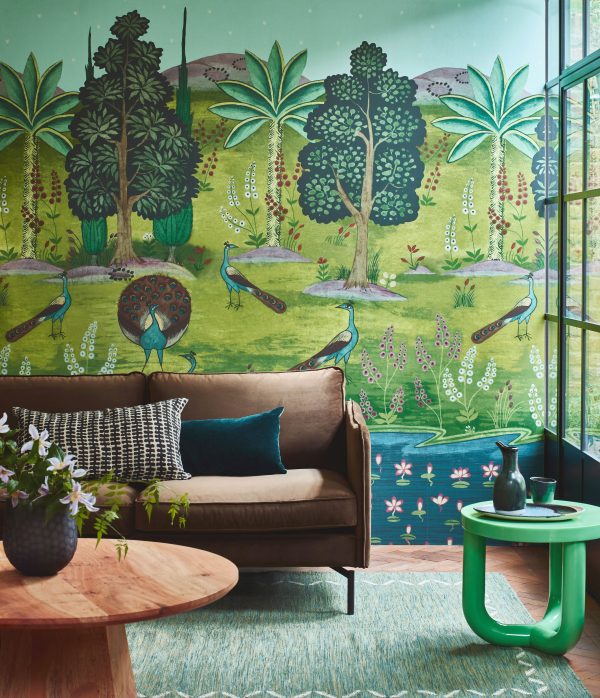
 As the weather begins to cool, wanderlusts craving sun-tinged escapism may be tempted to catch a flight to the balmy shores of the Mediterranean or even South East Asia. What if the rest and recuperation you seek could be found in a city you’d least expect? Copenhagen has built its reputation as a hub for architecture and design lovers, foodies and Scandi style enthusiasts. With its tropical design features and ethical ethos, Hotel Manon les Suites presents a peaceful hideaway from the bustle of city bikes and endless exhibits.